Sunday, June 30, 2013

Tao Te Ching by Lao Tzu, Chapter 16

Dao De Jing, Laozi
Chapter 16

"I do my utmost to attain emptiness;
I hold firmly to stillness.
The myriad creatures all rise together
And I watch their return.
The teaming creatures
All return to their separate roots.
Returning to one’s roots is known as stillness.
This is what is meant by returning to one’s destiny.
Returning to one’s destiny is known as the constant.
Knowledge of the constant is known as discernment.

Woe to him who wilfully innovates
While ignorant of the constant,
But should one act from knowledge of the constant
One’s action will lead to impartiality,
Impartiality to kingliness,
Kingliness to heaven,
Heaven to the way,
The way to perpetuity,
And to the end of one’s days one will meet with no danger."
-  Translated by D. C. Lau, Chapter 16  


"By attaining the height of abstraction we gain fullness of rest.  
All the ten thousand things arise, and I see them return.
Now they bloom in bloom but each one homeward returneth to its root.
Returning to the root means rest.
It signifies the return according to destiny.
Return according to destiny means the eternal.
Knowing the eternal means enlightenment.
Not knowing the eternal causes passions to rise; and that is evil.
Knowing the eternal renders comprehensive.
Breadth renders royal.
Royalty renders heavenly.
Heaven renders Reason-like.
Reason renders lasting.
Thus the decay of the body implies no danger."
-  Translated by D. T. Suzuki and Paul Carus, 1913, Chapter 16 


"Make emptiness in yourself complete and achieve the full calm!
Let everything around move by itself.
Let everyone bloom spiritually and advance to cognition of their true Essence.
Those who cognized their true Essence — achieve full calm.
Thus they attain the common Abode of All Who Attained.
One’s being in this Abode has to become constant.
He, who fulfilled this, is called Enlightened, Perfect, possessing the Higher Wisdom.
Those Who attained that Abode represent the United “We” which is the Highest Ruler.
That Abode is also called the Sky.
This is the Abode of the Eternal Tao.
Tao is non-corporeal.
It cannot be caught by anyone.
Thus, It is invincible."
-  Translated by Mikhail Nikolenko, Chapter 16 


"Seek to attain to absolute emptiness;
Maintain a state of perfect stillness.
See how all things come into being,
And see how they return!
They come to flower and fullness
And then go back to the roots whence they came.
To go home to the root is to achieve perfect stillness.
Thus, in attaining stillness, do they fulfil their destiny;
And thus, in turning back, they join the Never-changing.
To be aware of the Never-changing is to be enlightened.
Not to know the Never-changing is to stumble blindly into miseries.
He who knows the Never-changing embraces all;
Embracing all, shall he not accept all impartially?
To be impartial is an attribute of kingship,
And kingship is of Heaven.
He who is of Heaven can attain to the Tao.
He who is of the Tao endures forever,
And though his body decay, he never dies."
-  Translated by Herman Ould, 1946, Chapter 16  


"Attain the climax of emptiness, preserve the utmost quiet:
as myriad things act in concert, I thereby observe the return.
Things flourish, then each returns to its root.
Returning to the root is called stillness;
stillness is called return to Life, return to Life is called the constant;
knowing the constant is called enlightenment.
Acts at random, in ignorance of the constant, bode ill.
Knowing the constant gives perspective; this perspective is impartial.
Impartiality is the highest nobility; the highest nobility is divine, and the divine is the Way.
This Way is everlasting, not endangered by physical death."
-  Translated by Thomas Cleary, 1991, Chapter 16 


Chapter and Thematic Index to the Tao Te Ching


Saturday, June 29, 2013

Live Secretly

"The wealth required by nature is limited and is easy to procure;
but the wealth required by vain ideals extends to infinity."

"The most well-known Epicurean verse, which epitomizes his philosophy, is "lathe biōsas λάθε βιώσας "(Plutarchus De latenter vivendo 1128c; Flavius Philostratus Vita Apollonii 8.28.12), meaning "live secretly", "get through life without drawing attention to yourself", i. e. live without pursuing glory or wealth or power, but anonymously, enjoying little things like food, the company of friends, etc."

Epicurus, 341-271 BCE

Epicurean Philosophy Online

Epicurean History

Lifestyle Advice from Wise Persons

From a Letter to William Short by Thomas Jefferson, 1819

"I take the liberty of observing that you are not a true disciple of our master Epicurus, in indulging the indolence to which you say you are yielding. One of his canons, you know, was that "that indulgence which prevents a greater pleasure, or produces a greater pain, is to be avoided." Your love of repose will lead, in its progress, to a suspension of healthy exercise, a relaxation of mind, an indifference to everything around you, and finally to a debility of body, and hebetude of mind, the farthest of all things from the happiness which the well-regulated indulgences of Epicurus ensure; fortitude, you know is one of his four cardinal virtues. That teaches us to meet and surmount difficulties; not to fly from them, like cowards; and to fly, too, in vain, for they will meet and arrest us at every turn of our road. Weigh this matter well; brace yourself up ..."


Syllabus of the doctrines of Epicurus (By Thomas Jefferson)

"Physical.—The Universe eternal.

Its parts, great and small interchangeable.

Matter and Void alone.

Motion inherent in matter which is weighty and declining.

Eternal circulation of the elements of bodies.

Gods, an order of beings next superior to man, enjoying in their sphere, their own felicities;
but not meddling with the concerns of the scale of beings below them.

Moral.—Happiness the aim of life.

Virtue the foundation of happiness.

Utility the test of virtue.

Pleasure active and In-do-lent.

In-do-lence, is the absence of pain, the true felicity.

Active, consists in agreeable motion; it is not happiness, but the means to produce it.

Thus the absence of hunger is an article of felicity; eating the means to obtain it.

The summum bonum is to be not pained in body, nor troubled in mind.

i.e. In-do-lence of body, tranquillity of mind.

To procure tranquillity of mind we must avoid desire and fear, the two principal diseases of the mind.

Man is a free agent.

Virtue consists in 1) Prudence. 2) Temperance. 3) Fortitude. 4) Justice."

Friday, June 28, 2013

Proceed with a Smile

"What allows the energy you work with, gather and create a life of its own is humour. Humour is a lightness that admits of other possibilities. Combine that admission with hearty connectedness and those possibilities become incorporated into a body teeming and seething with life. If humour is maintained then those incorporated possibilities – each one a thread of energy if you like – remain in some way distinct – do not agglutinate into one amorphous mass – and there quickly comes a point where the combined intensity and complexity of these interacting threads develops into what feels like awareness.

Humour is not taking things, especially the self, seriously. It confounds the logical, rational, linear mind, which always struggles to force your movements into some preconceived template, with an element of play which revels in the surprises inherent in the unfolding of creative and natural processes. In a way humour is the most valuable possession you have because it allows you to put up with anything, not with resignation but with a smile – a mood and energy that is always opening and searching not for comfort and ease but for those threads that can be brought into the whole to transform it into a vehicle capable of thrusting you to the next level; humour finds fuel everywhere. Humour also admits that sneaking feeling that you are getting it wrong – that your efforts to do and to make are coming from a part of you – your conditioning – foreign to your essential nature. Humour is a natural and gentle way of applying shocks to your conditioning – unsettling it and loosening its iron grip sufficiently for your essential nature to momentarily peek through. This essential nature, so used to being plastered over, pushed into the background and over-ridden by the bullying conditioned and conditional mind, has a completely different relationship with reality than that mind: soft, playful, interactive, ringing with laughter – imagine children at play – but it needs years of gentle coaxing and encouragement before it will venture forth and take the lead in your life. Scars don't heal overnight. Humour – the touch of lightness that refuses to linger for too long and never repeats itself (jokes are rarely funny second time round). Your conditioning needs repetition to survive and it uses up most of your vital energy in the process of constantly reviewing and recounting its domain – imagine the lonely miser pointlessly counting his money each evening before he can sleep. Your conditioning is telling you the same joke over and over and because you don't realise it's a joke you listen and approve. Humour is the only effective way to cut through this – because it is so gentle its blade is very keen."
- Steven Moore, 6/11/06, Tai Chi Heartwork

Thursday, June 27, 2013

Playing Cloud Hands

T'ai Chi Ch'uan, Qigong, Hatha Yoga and Gardening are all me, among other things, a way of "playing."  Playing to lift my spirits, playing to meet a challenge, playing for delight, playing to show off, playing for exercise, playing to pass the time, playing for keeps, playing for no reason at all.

"We are never more fully alive, more completely ourselves, or more deeply engrossed in anything than when we are playing."
- Charles Schaefer

"The true object of all human life is play.
Earth is a task garden; heaven is a playground."
- G. K. Chesterton

"It is a happy talent to know how to play."
- Ralph Waldo Emerson 


"The supreme accomplishment is to blur the line between work and play."
- Arnold Toynbee

"In Hindu philosophy the whole creation is regarded as the Vishnu Lila, the play of Vishnu. Lila means dance or play. Also in Hindu philosophy, they call the world illusion; and in Latin the root of the word illusion is ludere, to play."
- Alan Watts, Work as Play

"We may play with and pass on a garden, possessing one is an illusion.
Gardeners must dance with feedback, play with results, turn as they learn.
Some gardeners don't grow old and stop playing; they stop playing and grow old.
Nature's playfulness is a gardener's delight.
A garden is a sporting field, an area for play."
- Michael P. Garofalo, Pulling Onions: The Maxims of Gardening


The Internal Structure of Cloud Hands: A Gateway to Advanced T'ai Chi Practice.  By Robert Tangora.  Foreword by Michael J. Gelb.  Berkeley, California, Blue Snake Books, 2012.  Bibliography, 141 pages.  ISBN: 9781583944486.  VSCL.  A thorough discussion of three components of internal power: 1) cross-body power, 2) left-right alignment or joint power, and 3) zhong ding power.  Six supplemental and complimentary exercises are precisely explained and illustrated.  "Cloud Hands is a paradigm for the internal symmetry in t'ai chi ch'uan through the hidden relationship between the stepping method, the changes of nei chin, and cross-body power. ... This book is beneficial for a a wide range of practitioners of movement, healing, and marital arts. ... The reader should be familiar with core concepts from t'ai chi ch'uan, e.g., song, nei chin, ch'i, and zhong ding."   


Tuesday, June 25, 2013

Summertime Garden and Home Work Projects

Karen and I both work part-time for school districts during the academic school year.  We have been off work for the last two weeks on 'summer vacation.'  We have been very busy with home and garden improvement projects every day for the last two weeks.

Today and yesterday, a storm came in from the south west.  It is been very overcast, cool, and raining.  A half-inch of rain fell last night in Red Bluff.  The weather forecasters predict this storm will pass by tomorrow and then a period of low humidity and high temperatures up to 105F will be coming next week.  Hot and dry are very typical in July where we live in rural Northern California. So, for today, indoor work projects and reading. 

Our orchard and garden are filled with fruits and vegetables.  Right now, we have our choice of four varieties of plums, two types of peaches, and three types of figs.  We are now harvesting squash, eggplant, onions, garlic, and tomatoes from our 'Sunny' vegetable garden.  The photograph of Karen was taken last August when the tomato plants were really producing heavily, but we still pick a few tomatoes in late June. 

As one can see from my recent posts, when not working on home improvement projects, I have been busy reading the Tao Te Ching, Chuang Tzu, and NeoPagan literature on Lithia (Summer Solstice), and developing webpages on related subjects.  


Monday, June 24, 2013

Soft and Supple in Taijiquan

Relaxation in Taijiquan: Bibliography, Links, Resources, Quotations, and Notes. By Mike Garofalo. 

Song or Sung: Loose, Relaxed, Open, Yielding, Free, Responsive. A Defining Characteristic of Taijiquan. 

"First, last, and always the student must relax. Various calisthenics aid him in
achieving this. All rigidity and strength must be emptied from the upper torso and must sink to the very soles of the feet, one of which is always firmly rooted to the ground. Without proper relaxation the student can never hope to achieve the trueness of the T'ai-chi postures. The student relaxes completely and breathes as a child - naturally through the nose, the diaphragm being aided by the abdominal rather than the intercostal muscles. Man's intrinsic energy, the ch'i, should be stored just below the navel. The mind directs this energy throughout the body according to need. But the ch'i cannot circulated in an unrelaxed body."
- Robert W. Smith, Chinese Boxing: Masters and Methods, 1974, p. 26.

"Human beings are
soft and supple when alive,
stiff and straight when dead.
The myriad creatures, the grasses and trees are
soft and fragile when alive
dry and withered when dead.
Therefore, it is said:
The rigid person is a disciple of death;
The soft, supple, and delicate are lovers of life.
An army that is inflexible will not conquer;
A tree that is inflexible will snap.
The unyielding and mighty shall be brought low;
The soft, supple, and delicate will be set above."
- Lao Tzu, Tao Te Ching, Chapter 76
Translated by Victor H. Mair, 1990
"In life, man is soft and tender,
In death, he is rigid and hard.
In life, plants and trees are soft and pliant,
In death, they are withered and tough.
Thus rigidity and hardness are companions of death.
Softness and tenderness are companions of life.
That is why the soldier who trusts only in strength does not conquer,
The tree that relies on its strength invites the axe.
Great strength dwells below,
Softness and tenderness dwell above."
-  Translated by Isabella Mears, 1916, Chapter 76

Sunday, June 23, 2013

Dao De Jing, Laozi, Chapter 17

Tao Te Ching by Lao Tzu
Chapter 17

"In the highest antiquity people scarce knew
That rulers existed among them;
In the next age attachment and praise for them grew,
In the next people feared they might wrong them; 
And then in the next age the people despised
The rulers whom fate set above them,
For when faith by the rulers no longer is prized,
The people no longer can love them.
Those earliest rulers! what caution they had
In weighing the words they were using;
How successful their deeds! while the people all said
We are what we are by our choosing.
"
-  Translated by Isaac Winter Heysinger, 1903, Chapter 17


"In the first age of mankind the people recognized their superiors.
In the second age they served and flattered them.
In the third age they feared them,
In the fourth age they despised them.
Where faith is lacking it does not inspire confidence.
How careful were they in their expressions!
When they had done a good thing they would say, "How very natural we are!" "
-  Translated by Walter Gorn Old, 1904, Chapter 17  


"The Ruler of the People ...
As for him who is highest,
The people just know he is there.
His deputy's cherished and praised;
Of the third, they are frightened;
The fourth, they depise and revile.
If you trust people less than enough,
Some of them never trust you.
He is aloof, as if his talk
Were priced beyond the purchasing;
But once his project is contrived,
The folk will want to say of it:
"Of course! We did it by ourselves!""
-  Translated by Raymond Blackney, 1955, Chapter 17 


"Of the best rulers
The people (only) know that they exist;
The next best the love and praise;
The next they fear;
And the next they revile.
When they do not command the people's faith,
Some will lose faith in them,
And then they resort to oaths!
But (of the best) when their task is accomplished,
their work done,
The people all remark, "We have done it ourselves.""
-  Translated by Lin Yutang, 1955, Chapter 17


"The wise leader does not intervene unnecessarily. The leader's presence is felt, but often the group runs itself.
Lesser leaders do a lot, say a lot, have followers, and form cults.
Even worse ones use fear to energize groups to overcome resistance.
Only the most dreadful leaders have bad reputations.
Remember that you are facilitating another person's process. It is not your process. Do not intrude. Do not control. Do not force your own needs and insights into the foreground.
If you do not trust a person's process, that person will not trust you.
Imagine that you are a midwife; you are assisting at someone else's birth. Do good without show or fuss. Facilitate what is happening rather than what you think ought to be happening. If you must take the lead, lead so that the mother is helped, yet still free and in charge.
When the baby is born, the mother will rightly say: "We did it ourselves!""
-  Translated by John Heider, 1985, Chapter 17 


Chapter and Thematic Index to the Tao Te Ching


Saturday, June 22, 2013

True Men of Old


"Assured! his stability, but not rigid:
Pervasive! his tenuous influence, but it is not on display.
Lighthearted!  Seems to be doing as he pleases:
Under compulsion!  Inevitable that he does it.
Impetuously! asserts a manner of his own:
Cautiously! holds the Power which is his own.
So tolerant! in his seeming worldliness:
So arrogant! in his refusal to be ruled.
Canny!  Seems he likes to keep his mouth shut:
Scatterbrained!  Forgets every word that he says."
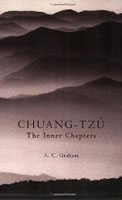
Chuang-Tzu, Chapter 6.1
Translation by Angus Graham, Chuang-Tzu: The Inner Chapters, 1981, 2000, p. 85


'The Genuine Human Beings of old seemed to do whatever was called for but were not partisan to any one course.  They appeared to be in want but accepted no assistance.  Taking part in all things, they were solitary but never rigid.  Spreading out everywhere, they were empty but never insubstantial.  Cheerful, they seemed to be enjoying themselves.  Impelled along, they did what they could not help doing.  The let everything gather within them but still it manifested outwardly to the world as their own countenance.  They gave it all away, but still it rested securely with them as their own Virtuosity.  Leprous with symptoms, they seem just like everyone else.  Haughty, nothing could control them.  Oblivious, they would forget what they were saying."
Zhuangzi, Chapter 6.1
Translation by Brook Ziporyn, Zhuangzi: The Essential Writings, 2009, p. 41


"The true man in ancient times was upright but impartial, humble but not servile.  He had distinct natural characteristics but was not adamant about them; his humility was evident but not displayed.  Pleasant and composed, he seemed to be content.  His actions appeared to spring from necessity.  People were drawn to his virtue; he seemed to comply with the age but with a certain reserve.  His independence of spirit was limitless.  Endeavoring to remain silent, he forgot what he wished to say."
Zhuangzi, Chapter 6.1
Translated by Hyun Hochsmann and Yang Guorong, Zhuangzi, 2007, p.117


"The true man of old
Was towering in stature but never collapses,
Seem insufficient but accepted nothing.
Aloofly independent but not obstinate,
Amply empty but not ostentatious,
Demurring, as though he were compelled,
Suffused with an alluring charm,
Endowed with an arresting integrity,
Stern, as though he were worldly,
Arrogant, as though he were uncontrollable,
Reticent, as though he preferred to clam up,
Absent-minded, as thought he forgot what to say."
Chuang Tzu, Chapter 6.1
Translated by Victor H. Mair, Wandering on the Way: Early Taoist Tales and Parables of Chuang Tzu, 1994, p.52


Chuang-Tzu: The Inner Chapters   Translated with commentary by Angus C. Graham (1919-1991).   Indianapolis, Hackett Pub. Co., 1981, 2001 edition.  Index, extensive footnotes, 293 pages.  ISBN: 0872205819.  VSCL.  

Zhuangzi: The Essential Writings with Selections from Traditional Commentaries.  Translated with an introduction and notes by Brook Ziporyn.  Indianapolics, Hackett Pub. Co., 2009.  Notes, index, bibliography, 238 pages.  ISBN: 9780872209114.  VSCL.  


Zhuangzi (Chuang Tzu, Zhuang Zhou, Master Chuang)  369—286 BCE

Ripening Peaches: Taoist Studies and Practices


Friday, June 21, 2013

Echoes of the Spirits

I enjoy listening the musical compositions and performances by Native American musicians and artists.  Lately, I have been listening to a number of MP3 albums by Robert Mirabal (also known as Johnny Whitehorse) and Mary Youngblood

Summer Solstice Celebrations 


Dance with the Wind   Mary Youngblood's 2007 Grammy Award winning MP3 album.   

Riders of the Healing Road  A 2009 MP3 album by Johnny Whitehorse. 

Johnny Whitehorse  A 2006 MP3 album by Johnny Whitehorse. 


My favorite MP3 album by Robert Mirabal (AKA Johnny Whitehorse) is "Totemic Flute Chants."  This album won the Grammy Award in 2008 for the best Native American music album of the year.

Totemic Flute Chants

Thursday, June 20, 2013

Spenta Armaiti - A Bounteous Immortal


"Spenta Armaiti, Mother of all humility,
Wisdom, piety, and benevolence are yours,
Love, serenity, and service are yours,
Devotion, tranquility, and peace, are yours,

May these traits also be within me,
May these traits reside in my heart and spirit,
Blessed Armaiti, amplify these traits within me.

That I might continue to serve the Kindred in devotion and reverence!
That I might continue to serve the Folk in love and joy!

Mighty Aramaiti, accept this gift, a reflection of my devoted heart. Be it so!"
-  From Reverend Jessie Olson, ADF Priestess, Chico, California
Prayers to the Goddess  
Summer Solstice Celebrations 
"Spenta Armaiti is one of the Amesha Spentas, the seven "Bounteous Immortals" of the Zoroastrian tradition. These are emanations of the one God Ahura Mazda, which are sometimes personified and sometimes considered as abstract concepts. Of all the Seven, Spenta Armaiti is perhaps the most difficult to translate and explain. The term Spenta is itself hard to translate into English; it means "increasing" or "growing" but with a connotation of goodness, holiness, and benevolence. Ali Jafarey translates it prosaically as "progressive." Armaiti is even more difficult to convey in English. Scholars of Avesta have rendered the name as "divine wisdom," "devotion," "piety," "benevolence," "loving- kindness," "right-mindedness," "peace and love," or even "service." Jafarey, using the later Persian word aramati or "tranquillity" as his model, translates Armaiti as "serenity." Thus his translation of Spenta Armaiti is "Progressive Serenity," a rather opaque term. Dr. Farhang Mehr has translated Spenta Armaiti with the more gracious "universal bountiful peace.""
-   Hannah Shapero


Wednesday, June 19, 2013

Crane Frolic Qigong, Exercise #3

Crane Frolics Chi Kung, Exercise #3

3.  The Grandmother Crane Shakes the Dust from Her Wings  

a) From the Crane Stance step out with the right leg at an angle, placing the heel gently on the floor.  Lean back as you raise your arms up the sides of the body.  As the arms are raised upward the palms face downward and the fingers are spread open.  Inhale as you raise your arms and lean back. 

b) Begin to shift the weight forward into right leg and flatten the right foot as you draw your hands in a downward and inward arc towards the center of your body.  As the arms move down, turn the hands so that the palms are facing upward when you reach about waist level.  Exhale as you move the arms downward.  Some people might need to bring both fee together at this point so as to be able to balance well enough to perform part c) of this movement sequence. 
c) Shift all the weight into the right leg.  Begin to raise the arms forward and upward to above shoulder height, palms up, fingers open, arms out to the side.  As the arms raise the left knee is drawn upward until it is at about waist height.  Inhale as you drawn both arms and the left knee upward.  Look forward. 
d) Draw both arms down and back as you lower your left knee and step backward to the starting position.  Step back with the right foot to return to the starting position and a Crane Stance.  The hands return to Dan Tian level.  Exhale as you move from c) to d). 
Repeat the same movement sequence above (a-d) to the opposite left side (i.e., stepping out to the left side at an angle, leaning back and raising arms, drawing right knee to waist, then steeping back). 
Instead of stepping back in part d) you could bring the foot back to alongside the other foot.  Then turn the body slightly to the left and begin a repetition of parts (a-d) to the opposite left side.  You would need room for moving forward.  
The model I have used for this movement is identical to the movement performed by Anson Rathbone in his Bird Frolic, #4 Dry Your Wings.   
 
Crane Frolics

Five Animal Frolics

Valley Spirit Qigong


Tuesday, June 18, 2013

Fly Free Like a Cloud

"In life, seek no heaven;
In death, fear no hell.
Enter the woods without disturbing a blade of grass;
Enter the water without making waves.
Meet the enlightened one on the street;
Do not greet him with words nor silence.
For so long, like a bird in a cage;
Now fly free like a cloud in the blue sky.
Hold the hoe with empty hands;
Ride the ox by standing on your own feet."
-  Master Zenrin, Translated by David Brazier  


Sunday, June 16, 2013

Honor the Good Fathers

A day to say "Thank You" to all the good fathers in our lives, our communities, our nation, the world.  Their hard work, generosity, kindness, courage, and steadfastness have helped us all lead better lives.  The good men who have supported, nurtured, raised, and properly educated their children (their own offspring or children they have adopted) are very important in our lives.  These good fathers (past, present, and future) deserve respect and praise. 

For those men who have been poor, bad, absent, or evil "fathers" we shake our heads with disapproval and disdain.  They squandered their opportunity and left the challenge to other women and men to do good towards their children and our communities.  Their irresponsibility is so shameful. 


So, to all these good men, "Happy Father's Day!"  
You deserve the praise. 
Three Cheers to You All !!! 


My own father, Michael J. Garofalo (1916-1997) provided well for his family, was very hard working, and was very reliable.  He stressed giving a full effort as a worker, fulfilling one's duties, obedience, and respect.  He was a hard taskmaster at times, but I learned a lot from living with him.  He was a decent man, and a fine grandfather. 
After he retired as the Chief Piping Engineer at the Fluor Corporation, he and my mom enjoyed traveling in their trailer in the Southwest.  


My father-in-law, Delmer Eubanks (1912-2002) was a good father, grand-father, and great-grand-father.  He was a decent man and friend of many.


The above family portrait was taken around 1987.
Yes, being a good father and grandfather is important to me.


Lifestyle Advice from Wise Persons


Saturday, June 15, 2013

Tai Chi Classes in the North Sacramento Valley

T'ai Chi Ch'uan (Taijiquan, Tai Chi) Classes in the North Sacramento Valley
Instructor: Michael P. Garofalo, M.S.

Indoor Taijiquan Practice and Classes in the Evening
Tehama Family Fitness Center, Red Bluff, California

Tuesday 6:35 - 7:35 pm
Thursday 6:35 - 7:35 pm


Outdoor Taijiquan Practice and Classes in the Early Morning
Valley Spirit Center
Location: 23005 Kilkenny Lane, Red Bluff, California
Phone:  530-200-3546

Outdoor T'ai Chi Ch'uan Practice in June and July of 2013 
Monday    5:00 am - 6:30 am
Tuesday   5:00 am - 6:30 am
Friday      5:00 am - 6:30 am
Saturday  5:00 am - 6:30 am
Sunday    5:00 am - 6:30 am


Tai Chi Chuan (Taijiquan, Tai Chi):  Yang Style of T'ai Chi Ch'uan 

Yang Style Taijiquan 24 Movements Short Form

Yang Style Taijiquan Traditional 108 Movements Long Form

Chen Style Taijiquan 18 Movements Short Form  


Qigong (Chi Kung): Eight Section Brocade, Temple, Dragon, Animal Frolics

Cane (Staff)

Walking


Tai Chi Chuan (Taijiquan) Class Webpage

Cloud Hands T'ai Chi Ch'uan Website 


Nearby communities:  Red Bluff, Anderson, Cottonwood, Corning, Los Molinos,
Gerber, Tehama, Rancho Tehama, Chico, Redding


Friday, June 14, 2013

The Nature of Mind

"A monk asked Zen master Yunju Daoying, "What is the one Dharma?"
Yunju said, "What are the ten thousand Dharmas?"
The monk said, "I don't understand how to comprehend this."
Yunju said, "The one Dharma is your own mind.  The ten thousand dharmas are your fundamental nature.  Are they one thing or two?"
The monk bowed.
Yunju showed the monk a poem that said:

The single Dharma is the essence of all dharmas,
The myriad dharmas penetrate the one Dharma.
"Mind-only: and "nature-only,"
Don't say they're different or the same."

"Zen's Chinese Heritage: The Masters and Their Teachings" by Andy Ferguson, Wisdom Publications, 2000, p. 212.

Complexity

My home altar helps me to focus on the many Elements of Nature that enable me to explore the complex realms of Mind/Spirit.