Wednesday, January 17, 2018

Benefits of Walking

"It engages your buttocks with the world
It modestly reduces fat
It improves glycemic control, especially after meals
It improves triglyceride levels and lowers blood pressure, especially after meals
It might help you live longer if you do it briskly
It is well tolerated by people with arthritis
It is good for your brain
It reduces stress
It boosts immune function
It helps prevent falls in the elderly
It gives you a chance to think
It can be a kind of meditation
It is in your blood, in your genes
It enables recognition of the felt presence of immediate experience."
-  Mark Sisson, Reasons to Walk this Year, 2014


"Walking might:
Allow you to see new aspects of your local environment
Make you a bit mellower and more peaceful
Set a good example for others
Enable you to meet other people and dogs
Make for good conversations with a friend while walking
Engender more gratefulness and kindness
Lift your mood and improve your attitude
Give you time to think, reflect, or contemplate alone
Energize your body, mind, and spirit
Bring new scents and smells to your nostrils
Provide mystical experiences and epiphanies
Reduce or resolve your worries
Enjoying good memories or testing your memory
Allow you to feel and see the effects of our invisible Air
Give you more confidence in achieving your goals
Get you in better awareness of your feelings
Change your perspective
Allow you to help with neighborhood watch
Let you be alone for awhile
Make your legs feel good
Appreciate the beauty in our world
Allow you to come under the 'Spell of the Sensuous'
Provide some time for listening to music or lectures
Reduce the onset or ameliorate physical ailments or diseases."
-  Michael P. Garofalo, Ways of Walking, October 2016  


Ways of Walking Website:  Quotations, Information, Facts, Poetry, Inspiration

Benefits of Walking

Caloric Expenditures While Walking

Walking Meditation

Exercise Options for Older Persons

Aging Well


Tuesday, January 16, 2018

Diabetes and Caloric Restriction

I have been dealing with the disease of diabetes since I was 52 years of age - for the last twenty years.  Vigorous daily exercise and reasonable eating from 1998 to 2016, kept my A1C around 7.2.  

Most diabetes patients die from cardio-vascular disease.  So, as the odds predicted, I had a pacemaker inserted in 6/17 and a LAD heart stent placed in 10/17.  Of course, being 72 years of age does not help with the progress of any disease.  Also, the problems and anxieties of serious heart disease resulted in a reduction of exercise.  

In the last year, while suffering from heart disease, my blood sugars were rising.  I tried three different medicines in 2017: Trulicity, Januvia, or Glipizide combined with Metaformin.    

I see my internal medicine doctor next Friday.  I am considering asking for a referral to an endocrinologist, and a change in medications.   

I have been attending, since November, the cardio rehabilitation classes three days each week, for 1.5 hours per class, at the Peace Health Hospital complex in Vancouver, WA.  The class consists of one hour of aerobics, and a half hour of weight lifting, core work, or stretching.  They offer a 1 hour lecture each Wednesday on heart health care.  Fortunately, my health insurance covers this cardio rehabilitation program - how lucky I am.  

Unquestionably, moderate exercise helps with reducing blood sugar.  Typically, after a breakfast (600 calories) and a one hour wait, my blood sugar will be at around 220.  After I finish the 1.5 hours of exercise, my blood sugar is 150.  Ideally, it would be around 110.  Exercise does help, it has few side effects like medicines, is inexpensive (e.g., my nearby LA Fitness Gym membership costs $31.00 per month).  I enjoy walking and weightlifting, and I practice Taijiquan. 

  
The most important factor in controlling diabetes is carefully choosing what you eat, and more important, what you do not eat.  Reducing caloric intake has the beneficial effect of reducing blood sugar.  Also, any overeating of high glycemic index (carbohydrate) foods increases your blood sugar.  In the past, sometimes I am inconsistent and negligent about my diet.  

My goal for January and February is too eat under 100 grams of carbohydrates per day, and around 1,500 calories per day.  My body-weight goal is 225 pounds.  For a, currently,  6'7" and 246 pound man, this is a significant caloric reduction.  

If I eat under 1,300 calories a day, my morning fasting blood sugar goes down to 135.  However, it is very hard for me to control my lust for food and eat under 1,300 calories per day.  Also, my energy level drops and fatigue sets in earlier the less I eat.  However, overall, I must strive to bring my blood sugar to proper maintenance levels.  Always Compromises!!


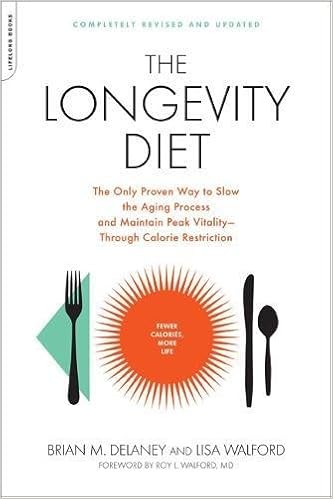
"The Longevity Diet: The Only Proven Way to Slow the Aging Process and Maintain Peak Vitality Through Caloric Restriction." By Brian M. Delaney, and Lisa Walford, 2010.  


Prevent and Reverse Heart Disease: The Revolutionary, Scientifically Proven, Nutrition Based Cure.  By Caldwell B. Esselstyn, M.D., 2008.  


Monday, January 15, 2018

Chen Style Taijiquan 18 Form


Chen Style of Tai Chi Chuan, 18 Movements Form

Developed by Grandmaster Chen Zhenglei

Chen Style Taijiquan 18 Form

A Hypertext Notebook by Michael P. Garofalo, M.S.  

Bibliography, Links, Resources, Research, Notes, Quotations, Key Ideas, List of Movements, Instructions, Videos, History, Principles


Sunday, January 14, 2018

January Gardening Chores

I now live in in Vancouver, Washington, USDA Zone 8b.  The best listings of garden chores I have read for Vancouver are the following:

Tsugawa Nursery, Woodland, Washington - Garden Tips for January

January Gardening To Do List

Vancouver, Washington, Zip Code: 98662.  Zone 8b, 15F-20F Low, Average First Frost October 21-31.  Average Last Frost: April 1-10.  Ecoregion 3a: Columbia/Vancouver Basin.  Palmer Drought Index: Extremely Moist.  


From 1998-2016 we lived in Red Bluff, California
From 1946-1998, I lived in East Los Angeles, California


January Gardening Chores
Red Bluff, North Sacramento Valley, California, USA
USDA Zone 9 


Typical (Average/Normal) Seasonal Weather for Our Area Normally, in January, we have high daytime temperatures of 54ºF, low nighttime temperatures of 37ºF, and get 4.2 inches of rain.

Red Bluff Gardening Notebooks of Karen and Mike Garofalo

January - Quotations, Poems, Lore   Compiled by Mike Garofalo.  


January Gardening Activities and Chores in Red Bluff 
USDA Zone 9

Pruning leafless trees and shrubs.
Adding compost, ashes and fertilizer to the vegetable and flower gardens.
Taking cuttings from dormant figs, grapes, and other shrubs.
Spraying dormant fruit and other trees.
Weeding and mowing where needed.
Burning piles of gardening cuttings.
Planting bare root trees and shrubs.
Fixing wood and metal fences.
Placing cold sensitive potted plants in protected areas outdoors or indoors.
Sharpening and oiling garden tools.
Protect tender plants from frosts.
Checking for and repairing any leaks in sheds.
The soil is usually too wet and cold for much garden digging.
Indoor activities: sorting seeds, planning, reading, writing, etc.
Caring for indoor plants.
Weeding the winter garden.
Watering potted plants as needed.
Adding Ironite and other soil supplements.
Fertilizing under trees and shrubs.
Keeping tools and equipment out of the rain and moisture.
Browsing seed and garden catalogs.
Reading gardening, botany, and agricultural books.
Planning garden improvements for the new year.
Fixing any leaking roofs or rain gutters.
Keep a journal.  Write a poem.
Take a slow walk in the garden.  


January Gardening Chores and Tips for Other U.S.A. Zones

Oak Hill January Tips - Georgia

Saturday, January 13, 2018

Books about Taoism by Ray Grigg


The Tao of Being.  By Ray Grigg.  Green Dragon Publishing Group, 1988.  204 pages.  ISBN: 978-0893341152. 

The Sage's Way: Teachings and Commentaries.  By Ray Grigg.  Trafford Pub., 2004.  172 pages.  ISBN: 978-1412021685.

The Tao of Zen.  By Ray Grigg.  Boston, Charles E. Tuttle, Inc., 1994.  Book Sales, 1999.  Notes, 357 pages.  ISBN: 0785811257.  VSCL. 

The New Lao Tzu: A Contemporary Tao Te Ching.  By Ray Grigg.  Tuttle, 1995.  187 pages.  ISBN: 978-0804830348. 

Taoism: A Bibliography  By Mike Garofalo.  


"Ray Grigg is the author of six internationally sold books on Taoism and Zen, The Tao of Relationships, The Tao of Being, The Tao of Sailing, Zen Brushpoems, The Tao of Zen, The New Lao Tzu and has been a serious student of Eastern Philosophy for more than 45 years.

Prior to writing professionally since 1985, he was a teacher in senior secondary schools of British Columbia, teaching principally English and English literary history but also designing and teaching courses in fine arts, cultural history and comparative world religions.

Besides writing books, he contributes a weekly environmental column, Shades of Green, to a Vancouver Island newspaper and also interviews for a local TV channel. He is a former director on the Advisory Council for The Centre For Studies in Religion and Society at the University of Victoria in British Columbia. He continues to give occasional presentations and workshops on Taoism and Zen. His latest interest, following travel, photography, Eastern philosophy, design and sailing, is kayaking.

He lives with his wife, a classical musician, in a self-built home on ten acres of forested land on Quadra Island, British Columbia, Canada. A large organic garden and orchard supply much of their food needs. Their pets are the wild birds and animals that share their property."

-  The Sage's Way


Thursday, January 11, 2018

Chen Style Taijiquan 19 Form


Chen Style of Tai Chi Chuan

Grandmaster Chen Xiaowang

Chen Style Taijiquan 19 Form

A Hypertext Notebook by Michael P. Garofalo, M.S.  

Bibliography, Links, Resources, Research, Notes, Quotations, Key Ideas, List of Movements, Instructions, Videos, History, Principles


Tuesday, January 09, 2018

Columbia Plateau, State of Washington, USA


"The Columbia Plateau is a geologic and geographic region that lies across parts of the U.S. states of Washington, Oregon, and Idaho. It is a wide flood basalt plateau between the Cascade Range and the Rocky Mountains, cut through by the Columbia River. In one of various usages, the term "Columbia Basin" refers to more or less the same area as the Columbia Plateau."
- Wikipedia, Columbia Plateau


Also:


Columbia Plateau, Washington


Columbia Plateau Photographs


Monday, January 08, 2018

Home Projects in January

"Soon will set in the fitful weather, with fierce gales and sullen skies and frosty air, and it will be time to tuck up safely my roses and lillies and the rest for their winter sleep beneath the snow, where I never forget them, but ever dream of their wakening in happy summers yet to be."
- Celia Thaxter

January Gardening

I pruned six roses. I dug up each rose and transplanted the roots into a new large pot. I moved six pots of roses to the nursery area in the back yard. 


I excavated and layed pavers by the front door. 

We had moved some large potted plants indoors: a lemon citrus, an avocado, a succulent, a fuchsia, etc.

I reworked the sides of the large covered patio on the east side of our house. I closed the entire fence line on the east side from the front gate to the back yard gate. Then I hung brown plastic sheets to enclose three sides and provide some additional rain protection. Two 75 watt utility lights were hung to provide worksite illumination. All sides included four level plastic storage racks to maximize storage in this covered and enclosed storage and work area outside the garage.


I started putting the the 4"x4"x8' treated posts into concrete in the ground.   


Taiji Fan

There are many T'ai Chi Ch'uan exercise forms which make use of a fan.   Most are shorter forms, under 25 movements, but some, like the famous Tai Chi Kung Fu Fan Form have over 50 movements.  Most are done slowly and softly, but some include vigorous and fast movements.  The majority favor the Yang Style of Tai Chi Chuan.  


Tai Chi Fan: Bibliography, Links, Resources, Notes, Lore, Quotations. Research by Mike Garofalo.  I welcome any comments, suggestions, additions, or ideas regarding this webpage.


One of the most popular Tai Chi Fan forms was created by Professor Li Deyin (1938-).  It has 52 movements.  I includes slow and gentle movements in the first half of the form, then the second half is much more vigorous.  This Tai Chi Fan form is for athletic and intermediate Tai Chi students. 


Here are some instructional resources for learning the Tai Chi Kung Fu Fan Form.   


Tai Chi Kung Fu Fan. Routine 1, created by Grandmaster Li Deyin (1938-). Instructional DVD, 65 minutes, by Master Jesse Tsao. Tai Chi Healthways, San Diego, California. "The most popular Tai Chi Fan form ever practiced in China. The routine was created by Grandmaster Li Deyin, Jesse Tsao's teacher since 1978. There are 52 movements in the whole routine based on the characteristic Tai Chi posture with the fan's artistic and martial functions. Master Tsao presents demonstrations at the beginning and end. He teaches step-by-step in slow motion, in English. There are plenty of repetitions of movements in both front and back view. It is a good reference for home study, or a resource for instructor's teaching preparation." Cost: 35.00 US. Demonstration.

Tai Chi Kung Fu Fan Instructional DVD by Professor Li Deyin. Narration in English. "A fan routine, created by Professor Li, which combines the gracefulness, centrality and continuity of Taiji with the power, speed and fierceness of Wushu. It is designed as an addition to the exercises for health, and has received massive interest and support throughout the world. In this DVD, Professor Li provides in-depth teaching with Mrs. Fang Mishou performing detail demonstration." Vendor 1. Cost: $35.00 US. 


Tai Chi Kung Fu Fan, Form 1. List of 52 movement names, directions, instructions, and notes by Mike Garofalo.


Sunday, December 31, 2017

With Slow Movements ...


"The movements of Qigong exercise should be slow instead of fast because slow movements will nourish qi and combine the posture with qi. The training practice of Qigong should start with Wuji with slow movement until the closing of the training.  Every movement and step must be done slowly, opening and spreading of the body be slow, closing and sinking of the body be slow, and rising and falling of the body be slow.  With slow movements, one can keep thinking whether the upper, lower, left and right of the body are followed, and whether the interior and exterior are coordinated.  With the slow and gentle movements and posture, the internal qi is conducted to flow slowly in the body to integrate mindwill with qi, vitality with posture, and enter the realm of forgetting the substance and me."
-  Master Wang Fengming, Special Taoist Taji Stick and Ruler Qigong, p. 115. 


Hun Yuan Stick and Ruler Qigong

Hun Yuan Qigong, Primordial Qigong, Mixed Circles Qigong

Valley Spirit Qigong

Vancouver Tai Chi and Chi Kung Studio, Vancouver, Washington State


I was given a number of books by family and friends this holiday season, and for my 72nd birthday. I thank them for their generosity. 

A 5 DVD set of instructional DVDs from Brett Wagland and Fontane Ip from Canberra, Australia.  They teach Hunyuan Taijiquan and Qigong.  A $125 investment in coaching in Hunyuan:

Yang Tai Chi for Beginners. By Dr. Yang, Jwing-Ming. Instructional DVD, 293 minutes. YMAA, 2012. VSCL.

Tai Chi Chuan Martial Power: Advanced Yang Style. By Dr. Wang, Jwing Ming. Foreword by Tsung-Hwa Jou. Wolfeboro, New Hampshire, YMAA Publication Center, 3rd Edition, 1986, 1996, 2015. Index, glossary, bibliography, 274 pages. ISBN: 978-1594392948. VSCL.


Tai Ji Quan: 105 Posture Yang Style Solo Form - Instructions and Applications. Chen Kung Series, From the Private Family Records of Master Yang Luchan, Volume Three. Translation and commentary by Master Stuart Alve Olson. Phoenix, Arizona, Valley Spirit Arts, 2017. Bibliography, appendices, 234 pages. ISBN: 978-1548105372. VSCL. "The long-awaited third volume in the Chen Kung Series presents the detailed instructions on the original Yang Style 105-Posture Taijiquan form, along with explanations of the practical self-defense applications, commentaries by Chen Kung, translations of the illustrations in the text, and notes by Stuart Alve Olson. A truly remarkable, insightful work that complements anyone’s library on the art of Taijiquan." "Born in 1906, Master Chen Kung (a.k.a., Yearning K. Chen and Chen Yen-lin) passed away in Shanghai, Chiina, in 1980. Master Chen Kung copied the Yang Family manuscripts in 1930."


Northwest Tai Chi and Qigong Studio, Vancouver, Washington


Northwest Taijiquan and Qigong
The Vancouver Tai Chi Chuan and Qigong Studio
Sifu Brian Knack
Assistant Instructors: Bill, Sandy, Joel

Vancouver Health and Wellness Building

202 E. Mcloughlin Blvd., Vancouver, Washington, 98663
360-607-8240
Also, on Facebook
The information on the Northwest Taijiquan website has not been updated.

Class Schedule:
Tuesday Morning 9-11 am
Tuesday Evening 5:30 - 7:30 pm
Thursday Morning 9-11 am  (Class Cancelled Jan-Mar 2018)
Saturday Morning 10-12 am

I plan to attend these classes in 2018.  


The facility is clean and attractive, and located in downtown Vancouver, near Main Street and Mcloughlin Blvd.  An excellent peaceful atmosphere with many very accomplished and knowledgeable students.  Good mature attitudes all around, and peaceful, polite, and friendly people.  


Here are the kinds of Taijiquan and Qigong we have been learning and practicing at the Vancouver Studio (Dojo/Training Center) with Sifu Knack, and the assistant Instructors Sandy, Bill, Joel, and Camille along with four to eight other other students.  I also use DVDs by Sifu Knack for home study.  Curriculum:  

Yang Style Taijiquan 24 Form
Yang Style Taijiquan 108 Long Form

Hunyuan Chen Taijiquan 24 Form
Eight Gates Warmup Yang Taijiquan

Push Hands
Da Lu

Hunyuan Qigiong, Primordial Qigong, Mixed Circles Qigong

Kuan Yin Sitting Qigong
Bagua Qigong: Liang Shen Pu
Eight Immortals Flute Form
Hun Yuan Taiji Stick and Qigong Ruler.  


32 Sword Form
Chen Broadsword Form


About Sifu Bryan Knack Ph.D./Ma.Sc.D.


"Bryan Knack was inducted to the U.S.A. Martial Arts Hall of Fame as "Chinese Martial Arts Master of the Year" and "International Sifu of the Year."

"Sifu Bryan Knack began studying martial arts in the mid-70's, begining with the external martial arts of Goju-ryu (Okinawan karate) and Siu Lum Kung Fu in the 1980's. Then he turned his studies to Tai Chi and Qi Gong and had a training center in Portland, Oregon.
He returned to his hometown of Spokane to open his own studio, Northwest Tai Chi for Health in 2000. Sifu Knack returned to the Vancouver/Portland area in 2011 to be close to his family."


"Tai Chi is fun!  The Vancouver Tai Chi and Qigong Studio offers an affordable program for multiple section classes for a monthly charge, or for a small fee for each class you attend."


Come and Join Us in Practicing and Learning Taijiquan and Qigong.  


Friday, December 29, 2017

Hunyuan Taijiquan and Qigong

"Hun Yuan Qigong is often translated as meaning ‘Primordial’ or ‘Congenital Qigong’ which is an appropriate name but it really deserves further exploration.  ‘Hun’ by its nature refers to something that is mixed, something that is still a composite and hasn’t been divided into various parts as in Hun Dun which is often translated as original chaos.  ‘Yuan’ literally means rotations or circles. So the name of this Qigong set is actually Mixed Circles or Mixed Rotations Qigong. Why is this and what does this have to do with primordial?  A state of undifferentiated rotating energy is the original state of the cosmos according to esoteric Daoism. This was the state before Yin and Yang divided. It is the potential for something but nothing manifest. The ultimate state of Wuji is supposed to be formed of various mixed circles – Wuji is Hun Yuan.  Out of these mixed circles come Taiji which is the catalyst for Creation so Hun Yuan literally implies trying to take yourself, your Mind, your Energy Body to a state before Yin and Yang divided when there is still just rotational potential for something – which is why often they’ll shorten all of that and say Primordial Qigong for example.  Most people will know Hun Yuan Qigong through a gentleman who died recently named Feng Zhi Qiang who was the founder of Hun Yuan Taiji, a variant of Chen style boxing. Feng also taught Hun Yuan Qigong which, prior to being part of a Taijiquan system, had alchemical Daoist origins."
-  Damo Mitchell, Hun Yuan in Qigong

"Qigong is the root of Tai Chi. Tai Chi is the flower of Qigong."
- Grandmaster Feng Zhi Qiang


Hun Yuan Taijiquan 24 Form

Chen Tai Chi Chuan

Hun Yuan Qigong


HunYuan Qigong: Tracing Life to its Root, by Kenneth S. Cohen, 2007

Valley Spirit Qigong

Hun Yuan Tai Chi 24 Form. Instructional DVD, NTSC, 74 minutes. Featuring Brett Wagland and Fontane Ip. From the Tai Chi Academy. VSCL.


Tuesday, December 26, 2017

Vancouver Tai Chi Chuan Studio


Northwest Taijiquan and Qigong
The Vancouver Tai Chi Chuan and Qigong Studio
Sifu Brian Knack

Assistant Instructors: Bill, Sandy, Joel

Vancouver Health and Wellness Building

202 E. Mcloughlin Blvd., Vancouver, Washington, 98663
360-607-8240
Also, on Facebook
The information on the Northwest Taijiquan website has not been updated.

Class Schedule:
Tuesday Morning 9-11 am
Tuesday Evening 5:30 - 7:30 pm
Thursday Morning 9-11 am  (Class Cancelled Jan-Mar 2018)
Saturday Morning 10-12 am

I plan to attend these classes in 2018.  


The facility is clean and attractive, and located in downtown Vancouver, near Main Street and Mcloughlin Blvd.  An excellent peaceful atmosphere with many very accomplished and knowledgeable students.  Good mature attitudes all around, and peaceful and friendly people.  


Here are the kinds of Taijiquan and Qigong we have been practicing at the Vancouver Studio with Sifu Knack, and the advanced students and assistant Instructors Sandy, Bill, Joel, Camille and with four to eight other other students. I also use DVDs by Sifu Knack for home study.  Curriculum: 

Yang Style Taijiquan 24 Form
Yang Style Taijiquan 108 Long Form

Hunyuan Chen Taijiquan 24 Form
Eight Gates Warmup Yang Taijiquan

Push Hands
Da Lu

Hun Yuan Qigiong

Kuan Yin Sitting Qigong
Bagua Qigong: Liang Shen Pu
Eight Immortals Flute Stick Form
Hun Yuan Taiji Stick and Qigong Ruler


32 Sword Form
Chen Broadsword Form


About Sifu Bryan Knack Ph.D./Ma.Sc.D.


"Bryan Knack was inducted to the U.S.A. Martial Arts Hall of Fame as "Chinese Martial Arts Master of the Year" and "International Sifu of the Year."

Sifu Bryan Knack began studying martial arts in the mid-70's, begining with the external martial arts of Goju-ryu (Okinawan karate) and Siu Lum Kung Fu in the 1980's. Then he turned his studies to Tai Chi and Qi Gong and had a training center in Portland, Oregon.
He returned to his hometown of Spokane to open his own studio, Northwest Tai Chi for Health in 2000. Sifu Knack returned to the Vancouver/Portland area in 2011 to be close to his family."


"Tai Chi is fun!  The Vancouver Tai Chi and Qigong Studeio offers an affordable program for multiple section classes for a monthly charge, or for a small fee for each class you attend."

Come and Join us in Practicing and Learning Taijiquan and Qigong. 


Sunday, December 24, 2017

Light Snow Falling


Taijiquan Thirteen Postures

"Tai Chi Chuan is based on this theory, and therefore it is smooth, continuous, and round. When it is necessary to be soft, the art is soft, and when it is necessary to be hard, the art can be hard enough to defeat any opponent.  Yin-Yang theory also determines Tai Chi fighting strategy and has led to thirteen concepts [Jings] which guide practice and fighting.  Thus, Tai Chi Chuan is also called "Thirteen Postures."  

"Chang San-Feng Tai Chi Chuan treatise states "What are the thirteen postures?  Peng (Wardoff), Lu (Rollback), Ghi (Press), An (Push), Chai (Pluck), Lie (Split), Zou (Elbow-Stroke), Kau (Shoulder-Stroke), these are the Eight Trigrams.  Jinn Bu (Forward), Twe Bu (Backward), Dsao Gu (Beware of the Left), Yu Pan (Look to the Right), Dsung Dien (Central EQuilibrium), these are the Five Elements.  Wardoff, Rollback, Press, and Push are Chyan (Heaven), Kuen (Earth), Kann (Water), and Lii (Fire) are the four main sides.  Pluck, Split, Elbow-Stroke, and Shoulder-Stroke are Shiunn (Wind), Jenn (Thunder), Duey (Lake), and Genn (Mountain), the four diagonal corners.  Forward, Backward, Beware of the Left, Look to the Right and Central Equilibrium are Gin (Metal), Moo (Wood), Sui (Water), For (Fire), and Tu (Earth).  All together they are thirteen postures."

"The eight postures are the eight basic fighting moves of the art, and can be assigned directions according to where the opponents force is moved.  Wardoff rebounds the opponent back in the direction from which he came from.  Rollback leads him further that he intended to go in the direction he was attacking.  Split and Shoulder-Stroke lead him forward and deflect him slightly sideward.  Pluck and Elbow-Stroke can be done so as to catch the opponent just as he is starting forward, and strike or unbalance him diagonally to his rear.  Push and Press deflect the opponent and attack at right angles to his motion.  The five directions refer to stance, footwork, and fighting strategy.  They concern the way one moves around in response to the opponent's attack, and how one sets up one's own attacks."

-  Dr. Yang Jwing-Ming.  Advanced Yang Style Tai Chi Chuan.  Volume One: Tai Chi Theory and Tai Chi Jing.  By Dr. Yang, Jwing-Ming.  Boston, Massachusetts, Yang's Martial Arts Academy, YMAA, 1986.  Glossary, 276 pages.  ISBN: Unknown.  This book includes a detailed explanation of the concepts of Jing, Yi, and Chi; and an outstanding discussion of the Jings (pp. 68-210) of Tai Chi Chuan.  VSCL.  Quotes from p. 9, and p. 253 (Appendix 13). 


Tai Chi Chuan Martial Power: Advanced Yang Style. By Dr. Wang, Jwing Ming. Foreword by Tsung-Hwa Jou. Wolfeboro, New Hampshire, YMAA Publication Center, 3rd Edition, 1986, 1996, 2015. Index, glossary, bibliography, 274 pages. ISBN: 978-1594392948. VSCL.


Taijiquan Jings Eight Trigrams and Five Elements
Wardoff   (Peng)  Heaven   (Chyan)  
Rollback   (Lu) Earth   (Kuen)
Press   (Ghi) Water   (Kann)
Push   (An)  Fire   (Lii)
Pluck   (Chai)  Wind   (Shiunn)
Split   (Lie)  Thunder  (Jenn)
Elbow-Stroke   (Zou)  Lake   (Duey)
Shoulder-Stroke   (Kau)  Mountain (Genn) 
Forward   (Jinn Bu)  Metal   (Gin) 
Backward  (Twe Bu)  Wood   (Moo) 
Left   (Sou Gu)  Water   (Sui) 
Right   (Yu Pan)  Fire   (For) 
Center (Sung Dien)  Earth   (Tu)