Daodejing, Laozi
Chapter 17
"Those of preeminent wisdom and purity
knew this Tao intuitively from their birth,
and so possessed it.
Those of the second rank—the men of virtue—approached it nearly,
and eulogised it.
Those of the third rank—who were still
above the commonalty—stood in awe of it.
Those of the lowest rank held it in light esteem.
Their belief in it was superficial, or imperfect;
while there were even some who did not believe in it at all.
The first spoke only with forethought and calculation,
as though honouring their words.
When their public labours were achieved,
and affairs progressed unimpeded, the people all said,
"This is our natural and spontaneous condition.""
- Translated by Frederic Henry Balfour, 1884, Chapter 17
"A leader is best
When people barely know that he exists,
Not so good when people obey and acclaim him,
Worst when they despise him.
'Fail to honor people,
They fail to honor you;'
But of a good leader, who talks little,
When his work is done, his aim fulfilled,
They will all say, 'We did this ourselves.'"
- Translated by Witter Bynner, 1944, Chapter 17
"In the highest antiquity people scarce knew
That rulers existed among them; In the next age attachment and praise for them grew, In the next people feared they might wrong them; And then in the next age the people despised The rulers whom fate set above them, For when faith by the rulers no longer is prized, The people no longer can love them. Those earliest rulers! what caution they had In weighing the words they were using; How successful their deeds! while the people all said We are what we are by our choosing."
- Translated by Isaac Winter Heysinger, 1903, Chapter 17
"With the highest rulers -
Those below simply know they exist.
With those one step down -
They love and praise them.
With those one further step down -
They fear them.
And with those at the bottom -
They ridicule and insult them.
Who does not trust enough
will not be trusted.
Hesitant and undecided!
Like this is his respect for speaking.
He completes his tasks and finishes his affairs
Yet the common people say,
"These things all happened by nature."
- Translated by Bram den Hond, Chapter 17
太上下知有之.
其次親而譽之.
其次畏之.
其次侮之.
信不足焉有不信焉.
悠兮其貴言.
功成事遂百姓皆謂我自然. - Chinese characters, Tao Te Ching, Chapter 17
t'ai shang hsia chih yu chih.
ch'i tz'u ch'in erh yü chih.
chi tz'u wei chih.
ck'i tz'u wu chih.
hsin pu tsu yen yu pu hsin yen.
yu hsi ch'i kuei yen.
kung ch'êng shih sui pai hsing chieh wei wo tzu jan.
- Wade-Giles Romanization, Tao Te Ching, Chapter 17
"Of great rulers the subjects do not notice the existence.
To lesser ones people are attached; they praise them.
Still lesser ones people fear, and the meanest ones people despise.
For it is said: 'If your faith be insufficient, verily, you will receive no faith.'
How reluctantly the great rulers considered their words!
Merit they accomplished; deeds they performed; and the hundred families thought: 'We are independent.' "
- Translated by D. T. Suzuki and Paul Carus, 1913, Chapter 17
"Of the best ruler,
The people only know he exists.
Next comes one the love and praise.
Next comes one they fear.
Next comes one they abhor.
When you are lacking in trust,
Others have no trust in you.
Of the work of one who is short with his words,
The hundred families say,
We have done it ourselves!"
- Translated by Herrymoon Maurer, 1985, Chapter 17
"Acerca de los antiguos todo lo que se sabe es que existían.
Los sucesores fueron amados y alabados, y los siguientes fueron temidos.
Los que vinieron después aborrecidos.
Sí no te tienes plena confianza, otros te serán infieles.
Entonces las palabras rituales estaban medidas.
El mérito de las obras tenía plenitud.
Todo el mundo decía:
"Estamos en armonía con nosotros mismos"."
- Translation from Logia Medio Dia, 2015, Capítulo 17
"In ancient times
The people knew that they had rulers.
Then they loved and praised them,
Then they feared them,
Then they despised them.
The rulers did not trust the people,
The people did not trust the rulers.
The rulers were grave, their words were precious.
The people having finished their work,
and brought it to a successful issue, said:
"We affirm the Self.""
- Translated by Isabella Mears, 1916, Chapter 17
A typical webpage created by Mike Garofalo for each one of the 81 Chapters (Verses, Sections) of the Tao Te Ching (Daodejing) by Lao Tzu (Laozi) includes over 25 different English language translations or interpolations for that Chapter, 5 Spanish language translations for that Chapter, the Chinese characters for that Chapter, the Wade-Giles and Hanyu Pinyin transliterations (Romanization) of the Mandarin Chinese words for that Chapter, and 2 German and 1 French translation of that Chapter. Each webpage for each one of the 81 Chapters of the Tao Te Ching includes extensive indexing by key words, phrases, and terms for that Chapter in English, Spanish, and the Wade-Giles Romanization. Each webpage on a Chapter of the Daodejing includes recommended reading in books and websites, a detailed bibliography, some commentary, research leads, translation sources, and other resources for that Chapter. Each webpage includes a Google Translate drop down menu at the top that enables you to read the webpage in over 100 languages.
Chapter 17, Tao Te Ching by Lao Tzu
Chapter Indexing for the Tao Te Ching
English Language Daodejing Translators' Source Index
Spanish Language Daodejing Translators' Source Index
Ripening Peaches: Taoist Studies and Practices
Taoism: A Selected Reading List
Concordance to the Tao Te Ching (2018 Project)
One Old Daoist Druid's Final Journey
Friday, February 23, 2018


Monday, February 19, 2018
New Winter Experiences
I lived in the East Los Angeles metropolitan area from 1946-1998, and in Red Bluff, California, from 1998-2017. We rarely saw snow fall and it melted quickly in these areas. We always had to drive up into the mountains, e.g., the San Gabriel or San Gorgonio Mountains in the LA area, or Mt. Lassen or Mt. Shasta in Red Bluff if we wanted to play in and enjoy the snow.
Here in Vancouver, Washington, where we live now, snowing is a more common occurrence. I think that last year Vancouver had about 8 - 10 inches of snow. The nearby foothills and mountains (Mt. St. Helens, Mt. Adams, Mt. Ranier, and Mt. Hood of the Cascades) have lots of snow.
Last night, about three inches fell as temperatures dropped and the cold front rolled into the Northeast Pacific Coast region.
We live about 500 miles north of Red Bluff, and 300 miles south from Vancouver, Canada.


Taijiquan 24 Form
"At this period of wushu, the Nanking
Central Kuoshu Institute in 1956 tasked the choreography of a Taijiquan routine
what would be more suitable for popular dissemination among the masses, in
keeping with the government's egalitarian agenda. The traditional forms
were just too long and time consuming to practice, and the traditional methods
too arcane and demanding for mass propagation. The challenge was to reduce
the one hundred-odd movements of the traditional Yang Style Taijiquan, prevalent
then, to its core, by removing the many repetitive movements as well as the less
essential ones. Thus, the 24-Form Taijiquan set was created.
Instrumental in this simplification effort was Li Tianji (1913-1996) who had
been appointed a wushu research fellow at the Institute. Under official
auspices, the 24-Form Taijiquan quickly became the standard form, taught
throughout China as part of physical education curriculum in schools and
colleges. It is perhaps the best know Taijiquan form in the world today.
As widespread as it is, the 24-Form is at best an abridged version of the
traditional Yang form, a synopsis of the art."
- C. P. Ong, Taijiquan: Cultivating Inner Strength ,
2013, p. 7.
,
2013, p. 7.
I practice this Taijiquan form twice every day. It takes from 5 to 7 minutes to perform.
You can do this indoors by adjusting to the space available, or outdoors. When done slowly and gently you don't need to do any warmup exercises unless your knees are problematic. A lovely Taijiquan form! Good for persons of all ages. This form is a cornerstone of my personal T'ai Chi Ch'uan practices.
The best book that I have seen on the subject is:
The Yang Taiji 24 Step Short Form: A Step by Step Guide for All Levels
By James Drewe
London, Singing Dragon Press, 2011.
382 pages, black and white photographs, charts, detailed descriptions, training tips.
I give information on many other fine books by other good authors on the 24 Form in my webpage: Cheng Zhao, Foen Tjoeng Lie, Eric Chaline, Le Deyin, etc..
My students tell me that their favorite instructional DVD on the 24 Form is:
Tai Chi - The 24 Forms
By Dr. Paul Lam
I have taught this lovely Tai Chi form to hundreds of people since 2000. Everyone tells me how much they enjoy learning and practicing this gentle form.
- C. P. Ong, Taijiquan: Cultivating Inner Strength
,
2013, p. 7. I practice this Taijiquan form twice every day. It takes from 5 to 7 minutes to perform.
You can do this indoors by adjusting to the space available, or outdoors. When done slowly and gently you don't need to do any warmup exercises unless your knees are problematic. A lovely Taijiquan form! Good for persons of all ages. This form is a cornerstone of my personal T'ai Chi Ch'uan practices.
The first Taijiquan form I learned in 1986 was the Standard 24
Movement T'ai Chi Ch'uan Form in the Yang Style of T'ai Chi Ch'uan.
At that time there were no books or instructional videotapes on this
popular form. Since that time, nearly 31 years have past. Now there
are dozens of books and instructional DVDs and webpages on the subject
of the 24 Form.
My webpage on the Standard 24 Taijiquan Form has been the most popular webpage on the Cloud Hands Website for many years. In the sidebar of this blog, you will find a quick index to this webpage.
Standard Simplified Taijiquan 24 Form.
Research by Michael P. Garofalo, M.S. This webpage includes a
detailed bibliography of books, media, links, online videos, articles,
and resources. It provides a list of the 24 movement names in
English, Chinese, French, German and Spanish, with citations for
sources of the movement names. It provides detailed descriptions of
each movement with black and white line illustrations and
photographs. It includes relevant quotations, notes, performance
times, section breakdowns, basic Tai Chi principles, and strategies
for learning the form. The Peking (Bejing) Chinese National orthodox
standard simplified 24 movement T'ai Chi Ch'uan form, created in 1956,
is the most popular form practiced all around the world. This form
uses the Yang Style of Taijiquan. Published by Green Way Research, Valley Spirit Taijiquan, Red Bluff, California: Webpage URL: http://www.egreenway.com/taichichuan/short.htm.
This
webpage provides many good suggestions for a person learning this form
on their own if there is no Tai Chi class in their area.
The best book that I have seen on the subject is:
The Yang Taiji 24 Step Short Form: A Step by Step Guide for All Levels
By James Drewe
London, Singing Dragon Press, 2011.
382 pages, black and white photographs, charts, detailed descriptions, training tips.
I give information on many other fine books by other good authors on the 24 Form in my webpage: Cheng Zhao, Foen Tjoeng Lie, Eric Chaline, Le Deyin, etc..
My students tell me that their favorite instructional DVD on the 24 Form is:
Tai Chi - The 24 Forms
By Dr. Paul Lam
I have taught this lovely Tai Chi form to hundreds of people since 2000. Everyone tells me how much they enjoy learning and practicing this gentle form.
Thursday, February 15, 2018


Tuesday, February 13, 2018
Ongoing Home Improvements

Our garage in July of 2017.

Our garage in February of 2018.
Vertical shelving installed, everything organized into plastic storage bins and fully inventoried on a spreadsheet, new washer and dryer installed, workbench area set up on west side of garage, room on east side to park a car where I am standing or use the same cleared space for an exercise area.
Moving keeps you quite busy.
Having fun may be habit forming.

Our fireplace corner in June of 2017.
Moving keeps you quite busy.
Having fun may be habit forming.

Our fireplace corner in June of 2017.
Tuesday, January 30, 2018
Seasonal Qigong
"In Spring, breathe xu for clear eyes and so wood can aid you liver.
In summer, reach for he, so that heart and fire can be at peace.
In fall, breathe si to stabilize and gather metal, keeping the lungs moist.
For the kidneys, next, breathe chui and see you inner water calm.
the Triple Heater needs your xi to expel all heat and troubles.
In all four seasons take long breaths, so spleen can process food.
And, of course, avoid exhaling noisily, not letting even your ears hear it.
The practice is most excellent and will help preserve your divine elixir."
- Master Sun Simiao (581-682 CE)
From Xiuzhen shishu (Ten Books on Cultivating Perfection), Song Dynasty
Translated by Livia Kohn, Chinese Healing Exercises, p. 135
Six Taoist Healing Sounds
Bear Frolic Exercises
Seasons and Months
Qigong, Daoyin, Nei Gong, Yangshengong, Chinese Yoga, Chi Kung

Monday, January 29, 2018
Memories of the Tea House

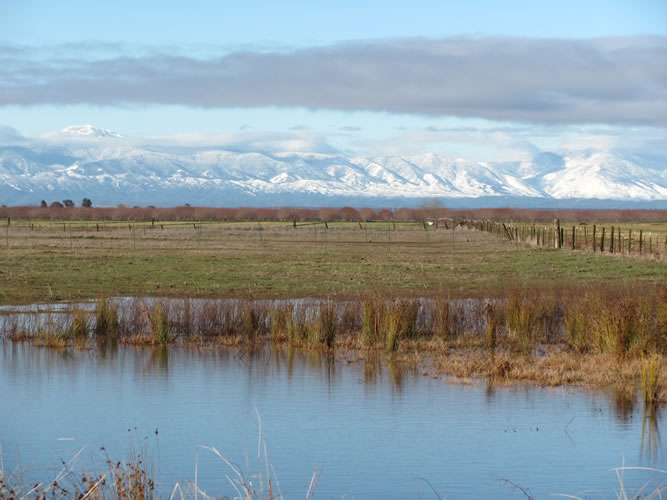
Our "tea house," at our home in Red Bluff, California, is hidden by weeping willows, eucalyptus and other trees and shrubs. The tea house is next to a small pond and gives a clear view to the west across the North Sacramento Valley to the Yolly Bolly Mountain range. These photos are from a Spring month.
I in the cooler months I drink more coffee than tea, and in the warmer months more cold water and iced tea.

"The first bowl sleekly moistened throat and lips,
The second banished all my loneliness
The third expelled the dullness from my mind,
Sharpening inspiration gained
from all the books I've read.
The fourth brought forth light perspiration,
Dispersing a lifetime's troubles through my pores."
- Lu Tung, Chinese Poet, On Drinking Tea
It is a nice quiet area to read, listen to music, write, and practice taijiquan. The shade is invaluable in the warm months.
Here is what the view to the west looks like in the winter. Just west of our fenceline is a low area were winter rain collects, then open grazing fields used by horses or cattle. About .3 miles west from our fence is a large almond orchard. Snow on the far western Yolly Bolly mountain range was down to about 2,000 feet on this day in January - a rare event.
Saturday, January 27, 2018
Corning Union Elementary School District Employment
I was employed part-time for the Corning Union Elementary School District from 1999 until July of 2016; 17 years.
I worked during the academic school year (August to June) for 119 days each year; normally, 3 days for 8 hours per day each week (Tuesday, Wednesday, Thursday). My schedule was flexible, and I earned overtime on many occasions. I had unpaid vacation for a week around Thanksgiving, two weeks for Christmas, one week in February, one week at Easter, and most of the summer from June 2 to August 15.
From 1999-2005, I was employed in a certificated position as the District Librarian. I managed five elementary school libraries, textbooks, and computer labs. I took two elementary education credential classes per semester at California State University at Chico during this period, so as to keep the certificated position.
From 2006-1916, I was employed in a classified management position as the Technology and Media Services Supervisor. I managed five school libraries, computer labs, and textbooks and consumables for 2,300 students in grades K-8. I also wrote many grants, and did the budget management for grants totaling $4.2 million to this district. I was also a certified substitute teacher during this period. We opened four new libraries in this district during my tenure there. My office was at the Maywood Middle School Library.

Technology, Media, and Libraries Services Group
Donna, Maria, Christina, Jeanie, Jackie, and Mike in 2014
 Many classes visited our five school libraries each week
 Karen and a Special Education Class of students
 Children Everywhere All the Time

We managed over a dozen computer labs in five schools

Our service group had many behind the scenes storage areas

Working on textbooks for 2,300 students


Talking with and Helping Students

Working on the East Lab Grant with Mr. Dillon

I worked during the academic school year (August to June) for 119 days each year; normally, 3 days for 8 hours per day each week (Tuesday, Wednesday, Thursday). My schedule was flexible, and I earned overtime on many occasions. I had unpaid vacation for a week around Thanksgiving, two weeks for Christmas, one week in February, one week at Easter, and most of the summer from June 2 to August 15.
From 1999-2005, I was employed in a certificated position as the District Librarian. I managed five elementary school libraries, textbooks, and computer labs. I took two elementary education credential classes per semester at California State University at Chico during this period, so as to keep the certificated position.
From 2006-1916, I was employed in a classified management position as the Technology and Media Services Supervisor. I managed five school libraries, computer labs, and textbooks and consumables for 2,300 students in grades K-8. I also wrote many grants, and did the budget management for grants totaling $4.2 million to this district. I was also a certified substitute teacher during this period. We opened four new libraries in this district during my tenure there. My office was at the Maywood Middle School Library.

Technology, Media, and Libraries Services Group
Donna, Maria, Christina, Jeanie, Jackie, and Mike in 2014


We managed over a dozen computer labs in five schools

Our service group had many behind the scenes storage areas

Working on textbooks for 2,300 students

Student Library Volunteers

Talking with and Helping Students

Working on the East Lab Grant with Mr. Dillon

Working with great teachers like Marna Whitley
Thursday, January 25, 2018
There's so much to be done
To experience the Five Animal Frolics we need to keep in mind the "Frolics" aspect of this movement art: being playful and exuberant, freeing up our time for fun, delighting in bodily movements, enjoying games of imitation, taking pleasure in the moment, and delighting in the exercise of fantasy and imagination. We should be smiling as we enjoy our playful frolics. We should strive to return to our youth, and rekindle those memories of our joyful childhood games, innocence, freedom of fancies, and silliness. We are never too old to embrace that precious child within each of us.
Bear Frolics: Lessons, Bibliography, Notes
The Complete Tales of Winnie-the-Pooh. By A. A. Milne. With decorations by Ernest H. Shepard. New York, Dutton's Children's Books, 1994. 344 pages. Color illustrations, hardbound. ISBN: 9780525457237. Originally published in 1926, 1954. This book includes: Winnie-the-Pooh, and The House at Pooh Corner, VSCL.
The Te of Piglet. By Benjamin Hoff. New York, Penguin Books, 1992. 257 pages. ISBN: 0140230165. VSCL.
The Tao of Pooh. By Benjamin Hoff. New York, Penguin Books. VSCL
The most famous literary Bear is Winnie the Pooh. Over 26 million English language books by A. A. Milne about the Pooh Bear and his friends have been sold since 1926, the books have been translated into scores of languages, and Disney Films has made him even more famous and a lucrative commodity line. Benjamin Hoff has explored how Pooh Bear is a quintessential "Taoist Bear."
So ... it is just fine for you to Dance like a Bear.
Become a Silly Bear for a awhile.
Enjoy the real honey of just being right were you are,
here and now, content,
Pooh, it is quite easy.
"Christopher Robin and I walked along
Under branches lit up by the moon
Posing our questions to Owl and Eeyore
As our days disappeared all too soon
But I've wandered much further today than I should
And I can't seem to find my way back to the Wood
So help me if you can
I've got to get back
To the House at Pooh Corner by one
You'd be surprised
There's so much to be done
Count all the bees in the hive
Chase all the clouds from the sky
Back to the days of Christopher Robin and Pooh."
- Return to Pooh Corner, Words and lyrics by Kenny Loggins, 1969, MCA Musi
Wednesday, January 24, 2018
Giving Away My Prayers
I very rarely have prayed since I was 15 years old. I figure that I should not bother the Gods or Goddesses with my concerns, and leave more access time for people with really urgent desires to pray or for people in dire circumstances. I do try to be generous in some way to others.
One Greek philosopher, Epicurus, argued that the Gods and Goddesses seemed seldom interested in human problems (if at all), lived at another level of existence, consider us irrelevant or we are out of their sphere of knowledge, and they lived in a remote and blissful state. Humans had to figure out how to solve their own problems. Praying was ineffectual.
Why would Gods and Goddesses be concerned or know about humans? How do supernatural beings get information about our petty lives. How do supernatural beings create change in the natural world? Many say, for the Goddess Guan Yin or Tara or Our Lady of Guadalupe or Lakshmi or Athena, that all will Listen to us, have compassion, and might be able to help us when we are in need. The Divine Mother: The Essential God Duty.
It would have been a little too bold in ancient Greece for Epicurus to call the gods or goddesses imaginary, archetypes, an opiate of the masses, or (like Nietzsche) "dead." However, even many religious believers at times shrug their shoulders in disappointment when everyone's prayers are not answered. We can't deny the facts of our senses, so maybe our beliefs are less accurate about the results of prayer.
I am reminded of a story about a farmer and a preacher:
"A farmer purchased an old, run-down, abandoned farm with plans to turn it into a thriving enterprise. The fields were grown over with weeds, the farmhouse was falling apart, and the fences were broken down. During his first day of work, the town preacher stops by to bless the man's work, saying, "May you and God work together to make this the farm of your dreams!" A few months later, the preacher stops by again to call on the farmer. Lo and behold, it's a completely different place. The farm house is completely rebuilt and in excellent condition, there is plenty of cattle and other livestock happily munching on feed in well-fenced pens, and the fields are filled with crops planted in neat rows. "Amazing!" the preacher says. "Look what God and you have accomplished together!" "Yes, reverend," says the farmer, "but remember what the farm was like when God was working it alone!" "
Over the years, other people have invited me to pray in small or large groups. One yoga teacher, had us chant and recite Hindu prayers. An abbreviated rosary was said or gospel songs were sung at funerals. I have occasionally listened to Christian or Hindu or Taoist or Tibetan Buddhist music. People would recite the Lord's Prayer at sad gatherings. Likewise, I join in, as is the custom, at ceremonial religious or political gatherings. It is easy for me to, in appropriate circumstances, to respectfully recite the Pledge of Allegiance, or stand respectfully and sing while our National Anthem is played. Courtesy and conformity and respect with others are useful at times, when we know their limits.
So, for five decades, normally, I have not attended any church services or prayed.
The options of Bhakti Yoga just do not suit my personal tastes, desires, outlook, or needs.
Since my teenage years, my spiritual focus has been more on Virtue Ethics, Pragmatic Living, and Getting the Job Done Right for me and others, all as a kind of Karma Yoga.
In addition, for five decades, my spiritual focus has been more on Philosophy, Wisdom, Understanding, Science, Self-Realization, the Big Hinges, all as a kind of Jhana Yoga.
Gardening, Walking, Sex, Travel, Teaching, Yoga, and Science have all led to mystical experiences for me.
I taught Hatha Yoga for 16 years in Red Bluff, California. I taught 3 or 4 yoga classes each week, and two Taijiquan/Qigong classes per week. I loved sharing these body-mind-spirit practices with persons in these hundreds of classes.
In different ways, we all can do some kind of good in our lives. Others will occasionally tip their hats to us.
And, all the Gods and Goddess would indeed be complimentary of all of our good deeds if they knew about or cared about 7 billion humans and trillions and Mega-trillions of mammals, reptiles, amphibians, birds, fish, insects, bacteria, plants, life.
I think that there is even too much for Gods and Goddesses to care about. And, their being so busy with billions of incoming prayers, they just can't get around to everyone.
So it goes: roll with the flow.
One Greek philosopher, Epicurus, argued that the Gods and Goddesses seemed seldom interested in human problems (if at all), lived at another level of existence, consider us irrelevant or we are out of their sphere of knowledge, and they lived in a remote and blissful state. Humans had to figure out how to solve their own problems. Praying was ineffectual.
Why would Gods and Goddesses be concerned or know about humans? How do supernatural beings get information about our petty lives. How do supernatural beings create change in the natural world? Many say, for the Goddess Guan Yin or Tara or Our Lady of Guadalupe or Lakshmi or Athena, that all will Listen to us, have compassion, and might be able to help us when we are in need. The Divine Mother: The Essential God Duty.
It would have been a little too bold in ancient Greece for Epicurus to call the gods or goddesses imaginary, archetypes, an opiate of the masses, or (like Nietzsche) "dead." However, even many religious believers at times shrug their shoulders in disappointment when everyone's prayers are not answered. We can't deny the facts of our senses, so maybe our beliefs are less accurate about the results of prayer.
I am reminded of a story about a farmer and a preacher:
"A farmer purchased an old, run-down, abandoned farm with plans to turn it into a thriving enterprise. The fields were grown over with weeds, the farmhouse was falling apart, and the fences were broken down. During his first day of work, the town preacher stops by to bless the man's work, saying, "May you and God work together to make this the farm of your dreams!" A few months later, the preacher stops by again to call on the farmer. Lo and behold, it's a completely different place. The farm house is completely rebuilt and in excellent condition, there is plenty of cattle and other livestock happily munching on feed in well-fenced pens, and the fields are filled with crops planted in neat rows. "Amazing!" the preacher says. "Look what God and you have accomplished together!" "Yes, reverend," says the farmer, "but remember what the farm was like when God was working it alone!" "
Over the years, other people have invited me to pray in small or large groups. One yoga teacher, had us chant and recite Hindu prayers. An abbreviated rosary was said or gospel songs were sung at funerals. I have occasionally listened to Christian or Hindu or Taoist or Tibetan Buddhist music. People would recite the Lord's Prayer at sad gatherings. Likewise, I join in, as is the custom, at ceremonial religious or political gatherings. It is easy for me to, in appropriate circumstances, to respectfully recite the Pledge of Allegiance, or stand respectfully and sing while our National Anthem is played. Courtesy and conformity and respect with others are useful at times, when we know their limits.
So, for five decades, normally, I have not attended any church services or prayed.
The options of Bhakti Yoga just do not suit my personal tastes, desires, outlook, or needs.
Since my teenage years, my spiritual focus has been more on Virtue Ethics, Pragmatic Living, and Getting the Job Done Right for me and others, all as a kind of Karma Yoga.
In addition, for five decades, my spiritual focus has been more on Philosophy, Wisdom, Understanding, Science, Self-Realization, the Big Hinges, all as a kind of Jhana Yoga.
Gardening, Walking, Sex, Travel, Teaching, Yoga, and Science have all led to mystical experiences for me.
I taught Hatha Yoga for 16 years in Red Bluff, California. I taught 3 or 4 yoga classes each week, and two Taijiquan/Qigong classes per week. I loved sharing these body-mind-spirit practices with persons in these hundreds of classes.
In different ways, we all can do some kind of good in our lives. Others will occasionally tip their hats to us.
And, all the Gods and Goddess would indeed be complimentary of all of our good deeds if they knew about or cared about 7 billion humans and trillions and Mega-trillions of mammals, reptiles, amphibians, birds, fish, insects, bacteria, plants, life.
I think that there is even too much for Gods and Goddesses to care about. And, their being so busy with billions of incoming prayers, they just can't get around to everyone.
So it goes: roll with the flow.
Monday, January 22, 2018
Sunday, January 21, 2018
Sensing Ourselves
“Proprioception is, literally, how we “sense ourselves.” There are three main sources of input into our proprioceptive system. One of them, kinesthesia, is the feeling of movement derived from all skeletal and muscular structures. Kinesthesia also includes the feeling of pain, our orientations in space, the passage of time, and rhythm. A second source, visceral feedback, consists of the miscellaneous impressions from our internal organ. Labyrinthine or vestibular feedback? The feeling of balance as related to our position in space is provided by the chochlea, and organ of the inner ear. The physiological term “proprioception” refers to the ability to evaluate, and respond to stimuli sensed by the proprioceptives, actual nerves imbedded in our tissues (muscles, joints and tendons). These cells constantly communicate with the brain, orienting the body to its movement, position, and tone. It is our sixth sense. The other five senses provide information about the outer world. Proprioception provides information about the inner world, which we alone inhabit. Physicist David Bohm used the term “proprioceptive intelligence” to describe an optimal state of self-sensing, self-correcting, and self-organizing awareness? allowing for coherent participation in life through the integral functioning of all modes of intelligence.”
- Risa Kaparo, Awakening Somatic Intelligence, 2012, p.25
"Awareness is the function of isolating "new" sensory-motor phenomena in order to learn to recognize and control them. It is only through the exclusionary function of awareness that the involuntary is made voluntary, the unknown made known, and the never-done the doable. Awareness serves as a probe, recruiting new material for the repertoire of voluntary consciousness. The upshot of this is somatic learning begins by focusing awareness of the unknown. This active functioning identifies traits of the unknown that can be associated with traits already known in one's conscious repertoire. Through the process the unknown becomes known by the voluntary consciousness. In a word, the unlearned becomes learned."
- Thomas Hanna
Body-Mind, Somaesthetics, Somatics: Quotations, Bibliography, Resources

- Risa Kaparo, Awakening Somatic Intelligence, 2012, p.25
"Awareness is the function of isolating "new" sensory-motor phenomena in order to learn to recognize and control them. It is only through the exclusionary function of awareness that the involuntary is made voluntary, the unknown made known, and the never-done the doable. Awareness serves as a probe, recruiting new material for the repertoire of voluntary consciousness. The upshot of this is somatic learning begins by focusing awareness of the unknown. This active functioning identifies traits of the unknown that can be associated with traits already known in one's conscious repertoire. Through the process the unknown becomes known by the voluntary consciousness. In a word, the unlearned becomes learned."
- Thomas Hanna
Body-Mind, Somaesthetics, Somatics: Quotations, Bibliography, Resources
Subscribe to:
Posts (Atom)