Sunday, December 31, 2017

With Slow Movements ...


"The movements of Qigong exercise should be slow instead of fast because slow movements will nourish qi and combine the posture with qi. The training practice of Qigong should start with Wuji with slow movement until the closing of the training.  Every movement and step must be done slowly, opening and spreading of the body be slow, closing and sinking of the body be slow, and rising and falling of the body be slow.  With slow movements, one can keep thinking whether the upper, lower, left and right of the body are followed, and whether the interior and exterior are coordinated.  With the slow and gentle movements and posture, the internal qi is conducted to flow slowly in the body to integrate mindwill with qi, vitality with posture, and enter the realm of forgetting the substance and me."
-  Master Wang Fengming, Special Taoist Taji Stick and Ruler Qigong, p. 115. 


Hun Yuan Stick and Ruler Qigong

Hun Yuan Qigong, Primordial Qigong, Mixed Circles Qigong

Valley Spirit Qigong

Vancouver Tai Chi and Chi Kung Studio, Vancouver, Washington State


I was given a number of books by family and friends this holiday season, and for my 72nd birthday. I thank them for their generosity. 

A 5 DVD set of instructional DVDs from Brett Wagland and Fontane Ip from Canberra, Australia.  They teach Hunyuan Taijiquan and Qigong.  A $125 investment in coaching in Hunyuan:

Yang Tai Chi for Beginners. By Dr. Yang, Jwing-Ming. Instructional DVD, 293 minutes. YMAA, 2012. VSCL.

Tai Chi Chuan Martial Power: Advanced Yang Style. By Dr. Wang, Jwing Ming. Foreword by Tsung-Hwa Jou. Wolfeboro, New Hampshire, YMAA Publication Center, 3rd Edition, 1986, 1996, 2015. Index, glossary, bibliography, 274 pages. ISBN: 978-1594392948. VSCL.


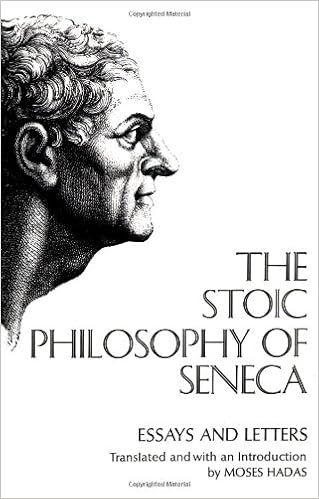
Tai Ji Quan: 105 Posture Yang Style Solo Form - Instructions and Applications. Chen Kung Series, From the Private Family Records of Master Yang Luchan, Volume Three. Translation and commentary by Master Stuart Alve Olson. Phoenix, Arizona, Valley Spirit Arts, 2017. Bibliography, appendices, 234 pages. ISBN: 978-1548105372. VSCL. "The long-awaited third volume in the Chen Kung Series presents the detailed instructions on the original Yang Style 105-Posture Taijiquan form, along with explanations of the practical self-defense applications, commentaries by Chen Kung, translations of the illustrations in the text, and notes by Stuart Alve Olson. A truly remarkable, insightful work that complements anyone’s library on the art of Taijiquan." "Born in 1906, Master Chen Kung (a.k.a., Yearning K. Chen and Chen Yen-lin) passed away in Shanghai, Chiina, in 1980. Master Chen Kung copied the Yang Family manuscripts in 1930."


Northwest Tai Chi and Qigong Studio, Vancouver, Washington


Northwest Taijiquan and Qigong
The Vancouver Tai Chi Chuan and Qigong Studio
Sifu Brian Knack
Assistant Instructors: Bill, Sandy, Joel

Vancouver Health and Wellness Building

202 E. Mcloughlin Blvd., Vancouver, Washington, 98663
360-607-8240
Also, on Facebook
The information on the Northwest Taijiquan website has not been updated.

Class Schedule:
Tuesday Morning 9-11 am
Tuesday Evening 5:30 - 7:30 pm
Thursday Morning 9-11 am  (Class Cancelled Jan-Mar 2018)
Saturday Morning 10-12 am

I plan to attend these classes in 2018.  


The facility is clean and attractive, and located in downtown Vancouver, near Main Street and Mcloughlin Blvd.  An excellent peaceful atmosphere with many very accomplished and knowledgeable students.  Good mature attitudes all around, and peaceful, polite, and friendly people.  


Here are the kinds of Taijiquan and Qigong we have been learning and practicing at the Vancouver Studio (Dojo/Training Center) with Sifu Knack, and the assistant Instructors Sandy, Bill, Joel, and Camille along with four to eight other other students.  I also use DVDs by Sifu Knack for home study.  Curriculum:  

Yang Style Taijiquan 24 Form
Yang Style Taijiquan 108 Long Form

Hunyuan Chen Taijiquan 24 Form
Eight Gates Warmup Yang Taijiquan

Push Hands
Da Lu

Hunyuan Qigiong, Primordial Qigong, Mixed Circles Qigong

Kuan Yin Sitting Qigong
Bagua Qigong: Liang Shen Pu
Eight Immortals Flute Form
Hun Yuan Taiji Stick and Qigong Ruler.  


32 Sword Form
Chen Broadsword Form


About Sifu Bryan Knack Ph.D./Ma.Sc.D.


"Bryan Knack was inducted to the U.S.A. Martial Arts Hall of Fame as "Chinese Martial Arts Master of the Year" and "International Sifu of the Year."

"Sifu Bryan Knack began studying martial arts in the mid-70's, begining with the external martial arts of Goju-ryu (Okinawan karate) and Siu Lum Kung Fu in the 1980's. Then he turned his studies to Tai Chi and Qi Gong and had a training center in Portland, Oregon.
He returned to his hometown of Spokane to open his own studio, Northwest Tai Chi for Health in 2000. Sifu Knack returned to the Vancouver/Portland area in 2011 to be close to his family."


"Tai Chi is fun!  The Vancouver Tai Chi and Qigong Studio offers an affordable program for multiple section classes for a monthly charge, or for a small fee for each class you attend."


Come and Join Us in Practicing and Learning Taijiquan and Qigong.  


Friday, December 29, 2017

Hunyuan Taijiquan and Qigong

"Hun Yuan Qigong is often translated as meaning ‘Primordial’ or ‘Congenital Qigong’ which is an appropriate name but it really deserves further exploration.  ‘Hun’ by its nature refers to something that is mixed, something that is still a composite and hasn’t been divided into various parts as in Hun Dun which is often translated as original chaos.  ‘Yuan’ literally means rotations or circles. So the name of this Qigong set is actually Mixed Circles or Mixed Rotations Qigong. Why is this and what does this have to do with primordial?  A state of undifferentiated rotating energy is the original state of the cosmos according to esoteric Daoism. This was the state before Yin and Yang divided. It is the potential for something but nothing manifest. The ultimate state of Wuji is supposed to be formed of various mixed circles – Wuji is Hun Yuan.  Out of these mixed circles come Taiji which is the catalyst for Creation so Hun Yuan literally implies trying to take yourself, your Mind, your Energy Body to a state before Yin and Yang divided when there is still just rotational potential for something – which is why often they’ll shorten all of that and say Primordial Qigong for example.  Most people will know Hun Yuan Qigong through a gentleman who died recently named Feng Zhi Qiang who was the founder of Hun Yuan Taiji, a variant of Chen style boxing. Feng also taught Hun Yuan Qigong which, prior to being part of a Taijiquan system, had alchemical Daoist origins."
-  Damo Mitchell, Hun Yuan in Qigong

"Qigong is the root of Tai Chi. Tai Chi is the flower of Qigong."
- Grandmaster Feng Zhi Qiang


Hun Yuan Taijiquan 24 Form

Chen Tai Chi Chuan

Hun Yuan Qigong


HunYuan Qigong: Tracing Life to its Root, by Kenneth S. Cohen, 2007

Valley Spirit Qigong

Hun Yuan Tai Chi 24 Form. Instructional DVD, NTSC, 74 minutes. Featuring Brett Wagland and Fontane Ip. From the Tai Chi Academy. VSCL.


Tuesday, December 26, 2017

Vancouver Tai Chi Chuan Studio


Northwest Taijiquan and Qigong
The Vancouver Tai Chi Chuan and Qigong Studio
Sifu Brian Knack

Assistant Instructors: Bill, Sandy, Joel

Vancouver Health and Wellness Building

202 E. Mcloughlin Blvd., Vancouver, Washington, 98663
360-607-8240
Also, on Facebook
The information on the Northwest Taijiquan website has not been updated.

Class Schedule:
Tuesday Morning 9-11 am
Tuesday Evening 5:30 - 7:30 pm
Thursday Morning 9-11 am  (Class Cancelled Jan-Mar 2018)
Saturday Morning 10-12 am

I plan to attend these classes in 2018.  


The facility is clean and attractive, and located in downtown Vancouver, near Main Street and Mcloughlin Blvd.  An excellent peaceful atmosphere with many very accomplished and knowledgeable students.  Good mature attitudes all around, and peaceful and friendly people.  


Here are the kinds of Taijiquan and Qigong we have been practicing at the Vancouver Studio with Sifu Knack, and the advanced students and assistant Instructors Sandy, Bill, Joel, Camille and with four to eight other other students. I also use DVDs by Sifu Knack for home study.  Curriculum: 

Yang Style Taijiquan 24 Form
Yang Style Taijiquan 108 Long Form

Hunyuan Chen Taijiquan 24 Form
Eight Gates Warmup Yang Taijiquan

Push Hands
Da Lu

Hun Yuan Qigiong

Kuan Yin Sitting Qigong
Bagua Qigong: Liang Shen Pu
Eight Immortals Flute Stick Form
Hun Yuan Taiji Stick and Qigong Ruler


32 Sword Form
Chen Broadsword Form


About Sifu Bryan Knack Ph.D./Ma.Sc.D.


"Bryan Knack was inducted to the U.S.A. Martial Arts Hall of Fame as "Chinese Martial Arts Master of the Year" and "International Sifu of the Year."

Sifu Bryan Knack began studying martial arts in the mid-70's, begining with the external martial arts of Goju-ryu (Okinawan karate) and Siu Lum Kung Fu in the 1980's. Then he turned his studies to Tai Chi and Qi Gong and had a training center in Portland, Oregon.
He returned to his hometown of Spokane to open his own studio, Northwest Tai Chi for Health in 2000. Sifu Knack returned to the Vancouver/Portland area in 2011 to be close to his family."


"Tai Chi is fun!  The Vancouver Tai Chi and Qigong Studeio offers an affordable program for multiple section classes for a monthly charge, or for a small fee for each class you attend."

Come and Join us in Practicing and Learning Taijiquan and Qigong. 


Sunday, December 24, 2017

Light Snow Falling


Taijiquan Thirteen Postures

"Tai Chi Chuan is based on this theory, and therefore it is smooth, continuous, and round. When it is necessary to be soft, the art is soft, and when it is necessary to be hard, the art can be hard enough to defeat any opponent.  Yin-Yang theory also determines Tai Chi fighting strategy and has led to thirteen concepts [Jings] which guide practice and fighting.  Thus, Tai Chi Chuan is also called "Thirteen Postures."  

"Chang San-Feng Tai Chi Chuan treatise states "What are the thirteen postures?  Peng (Wardoff), Lu (Rollback), Ghi (Press), An (Push), Chai (Pluck), Lie (Split), Zou (Elbow-Stroke), Kau (Shoulder-Stroke), these are the Eight TrigramsJinn Bu (Forward), Twe Bu (Backward), Dsao Gu (Beware of the Left), Yu Pan (Look to the Right), Dsung Dien (Central EQuilibrium), these are the Five Elements.  Wardoff, Rollback, Press, and Push are Chyan (Heaven), Kuen (Earth), Kann (Water), and Lii (Fire) are the four main sides.  Pluck, Split, Elbow-Stroke, and Shoulder-Stroke are Shiunn (Wind), Jenn (Thunder), Duey (Lake), and Genn (Mountain), the four diagonal corners.  Forward, Backward, Beware of the Left, Look to the Right and Central Equilibrium are Gin (Metal), Moo (Wood), Sui (Water), For (Fire), and Tu (Earth).  All together they are thirteen postures."

"The eight postures are the eight basic fighting moves of the art, and can be assigned directions according to where the opponents force is moved.  Wardoff rebounds the opponent back in the direction from which he came from.  Rollback leads him further that he intended to go in the direction he was attacking.  Split and Shoulder-Stroke lead him forward and deflect him slightly sideward.  Pluck and Elbow-Stroke can be done so as to catch the opponent just as he is starting forward, and strike or unbalance him diagonally to his rear.  Push and Press deflect the opponent and attack at right angles to his motion.  The five directions refer to stance, footwork, and fighting strategy.  They concern the way one moves around in response to the opponent's attack, and how one sets up one's own attacks."

-  Dr. Yang Jwing-Ming.  Advanced Yang Style Tai Chi Chuan.  Volume One: Tai Chi Theory and Tai Chi Jing.  By Dr. Yang, Jwing-Ming.  Boston, Massachusetts, Yang's Martial Arts Academy, YMAA, 1986.  Glossary, 276 pages.  ISBN: Unknown.  This book includes a detailed explanation of the concepts of Jing, Yi, and Chi; and an outstanding discussion of the Jings (pp. 68-210) of Tai Chi Chuan.  VSCL.  Quotes from p. 9, and p. 253 (Appendix 13). 


Tai Chi Chuan Martial Power: Advanced Yang Style. By Dr. Wang, Jwing Ming. Foreword by Tsung-Hwa Jou. Wolfeboro, New Hampshire, YMAA Publication Center, 3rd Edition, 1986, 1996, 2015. Index, glossary, bibliography, 274 pages. ISBN: 978-1594392948. VSCL.


Taijiquan Jings Eight Trigrams and Five Elements
Wardoff   (Peng Heaven   (Chyan)  
Rollback   (Lu) Earth   (Kuen)
Press   (Ghi) Water   (Kann)
Push   (An Fire   (Lii)
Pluck   (Chai Wind   (Shiunn)
Split   (Lie Thunder  (Jenn)
Elbow-Stroke   (Zou Lake   (Duey)
Shoulder-Stroke   (Kau Mountain (Genn) 
Forward   (Jinn Bu Metal   (Gin
Backward  (Twe Bu Wood   (Moo) 
Left   (Sou Gu Water   (Sui) 
Right   (Yu Pan Fire   (For
Center (Sung Dien Earth   (Tu


Saturday, December 23, 2017

Regain Childhood Suppleness


Tao Te Ching (Daodejing) by Lao Tzu (Laozi)
Chapter 10


"While you
Cultivate the soul and embrace unity,
can you keep them from separating?
Focus your vital breath until it is supremely soft,
can you be like a baby?
Cleanse the mirror of mysteries,
can you make it free of blemish?"
- Translated by Victor H. Mair, 1990, Chapter 10


"By patience the animal spirits can be disciplined.
By self-control one can unify the character.
By close attention to the will, compelling gentleness,
one can become like a little child.
By purifying the subconscious desires one may be without fault."
- Translated by Dwight Goddard and Henri Borel, 1919, Chapter 10


"When the intelligent and animal souls are held together in one embrace, they can be kept from separating.
When one gives undivided attention to the vital breath, and brings it to the utmost degree of pliancy,
He can become as a tender babe.
When he has cleansed away the most mysterious sights of his imagination,
He can become without a flaw."
- Translated by James Legge, 1891, Chapter 10 


"Can you coax your mind from its wandering
and keep to the original oneness?
Can you let your body become
supple as a newborn child's?
Can you cleanse your inner vision
until you see nothing but the light?
Can you love people and lead them
without imposing your will?
Can you deal with the most vital matters
by letting events take their course?
Can you step back from you own mind
and thus understand all things?
Giving birth and nourishing,
having without possessing,
acting with no expectations,
leading and not trying to control:
this is the supreme virtue."
- Translated by Stephen Mitchell, 1988, Chapter 10

Thursday, December 21, 2017

Powell's Bookstore Visit


We went to Powell's "City of Books" Bookstore in downtown Portland today.  Along for the trip were the adults: Alicia, Karen, Sean, and I.  We took the children: Katelyn and Makenna (my granddaughters) and their two cousins, Casey and Ryan.  

Everyone enjoyed the bookstore visit.  Powell's is the largest bookstore in the Pacific Northwest.  


Wednesday, December 20, 2017

Responding to Changing Circumstances


Lately, I have been reading the letters and short essays by the Roman philosopher, Lucius Annaeus Seneca, 4 BCE - 65 CE.  Seneca was a wealthy Roman, influential writer, political advisor, and aristocrat.  Many consider him a Stoic. He grew up in Spain.  Once, he was banished to Corsica for seven years; and, later, ordered to commit suicide by the Emperor Nero.  

"And we ought to make ourselves adaptable.  We should not be partial to a rigid program but pass easily where chance has taken us without shrinking from change or plan or status, provided we do not fall into the vice of fickleness, which is an enemy to repose.  Obstinacy is necessarily anxious and unhappy because Fortune often forces it askew, but fickleness is a more serious fault because it never holds its posture.  Each, inability to change and inability to persevere, is hostile to tranquility.  In any case, the mind must be recalled from externals and focus upon itself.  It must confide in itself, find pleasure in itself, respect its own interests, withdraw as far as may be from what is foreign to it and devote itself to itself; it must not feel losses and must even construe adversity charitably."
-  Seneca, On Tranquility, Section 14, p.99 in the Hadas' translation; online version transleated by Aubrey Stewart.   


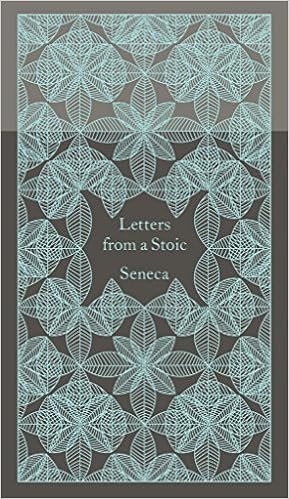
Letters from a Stoic. By Seneca. Translated with an introduction by Robin Campbell. Illustrated by Coralie Bickford-Smith. Hardcover Classics Series. New York, Penguin Classics, Reissue Edition, 2015. Index of persons, appendix, notes, 352 pages. ISBN: 978-0141395852. VSCL. 


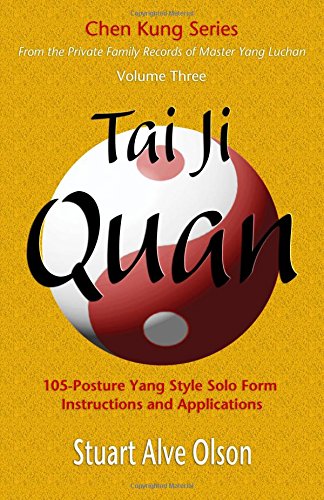
Seneca The Stoic Philosophy of Seneca: Essays and Letters. By Seneca. Translated with and introduction by Moses Hadas.  New York, W. W. Norton, 1958, 1968. 261 pages. ISBN: 0393004597. VSCL. 

Stoicism: Bibliography, Links, Notes, Quotations, Reflections, Resources.
A hypertext notebook by Michael P. Garofalo.


Personally, I favor the metaphysics and natural philosophy of the Epicureans over the Stoics.  


Tuesday, December 19, 2017

Let It Go


"To study Tai Chi Chuan means to learn to relax," were his first words to my beginners' class, and it was his constant message.  "Relax.  Let go of all tension, all hardness.  Be soft.  Hardness is the discipline of death; softness is the discipline of life.  So, wherever you identify tension or hardness, let it go.  Relax completely.  This is what it means to study Tai Chi Chuan."

- The words of the Tai Chi Chuan Master Cheng Man-ch'ing, 1967. 
Gateway to the Miraculous: Further Explorations in the Tao of Cheng Man-ch'ing.  By Wolfe Lowenthal, p. 41.  


Gateway to the Miraculous: Further Explorations in the Tao of Cheng Man-ch'ing.  By Wolfe Lowenthal.  Berkeley, California, North Atlantic Books, Frog Ltd., 1994.  124 pages.  ISBN: 1883319137.  Wolfe Lowenthal was a student of Cheng Man-ch'ing from 1967-1975; and later taught Taijiquan at the Long River Tai Chi Circle.  VSCL. 


Relax (Sung) in Tai Chi Chuan
Relaxed, Loosened, Soft, Released
Bibliography, Links, Quotes, Notes, Resources, Instructions.
A hypertext notebook by Michael P. Garofalo.


Valley Spirit Taijiquan, Vancouver, Washington

Cloud Hands Taijiquan


"If we want to fold something up, we must first spread it out.
If we want to weaken something, we must first strengthen it.
If we want to get rid of something, we must first encourage it.
If we want to have something, we must first let it go.

This is called The Secret Wisdom:
That the soft and the weak shall overcome the hard and the strong."


- Dao De Jing, Chapter 36
  Translated by Roderic and Amy Sorrell, 2003


Sunday, December 17, 2017

Tai Chi Chuan with Whisker's Man

Yang Taijiquan 37 Form of Master Cheng Man-ch’ing in 1940

1.  Preparation: Standing, Step

2.  Beginning: Raise Hands, Lower Hands
3.  Ward Off Left
4.  Grasping the Sparrow’s Tail: Ward Off L/R, Roll Back, Press, Push
5.  Single Whip
6.  Raise Hands
7.  Shoulder Strike
8.  White Crane Spreads Its Wings
9.  Brush Left Knee, Twist Step 
10.  Play the Lute
11.  Brush Left Knee, Twist Step
12.  Step Forward, Deflect, Parry, Punch
13.  Apparently Sealing, Seemingly Closing, Apparent Close, Push
14.  Cross Hands, Embrace Tiger
15.  Return to Mountain Brush Knee, Grasping Sparrow’s Tail, Single Whip
16.  Rely on Fist Under Elbow
17.  Step Back, Retreat, Repulsing Monkey 3X  
18.  Diagonal Slant Flying
19.  Cloud Hands 4X, Single Whip
20.  Snake Creeps Down  
21.  Golden Rooster Stands on Both Legs 2X
22.  Kick with Right Foot
23.  Kick with Left Foot
24.  Turn, Kick with Left Heel
25.  Brush Knees 3X, Punch Down
26.  Grasping the Sparrow’s Tail, Single Whip
27.  Fair Lady Works the Shuttles 4X
28.  Grasping the Sparrow’s Tail, Single Whip 
29.  Snake Creeps Down Left Leg
30.  Seven Stars of the Big Dipper Step Forward 
31.  Step Back, Ride the Tiger
32.  Rotate and Turn Body, Sweeping Right Leg Lotus Kick
33.  Bend the Bow, Shoot the Tiger  
34.  Step Forward, Deflect Block, Intercept and Punch
35.  Apparent Close, Withdraw and Push 
36.  Cross Hands, Horse Stance
37.  Conclusion: Feet Together, Hands Down, Standing

List of the 37 Movements, 1 page, PDF format, 4/15/2016

http://www.egreenway.com/taichichuan/chengform4.pdf


Cheng Man-ch'ing (1902-1975): Tai Chi Chuan Master

Bibliography, Links, Quotes, Resources, Reflections, Notes.
A hypertext notebook by Michael P. Garofalo.


Bibliography, Links, Quotes, Notes, Instructions. By Mike Garofalo.

Cheng Man-ch'ing on UTube


There is a very good article 
by Master Wasentha Young titled "Professor Cheng Man-ch'ing's Design of the Yang Style Short Form."  It is located in the recent Qi Magazine: Journal of Traditional Eastern Health and Fitness (Volume 27, Number 4, 2017, pp. 30-37.)  Her instruction on pacing energetic flow levels at subsequences of dingdian, parts of the 37 form, were valuable.  


Professor Cheng Man-ch'ing was also known affectionately by one of his many nicknames -  "Whisker's Man."  Lots of pictures of him smiling - I like that.  


Saturday, December 16, 2017

Cherish and Enjoy Old Age


Lately, I have been reading the letters and short essays by the Roman philosopher, Lucius Annaeus Seneca, 4 BCE - 65 CE.  Seneca was a wealthy Roman, influential writer, political advisor, and aristocrat.  Many consider him a Stoic. He was raised and educated in Rome.  Once, he was banished to Corsica for seven years; and, later, ordered to commit suicide by the Emperor Nero.  

"We should cherish old age and enjoy it.  It is full of pleasure if you know how to use it.  Fruit tastes most delicious when its season is ending.  The charms of youth are at their greatest at the time of its passing.  It is the final glass which pleases the inveterate drinker, the one that sets the crowning touch on his intoxication and sends him off into oblivion. Every pleasure defers till its last its greatest delights. The time of life which offers the greatest delight is the age that sees the downward movement - not the steep decline - already begun; and in my opinion, even the age that stands on the brink has pleasures of its own - or else the very fact of not experiencing the want of any pleasures takes their place.  How nice it is to have out-worn one's desires and left them behind."
-  Seneca, Letters, XII, p. 37 in the Campbell translation; online version by R. M. Gummere.   


Letters from a Stoic. By Seneca. Translated with an introduction by Robin Campbell. Illustrated by Coralie Bickford-Smith. Hardcover Classics Series. New York, Penguin Classics, Reissue Edition, 2015. Index of persons, appendix, notes, 352 pages. ISBN: 978-0141395852. VSCL. 


Seneca The Stoic Philosophy of Seneca: Essays and Letters. By Seneca. Translated with and introduction by Moses Hadas.  New York, W. W. Norton, 1958, 1968. 261 pages. ISBN: 0393004597. VSCL. 


Stoicism: Bibliography, Links, Notes, Quotations, Reflections, Resources.
A hypertext notebook by Michael P. Garofalo.


Personally, I favor the metaphysics and natural philosophy of the Epicureans over the Stoics.  The Stoics remind me of the Confucians, and the Epicureans remind me of the Taoist thinkers of around 300 BCE.  


Wednesday, December 13, 2017

Memories of Long Walks


I enjoy walking in the early morning.  From 1998 to 2017 I walked on a country lane, Kilkenny Lane, directly in front of my home in Red Bluff, California.  This cul de sac lane is .32 miles from Highway 99W.  
Occasionally, a car might use this country lane, and I move to the side of the road.  It is a very safe, peaceful, and quiet place with lovely landscaping and dramatic views.

The photos show here were taken in November after a series of gentle rain storms.  

I try to walk every day from two to four miles in the morning; when I was not working for the Corning Union Elementary School District.  I walked on this road from June of 1998 until we moved to Vancouver, Washington, in April of 2017; nearly 19 years.  


"Putting facts by the thousands,
into the world, the toes take off
with an appealing squeak which the thumping heel
follows confidentially, the way men greet men.
Sometimes walking is just such elated
pumping."
-   Lyn Hejinian, Determination


"Every day, in the morning or evening, or both, take a walk in a safe and peaceful environment for less than an hour.  The can be a great fountain of youth.  Choose a place to walk that has no kind of disturbance.   Walking done in a work environment and when your mind is busy is different; it is not as nutritious as the walking you do for yourself in the morning or evening in a quiet, peaceful, and safe place."
-  Master Hua-Ching Ni, Entering the Tao, 1997, p. 135


Looking to the northeast on Kilkenny Lane.  Mt. Lassen (10,000 feet) in the distance is capped with a little snow.  These photos were taken in late Autumn.    


"Walking is the natural recreation for a man who desires not absolutely to suppress his intellect but to turn it out to play for a season."
- Leslie Stephen

"Our philosophies must be rewritten to remove them from the domain of words and "ideas," and to plant their roots firmly in the earth."
- William Vogt

"If you look for the truth outside yourself,
It gets farther and farther away.
Today walking alone, I meet it everywhere I step.
It is the same as me, yet I am not it.
Only if you understand it in this way
Will you merge with the way things are."
- Tung-Shan


`


Looking west on Kilkenny Lane.  The red leafed autumn colors are from Raywood Ash trees. The Yolly Bolly mountain range (7,000 feet) is to the west of the North Sacramento Valley.


"The interior solitude, along with the steady rhythm of walking mile after mile, served as a catalyst for deeper awareness.  The solitude I found and savored on the Camino had an amazing effect on me.  The busyness of my life slowly settled down as the miles went on.  For a good portion of my life I had longed for a fuller experience of contemplation, that peaceful prayer of the heart in which one is able to look intently and see each piece of life as sacred.  Ten days into the journey, totally unforeseen, the grace of seeing the world with startling lucidity came to me.  My eyes took in everything with wonder.  The experience was like looking through the lens of an inner camera – my heart was the photographer.  Colors and shapes took on nuances and depths never before noticed.  Each piece of beauty appeared to be framed: weeds along roadsides, hillsides of harvested fields with yellow and green stripes, layers of mountains with lines of thick mist stretching along their middle section, clumps of ripe grapes on healthy green vines, red berries on bushes, roses and vegetable gardens.  Everything revealed itself as something marvelous to behold.  Each was a work of art.  I noticed more and more details of light and shadow, lines and edges, shapes, softness, and texture.  I easily observed missed details on the path before me – skinny worms, worn pebbles, tiny flowers of various colors and shapes, black beetles, snails, and fat, grey slugs.  I became aware of the texture of everything under my feet – stones, slate, gravel, cement, dirt, sand, grass.  I responded with wonder and amazement.  Like the poet Tagore, I felt that everything “harsh and dissonant in my life” was melting into “one sweet harmony”."
-  Joyce Rupp  


"As I went walking
That ribbon of highway
I saw above me
The endless skyway
I saw below me
The lonesome valley
This land was made for you and me."
- Woody Guthrie, This Land is Your Land


Tuesday, December 12, 2017

Sit and Listen


"Teach us to care and not to care.
Teach us to sit still."
- T.S. Eliot


"You are sitting on the earth and you realize that this earth deserves you and you deserve this earth.  You are there - fully, personally, genuinely."
-  Chogyam Trungpa


"Remain sitting at your table and listen. 
Do not even listen, simply wait, 
be quiet still and solitary. 
The world will freely offer itself 
to you to be unmasked, 
it has no choice, it will roll in ecstasy 
at your feet."
-  Franz Kafka


"Sit quietly
focus and forget
rest with the great achievement.
The ancient child asks
"what is the great achievement?"
It is beyond description in any language
it can only be felt intuitively
it can only be expressed intuitively.
Engage a loose, alert, and aware
body, mind, and sound
then look into the formless
and perceive no thing.
See yourself as a sphere
small at first
growing to encompass
the vastness of infinite space.
Sit quietly
focus and forget then
in a state of ease and rest
secure the truth of the great achievement.
Employing the truth will not exhaust its power
when it seems exhausted it is really abundant
and while human art will die at the hands of utility
the great achievement is beyond being useful.
Great straightness is curved and crooked
great intelligence is raw and silly
great words are simple and naturally awkward.
Engaged movement drives out the frozen cold
mindful stillness subdues the frenzied heart.
Sit quietly
focusing
forgetting
summon order from the void
that guides the ordering of the universe."
-  Tao Te ChingChapter 45, Translated by John Bright-Fey, 2006


"There are many matters and many circumstances in which consciousness is undesirable and silence is golden, so that secrecy can be used as a marker to tell us that we are approaching the holy."-  Gregory Bateson, Angels Fear


Sitting in the Garden

Zuowang Meditation

Spirituality and Nature