Showing posts with label Practice. Show all posts

Tuesday, April 14, 2026

Chen Tai Chi Chuan Short Forms

Chen 18 Taijiquan Short Form of Grandmaster Chen Zenglei

18 Movements Short Form

Notes by Michael P. Garofalo, Vancouver, Washington, 2024

Chen Taijiquan Short 18 Form of Grandmaster Chen Zenglei
Webpage by Michael P. Garofalo
Bibliography, links, resources, notes, quotes, videos, lists, photos, comments.


Chen's Taichi for Health and Wellness  By Grandmaster Chen Zenglei. White Bench Publications, Toronto, Canada, 2010, 94 pages. Warmup exercises, and detailed instructions with some photographs for the Chen 18 Short Form. Jack Yan is a collaborator  I like this book quite a bit.  $24.00 in 2/2021. VSCL.

Chen Style Taijiquan Short 18 Form  Performance by Grandmaster Chen Zhenglei  UTube, color, 3:38 Minutes, 2007.

The Chen Style Taijiquan for Life Enhancement. Written by Chen Zhenglei and translated by Xu Hailing. Zhongzhou Classic Publishing House, Zhengzhou, China, 2002. Text in English and Chinese.  ISBN: 7534821819.  149 pages. "Describes the principles of Chen style for life enhancement, basic training, Taiji Skills for Preserving Energy and the 18 Forms of the Chen Style. Many photos of Chen Zhenglei doing Exercises and forms. Chen Zhenglei is one of the top Chen stylists in China. Paperback, 149 pages, 5 1/2' by 8'. -  Wayfarer Publications "It covers the content of the health exercise silk reeling video, and is a useful reference,  giving more detail, especially on theory." This is a very expensive out of print book, not worth $150.00. I purchased back in 2004 for $25.00. VSCL.

Essence of Traditional Chen Style 18 Posture Short Form. Instructional DVD by Shifu Jiang Jian-ye.  Color, 87 Minutes. Capital District Tai Chi and Kung Fu Association of New York, 1997.  "Cheng Zheng Lei (the 19th generation of the Chen Family) created this form from the old style of Chen first and second routines.  It includes "silk reeling," fa jin (releasing energy), and balance.  This short form is a good introduction for beginners or for those with little Chen style experience." "A good introductory Chen form that includes silk reeling and fajing movements as well as other characteristics of the Chen first and second routines. Chen Zhenglei, one of today's top Chen stylists, created the form.There is a demonstration of the entire form followed by step-by-step teaching in slow motion with 2-4 views, from the front, back and side. There are front and back demonstrations of each segment (5 to 7 moves each.)  At the end of the teaching there are demonstrations, front and back. There are also excerpts from other Chen forms." - Wayfarer Publications. CDTKA.  VSCL. I use a Cboy V-Zon portable DVD player and this DVD works fine because of the way it is organized.   


Chen Style Taijiquan
Grandmaster Chen Zhenglei's Short 18 Movements Tai Chi Hand Form, 2001
List of 18 Movements


1.     Beginning Posture of Taiji    (Taiji Chu Shi

2.     Buddha's Warrior Attendant Pounds the Mortar   (Jin Gang Dao Dui

3.     Lazily Tying One's Coat   (Lan Zha Yi)   

4.     Six Sealing and Four Closing   (Liu Feng Si Bi)    

5.     Single Whip   (Dan Bian)  

6.     White Crane Spreads Its Wings   (Bai E Liang Chi

7.     Walk Diagonally   (Xie Xing)    

8.     Brush Knee   (Lou Xi

9.     Stepping to Both Sides   (Ao Bu)    

10.   Cover Hands and Strike with Fist   (Yan Shou Gong Quan)    

11.   High Pat on the Horse   (Gao Tan Ma)   

12.   Kick with the Left Heel    (Zuo Deng Yi Gen

13.   Jade Maiden Working Her Loom   (Yu Nu Chuan Suo)    

14.   Cloud Hands   (Yun Shou)     

15.   Turn Body with Double Lotus Kick    (Zhuan Shen Shuang Bai Lian

16.   Cannon Fist Over the Head   (Dan Tou Pao)    

17.   Buddha's Warrior Attendant Pounds the Mortar   (Jin Gang Dao Dui)    

18.   Closing Posture of Taiji   (Taiji Shou Shi)      


Chen Taijiquan Short 18 Form of Grandmaster Chen Zenglei. By Michael P. Garofalo. Bibliography, links, resources, notes, information, lists, practices, quotes.

List of Movements in Grandmaster Chen Zhenglei's Short 18 Form  (1 Page, PDF)  English Only


Friday, January 02, 2026

Chen Style Taijiquan Broadsword Dao 23 Form

Back on June 14, 2010, I was working with a friend on the Chen Broadsword Form, 23 Movements.  

This popular Chen broadsword form was created in the 1930's by Chen Zhaopei (1893-1972). 

List of Movements of Chen Dao Broadsword 23 Form.  1 page. 

List of Movements in Five Languages 

Bibliography, Resources, Links

Here are two instructional resources that I am using to learn this form:

Chen Style Taijiquan: Sword and Broadsword.   By Chen Zhenglei.  Translated by Zhang XinHu, Chen Bin, Xu Hailiang, and Gregory Bissell.  Tai Chi Centre, 2003.  367 pages.  ISBN: 7534823218.   This book is in English.  Detailed descriptions, with photographs, of the first form, sword form and broadsword form.  An excellent companion to Chen Zenglei's instructional DVDs, with English narration.  Review by Herbert O. Rich: "This is the first translated volume of Grandmaster Chen Zhenglei's three-volume set entitled "A Compendium of Taiji Boxing and Weapons".  Chen Zhenglei is famed as a 19th generation Grandmaster of traditional Chen Style Taijiquan (Tai Chi Chuan). He is known to Taijiquan enthusiasts the world over for his skill and ability in teaching.  This book is a detailed instruction manual for the basic set (or form) of the Laojia ("old frame") Chen style, as well as the single broadsword and straight sword forms.  Profusely illustrated, it describes basic theory, physical requirements, postural movements, Qi circulation, and self defense applications for each of the postures of the form."  The 23 movement broadsword form is described in detail, with many black and white photographs, on pages 322-360.  VSCL. 

Traditional Chen Family Tai Chi Broadsword.  Instructional videotape or DVD by Shifu Jiang Jian-ye.  70 minutes.  Detailed instructions, repetitions, and demonstrations.   Jiang's Tai Chi Videos.  He teaches the 23 movement form developed by Chen Zhaopei in 1933.  "By Jiang Jian-ye. This classic weapon routine enhances fajin, relaxed explosive release of force, and silk reeling energy. Jiang, who studied intensively in China, demonstrates the 23-movement form from the back at the beginning of the tape and multiple times, back and front, at the conclusion. Teaching of the movements uses multiple repetitions and camera angles an reviews of segments.  70 Min.  $39.95."  - Wayfarer Catalog.  Traditional Chen Family Tai Chi Broadsword.  Instruction and demonstration by Shifu Jiang Jian-ye.  Available in VHS and DVD media formats.  70 minutes.  Shifu Jiang demonstrates and carefully and slowly teaches the 23 movement form.  He teaches the form in a step-by-step and movement by movement manner.  Each movement is repeated from 3-5 times, slowly and at normal speed.  Each movement is show from front, back and side views.  Jiang's Tai Chi Videos.  VSCL.  

Friday, June 20, 2025

Shifu Mio Zhang's "Gradual Enlightenment"

 The Fireplace Records, Chapter 21


Shifu Mao Zhang's "Gradual Enlightenment


Xita asked Shifu Miao Zhang, "What is sudden enlightenment?"  Shifu Miao Zhang threw his staff on the muddy ground. 

Xita asked Miao Zhang, "What is gradual enlightenment?" Shifu Miao Zhang stomped on his staff three times.

Xita said, "Yes! Good!  Your understanding is straightening.  From now on, Miao Zhang, you will need to continue to clean and polish your staff."


Related Links, Resources, References

Koans:

Refer to my Cloud Hands Blog Posts on the topic of Koans/Dialogues.

The Daodejing by Laozi  

Pulling Onions  Over 1,043 One-line Sayings by Mike Garofalo

Chinese Chan Buddhist and Taoist Stories and Koans

Taoism

Buddhism

Fireplaces, Stoves, Campfires, Kitchens, Pots, Firewood

Chinese Art

Tai Chi Chuan and Qigong

Meditation Methods

Zen Koan Books I Use

Koan Database Project

Brief Spiritual Lessons Database Project: Subject Indexes


Subject Index to 621 Zen Buddhist Koans


Sparks: Brief Spiritual Lessons and Stories

Matches to Start a Kindling of Insight
May the Light from Your Inner Fireplace Help All Beings
Taoist, Chan Buddhist, Zen Buddhist, Philosophers
Catching Phrases, Inspiring Verses, Koans, Meditations
Indexing, Bibliography, Quotations, Notes, Resources
Research by Michael P. Garofalo

The Fireplace Records
By Michael P. Garofalo


Monday, April 28, 2025

Taijiquan Sword: Yang Style 32 Sword Form


This popular webpage includes a comprehensive bibliography, scores of links to webpages; an extensive listing of the names and name variations for each movement in English, Chinese, French, German, and Spanish; a detailed analysis of each posture and movement sequence with explanations and numbered illustrations and detailed instructions; selected quotations; comments on 20 Taijiquan sword techniques; a comprehensive media bibliography; a chart of performance times; recommendations for starting to learn this form at home one your own with instructional DVDs, books and practice methods; and, a comparison of the 32 and 55 sword forms in the Yang style. 

This is the standard, simplified, orthodox, 1957, 32 Taiji Sword Form, in the Yang Style of T'ai Chi Ch'uan. 

32 Sword Form Pamphlet by Geoffrey Hugh Miller.  Adapted from information and graphics found on the 32 Sword Form webpage by Michael P. Garofalo.  22 pages, 9/7/2015, PDF Format.  Excellent job by Mr. Miller.  This is a handy practice tool.  


Wednesday, April 23, 2025

Bound Angle Pose

Baddha Konasana
Bound Angle Pose

Description in Yoga Journal  

Benefits of Bound Angle Pose


I teach two versions of the seated version the Bound Angle Pose:   

1.  Sit up straight.  Keep your heels and the soles of your feet together.  Chin slightly tucked and the crown of the head lifted, ears over shoulders.  Keep the abdominals tucked.  Allow the knees to gradually lower down to the floor.  Relax, Release and stretch!  This is a gentle static isometric stretch of the adductor muscles (inner thighs) in the groin area and a hip opener.  Inhale and exhale gently as you hold the posture for 1 to 3 minutes.  Try not to force the knees down to the floor.  Relax and release! Let gravity do the work of lowering the knees towards the floor.  Hands are placed on the floor at the sides of the hips, or behind the back as shown above. 

Some folks also lean forward while keeping the back straight, or round the back as they lean forward and draw the head towards the floor while keeping the knees drawn down to the extent that they can do so.  They try to bring the head in front of the knees. 


2.  Sit up straight.  I don't recommend leaning to far forward in this version.  Keep your heels and the soles of your feet together.  Chin slightly tucked and the crown of the head lifted, ears over shoulders  Keep the abdominals tucked.  Place your hands on the inside of your knees and press down at the same time as you tense and draw the knees upward.  The muscular lifting effort of the upper legs resists the force downward on the legs with the arms.  This is called oppositional or resistance stretching.  Press down on the legs and lift the legs up simultaneously as you slowly exhale, then relax, release the downward pressure on the legs, and slowly inhale.  Some folks prefer a two breath cycle of simultaneously pressing the legs down and pushing/lifting the legs up.  Do this for 5 to 8 repetitions.

Yoga: Research, notes, lists, bibliography, links.  By Mike Garofalo.

Qigong (Chi Kung), Chinese Health Exercises.

There is also a supine (lying on back) version of this pose, relaxing and releasing (1), including using props under the torso while lying on your back.  

The first version (1) of the Bound Angle Pose is suitable for people with osteoarthritis, as shown below in the instructional video.

Help with Arthritis: Tai Chi, Chi Kung, Yoga, Walking, and Diet   Bibliography, links, resources, recommended books, information, quotations, tips, and research.  By Michael P. Garofalo.


Monday, February 17, 2025

What is the Practice?

What is the Practice?  That is, what is correct Zen Buddhist practice?

"We are confused about the basic core of practice, and we get sidetracked with all sorts of incorrect notions about it. Practice can be stated very simply. It is moving from a life of hurting myself and others to a life of not hurting myself and others."
- Charlotte Joko Beck, Everyday Zen, p. 131


"So the crux of zazen is this: all we must do is constantly to create a little shift from the spinning world we've got in our heads to right-here-now. That's our practice. The intensity and ability to be right-here-now is what we have to develop."
- Charlotte Joko Beck, Everyday Zen, p. 11


Practice
has many dimensions for Ms. Beck: zazen - just sitting, behaviors in our daily lives, interactions with others, dealing with feelings and reactions, vows, respect for students and teachers, daily life, calm and quiet nature, simple lifestyle, friendships, determination-grit-endurance-steadfastness-discipline, etc.


"What Practice is Not:
Practice is not about producing psychological change.
Practice is not about intellectually knowing the physical nature of reality, what the universe consists of, or how it works.
Practice is not about achieving some blissful state.
Practice is not about having or cultivating special powers.
Practice is not about personal power or Joriki, the strength that is developed in years of sitting.
Practice is not about having nice feelings, happy feelings.
Practice is not about some bodily state in which we are never ill, never hurt, one in which we have no bothersome ailments.
Practice is not about achieving an omniscient state in which a person knows about everything, a state in which a person is an authority on any and all worldly problems.
Practice is not about being spiritual.
Practice is not about highlighting all sorts of "good" qualities and getting rid of the so-called "bad" ones."
- Charlotte Joko Beck, Everyday Zen, p. 23


"Practice is essentially simplified space." p. 25

"On no account make a distinction between the Absolute and the sentient world.
- Huang Po

"Practice has to proceed in an orderly fashion, in a relentless dissolution of self."
p. 43

"Practice is for a lifetime. There is no end to it." p. 175

"The process of practice is to see through, not to eliminate, anything to which we are attached." p. 188

"It's important that we continually examine ourselves and see where it is that we are looking and what it is that we are looking for." p. 134


Everyday Zen. By Charlotte Joko Beck (1917-2011). Edited by Steve Smith. Harper One, 2007, 230 pages. VSCL.


All of the following websites were created by Michael P. Garofalo

Zen Poetry

Buddhism

Taoism

Zen Buddhism Koans

Virtue Ethics


Tuesday, October 22, 2024

Why I Don't Practice With a Chromatic Harmonica


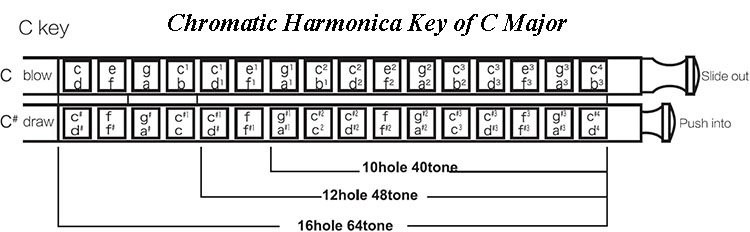
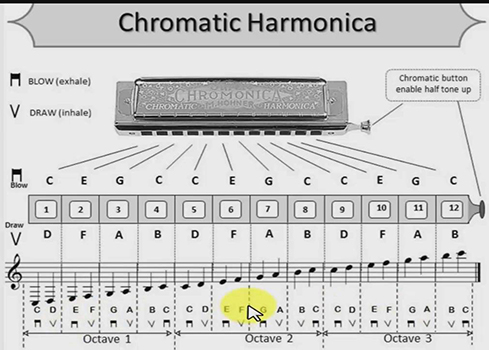
I have very little experience with using a chromatic harmonica. I have purchased two chromatic harmonicas in the Key of C Major, 12 holes, 48 tones/notes, in the past. I have considerable experience with diatonic harmonicas.

After playing the chromatic harmonica for a year, after studying, learning, and using the different layouts for blow/draw notes/holes (Richter vs Solo), after listening to the different sound of the diatonic and chromatic, after sensing the different feel of the size and shape of these two types of harmonicas, and after experimenting with the slide, etc.; I've come to a conclusion. I have decided to focus on playing, learning, and advancing my musical skills in using only a diatonic harmonica.

I have decided not to play a chromatic harmonica anymore. Why?

All chromatics are much larger and heavier than a diatonic. They are considerably less portable than a Hohner Thunderbird or Hohner Rocket diatonic. Most good chromatics have 12 or 16 holes, and diatonics have 10 holes. A typical chromatic is not a carry in your pocket anywhere harmonica, they are more a carry in your backpack musical instrument.

A chromatic, in my opinion, does not play chords as well as a diatonic harmonica.

If you can't manage the chromatic's slide well, then a chromatic can sound really bad. A diatonic is more forgiving of mistakes.

I do enjoy experimenting with a wider ranges of notes/sounds available on the chromatic harmonica vs a diatonic harmonica (48 notes vs 20 notes without bends or overblows); however, I find that using my decent electronic MIDI keyboard offers vastly more experimental options for an adventuresome sound explorer.

Good chromatic harmonicas are typically more expensive than good diatonic harmonicas. Some good chromatic models cost from $150.00 - $250.00 or more. A decent diatonic harmonica can be purchased for under $50.00.

Both chromatic and diatonic harmonicas are available in a variety of different keys, both in standard and low tuned. However, most good chromatics come in the Key of C Major. And, with a higher degree of skill, you can play in many keys on one C Major Key chromatic. However, in my opinion, it is just far easier to play a diatonic in the key you want to play, rather than mastering playing in different keys on one chromatic harmonica.

It is easier to bend or overblow on a diatonic harmonica, rather than on a chromatic without using the slider. Seems to me that the degree and control of notes with bends and overblows, excluding slider functions, is more capable of refinement on a diatonic.

Chromatics are favored by classical and jazz harmonica musicians. Diatonics are favored by blues, rock, folk, and country musicians. I play tunes I enjoy the most being played on a diatonic harmonica.

Using the chromatic slider properly is a refined skill requiring considerable practice, and adds another challenging layer of refined learning and practice demands for typical home solo players.

In is far easier to us a variety of cupping techniques on a diatonic, rather than on the larger chromatic.

Shifting between chromatic and diatonic versions can be confusing for beginners like me. Better to focus on playing just one type of musical instrument. I chose the diatonic harmonica.


I own a EastTop Forerunner Chromatic Harmonica in the Key of C Major LOW. 12 Holes, 48 Tones, Chromatic Mouth Organ Harmonica, $125.00. VSCL.

I own a EastTop Forerunner Chromatic Harmonica in the Key of C Major. 12 Holes, 48 Tones, Chromatic Mouth Organ Harmonica, $52.00. VSCL.


Chromatic Harmonica in the Key of C Major


Saturday, August 03, 2024

Harmonica: I Just Called to Say I Love You by Stevie Wonder


I Just Called to Say I Love You

Stevie Wonder

Key of C Major Harmonica


    NO   NEW   YEARS   DAY   TO   CEL-E-BRATE   

      3       -4             4             4        3      -4     4      4

    NO   CHOC-LATE   COV-ERED   CAN-DY   HEARTS   TO   GIVE   A-WAY

     3        -4           4           4       -4           4     -5            6           -5        4       -4     -3

    NO   FIRST   OF   SPRIN-G,   NO   SONG   TO   SING

     -3        5        -5         -5       5     -3          5         5        -3

    IN   FACT   HERES   JUST   AN-OTH-ER   OR-DI-NAR-Y   DAY

    -3        5           -5           -5         5       5     -5      6     -5    5    -4       3

    NO   A-PRIL   RAIN,   NO   FLOW-ERS   BLOOM

     3     -4     4           4          3        -4         4             4

    NO   WED-DING   SAT-UR-DAY   WITH-IN   THE   MONTH   OF   JUNE

     3         -4        4          4     -4      4           -5        6      -5           4           -4       -3

    BUT   WHAT   IT   I-S,   IS   SOME-THING   TRUE

    -3             5        -5    -5  5     -3        5           5            -3

    MADE   UP   OF   THESE   THREE   WORDS   THAT   I   MUST   SAY   TO   YOU

    -3          5     -5         -5             5                5              -5       6       -5          4       -4        4 

   Chorus

     I   JUST     CALLED   TO   SAY   I   LOVE   YOU

    4      4              -3            4        -4     3       -4          4

    I   JUST     CALLED   TO   SAY   HOW   MUCH   I   CARE

    4      4               -3            4       -4          -3            3       -3       2

    I   JUST     CALLED   TO   SAY   I   LO-VE   YOU

    4     4               -3            4      -4       3   -5    6        5

    AND   I   MEAN   IT   FROM   THE   BOT-TOM   OF   MY   HEART

     5      5       -3         3        -2          -1         2       -1        2       -1           1 


No summer's high
No warm July
No harvest moon to light one tender August night
No autumn breeze
No falling leaves
Not even time for birds to fly to southern skies

Chorus

No Libra sun
No Halloween
No giving thanks to all the Christmas joy you bring
But what it is, though old so new
To fill your heart like no three words could ever do

Chorus


Tuesday, July 09, 2024

Reading Sheet Music: Discovery 2

Reading Sheet Music for Harmonica
Discoveries #2 (July 8, 2024)

Harmonica Studies by Michael P. Garofalo

I have been diligently working on learning to read standard music notation, sheet music, when
playing the harmonica. I had been using for many years the harmonica tablature notation showing what hole to blow or draw into. Sheet music notation tells me what note to play and the duration and sequence of the notes played. Most diatonic harmonica music books have lessons using a C Major harmonica, the sheet music for each song, and under each note the harmonica tablature. I focus now on the sheet music and ignore the harmonica tablature. I am using the book 'Easy Piano Sheet Music for Kids', by Avgusta Udartseva, while learning, which does not include harmonica tablature.

For me, what are the benefits of reading standard musical notation (sheet music):
1. A better sense of the flow and timing of a composition.
2. There is far more sheet music without harmonica tablature that is readily available.
3. Following traditional musical learning using sheet music is very valuable, and essential for real progress in music playing.
4. Learning to connect names of notes (CDEFGABC) with positions on the sheet music, and connecting these with diatonic harmonica holes for blow or draw notes (20 notes on a 10 hole diatonic harmonica).
5. Learning to read sheet music more efficiently, effectively, knowledgeably, and beneficial for playing properly.
6. I am learning more musical theory each day.
7. The visual spacing of the notes on the sheet music is more useful to precise playing and improving one's anticipation and timing.
8. Improves my learning how to play better.
9. I enjoy learning challenges, tests, new methods and techniques.
10. It is intellectually and emotionally satisfying to make progress in playing music.
11. The challenge of new ways of looking and seeing; new ways of communicating with symbols.
12. Harmonica tablature can be useful, but must be left behind for real progress to occur.

This has been a significant and transformative learning experience for me! Why did I wait so long to learn how to read and play from sheet music? Why did I not take classes from a music teacher? Why did I not take community college or private classes in musical theory and education? Nevertheless, this is all just muddy water gone past under the bridge for a 78 year old man playing the harmonica on his own. I must focus on learning NOW, and ignore my regrets and failings. PRACTICE NOW and enjoy myself.


Harmonica Studies by Michael P. Garofalo


Tuesday, July 02, 2024

Harmonica Chords

I keep some of my notes about my Harmonica Studies on my webpage:

Harmonica Studies by Michael P. Garofalo.


Chords for Harmonicas


By Michael P. Garofalo
June 25, 2024


Common Harmonica Keys: C A D G


I gathered the information provided below from a series of books by James Major titled "the Complete 10 Hole Diatonic Harmonica Series." Each book in the series is about one Harmonica Key. Detailed information, informative charts, well organized, excellent layout, and a valuable booklet of around 50 ages. For example, C Harmonica Book. By James Major. Mel Bay Publishing, 2005, 48 pages. VSCL.


Chords on C Key Harmonica

I C Major CEG (Blow Holes 456 or 789 or 123 or any 3 adjacent holes)

IV F Dyad FA (Draw 56 and Draw 9 10)

V G Major GBD (Draw Holes 234 or Draw Holes 1234

G7 GBDF (Draw Holes 2-5)

Gm DG (Draw 12) 

Dm DFA (Draw 456 and Draw 89 10)

Bb BDF (Draw 3456 and 789) 

Blues Second (Play on G Key Harmonica)


Chords on G Key Harmonica

I G Major GBD (Blow Holes 456 or 789 or 123 or any 3 adjacent holes)

IV C Dyad CE (Draw 56 and Draw 9 10)

V D Major DF#A (Draw Holes 234 or Draw Holes 1234

Gm Minor DG (Blow 34 and 67 and 9 10)

D7 DFmAC (Draw Holes 2-5)

Dm AD (Draw 12)

Am ACE (Draw 456 and 89 10)

F# FAC (Draw 345 and 789)

Blues Second (Play on ? Key Harmonica)


Chords on D Key Harmonica

I D Major DFA (Blow Holes 456 or 789 or 123 or any 3 adjacent holes)

IV G Dyad GB (Draw 56 and Draw 9 10)

V A Major ACE (Draw Holes 234 or Draw Holes 1234)

A7 AC#EG (Draw 2345)

Am EA (Draw 12)

Em EGB (Draw 456 and 89 10)

D Blow AD (Blow 34 and 67 and 9 10)

C Triad C#EG (Draw 345 an 789)

Blues Second (Play on ? Key Harmonica)

Use D Key Harp to Play Blues in Key of A


Monday, July 01, 2024

The Ground is a Heart Platform


Technique is a Whisper

Some Thoughts from John Kells:

"Put everything into the initial connexion.
The posture thereafter must spring from that connexion.
The initial connexion has to be whole-hearted.
What happens thereafter must not be a distraction.
In other words, the heart keeps pumping out that connexion.
The technique is a whisper.
What is completed between you has the feeling of an entirety – of a being.
The responsibility is to be open.

The working of the mind is too slow to deal with real life.
To be sincere in this matter is not a question of thinking about it.
Sufficient practice must be undertaken so that basic body usage is not a grinding problem.
It is impossible to describe how thorough going your dedication needs to be.
What bit of you has the wisdom to know what is unknowable?
There is no mind to deliberate or be backwards.
If there isn't a feeling of coming home and finding a lively peace within then you are missing the point.

If there is a way of life or living it has to be joining from the heart.
The eyes are so quick to translate your heart feelings.
The ground is a heart platform.
Although important the eyes have to take second place to the heart.
Be open to the connecting of your heart with the other person's heart.
If the other person wants information about you let them open their heart.
Connecting is not a personal matter.
In any real interchange it is the Third Heart that counts.
Light and embracing, but embracing as a giving from the heart rather than capturing.
And the inspiration of the Third Heart is nutrition for your becoming.
The spirit must be allowed freedom to dart about and tempt the heart at the right moment.
To be a believer is to be a positive being – a believer is someone who is becoming.
Becoming leaves no imprint.
Becoming swallows what is commonly known as destiny.
Spirit is the effervescence of real interest in something other than yourself.

The essence of true destiny is yielding.
The essence of yielding is softness.
The essence of softness is entering.
The essence of entering is welcoming openness.
The essence of openness is heart."

Grandmaster John Kells

Steven Moore and John Kells

British Tai Chi Chuan Association and John Kells

Words of John Kells

A repost from Cloud Hands Blog from 2006


Friday, June 21, 2024

Harmonica Playing

My Musical Objectives

June-July 2024

Study The Idiot's Guide to Harmonica Playing for 30 minutes each day.
Attend an online class at Harmonica.com with Luke twice each week.

Fluency with C Chords: 
I     C Major   CEG  (Blow Holes 456 or 789 or 123 or any 3 adjacent holes)
IV   F Dyad    FA     (Draw 56 and Draw 9 10)
V   G Major   GBD  (Draw Holes 234 or Draw Holes 1234
     G7   GBDF        (Draw Holes 2-5)
     Dm  DFA           (Draw 456 and Draw 89 10)


Playing, Jamming, Learning, and Practicing with
various C Major Diatonic 10 Hole Harmonicas:


Hohner Special 20 Progressive
Hohner Crossover Marine Band 
Suzuki ProMaster MR 350
Seydel Sohne Blues Session 
Lee Oskar Tombo

Learning how to play 5 simple folk music tunes properly all the way through:
Streets of Laredo, Annie Laurie, Marine Corps Hymn, Michael Row the Boat Ashore,
Blues Piece in C.

Intermediate Objectives (June-Dec 2024):

Find a good harmonica teacher in Portland, Oregon, or Vancouver, Washington.
Learn how to use the Band in a Box computer software ($160) 
Purchase Novation Launchkey 49 MIDI Keyboard Controller
using seamless Ableton Live DAW software ($240).
Learn how to use DAW software.
Continue to advance my understanding of musical theory and history.


My Musical Goals

Playing the harmonica daily.
Learning how to play better chords on the harmonica.
Learning how to play harmonica rhythmic patterns better.
Listening to harmonica music.
Learning some harmonica musical theory each week.
Learning to interpret standard musical score notation for a harmonica.
Learning how to play easy popular tunes. 
Learn how to use Band in a Box software.


My Musical Mission

Listening to all kinds of music over a lifetime.
Enjoying the pleasures of music over a lifetime.
Seeking positive, uplifting, spiritual, and mystical experiences via music.
Enjoying playing the harmonica.
Sharing good sounds with others.
Encouraging and supporting musicians.


Background, Introduction

I have owned various harmonicas since my childhood days.  

I have enjoyed playing various harmonicas by myself.

I have used various books, CDs, MP3s, charts, and online learning resources to learn 
how to play the harmonica.

I now focus for 30 to 60 minutes each day in learning and practicing with a harmonica.

Purchasing good quality harmonicas in different Keys, books, CDs, MP3s, online resources, online video instruction (Luke), and paying for a personal harmonica instructor can be costly for serious intermediate harmonica students and lifetime enthusiasts.

Good education and ongoing learning are essential for steady improvement and more fun.

From January to May 2024, I used a Hohner Crossover Marine Band Key of C and a Seydel Sohne 1847 Key of Low C for daily practice. I was learning the chords on the C Key harmonica, learning the hole notes and playing single notes more clearly.  Most basic instruction books for the harmonic focus on using a diatonic harmonic in the Key of C.  I have gained some fluency in properly playing single notes and chords, in blowing techniques, and I can entertain myself with some improvising.


Monday, May 20, 2024

Harmonica Playing

I have owned various harmonicas since my childhood days.  

I have enjoyed playing various harmonicas by myself.

I have used various books, CDs, MP3s, charts, and online learing resources to learn 
how to play the harmonica.

I now focus for 30 to 60 minutes each day in learning and practicing with a harmonica.

Serious harmonica hobbyists, players, listeners, students, enthusiasts,
learners, and musical pleasure seekers can get OCD about this music.

Purchasing good quality harmonicas in differest Keys, books, CDs, MP3s, online resources, online video instruction (Luke), and paying for a personal harmonica instructor can be costly for serious intermediate harmonica students and lifetime enthusiasts.

Good education and ongoing learning are essential for steady improvement and more fun.


My Musical Mission

Listening to all kinds of music over a lifetime.
Enjoying the pleasures of music over a lifetime.
Seeking positive, uplifiting, spiritual, and mysical experiences via music.
Enjoying playing the harmonica.
Sharing good sounds with others.
Encouraging and supporting musicians.

My Musical Goals

Playing the harmonica daily.
Learning how to play better chords on the harmonica.
Learning how to play harmonica rythmic patterns better.
Listening to harmonica music.
Learning some harmonica musical theory each week.
Learning to interpret standard musical score notation for a harmonica.
Learning how to play easy popular tunes. 

My Musical Objectives


May- June 2024

Study The Idiot's Guide to Harmonica Playing for 30 minutes each day.
Attend an online class at Harmonica.com with Luke twice each week.

Playing, Jamming, Learning, and Practicing with various harmonicas:
Hohner Crosover Marine Band  Key of C
Seydel Sohne 1847  Key of Low C

Learning how to play 5 simple folk music tunes properly all the way through.


Since January, 2024, I have been using a Hohner Crossover Marine Band Key of C and a Seydel Sohne 1847 Key of Low C for daily practice, learning the chords on the C Key harmonica, learning the hole notes and playing single notes more clearly.  Most basic instruction books for the harmonic focus of using a diatonic harmonic in the Key of C. 


Saturday, April 27, 2024

Chen Taijiquan Short Forms

Chen 18 Taijiquan form of Grandmaster Chen Zenglei.


Chen's Taichi for Health and Wellness.  By Grandmaster Chen Zenglei.  White Bench Publications, Toronto, Canada, 2010, 94 pages.  Warmup exercises, and detailed instructions with some photographs for the Chen 18 Short Form.  Jack Yan is a collaborator.  I like this book quite a bit.  $24.00 in 2/2021. VSCL.  

Chen Taijiquan Short 18 Form of Grandmaster Chen Zenglei.  By Michael P. Garofalo.  Bibliography, links, resources, notes, quotes.  

Chen Style Taijiquan Short 18 Form.  Performance by Grandmaster Chen Zhenglei.  UTube, color, 3:38 Minutes, 2007. 

The Chen Style Taijiquan for Life Enhancement.  Written by Chen Zhenglei and translated by Xu Hailing.  Zhongzhou Classic Publishing House, Zhengzhou, China, 2002.  Text in English and Chinese.  ISBN: 7534821819.  149 pages.  "Describes the principles of Chen style for life enhancement, basic training, Taiji Skills for Preserving Energy and the 18 Forms of the Chen Style. Many photos of Chen Zhenglei doing Exercises and forms. Chen Zhenglei is one of the top Chen stylists in China. Paperback, 149 pages, 5 1/2' by 8'. -  Wayfarer Publications   "It covers the content of the health exercise silk reeling video, and is a useful reference,  giving more detail, especially on theory."  This is a very expensive out of print book, not worth $150.00.  I purchased back in 2004 for $25.00.  VSCL   

Essence of Traditional Chen Style 18 Posture Short Form.  Instructional DVD by Shifu Jiang Jian-ye.  Color, 87 Minutes.  Capital District Tai Chi and Kung Fu Association of New York, 1997.  "Cheng Zheng Lei (the 19th generation of the Chen Family) created this form from the old style of Chen first and second routines.  It includes "silk reeling," fa jin (releasing energy), and balance.  This short form is a good introduction for beginners or for those with little Chen style experience."  "A good introductory Chen form that includes silk reeling and fajing movements as well as other characteristics of the Chen first and second routines. Chen Zhenglei, one of today's top Chen stylists, created the form. There is a demonstration of the entire form followed by step-by-step teaching in slow motion with 2-4 views, from the front, back and side. There are front and back demonstrations of each segment (5 to 7 moves each.)  At the end of the teaching there are demonstrations, front and back. There are also excerpts from other Chen forms." - Wayfarer Publications.  CDTKA.  VSCL.  I use a Cboy V-Zon portable DVD player and this DVD works fine because of the way it is organized.     


Chen Style Taijiquan
Grandmaster Chen Zhenglei's Short 18 Movements Tai Chi Hand Form, 2001
List of 18 Movements


1.     Beginning Posture of Taiji    (Taiji Chu Shi

2.     Buddha's Warrior Attendant Pounds the Mortar   (Jin Gang Dao Dui

3.     Lazily Tying One's Coat   (Lan Zha Yi)   

4.     Six Sealing and Four Closing   (Liu Feng Si Bi)    

5.     Single Whip   (Dan Bian)  

6.     White Crane Spreads Its Wings   (Bai E Liang Chi

7.     Walk Diagonally   (Xie Xing)    

8.     Brush Knee   (Lou Xi

9.     Stepping to Both Sides   (Ao Bu)    

10.   Cover Hands and Strike with Fist   (Yan Shou Gong Quan)    

11.   High Pat on the Horse   (Gao Tan Ma)   

12.   Kick with the Left Heel    (Zuo Deng Yi Gen

13.   Jade Maiden Working Her Loom   (Yu Nu Chuan Suo)    

14.   Cloud Hands   (Yun Shou)     

15.   Turn Body with Double Lotus Kick    (Zhuan Shen Shuang Bai Lian

16.   Cannon Fist Over the Head   (Dan Tou Pao)    

17.   Buddha's Warrior Attendant Pounds the Mortar   (Jin Gang Dao Dui)    

18.   Closing Posture of Taiji   (Taiji Shou Shi)      


List of Movements in Grandmaster Chen Zhenglei's Short 18 Form  (1 Page, PDF)  English Only 


Thursday, April 18, 2024

Tai Chi Chuan at the Beach


I travel to a State Park each month on the Oregon or Washington Pacific Coast.  I camp in a Yurt for four days each month. 

I practice Taijiquan, Qigong, Balance Exercises, and Walking at the State Park and beaches.

You are welcome to join me to discuss Taijiquan, Qigong, Taoism, Yoga, Buddhism, poetry, philosophy, and natural history.  It would be enjoyable to sit around a morning or evening fireplace, chat, sip refreshments, and ponder the good life.  

We could practice and share some internal arts movements and practices.

Here is my current Yurt Camping Schedule:

Dosewallips State Park, Hood Canal, Brinnon, Washington
May 6, 7, 8, 9 2024

Grayland Beach State Park, Grayland, Westport, Washington
June 3, 4, 5 ,6  2024

Harris Beach State Park, Brookings, Oregon
Oct
ober 7, 8, 9, 10  2024

Here is a guide to my practices, outlook, research, and experience.

Send me an email if you are interested in joining me.  

For those not interested in camping, there are some motels and restaurants near the Parks.

There will be no charges, fees, or workshop costs.

Hang Out, Meetup, Share, Socialize, Beachcombing, Practice


Saturday, December 09, 2023

Studying Tai Chi Chuan


Five Beneficial Methods for the Study of Tai Chi Chuan

"1.  Your study should be broad and diversified.  Do not limit yourself.  This principle (virtue) can be compared to your stance, which moves easily in many different directions.  

2.  Examine and question.  Ask yourself how and why Tai Chi works.  This principle can be compared to your sensitivity, which is receptive to that which others ignore.  

3.  Be deliberate and careful in your thinking.  Use your mind to discover proper understanding.  This principle can be compared to your understanding power.

4.  Clearly examine.  Separate concepts distinctly, then decide upon the proper course.  This principle can be compared to the continuous motion of Tai Chi.

5.  Practice sincerely.  This principle can be compared to heaven and earth, the eternal."
T'ai Chi Classics, translations and commentary by Waysun Liao, p. 125 

Tai Chi Classics.  By Waysun Liao.  New translations of three essential texts of T'ai Chi Ch'uan with commentary and practical instruction by Waysun Liao.  Illustrated by the author.  Boston, Shambhala, 1990.  210 pages.  ISBN: 087773531X.  VSCL. 


Sunday, September 24, 2023

Walking on a Drizzling Morning

My dog, Bruno, and I walk every morning for 45 to 60 minutes.  We walk in our suburban neighborhood in Vancouver, Washington State. The autumn season can bring cool morning temperatures between 45F to 55F, overcast skies, fog, dampness, and rain.  We wear warm clothes and try to stay dry. 

I began my daily morning walks in 1998.


"I was the world in which I walked."
-   Wallace Stevens, Tea at the Palaz of Hoon

"Allow walking to occupy a place of stature equal with all the other important activities in your life. As difficult as that might seem, here's how to do it. Make it a practice. That's right. Turn your walking into a vehicle for personal growth as well as for fitness. This will add a higher level of integrity and intention to your approach because you will find that it is a way to deepen and upgrade your relationship to your body. Instead of merely giving your legs a good workout, you'll be practicing to relax more, to breathe better, to expand your vision, to open up your range of motion, to increase your energy, to feel and sense your body. The list is exciting - and endless. With all of this to look forward to, your walking program will take its place alongside everything in your life you value most, and you'll be amazed at how easy it is to schedule time for something you really love to do."
- Katherine Dreyer, Chi Walking, p. 56
 
Chi Walking: The Find Mindful Steps for Lifelong Health and Energy. By Danny Dreyer and Katherine Dreyer. New York, Simon and Shuster, Fireside Books, 2006. Index, 258 pages. ISBN: 0743267206.


"Walking I am unbound, and find that precious unity of life and imagination, that silent outgoing self, which is so easy to loose, but which a high moments seems to start up again from the deepest rhythms of my own body. How often have I had this longing for an infinite walk - of going unimpeded, until the movement of my body as I walk fell into the flight of streets under my feet - until I in my body and the world in its skin of earth were blended into a single act of knowing."
- Alfred Kazin, The Open Street

"If you look for the truth outside yourself,
It gets farther and farther away.
Today walking alone, I meet it everywhere I step.
It is the same as me, yet I am not it.
Only if you understand it in this way
Will you merge with the way things are."
- Tung-Shan
 

     "Walking meditation means to enjoy walking without any intention to arrive. We don't need to arrive anywhere. We just walk. We enjoy walking. That means walking is already stopping, and that needs some training. Usually in our daily life we walk because we want to go somewhere. Walking is only a means to an end, and that is why we do not enjoy every step we take. Walking meditation is different. Walking is only for walking. You enjoy every step you take. So this is a kind of revolution in walking. You allow yourself to enjoy every step you take.
     The Zen master Ling Chi said that "the miracle is not to walk on burning charcoal or in the thin air or on the water; the miracle is just to walk on earth." You breathe in. You become aware of the fact that you are alive. You are still alive and you are walking on this beautiful planet. That is already performing a miracle. The greatest of all miracles is to be alive. We have to awaken ourselves to the truth that we are here, alive. We are here making steps on this beautiful planet. This is already performing a miracle. But we have to be here in order for the miracle to be possible. We have to bring ourselves back to the here and the now."
- Thich Nhat Hanh, Resting in the River