Showing posts with label Heart. Show all posts

Saturday, March 07, 2026

Personal Improvement Prayer


“Lord, make me an instrument of Your peace.
Where there is hatred, let me show love;
Where there is injury, pardon;
Where there is doubt, faith;
Where there is despair, hope;
Where there is darkness, light; and
Where there is sadness, joy.
Oh Divine Master, grant that I may not so much
Seek to be consoled as to console;
To be understood as to understand;
To be loved as to love.”
- St. Francis of Assisi (1128-1226)

An informative old book by Dean Ornish, M.D., "Reversing Heart Disease," 1995, includes a chapter on the power of praying, meditating, and guided thinking.  A newer version of this book came out in 2022, "Undo It."  I quickly browsed and reread some of this useful old book last month.  I have tried to follow his advice for many years.  

Many people told me they prayed for my recovery from my cryo-genic ablation surgery on February 4, 2023.  The positive thoughts from others helped me stay calm, feel appreciated, and hopeful. 

Good and positive thoughts, sayings, prayers, mantras, scriptures, poems, well wishes, and encouragement can help others and ourselves.  


"Don't misunderstand me.  I don't believe in prayer.  I only do it.  Or perhaps it does me."
- Sam Keen

Believing is an important step in transformation.  If you don't believe in achieving your goals and objectives, it is very hard to keep working steadily on actualizing your specific goals.  Your not going to have the grit to stick with a self-improvement tactic unless you believe the tactic is beneficial, useful, doable, and achievable.  

Sunday, December 07, 2025

Heart-Mind Boxing

"Dragon Body - This imaginary beast is common in Chinese fables and folklore. The dragon could fly high, riding the mists, contracting and twisting it's body like a snake through the clouds. Xingyi places high importance on this for every transitional movement in the art should embody the spirit of the dragon, expanding and contracting, striking out with mystical prowess.

Chicken Leg - This is one of the most basic fundamentals of the art of Xingyiquan. A chicken can run very quickly and stop suddenly, keeping it's weight on one leg, ready to peck. Xingyi's five elements all encompass this theory by stepping forward onto one leg before it issues it's strike much like a chicken does. By mastering this, you can advance, retreat, turn and change forms very quickly because the weight is always ready to transfer.

Eagle Claw - While the hands are relaxed and held in gentle curves when in transitional movements, when striking, they must become like the fearless bird of prey's attacking talons, digging and grasping with an iron grip. This is especially seen in the beginning movement of Pi Quan when the hands draw down towards the Dan Tian. This is also very important in Xingyi, for many of the art's applications consist of grabbing with one hand while simultaneously striking with the other.

Bear Shoulders - Bears are large animals that can can generate a great deal of power from their great rounded shoulders. The Xingyi practitioner must mimic this to obtain maximum power in his art. By rounding the shoulders and hollowing the chest, the body actually "gets behind" the arms and hands, so when you strike, the power doesn't come from the arms, but from the whole body.

Tiger's Head Embrace - The tiger is a very regal beast. They are powerful and strong animals that exude the finest and most fearsome aspects of nature. In Xingyi, the head must be held erect and slightly back, but spiritually, it must also capture the imposing manner of the tiger, letting it's blank cunning show in your eyes and it's ability to pounce.

Xonghua Xinyiquan

Xing Yi Quan (Hsing I Chuan): Bibliography, Links, Resources, Quotes, Notes. By Mike Garofalo.


Xing Yi Quan Xue: The Study of Form-Mind Boxing.   By Sun Lu Tang.  Translated by Albert Liu.  Compiled and edited by Dan Miller.  Burbank, CA, Unique Publications, 2000.  ISBN: 0865681856.  312 pages.  Includes a biography of Sun Lu Tang (pp.1-41) by Dan Miller.  The work was encouraged and supported by Sun Jian Yun, and an interview with her is included.  Translations by Tim Cartmell, Gu Feng Mei, and Huang Guo Qi.  This original book was first published in 1915.  It was the first book ever published that integrated Chinese martial arts with Chinese philosophy and Daoist Qi cultivation  theories.  The book includes many photographs of Sun Lu Tang.  


"Of the three internal arts, Xing Yi is probably the most straightforward to understand in terms of practical fighting applications. Grandmaster Sun, however, believed that the most important reason to practice martial arts was the improvement of one's health; developing fighting ability was merely of secondary importance. Sun himself certainly benefited in both respects. In 1933, at the age of 73 and shortly before his death, Sun was examined by a physician and found to have the body of a 40-year old. Furthermore, throughout his life he was an awesome fighter: He worked as a professional bodyguard, taught martial arts at the Presidential Palace, and never lost a challenge match.
Certain health benefits of Xing Yi training are obvious. It is a low-impact exercise requiring little jumping, few low stances, and smooth rather than ballistic movements. As Sun notes in his book, it can be practiced by anyone, both the young and old, and the sick and infirm. Healthy people will grow stronger, while those with a disease will recover their health. However, in addition to the external physical benefits, Xing Yi practice offers a sophisticated system of internal energy training that stimulates the major energetic pathways within the body.At the core of Sun Lu Tang's Xing Yi Quan system is the 12 animals set. This set consists of 12 lines of movements, each emulating the fighting techniques of the 12 animals that come from heaven and earth. These are the Dragon, Tiger, Monkey, Horse, Water Lizard, Chicken, Sparrow Hawk, Swallow, Snake, Tai Bird, Eagle, and Bear. Regular practice of the 12 animals set benefits the practitioner both externally and internally. Externally, one learns the physical characteristics of each animal-the explosive power of the tiger, or the strength of the bear, for example. Internally, each animal form stimulates the internal energy, or Qi, in a particular and beneficial manner. The remainder of this article describes both the energetic work and the fighting applications of four of the animal forms: the Dragon, Tiger, Eagle, and Bear."
-  Justin Liu, 
 Cultivation and Combat: The Fighting Animals of Xing Yi Quan.


Friday, August 08, 2025

Heart-Mind Connections

 "Research in the relatively new discipline of neuro-cardiology has confirmed that the heart is a sensory organ and acts as a sophisticated information encoding and processing center that enables it to learn, remember, and make independent functional decisions that do not involve the cerebral cortex. Additionally, numerous studies have demonstrated that patterns of cardiac signals to the brain affect autonomic regulatory centers and higher brain centers involved in perception and emotional processing.\."
-  Thomas R. Verny, M.D., The Embodied Mind, Pegasus Books, 2021, p. 125.

"Common Heart Expressions

Follow your heart.
He had a big heart.
If you find it in your heart.
My heartfelt sympathies on you loss.
Wear one's heart on one's sleeve.
He died of a broken heart.
His heart is in the right place.
Eat your heart out.
She was a lighthearted person.
She had a change of heart.
Her heart was not in it.
He has a heart of gold.
He was a heartless villain.
A bleeding heart.
A faint heart.
Absence makes the heart grow fonder.
With an aching heart.
She is all heart.
Open one's heart to.
Pour open's heart out to.
With a heavy heart."

-  Thomas R. Verny, M.D., The Embodied Mind, Pegasus Books, 2021, p. 116, and Mike Garofalo.


"Put your heart, mind, and soul into even your smallest acts.  This is the secret of success."
- Swami Sivananda

"Your heart is full of fertile seeds, waiting to sprout."
- Morihei Ueshiba

"A loving heart is the beginning of all knowledge."
Thomas Carlyle


Tai Chi Chuan, Chi Kung, Nei Gung, and Yoga Masters all mention the role of our hearts and lungs in our brief lives.  

Chinese medical theorists and martial artists (Heart-Mind Boxing) point to the Heart or Middle Dantian or Hsing-Ming (Heart-Mind) as a locus for energy and consciousness. Breathing techniques involving the lungs is also a constant point of emphasis.

"The nearest equivalent to the English term for mind in the classical period is xin 心, which originated as a picture of the heart in human beings and animals and directs body’s behavior. Since ethical guidance in Chinese thought arises from both the cognitive function of the mind and the affective states attributed to the heart, xin is frequently translated as “heart-mind”. This translation will be used here. The xin is credited with thinking si 思, understanding míng 明, knowing zhi 知, intention zhi 志, felt moods and/or emotions qing 情, and desire yu 欲. Xin plays a central role in Chinese ethics, epistemology, and metaphysics; and philosophical disputes often turn on how different schools or Masters portray the role of xin. How it arrives at ethical guidance is a central point of contention between those who treat the guidance as internal (Mengzi) to those who treat xin as navigating an external normative structure and those who advocate emptying or ignoring the xin and taking guidance from some other organ or authority."
Mind (Heart-Mind) in Chinese Philosophy


I have more doubts about the efficacy of the Lower Dan Tien, and its role as an energy source, reservoir, and generator.  See my post titled:
Dantian: A Baffling Legacy.  The area below and behind our belly button is primarily used for digestion, elimination, the female reproductive organs (womb), and some big muscles involved with leg movement and balancing. Digestion is critical for life and has its own biochemistry and automatic functioning.  However, A TCM "Dantian" is invisible and undetectable to modern medical anatomy.

I've never heard any Chi Kung or Tai Chi Chuan teacher talk about sending Chi energy from the heart and lungs out to the arms, hand, legs, feet, or brain; or Chi energy circulation to and from the Middle Dantian or Heart area. This seems remiss to me.  

I have heard both taijiquan and qigong teachers talk about their large bellies as the Dantian source of their power and a chi resovoir.  Men don't have a womb for reproduction, but I guess they envy a woman's power.  People who eat too much and don't exercise, as they age, accumulate fat: men morso in the abdomen and women in the hips. Since the lower Dantian is invisible and non-existent, people can still imagine what they want to imagine about "It" as with other supernatural entities.  

Heart and vascular diseases are the highest cause of death in the world. Far fewer die of kidney or bowel or excretory diseases.  If your heart or lungs fail you die quickly.  If your lower intestine is diseased you die far less quickly.  The heart and lungs never rest; but, you can live a week without water and a month without food. Which is more important to immediate good health and life?  

Yoga masters and Indian doctors speak about the Heart Charkra (Anhata) in a similar way. Yoga practitioners practice a variety of breathing exercises (Pranayama). 

"The middle dantian is located at the center of the chest and is most closely related to the heart chakra, or Anahata. It’s associated with the thymus gland and is considered to be the seat of qi.  “Qi is more subtle and less dense of an energy than jing, and as you elevate through the dantians, you also evolve through the purity of consciousness and subtlety of energy, just like you would in looking at the chakras,” says Soffer. “Qi, like prana, is as ubiquitous in the body as it is in nature. It’s the basis of form and function for universal energy.” According to practitioners, the middle dantian is the spark of all living things. The energy in this dantian is considered unique when compared with the other two. “The energy here is created from the food and fluids we consume and the air we breathe, and is appropriately located around the upper abdomen, where we consume, digest, and distribute energy throughout the body,” explains Ali Vander Baan, a licensed acupuncturist and founder of Yintuition Wellness in Boston. According to Soffer, when a person’s essence (jing) is properly cultivated, their life force rises to support the middle dantian and the opening of the heart. “This is a common occurrence on the path of enlightenment, to become open-hearted, loving, compassionate, and a source of good for the world around you,” explains Soffer."
- What are Dantian

When I teach Tai Chi Chuan, Qigong, Nei Gong, and Yoga I place much more emphasis on strengthening the heart, improving the functioning of the heart, using the emotional-mental aspects of the heart, having the heart and desire for training, having a big and kind heart, and heartfelt understanding; and proper breathing methods and exercises. Sending energy from the heart and lungs to all parts of our body via blood and the circulatory system is my focus.  Blood and nerves transmissions seem a more understandable anatomical and physiological concept to me.  I place little or no emphasis upon the Lower Dantian except for centering and balance in the lower back and hip areas. 


Saturday, December 16, 2023

With Open Arms

For an excellent presentation on how the various parts of our bodies influence other parts and interact with our nervous/brain system read "The Embodied Mind" by Thomas R. Verny, M.D., 2021. Chapter 8 deals with the impact of our hearts on on our personality, energy levels, hormonal levels, alertness, emotions, etc., pp. 134-159.

A question:  Does the Heart Chakra govern, control, energetically interact with, or involve both arms?  


In the above artwork, from the cover of "Wheels of Life" by Anodea Judith, 1987, the Heart Chakra zone of the body is highlighted in a green color.  One would infer from the artwork that the arms are in the zone of the Heart Chakra.  In Anodea Judith's chart of correspondences for Chakra Four she lists parts of the body: lungs, heart, arm, hands. 
It would make sense from the point of view of the fact that most labor, work, productive activity involves the arms and hands.  We often work hard and long for those we love.  We hug those we love.  I like to welcome yogis, taoists, and druids with open arms.  I love to move my arms about gracefully in yoga, chi kung, and tai chi postures an know this helps my heart and lungs, the zone of the fourth chakra.  

The Chinese speak of mind-heart (hsin) and human nature (hsing) from Menicus.  


Hsin literally means "heart." It means mind, not the deluded mind of the ignorant but the Buddha-mind. Hsin is the mind that merge with the all-encompassing One Mind.
  
There is a Middle Dan Tien in chi kung theory.  It is in the heart area.  

Citta, a Pali word, refers to one's state of mind, emotional state, one's heart-mind, the quality of mental processes as a whole, heart-mind field of consciousness.

Tantric Yoga
Heart Chakra, Metta, Heart-Mind, Loving Kindness

Thursday, February 02, 2023

Cryo-Balloon Ablation of My Heart


At 9:30 am this morning, at the Peace Health Hospital in Vancouver, a team led by Dr. Reese will perform a cryo-balloon catheter ablation of my heart.  We hope this will correct some of my current electrical heart problems.  This is a non-invasive procedure, is "relatively safe," and does help 60-80% of people who undergo the procedure.  Dr. Reese told me he thought I was a good candidate for using this procedure.  

At age 77, I have been slowed down by shortness of breath, mild chest tightness, fatigue, and lightheadedness caused by paroxysmal atrial fibrillation.  My heart went into atrial fibrillation in May of 2022.

We shall see what happens in the next month to me as a result of this technical procedure.  


Friday, 7 am, 2/3/2023

The procedure went smoothly.  AFib controlled.  Dr. Reese said it would take three months to feel fully back to "normal."  Little discomfort, and no pain.  Sutures in thighs healing OK thus far.  Feeling very good.  Alert and thinking all night with little sound sleep.  Moving 10-15 minutes at the end of one hour of sitting.  Moving slowly, carefully, gently.  No chest tightness.  No lightheadedness or dizziness.  Clear vision.  

Cancelled February retreat to a yurt at Pacific Beach State Park in Washington.  My next retreat will come in April.  Waiting nearly 3 months to go on retreat.  Staying close to home until recovery comes.  Also, Karen has upcoming hip surgery on March 7th.  


Saturday, 4 am, 2/4/2023

Still feeling pretty good.  No problems.  Sutures healing OK.  No chest pain or discomfort.  Don't get out of breath.  A few cases of blurred/odd visual disturbances - wavy edges.  Trying to sit for 1 hour and then get up and gently exercise for 20 minutes today: walking, treadmill, qigong, taijiquan, yoga stretches.  

Before the ablation, I was in AFib frequently.  My heartbeat averaged 61 bpm when at rest.  Now my average heartbeats per minute is between 70-80 bpm at rest.  


Sunday, Noon, 2/5/2023

A little punked today.  Did not sleep well again last night: too much thinking.  My legs are a little sore from lots of Taijiquan practice yesterday.  Truly, a day of complete resting for me.  Sutures healed and looking good.  Very little chest discomfort.  Somewhat anxious.  No exercise.  Read, relax, sit, nap.  Ate  up to my recommended limit of calories 1500/carbohydrates 150.  


Monday, 2/6/2023,

Four days since the ablation procedure.  Slept 7 hours last night - excellent for me.  Feeling alert and ready to move.


Thursday, 2/9/2023

Met with James Mathey, Physician's Assistant, Peace Health Hospital today.  He ran an EKG and checked my pacemaker memory.  I am in normal heart rhythm with no AFib.  He checked my leg wounds.  In his assessment, overall, I am progressing well.  I return to be evaluated by him on March 6th.  I can ramp my walking up to 5,000 steps per day in the next 10 days.  No heavy workouts, sweating, or hard labor.  


Sunday, 2/12/2023

Injured my right leg.  Limping and in pain.  Start recovery process.


Saturday, July 03, 2021

Tao Te Ching Chapter 47 Dao De Jing

Tao Te Ching by Lao Tzu
Chapter 47


"No need to go outside a door
To see totality
Or look out of a window
For seeing what will always be
Going out you go astray
At home and center all is one
The seer doesn't have to do
To see that everything is done."
-  Translated by Jim Clatfelter, 2001, Chapter 47  


"Without going out the door, you can know Heaven below (the sacred body).
Without looking through a window, you can see Heaven’s Tao.
The more you go away from yourself, the less you perceive.
The sage does not go out, yet knows;
does not look, yet names;
does not do, yet finishes."
-  Translated by Barbara Tovey, 2002, Chapter 47


"Without opening your door,
 you can know the whole world.
 Without looking out your window,
 you can understand the way of the Tao.
  The more knowledge you seek,
 the less you will understand.
  The Master understands without leaving,
 sees clearly without looking,
 accomplishes much without doing anything."
 -  Translated by John H. McDonald, 1996, Chapter 47  


"One need not pass his threshold to comprehend all that is under Heaven,
nor to look out from his lattice to behold the Tao Celestial.
Nay! but the farther a man goeth, the less he knoweth.
The sages acquired their knowledge without travel; they named all things
aright without beholding them; and, acting without aim, fulfilled their wills."
-  Translated by Aleister Crowley, 1918, Chapter 47   


不出戶, 知天下.
不闚牖, 見天道. 
其出彌遠, 其知彌少. 
是以聖人不行而知.
不見而名.
不為而成. 
-  Chinese characters, Tao Te Ching, Chapter 47 


pu ch'u hu, chih t'ien hsia.
pu k'uei yu, chien t'ien tao.
ch'i ch'u mi yüan, ch'i chih mi shao. 
shih yi shêng jên pu hsing erh chih.
pu chien erh ming.
pu wei erh ch'êng. 
-  Wade-Giles Romanization, Tao Te Ching, Chapter 47 


"Without going out of the door
One can know the whole world;
Without peeping out of the window
One can see the Tao of heaven.
The further one travels
The less one knows.
Therefore the Sage knows everything without travelling;
He names everything without seeing it;
He accomplishes everything without doing it."
-  Translated by Ch'u Ta-Kao, 1904, Chapter 47 


"Without leaving his door
He knows everything under heaven.
Without looking out of his window
He knows all the ways of heaven.
For the further one travels
The less one knows.
Therefore the Sage arrives without going,
Sees all without looking,
Does nothing, yet achieves everything."
-  Translated by Arthur Waley, 1934, Chapter 47  


"Sin salir de la puerta
se conoce el mundo.
Sin mirar por la ventana
se ve el camino del cielo.
Cuanto más lejos se va,
menos se aprende.
Así, el sabio,
No da un paso y llega,
No mira y conoce,
No interfiere y cumple."
-  Translation from Wikisource, 2013, Capitulo 47


"Without going out of my door I know the Universe.
Without opening my window I perceive Heavenly Tao.
The more I go abroad, the less I understand.
That is why the self-controlled man arrives without going,
names things without seeing them, perfects without activity."
-  Translated by Isabella Mears, 1916, Chapter 47 


"There is no need to run outside
For better seeing,
Nor to peer from a window. Rather abide
At the center of your being;
For the more you leave it, the less you learn.
Search your heart and see
If he is wise who takes each turn:
The way to do is to be."
-  Translated by Witter Bynner, 1944, Chapter 47


Chapter and Thematic Index (Concordance) to the Tao Te Ching


Taoism: A Selected Reading List


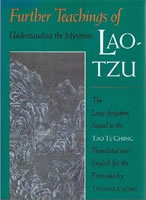
Further Teachings of Lao-Tzu: Understanding the Mysteries (Wen Tzu)   By Thomas Cleary

The Lunar Tao: Meditations in Harmony with the Seasons   By Deng Ming-Dao

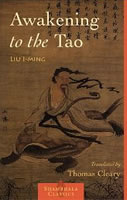
Awakening to the Tao   By Lui I-Ming (1780) and translated by Thomas Cleary

Ripening Peaches: Taoist Studies and Practices   By Mike Garofalo  

Zhuangzi: The Essential Writings with Selections from Traditional Commentaries   Translation and commentary by Brook Ziporyn  

The Inner Chapters of Chuang Tzu (Zhuangzi)   Translated by A. C. Graham


Wednesday, October 02, 2019

Everything Was More Vivid and Real


"My own experience of śaktipāta occurred at the age of 16 through meeting a powerful and loving meditation master.  It was not the product of wishful thinking, because I didn't even want to be there, at least on the level of the conscious mind.  My mother had persuaded me to take a two-day meditation retreat and I had acceded because I wanted the reward she was offering me; I had neither expectation nor hope that anything particularly magical would happen.  And indeed, the whole thing was fairly boring, though in the final meditation of the weekend, I did make a grudging effort to be fully present in the warm, dark stillness of the meditation room.  It was nice, but nothing special, until I opened my eyes and walked outside.  I was astonished to discover that the whole world had apparently changed.  Everything was more vivid and real, and almost sparkling.  Not only that, I was feeling an incredible energy in my heart, and it was flowing palpably between my heart and the hearts of everyone else I could see.  I call it "energy" for lack of a better word; it was a tangible power or force, not a passive feeling, and it had the nature of exquisitely pure love.  It was connecting the hearts of all the people around me, coursing freely in a kind of web or grid of power, entirely independent of whether the people liked each other or not.  Then I noticed it was really everywhere; the very air around me seemed thick with it; it was undoubtedly the most "real" thing in reality, though not perceptible with any of the five senses!  It was astonishing, and I was never the same, now that I knew this power, this love beyond anything I had ever imagined, was a real possibility in human life."
-  Christopher D. Wallis, Tantra Illuminated, 2012, p.323


Tantra Illuminated: The Philosophy, History, and Practice of a Timeless Tradition   By Christopher D. Wallis, M.A.  Illustrations by Ekabhumi Ellik.  Woodlands, Texas, Anusara Press, 2012.  Index, endnotes, bibliography, three appendices, 506 pages.  ISBN: 978-1937104016.  VSCL.  In 2012, the author was a Ph.D. candidate in Sanskrit at the University of California, Berkeley.  This book takes as its exemplar and focal point the lineages of nondual Śaiva Tantra most clearly typified by the Kaula Trika lineage.  Written for the educated lay reader.  The author shares his personal life, his spiritual life, his practices, his yoga, within this tradition of Tantra.   


Tantra: Path of Ecstasy By Georg Feuerstein (1947-2012), Ph.D. Boston, Shambhala, 1998. Index, bibliography, notes, 314 pages. ISBN: 157062304X. VSCL. An excellent introduction to Tantra, and a great starting point for readers. I own, and have read and reread in the last ten years nearly all of the books by Dr. Georg Feuerstein. If my understanding is correct, Dr. Feuerstein personally followed the path of Vajrayana Buddhism, a Tibetan Buddhist tradition, a lineage of Tantric Buddhism.

"Tantra's body-positive approach is the direct outcome of its integrative metaphysics according to which this world is not mere illusion but a manifestation of the supreme Reality.  If the world is real, the body must be real as well.  If the world is in essence divine, so must be the body.  If we must honor the world as a creation or an aspect of the divine Power (shakti), we must likewise honor the body.  The body is a piece of the world and, as we shall see, the world is a piece of the body.  Or, rather, when we truly understand the body, we discover that it is the world, which in essence is divine."
-  Georg Feuerstein, Tantra: The Path of Ecstasy, p. 53  


Somaesthetic Practices and Theory


Tantra: Bibliography, Quotations, Links, Resources


Nature and Spirituality 


Wednesday, December 06, 2017

Cardiac Rehabilitation Program


I participate in the Cardiac Rehabilitation program at the Peace Health Hospital in Vancouver on Mill Plain Avenue.  I had a stent implanted in my left arterial descending (LAD) in my heart on 10/18, and a pacemaker implanted in my heart on 6/9.  

I attend physical exercise classes on Monday, Wednesday, and Friday morning from 10 to 11:30 am.  I attend a heart health lecture on Wednesday from 9 to 10 am.  

I take a blood sugar test before and after the class, blood pressure is taken three times during the class, exertion levels are monitored, and I wear a electronic heart monitor that shows results on a computer monitor observed by experienced staff.  Staff members check and observe participants, and encourage you, and keep participation safe.  They contact heart physicians as needed.  

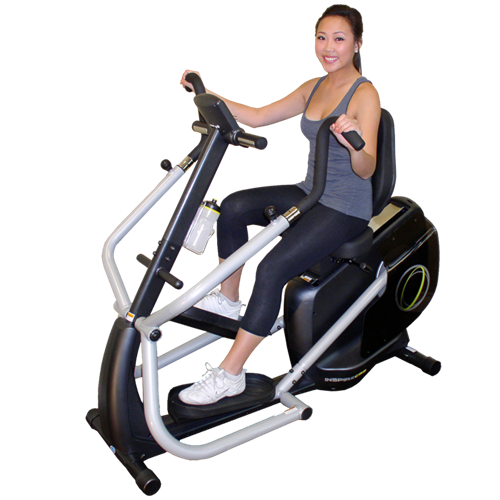
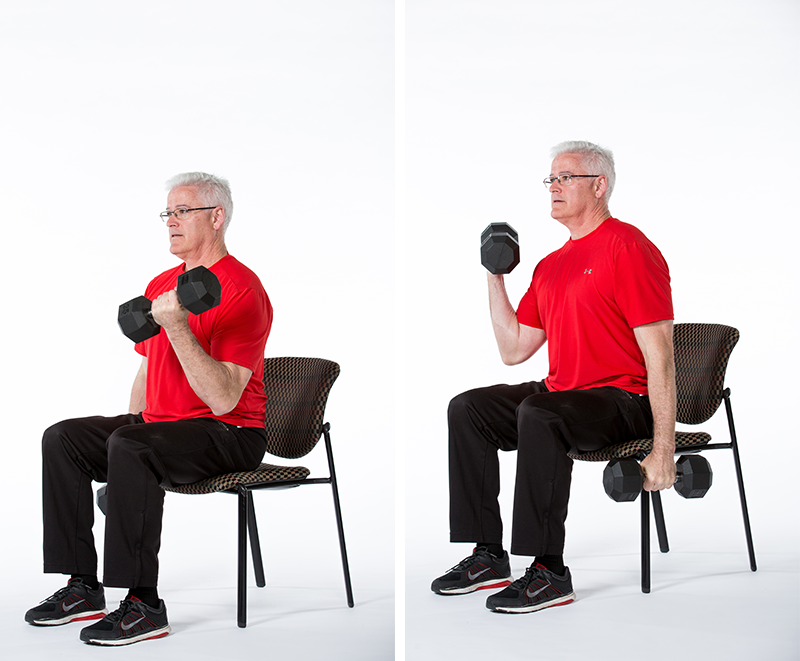
The physical exercises include 30 minutes of treadmill using pre-assigned levels of intensity settings (speed and incline).  25 minutes of seated incumbent bike.  30 minutes of chair exercises with weights or bands, and stretching.  

Diet is very important.  I try to eat under 1700 calories per day, reducing fat and salt and cheap carbohydrates.  My goal is to get my body weight to under 240 pounds, and I now weight 247.  

I take 4 medicines for heart problems.  This is an essential part of my medical program.  The medicines lower blood pressure, reduce clotting in the stent, prevent increased heartbeat, and includes a mild diuretic.   

I trust the team of therapists, nurses, physician's assistants, and physicians.  

Starting this weekend, I plan to add a similar workout on Saturday and Sunday at the LA Fitness gym on Fourth Plain Avenue near the Lewiston Highway (503).  


Image result for seated weight lifting for seniors

Saturday, November 04, 2017

Vancouver Tai Chi and Qigong


Sifu Brian Knack recently informed me by email about the reconfiguration of his local Tai Chi studio. It is now called "Vancouver Tai Chi and Qigong."

Sifu Knack is also back to teaching nearly all of the classes.

Classes are scheduled as follows:

Tuesday Morning
9 am Qigong,
10 am Tai Chi

Tuesday Evening
5:30 pm Advanced Tai Chi
6:30 pm Beginning Tai Chi
7:30 pm Push -Hands

Thursday Morning
9 am Qigong
10 am Advanced Tai Chi

Saturday Morning
10 am to 11:30 am Qigong and Tai Chi

Check beforehand about the content of the "Advanced Tai Chi" sessions.

Fees vary depending on levels and frequency of attendance.

Classes are held at the Vancouver Health and Wellness Building at 202 E. Mcloughlin Blvd., Vancouver, 360-607-8240. Also, on Facebook.


As long as my stamina and conditioning improves, my time permits, and my money permits, I plan to attend these classes on Saturday morning and Thursday evening.  Maybe we can meet there?

Monday, October 23, 2017

Weekend Grandparenting

Karen and I took care of our two granddaughters from last Thursday until Sunday evening.  We stayed at my daughter's home in Salmon Creek.  We talked, played, and entertained ourselves for many hours.  We attended two soccer games.  It was an enjoyable experience.  

Doing Yang style Tai Chi, qigong, and yoga indoors because of the steady rain.  Such Taiji activity requires some readjustment in the form work, but that also makes it more interesting in some ways.  I did not feel strong enough to go to the workshop on Wuji this past weekend. 


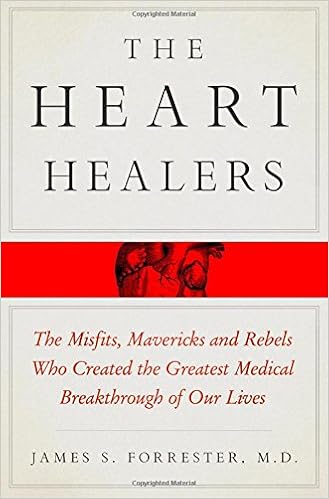
I read a fascinating book this weekend about the the history of the medical, pharmacological and technological improvements in the treatment of heart disease in the last 100 years.  "The Heart Healers: The Misfits, Mavericks, and Rebels Who Created the Greatest Medical Breakthrough of Our Lives."  This book was written by the renowned cardiologist, Dr. James S. Forrester.  (St. Martin's Press, 2015, 388 pages)  The individuals and teams of innovators, their dedication and creativity, their risk taking, and their hope to improve the lives of their patients are interwoven with the advances in medical science during this period.  Biographical insights into the personal lives of these creative physicians, bio-tech researchers, and scientists was very revealing.  

Personally, my advancing heart disease was likely slowed by the innovations and inventions of these great men and women: diagnostic methods, drugs, angioplasty, pacemaker, stents, etc.  


Friday, October 20, 2017

The Heart of the Matter

On Wednesday of this week, Dr. Gungor, my cardiologist, did the angiogram test.  He decided to have a stent inserted one of my heart arteries.   The coronary angioplasty was performed by another expert surgeon.  

I'm feeling pretty good now, and seem to have recovered properly from the procedure.  Taking it easy and resting for a few days.  No shortness of breath, lightheartedness, or chest discomfort.  

I will need to take a blood thinner medicine twice a day for a year. 

Hopefully, the quality of my life with improve in the coming months.  


Wednesday, October 18, 2017

My Health Problems

I continue to have some heart problems.  Today, Dr. Gungor will perform an angiogram test at 11 am.  He will give me the good or bad news afterwards.  Yes, I am a bit nervous.  After 71 years of good health, circumstances have changed. 

The challenges of aging!  Deal with them!!

Aging Well


Thursday, August 24, 2017

Steady Progress

Karen and I have been busy working on making our new house our home.

We have improved the back yard with new plants, trellis, pots, fencing, steps, pavers, etc.  


There are still some boxes remaining in our garage waiting to be unboxed, sorted, and moved.  We want to park one of our cars in the garage for easy loading and unloading in the garage, especially during our coming wet autumn-winter season.  With 45 inches of rain per year average, a sheltered place for our car will be useful.  

I joined the local LA Fitness gym.  It is 2.8 miles from my new home.  It has all the facilities, equipment, and amenities I will need for exercising.  It also has a very nice heated lap pool.  I will try their yoga classes.  

Walking for 30 minutes in the morning and/or evening.  Beautiful summer weather here in Vancouver for pleasant walks.  

My new (6/6/17) pacemaker seems to be working OK.  My sprained right hand and broken right ring finger are steadily healing.  I now have a team of physicians and good health care support here in Vancouver.  

I had hoped to study Tai Chi Chuan and Qigong here in Vancouver with Sifu Brian Knack. However, unfortunately, he retired and moved from the area.  I am researching Tai Chi Chuan training options in Vancouver.  There are many options in nearby Portland.  However, commuting from Vancouver to Portland and back to Vancouver is very time consuming and inefficient considering typical traffic patterns.   

Monday, June 12, 2017

Very Grateful

I had a Pacemaker implanted on June 7, 2017.  I seem to be doing well thus far. 

I told my story a few days ago.  

I am now walking, slowly and steadily, three times each day for 20 minutes each time.  I try to increase the time walking each day.  Also, I am doing gentle modified Taiji every day.  

I often reflect on this fact: If I was living in 1917, no medical procedures or drugs existed to keep me alive with severe Bradycardia (very low heartbeat).  

I thank all the medical professionals, health care workers, engineers, scientists, and creative people who have helped so many people.  

I thank all those people, Republicans and Democrats and Independents, who in 1964 established Medicare.  I thank all the hard working citizens in the United States who support Medicare, and contribute part of their paycheck each month for public governmental health services.  I worked 54 years and politically supported these governmental health care programs, and paid for these programs.  My wife and I still pay for Medicare and other health insurance.  

I favor many of Senator Bernie Sanders ideas for improving health care in America.  

I am very grateful to all Americans for helping to keep me alive.  

I will try my best to return this great favor to me, and promise to work to help make America a decent, just, and productive place to live for all people.  


Monday, June 05, 2017

Pacemaker Time for Me

My health has been in some decline for the last ten months.

For the last decade, my 1st degree AV Node heart block has been worsening.  Recent symptoms in the last ten months have included: shortness of breath with mild exertion, lightheaded experiences, weakness, slow heartbeat episodes (Bradycardia), skipped heartbeats, fatigue, occasional dizziness, chest pains, feeling uncomfortable and very anxious at times, etc.   I have worn an exterior heart monitor for a few months last year, and now have an electronic heart monitor chip implanted in my chest.

Two weeks ago my new cardiologist from Peace Health Hospital in Vancouver reviewed my case.   A few days later, technicians brought up all the data results from my implanted heart monitor.  The results were very bad. My heartbeat was falling at times to 40, 30, and even 20 heartbeats per minute.

Last week, I met with the electro-cardiologist physician and associated team. Four doctors, including my cardiologist of the last 15 years in Redding, CA, all recommend I have a Pacemaker implanted.  Without the surgery to implant a Pacemaker, my death would come much sooner rather than later.  

The 2 hour Pacemaker implant surgery is scheduled for Wednesday morning, June 7th, 2017.  Dr. Yamac Gungor is the electro-cardiologist who will do the surgery.

Since I am now 71 years old, I must, like all other older people, deal with health setbacks as best I can.  I have been told the surgery is typically uncomplicated, and the results typically are very positive for the patient.  Hopefully, this will be the case for me.

My wife and I pay $550 per month for health insurance, not including the cost for medicines.  Hopefully, we will not have a huge expense for this surgery.

Wednesday, April 20, 2016

Mystical Experience: Sakipata


"My own experience of śaktipāta occurred at the age of 16 through meeting a powerful and loving meditation master.  It was not the product of wishful thinking, because I didn't even want to be there, at least on the level of the conscious mind.  My mother had persuaded me to take a two-day meditation retreat and I had acceded because I wanted the reward she was offering me; I had neither expectation nor hope that anything particularly magical would happen.  And indeed, the whole thing was fairly boring, though in the final meditation of the weekend, I did make a grudging effort to be fully present in the warm, dark stillness of the meditation room.  It was nice, but nothing special, until I opened my eyes and walked outside.  I was astonished to discover that the whole world had apparently changed.  Everything was more vivid and real, and almost sparkling.  Not only that, I was feeling an incredible energy in my heart, and it was flowing palpably between my heart and the hearts of everyone else I could see.  I call it "energy" for lack of a better word; it was a tangible power or force, not a passive feeling, and it had the nature of exquisitely pure love.  It was connecting the hearts of all the people around me, coursing freely in a kind of web or grid of power, entirely independent of whether the people liked each other or not.  Then I noticed it was really everywhere; the very air around me seemed thick with it; it was undoubtedly the most "real" thing in reality, though not perceptible with any of the five senses!  It was astonishing, and I was never the same, now that I knew this power, this love beyond anything I had ever imagined, was a real possibility in human life."
-  Christopher D. Wallis, Tantra Illuminated, 2012, p.323


Tantra Illuminated: The Philosophy, History, and Practice of a Timeless Tradition   By Christopher D. Wallis, M.A.  Illustrations by Ekabhumi Ellik.  Woodlands, Texas, Anusara Press, 2012.  Index, endnotes, bibliography, three appendices, 506 pages.  ISBN: 978-1937104016.  VSCL.  In 2012, the author was a Ph.D. candidate in Sanskrit at the University of California, Berkeley.  This book takes as its exemplar and focal point the lineages of nondual Śaiva Tantra most clearly typified by the Kaula Trika lineage.  Written for the educated lay reader.  The author shares his personal life, his spiritual life, his practices, his yoga, within this tradition of Tantra.   

Tantra: Path of Ecstasy  By Georg Feuerstein (1947-2012), Ph.D.  Boston, Shambhala, 1998.  Index, bibliography, notes, 314 pages.  ISBN: 157062304X.  VSCL.  An excellent introduction to Tantra, and a great starting point for readers.  I own, and have read and reread in the last ten years nearly all of the books by Dr. Georg Feuerstein.  If my understanding is correct, Dr. Feuerstein personally followed the path of Vajrayana Buddhism, a Tibetan Buddhist tradition, a lineage of Tantric Buddhism.  


"Tantra's body-positive approach is the direct outcome of its integrative metaphysics according to which this world is not mere illusion but a manifestation of the supreme Reality.  If the world is real, the body must be real as well.  If the world is in essence divine, so must be the body.  If we must honor the world as a creation or an aspect of the divine Power (shakti), we must likewise honor the body.  The body is a piece of the world and, as we shall see, the world is a piece of the body.  Or, rather, when we truly understand the body, we discover that it is the world, which in essence is divine."
-  Georg Feuerstein, Tantra: The Path of Ecstasy, p. 53  


Somaesthetic Practices and Theory

Tantra: Bibliography, Quotations, Links, Resources

Nature and Spirituality 


Saturday, October 11, 2014

Walk Your Way to Better Health

"Taking a moderately-paced walk for between 30 and 45 minutes daily was found to increase the amount of immune system cells that were present in the body. The levels of immunity boosters remained elevated for several hours after exercise and appear to have a cumulative effect in protecting against illnesses over time."
Walk Away from Colds


"There are countless physical activities out there, but walking has the lowest dropout rate of them all! It's the simplest positive change you can make to effectively improve your heart health.
Research has shown that the benefits of walking and moderate physical activity for at least 30 minutes a day can help you:
  • Reduce the risk of coronary heart disease
  • Improve blood pressure and blood sugar levels
  • Improve blood lipid profile
  • Maintain body weight and lower the risk of obesity
  • Enhance mental well being
  • Reduce the risk of osteoporosis
  • Reduce the risk of breast and colon cancer
  • Reduce the risk of non-insulin dependent (type 2) diabetes."
American Heart Association, The Benefits of Walking

Ways of Walking  Hundreds of quotations, sayings, poems, quips, and insights about walking.  


"Walking is one of the simplest and easiest ways to get the exercise you need in order to be healthy—and almost anyone can do it. Walking can strengthen bones, tune up the cardiovascular system, and clear a cluttered mind. This uncomplicated but important activity continues to attract researchers, reports the March 2011 issue of the Harvard Health Letter. Recent research indicates that:  Later in life, walking becomes as much an indicator of health as a promoter of it. After age 65, how fast you walk may predict how long you have to live. Walking, or gait, has long been recognized as a proxy for overall health and has been measured in many studies. Researchers have found a remarkably consistent association between faster walking speed and longer life."
-  Harvard Medical School, Research Points to Even More Health Benefits of Walking


Wednesday, January 09, 2013

Three Things

"When you die, only three things will remain of you, since you will abandon all material things on the threshold of the Otherworld: what you have taught to others, what you have created with your hands, and how much love you have spread. So learn more and more in order to teach wise, long-lasting values. Work more and more to leave the world things of great beauty. And love people around you for the Light of Love heals everything."
- François Bourillon

Triads: Wisdom Sayings of the Celts, Druids, and Neopagans

Wednesday, October 31, 2012

The Fragrance of Rock

"When speech comes from a quiet heart, it has the strength of the orchid, and the fragrance of rock."
-  Stephen Mitchell, Four Watercolors by Tao-chi  

"Gratitude unlocks the fullness of life.  It turns what we have into enough, and more. It turns denial into acceptance, chaos to order, confusion to clarity.  It can turn a meal into a feast, a house into a home, a stranger into a friend.  Gratitude makes sense of our past, brings peace for today, and creates a vision for tomorrow."
-  Melody Beattie

Simplicity: Quotes, Sayings, Poems

Heart

Sunday, July 01, 2012

Walking Around the Mind

I usually leave my home at around 5:15 am to begin my morning walk in the summer months.  It is cool, quiet, and the air is sweet and clear in the early morning hours.  I walk about 3.6 miles.  A good portion of my walk is at an unhurried, easy, and steady pace.  I use some of my walking time for meditative or spiritual practices (Sadhana).  Just the walk itself is a spiritual practice.  

Before I begin my walk, I use a Calling the Quarters ritual for honoring and acknowledging the sacred space of my environment.    

Enjoy your walk as if you were drinking water when you are thirsty, or eating a plum when you are hungry, or making love when lust overcomes you. 


Today, when you walk, try the following imaginative exercise.  Some might call it a contemplative exercise or meditative practice.

Keep your eyes open so as to walk safely, but don't focus or stare at particular objects.

Imagine what you look like from above if you were in a balloon at various altitudes looking down at yourself walking on the earth.

Imagine what you look like from below and in front of you if you were a small animal or insect seeing you approaching them.

Imagine what you look like from the sides as you walk along.  Vary the distance from you as a walker and the imaginative person or animal looking at you. 

Imagine what you look like from behind as you walk away from the viewer.  What does your backside look like from 10 meters, 100 meters?  

Imagine what you would look like walking in a different season of the year?  We are imbedded in the context of the world, other things, the ground, our place, the season, in the sunlight - and we are seen walking in such contexts.  

Imagine looking within your body and seeing your heart beating, blood flowing through your arteries and veins, your lungs rising and falling, your muscles contracting and relaxing.  

If the imaginative "viewer" were at a great distance, could "It" even see you moving?  

Draw your attention to how your walking body would look from various angles and distances.  As you shift your viewing perspectives, does your mind change?
Imagine yourself as a viewer, witness, and observer removed from your body.

Who is the "self" that can imagine in this manner?  Is it your ordinary mind, your ego, your social self, an outpouring of your material essence; or, is the "It" or the "That" which is self-aware that is something more profound, more expansive, more miraculous?  Are "you" doing the imagining?  Is it the vast interdependent matrix of beings that can imagine, reflect, witness itself?  Is imagining another form of seeing; or, seeing just another form of imagining?  
 
Play with these questions and ideas.  Mull over them.  Smile.  Walk on. 

"Wherever you are is the entry point."
-  Kabir