"In the Confucian writings Tao usually
means either a road or a way of life. It means that in the opening verse of the Tao
Te Ching, “The way that can be followed (or the road that can be traced or
charted) is not the true way. The word that can be spoken is not the true word.”
Very quickly the text drives home the numinous significance of both Tao and Te. Tao is
described by paradox and contradiction — the Absolute in a worldview where
absolutes are impossible, the ultimate reality which is neither being nor not
being, the hidden meaning behind all meaning, the pure act which acts without
action and yet the reason and order of the simplest physical occurrence.
It is quite possible — in fact Joseph Needham in his great Science
and Civilization in China does
so — to interpret the Tao Te
Ching as a treatise of
elementary primitive scientific empiricism; certainly it is that. Over and over
it says, “learn the way of nature”; “do not try to overcome the forces of nature
but use them.” On the other hand, Fr. Leo Weiger, S.J., called the Tao
Te Ching a restatement of the
philosophy of the Upanishads in
Chinese terms. Buddhists, especially Zen Buddhists in Japan and America, have
understood and translated the book as a pure statement of Zen doctrine. Even
more remarkable, contemporary Chinese, and not all of them Marxists, have
interpreted it as an attack on private property and feudal oppression, and as
propaganda for communist anarchism. Others have interpreted it as a cryptic work
of erotic mysticism and yoga exercises. It is all of these things and more, and
not just because of the ambiguity of the ideograms in a highly compressed
classical Chinese text; it really is many things to many men — like the Tao
itself.
Perhaps the best way to get at the foundations of the philosophy of the Tao
Te Ching is by means of a
historical, anthropological approach which in itself may be mythical. There is
little doubt that the organized Taoist religion, which came long after the Tao
Te Ching but which still was
based on it, swept up into an occultist system much of the folk religion of the
Chinese culture area, much as Japanese Shinto (which means the Tao of
the Gods) did in Japan. If the later complicated Taoist religion developed from
the local cults, ceremonies and superstitions of the precivilized folk religion,
how could it also develop from the Tao
Te Ching or from the early
Taoist philosophers whose works are collected under the names of Chuang Tzu and
Lieh Tzu and who are about as unsuperstitious and antiritualistic as any
thinkers in history? The connection is to be found I feel in the shamans and
shamanesses of a pan-Asiatic culture which stretches from the Baltic far into
America, and to the forest philosophers and hermits who appear at the beginnings
of history and literature in both India and China and whose prehistoric
existence is testified by the yogi in the lotus position on a Mohenjo-Daro seal.
The Tao Te Ching describes
the experiential or existential core of the transcendental experience shared by
the visionaries of primitive cultures. The informants of Paul Radin’s classic Primitive
Man as Philosopher say much the
same things. It is this which gives it its air of immemorial wisdom, although
many passages are demonstrably later than Confucius, and may be later than the
“later” Taoists, Chuang Tzu and Lieh Tzu.
There are two kinds of esotericism in Oriental religion: the proliferation of
spells, chants, rituals, mystical diagrams, cosmologies and cosmogonies, trials
of the soul, number mysticism, astrology, and alchemy, all of which go to form
the corpus of a kind of pan-Gnosticism. Its remarkable similarities are shared
by early Christian heretics, Jewish Kabbalists, Tantric worshipers of Shiva,
Japanese Shingon Buddhists, and Tibetan lamas. The other occultism (held
strangely enough by the most highly developed minds amongst some people) is the
exact opposite, a stark religious empiricism shorn of all dogma or cult, an
attitude toward life based upon realization of the unqualified religious
experience as such. What does the contemplator contemplate? What does the life
of illumination illuminate? To these questions there can be no answer — the
experience is beyond qualification. So say the Zen documents, a form of late
Buddhism originating in China, but so say the Hinayana texts, which are assumed
to be as near as we can get to the utterances of the historic Buddha Sakyamuni,
but so say also the Upanishads —
“not this, not this, not that, not that,” but so also say some of the highly
literate and sophisticated technical philosophers (in our sense of the word) of
Sung Dynasty Neo-Confucianism. So says the Tao
Te Ching.
In terms of Western epistemology, a subject Classical Chinese thought does not
even grant existence, the beginning and end of knowledge are the same thing —
the intuitive apprehension of reality as a totality, before and behind the data
of sense or the constructions of experience and reason. The Tao
Te Ching insists over and over
that this is both a personal, psychological and a social, moral, even political
first principle. At the core of life is a tiny, steady flame of contemplation.
If this goes out the person perishes, although the body and its brain may
stumble on, and civilization goes rapidly to ruin. The source of life, the
source of the order of nature, the source of knowledge, and the source of social
order are all identical — the immediate comprehension of the reality beyond
being and not being; existence and essence; being and becoming. Contact with
this reality is the only kind of power there is. Against that effortless power
all self-willed acts and violent attempts to rule self, man, or natural process
are delusion and end only in disaster.
The lesson is simple, and once learned, easy to paraphrase. The Tao is like
water. Striving is like smoke. The forces of Nature are infinitely more powerful
than the strength of men. Toil to the top of the highest peak and you will be
swept away in the first storm. Seek the lowest possible point and eventually the
whole mountain will descend to you. There are two ways of knowing, under
standing and over bearing. The first is called wisdom. The second is called
winning arguments. Being, as power, comes from the still void behind being and
not being. The enduring and effective power of the individual, whether hermit or
king or householder, comes from the still void at the heart of the
contemplative. The wise statesman conquers by the quiet use of his opponents’
violence, like the judo and jujitsu experts.
The Tao Te Ching is
a most remarkable document, but the most remarkable thing about it is that it
has not long since converted all men to its self-evident philosophy. It was
called mysterious at the beginning of this essay. It is really simple and
obvious; what is mysterious is the complex ignorance and complicated morality of
mankind that reject its wisdom.
-
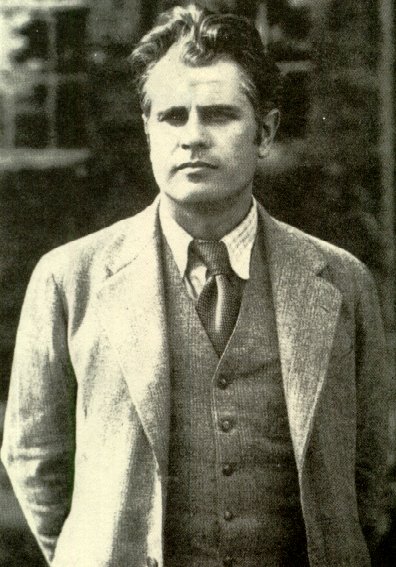
Kenneth Rexroth,
Classics Revisited, 1968