Showing posts with label Trees. Show all posts

Thursday, December 25, 2025

Happy Holidays

We plan to enjoy the many celebrations that center around the Winter Solstice.  Best wishes to everyone.


Merry Christmas, Party at Saturnalia, a Happy New Year, beneficent Yule Celebrations, and more Winter Lore!  

Karen and I enjoy this season. We decorate a lighted tree, and set out Christmas decorations. We exchange presents with family and friends.  We prepare special holiday meals: cookies, tamales, Italian dishes, fruitcake, Mexican dishes, pies. We light fires in our fireplace. We play and sing Christmas carols. Many Pagan and Christian celebrations overlap in America, just like in ancient Rome in 100 CE. Retail stores and markets are busy, and Christmas decorations and colored lights are in evidence everywhere.  

Lately, our typical weather here in Vancouver, Washington, has been 35F low and 48F high, with light rain and fog, and sometimes with a little snow. As for gardening, we bring many frost sensitive potted plants indoors for warmth.

My brother, Philip Greco, was born on December 21st. I was born in January. I have always celebrated Christmas my whole life. This holiday season represents both the ending of the year and the beginning of the new year.  A mixed blessing. 


Yule Celebrations  A hypertext notebook by Mike Garofalo.  

Yule, Winter Solstice, Christmas, Xmas, Saturnalia, Wassail Blot, December 20th - 31st
Festival of the Fires, Feliz Navidad, Birthday of Mithras, New Year Celebrations, Santa Claus, Brumalia, Christmas Eve, Father Christmas, St. Nicholas, Las Posadas, Hanukkah, Kwanzaa, 2nd Celebration in the NeoPagan Holy Day Annual Cycle or Wiccan Wheel of the Year.


"Reclaim Santa Claus as a Pagan God form. Today's Santa is a folk figure with multicultural roots. He embodies characteristics of Saturn (Roman agricultural god), Cronos (Greek god, also known as Father Time), the Holly King (Celtic god of the dying year), Father Ice/Grandfather Frost (Russian winter god), Thor (Norse sky god who rides the sky in a chariot drawn by goats), Odin/Wotan (Scandinavian/Teutonic All-Father who rides the sky on an eight-legged horse), Frey (Norse fertility god), and the Tomte (a Norse Land Spirit known for giving gifts to children at this time of year). Santa's reindeer can be viewed as forms of Herne, the Celtic Horned God. Decorate your home with Santa images that reflect His Pagan heritage. Honor the Goddess as Great Mother. Place Pagan Mother Goddess images around your home. You may also want to include one with a Sun child, such as Isis with Horus. Pagan Goddess forms traditionally linked with this time of year include Tonantzin (Native Mexican corn mother), Holda (Teutonic earth goddess of good fortune), Bona Dea (Roman women's goddess of abundance and prophecy), Ops (Roman goddess of plenty), Au Set/Isis (Egyptian/multicultural All Goddess whose worship continued in Christian times under the name Mary), Lucina/St. Lucy (Roman/Swedish goddess/saint of light), and Befana (Italian Witch who gives gifts to children at this season)."
- Selena Fox, Celebrating the Winter Solstice 


"It was the Yuletide, that men call Christmas though they know in their hearts it is older than Bethlehem and Babylon, older than Memphis and mankind."
-  H.P. Lovecraft


Image result for grandfather frost

Are not Yuletide costumes fascinating?
The Ice King and Ice Queen from Russia.


"Before the time of Constantine the ancient world was a virtual cornucopia of different religions and cults that existed all over the Roman Empire and eastward into China and India. As a result of these competing doctrines "when Christianity was only one of several dozen foreign Eastern cults struggling for recognition in Rome, the religious dualism and dogmatic moral teaching of Mithraism set it apart from other sects, creating a stability previously unknown in Roman paganism" (Mithras in the Roman Empire). The striking parallels to Christianity in Mithraism have long been pointed out, for Mithras was said to have been: born of a virgin birth, had twelve followers or disciples, was killed and resurrected, performed miracles, and was known as mankind's savior who was called the light of the world and his virgin birth occurred on December 25. Indeed, the resemblances are so striking in that all of the Christian mysteries were known nearly five hundred years before the birth of Christ that later church fathers claimed that Satan had created all of this prior to Christ's birth so as to confuse the laity. In regard to Mithras Nabaraz wrote: 'According to Persian traditions, the god Mithras was actually incarnated into the human form of the Saviour expected by Zarathustra. Mithras was born of Anahita, an immaculate virgin mother once worshipped as a fertility goddess before the hierarchical reformation. Anahita was said to have conceived the Saviour from the seed of Zarathustra preserved in the waters of Lake Hamun in the Persian province of Sistan. Mithra's ascension to heaven was said to have occurred in 208 B.C., 64 years after his birth. This birth took place in a cave or grotto, where shepherds attended him and regaled him with gifts, at the winter solstice. This is based on an older myth about birth of Mithra, that his magical birth at the dawn of time was from a rock from which he formed himself using his Will. He holds in his hand a dagger and a torch. A statue from Housesteads shows Mithras being born from the rock while the twelve signs of the zodiac surround him, showing his image as a stellar god who rules the cosmos even at his birth. A serpent [is at} times shown to be coiled around…Mithras or [his] birth stone/egg. (Mithras and Mithraism).' "
Christ, Constantine, Sol Invictus: The Unconquerable Sun By Ralph Monday


Yuletide Customs: Family Gatherings in Oregon and Washington


Thanksgiving Day, 2012, Oregon
Betty Eubanks-Yarber, R.I.P., 2017
Family Gatherings are popular at Yuletide in America,
or later at Chinese New Year Week.


2015 Christmas, Oregon


2020 Washington


2020 Washington


Image result for Holly King

Wednesday, May 28, 2025

The Eucalyptus Trees at Tomales Bay

We laughed over dinner in the Village at Bodega Bay. The shrimp scampi and grilled asparagus, plated to perfection, tasty beyond belief, remembered to this day. Brothers and wives, six old carriers of fading memories, sat together chatting over wine and fancy local cheese.

From our comfortable hotel suites we gazed at the wind-surfers sliding around the quiet harbor today, heard children talking in the shade, walked up to vista points, smelled the salty spray, wondered about our futures fading fast day by day.

Talked about our surgeries, our children's escapades and failures, our trips to places faraway, our dead friends and family erased from time, and our petty habits that directed our minds.

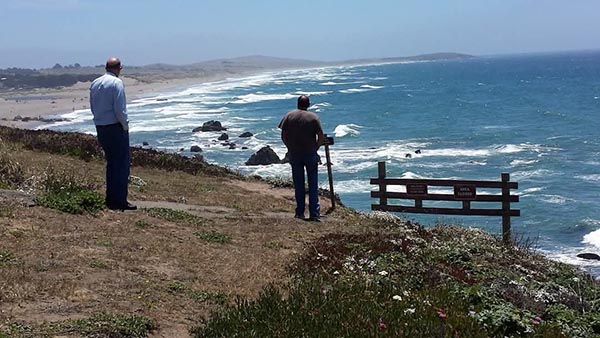
The grassy hills, carpets of green, a few wildflowers of early spring, spread over smooth rounded mounds of earth bordering this quaint smallish bay.

We walked and talked, ruminated, reflected on what we once saw and what we missed. Since we all had worked, saved, invested, and retired, lived in California all our lives, in a peaceful time, our experiences reflected our conservative bourgeois lives.

We drove south along Highway 1, along the lush hills encasing narrow Tomales Bay. Forests of fragrant eucalyptus trees, dense, flaky barked, for miles and miles as far as one could see. Dead pointed arrow-tipped leaves spread thick beneath our booted feet. Eucalyptus seed pods, gnarled and round, twisted in our fingers fragrantly.

The shallow Tomales Bay was calm, subdued, and colored in shades of gray. Drivers in the traffic from Frisco, escaping city life, streamed steadily though these rural scenes, past hip cafes, and souvenir packed shops. Headed up the coast, kind of lost, but not, just pretending to be explorers or adventurers ... but they were not. Just folks with cash, like us, tourists on a weekend lark.

Below the slender 15 mile long Tomales Bay estuary, Deep Below, under miles of salty rocks, crawling slowly, pushing-pushing, inching along, invisible and real, the Immense San Andreas Fault. One side of the shallow bay moves northwest, the other side shifts south. If the San Andreas Fault faulted, split, rifted, strike-shifted, exploded, rock and rolled ... the earthquakes would send tsunami waves to the height of young Madrone trees, and slash Inverness, Marshall, and Point Reyes Stations to rubbled ground! Leaving broken houses, wrecked cars, rotting herring, salmon, eels, sturgeon, halibut, and human bits scattered all around. Always a disastrous possibility!

Yet, I did not worry, can't fret about every unpredictable or unknown threat. Just enjoyed eating a fine carnitas tamale and flirted with a Hot Tamale Lady in a Olema cafe; that's It! Little time to dwell on Death ... the inevitable ultimate Rift.

My brother and I gazed to the South, wistfully, at Sonoma State Beach, near where the Russian River empties down into the Pacific Sea. We were older, wiser, but listing steeply toward our ends from disease. Memories from 2019 ... crumbling.


This poem is one part of:

At the Edges of the West
Highway 101 and 1
Memories of Pacific Coast Places
By Mike Garofalo

25 Steps and Beyond: The Collected Works
By Mike Garofalo


Saturday, May 03, 2025

Rhododendron and Bonsai Garden in Tacoma WA

Today, Karen and I visited the Rhododendron Species Botanical Garden, with the largest collection in the world, north of Tacoma, Washington. It was constructed by the Weyerhaeuser Timber Company. The gardens also feature a fantastic exhibit of champion Bonsai plants at the Pacific Bonsai Museum. The gardens, close to the Interstate 5 Freeway, were surrounded by Douglas Firs.

Many companion plants were also featured: Himalayan blue poppies, camellias, magnolias, Japanese maples, and many rare plants. Many vendors were present selling a variety of plants. We purchased two rhododendrons.

The traffic from Olympia to Tacoma was extremely congested this Saturday. We found the driving experience to be frustrating and very tiring.

Sunday, April 20, 2025

The Man Who Planted Trees


The Man Who Planted Trees. By Jean Giono. Illustrated by Michael McCurdy. Chelsea Green, 2007, 72 pages. 


From a Facebook Post on March 18, 2025. One reviewer suggested that this is an artificially AI generated post to sell the book. You be the judge:

I found "The Man Who Planted Trees" three days after the diagnosis. Terminal, they said. Six months, maybe less. I hurled books across my hospital room, cursing the universe for its cruelty, until a thin volume slipped from the pile, landing open-faced on the sterile floor. A nurse picked it up, glanced at the first page, and against protocol, left it on my bedside table instead of reshelving it.
"You might need this one," she whispered.
She was right. But not for the reasons either of us could have imagined.
Let me tell you about resurrection.
Not the biblical kind—though what Jean Giono created in his slender 4,000-word masterpiece borders on the miraculous—but the kind that begins with dirt under fingernails and an obstinate refusal to accept desolation as the final word.
Most readers encounter "The Man Who Planted Trees" as ecological parable or gentle inspiration. They admire its message of environmental stewardship, nod appreciatively at its humanistic optimism, perhaps feel momentarily better about our species' potential. Then they return it to the shelf and continue their lives fundamentally unchanged.
I couldn't return it to the shelf. Because Elzéard Bouffier wouldn't let me go.
The story's premise is deceptively simple: In 1913, a young hiker traverses the barren, wind-scoured highlands of Provence, a landscape so bleak it drives inhabitants to madness or exodus. There he encounters a silent shepherd methodically planting oak trees—one hundred perfect acorns daily, year after year, asking nothing in return. The narrator returns after both world wars to discover this solitary man's quiet, relentless labor has miraculously transformed thousands of acres of wasteland into a vibrant, water-rich forest ecosystem where communities once again thrive.
A simple summary that betrays nothing of the story's devastating power.
I began reading in that antiseptic hospital room, my body already betraying me at thirty-six, the scan results still burning in my mind. By page three, something shifted. Giono's sparse prose—devoid of sentimentality yet pulsing with life—bypassed my intellectual defenses and struck directly at something primal within me.
His description of that initial landscape—"everything was barren and colorless, a desert without even the drama of traditional deserts"—mirrored my interior state with such precision that I gasped audibly. The nurse looked up, concerned, but I waved her away, already descending deeper into Giono's world.
When the narrator first meets Bouffier, the shepherd is described with haunting simplicity: "His beard was black, and his shoulders slightly hunched, but his figure was tall and straight, more suggestive of an athlete than an old man." Something in this portrait of contained power, of vitality harnessed for purpose rather than display, seized me. I read the entire story without moving, the hospital machinery beeping in counterpoint to my racing heart.
That night, I dreamed of acorns—hundreds of them, cool and smooth in my palms.
What makes "The Man Who Planted Trees" truly dangerous isn't its ecological message but its fundamental challenge to our understanding of time, purpose, and what constitutes a meaningful life.
Bouffier plants trees he will never sit beneath. He creates forests without recognition or reward. He persists through two world wars, through personal tragedy, through complete societal collapse and reconstruction, doing exactly one thing: planting perfectly selected seeds in precisely the right places, then letting nature and time do what they will.
This radical patience—this refusal of instant gratification, external validation, or even measurable short-term progress—represents a direct assault on everything our culture holds sacred. Bouffier's calm, methodical labor exposes the poverty of our addictions to immediacy, recognition, and tangible results.
And yet, the miracle happens. The wasteland transforms. Life returns. Not through dramatic intervention or technological salvation, but through one man's stubborn, daily choice to believe in a future he personally will barely glimpse.
By day three in the hospital, something unprecedented occurred. I found myself examining my own wasteland with different eyes. What if my diagnosis wasn't an ending but a clarification? What if the time I had—whether six months or six years—could be measured not in duration but in seeds planted?
I began making calls. Family members I'd avoided for decades. Former colleagues I'd betrayed climbing corporate ladders. My estranged son, now eighteen, who'd stopped taking my calls five years earlier.
Many rejected my overtures. Some responded with suspicious caution. A few engaged more openly. I didn't explain the diagnosis—this wasn't about extracting forgiveness or pity. It was about planting whatever seeds I could in the time remaining.
I started volunteering at a youth center near my apartment, teaching chess to kids with life circumstances far more challenging than my privileged trajectory. I allocated my savings to establish a small foundation focused on reforesting a degraded watershed in my grandfather's rural hometown.
The doctors were baffled by my sudden shift from rage to focused engagement. My oncologist suggested the medication might be affecting my cognition. I smiled and told her I'd simply found a better way to measure what remained of my life.
One acorn at a time.
The true power of Giono's story isn't its gentle hopefulness but its ruthless rejection of excuses. Bouffier begins his work as an old man, already sixty-five when the narrator first meets him. He has suffered devastating personal loss. The landscape itself actively resists regeneration. The broader society remains oblivious to his efforts for decades.
None of this matters to him. None of it interrupts the steady rhythm of his planting.
When I returned to the hospital for treatment six weeks after that first reading, I brought my own dog-eared copy of the book. As chemicals designed to kill rapidly dividing cells dripped into my veins, I read aloud to two other patients receiving treatment. One wept silently by the end. The other asked to borrow it when I finished.
We formed an unlikely book group in that chemo ward—discussing Bouffier's methods, his solitude, his monastic patience. The oncology nurses began calling us "the forest people," not understanding our private reference but sensing the strange energy our discussions generated amid the clinical despair.
Seven months later—already longer than my initial prognosis—a second scan showed something unexpected. Not remission, not yet, but a significant slowing of the disease's progression. My oncologist called it "unusual but not unprecedented." I had a different explanation.
I'd begun to dream regularly of Bouffier—not as Giono described him but as a presence beside me, teaching me to distinguish promising acorns from those that would never germinate. In these dreams, we worked together in comfortable silence, filling pockets with seeds, walking barren ridgelines, kneeling in dust and stone.
During my waking hours, I continued my own planting—reconciliations where possible, new connections where not, small contributions to strangers' lives, seeds of possibility in whatever soil would receive them.
Inexplicably, improbably, I was still alive.
What "The Man Who Planted Trees" offers isn't gentle inspiration but a radical alternative to despair. Giono doesn't just tell a pretty story about environmentalism—he demonstrates that meaning exists precisely in the face of apparent futility, that purpose transcends outcome, that transformative power often lies in the humblest, most repetitive actions.
The story's most devastating passage describes Bouffier's work during World War I: "The war of 1914 had taken away all his sons, all three of them... He resumed his planting." This breathtaking understatement contains volumes—both the immensity of Bouffier's personal tragedy and the immensity of his refusal to surrender to it.
Three years after my diagnosis, against all medical predictions, I remain. The disease and I have reached a standoff of sorts—it advances more slowly than expected; I live more fully than I ever did in health. I've since learned that Giono wrote this story for an American magazine that requested "the most extraordinary character I've encountered." He invented Bouffier entirely, later explaining: "My goal was to make trees likeable, or more specifically, to make planting trees likeable."
But here's what Giono himself may not have fully understood: he didn't create a character; he created a template for living meaningfully in the face of apparent hopelessness. He didn't make trees likeable; he made perseverance without guarantee of personal reward not just likeable but essential.
Last week, I visited the youth center where I still teach chess. One of my first students—now heading to college on scholarship—asked why I never seem afraid despite my illness. I showed him my worn copy of Giono's book.
"The man in this story," I explained, "plants trees knowing three things for certain: many will fail to grow, he won't live to see most that do succeed, and he has no guarantee the world won't destroy his work through war or greed or simple indifference."
"Then why bother?" the young man asked.
"Because the planting itself matters," I said. "Because transformation always begins in apparent futility. Because life, ultimately, is measured not in what we harvest but in what we plant."
I don't know if he understood. But later that day, I saw him reading the book in a corner, his expression intense with discovery.
Another acorn planted.
If you value comfort over transformation, avoid "The Man Who Planted Trees." This isn't inspirational literature; it's a literary detonation device disguised as a simple tale. Once you truly absorb Bouffier's example, you lose all excuses for inaction. You forfeit the luxury of despair. You find yourself, against all reason, planting seeds in whatever barren landscape you've been given—with no guarantee except that the planting itself may be the most profound expression of being fully alive.
And somewhere in your dreams, a forest is already rising.

Like
Comment
Send
Share
Facebook
Facebook
Facebook
Facebook
Facebook
Facebook
Facebook