Showing posts with label Diet. Show all posts

Monday, June 02, 2025

Reducing Carbohydrate Eating


Repost from June 17, 2023:

Personal Goal: I have found that if I eat under 140 grams of carbohydrates each day, and under 1,500 calories, I can keep my blood sugar at between 130 and 160. 

Here are some ideas I use for reducing the amount of carbohydrate grams in my daily eating:

Choose non-starchy green vegetables.  Reduce or avoid starchy vegetable foods like potatoes, rice, corn, beets, peas, etc.

Significantly reduce or eliminate eating breads, cookies, cakes, doughnuts, pastries.  Avoid processed grains. 

Keep a daily food log journal.  Increase your awareness and track exactly what you do eat and when; and, correlate it with blood sugar testing results. 

Use a calorie, fat, and carbohydrate counter information book.  I use The NutriBase Complete Book of Foot Counts (2001) which for 40,000 food products provides information on serving size, calories grams, protein grams, carbohydrate grams, sodium grams, fiber grams, fat grams, and cholesterol grams.  Also, I can easily find food information on the Internet.  Also, read food labels carefully.  Learn what foods have higher carbohydrates, and a higher glycemic index. 
  
Stop drinking sugary drinks or fruit juices.  Use non-sugar sweeteners sometimes.  Avoid sugars and sweets like candy. 

Choose low carbohydrate “snacks” (small portions) like nuts, cheese, or fruits
Avoid high fat and salty foods because they add calories and result in binging, e.g., potato chips, bagel chips, pizza.

Drink plenty of water each day.  Stay hydrated! 

Reduce or eliminate drinking whole milk, shakes, lattes.  Some dairy products can be high in carbs. 

Eat some high-quality protein at each meal. 

Eat foods with a lower glycemic index

Choose baked or broiled foods, and reduce fried foods. 

Limit portions, reduce total caloric intake, and use restraint in eating.  Stay under 1,500 calories each day until I weight 225 pounds. 

Develop strategies and tactics for following a healthy eating pattern for a Type 2 diabetic. 

Consult with my doctor, dietitian, and related health professionals. 

Develop a personal dietary program that I can stick to, maintain, and not diverge from for long term benefit. 

Don’t smoke marihuana [legal in Washington State] because it typically results in more hunger and overeating, not exercising, elevated blood sugar, and some loss of self-control in sticking with your eating program.  You just don’t care about dieting when you are in a euphoric mood. 

Be aware of the potential negative complications of reducing carbohydrate intake for a diabetic, e.g., ketosis.  There are medical cautions about severe carbohydrate reduction, and increased eating of fats and proteins.  Strive for balance, be sensible, and research this topic.  However, I must do what I need to do to get my blood sugar to range from 130 to 160, and my body weight down 20 pounds to 225 pounds. 

“The current national standard for recommended daily intake for carbohydrates is 130 grams/day. Anything below that can be considered a reduced-carbohydrate diet, although Americans typically eat two to three times that amount in a day. The benefits of carbohydrate reduction seem to be continuous; as carbohydrates are reduced, health benefits usually increase. However, for those addressing health concerns such as diabetes, Metabolic Syndrome, and abnormal lipids, there is usually a threshold effect. In other words, dietary carbohydrates don’t have to be eliminated, just lowered to the point that an individual is able to achieve his or her health goals.”
- Reducing Carbohydrates: A Key to Better Health

Diabetes and Caloric Restriction


Tuesday, December 31, 2024

New Year's Eve, 2024, Reflections

Peace on Earth and Good Will to People

May family and friends have continued happiness.

How to Live a Good Life: Advice for Wise Persons


In 2025 I plan to, intend to, and will apply effort to:

Continue to enjoy playing and learning about making music with my harmonica and electric keyboard.

Write and study poetry, e.g., At the Edges of the West.

Walk over 5,000 steps per day for three months, then increase.

Go on a 4 day Yurt Camping trip each month.

Eat under 150 Grams of Carbohydrates each day.

Practice Yang Style Tai Chi Chuag each day for 30 minutes.


Tuesday, January 16, 2018

Diabetes and Caloric Restriction

I have been dealing with the disease of diabetes since I was 52 years of age - for the last twenty years.  Vigorous daily exercise and reasonable eating from 1998 to 2016, kept my A1C around 7.2.  

Most diabetes patients die from cardio-vascular disease.  So, as the odds predicted, I had a pacemaker inserted in 6/17 and a LAD heart stent placed in 10/17.  Of course, being 72 years of age does not help with the progress of any disease.  Also, the problems and anxieties of serious heart disease resulted in a reduction of exercise.  

In the last year, while suffering from heart disease, my blood sugars were rising.  I tried three different medicines in 2017: Trulicity, Januvia, or Glipizide combined with Metaformin.    

I see my internal medicine doctor next Friday.  I am considering asking for a referral to an endocrinologist, and a change in medications.   

I have been attending, since November, the cardio rehabilitation classes three days each week, for 1.5 hours per class, at the Peace Health Hospital complex in Vancouver, WA.  The class consists of one hour of aerobics, and a half hour of weight lifting, core work, or stretching.  They offer a 1 hour lecture each Wednesday on heart health care.  Fortunately, my health insurance covers this cardio rehabilitation program - how lucky I am.  

Unquestionably, moderate exercise helps with reducing blood sugar.  Typically, after a breakfast (600 calories) and a one hour wait, my blood sugar will be at around 220.  After I finish the 1.5 hours of exercise, my blood sugar is 150.  Ideally, it would be around 110.  Exercise does help, it has few side effects like medicines, is inexpensive (e.g., my nearby LA Fitness Gym membership costs $31.00 per month).  I enjoy walking and weightlifting, and I practice Taijiquan

  
The most important factor in controlling diabetes is carefully choosing what you eat, and more important, what you do not eat.  Reducing caloric intake has the beneficial effect of reducing blood sugar.  Also, any overeating of high glycemic index (carbohydrate) foods increases your blood sugar.  In the past, sometimes I am inconsistent and negligent about my diet.  

My goal for January and February is too eat under 100 grams of carbohydrates per day, and around 1,500 calories per day.  My body-weight goal is 225 pounds.  For a, currently,  6'7" and 246 pound man, this is a significant caloric reduction.  

If I eat under 1,300 calories a day, my morning fasting blood sugar goes down to 135.  However, it is very hard for me to control my lust for food and eat under 1,300 calories per day.  Also, my energy level drops and fatigue sets in earlier the less I eat.  However, overall, I must strive to bring my blood sugar to proper maintenance levels.  Always Compromises!!


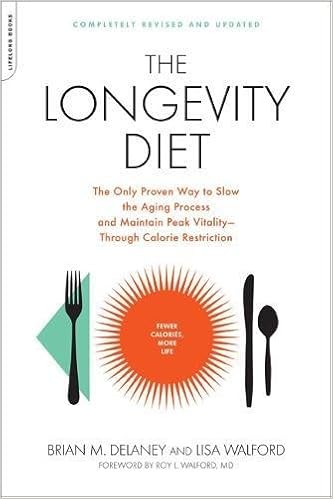
"The Longevity Diet: The Only Proven Way to Slow the Aging Process and Maintain Peak Vitality Through Caloric Restriction." By Brian M. Delaney, and Lisa Walford, 2010.  


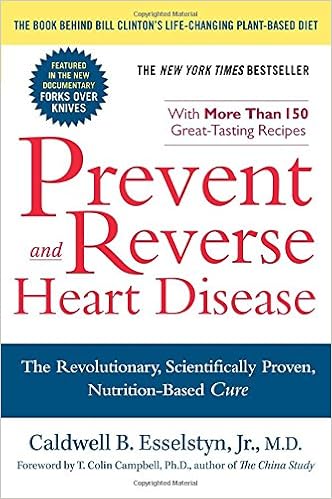
Prevent and Reverse Heart Disease: The Revolutionary, Scientifically Proven, Nutrition Based Cure.  By Caldwell B. Esselstyn, M.D., 2008.  


Wednesday, December 06, 2017

Cardiac Rehabilitation Program


I participate in the Cardiac Rehabilitation program at the Peace Health Hospital in Vancouver on Mill Plain Avenue.  I had a stent implanted in my left arterial descending (LAD) in my heart on 10/18, and a pacemaker implanted in my heart on 6/9.  

I attend physical exercise classes on Monday, Wednesday, and Friday morning from 10 to 11:30 am.  I attend a heart health lecture on Wednesday from 9 to 10 am.  

I take a blood sugar test before and after the class, blood pressure is taken three times during the class, exertion levels are monitored, and I wear a electronic heart monitor that shows results on a computer monitor observed by experienced staff.  Staff members check and observe participants, and encourage you, and keep participation safe.  They contact heart physicians as needed.  

The physical exercises include 30 minutes of treadmill using pre-assigned levels of intensity settings (speed and incline).  25 minutes of seated incumbent bike.  30 minutes of chair exercises with weights or bands, and stretching.  

Diet is very important.  I try to eat under 1700 calories per day, reducing fat and salt and cheap carbohydrates.  My goal is to get my body weight to under 240 pounds, and I now weight 247.  

I take 4 medicines for heart problems.  This is an essential part of my medical program.  The medicines lower blood pressure, reduce clotting in the stent, prevent increased heartbeat, and includes a mild diuretic.   

I trust the team of therapists, nurses, physician's assistants, and physicians.  

Starting this weekend, I plan to add a similar workout on Saturday and Sunday at the LA Fitness gym on Fourth Plain Avenue near the Lewiston Highway (503).  


Image result for seated weight lifting for seniors

Friday, September 29, 2017

Returning to Feeling Better and Training

In May of 2016, I was lifting weights for 45 minutes at the gym 5 days a week.  I walked 2 to 3 miles four days every week.  I taught 3 yoga classes and 3 taijiquan classes each week.  I worked 24 hours a week for the Corning School District.  I was feeling strong, energetic, and positive.  Medical tests were positive.  I was 70 years of age.  

After July of 2017, my health declined.  My 1st degree AV heart block (which I had since 1990) became a 2nd degree AV heart block and Bradycardia (excessively slow heartbeat) caused great concern and distress.  I had a pacemaker inserted in 6/17. 

We sold our home in Red Bluff, CA, and purchased a home in 6/17 in Vancouver WA.  This was challenging and stressful. 

During this period I fell twice and injured both knees and my right hip.  My damaged right rotator cuff tendon continued to limit my motions. 

My Type II diabetes, under reasonable control since 1990, began to worsen.  My new physician, Dr. Anna, switched my medicines in 7/17 and my recent blood sugar AIC was 7.2.  I must improve. 

I was depressed and drugged.  Disheartening!  Little energy!  Lighteaded! 

I smoked cannabis during this period to ease the pain and dull my senses.  This was a mistake.  I stopped smoking! 

I did not write much or research/study much for 14 months. 

I health started to improve in September, 2017.  I am now hoping to resume a more comprehensive physical training program in October, 2017. 

Karen and I are now eating more vegetarian based meals.  We are both greatly reducing our intake of  meats, dairy products, and eggs. 

I am now walking every day for 30 to 40 minutes. 

I garden some everyday at our new home.  

I go to the gym at LA Fitness four days a week. 

Hopefully, this autumn season will bring improved stamina and vitality to my life. 

I know that I have told my recent story before in this blog.  I apologize for the repetition. 

I hope my future writing and posts help me recover.  Productive work of this kind is uplifting for me.  Maybe, in addition, it might help others in some way.

Best wishes, 

Mike


Thursday, September 28, 2017

Films about Vegetarianism

Karen and I have recently watched a number of "documentary" films on Netflix dealing with the impact of excessive meat eating on individuals, communities, and our environment.  Also, we have read a number of books on the subject.  In addition, my cardiologist recommends a change in my own eating habits. 


Wednesday, November 12, 2014

Can Eating Less Slow the Aging Process?


For me, eating less and loosing 30 pounds of body weight in the last two years has significantly lowered my average morning fasting blood sugar and four month A1C readings; and, has resulted in my cardiologist reducing my blood pressure medicine dosages in half.  I feel stronger and more energetic, and I exercise in some way on a daily basis.  I sleep soundly and dream every night.  My waistline measurements have decreased from 44 inches to 40 inches.  My current goal is to reach a body weight of 230 pounds, and a waist of 38 inches, at a height of 6’6”.  Consequently, I plan to continue my efforts to eat less, but eat nutritious meals. 

I doubt I can live longer by eating less, but the likelihood of reducing the significant possible negative health effects of my Type 2 diabetes and high blood pressure seem worth the effort. 

Is fasting one day a week reasonable for me?    I am currently not sure about this approach to reducing caloric intake, since I actively exercise each day.  Maybe skipping dinner twice a week might be an option.  Comments?? 


“While human calorie restriction doesn't have the same impact on life span, it does provide numerous benefits, such as a greatly lowered risk for most degenerative conditions of aging, and improved measures of health. In recent years, human studies of long-term and short-term calorie restriction have comprehensively demonstrated these benefits. Many researchers believe that the evidence to date shows the practice of CR will in fact extend the healthy human life span, but there simply isn't enough data yet to pin down the effects on life expectancy. It is plausible that they are at least as good as those resulting from exercise. If so, it could mean a difference of 5-10 years of life.”


“Calorie restriction (CR) extends life span and retards age-related chronic diseases in a variety of species, including rats, mice, fish, flies, worms, and yeast. The mechanism or mechanisms through which this occurs are unclear. CR reduces metabolic rate and oxidative stress, improves insulin sensitivity, and alters neuroendocrine and sympathetic nervous system function in animals. Whether prolonged CR increases life span (or improves biomarkers of aging) in humans is unknown. In experiments of nature, humans have been subjected to periods of nonvolitional partial starvation. However, the diets in almost all of these cases have been of poor quality. The absence of adequate information on the effects of good-quality, calorie-restricted diets in nonobese humans reflects the difficulties involved in conducting long-term studies in an environment so conducive to overfeeding. Such studies in free-living persons also raise ethical and methodologic issues. Future studies in nonobese humans should focus on the effects of prolonged CR on metabolic rate, on neuroendocrine adaptations, on diverse biomarkers of aging, and on predictors of chronic age-related diseases.”
-  Caloric Restriction and Aging, The American Journal of Clinical Nutrition   


Calorie restriction (CR), or caloric restriction, is a dietary regimen that is based on low calorie intake. "Low" can be defined relative to the subject's previous intake before intentionally restricting calories, or relative to an average person of similar body type. Calorie restriction without malnutrition has been shown to work in a variety of species, among them yeast, fish, rodents and dogs to decelerate the biological aging process, resulting in longer maintenance of youthful health and an increase in both median and maximum lifespan.


Live Longer:  The One Anti-Aging Trick That Works by Robert Roy Britt.

Making Aging Positive by Linda P. Fried

The Longevity Diet by Lisa Waldford and Brian M. Delaney