Showing posts with label Zhang Sanfeng. Show all posts

Sunday, October 01, 2023

More Zhang Sanfeng Lore

A repost from August 2013:

Chang San-Feng, Taoist Grand Master: Bibliography, Quotes, Writings, Lore, Encounters

Research by Mike Garofalo


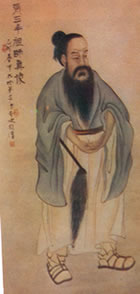
    "Zhang Sanfeng ("Zhang Triple Abundance" or "Zhang Three Peaks") is a famous Taoist said to have live between the end of the Yuan and beginning of the Ming periods.  His historical existence, however, is unproved.  In early biographies―including the one in the Mingshi (History of Ming)―he is usually said to be a native of Yizhou (Liaoning), but other sources give different birthplaces.  According to these works he was seven feet tall and had enormously big ears and eyes, his appearance suggested the longevity of a turtle and the immortality of a crane, and his beard and whiskers bristled like the blades of a halberd.  He tied his hair in a knot and, regardless of the season, wore only a garment made of leaves.  In his youth, Zhang is supposed to have studied Buddhism under the Chan master Haiyun (1021-56), but then mastered neidan and reached immortality.  He was known for his extraordinary magical powers as well as his ability to prophesy.
    In the first years of the Ming period, Zhang reportedly established himself on Mount Wudang (Wudang Shan, Hubei), where he lived in a thatched hut.  With his pupils he rebuilt the mountain monasteries destroyed during the wars at the end of the Mongol dynasty.  From Mount Wudang, Zhang went to the Jintai guan (Abbey of the Golden Terrace) in Baoji (Shananxi), where he announced his departure, composed a hymn, and passed away.  Later he came back to life, travelled to Sichuan, and visited Mount Wudang.
    The belief in the real existence of Zhang Sanfeng during the Ming Dynasty is reflected in the emperor's continued efforts to locate him.  The search for Zhang started in 1391 by order of the Hongwu Emperor (1368-1398) and was extended from 1407 to 1419 by the Yongle Emperor (1403-1424).  Both sent out delegates several times, but they all returned without success.  Promoted by the Ming emperor's interest, a cult developed around Zhang that spread widely and lasted until the later years of the Qing dynasty.
    As time went on, the legends about Zhang Sanfeng multiplied and became increasingly exaggerated.  Zhang is known as the founder of taiji quan (a claim without historical evidence) and the patron saint of practitioners of this technique.  During the sixteenth and seventeenth centuries, a connection to the sexual techniques (fangzhong shu) was also established and texts dealing with these practices were ascribed to him.  The belief that Zhang was the master of Shen Wansan, a popular deity of wealth, led to his own identity as a god of wealth in the seventeenth century.  The Western Branch (Xipai) of neidan and various Qing sects also regarded Zhang Sanfeng as their first patriarch."
-  Martina Darga.  The Routledge Encyclopedia of Taoism (EoT), 2008, 2011, Volume II, p. 1233-35, article about Zhang Sanfeng in the EoT by Martina Darga. 


Tuesday, June 16, 2015

Zhang Sanfeng Lore

Chang San-Feng, Taoist Grand Master: Bibliography, Quotes, Writings, Lore, Encounters
Research by Mike Garofalo


    "Zhang Sanfeng ("Zhang Triple Abundance" or "Zhang Three Peaks") is a famous Taoist said to have live between the end of the Yuan and beginning of the Ming periods.  His historical existence, however, is unproved.  In early biographies―including the one in the Mingshi (History of Ming)―he is usually said to be a native of Yizhou (Liaoning), but other sources give different birthplaces.  According to these works he was seven feet tall and had enormously big ears and eyes, his appearance suggested the longevity of a turtle and the immortality of a crane, and his beard and whiskers bristled like the blades of a halberd.  He tied his hair in a knot and, regardless of the season, wore only a garment made of leaves.  In his youth, Zhang is supposed to have studied Buddhism under the Chan master Haiyun (1021-56), but then mastered neidan and reached immortality.  He was known for his extraordinary magical powers as well as his ability to prophesy.
    In the first years of the Ming period, Zhang reportedly established himself on Mount Wudang (Wudang Shan, Hubei), where he lived in a thatched hut.  With his pupils he rebuilt the mountain monasteries destroyed during the wars at the end of the Mongol dynasty.  From Mount Wudang, Zhang went to the Jintai guan (Abbey of the Golden Terrace) in Baoji (Shananxi), where he announced his departure, composed a hymn, and passed away.  Later he came back to life, travelled to Sichuan, and visited Mount Wudang.
    The belief in the real existence of Zhang Sanfeng during the Ming Dynasty is reflected in the emperor's continued efforts to locate him.  The search for Zhang started in 1391 by order of the Hongwu Emperor (1368-1398) and was extended from 1407 to 1419 by the Yongle Emperor (1403-1424).  Both sent out delegates several times, but they all returned without success.  Promoted by the Ming emperor's interest, a cult developed around Zhang that spread widely and lasted until the later years of the Qing dynasty.
    As time went on, the legends about Zhang Sanfeng multiplied and became increasingly exaggerated.  Zhang is known as the founder of taiji quan (a claim without historical evidence) and the patron saint of practitioners of this technique.  During the sixteenth and seventeenth centuries, a connection to the sexual techniques (fangzhong shu) was also established and texts dealing with these practices were ascribed to him.  The belief that Zhang was the master of Shen Wansan, a popular deity of wealth, led to his own identity as a god of wealth in the seventeenth century.  The Western Branch (Xipai) of neidan and various Qing sects also regarded Zhang Sanfeng as their first patriarch."
-  Martina Darga.  The Routledge Encyclopedia of Taoism (EoT), 2008, 2011, Volume II, p. 1233-35, article about Zhang Sanfeng in the EoT by Martina Darga. 


Thursday, March 19, 2015

The Sqawk of the Jay Opened My Mind's Eye

"The smell of the sea hugged the fog in the redwood trees,
All cool and dank, dimly lit and rank with green,
And in shadowed limbs the Stellar jays jabbered free,
And me, standing silently, an alien in this enchanted scene.

From behind the mossy grey stumps
the sounds of footsteps crunching fronds of ferns
caught my suddenly wary mind ...
What?

"Hello, old friend," said Chang San Feng.
"Master Chang, what a surprise," said I.
Master Chang sat on a stump, smiled, and said,

"Can you hear the Blue Dragon singing in the decaying tree;
Or is it the White Tiger roaring in the wilderness of your bright white skull?
No matter!  The answer is in the questioning; don't you Chan men see?

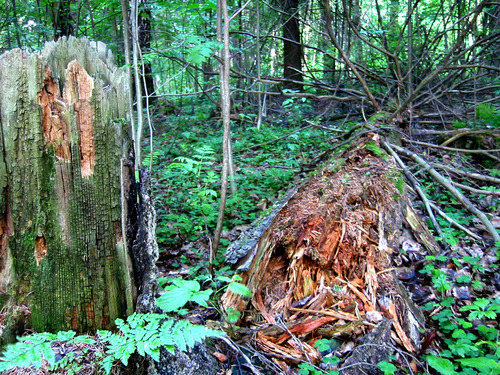
In the red ball flesh of this decaying tree
Sapless woody shards of centuries of seasons
Nourish the new roots of mindfulness sprouting. 
Yes, Yes, but how can it be?
The up-surging waves of life sprout forth from the decaying tree,
As sure as sunrise rolling over the deep black sea. 
Coming, coming, endlessly coming; waves of Chi

Tan Qian's raven roosts for 10,000 moons
     in the withered branches of the rotting tree;
     then, one day, the weathered tree falls,
     nobody hearing, soundlessly crashing
     on the forest floor, on some unknown noon. 

Over and over, over and over, life bringing death, death bringing life,
Beyond even the miraculous memories of an old Xian like me;
Watching, watching, sequestered from the strife,
Turning my soul away sometimes because I cannot bear to see. 

Even minds may die, but Mind is always free
Bounding beyond, beyond, far beyond you and me;
Somehow finding the Possibility Keys
And unlocking the Door out of the Voids of Eternities."

Master Chang somehow, someway,
slowly disappeared into the red brown heart of the decaying tree.

Then the squawk of the jay
opened my mind's eye to the new day -
Namaste."

-  Michael P. Garofalo
   Meetings with Master Chang San Feng   
   Remembering Prairie Creek Redwoods State Park, California


Wednesday, June 18, 2014

The Homeland of Time's Past

"I saw Master Chang San-feng
Enter the Sidhe, Fairies by his side,
Crossing over the pond at dawn.
Astonished I was!
On the teahouse table by the pond I later found
Some of his neatly printed notes
Folded in a well worn tome 
Of the Tao Te Ching, in Chapter 14. 


He had written:
”Even for an Immortal, the Past is the Key.

The Future
Grasp at it, but you can’t get it,
Colorless as an invisible crystal web,
Unformed, thin, a conundrum of ideas,
The Grand White Cloud Temple of Possibilities,
Flimsy as a maybe, strong as our hopes,
Silent as eternal Space.
When you meet it, you can’t see its face.
You want to stand for it, but cannot find a place. 

The Present
It appears and disappears through the moving ten thousand things,
Quick as a wink, elusive as a hummingbird,
Always Now with no other choice,
Moving ground, unstable Plates,
Real as much as Real gets to Be,
This Day has finally come,
Room for something, for the moment, waits
Gone in a flash, assigned a date,
Gulp, swallowed by the future.
Unceasing, continuous, entering and leaving
The vast empty center of the Elixir Field.

The Past
Becoming obscurer, fading, falling apart,
A mess of memories in the matrix of brains;
Some of it written, fixed in ink, chiseled in stone,
Most of it long lost in graves of pure grey bones.
Following it you cannot see its back,
Only forms of the formless, stories, tales,
Images of imageless, fictions, myths.
A smattering of forever fixed facts,
Scattered about the homes of fading ghosts. 
The twists and turns of millions of tongues
Leaving us languages, our passports to the past.
The future becomes past, the present becomes past,

Every thing lives, subtracting but seconds for Nowness, in the Past. 
The Realms of the Gods, the kingdoms of men,
The Evolutionary Tree with roots a million years long
Intertwined with turtles, dragons, trees, stars and toads;
     crickets, coyotes, grasses, tigers, bears, monkeys and men.  

These profoundest Three of Time
An unraveled red Knot of Mystery,
Evading scrutiny in the darkness of days
Eluding capture in the brightness of nights,
In beginnings and endings are only One, the Tao,
Coming from Nowhere, Returning to Nothing.  

What dimension of Time
Does your mind dwell within?
Future, Present or Past
Where is your homeland?  

The Past holds the accomplishments, the created, the glories, and the Great.
The Present is but a thin coat of ice on the Pond of Fate. 
The Future is an illusion, a guess, a plethora of possible states.

Recreate the Past
By playing within the Present. 
Twisting and reeling one’s silky reality
From the Black Cocoons of the Acts
From which we create our Pasts.
Follow the Ancient Ways. 
The Past is the Key.”   
-  By Michael P. Garofalo, Meetings with Master Chang San-feng


Wednesday, April 09, 2014

Chang San-Feng, Taoist Grand Master

Chang San-Feng, Taoist Grand Master: Bibliography, Quotes, Writings, Lore, Encounters
Research by Mike Garofalo


    "Zhang Sanfeng ("Zhang Triple Abundance" or "Zhang Three Peaks") is a famous Taoist said to have live between the end of the Yuan and beginning of the Ming periods.  His historical existence, however, is unproved.  In early biographies―including the one in the Mingshi (History of Ming)―he is usually said to be a native of Yizhou (Liaoning), but other sources give different birthplaces.  According to these works he was seven feet tall and had enormously big ears and eyes, his appearance suggested the longevity of a turtle and the immortality of a crane, and his beard and whiskers bristled like the blades of a halberd.  He tied his hair in a knot and, regardless of the season, wore only a garment made of leaves.  In his youth, Zhang is supposed to have studied Buddhism under the Chan master Haiyun (1021-56), but then mastered neidan and reached immortality.  He was known for his extraordinary magical powers as well as his ability to prophesy.
    In the first years of the Ming period, Zhang reportedly established himself on Mount Wudang (Wudang Shan, Hubei), where he lived in a thatched hut.  With his pupils he rebuilt the mountain monasteries destroyed during the wars at the end of the Mongol dynasty.  From Mount Wudang, Zhang went to the Jintai guan (Abbey of the Golden Terrace) in Baoji (Shananxi), where he announced his departure, composed a hymn, and passed away.  Later he came back to life, travelled to Sichuan, and visited Mount Wudang.
    The belief in the real existence of Zhang Sanfeng during the Ming Dynasty is reflected in the emperor's continued efforts to locate him.  The search for Zhang started in 1391 by order of the Hongwu Emperor (1368-1398) and was extended from 1407 to 1419 by the Yongle Emperor (1403-1424).  Both sent out delegates several times, but they all returned without success.  Promoted by the Ming emperor's interest, a cult developed around Zhang that spread widely and lasted until the later years of the Qing dynasty.
    As time went on, the legends about Zhang Sanfeng multiplied and became increasingly exaggerated.  Zhang is known as the founder of taiji quan (a claim without historical evidence) and the patron saint of practitioners of this technique.  During the sixteenth and seventeenth centuries, a connection to the sexual techniques (fangzhong shu) was also established and texts dealing with these practices were ascribed to him.  The belief that Zhang was the master of Shen Wansan, a popular deity of wealth, led to his own identity as a god of wealth in the seventeenth century.  The Western Branch (Xipai) of neidan and various Qing sects also regarded Zhang Sanfeng as their first patriarch."
-  Martina Darga.  The Routledge Encyclopedia of Taoism (EoT), 2008, 2011, Volume II, p. 1233-35, article about Zhang Sanfeng in the EoT by Martina Darga.