Showing posts with label Wasted Time. Show all posts

Wednesday, February 05, 2025

Using Your Time Wisely


The Improvement of Spare Moments
From Pushing to the Front, 1894
By Orrison Swett Marden

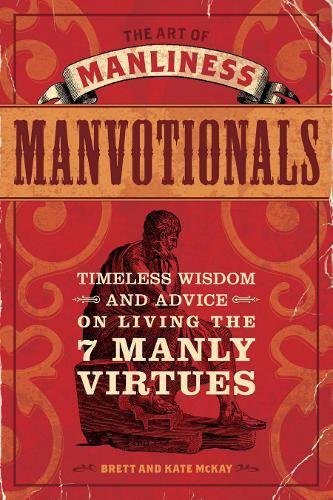
Found in The Art of Manliness - Manvotionals: Timeless Wisdom and Advice on Living the 7 Manly Virtues. By Brett and Kate McKay.  HOW Books, 2011.  272 pages.  Quote: p 87-90.


The Improvement of Spare Moments, Part 1
By Orrison Swett Marden, 1894


"On the floor of the gold-working room, in the United States Mint in Philadelphia, there is a wooden lattice-work which is taken up when the floor is swept, and the fine particles of gold-dust, thousands of dollars' worth yearly, are thus saved.  So every successful man has a kind of network to catch "the raspings and parings of existence, those leavings of days and wee bits of hours" which most people sweep into the waste of life.  He who hoards and turns into account all odd minutes, half hours, unexpected holidays, gaps between times, and chasms of waiting for unpunctual persons, achieves results which astonish those who have not mastered this most valuable secret.  

The days come to us like friends in disguise, bringing priceless gifts from an unseen hand; but if you do not use them, they are borne silently away, never to return.  Each successive morning new gifts are brought, but if we failed to accept those that were brought yesterday and the day before, we become less and less about to turn them in account, until the ability to appreciate and utilize them is exhausted.  Wisely was it said that lost wealth may be regained by industry and economy, lost knowledge by study, lost health by temperance and medicine, but lost time is gone forever.  

"Oh, it's only five minutes or ten minutes till meal-time: there's not time to do anything now," is one of the commonest expressions heard in the family.  But what monuments have been built up by poor boys with no chance, out of broken fragments of time which many of us throw away!  The very hours you have wasted, if improved, might have insured your success.  

The author of "Paradise Lost" was a teacher, Secretary of the Commonwealth, Secretary of the Lord Protector, and had to write his sublime poetry whenever he could snatch a few minutes from a busy life.  John Stuart Mill did much of his best work as a writer while a clerk in the East India House.  Galileo was a surgeon, yet to the improvement of his spare moments the world owes some of its greatest discoveries."  


Wednesday, December 06, 2023

Tao Te Ching, Chapter 53

Tao Te Ching by Lao Tzu
Chapter 53


"Ah, that I were wise enough to follow the great Tao!
Administration is a great undertaking.
The great Tao is extremely simple, but the people prefer the complex ways.
While the palace is extremely well appointed, the fields may be full of tares, and the granaries may be empty.
To dress grandly, to carry sharp swords, to eat and drink excessively, and to amass great wealth,
this I call stylish theft.
That it is not Tao is certain."
-  Translated by Walter Gorn Old, 1904, Chapter 53 


"If I were possessed of the slightest knowledge, traveling on the great Way,
My only fear would be to go astray.
The great Way is quite level,
but the people are much enamored of mountain trails.
The court is thoroughly deserted,
The fields are choked with weeds,
The granaries are altogether empty.
Still there are some who wear clothes with fancy designs and brilliant colors,
sharp swords hanging at their sides,
are sated with food,
overflowing with possessions and wealth.
This is called "the brazenness of a bandit."
The brazenness of a bandit is surely not the Way!"
-  Translated by Victor H. Mair, 1990, Chapter 53   


"If, in some unexpected manner, I
As one endowed with knowledge should appear,
To walk according to the mighty Tao,
T'is only bold display that I should fear;
For plain and simple ways Great Tao suggest,
But people love cross-paths and by-ways best.
The halls and courts are splendid, but the fields
Uncultivated are, the granaries
Empty; to put on ornamented robes,
And keen-edged swords, to gorge with gluttonies,
To pile up wealth; this, robbers' pride I call,
But, of a surety, not Great Tao at all."
-  Translated by Isaac Winter Heysinger, 1903, Chapter 53  


"If I had but little knowledge I should, in walking on a broad way,
Fear getting off the road.
Broad ways are extremely even,
But people are fond of bypaths.
The courts are exceedingly splendid,
While the fields are exceedingly weedy,
And the granaries are exceedingly empty.
Elegant clothes are worn,
Sharp weapons are carried,
Food and drinks are enjoyed beyond limit,
And wealth and treasures are accumulated in excess.
This is robbery and extravagance.
This is indeed not Tao."
-  Translated by Wing-Tsit Chan, 1963, Chapter 53   


使我介然有知.
行於大道. 
唯施是畏. 
大道甚夷而民好徑. 
朝甚除.
田甚蕪.
倉甚虛.
服文綵. 
帶利劍.
厭飲食.
財貨有餘.
是謂盜夸. 
非道也哉. 

-  Chinese characters, Tao Te Ching, Chapter 53


shih wo chieh jan yu chih.
hsing yü ta tao.
wei shih shih wei.
ta tao shên yi erh min hao ching.
chao shê ch'u. 
t'ien shên wu.
ts'ang shên hsü.
fu wên ts'ai. 
tai li chien.
yen yin shih.
ts'ai huo yu yü. 
shih wei tao k'ua.
fei tao yeh tsai.
-  Wade-Giles Romanization, Tao Te Ching, Chapter 53


"If I had the smallest seed of wisdom,
I would walk the Great Way,
And my only fear
would be to lose my way from it.
The Great Way is very smooth and straight;
And yet the people like better the complicated paths.
The courtyard is very clean and well decorated,
(Their cities appear powerful.)
But the fields are very weedy and wild,
And the grain silo's are very empty!
(But they have lost the skill to feed themselves.)
They wear beautiful clothes,
(They value appearances over substance.)
They carry destructive weapons,
They use the tools of destruction to get their needs.)
They over fill themselves with food and drink,
(They indulge themselves in the fruits of the conquered.)
They own more riches than they can use!
(They are greedy.)
They are the messengers of lawlessness!
As for Tao (the Laws of the Universe),
what do they know about it?"
-  Translated by John Trottier, Chapter 53


"Quisiera poseer la sabiduría
para poder marchar por el Gran Camino
sin temor a desviarme.
El Gran Camino es llano y recto,
pero la gente elige los senderos tortuosos.
Cuando la corte imperial se adorna de esplendor,
los campos se llenan de malas hierbas
y los graneros quedan vacíos.
Los barones y reyes visten ropas lujosas,
Tienen mas posesiones de las que llegan a usar,
se hartan de bebida y de manjares,
Acumulan tesoros y riquezas en exceso.
Son gobernantes-ladrones.
Robar y ostentar no es seguir al Tao."
-  Translation from Wikisource, 2013, Tao Te Ching, Capítulo 53


"If I have a grain of wisdom,
I walk along the great Tao
And fear only to stray.
The great Tao is easy indeed,
But the people choose by-paths.
The court is very resplendent;
Very weedy are the fields,
And the granaries very empty.
They wear gaudy clothes,
Carry sharp swords,
Exceed in eating and drinking,
Have riches more than they can use.
Call them robber-braggarts:
They are anti-Tao indeed!"
-  Translated by Herrymoon Maurer, Chapter 53  


Chapter and Thematic Index (Concordance) to the Tao Te Ching


Taoism: A Selected Reading List


Tao Te Ching English Language Corncordance by Gerold Claser.  An excellent English language concordance providing terms, chapter and line references, and the proximal English language text.  No Chinese language characters or Wade-Giles or Pinyin Romanizations.  Based on the translation by John H. McDonald.  


Wednesday, May 05, 2021

Right Place at the Wrong Time


"I been in the right place
But it must have been the wrong time
I'd have said the right thing
But must have used the wrong line
I been on the right trip
But I must have used the wrong car
Head is in a bad place and I wonder what it's good for

I been in the right place 
But it must have been the wrong time
My head is in a bad place
But I'm having such a good time
I been running trying to get hung up in my mind
Really got to give myself a good talking to this time 
Just need a little brain salad surgery
Got to que my insecurity
I been in the wrong place
But it must have been the right time
I been in the right place
But it must have been the wrong song
I been in the right vein
But it seems like a wrong arm
I been in the right world
But it seems like wrong-wrong-wrong wrong-wrong

Slipping dodging sneaking creeping hiding down the street
See my life shaking with every who I meet
Refried confusion is making itself clear
Wonder which way do I go to get on out of here
I been in the right place
But it must have been the wrong time
I'd have said the right thing
But I must have used the wrong line
I took the right road
But I must have took a wrong turn
I took a right move
But I made it at the wrong time
I was in the right trip
But I made it in the wrong car
Head is in a good place and I wonder what it's bad for ..."

Dr. John, 1973
The bass line in this song seems to lift my spirits.

Saturday, September 30, 2017

A Wise Use of Your Time


I find it interesting to consider the topic of whether or not some activity is a “waste of time.”

There are numerous articles on the Internet on the topic of what to do to prevent wasting your time. For example, Theresa Griffith wrote a short article titled "Top 20 Time Wasters and the Top 5 Worthwhile Activities." Dozens of books provide practical suggestions on the topic of 'time management.' The 'time wasters' are important to consider.

Everyone has personal opinions about what, for them, is unpleasant and something they want to avoid. Doing something they dislike is, for them, a “waste of time.” Many other people find the exact same activity pleasurable and not a waste of time. For examples: For many, gardening is not pleasurable and a waste of time; for others, a creative and physical joyfulness. Walking in the woods for hours is a delight for some; and an unpleasant waste of time for others. Some folks want to repair and upgrade automobiles for hours; for many others, that is just a technical and greasy job for the paid local mechanic.  Praying and attending church services are essential activities for many; and yet considered by many others as a waste of their time.  Watching sports for many hours on television is a top priority for many; and a boring waste of time for may others.  The old saying about "one man's meat is another man's poison" applies to more that debates between vegetarians and meat eaters. 

Efficiency is indeed important in many aspects of life and employment. Consistently doing something the wrong way at work would be considered a “waste of time,” and a likely cause for dismissal. Some problems are seemingly impossible to solve, and trying to do so might be considered a waste of time.
However, efficiency should not always be the primary criterion to use in judging. What about effectiveness, aesthetics, goodness, pleasures, etc.

Personal dissatisfaction about “excessive” amounts of time spent on a single activity, and avoiding or neglecting some other more important personal priorities and objectives, might trigger the judgment about that activity being a waste of time. Any activity carried to excess in this fashion is indeed a squandering your limited temporal resources.

Sometimes some of our behaviors are an addiction or compulsion, and of very limited benefit or injurious to us or others. We realize we are wasting and loosing time, but cannot control ourselves.

After our daily work and chores are completed, and we have completed our commitments and responsibilities, then we might relax, enjoy ourselves, and "waste" some time. It was not time wasted, but time used for personal pleasures.  


It is best for us to be very careful in our judgments about what we consider a "waste of time" for ourselves and/or others.  

"I am not an arbiter of taste, and it is not my place to tell you what to read, listen to, or watch.  I just want you to be aware that the decisions you make about all this affect your moods and emotions better and worse.  I urge you to make them mindfully."
-  Dr. Andrew Weil, Spontaneous Happiness, p 155.

Saturday, August 22, 2015

Bull Crap Qigong

In nearly all of the photographs of persons doing standing meditation their faces are impassive, close mouthed, neutral, glum, even mean looking.  Do you ever see any pictures of persons doing Zhan Zhuang with a nice smile on their face?  Don't the majority look rather stern, stiff, and aloof?  Is the coolness, toughness, frowning, and closed eyes of these faux standing posts a defiant reaction to the many other people who look at them and smile or laugh at them?  Is the gruff expression a bodily mudra to affirm the Buddhist claim about the inherent unhappiness and suffering of human existence?  Is the Yiquan toughness required to endure this demanding standing physical exercise the source of this hard, 'don't mess with me' facial expression?  Persons doing hours and hours of seated zazen mostly look, to me, just tired, frustrated, aching, and pissed off about their inner insights.  C'mon Man!  Why all the serious. sad. and stern looks?  

I don't resist smiling or having pleasant and easy going look on my face when I do seated or standing meditation.  I've read about smiling meditation, laughing yoga, smiling heart qigong, and Inner Smile Taoist Neidan.  Seek and embrace more options than glum, neutral, stern postures and attitudes.  More Yin, Less Yang!!

Hours and hours of these standing or seated "meditation" practices are often just boring, dull, uneventful, uninspiring, and non-productive for me.  Twenty minutes a couple of times a week are more than ample.  I lay odds that if you try to do standing meditation for an hour a day you will end up frowning, stiff, tired, grumpy, and ready to quit.  It would be far better to take a walk each day and enjoy yourself.

I enjoy doing Chi Kung (Qigong) and yoga movements because they are fun and provide fitness exercise variety.  However, when the qigong or yoga teachers drone on about invisible organs and esoteric anatomy, contradict one another, discourage questioning, are vague and confusing, share only anecdotal reports of benefits, overuse flaccid metaphors, worship specific lineage traditions and bad mouth competing styles, don't explain much or seldom talk, or are too secretive ...  then I just loose my interest and move on.  I recommend learning early on about how to smell out that kind of bull crap qigong or bull crap yoga.  

I would question the claims that long sessions of standing post will make your legs stronger, build up your Qi, or give you super powers (siddhis) of some kind.  I would argue confidently for more benefits to your legs and overall fitness from walking, jogging, squats, weight lifting, stretching, form practice, sports, and other leg intensive exercises.  Since there is no known way of quantifying and measuring Qi, how do you know you have built up, increased, or amplified your Qi??  And, as for those super powers, they are the unreal stuff of our playful imaginations, fantasies, Wuxia novels, comic books, and motion picture special effects. 

I don't deny that a few, rare, and unique persons have unusual and powerful inner martial arts skills.  Likewise, a few yogis are superior contortionists and gymnasts that can do extreme postures.  But, so what!   So you can defeat everyone you meet in push hands, so you can stand on one leg for two hours, so you can walk/run 70 miles in a day .... fine, and some of us will be amazed.  However, most reasonable people don't aspire to Olympic standards of performance, and don't need to endure the strict training regimes of the extremely rare Amazing Masters and Siddhi Adepts.  Further, I do not have much of a pressing need to fly up walls, defeat 40 swordsmen like the blind Zatoichi, repulse ten men with a single magical push, kill a man with the touch of a finger, disappear through walls (doors work quite well), read your mind (probably as hohum as mine), or live to 300 years of age and have to dutifully work at seven careers.  Since I am a poor swimmer, I might have an occasional need to walk on water, but I might die before completing the required discipline of forty days and nights in the desert alone fasting, doing yoga and chanting - so that particular unpleasant task and marginal benefit are now off of my bucket list. Playing drums, dancing, and chanting for three hours before walking on burning hot coals might appeal to some, but I will pass on that experience also. 

Some people claim profound inner experiences, mystical insights, revelations, epiphanies, ecstasy, personal gnosis, satori, kensho, illumination, or enlightenment as a result of enduring these strict bodily disciplines.  Even the Buddha tried these physical austerities for many years until he "realized" that enough is enough and that moderation is a better course.  I hear LSD takers and steady alcohol drinkers claim the same "benefits" of consciousness expansion.  Personally, I'd rather water my garden each day, do some Taijiquan, and read good books; and not be a drug user or face a cave wall in stiff seated meditation for seven years like the Bodhidharma.  Some say they practiced for many years, even decades, to gain a "glimpse" of some degree of profound, unified, or universal consciousness.  Seems to me like a very big investment of time and effort for very little return.  Sharpening your critical thinking and reasoning skills would reap more rewards.

Some people take up these hard physical practices because their guru, preacher, master, roshi, sifu, or other authority or leader tells them or orders them to do so.  Students are taught to trust, obey, submit, respect, and kow-tow to the guru.  I say, keep your independence!!  Sensibly respect and learn from worthy teachers, but don't be slavish.  Some degree of healthy skepticism is valuable.  Practice on your own rather than humble yourself before some faker, phony, braggart, secretive or expensive master.  Discover what works for you to earn better fitness and well being rather than dumbly following an unbending formulaic physical regimen lineage invented by some illiterate old man 300 years ago.  Not obeying a goofy or exploitative guru is quite sensible.  Some rich gurus, preachers and masters are often merely just trying to tap the soul of your wallet.  Beware of quacks, and keep thinking clearly.

Long periods of standing, fasting, sitting, and self-humiliation may be required as a kind of initiation or hazing ritual before the neophyte applicant is allowed into the practice group.  These disciplinary practices are to test the mettle, seriousness, intent and grit of the applicant.  Stories abound about monks being struck with a stick and rebuffed and made to wait standing outside in the cold for weeks until the master allowed them into the temple.  College fraternities have bizarre hazing rituals, and occasionally young applicants have died in the process.  Criminal gangs may beat up new members or make that potential gang member beat up, rape, or kill some enemy or random person before they are admitted to the gang.  ISIS recruits probably have to blow up some antiquity or decapitate a retired museum director to get into the inner circle of that cabal of True Believers.  Military recruits must endure Boot Camp to prove they have guts, are obedient, and have a killer attitude.   Sports have their "hell week" of double practices to test the toughness of new players. Likewise, new Tai Chi players may be made to stand like a post for long periods of time, maybe for weeks, before the exalted Taiji Wizard will teach them anything.  You have to prove to the regular members of the group that you are trustworthy, obedient, loyal, submissive, and can endure discipline.  In some cases it makes sense and the initiation is worth the effort; but, in many cases the hazing and self-humiliation are unnecessary and just humbug. 

Yes, I do exaggerate here to try to make a few points.  I do greatly enjoy and benefit from Taijiquan, Yoga, and Qigong.  But, in addition, being a doubter and skeptic and smiler all do have their own benefits. 


I might not push hands with this guy.
He probably could have flung my disrespectful and sassy rear end ten feet away.
Maybe not!  I'm pretty tough and strong myself - but with a smile.


Another sad looking group doing serious standing meditation to find inner peace.


The 'enlightened' and sour puss Bodhidharma. 


An unenlightened and smiling old Daoist Druid.