Showing posts with label Legends. Show all posts

Tuesday, March 29, 2022

Legends of the Cowlitz Indian Tribe

I have enjoyed reading the following book:

Legends of the Cowlitz Indian Tribe.  By Roy I. Wilson.  Cowlitz Tribe, 1998. 401 pages.  

Mr. Wilson suggests to us, or maybe just to Cowlitz Peoples, that we personally identify with aspects of these legends and stories:

"As you read these ancient stories you might possibly recognize yourself as a Coyote, Bear, Cougar, Beaver, or some other type of Animal Person.  Your community is the legend, and the legend is your community; also, you are the legend, and the legend is you.  As you read these legends see if you can recognize yourself in these stories.  Look and find other members of your community in these legends.  When you look at the legends with the understanding that you are the legend and the legend is you, then you will look for each of the animal characteristic within yourself.  It will be at this point that these legends will become more that just stories.  They will become a guide to the way you live your life.  At the end of each legend, or versions of a legend, you will find a section titled "LESSONS."  An attempt is made here to give the basic teaching or purpose of the legend, along with other lessons that the legend teaches us.  It is here that the basic understandings of the animals becomes important in order that we might understand these animal characteristics in our own individual lives and be able to interpret the legend personally, that is, to be able to make a personal application of it to our own lives."
-  Roy I. Wilson, p. 13

Native Legends of Oregon and Washington.  Collected by Franz Boas.  1893. 


Cowlitz Indian Tribe 

"The Cowlitz Indian Tribe is a growing force in community building in what are now Clark, Cowlitz, Lewis and parts of Pierce, Skamania and Wahkiakum Counties, a vast territory occupied by numerous Cowlitz villages prior to non-Cowlitz exploration and seizure.  Today, an elected Tribal Council is composed of professionals adept at managing multiple programs and projects. Tribal members engage in a rich cultural practice of old Cowlitz lifeways such the Smelt, Salmon and River Ceremonies.  They join coastal tribes in Canoe Journeys on major waterways.  They drum and sing at ceremonies throughout the year and as called upon for funerals, naming ceremonies, healings and celebration.  The Cowlitz Pow-Wow is one of the largest in southern Washington.  The Cowlitz Tribe is a significant employer and contributor to local economies."  A large Indian Casino and Hotel, ilani, near the town La Center, part of a Cowlitz Indian Reservation town near the Lewis River. 

The Lower Cowlitz people, with over 30 settlements and long houses, lived along the Cowlitz River from current Longview on the Columbia River north to Toledo.  The Upper Cowlitz lived in the area from Mossyrock to Packwood and up into Yakima territory over White Pass. 

Cowlitz Indian Tribe History   "The name Cowlitz means "seeker" in a spiritual sense, according to some Cowlitz living today. Place Names of Washington also spells the name as "Ta-wa-l-litch," which meant "capturing the medicine spirit," referring to the Cowlitz practice of sending their youths to the river' s prairies to seek their tomanawas, or spirit power."

The Cowlitz River flows from the canyons behind the southeast side of Mt. Ranier down the broad Cowlitz River Valley, almost prairie like at times, flowing west past the Clowlitz Farm near Toledo, then flowing south to the Columbia River at Longview/Kelso/Ranier.  The Toutle River meets the Cowlitz near present day.

Cowlitz People - Wikipedia

Cowlitz Indian Tribe  Official Website

Lower Cowlitz Language

"Lower Cowlitz is a Salishan language of Washington state, related to Chehalis. The people's original name for themselves was Stl'pulmsh-- Cowlitz was the name of the river whose banks they lived on. The Upper Cowlitz, whose traditional homelands are located further up the same river, are a Sahaptin tribe who spoke a dialect of the unrelated Yakama language. Neither Cowlitz Salish nor Cowlitz Sahaptian are spoken as first languages today, but the Cowlitz tribes are working on reviving their traditional languages, as well as the Chinook Jargon trade language that was used extensively in this region."

Being Cowlitz: How One Tribe Renewed and Sustained Its Identity.  By Christine Dupres.  Seattle, University of Washington Press, 2014. Bibliography, 160 pages.  FVRL. 

The Cowlitz tribe completed a yearly cycle where they inhabited locations during certain seasons and harvested seasonal crops, in preparation for cold winter months. The season started in spring, when the Cowlitzes left their cedar houses along the river and streams by traveling via canoe and horseback to harvest camas bulbs, roots, barks, and grasses to make mats, fishnets, and basketry. Followed by the arrival of summer, where they would move into the higher country to pick and harvest seasonal berries. Lastly, followed by the return to fall, where the Cowlitzes would return to their cedar homes along the river to harvest Salmon, for the upcoming season. Generally, hunting and fishing were practiced all year round, but only roots and fruits had to be harvested seasonally."

Cowlitz People Annual Activities Cycle   Fishing, hunting, gathering, foraging, resources for food and clothing. 


Wednesday, December 01, 2021

Happy Holidays


In December 2021, I plan to yurt camp for four days at Cape Disappointment State Park, walk more each day, assemble a large cedar pergola behind my house, and join in many holiday festivities.  Here is a repost of blog post of mine from 2020, Vancouver, WA.

Enjoy the many celebrations that center around the Winter Solstice.  Best wishes to everyone.

Merry Christmas, Party at Saturnalia, a Happy New Year, beneficent Yule Celebrations, and more Winter Lore!  

Karen and I enjoy this season.  We decorate a lighted tree, and set out Christmas decorations.  We exchange presents with family and friends.  We prepare special holiday meals: cookies, tamales, Italian dishes, pies.  We light fires in our fireplace.  We play and sing Christmas carols.  Many Pagan and Christian celebrations overlap in America, just like in ancient Rome in 100 CE.  Retails stores and markets are busy and Christmas decorations and colored lights are in evidence everywhere.  

Lately, our typical weather here in Vancouver, Washington, has been 35F low and 48F high, with light rain and fog, and no snow. As for gardening, we bring many frost sensitive potted plants indoors for warmth.  


Yule Celebrations  A hypertext notebook by Mike Garofalo.  

Yule, Winter Solstice, Christmas, Xmas, Saturnalia, Wassail Blot, December 20th - 31st
Festival of the Fires, Feliz Navidad, Birthday of Mithras, New Year Celebrations, Santa Claus, Brumalia, Christmas Eve, Father Christmas, St. Nicholas, Las Posadas, Hanukkah, Kwanzaa, 2nd Celebration in the NeoPagan Holy Day Annual Cycle or Wiccan Wheel of the Year.


"Reclaim Santa Claus as a Pagan Godform. Today's Santa is a folk figure with multicultural roots. He embodies characteristics of Saturn (Roman agricultural god), Cronos (Greek god, also known as Father Time), the Holly King (Celtic god of the dying year), Father Ice/Grandfather Frost (Russian winter god), Thor (Norse sky god who rides the sky in a chariot drawn by goats), Odin/Wotan (Scandinavian/Teutonic All-Father who rides the sky on an eight-legged horse), Frey (Norse fertility god), and the Tomte (a Norse Land Spirit known for giving gifts to children at this time of year). Santa's reindeer can be viewed as forms of Herne, the Celtic Horned God. Decorate your home with Santa images that reflect His Pagan heritage. Honor the Goddess as Great Mother. Place Pagan Mother Goddess images around your home. You may also want to include one with a Sun child, such as Isis with Horus. Pagan Goddess forms traditionally linked with this time of year include Tonantzin (Native Mexican corn mother), Holda (Teutonic earth goddess of good fortune), Bona Dea (Roman women's goddess of abundance and prophecy), Ops (Roman goddess of plenty), Au Set/Isis (Egyptian/multicultural All Goddess whose worship continued in Christian times under the name Mary), Lucina/St. Lucy (Roman/Swedish goddess/saint of light), and Befana (Italian Witch who gives gifts to children at this season)."
- Selena Fox, Celebrating the Winter Solstice 


"It was the Yuletide, that men call Christmas though they know in their hearts it is older than Bethlehem and Babylon, older than Memphis and mankind."
-  H.P. Lovecraft


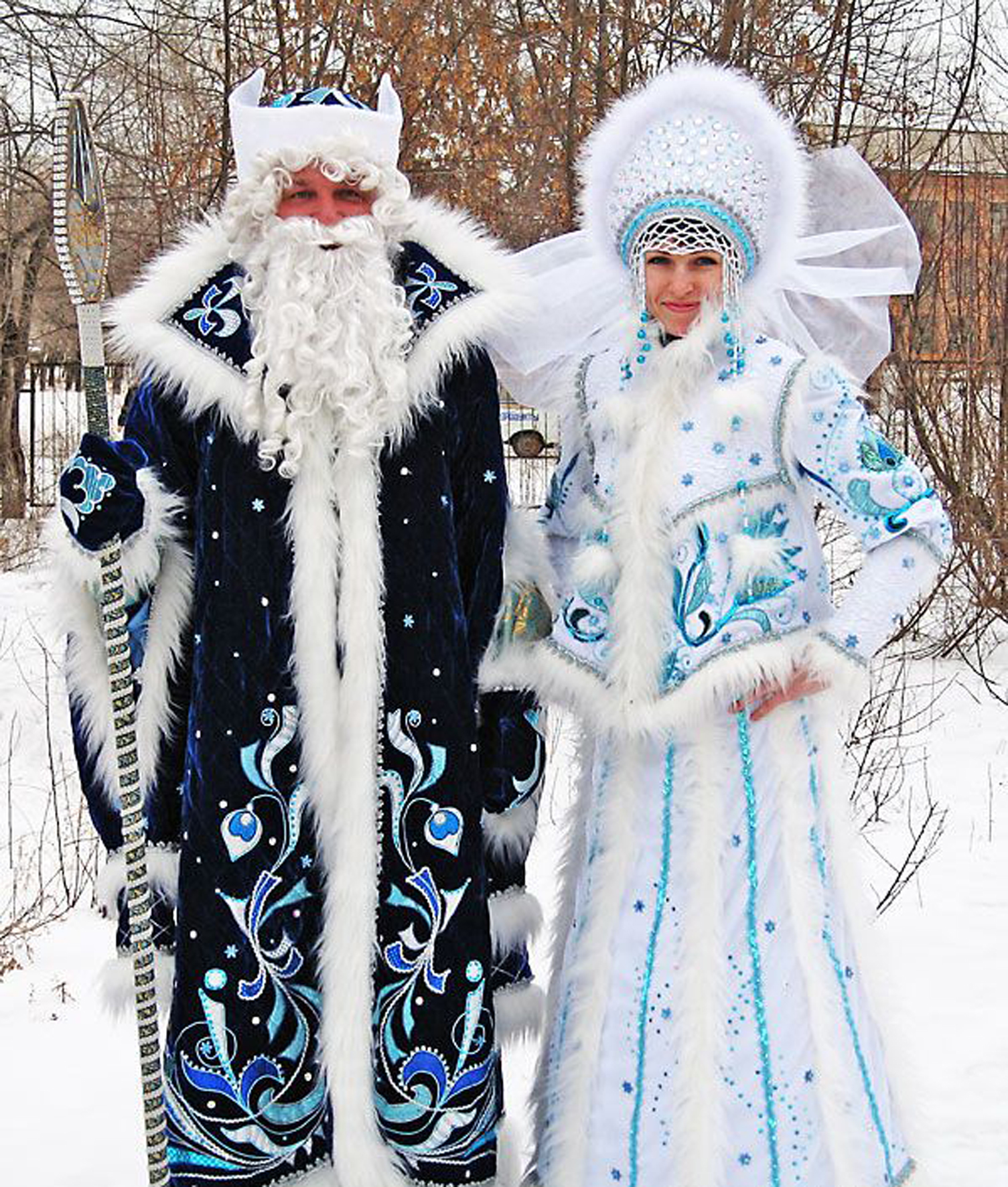
Image result for grandfather frost

Are not costumes so fascinating?
The Ice King and Ice Queen from Russia.


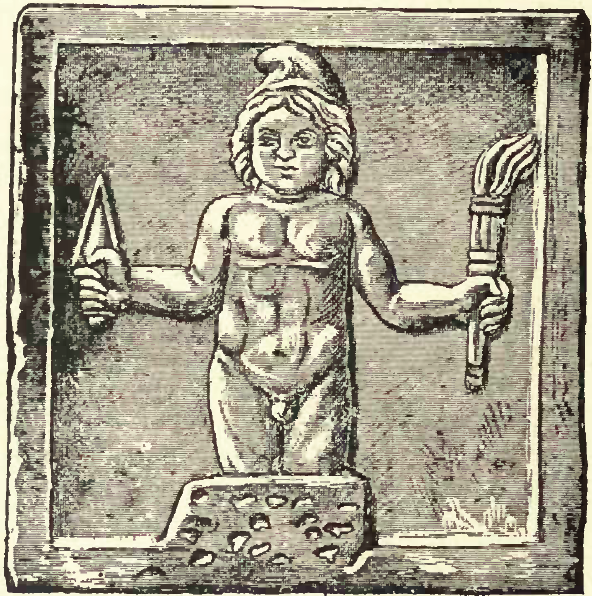
"Before the time of Constantine the ancient world was a virtual cornucopia of different religions and cults that existed all over the Roman Empire and eastward into China and India. As a result of these competing doctrines "when Christianity was only one of several dozen foreign Eastern cults struggling for recognition in Rome, the religious dualism and dogmatic moral teaching of Mithraism set it apart from other sects, creating a stability previously unknown in Roman paganism" (Mithras in the Roman Empire). The striking parallels to Christianity in Mithraism have long been pointed out, for Mithras was said to have been: born of a virgin birth, had twelve followers or disciples, was killed and resurrected, performed miracles, and was known as mankind's savior who was called the light of the world and his virgin birth occurred on December 25. Indeed, the resemblances are so striking in that all of the Christian mysteries were known nearly five hundred years before the birth of Christ that later church fathers claimed that Satan had created all of this prior to Christ's birth so as to confuse the laity. In regard to Mithras Nabaraz wrote: 'According to Persian traditions, the god Mithras was actually incarnated into the human form of the Saviour expected by Zarathustra. Mithras was born of Anahita, an immaculate virgin mother once worshipped as a fertility goddess before the hierarchical reformation. Anahita was said to have conceived the Saviour from the seed of Zarathustra preserved in the waters of Lake Hamun in the Persian province of Sistan. Mithra's ascension to heaven was said to have occurred in 208 B.C., 64 years after his birth. This birth took place in a cave or grotto, where shepherds attended him and regaled him with gifts, at the winter solstice. This is based on an older myth about birth of Mithra, that his magical birth at the dawn of time was from a rock from which he formed himself using his Will. He holds in his hand a dagger and a torch. A statue from Housesteads shows Mithras being born from the rock while the twelve signs of the zodiac surround him, showing his image as a stellar god who rules the cosmos even at his birth. A serpent [is at} times shown to be coiled around…Mithras or [his] birth stone/egg. (Mithras and Mithraism).' "
- Christ, Constantine, Sol Invictus: The Unconquerable Sun By Ralph Monday


Yuletide Customs: Family Gatherings in Oregon and Washington


Thanksgiving Day, 2012, Oregon
Betty Eubanks-Yarber, R.I.P., 2017
Family Gatherings are popular at Yuletide in America, or later at Chinese New Year Week.


2015 Christmas, Oregon


2020 Washington


2020 Washington


Image result for Holly King


Thursday, November 05, 2015

I'm Telling You the Story that She is Thinking


"Take a deep breath of all the stories that live here. A re-ligious act, to be true to the origin of the word “re-ligios”- to re-tie, re-link - is to find ways to re-connect, re-turn, re-imagine.  All of those "Sorcorer" words.”
-  Spider Woman Speaks, 2004


In the colder and darker season of the year, we are allowed to say,


“Ts' its' tsi' nako, Thought-Woman,
The Spider
named things and as she named them they appeared.
She is sitting in her room thinking of a story now
I'm telling you the story she is thinking.”
-  Keresan Pueblo introduction


The image above is of the string figure called The Apache Door (Jayne SF12) known to many string players.  A different Navaho string figure, with a criss-crossing web pattern, is called Many Stars (Jayne SF51), which I re-named "Spider Web" or "Spider Grandmother's Web" (Jayne SF51).       


Strings on Your Fingers by Mike Garofalo.  String figures and tricks from many lands.  


Spider Grandmother weaves the Grand Cosmic Web and then spins off the planets and stars in the Navaho myths.  Zuni myths say the Spider Grandmother gave the art of string figures into the hands of the children.  Spider Grandmother is a powerful earth spirit being, the primary Creatrix of the cosmos and mind, a source of boundless imagination and the creation of the new.  An archaic Goddess of Weaving is essential to a pleasant life for all our people. 


Many Stars, Son-thlani, (Caroline Jayne SF51)or Spider Grandmother’s Web is one of my favorite Navaho string figures to make.  I usually do the Spider Grandmother's Web (Jayne SF51) string figure first, for ritual purposes, to remind myself of my debts to all the people who have helped me learn in various ways.  The pattern is a reminder of our shared real world web of re-lationships and re-connecting with others, the productive Cosmic Web or Matrix symbolized as the Cosmic Web of Spider Grandmother.  


Hands, Fingers, Feeling, Touching by Mike Garofalo 

The first picture, taken around 1978, shows a small group of children learning and playing string figures, string games, and string tricks.  This was a crafts activity for children in a public library.  Physical education in improving manual dexterity and memory.  The teacher is Mike Garofalo.  

The second picture, taken in 1990, shows a brief demonstration and talk by me.  Afterwards, each child gets their own private string to take home to play with.  Then we do some manual dexterity and memory improvement practices together.