Showing posts with label Health. Show all posts

Wednesday, May 20, 2026

Headache Relief - Acupressure

"Perhaps the most famous, and one of the most commonly used points of Tung Ching Ch'ang's (1916-1975) system is Ling Gu.  The name 'Ling Gu' literally means 'miraculous bone,' and without a doubt the effectiveness of Ling Gu is extraordinary.  Ling Gu is located on the back of the hand in the space between the thumb and first finger, as far back as possible at the junction of the metacarpal bones.  It is in a similar location to the conventional point He Gu LI-4, but is located closer to the wrist than He Gu
     In Chinese medical terms, Ling Gu frees the channels and quickens the network vessels (luo mai), clears and regulates Lung qi, frees and descends the Stomach and intestines, frees the qi and disperses stasis.  Since it has a very strong moving function it is a main point to treat many types of pain.  However, because of its strong moving function it should not be used on pregnant women.
     The list of conditions the Ling Gu point treats includes migraine, low back pain, sciatica, facial paralysis, hemiplegia (e.g., paralysis after stroke), tinnitus, deafness, menstrual disorders (irregular, scanty, profuse, absent), frequent urination, incontinence, foot pain, intestinal pain, and breathing difficulties.  I usually recommend this point for home acupressure treatment in patients with any type of headache, low back pain, sciatica or leg pain. 
     To stimulate the point, press deep into the hand using the thumb of the opposite hand.  Pressure should be strong enough to feel a numbing or aching sensation deep in the point.  Hold the pressure for several seconds and then release.  Repeat several times for the next minute or two.  Remember to stimulate the point on the opposite side of where the pain is felt.  The, be sure move the area of the pain (the Moving Qi technique).  For example, to treat right-sided back or leg pain, press into the left Ling Gu.  At the same time bend and stretch the low back, or move the leg that is painful.  Repeat this stimulation several times per day or as needed."
 -  Henry McCann, DAOM, LAc, "Tung Lineage Classical Acupuncture," Qi: the Journal of Traditional Eastern Health and Fitness, Volume 25, No. 1, Spring, 2015, pp. 26-33.


Self Massage and Acupressure

Qigong and Healing

Hand, Touching, Haptics


Saturday, May 09, 2026

Walking Just Might ...

"It engages your buttocks with the world
It modestly reduces fat
It improves glycemic control, especially after meals
It improves triglyceride levels and lowers blood pressure, especially after meals
It might help you live longer if you do it briskly
It is well tolerated by people with arthritis
It is good for your brain
It reduces stress
It boosts immune function
It helps prevent falls in the elderly
It gives you a chance to think
It can be a kind of meditation
It is in your blood, in your genes
It enables recognition of the felt presence of immediate experience."
-  Mark Sisson, Reasons to Walk this Year, 2014


"Walking might:
Allow you to see new aspects of your local environment
Make you a bit mellower and more peaceful
Set a good example for others
Enable you to meet other people and dogs
Make for good conversations with a friend while walking
Engender more gratefulness and kindness
Lift your mood and improve your attitude
Give you time to think, reflect, or contemplate alone
Energize your body, mind, and spirit
Bring new scents and smells to your nostrils
Provide mystical experiences and epiphanies
Reduce or resolve your worries 
Enjoying good memories or testing your memory 
Allow you to feel and see the effects of our invisible Air
Give you more confidence in achieving your goals
Get you in better awareness of your feelings
Change your perspective 
Allow you to help with neighborhood watch
Let you be alone for awhile
Make your legs feel good
Appreciate the beauty in our world
Allow you to come under the 'Spell of the Sensuous'
Provide some time for listening to music or lectures
Reduce the onset or ameliorate physical ailments or diseases."
-  Michael P. Garofalo, Ways of Walking, October 2016  


Ways of Walking Website:  Quotations, Information, Facts, Poetry, Inspiration

Benefits of Walking

Caloric Expenditures While Walking

Walking Meditation

Exercise Options for Older Persons

Aging Well


Thursday, April 30, 2026

How to Boost One's Immune System

How to Boost One's Immune System

1.  Daily moderate cross training exercises.
2.  Adequate rest, relaxation, and sleep.
3.  Proper diet and adequate protein.
4.  Vitamin C supplementation.
5.  Reduce stress, overdoing, overreaching, overachieving, unrealistic objectives.
6.  Maintain cleanliness and sanitary conditions.
7.  Adequate water intake.
8.  Maintain an upbeat, positive, and realistic attitude. 
9.  Take all prescribed medicines on schedule.
10.  Don't smoke or drink alcohol.
11.  Develop and maintain positive social relationships.
12.  Stimulate and engage your thinking processes. 
13.  Use effective vaccines and avoidance tactics to prevent communicable diseases.  


There is plenty of evidence that Tai Chi, Yoga, Chi Kung, and Walking all can boost one's immune system.  However, claims by advocates of each of these mind-body exercise systems seem to ignore the fact that regular moderate exercise of just about any type will improve functioning of the immune system, combined with the other healthy living practices listed above.  I find little evidence that any one mind-body exercise system is "the best."  The bottom line, for me, is daily moderate cross training exercises.  

Tuesday, March 17, 2026

Help With Arthritis

Help with Arthritis: Tai Chi, Chi Kung, Yoga, Walking, and Diet   Bibliography, links, resources, recommended books, information, quotations, tips, and research.  By Michael P. Garofalo.  

For the past six years, I have had increasing pain, discomfort, and joint problems caused by arthritis.  Osteoarthritis effects my toes, fingers, tailbone, and shoulder.

My orthopedist has recommended surgery on my right shoulder, and my podiatrist has recommended surgery on my right big toe.  Not an unusual report for a 69 year old big man.  As of yet, I have not had any surgeries to help with my arthritis. 

I don't take any oral medications specifically targeting arthritis.  I take two ibuprophen tablets approximately two times in any ten day period.

I practice t'ai chi ch'uan, chi kung, yoga, walking, and gardening. 

I favor a non-inflamatory diet with lots of vegetables, grains, seeds, nuts, fruits and salads.  For example, my breakfast each morning consists of 2/3 dry cup of half steel cut oats and half quinoa, with raisins, almonds, and butter added to the cooked grains; along with coffee and creamer.  I start with about 900 calories for breakfast.  Since I weight between 250 and 260 pounds, and am very active, I need a few more calories than smaller people. 

Hopefully, these health practices, will slow the progress of my osteoarthritis, keep me limber, allow me to be active, and ameliorate the, thus far, modest pain and discomfort.

Many experts have recommended that persons suffering from osteoarthritis practice T'ai Chi Ch'aun, particularly Sun Style Taijiquan.

My webpages on the subject of exercise might be useful to persons with this health problem:

Help with Arthritis: Tai Chi, Chi Kung, Yoga, Walking, and Diet

Qigong (Chi Kung) Exercises for Fitness and Good Health

T'ai Chi Ch'uan Exercises 


Tai Chi for Arthritis - 12 Lessons with Dr. Paul Lam, M.D..   Instructional DVD, 2009.  2 Discs, 300 Minutes.  VSCL. 

Gentle Yoga for Arthritis: A Safe and Easy Approach to Better Health and Well-Being through Yoga.  By Laurie Sanford and Nancy Forstbauer.  Hatherleigh Press, 2014.  112 pages.  ISBN: 978-1578264483.  


Arthritis Relief: Chinese Qigong for Healing and Prevention  By Grandmaster Yang Jwing Ming.  YMAA Publications Center, 3rd Edition, 2005.  Index, 2014 pages.  ISBN: 978-1594390333.   VSCL.  

The Immune System Recovery Plan: A Doctor's 4-Step Program to Treat Autoimmune Disease.  By Susan Blum, MD and MPH; and Michele Bender.  Foreword by Mark Hyman, M.D..  Scribner, 2013.  384 pages.  ISBN: 978-1451694970.  VSCL. 


Sunday, March 15, 2026

Feldenkrais Techniques

A repost from February 2018:

I have taken 9 Feldenkrais' introductory 90 minute group classes from a local Feldenkrais practitioner, Christine Toscano.  I also practice this method alone at home.  I have also read a number of books on the subject.


Mrs. Toscano recommended we read Chapter 5 of the book by Norman Doidge, M.D., "The Brain's Way of Healing: Remarkable Discoveries and Recoveries from the Frontiers of Neuroplasticity," (Penguin Books, 2016). The chapter covers the life and work of Moshe Feldenkrais (1904-1984).  He was a Ph.D. engineer, kudo master, movement therapist, author, and healer. The chapter discusses some of the core principles of his theory and methods as follows:

"1. The mind programs the functioning of the brain.
2. A brain cannot think without motor function.
3. Awareness of movement is the key to improving movement.
4. Differentiation: making the smallest possible sensory distinctions between movements - builds brain maps.
5. Differentiation is easiest to make when the stimulus is smallest.
6. Slowness of movement is the key to awareness, and awareness is the key to learning.
7. Reduce the effort whenever possible. Relax.
8. Errors are essential, and there is no right way to move, only better.
9. Random movements provide variation that leads to developmental breakthroughs.
10. Even the smallest movement in one part of the body involves the entire body.
11. Many movement problems, and the pain that goes with them, are caused by learned habit, not by abnormal structure." 


Awareness Through Movement.  Easy-To-Do Health Exercises to Improve Your Posture, Vision, Imagination and Personal Awareness.  By Moshe Feldenkrais.  HarperOne, Reprint edition, 2009.  192 pages.  ISBN: 978-0062503220.  VSCL. 

Awareness Heals: The Feldenkrais Method for Dynamic Health.  By Stephen Shafarman.  Da Capo Lifelong Books, 1997.  224 pages.  ISBN: 978-0201694697.  VSCL. 


The Brain's Way of Healing: Remarkable Discoveries and Recoveries from the Frontiers of Neuroplasticity.  By Norman Doidge, M.D..  Penguin Books, 2016.

Change Your Age: Using Your Body and Brain to Feel Younger, Stronger, and More Fit.  By Frank Wildman, Ph.D..  Da Capo Lifelong Books, 2010.  240 pages.  ISBN: 978-0738213637.  VSCL. 


Embodied Wisdom: The Collected Papers of Moshe Feldenkrais.  Edited by Elizabeth Beringer.  Foreword by David Zemach-Bersin.  North Atlantic Books, 1st Edition, 2010.  256 pages.  ISBN: 978-1556439063.  VSCL.  


Moshe Feldenkrais.png


Wednesday, December 10, 2025

Lifelong Vitality

"The chief condition on which, life, health and vigor depend on, is action.  It is by action that an organism develops its faculties, increases its energy, and attains the fulfillment of its destiny."
-   Pierre Joseph Proudhon   


“They who lack talent expect things to happen without effort. They ascribe failure to a lack of inspiration or ability, or to misfortune, rather than to insufficient application. At the core of every true talent there is an awareness of the difficulties inherent in any achievement, and the confidence that by persistence and patience something worthwhile will be realized. Thus talent is a species of vigor.”
-  Eric Hoffer


How to Life the Good Life:  Advice from Wise Persons 

The Good Life: Virtues 

Nine Essentials for Lifelong Vitality

"1.  Moving with Attention, Wake Up to Life, Mindful Movements
2.  The Learning Switch, Bring in the New, Lifelong learning, Retraining
3.  Subtlety, Experience the Power of Gentleness
4.  Variation, Enjoy Abundant Possibilities
5.  Taking Your Time, Slowing Down, Not Rushing, Luxuriate in the Richness of Feeling 
6.  Enthusiasm, Turn the Small into the Great
7.  Flexible Goals, Make the Impossible Possible  
8.  Imagination and Dreams, Create Your Life
9.  Awareness, Cultivating Mindfulness, Thrive with True Knowledge"


Move into Life: The Nine Essentials for Lifelong Vitality  By Anat Baniel.  New York, Harmony Books, 2009.  Index, bibliography, 306 pages.  ISBN: 9780307395290.  VSCL.  


Thursday, September 04, 2025

Poor Health

I've not been blogging much because I am dealing with poor health.

Hoping to return to blogging in the coming weeks.

I did complete publishing 1,000 of my 3,000 Quintain poems.
Bundled Up: Volume 1 by Mike Garofalo


Monday, June 02, 2025

Reducing Carbohydrate Eating


Repost from June 17, 2023:

Personal Goal: I have found that if I eat under 140 grams of carbohydrates each day, and under 1,500 calories, I can keep my blood sugar at between 130 and 160. 

Here are some ideas I use for reducing the amount of carbohydrate grams in my daily eating:

Choose non-starchy green vegetables.  Reduce or avoid starchy vegetable foods like potatoes, rice, corn, beets, peas, etc.

Significantly reduce or eliminate eating breads, cookies, cakes, doughnuts, pastries.  Avoid processed grains. 

Keep a daily food log journal.  Increase your awareness and track exactly what you do eat and when; and, correlate it with blood sugar testing results. 

Use a calorie, fat, and carbohydrate counter information book.  I use The NutriBase Complete Book of Foot Counts (2001) which for 40,000 food products provides information on serving size, calories grams, protein grams, carbohydrate grams, sodium grams, fiber grams, fat grams, and cholesterol grams.  Also, I can easily find food information on the Internet.  Also, read food labels carefully.  Learn what foods have higher carbohydrates, and a higher glycemic index. 
  
Stop drinking sugary drinks or fruit juices.  Use non-sugar sweeteners sometimes.  Avoid sugars and sweets like candy. 

Choose low carbohydrate “snacks” (small portions) like nuts, cheese, or fruits
Avoid high fat and salty foods because they add calories and result in binging, e.g., potato chips, bagel chips, pizza.

Drink plenty of water each day.  Stay hydrated! 

Reduce or eliminate drinking whole milk, shakes, lattes.  Some dairy products can be high in carbs. 

Eat some high-quality protein at each meal. 

Eat foods with a lower glycemic index

Choose baked or broiled foods, and reduce fried foods. 

Limit portions, reduce total caloric intake, and use restraint in eating.  Stay under 1,500 calories each day until I weight 225 pounds. 

Develop strategies and tactics for following a healthy eating pattern for a Type 2 diabetic. 

Consult with my doctor, dietitian, and related health professionals. 

Develop a personal dietary program that I can stick to, maintain, and not diverge from for long term benefit. 

Don’t smoke marihuana [legal in Washington State] because it typically results in more hunger and overeating, not exercising, elevated blood sugar, and some loss of self-control in sticking with your eating program.  You just don’t care about dieting when you are in a euphoric mood. 

Be aware of the potential negative complications of reducing carbohydrate intake for a diabetic, e.g., ketosis.  There are medical cautions about severe carbohydrate reduction, and increased eating of fats and proteins.  Strive for balance, be sensible, and research this topic.  However, I must do what I need to do to get my blood sugar to range from 130 to 160, and my body weight down 20 pounds to 225 pounds. 

“The current national standard for recommended daily intake for carbohydrates is 130 grams/day. Anything below that can be considered a reduced-carbohydrate diet, although Americans typically eat two to three times that amount in a day. The benefits of carbohydrate reduction seem to be continuous; as carbohydrates are reduced, health benefits usually increase. However, for those addressing health concerns such as diabetes, Metabolic Syndrome, and abnormal lipids, there is usually a threshold effect. In other words, dietary carbohydrates don’t have to be eliminated, just lowered to the point that an individual is able to achieve his or her health goals.”
- Reducing Carbohydrates: A Key to Better Health

Diabetes and Caloric Restriction


Thursday, November 21, 2024

Ling Gu "Miraculous Bone" Acupressure Technique

    "Perhaps the most famous, and one of the most commonly used points of Tung Ching Ch'ang's (1916-1975) system is Ling Gu.  The name 'Ling Gu' literally means 'miraculous bone,' and without a doubt the effectiveness of Ling Gu is extraordinary.  Ling Gu is located on the back of the hand in the space between the thumb and first finger, as far back as possible at the junction of the metacarpal bones.  It is in a similar location to the conventional point He Gu LI-4, but is located closer to the wrist than He Gu
     In Chinese medical terms, Ling Gu frees the channels and quickens the network vessels (luo mai), clears and regulates Lung qi, frees and descends the Stomach and intestines, frees the qi and disperses stasis.  Since it has a very strong moving function it is a main point to treat many types of pain.  However, because of its strong moving function it should not be used on pregnant women.
     The list of conditions the Ling Gu point treats includes migraine, low back pain, sciatica, facial paralysis, hemiplegia (e.g., paralysis after stroke), tinnitus, deafness, menstrual disorders (irregular, scanty, profuse, absent), frequent urination, incontinence, foot pain, intestinal pain, and breathing difficulties.  I usually recommend this point for home acupressure treatment in patients with any type of headache, low back pain, sciatica or leg pain. 
     To stimulate the point, press deep into the hand using the thumb of the opposite hand.  Pressure should be strong enough to feel a numbing or aching sensation deep in the point.  Hold the pressure for several seconds and then release.  Repeat several times for the next minute or two.  Remember to stimulate the point on the opposite side of where the pain is felt.  The, be sure move the area of the pain (the Moving Qi technique).  For example, to treat right-sided back or leg pain, press into the left Ling Gu.  At the same time bend and stretch the low back, or move the leg that is painful.  Repeat this stimulation several times per day or as needed."
 -  Henry McCann, DAOM, LAc, "Tung Lineage Classical Acupuncture," Qi: the Journal of Traditional Eastern Health and Fitness, Volume 25, No. 1, Spring, 2015, pp. 26-33.


Self Massage and Acupressure

Qigong and Healing

Hand, Touching, Haptics


Tuesday, June 11, 2024

Recuperating from COVID 19 Flu

 Karen and I were both were infected by the COVID 19 Flu virus on May 21st., 2024.

We have both had 2 basic COVID flu shots and a third; plus, the regular annual flu shot in 2023.

We both stayed home alone, rested, stayed warm, drank plenty of fluids, and regained some appetite.  Both of us are coughing frequently with yellow sputum, no fever, fatigue, tired, weak, aching muscles, having sinus infections, etc.

Tiresome, frustrating, disappointing, unstoppable.  So it goes.  

Reading, napping, Smithsonian Aerial America episodes, map reading, resting.

Unfortunately, my heart flipped back into AFib on June 2nd.  

Sadly, over 1,140,722 have died from COVID 19 and 1,147,399 have died from pneumonia.

Was I scared, worried, anxious ... yes, seriously at times.

We did not visit our physician or the hospital emergency room. We did get advice and medicine by phone from our physician.  

Not much energy or interest in writing, blogging, research.  Mostly reading, watching television, sleeping, harmonica playing, 


Monday, April 15, 2024

Resuming Blog Publishing

 I have been dealing with numerous health issues the last few months: COVID, Atrial Fib and Flutter, high blood sugar, fatigue, and mild depression.  These conditions have slowed my progress on writing since January 1st.

My Health Regime after April 13th Includes:
- A Low Carbohydrate Diet (under 90 carbs each day)
- Walking Over 4,000 Steps a Day
- No Smoking or Drinking 
- Cardio Conversion 4/12
- Changed Medication
- Use Insulin if Blood Sugar over 200
- Taijiquan Daily for 40 Minutes
- Plenty of Drinking Water Each Day

Working Now on Various Projects:

At the Edges of the West: Highway 101

Yurt Camping (Pacific Northwest Coast) Preparations


Tuesday, December 19, 2023

Family Health Issues

My wife, Karen, is scheduled today, 11/19/23, for urological/gynecological surgery today at Legacy Hospital in Vancouver. We check in at 5:30 am this morning. Surgery around 9 am. She and all of us are very concerned and hope for the best outcome.  She will stay at the hospital overnight.

I had a cardio-conversion procedure done at Peace Health Hospital in Vancouver on 11/22/23. Thus far, my serious and scary symptoms of atrial fibrillation and atrial flutter have abated; and, I feel fine and can walk and exercise again.

We are both over 75 years of age.  We try to face and adjust to our medical problems in a positive, constructive, and practical manner.  We don't complain at lot, and try to laugh off some of our nagging problems of old age.  On the whole, we are happy and grateful people.


Wednesday, October 11, 2023

The Benefits of Qigong Exercises for Older Persons

The Anti-Aging Benefits of Chinese Qigong (Chi Kung) Exercises
Gentle Exercise, Breathing, and Meditation


Scientific Research  Many Reports on the Effect of Qigong on Improving the Health of the Elderly

Aging Well

"Qigong can do wonders to rejuvenate the elderly. In fact, more than 50 percent of the people who begin tai chi and qigong in China do so after the age of 60, when the realities of aging can no longer be pushed aside. Already, hundreds of millions of people over the age of 60 have found qigong to be uniquely effective."
-  Bruce Frantzis, Qigong for Seniors


Anti-Aging Benefits of Qigong   by Kenneth Sancier, Ph.D.

Qigong for the Elderly


"This report shows that regular qigong practice could relieve depression, improve self-efficacy and personal well being among elderly persons with chronic physical illness and depression"
-  Effect of a Qigong Program on Elderly Persons with Depression, International Journal of Geriatric Psychiatry.


Qigong (Chi Kung):  Styles,Bibliographies, Research, Resources, Links, Lessons, Benefits, Quotations.  Website by Mike Garofalo.

A review of clinical trials of t’ai chi and qigong in older adults reported in the March 2009 issue of the Western Journal of Nursing Research notes that qigong improves physical functioning, limits fall risk, alleviates symptoms of depression and anxiety, and lowers blood pressure in older adults.

"Why Every Elderly Citizen Should Do Qigong: Qigong can treat many diseases.  Qigong can prevent many diseases.  Qigong can extend life.  Qigong can improve the quality of life.  Qigong can prevent accidents."


"According to T'ai Chi and Qigong enthusiasts, the discipline can prevent many ailments, including high blood pressure, tuberculosis, and diabetes, and US scientists agree that T'ai Chi can offer some important fitness benefits, particularly for older adults."
-  Modern Maturity, V. 35 June/July 92 p. 60-62


Qigong (Chi Kung): Recommended Reading, Bibliography, Resources, Links, Quotations.  Research by Mike Garofalo, Qigong Instructor


"The average person uses only five to ten percent of his or her 15 billion brain cells; yet studies show that Qi Gong activates 90 percent of the human brain by suffusing it with stimulating bioelectric currents.  This results in significant memory improvement, learning, and enhancement of the physiological functions  controlled by the brain.  Studies also show that practicing Qi Gong increases the level of essential neurotransmitters in the blood.  Deficiency of these elements can cause Parkinsons, Alzheimer’s, chronic depression, and insomnia."
-  Lee Holden


According to the February 2009 issue of The Journal of Nursing, “evidence-based research supports the argument that qigong improves cardiovascular-respiratory function and lipid profile, decreases blood sugar, and relieves anxiety and depression.”

An Evidence-Based Review of Qi Gong by the Natural Standard Research Collaboration, 2010

The Healing Promise of Qi: Creating Extraordinary Wellness Through Qigong and Tai Chi.  By Roger Jahnke, O.M.D..  Chicago, Contemporary Books, 2002.   Index, notes, extensive recommended reading list, 316 pages.  ISBN: 0809295288.  VSCL.  

The Way of Qigong: The Art and Science of Chinese Energy Healing.  By Kenneth S. Cohen.  Foreword by Larry Dossey.  New York Ballantine Books, 1997.  Index, notes, appendices, 427 pages.  ISBN: 0345421094.  One of my favorite books: comprehensive, informative, practical, and scientific.  VSCL.  


Monday, August 28, 2023

Walking: Thy Lasting Youth Defends

“Of all the causes which conspire to render the life of a man short and miserable, none have greater influence than the want of proper exercise.”
-  Dr. William Buchan, 18th Century Scottish physician

 “Exercise thy lasting youth defends.”
-  John Gay, British poet

“Resting is rusting.”
-  Helen Hayes


"Exercise may do more than keep a healthy brain fit: New research suggests working up a good sweat may also offer some help once memory starts to slide- and even improve life for people with Alzheimer’s.  The effects were modest, but a series of studies reported Thursday found vigorous workouts by people with mild memory impairment decreased levels of a warped protein linked to risk of later Alzheimer’s — and improved quality of life for people who already were in early stages of the disease.  “Regular aerobic exercise could be a fountain of youth for the brain,” said cognitive neuroscientist Laura Baker of Wake Forest School of Medicine in North Carolina, who reported some of the research at the Alzheimer’s Association International Conference.  Doctors have long advised that people keep active as they get older. Exercise is good for the heart, which in turn is good for the brain. Lots of research shows physical activity can improve cognition in healthy older people, potentially lowering their risk of developing dementia.  How much exercise? In studies from North Carolina, Denmark and Canada, people got 45 minutes to an hour of aerobic exercise three or four times a week, compared to seniors who stuck with their usual schedule."
Exercise is Good for the Brain

"The street curves in and out, up and down
in great waves of asphalt;
at night the granite tomb is noisy with starlings
like the creaking of many axles;
only the tired walker know how much there is to climb,
how the sidewalk curves into the cold wind."
-   Charles Reznikoff, Walking and Watching

"Thoughts come clearly while one walks."
-   Thomas Mann

"Happy is the man who has acquired the love of walking for its own sake!"
-   W.J. Holland


 Walking: Quotes, Sayings, Poems, Information.  Compiled by Mike Garofalo.


Thursday, March 09, 2023

Family Activities: Karen's Hip Surgery

 Karen had hip replacement surgery yesterday 3/8 at the Peace Health Hospital in Vancouver.  We arrived at the hospital at 7:30 am, and I left around 3 pm.

The surgery went well.  She is recovering nicely.  They had her stay at the hospital last night.  

I will pick Karen up today and bring her home.  We will have lessons from physical therapists and occupational therapists.  Once cleared by the doctor we will drive home.  

We are prepared for appropriate "by the book" recovery protocols.  They give you a large notebook with instructions, lots of verbal reinforcement, and tools and methods needed for effective recovery of a hip replacement.  

Thursday, February 02, 2023

Cryo-Balloon Ablation of My Heart


At 9:30 am this morning, at the Peace Health Hospital in Vancouver, a team led by Dr. Reese will perform a cryo-balloon catheter ablation of my heart.  We hope this will correct some of my current electrical heart problems.  This is a non-invasive procedure, is "relatively safe," and does help 60-80% of people who undergo the procedure.  Dr. Reese told me he thought I was a good candidate for using this procedure.  

At age 77, I have been slowed down by shortness of breath, mild chest tightness, fatigue, and lightheadedness caused by paroxysmal atrial fibrillation.  My heart went into atrial fibrillation in May of 2022.

We shall see what happens in the next month to me as a result of this technical procedure.  


Friday, 7 am, 2/3/2023

The procedure went smoothly.  AFib controlled.  Dr. Reese said it would take three months to feel fully back to "normal."  Little discomfort, and no pain.  Sutures in thighs healing OK thus far.  Feeling very good.  Alert and thinking all night with little sound sleep.  Moving 10-15 minutes at the end of one hour of sitting.  Moving slowly, carefully, gently.  No chest tightness.  No lightheadedness or dizziness.  Clear vision.  

Cancelled February retreat to a yurt at Pacific Beach State Park in Washington.  My next retreat will come in April.  Waiting nearly 3 months to go on retreat.  Staying close to home until recovery comes.  Also, Karen has upcoming hip surgery on March 7th.  


Saturday, 4 am, 2/4/2023

Still feeling pretty good.  No problems.  Sutures healing OK.  No chest pain or discomfort.  Don't get out of breath.  A few cases of blurred/odd visual disturbances - wavy edges.  Trying to sit for 1 hour and then get up and gently exercise for 20 minutes today: walking, treadmill, qigong, taijiquan, yoga stretches.  

Before the ablation, I was in AFib frequently.  My heartbeat averaged 61 bpm when at rest.  Now my average heartbeats per minute is between 70-80 bpm at rest.  


Sunday, Noon, 2/5/2023

A little punked today.  Did not sleep well again last night: too much thinking.  My legs are a little sore from lots of Taijiquan practice yesterday.  Truly, a day of complete resting for me.  Sutures healed and looking good.  Very little chest discomfort.  Somewhat anxious.  No exercise.  Read, relax, sit, nap.  Ate  up to my recommended limit of calories 1500/carbohydrates 150.  


Monday, 2/6/2023,

Four days since the ablation procedure.  Slept 7 hours last night - excellent for me.  Feeling alert and ready to move.


Thursday, 2/9/2023

Met with James Mathey, Physician's Assistant, Peace Health Hospital today.  He ran an EKG and checked my pacemaker memory.  I am in normal heart rhythm with no AFib.  He checked my leg wounds.  In his assessment, overall, I am progressing well.  I return to be evaluated by him on March 6th.  I can ramp my walking up to 5,000 steps per day in the next 10 days.  No heavy workouts, sweating, or hard labor.  


Sunday, 2/12/2023

Injured my right leg.  Limping and in pain.  Start recovery process.


Thursday, October 27, 2022

Spring of Life in Old Age

"The enduring legacy of Taijiquan is that qi grows by the practice methodology, as a plant by tending and watering.  Along the way, the qi nutured in daily practice alleviates stress related illnesses.  In the longer term, the qi buildup invigorates and strengthens the body's constitution, and serves as a natural preventive medicine that shields against chronic ailments.  The alluring promise is that the store of qi preserves the "spring of life" in old age, as espoused in the verse of the Song of Thirteen Postues.

Yi shou yan nian bu alo chun
One gains longevity and prolongs the spring of life in old age."


-  C.P. Ong, Taijiquan: Cultivating Inner Strength, p. 156


Taijiquan: Cultivating Inner Strength  By C. P. Ong.  Bagua Press, 2013.  366 pages.  ISBN: 978-0615874074.  VSCL.  "This book diverges from traditional exposition on Taijiquan (Tai Chi Chuan) as it engages rather than shuns the role of muscles in elucidating the cryptic practice dictum of “using yi (mind) and not li (muscle force).” It centers on the core principle of Taiji balance—the balance of yin and yang, but presents the metaphysics of balance the way the body comprehends it, developmentally, through practice in the musculo-skeletal framework. In the process, the fog of mystique lifts, and the many abstruse concepts of Taijiquan become clear. Taijiquan training is physical at the initial phase, but the slow-motion exercise nurtures a meditative discipline of the mind. As it progresses, the soft methodology grows into one of building qi-energy, and then the practice becomes more internalized. The process fortifies the body with qi and cultivates a holistic balance of the organ systems. The book explains how the training methodology, in pursuing Taiji balance, leads to the development of a highly refined strength called neijin (inner strength). By incorporating the training of “silk-reeling energy” in Taiji balance, the practitioner develops the coiling power (chanrao jin) that underlies the magic of Taijiquan kungfu."  Dr. Ong has a Ph.D. in mathematics from U.C. Berkeley.  C.P. Ong is a 20th generation Chen Family Taijiquan disciple of both Chen Xiaowang and Chen Zhenglei. He has traveled with them, as well as with Zhu Tiancai, for a few years in their U.S. workshop tours.

"Think over carefully what the final purpose is: to lengthen life and maintain youth."
-  Song of 13 Postures, translated by Benjamin Lo


Thirteen Postures of Taijiquan

Cloud Hands Taijiquan


The Harvard Medical School Guide to Tai Chi: 12 Weeks to a Healthy Body, Strong Heart, and Sharp Mind.  By Peter M. Wayne, Ph.D., and Mark L. Fuerst.  Shambhala Press, 2013.  240 pages.  A Harvard Health Publication. 


Saturday, May 21, 2022

Change of Plans: Heart Problems

Unfortunately, for me, I could not take my planned Yurt Camping Trip to Pacific Beach on May 23-26.  

In late April, I worked too hard in my backyard garden one clear cold damp day, and I had a mild heart attack.  On May 15, my cardiac medical group and EKG tests revealed that my heart was now in AFib  (atrial fibrillation), and my internal pacemaker recorded an incident on April 24th, that put my heart in AFib.

I am scheduled for a cardioversion on June 8, 2022, at the Peace Health Hospital Complex, Mill Plain Blvd., Vancouver, WA, Physicians Pavilion, Cardiac Division - Electrical, the procedure will be controlled by Dr. Zahourian, at 10:00 am.  I have Medicare and Anthem/Blue Cross Medical Insurance in Vancouver.  

Maybe this procedure can help me in some way.  My Five Lucky Fingers Are in a Bird's Beak!!  

Five years ago, Dr. Gungor installed a pacemaker to correct my increasing bradycardia problem.  This device has worked wonders to my sense of well being.  I take my blood pressure each day, and my heartbeat is never lower than 60 beats per minute.    

Right now, 2022 05 21 6:36 am,
If I am sitting, then I feel fine. 
I can stand and move slowly and carefully on flat surfaces.  I wear good shoes.  
I use a good long cane for balance and avoiding falls.  
I handle all bathing and personal care and dressing myself on my own.
I try to stand up and move my body every 30 minutes ... limbering, stretching, walking, chores.  
I am taking a blood thinner: Eliquis
I take flu prevention measures and consider myself as high risk right now.  
I enjoy reading, writing, photography, website creation, and many private hobbies.  
I handle most assigned household maintenance chores on schedule.  
I can no longer do heavy lifting or very strenuous activities as when I was 65 years of age.
I enjoy Yoga at home, Feldenkrais, Qigong, slow Tai Chi practice, stretching. 
I no longer teach Yoga, Tai Chi Chuan, or Qigong.    
 

Sometimes, after sitting, when I get up and start walking quickly or up a hill, I will become lightheaded, weak, breathing more rapidly, chest tightening, alarmed/anxious/concerned, unbalanced ... sick.  I suddenly feel totally out of shape, a weakling, and I sit.  In a minute or so my breathing returns to normal, all senses functional, and I get up and move OK.  Knowing now that I am being treated for AFib makes these new unpleasant bodily experiences even more alarming - is this episode the BIG ONE that will cash me out, TIA me, stroke me...   

I can no longer climb to the top of Mt. Lassen, 10,457 feet, as I did in 2006 at age 60.  I did view the northeast side of Mt. Ranier last summer from Sunrise Point ... driving to this viewpoint.  Digressions keep the mind off one way tracks of thought.  

I was eating lunch with a co-worker in 1975, Mrs. Lesnick, and she had a heart attack and died there.
I visited some during the last hours of my father's life.  He was unconscious, quiet, and dying of congestive heart failure.  I spoke with a kindly Roman Catholic Priest who gave my dad the Last Rites.  

In April 2022, I walked nearly every day for 40 minutes.  Sometimes I came back breathing pretty hard.  Mostly, felt fine walking under overcast Vancouver Spring skies.  

The unpredictability of these new unpleasant bodily spells/attacks, and the anxiety they can arouse, makes me favor staying at our home in Vancouver from May 15th - June 30th, 2022.  I will just take it easy in Vancouver until my 
June 8 cardioversion procedure.  I have the support of family here to help me through any difficult times.  

So, I cancelled my trip to Pacific Beach State Park, Washington, 5/23-5/26.  They refunded a decent amount.  Booking a Yurt for $62 a night is practical for a solo camper like myself.  A person needs to be sure of their health when they go Yurt camping alone at a distant place like Pacific Beach.  

However, I am going to let the next four posts about going to Pacific Beach and the Quinault Rainforest run anyway.  They have local travel information, facts about Douglas Fir trees, and info on the Quinault Rainforest.  

As if ... What was Planned ... Local Travel Information ... Places I Plan to Return To Soon 

Karen and I garden at our home.  Winter and Springtime temperatures between 40F to 55F, keep gardeners dressing warm in Vancouver.  

We planted three trees in December.


Birds love juicy wisteria blossoms.


Ready for some chores.


Two dogs want to be in the warm corner
of the cold garage in winter.  Near
the workbench, space heater, and tools.
We were dog-sitting the Golden Retriever under my seat.


Saturday, April 23, 2022

Yoga, Tai Chi, and Zen

"Questioner:  Is it wise to combine Hatha Yoga or Tai Chi or Karate with Zen?

Roshi Philip Kapleau: Both Hatha Yoga and Tai Chi, provided you separate them from their philosophical aspects and do not devote more time to them than to Zen, go well with zazen and in fact strengthen it.

Questioner:  Do you do any of these, Roshi?

Roshi:  Yes, I do Hatha Yoga for about an hour daily.

Questioner: What time of the day do you do it?

Roshi:  In the morning.  First we have zazen, then chanting and then yoga.  It is an excellent way to start the day.  My teachers, Harada-roshi and Yasutani-roshi, both did calisthenics for an hour every day until the age of about eighty-five.'

-  Zen: Merging of East and West (1989).  By Roshi Philip Kapleau (1912-2004).

Friday, February 25, 2022

Feathered Friends, Shell-Fish, and Epidemics


"The feathered tribe are numerous, and during the season flock hither in clouds: white and black swans, white geese, Canada geese, brant, sheldrake, cormorants, loon, mallard, ducks, red-head, gray and canvas back ducks, teal, curlew, snipe, plover, pheasant, quail, pigeons, crows, and robins. During the summer months pelicans are plenty, and go sailing round in the heavy, lazy flight, occasionally dashing down into the water in the most clumsy manner to catch a fish, and at all times an easy prey and an acceptable banquet to the Indians, who swallow their coarse, fishy, oily flesh with the greatest avidity. Innumerable flocks of gulls of various species are constantly to be seen, and at times, when attracted by any quantities of food, appear like clouds. These birds, also, are readily eaten by the Indians, who never are at a loss to find means to appease their appetite."

- James Gilcrest Swan, 1852, Willapa (Shoalwater) Bay, Southwestern Washington, from his book "The Northwest Coast: Or, Three Year's in Residence in Washington Territory, 1957."

Willapa Bay  A Hyper-text Notebook by Mike Garofalo


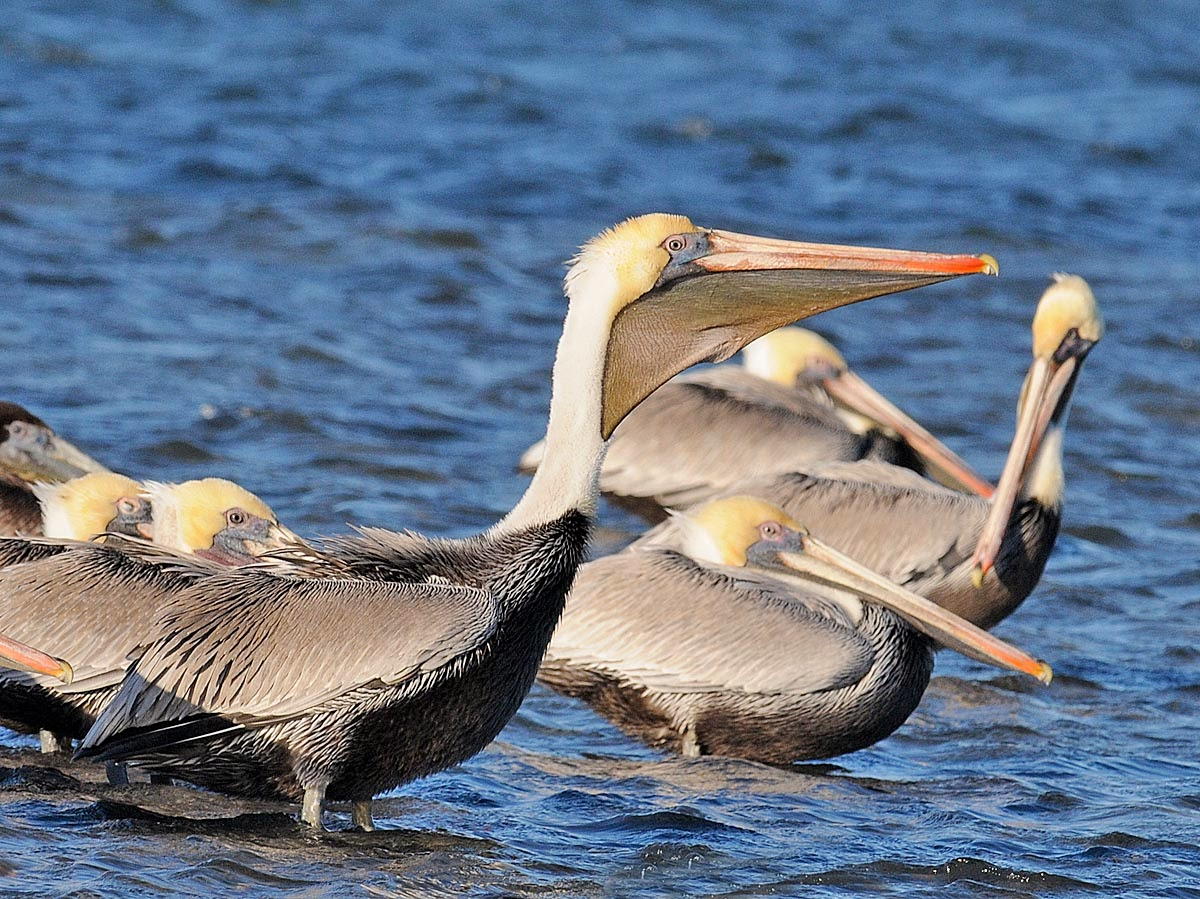
Brown Pelicans


In 2022, I will be Yurt camping at Grayland Beach State Park twice and Pacific Beach State Park once during the spring bird migration fly-by. Millions of birds rest and eat in the shallow bays, wetlands, marshes, sloughs, sandy islands, and rivers in Grays Harbor Bay and Willapa Bay.  Looking forward to visiting Bottle Beach and other bird watching locations.  


A Birder's Guide to Coastal Washington. By Bob Morse, 2001. Featuring Ocean Shores, Long Beach Peninsula, Forks, Westport, Tokeland, and 160 Birding Hot Spots. Detailed coverage of birding locations near Westport and how to get there. Excellent resource!  RWMorse, 2001, 270 pages, ring-bound. VSCL. FVRL.  First Choice!!

Coastal Washington Shorebirds and Waterbirds. By Ruth McCausland. 116 pages.

Birds of Washington Field Guide. By Stan Tekiela. Adventure Pubs., 2001, 332 pages.

American Birding Association Field Guide to the Birds of Washington. By Dennis Paulson and Brian Small. Scott and Nix, 2020, 368 pages.

Birds of the Pacific Northwest. By John Shewey and Tim Blount. Timber, 2017, 560 pages.

Birds of Washington State. By Brian Bell and Gregory Kennedy. Partners, 2017, 284 pages.


"The shoals are covered with shell-fish, among which the oyster is the most abundant, and constitutes the primary article of export. Several species of clams, crabs of the largest size, and of a most delicious flavor, shrimps, mussels, and a small species of sand-lobster, are in the greatest abundance, and furnish nutritious food, not only to the different tribes of Indians who resort to the bay at different seasons to procure supplies, but also the white settler, who is this enabled to greatly reduce the expenses of living when compared with those settlements on the Columbia River and interior where provision of all kinds are usually scarce and high."
- James Gilcrest Swan, 1852, Willapa (Shoalwater) Bay, Southwestern Washington

Fort Vancouver (1824-1845) and Portland (1845-) were the settlements inland on the Columbia River.  

By 1851, epidemics of disease (1795-1845) had decimated the Chinook and Chelais Indian tribes on the Shoalwater (Willapa) Bay coastal area. In 1856, for example, a large tribe of Chelais Indians were camping in Westport and digging clams. A smallpox epidemic erupted and killed hundreds of Chelais Indians of all ages, and the Indians never returned to Westport.

In 2022, tens of thousands of people go to dig razor clams on fixed approved days on the sandy beaches of Twin Harbors and the Long Beach Peninsula.  My son and his wife are expert razor clam diggers.  And, we all have been challenged by our own COVID flu pandemic in America the past three years.  

Most of us enjoy finding ways and means to appease our appetites, despite any obstacles.  


Travel Notebooks by Mike Garofalo