Showing posts with label Eating. Show all posts

Tuesday, November 18, 2025

Westport, Washington, Clam Digging Trip

More Details and Photos to Follow.

Our rental home was near Westport.

Nice weather. Beachcombing. Dog walking. Mushroom hunting.

Brady's Oyster Shack for oysters and fish.
Grundson Fishing store near Westport docks.
Hot Coffees
Fireplace chats
TV indoors

Fancy high-qulity Chef's meals

Clam Digging at 4:30 pm

Thursday, November 28, 2024

Happy Thanksgiving

Happy Thanksgiving Day 2024

Best wishes for a peaceful and happy day to all.


Tuesday, November 14, 2023

Hunting for Mushrooms and Raxor Clams

 We enjoyed a beautiful clear day of camping at Twin Harbors State Park.   November 14, 2023

We went walking in search of mushrooms in the Park.

We ate Dungeness crab, Kumamoto oysters, Little Neck clams, homemade squash soup, fresh bread, and wine. Shopped at the fish market at Brady's Oysters.

Went razor clam digging at Grayland Beach Road. Caught 49 clams after 5 pm at low tide.

For many photographs and more information go to: Four Days in Grayland by Michael P. Garofalo.


Tuesday, January 16, 2018

Diabetes and Caloric Restriction

I have been dealing with the disease of diabetes since I was 52 years of age - for the last twenty years.  Vigorous daily exercise and reasonable eating from 1998 to 2016, kept my A1C around 7.2.  

Most diabetes patients die from cardio-vascular disease.  So, as the odds predicted, I had a pacemaker inserted in 6/17 and a LAD heart stent placed in 10/17.  Of course, being 72 years of age does not help with the progress of any disease.  Also, the problems and anxieties of serious heart disease resulted in a reduction of exercise.  

In the last year, while suffering from heart disease, my blood sugars were rising.  I tried three different medicines in 2017: Trulicity, Januvia, or Glipizide combined with Metaformin.    

I see my internal medicine doctor next Friday.  I am considering asking for a referral to an endocrinologist, and a change in medications.   

I have been attending, since November, the cardio rehabilitation classes three days each week, for 1.5 hours per class, at the Peace Health Hospital complex in Vancouver, WA.  The class consists of one hour of aerobics, and a half hour of weight lifting, core work, or stretching.  They offer a 1 hour lecture each Wednesday on heart health care.  Fortunately, my health insurance covers this cardio rehabilitation program - how lucky I am.  

Unquestionably, moderate exercise helps with reducing blood sugar.  Typically, after a breakfast (600 calories) and a one hour wait, my blood sugar will be at around 220.  After I finish the 1.5 hours of exercise, my blood sugar is 150.  Ideally, it would be around 110.  Exercise does help, it has few side effects like medicines, is inexpensive (e.g., my nearby LA Fitness Gym membership costs $31.00 per month).  I enjoy walking and weightlifting, and I practice Taijiquan

  
The most important factor in controlling diabetes is carefully choosing what you eat, and more important, what you do not eat.  Reducing caloric intake has the beneficial effect of reducing blood sugar.  Also, any overeating of high glycemic index (carbohydrate) foods increases your blood sugar.  In the past, sometimes I am inconsistent and negligent about my diet.  

My goal for January and February is too eat under 100 grams of carbohydrates per day, and around 1,500 calories per day.  My body-weight goal is 225 pounds.  For a, currently,  6'7" and 246 pound man, this is a significant caloric reduction.  

If I eat under 1,300 calories a day, my morning fasting blood sugar goes down to 135.  However, it is very hard for me to control my lust for food and eat under 1,300 calories per day.  Also, my energy level drops and fatigue sets in earlier the less I eat.  However, overall, I must strive to bring my blood sugar to proper maintenance levels.  Always Compromises!!


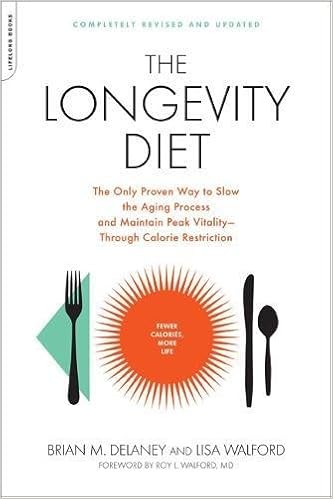
"The Longevity Diet: The Only Proven Way to Slow the Aging Process and Maintain Peak Vitality Through Caloric Restriction." By Brian M. Delaney, and Lisa Walford, 2010.  


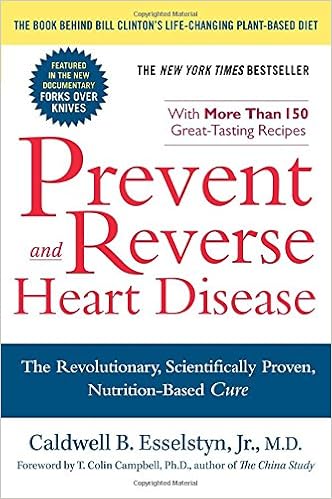
Prevent and Reverse Heart Disease: The Revolutionary, Scientifically Proven, Nutrition Based Cure.  By Caldwell B. Esselstyn, M.D., 2008.  


Wednesday, November 12, 2014

Can Eating Less Slow the Aging Process?


For me, eating less and loosing 30 pounds of body weight in the last two years has significantly lowered my average morning fasting blood sugar and four month A1C readings; and, has resulted in my cardiologist reducing my blood pressure medicine dosages in half.  I feel stronger and more energetic, and I exercise in some way on a daily basis.  I sleep soundly and dream every night.  My waistline measurements have decreased from 44 inches to 40 inches.  My current goal is to reach a body weight of 230 pounds, and a waist of 38 inches, at a height of 6’6”.  Consequently, I plan to continue my efforts to eat less, but eat nutritious meals. 

I doubt I can live longer by eating less, but the likelihood of reducing the significant possible negative health effects of my Type 2 diabetes and high blood pressure seem worth the effort. 

Is fasting one day a week reasonable for me?    I am currently not sure about this approach to reducing caloric intake, since I actively exercise each day.  Maybe skipping dinner twice a week might be an option.  Comments?? 


“While human calorie restriction doesn't have the same impact on life span, it does provide numerous benefits, such as a greatly lowered risk for most degenerative conditions of aging, and improved measures of health. In recent years, human studies of long-term and short-term calorie restriction have comprehensively demonstrated these benefits. Many researchers believe that the evidence to date shows the practice of CR will in fact extend the healthy human life span, but there simply isn't enough data yet to pin down the effects on life expectancy. It is plausible that they are at least as good as those resulting from exercise. If so, it could mean a difference of 5-10 years of life.”


“Calorie restriction (CR) extends life span and retards age-related chronic diseases in a variety of species, including rats, mice, fish, flies, worms, and yeast. The mechanism or mechanisms through which this occurs are unclear. CR reduces metabolic rate and oxidative stress, improves insulin sensitivity, and alters neuroendocrine and sympathetic nervous system function in animals. Whether prolonged CR increases life span (or improves biomarkers of aging) in humans is unknown. In experiments of nature, humans have been subjected to periods of nonvolitional partial starvation. However, the diets in almost all of these cases have been of poor quality. The absence of adequate information on the effects of good-quality, calorie-restricted diets in nonobese humans reflects the difficulties involved in conducting long-term studies in an environment so conducive to overfeeding. Such studies in free-living persons also raise ethical and methodologic issues. Future studies in nonobese humans should focus on the effects of prolonged CR on metabolic rate, on neuroendocrine adaptations, on diverse biomarkers of aging, and on predictors of chronic age-related diseases.”
-  Caloric Restriction and Aging, The American Journal of Clinical Nutrition   


Calorie restriction (CR), or caloric restriction, is a dietary regimen that is based on low calorie intake. "Low" can be defined relative to the subject's previous intake before intentionally restricting calories, or relative to an average person of similar body type. Calorie restriction without malnutrition has been shown to work in a variety of species, among them yeast, fish, rodents and dogs to decelerate the biological aging process, resulting in longer maintenance of youthful health and an increase in both median and maximum lifespan.


Live Longer:  The One Anti-Aging Trick That Works by Robert Roy Britt.

Making Aging Positive by Linda P. Fried

The Longevity Diet by Lisa Waldford and Brian M. Delaney