Showing posts with label Dragon. Show all posts

Friday, June 05, 2026

The Staff Turned Into a Dragon and Swallowed the Universe


Blue Cliff Record, Case 60
Yunmen's Staff Turns Into a Dragon


"Yúnmén Wényan (864–949 CE), (雲門文偃; Japanese: Ummon Bun'en; also known in English as "Unmon", "Ummon Daishi", "Ummon Zenji")

Introduction 

"Engo's Introduction:  Buddhas and sentient beings are not, by nature, different.  Mountains, rivers, and your own self are all just the same.  Why should they be separation and constitute two worlds?  Even if you are well versed in Zen koans and know how to deal with them, if you stop then everything is spoiled.  If you do not stop, the whole world will be dissolved, with not a particle of it left behind.  Now tell me, what does it mean to be well versed in Zen koans?  See the following.

MAIN SUBJECT:  Ummon held out his staff and said to the assembled monks, "The staff has transformed itself into a dragon and swallowed up the universe!  Where are the mountains, the rivers, and the great world?"
Two Zen Classics: Mumonkan and Hekiganroku, Translated by Katsuki Sekida, 1977, p.

Commentary on Yunmen's Staff Turns Into a Dragon by Mike Garofalo

Zen Koans:  Bibliography, Index, Links, Commentary, Information

The Blue Cliff Record.  Translated by Thomas Cleary and J. C. Cleary.  Foreword by Taizan Maezumi Roshi.  Boston, Shambhala, 2005.  Glossary, biographies, bibliography, 648 pages.  ISBN: 9781590302323.  Case 60, p. 341-346.  "Yun Men's Staff Turns Into a Dragon."


Way of the Staff


Setchō's Verse 
"The staff has swallowed up the universe?
Don't say peach blossoms float on the waters.
The fish that gets it tail singed
May fail to grasp the mist and clouds.
The ones that lie with gills exposed
Need not loose heart.
My verse is done.
But do you really hear me?
Only be carefree!  Stand unwavering!
Why so bewhildered?
Seventy-two blows are not enough
I want to give you a hundred and fifty.
Setchō descended from the rostrum waving his staff. The whole crowd ran away."
Two Zen Classics: Mumonkan and Hekiganroku, Translated by Katsuki Sekida, 1977, p.


"A monk asked Kenpo, "The one road of Nirvana leads into the ten quarters. But where does it begin?" 
Kenpo raised his staff and traced a horizontal line in the air and said, "Here."
Disappointed, the monk went to Yunmen and asked him the same question.
Ummon held up his staff and said, "This staff leaps up to the 33rd heaven and hits the presiding deity on the nose,
then it dives down into the Eastern Sea where it hits the holy carp.
The carp becomes a dragon which then brings a flood of rain." 
List of Koans by Yunmen Wenyan  


Yunmen said, "A true person of the Way can speak fire without burning his mouth.  He can speak all day with moving his lips and teeth or uttering a word.  The entire day he just wears his clothes and eats his food, but never comes in contact with a single grain of rice or thread of cloth.
When we speak in this fashion it is jut the manner of our school.  It must be set forth like this to be realized.  But if you meet a true patch-robed monk of our school and try to reveal the essence through words, it will be a waste of time and effort.  Even if you get some great understanding by means of a single word you are still just dozing."
Zen's Chinese Heritage: The Masters and Their Teachings By Andy Ferguson, 2000, p. 262


Roshi Robert Baker Aitken
(1917-2010)
Roshi Aitken holds a ceremonial stick. 


Tuesday, March 24, 2026

Like a Dragon Whirling in the Clouds

"It is easier to leave a circle than to enter it.
The emphasis is on the hip movement whether front or back.
The difficulty is to maintain the position without shifting the centre.
To analyze and understand the above situation is to do with movement and not with a stationary posture.
Advancing and retreating by turning sideways in line with the shoulders, one is capable of turning like a millstone, fast or slow, as if whirling like a dragon in the clouds or sensing the approach of a fierce tiger.
From this, one can learn the usage of the movement of the upper torso.
Through long practice, such movement will become natural."
- Yang Family Old Manual, The Coil Incense Kung


"The East Asian Dragons are often associated with water, rain, vapors, fog, springs, streams, waterfalls, rivers, swamps, lakes, and the ocean.  Water can take many shapes and states, and Dragons are shape shifters and linked with transformation, appearing and disappearing, changing into something new.  Water is found in three states, depending upon the surrounding temperature: a solid (ice, snow), a fluid (flowing liquid), and a gas (fog, vapor, steam).  Since rainfall is often accompanied by thunder and lightening (thunderstorms and typhoons), the Dragon is sometimes associated with fire; and, since hot water and steam are major sources of energy in human culture, this further links the Dragon with the essential energy of Fire.  The Dragon is thus linked with the chemical and alchemical transformative properties of two of the essential Elements, both Water and Fire.  Dragons are generally benign or helpful to humans in East Asia, but their powers can also be destructive (e.g., flooding, tsunami, typhoon, lightening, steam, drowning, etc.).  There are both male and female Dragons, kinds or species of Dragons, Dragons of different colors and sizes, and mostly good but some evil Dragons.  Some Dragons can fly, some cannot fly; most live in or near water, a few on land.  The body of a Dragon combines features from many animals, representing the many possibilities for existential presence.  The Dragon in the East has serpentine, snake, or eel like movement qualities: twisting, spiraling, sliding, circling, swimming, undulating, flowing freely like water."  [See: The Dragon in China and Japan by Marinus De Visser, 1913] 


Dragon Chi Kung features exercises that involve twisting, turning, screwing, spiraling, curving, wiggling, undulating, spinning, sinking down and rising up, swimming, circling, swinging, or twining movements are often associated with snakes, serpents and dragons.  There are many Qigong sets and specific Qigong movements that have been called "Dragon" forms, sets, or exercises.  Baguazhang martial arts feature much twisting, turning and circling; and, also include many "Dragon" sets and movements.  Silk Reeling exercises in Chen Style Taijiquan include twisting, twining, circling, and screwing kinds of movements. 

Tuesday, December 12, 2023

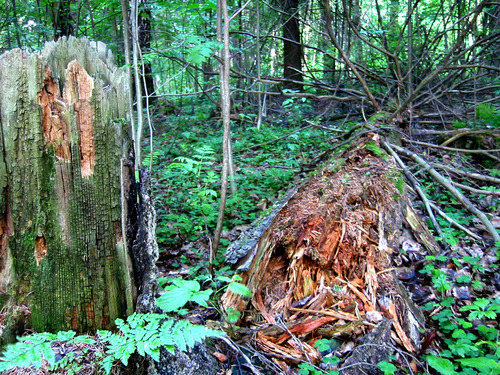
The Decaying Tree

                The Fireplace Records, Chapter 42


The Decaying Tree

The smell of the sea hugged the fog in the redwood trees,
All cool and dank, dimly lit and rank with green,
And in shadowed limbs the Stellar jays jabbered free,
And me, standing silently, an alien in this enchanted scene.

From behind the mossy grey stumps
the sounds of footsteps crunching fronds of ferns
caught my suddenly wary mind ...
What?

"Hello, old friend," said Chang San Feng.
"Master Chang, what a surprise," said I.
Master Chang sat on a stump, smiled, and said,

"Can you hear the Blue Dragon singing in the decaying tree;
Or is it the White Tiger roaring in the wilderness of your bright white skull?
No matter!  The answer is in the questioning; don't you Chan men see?
In the red ball flesh of this decaying tree
Sapless woody shards of centuries of seasons
Nourish the new roots of mindfulness sprouting. 
Yes, Yes, but how can it be?
The up-surging waves of life sprout forth from the decaying tree,
As sure as sunrise rolling over the deep black sea. 
Coming, coming, endlessly coming; waves of Chi
 

Tan Qian's raven roosts for 10,000 moons
     in the withered branches of the rotting tree;
     then, one day, the weathered tree falls,
     nobody hearing, soundlessly crashing
     on the forest floor, on some unknown noon. 
 

Over and over, over and over, life bringing death, death bringing life,
Beyond even the miraculous memories of an old Xian like me;
Watching, watching, sequestered from the strife,
Turning my soul away sometimes because I cannot bear to see. 

Even minds may die, but Mind is always free
Bounding beyond, beyond, far beyond you and me;
Somehow finding the Possibility Keys
And unlocking the Door out of the Voids of Eternities."

Master Chang somehow, someway,
slowly disappeared into the red brown heart of the decaying tree.


Then the squawk of the jay
opened my mind's eye to the new day -
Namaste."    

-  Michael P. Garofalo
   Remembering Prairie Creek Redwoods State Park, California
   April 27, 2012


Comments, Sources, Observations, Koans, Poems, Quips:

Dead things help produce life.
Don't underestimate the power of Nature.
Mysteries upon mysteries upon mysteries.
Dragons appear and disappear.
Ravens roosting in the boughs of trees for centuries.


Trees

Trees: Magick, Lore, Myths

Master Chang San-Feng


636 Riddles, Jokes, Witticisms, Humor

Refer to my Cloud Hands Blog Posts on the topic of Koans/Stories. 

Subject Index to 1,975 Zen Buddhist Koans

Zen Buddhist Koans: Indexes, Bibliography, Commentary, Information

The Daodejing by Laozi

Pulling Onions  Over 1,043 One-line Sayings, Quips, Maxims, Humor

Chinese Chan Buddhist and Taoist Stories and Koans

The Fireplace Records (Blog Version) By Michael P. Garofalo


Monday, October 30, 2023

Great Determination and Great Effort

Repost from 2015:

My yoga classes have their greatest attendance in January and February of each year.  Students join the gym because of a New Year's Resolution to improve their health and fitness, loose weight, or share an activity with a friend or loved one.

Keeping up efforts to accomplish a resolution, goal, objective, or intention requires great effort and great determination.  

In China, there is a legend about a carp or salmon struggling upstream against many obstacles to bring a new generation into being.  Accomplishing the tasks toward a goal is referred to as passing through the Dragon's Gate.  Scholars who have successfully completed all the requirements of a university curriculum, passed all the tests, are said to have graduated and passed through the Dragon's Gate and thus have transformed themselves into something new and improved. 

May each of you have great determination and exert great effort to accomplish your chosen goals and objectives in 2015.  

Here is a version of the legendary story of the Redfin Carp passing through the Dragon's Gate, as told by the Japanese Zen Master, Haikuin Ekaku:

"Redfin Carp pledged a solemn vow.  "I shall swim beyond the Dragon Gates.  I shall brave the perilous bolts of fire and lightening.  I shall transcend the estate of ordinary fish and achieve a place among the order of sacred dragons.  I shall rid myself forever of the terrible suffering to which my race is heir, expunge every trace of our shame and humiliation."    
Waiting until the third day of the third month, when the peach blossoms are in flower and the river is full, he made his way to the entrance of the Yü Barrier.  Then, with a flick of his tail, Redfin Carp swam forth.

You men have never laid eyes on the awesome torrent of water that rolls through the Dragon Gates.  It falls all the way from the summits of the far-off Kunlun Range with tremendous force.  There are wild, thousand foot waves that rush down through gorges towering to dizzying heights on either side, carrying away whole hillsides as they go.  Angry bolts of thunder beat down with a deafening roar.  Moaning whirlwinds whip up poisonous mists and funnels of noisome vapor spitting flashing forks of lightening.  The mountain spirits are stunned into senselessness; the river spirits turn limp with fright.  Just a drop of this water will shatter the carapace of the giant tortoise, it will break the bones of the giant whale.

It was into this maelstrom that Redfin Cary, his splendid golden-red scales girded to the full, his steely teeth thrumming like drums, mad a direct all-out assault.  Ah! Golden Carp!  Golden Carp!  You might have led an ordinary life out in the boundless ocean.  It teems with lesser fish.  You would not have gone hungry.  Then why?  What made you embark on this wild and bitter struggle:  What was waiting for you up beyond the Barrier?
Suddenly, after being seared by cliff-shattering bolts of lightning, after being battered by heaven scorching blast of thunder-fire, his scaly armor burnt from from head to tail, his fins singed through, Redfin Carp perished into the Great Death and rose again as a divine dragon─ a supreme lord of the waters.  Now, with the thunder god at his head and a fire god at his rear, flanked right and left with the gods of rain and wind, he moves abroad with the clouds in one hand and mists in the other, bringing new life to the tender young shoots withering in the long parched desert lands, keepin the true Dharma safe amid the defilements of the degenerate world.

Had he been content to pass his life like a lame turtle or blind tortoise, feeding on winkles and tiny shrimps, not even all the effort Vasuki, Manasvi, and the other Dragon Kings might muster on his behalf could have done him any good.  He could never have achieved the great success that he did."

-   Hakuin Ekaku (1686-1769), Japanese Zen Master and artist, "The Essential Teachings of Zen Master Hakuin," translated by Norman Waddell, 1994, p. 64


Willpower


Leaping Over the Dragons Gate

Taoism


Monday, May 22, 2023

Dragon Ch Kung Exercises

Exercises that involve twisting, turning, spiraling, screwing, sliding, swinging, swimming, sinking down and rising up, wiggling, undulating, circling, or twining are often associated with snakes and dragons.  There are many Qigong sets and specific Qigong movements given a name that includes a 'Dragon.'  Baguazhang and Shaolin Kung Fu also include many "Dragon" forms, sets and movements.  Silk Reeling Qigong is also related to Dragon like movements. 
Dragon Qigong is often associated with Wudang Taoist mind/body arts.  Maybe the cliffs and valleys of the Wudang Mountain area are home to many dragons? Dragons have a well established place in Taoist symbolism and lore, as well as in Chinese culture in general.    

My updated webpage on Dragon Qigong includes an extensive bibliography, links, resources, an introduction, quotations, and a detailed description of my own Dragon Qigong set.  

I welcome suggestions for additions and changes to the Dragon Qigong webpage. I have also successfully used these Dragon Qigong movements in my Hatha Yoga classes, and call them "Chinese Yoga."


Are you preparing for the upcoming start of the Year of the Water Dragon in 2012 starting on January 23rd?  Check out the sidebar on this blog for links to resources on Dragons. 


The East Asian Dragons are often associated with water, rain, vapors, fog, springs, streams, waterfalls, rivers, swamps, lakes, and the ocean.  Water can take many shapes and states, and Dragons are shape shifters and linked with transformation, appearing and disappearing, changing into something new.  Water is found in three states, depending upon the surrounding temperature: a solid (ice, snow), a fluid (flowing liquid), and a gas (fog, vapor, steam).  Since rainfall is often accompanied by thunder and lightening (thunderstorms and typhoons), the Dragon is sometimes associated with fire; and, since hot water and steam are major sources of energy in human culture, this further links the Dragon with the essential energy of Fire.  The Dragon is thus linked with the chemical and alchemical transformative properties of two of the essential Elements, both Water and Fire.  Dragons are generally benign or helpful to humans in East Asia, but their powers can also be destructive (e.g., flooding, tsunami, typhoon, lightening, steam, drowning, etc.).  There are both male and female Dragons, kinds or species of Dragons, Dragons of different colors and sizes, and mostly good but some evil Dragons.  Some Dragons can fly, some cannot fly; most live in or near water, a few on land.  The body of a Dragon combines features from many animals, representing the many possibilities for existential presence.  The Dragon in the East has serpentine, snake, or eel like movement qualities: twisting, spiraling, sliding, circling, swimming, undulating, flowing freely like water.  [See: The Dragon in China and Japan by Marinus De Visser, 1913]

Sunday, June 07, 2015

Turning Like a Dragon

"It is easier to leave a circle than to enter it.
The emphasis is on the hip movement whether front or back.
The difficulty is to maintain the position without shifting the centre.
To analyze and understand the above situation is to do with movement and not with a stationary posture.
Advancing and retreating by turning sideways in line with the shoulders, one is capable of turning like a millstone, fast or slow, as if whirling like a dragon in the clouds or sensing the approach of a fierce tiger.
From this, one can learn the usage of the movement of the upper torso.
Through long practice, such movement will become natural."
- Yang Family Old Manual, The Coil Incense Kung


"The East Asian Dragons are often associated with water, rain, vapors, fog, springs, streams, waterfalls, rivers, swamps, lakes, and the ocean.  Water can take many shapes and states, and Dragons are shape shifters and linked with transformation, appearing and disappearing, changing into something new.  Water is found in three states, depending upon the surrounding temperature: a solid (ice, snow), a fluid (flowing liquid), and a gas (fog, vapor, steam).  Since rainfall is often accompanied by thunder and lightening (thunderstorms and typhoons), the Dragon is sometimes associated with fire; and, since hot water and steam are major sources of energy in human culture, this further links the Dragon with the essential energy of Fire.  The Dragon is thus linked with the chemical and alchemical transformative properties of two of the essential Elements, both Water and Fire.  Dragons are generally benign or helpful to humans in East Asia, but their powers can also be destructive (e.g., flooding, tsunami, typhoon, lightening, steam, drowning, etc.).  There are both male and female Dragons, kinds or species of Dragons, Dragons of different colors and sizes, and mostly good but some evil Dragons.  Some Dragons can fly, some cannot fly; most live in or near water, a few on land.  The body of a Dragon combines features from many animals, representing the many possibilities for existential presence.  The Dragon in the East has serpentine, snake, or eel like movement qualities: twisting, spiraling, sliding, circling, swimming, undulating, flowing freely like water."  [See: The Dragon in China and Japan by Marinus De Visser, 1913] 


Dragon Chi Kung features exercises that involve twisting, turning, screwing, spiraling, curving, wiggling, undulating, spinning, sinking down and rising up, swimming, circling, swinging, or twining movements are often associated with snakes, serpents and dragons.  There are many Qigong sets and specific Qigong movements that have been called "Dragon" forms, sets, or exercises.  Baguazhang martial arts feature much twisting, turning and circling; and, also include many "Dragon" sets and movements.  Silk Reeling exercises in Chen Style Taijiquan include twisting, twining, circling, and screwing kinds of movements. 

Wednesday, May 13, 2015

Dragon Qigong Exercises

Exercises that involve twisting, turning, spiraling, screwing, sliding, swinging, swimming, sinking down and rising up, wiggling, undulating, circling, or twining are often associated with snakes and dragons.  There are many Qigong sets and specific Qigong movements given a name that includes a 'Dragon.'  Baguazhang and Shaolin Kung Fu also include many "Dragon" forms, sets and movements.  Silk Reeling Qigong is also related to Dragon like movements. 

Dragon Qigong is often associated with Wudang Taoist mind/body arts.  Maybe the cliffs and valleys of the Wudang Mountain area are home to many dragons? Dragons have a well established place in Taoist symbolism and lore, as well as in Chinese culture in general.    

My updated webpage on Dragon Qigong includes an extensive bibliography, links, resources, an introduction, quotations, and a detailed description of my own Dragon Qigong set.  

I welcome suggestions for additions and changes to the Dragon Qigong webpage. 


Wednesday, February 25, 2015

Dragon Chi Kung Exercises

Exercises that involve twisting, turning, spiraling, screwing, sliding, swinging, swimming, sinking down and rising up, wiggling, undulating, circling, or twining are often associated with snakes and dragons.  There are many Qigong sets and specific Qigong movements given a name that includes a 'Dragon.'  Baguazhang and Shaolin Kung Fu also include many "Dragon" forms, sets and movements.  Silk Reeling Qigong is also related to Dragon like movements. 

Dragon Qigong is often associated with Wudang Taoist mind/body arts.  Maybe the cliffs and valleys of the Wudang Mountain area are home to many dragons? Dragons have a well established place in Taoist symbolism and lore, as well as in Chinese culture in general.    

My updated webpage on Dragon Qigong includes an extensive bibliography, links, resources, an introduction, quotations, and a detailed description of my own Dragon Qigong set.  

I welcome suggestions for additions and changes to the Dragon Qigong webpage. 


Tuesday, January 27, 2015

Dragon Chi Kung Practices

"It is easier to leave a circle than to enter it.
The emphasis is on the hip movement whether front or back.
The difficulty is to maintain the position without shifting the centre.
To analyze and understand the above situation is to do with movement and not with a stationary posture.
Advancing and retreating by turning sideways in line with the shoulders, one is capable of turning like a millstone, fast or slow, as if whirling like a dragon in the clouds or sensing the approach of a fierce tiger.
From this, one can learn the usage of the movement of the upper torso.
Through long practice, such movement will become natural."
- Yang Family Old Manual, The Coil Incense Kung


"The East Asian Dragons are often associated with water, rain, vapors, fog, springs, streams, waterfalls, rivers, swamps, lakes, and the ocean.  Water can take many shapes and states, and Dragons are shape shifters and linked with transformation, appearing and disappearing, changing into something new.  Water is found in three states, depending upon the surrounding temperature: a solid (ice, snow), a fluid (flowing liquid), and a gas (fog, vapor, steam).  Since rainfall is often accompanied by thunder and lightening (thunderstorms and typhoons), the Dragon is sometimes associated with fire; and, since hot water and steam are major sources of energy in human culture, this further links the Dragon with the essential energy of Fire.  The Dragon is thus linked with the chemical and alchemical transformative properties of two of the essential Elements, both Water and Fire.  Dragons are generally benign or helpful to humans in East Asia, but their powers can also be destructive (e.g., flooding, tsunami, typhoon, lightening, steam, drowning, etc.).  There are both male and female Dragons, kinds or species of Dragons, Dragons of different colors and sizes, and mostly good but some evil Dragons.  Some Dragons can fly, some cannot fly; most live in or near water, a few on land.  The body of a Dragon combines features from many animals, representing the many possibilities for existential presence.  The Dragon in the East has serpentine, snake, or eel like movement qualities: twisting, spiraling, sliding, circling, swimming, undulating, flowing freely like water."  [See: The Dragon in China and Japan by Marinus De Visser, 1913]

Dragon Chi Kung features exercises that involve twisting, turning, screwing, spiraling, curving, wiggling, undulating, spinning, sinking down and rising up, swimming, circling, swinging, or twining movements are often associated with snakes, serpents and dragons.  There are many Qigong sets and specific Qigong movements that have been called "Dragon" forms, sets, or exercises.  Baguazhang martial arts feature much twisting, turning and circling; and, also include many "Dragon" sets and movements.  Silk Reeling exercises in Chen Style Taijiquan include twisting, twining, circling, and screwing kinds of movements. 

Monday, December 15, 2014

Dragon Qigong Exercises

"It is easier to leave a circle than to enter it.
The emphasis is on the hip movement whether front or back.
The difficulty is to maintain the position without shifting the centre.
To analyze and understand the above situation is to do with movement and not with a stationary posture.
Advancing and retreating by turning sideways in line with the shoulders, one is capable of turning like a millstone, fast or slow, as if whirling like a dragon in the clouds or sensing the approach of a fierce tiger.
From this, one can learn the usage of the movement of the upper torso.
Through long practice, such movement will become natural."
- Yang Family Old Manual, The Coil Incense Kung


"The East Asian Dragons are often associated with water, rain, vapors, fog, springs, streams, waterfalls, rivers, swamps, lakes, and the ocean.  Water can take many shapes and states, and Dragons are shape shifters and linked with transformation, appearing and disappearing, changing into something new.  Water is found in three states, depending upon the surrounding temperature: a solid (ice, snow), a fluid (flowing liquid), and a gas (fog, vapor, steam).  Since rainfall is often accompanied by thunder and lightening (thunderstorms and typhoons), the Dragon is sometimes associated with fire; and, since hot water and steam are major sources of energy in human culture, this further links the Dragon with the essential energy of Fire.  The Dragon is thus linked with the chemical and alchemical transformative properties of two of the essential Elements, both Water and Fire.  Dragons are generally benign or helpful to humans in East Asia, but their powers can also be destructive (e.g., flooding, tsunami, typhoon, lightening, steam, drowning, etc.).  There are both male and female Dragons, kinds or species of Dragons, Dragons of different colors and sizes, and mostly good but some evil Dragons.  Some Dragons can fly, some cannot fly; most live in or near water, a few on land.  The body of a Dragon combines features from many animals, representing the many possibilities for existential presence.  The Dragon in the East has serpentine, snake, or eel like movement qualities: twisting, spiraling, sliding, circling, swimming, undulating, flowing freely like water."  [See: The Dragon in China and Japan by Marinus De Visser, 1913]

Dragon Chi Kung features exercises that involve twisting, turning, screwing, spiraling, curving, wiggling, undulating, spinning, sinking down and rising up, swimming, circling, swinging, or twining movements are often associated with snakes, serpents and dragons.  There are many Qigong sets and specific Qigong movements that have been called "Dragon" forms, sets, or exercises.  Baguazhang martial arts feature much twisting, turning and circling; and, also include many "Dragon" sets and movements.  Silk Reeling exercises in Chen Style Taijiquan include twisting, twining, circling, and screwing kinds of movements. 

Monday, November 10, 2014

Dragon Qigong Exercises

 
Dragon Chi Kung features exercises that involve twisting, turning, screwing, spiraling, curving, wiggling, undulating, spinning, sinking down and rising up, swimming, circling, swinging, or twining movements are often associated with snakes, serpents and dragons.  There are many Qigong sets and specific Qigong movements that have been called "Dragon" forms, sets, or exercises.  Baguazhang martial arts feature much twisting, turning and circling; and, also include many "Dragon" sets and movements. Silk Reeling exercises in Chen Style Taijiquan include twisting, twining, circling, and screwing kinds of movements. 


    "Laozi's Dao Te Jing in the third chapter says "Empty the mind, fill the belly. Weaken the ambition, strengthen the character." So then, this is the motto for practicing China's Wudang Daoist Qigong. To study each method, each method must be understood, the energy processed must be understood. If there is one type of practice Daoist qigong method not mastered, temporarily don't practice other training methods. If one type of movement has not been mastered, concentrate on that posture, do not study or practice other postures. Do not reach too high, must empty the mind, have patience, cultivate both inside and outside, step-by-step achieve an abdomen relaxed inside and breath ascending correctly, so then cultivate the breath continuously, and you will not contract illness. When the dan tian is full and sufficient, the inner breath is unimpeded and not obstructed.  Breath and strength are sent out from the spine, following that which the mind desires. Strive for the substantial, don't let practice become lax, maintain it so it will be lasting; abide by the regulations, follow the rules; refine the breath, cultivate the body; cultivate the Mind, develop the character; thus seek emptiness and stillness, complete emptiness, and long life.
    Wudang Qigong has eighteen types of practice exercises and methods: Extreme Emptiness, Pushing the Mountain, Wild Goose Flying, Crane Bending, Supporting Heaven, Both Appear, Four Directions, Ward Off and Pull Down, Pipa, Shaking Tail Feathers, Offering Fruit, Facing the Sun, Stirring the Grass, Dragon and Tiger, Coiling Snake, Spitting a Core, Climbing a Tree, and Bowing To The Top."
-   Wudang Qigong: China's Wudang Mountain Daoist Breath Exercises.  By Yuzeng Liu, and Terri Morgan. 


Saturday, May 11, 2013

Dragon Qigong

Dragon Chi Kung features exercises that involve twisting, turning, screwing, spiraling, curving, wiggling, undulating, spinning, sinking down and rising up, swimming, circling, swinging, or twining movements are often associated with snakes, serpents and dragons.  There are many Qigong sets and specific Qigong movements that have been called "Dragon" forms, sets, or exercises.  Baguazhang martial arts feature much twisting, turning and circling; and, also include many "Dragon" sets and movements. Silk Reeling exercises in Chen Style Taijiquan include twisting, twining, circling, and screwing kinds of movements. 


"This extraordinary gem is represented as a spherical object, or ‘ball,’ half as big, or quite as large, as the head of the dragon with which it is associated, for it is never depicted quite by itself. The gem is white or bluish with a reddish or golden halo, and usually has an antler-shaped 'flame' rising from its surface. Almost invariably there hangs downward from the centre of the sphere a dark-colored, comma-like appendage, frequently branched, wavering below the periphery. A biologist might easily at first glance conclude that the whole affair represented the entry of a spermatozoon into an ovum; and the Chinese commonly interpret the ball with its comma-mark as a symbol of yang and yin, male and female elements, combined in the earth--which seems pretty close to the biologist's view. Such is the Dragon-Pearl.  In purely decorative work, where the figure of a dragon is writhing in clouds or adapting its lithe body under an artist's hand to the shape or purpose of a piece of porcelain, a bronze article, or a silken garment, the pearl may be drawn close to the dragon, or wherever convenient. When, however, it is desirable to express the significance of this sacred adjunct of dragon-hood, it is treated with strict attention to reverence and tradition. Then are pictured celestial dragons ascending and descending through the upper air, tearing a path, perhaps, through swirling mists and shadows, "in pursuit of effulgent jewels or orbs that appear to be whirling in space, and that were supposed to be of magic efficiency, granting every wish." A passion for gems is a well-known characteristic of these beings."
-   Dragons and Dragons Lore, Ernest Ingersoll, 1928


Saturday, April 20, 2013

The Dragon is Awakening

  "Love is the power to feel through the feet in Earth and through the spine into heaven to mingle into motion the inner wheels, to awaken the sleeping Serpent. 
- Dei Hughes, "Sacred Loyalties"

    
"As the glory of May-time unfurls in every leaf and flower, we begin to feel a new well-being in our bodies, a sense of vigor and energy that we have lacked over the cold months of winter.  In terms of Celtic understanding, we are experiencing the nwyfre (NWIVE'ry) of the earth in our own bodies.  Nwyfre is a Welsh word that means the subtle energy field of the earth; it is often used poetically for the sky or heavens.
    Every sentient being has its own energy field or nwyfre as well.  The symbolic representation of nwyfre is the dragon, which is a very important emblem in Britain (the red dragon being the guardian beast of Wales and appearing upon its flag).  The awakening of the dragons of the land traditionally happens about the time of Beltane.  The nwyfre of the land rise up at summer's approach, and the dormant dragons, emblems of the land's power, rise from their dark earth caverns upon powerful wings.
    To experience the awakening of the dragons of nwyfre in our bodies, we need to take ourselves out into the open air, to stand without concrete between our bare feet and earth, to experience the daily miracle of life within our bodies.  If we make this our practice, our nwyfre will not be lacking. 
    Stand on the green earth and close your eyes, soaking up the light of the sun and the warmth of the earth at the same time.  Be aware of the nwyfre of the earth.  Now become aware of your own.  As you breathe in, experience drawing up the subtle energy of the earth.  Give thanks for renewed energy and life."
-  Caitlin Matthews, The Celtic Spirit: Daily Meditations for the Turning Year,  1999, p. 207


Friday, September 21, 2012

Dragon Qigong

"It is easier to leave a circle than to enter it.
The emphasis is on the hip movement whether front or back.
The difficulty is to maintain the position without shifting the centre.
To analyze and understand the above situation is to do with movement and not with a stationary posture.
Advancing and retreating by turning sideways in line with the shoulders, one is capable of turning like a millstone, fast or slow, as if whirling like a dragon in the clouds or sensing the approach of a fierce tiger.
From this, one can learn the usage of the movement of the upper torso.
Through long practice, such movement will become natural."
- Yang Family Old Manual, The Coil Incense Kung

Dragon Chi Kung features exercises that involve twisting, turning, screwing, spiraling, curving, wiggling, undulating, spinning, sinking down and rising up, swimming, circling, swinging, or twining movements are often associated with snakes, serpents and dragons.  There are many Qigong sets and specific Qigong movements that have been called "Dragon" forms, sets, or exercises.  Baguazhang martial arts feature much twisting, turning and circling; and, also include many "Dragon" sets and movements.  Silk Reeling exercises in Chen Style Taijiquan include twisting, twining, circling, and screwing kinds of movements. 

Tuesday, July 10, 2012

Dragon Chi Kung

Dragon Chi Kung features exercises that involve twisting, turning, screwing, spiraling, curving, wiggling, undulating, spinning, sinking down and rising up, swimming, circling, swinging, or twining movements are often associated with snakes, serpents and dragons.  There are many Qigong sets and specific Qigong movements that have been called "Dragon" forms, sets, or exercises.  Baguazhang martial arts feature much twisting, turning and circling; and, also include many "Dragon" sets and movements. Silk Reeling exercises in Chen Style Taijiquan include twisting, twining, circling, and screwing kinds of movements. 


"This extraordinary gem is represented as a spherical object, or ‘ball,’ half as big, or quite as large, as the head of the dragon with which it is associated, for it is never depicted quite by itself. The gem is white or bluish with a reddish or golden halo, and usually has an antler-shaped 'flame' rising from its surface. Almost invariably there hangs downward from the centre of the sphere a dark-colored, comma-like appendage, frequently branched, wavering below the periphery. A biologist might easily at first glance conclude that the whole affair represented the entry of a spermatozoon into an ovum; and the Chinese commonly interpret the ball with its comma-mark as a symbol of yang and yin, male and female elements, combined in the earth--which seems pretty close to the biologist's view. Such is the Dragon-Pearl.  In purely decorative work, where the figure of a dragon is writhing in clouds or adapting its lithe body under an artist's hand to the shape or purpose of a piece of porcelain, a bronze article, or a silken garment, the pearl may be drawn close to the dragon, or wherever convenient. When, however, it is desirable to express the significance of this sacred adjunct of dragon-hood, it is treated with strict attention to reverence and tradition. Then are pictured celestial dragons ascending and descending through the upper air, tearing a path, perhaps, through swirling mists and shadows, "in pursuit of effulgent jewels or orbs that appear to be whirling in space, and that were supposed to be of magic efficiency, granting every wish." A passion for gems is a well-known characteristic of these beings."
-   Dragons and Dragons Lore, Ernest Ingersoll, 1928


Monday, May 14, 2012

Awakening the Dragon

    "Love is the power to feel through the feet in Earth and through the spine into heaven to mingle into motion the inner wheels, to awaken the sleeping Serpent. 
- Dei Hughes, "Sacred Loyalties"
    
"As the glory of May-time unfurls in every leaf and flower, we begin to feel a new well-being in our bodies, a sense of vigor and energy that we have lacked over the cold months of winter.  In terms of Celtic understanding, we are experiencing the nwyfre (NWIVE'ry) of the earth in our own bodies.  Nwyfre is a Welsh word that means the subtle energy field of the earth; it is often used poetically for the sky or heavens.
    Every sentient being has its own energy field or nwyfre as well.  The symbolic representation of nwyfre is the dragon, which is a very important emblem in Britain (the red dragon being the guardian beast of Wales and appearing upon its flag).  The awakening of the dragons of the land traditionally happens about the time of Beltane.  The nwyfre of the land rise up at summer's approach, and the dormant dragons, emblems of the land's power, rise from their dark earth caverns upon powerful wings.
    To experience the awakening of the dragons of nwyfre in our bodies, we need to take ourselves out into the open air, to stand without concrete between our bare feet and earth, to experience the daily miracle of life within our bodies.  If we make this our practice, our nwyfre will not be lacking. 
    Stand on the green earth and close your eyes, soaking up the light of the sun and the warmth of the earth at the same time.  Be aware of the nwyfre of the earth.  Now become aware of your own.  As you breathe in, experience drawing up the subtle energy of the earth.  Give thanks for renewed energy and life."
-  Caitlin Matthews, The Celtic Spirit: Daily Meditations for the Turning Year,  1999, p. 207


Wednesday, May 09, 2012

Dragon Chi Kung

Dragon Chi Kung features exercises that involve twisting, turning, screwing, spiraling, curving, wiggling, undulating, spinning, sinking down and rising up, swimming, circling, swinging, or twining movements are often associated with snakes, serpents and dragons.  There are many Qigong sets and specific Qigong movements that have been called "Dragon" forms, sets, or exercises.  Baguazhang martial arts feature much twisting, turning and circling; and, also include many "Dragon" sets and movements. Silk Reeling exercises in Chen Style Taijiquan include twisting, twining, circling, and screwing kinds of movements. 


    "Laozi's Dao Te Jing in the third chapter says "Empty the mind, fill the belly. Weaken the ambition, strengthen the character." So then, this is the motto for practicing China's Wudang Daoist Qigong. To study each method, each method must be understood, the energy processed must be understood. If there is one type of practice Daoist qigong method not mastered, temporarily don't practice other training methods. If one type of movement has not been mastered, concentrate on that posture, do not study or practice other postures. Do not reach too high, must empty the mind, have patience, cultivate both inside and outside, step-by-step achieve an abdomen relaxed inside and breath ascending correctly, so then cultivate the breath continuously, and you will not contract illness. When the dan tian is full and sufficient, the inner breath is unimpeded and not obstructed.  Breath and strength are sent out from the spine, following that which the mind desires. Strive for the substantial, don't let practice become lax, maintain it so it will be lasting; abide by the regulations, follow the rules; refine the breath, cultivate the body; cultivate the Mind, develop the character; thus seek emptiness and stillness, complete emptiness, and long life.
    Wudang Qigong has eighteen types of practice exercises and methods: Extreme Emptiness, Pushing the Mountain, Wild Goose Flying, Crane Bending, Supporting Heaven, Both Appear, Four Directions, Ward Off and Pull Down, Pipa, Shaking Tail Feathers, Offering Fruit, Facing the Sun, Stirring the Grass, Dragon and Tiger, Coiling Snake, Spitting a Core, Climbing a Tree, and Bowing To The Top."
-   Wudang Qigong: China's Wudang Mountain Daoist Breath Exercises.  By Yuzeng Liu, and Terri Morgan. 


Wednesday, February 15, 2012

Whirling Like A Dragon

"It is easier to leave a circle than to enter it.
The emphasis is on the hip movement whether front or back.
The difficulty is to maintain the position without shifting the centre.
To analyze and understand the above situation is to do with movement and not with a stationary posture.
Advancing and retreating by turning sideways in line with the shoulders, one is capable of turning like a millstone, fast or slow, as if whirling like a dragon in the clouds or sensing the approach of a fierce tiger.
From this, one can learn the usage of the movement of the upper torso.
Through long practice, such movement will become natural."
- Yang Family Old Manual, The Coil Incense Kung

Dragon Chi Kung features exercises that involve twisting, turning, screwing, spiraling, curving, wiggling, undulating, spinning, sinking down and rising up, swimming, circling, swinging, or twining movements are often associated with snakes, serpents and dragons.  There are many Qigong sets and specific Qigong movements that have been called "Dragon" forms, sets, or exercises.  Baguazhang martial arts feature much twisting, turning and circling; and, also include many "Dragon" sets and movements.  Silk Reeling exercises in Chen Style Taijiquan include twisting, twining, circling, and screwing kinds of movements.