Showing posts with label Brief Spiritual Lessons. Show all posts

Saturday, September 19, 2026

The Magical Cane Master


The Magical Cane Master

I. Sudden vs Gradual

Master Pita asked Shifu Miao Zhang,
"What is sudden enlightenment?"

Shifu Zhang immediately
threw his staff on the muddy ground.

Master Xita asked Shifu Miao Zhang,
"What is gradual enlightenment?"

Shifu Zhang stomped on his muddy staff three times,
and yelled "Get to Work!"


II. Slicing Through Nothing

Mayoku walked around his old
Daoist friend, Shifu Miao Zhang,
three times, and he then thumped
his oak staff once on the ground.

Miao Zhang stood up,
walked around Mayoku once,
tapped his pine cane
three times on the wall, and said,

"The power of the wind can topple trees
      and is gone by morning.
My cane can cut through the wind."


III. From the East to the West

Master Sound of Bitterroot Mountain
      asked Shifu Miao Zhang,
'What is the meaning of Old Pahto
      emerging in the West?'

Shifu lifted his cane and placed it in his mouth,
      saying nothing.

Later, zany Zen liar that he was, he wrote:
"No minds, no Dharma.
No-mind, much Dharma."


IV. I Will Take Your Staff Away

Zen Master Baqiao told his old friend,
Shifu Miao Zhang, "If you have a staff,
I will give you a staff; if you have no staff,
I will take your staff away."

Shifu Zhang replied "I have a cane and
you don't. Would you like to borrow yours?"

Baqiao replied, "Miao Zhang, you will
have to walk into Hell!"

Miao Zhang raised his eyebrows and said,
"Well, Baqiao, then I will need to
borrow my cane for the long hot walk
with you. Sorry, but I can't lend your cane to you."


V. Same or Different

Zen Master Seung Sahn held up his staff
in front of Shifu Miao Zhang, and said
"Then, Miao Zhang, what are this staff,
this sound and your mind? Are they the
same or different? If you say "same," I
will hit you ten times. If you say "different,"
I will also hit you ten times. Why?"

Miao Zhang lifted his cane slowly, grounded himself,
prepared to block Seung Sahn's strike and then said,
"Don't know! Same or different,
nobody can hit the sound of our minds."


Meetings with Master Chang San Feng

Shifu Miao Zhang Points the Way

Zen Koans

Zatoichi and Kung Fu TV Characters


Monday, September 07, 2026

Subject Index to the Book of Serenity 100 Zen Buddhist Koans


Book of Serenity 100 Koans (BOS)


Book of Equanimity or Book of Serenity (BOS)

The Book of Serenity (BOS) Book of Equanimity
100 Cases of Brief Stories, Spiritual Encounters, Koans, Wisdom Tales, Sermons, Dialogues, Parables
Compiled and published around 1224 CE.

Indexed by Michael P. Garofalo. Second Draft on August 26, 2023.

Primary Source for Indexing: The Book of Serenity: One Hundred Zen Dialogues. Translated with commentary by Thomas Cleary, 2005, 512 pages.


Subject Index to Cases in the Book of Serenity (BOS) 100 Koans Collection. Second Draft, August 25, 2023, 26 pages, PDF.

Alphabetical List of Cases in the Book of Serenity (BOS) 100 Koans Collection. Second Draft, August 25, 2023, 4 pages, PDF.

List of Cases by Case Numbers in the Book of Serenity (BOS) 100 Koans Collection. Second Draft, August 25, 2023, 4 pages, PDF.


Subject Index to 1,975 Zen Buddhist Koans and Discourses

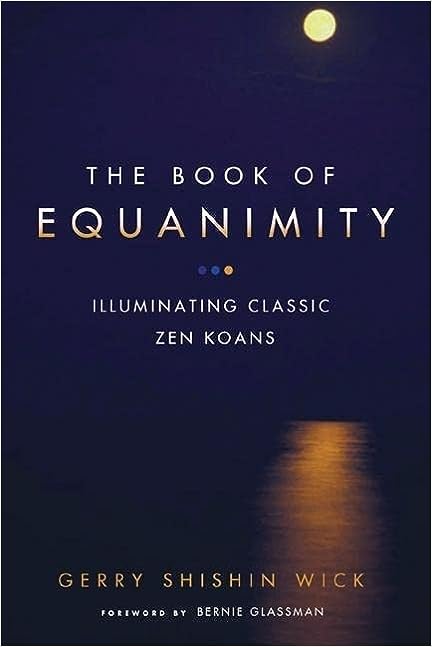
The Book of Equanimity: Illuminating Classic Zen Koans. By Gerry Shishin Wick. Foreword by Bernie Glassman. Boston, Wisdom Publications, 2005. Recommended reading list, list of names index, 331 pages. ISBN: 9780861713875.


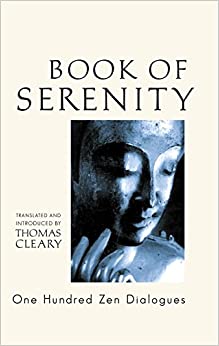
Book of Serenity: One Hundred Zen Dialogues. Translation and commentary by Thomas Cleary. Shambhala, 2005, glossary, notes, 463 pages. 100 Koans. VSCL, paperback.


Book of Serenity Translated by Joan Sutherland Roshi and John Tarrant Roshi. "The hundred koans of the Book of Serenity, also translated as the Book of Equanimity, were among those written by twelfth-century Chan teacher Hongzhi Zhengjue. In the thirteenth century, Wansong Xingxiu compiled Hongzhi’s koans and wrote commentaries for each. Although the collection is associated with the Caodong / Soto school, they are also taken up in koan study by Linji / Rinzai practitioners." Online PDF Version.


Shoyoroku (E. Book of Serenity, C. Ts’ung-jung lu) Online version of the Book of Serenity. Congrong Lu.
A collection of 100 koans, originally compiled in the 12th century by Wanshi Shogaku (C. Hung-chih Cheng-chüeh).


Book of Equanimity - Wikipedia 100 Cases. Compiled by Wangsong Zingxiu (1166-1246), and first published in 1224. The book comprises a collection of 100 koans written by the Chan Buddhist master Hongzhi Zengjue (1091-1157), together with commentaries by Wansong. Wansong's compilation is the only surviving source for Hongzhi's koans.


Buddhism: Bibliography, Links, Information, Resources. Compiled by Michael P. Garofalo.


Zen Buddhist Koans and Information: https://www.egreenway.com/buddhism/koansdup1.htm By Michael P. Garofalo.


Friday, June 12, 2026

Shifu Miao Zhang's Parables

Michael P. Garofalo writes extensively about a fictional Daoist master who carries a cane, whom he named Shifu Miao Zhang. Garofalo explicitly translates Shifu Miao Zhang's title as the "Teacher with the Magical (Wondrous) Staff".

Through a series of philosophical parables, Garofalo uses Shifu Miao Zhang and his cane to engage in witty debates with famous historical Zen Masters like Hakuin, Zhaozhou, and Yunmen. True to Garofalo's grounded, pragmatic philosophy, the master's cane is repeatedly used to cut through abstract religious dogma and bring high-minded koans back down to practical reality.

Here are some of the most notable ways Shifu Miao Zhang uses his cane in Garofalo's writings:

  • Answering Famous Koans: When the legendary Zen Master Hakuin asks him, "What is the sound of one hand?", Miao Zhang simply picks up his beautiful cane and taps it three times on the floor.
  • Practicality over Magic: When a man with a magical sword challenges him, asking what his crooked staff can do, Miao Zhang replies that it enabled his wobbly legs to walk to work each day so he could earn enough money to pay for poor women and children to safely ride a ferry boat.
  • Locating the Divine: When asked where the Tao is to be found, Miao Zhang replies, "There is no place my cane or my mind goes or rests where the Tao cannot be found".
  • Rejecting Pretentious Poetry: When Master Ummon attempts to impress him with elaborate, mystical poetry about his own staff leaping to the Eighth Heaven, Miao Zhang bluntly responds, "Ummon your poetry is lovely, but my gnarled cane cannot hear you".
  • Teaching Impermanence: When asked where "the One" returns, he playfully remarks that last week his cane fell off a mountain and was lost, yesterday it was burned to nothing, and today it "is just an ordinary wood cane". In another exchange, he notes that while yesterday his cane was a walking stick, tomorrow "it may become firewood, crackling in the flames".
  • Ending Arguments: When challenged to a debate where he will be whacked with a staff whether he speaks or remains silent, Miao Zhang stands up, lifts his cane in defense, insults the other masters' staffs, and simply announces, "I am leaving now to take my evening walk. Goodbye".

Ultimately, Garofalo uses the master and his cane as a reflection of his own "secular nature mysticism." As Miao Zhang explains in one of the parables, "My cane is ordinary, so it walks with me along the Watercourse Way". In another poem, Garofalo writes from the perspective of a master who, when asked a deep philosophical question about a mountain, simply lifts his cane, places it in his mouth, and says absolutely nothing.


Saturday, April 18, 2026

Prajnatara's "It's the Attitude that Counts"


The Fireplace Records, Chapter 16


Prajnatara's "It's the Attitude that Counts"


Bill and Frank were Dharma Buddies for a number of years.  Their 'Book of the Month Club' choice in April was the "Book of Serenity" translated and introduced by Thomas Cleary, 1988. They met at the local Brewed Awakenings coffee shop to discuss the book.

Bill opened the Book of Serenity and read from Case 3: The Invitation of the Patriarch to Eastern India:

"A Rajah of an east Indian country invited the twenty-seventh Buddhist Patriarch Prajnatara to a feast. The Rajah asked him, "Why don't you read scriptures?" The Patriarch said, "This poor wayfarer doesn't dwell in the realms of the body or mind when breathing in, doesn't get involved in myriad circumstances when breathing out. I always reiterate such a scripture, hundreds, thousands, millions of scrolls."

Frank said, "I know that some people constantly, mostly silently, repeat a sacred name or phrase or prayer as part of their spiritual training.  When I was a boy we said the Hail Mary Rosary in our Catholic Church. Yogis have their 'Om Mani Padme Hum.' Transcendental meditators had a 'mantra'.  Koan meditators had their 'Hua Tou.'  Pure Landers chant 'Namo Amida Butsu.' Nichiren encouraged worship of the Lotus Sutra and the repetition of the Sutra's Title: 'Namu Myoho Renge Kyo'. Taoists repeat verses from the Tao Te Ching. Christians sing the same favorite hymn over and over."

Bill said, "Good observations, Frank.  Just being alive today and able to think or behave in some way about our spiritual development, even by chanting, is a great opportunity.  However, I have some reservations about Prajnatara's path. When we are sleeping we come close to not dwelling in the realms of body and mind and we don't get involved with myriad circumstances when we are sleeping.  Does my snoring turn the scrolls of scriptures?" Even an evil demon sleeps, does it reiterate scriptures while unconscious?"

Frank said, "A poor traveling wayfarer like Prajnatara cannot haul around delicate paper scriptures. So he must find ways to interpret the ordinary in a sympathetic manner, find ways to use breathing to focus awareness, and find ways to become more detached from desires and less entangled in myriad circumstances. Whether he sits, stands or walks, if he/she keeps the Buddhist attitude he can be an awakened and compassionate person. By being this way, acting like a Buddha, is another way of turning the scriptures, honoring them, if not by reading them because of impoverished circumstances."

Bill said, "Yes, Yes. Sometimes, reading is just not feasible or possible. One's attitude is the primary concern."

Bill added, "Changing the subject, I read that the great California translator and commentator of over 80 classic Taoist and Buddhist sacred scriptures, Thomas Cleary, passed away.  He translated the book we are studying, 'The Book of Serenity.'  I have been reading his translations since 1977."


A Student's Considerations: 

Somewhere, Somehow, Someone is Chanting
A Funeral Chant:

Gate Gate Para Gate Para Sam Gate Bodhi Swaha
Rest in Peace
Requiescat in Pace
Requiescat in Pace
Rest in Peace
Rest in Peace
Gate Gate Para Gate Para Sam Gate Bodhi Swaha

No More Breathing In or Breathing Out
The Prayer Wheels Turn Nevertheless


Related Links, Resources, References


Koans: BOS 03, 

Thomas Cleary (1949-2021)

Refer to my Cloud Hands Blog Posts on the topic of Koans/Dialogues.

The Daodejing by Laozi    Best? 

Pulling Onions  Over 1,043 One-line Sayings by Mike Garofalo

Chinese Chan Buddhist and Taoist Stories and Koans

Taoism

Buddhism

Fireplaces, Stoves, Campfires, Kitchens, Pots, Firewood

Chinese Art

Tai Chi Chuan and Qigong

Meditation Methods

Zen Koan Books I Use

Koan Database Project

Brief Spiritual Lessons Database Project: Subject Indexes


Sparks: Brief Spiritual Lessons and Stories
Matches to Start a Kindling of Insight
May the Light from Your Inner Fireplace Help All Beings
Taoist, Chan Buddhist, Zen Buddhist, Philosophers
Catching Phrases, Inspiring Verses, Koans, Meditations
Indexing, Bibliography, Quotations, Notes, Resources
Research by Michael P. Garofalo

The Fireplace Records
By Michael P. Garofalo


Thomas Cleary (1949-2021)

Thursday, November 27, 2025

Brief Spiritual Lessons and Koans Database Project

Master Subject Index

Brief Spiritual Lessons, Brief Religious Teaching Stories,
Brief Philosophical Lessons, Brief Reflections
Brief Essays, Sermons, Tales, Koans, Meditations, Lectures
Brief Dialogues, Encounters with Sages, Puzzling Questions

Taoist, Chan Buddhist, Zen Buddhist, Philosophers
China, Japan, American Pacific West Coast
Brief Spiritual Lessons Database Project
Koan Database Project
Master Subject Index


Indexing by Michael P. Garofalo

Green Way Research, Vancouver, Washington
Second Draft, April 4, 2023. PDF File, 94 Pages

Blue Cliff Record (BCR), All 100 Cases Buddhist
Tao Te Ching, Daodejing (DDJ), All 81 Cases Taoist
Gateless Barrier (GB), All 48 Cases Buddhist

Book of Serenity (BOS) All 100 Cases Buddhist
Transmission of Light: Keizan Biographies (TOL) All 53 Biographies Buddhist

365 Tao (DMD) 99 One-Page Meditations Taoist
Dogen's Shinji Mana Shobogenzo Koans (DSMS) 10 Cases Buddhist
Lieh-Tzu: Guide to Practical Living (TGPL) 7 Cases Taoist

Fireplace Records (TFR) 15 Cases Philosopher

Master Subject Index of the Koan Database Project. PDF File, 94 pages.
Second Draft, April 4, 2023. Indexing by Michael P. Garofalo
Green Way Research, Vancouver, Washington


Brief Spiritual Lessons and Koans Database Projects Information

PDF files are searchable. Use the keyboard strokes: Ctrl + F This will open the Search or Find box.
Cases = Brief spiritual teaching stories, dialogues, koan puzzles, wisdom tales, Chan/Taoist teaching, Lore, Fables, Records, Cases, One-Page Meditations
Internet Links in PDF Files are clickable/searchable.


Tuesday, September 09, 2025

Simple As: 0123456789 ...

The Fireplace Records, Chapter 25


Simple As: 0123456789...


In 2000, a young mother was teaching her 4 year old daughter every day about counting and numbers.  The little girl could count to 10 using number songs/ditties, and knew the correct order from memory.  She used numbered blocks and her fingers for counting and displaying quantities.  If asked by her mother to pick out seven cookies from a jar she could do so accurately; and, knew that no cookies in the jar had something to do with zero.  She could count backwards from 20, and upwards to over 100.  She could sort quantities with a high degree of accuracy.  She was learning to read and write numbers.  She was, obviously, a bright four year old, and liked matters orderly.   

In 2020, that same girl was studying mathematics at the University of Oregon in Eugene.  Her learning at the age of four is not forgotten, just buried deep in the Mind Matrix of brain-language-skills-habits.  She is now ready for "Mastery!" 

Step by step, little by little, one by one, day by day, year by year our bodies work and play with things, and our minds play with languages and concepts.  There is an order for learning, just like an order for numbers.  Skills and habits develop and improve with long orderly sequences of practice.

Some sequences and patterns in our lives are rigid, fixed, set, established, formally ordered, and, as it were, "set in stone."  Mathematics is like that.  Orderly!  Formal!  Done just one correct way!  Only one ordering: 0123456789 ...

Time is like mathematical order.  The Past before the Future; 6 before 9.  The Future after the Present; 6 after 0.  The Present between the Past and Future; -34 before 0 and 8 after 0.  April precedes May, and October follows September.  These Nature-socially established patterns and sequences never change.  We visually represent these ideas on a numbered clock or calendar.

We can interpret and organize our experiences via mathematics, one of the key foundations of modern science.  


A Student's Considerations:

Some aspects and patterns in life are formally ordered and fixed.  Learn them well to cope with your challenges in living with others.
Arithmetic is an essential skill in our lives in 2020.
Find the best "order" for your learning of some new skill or body of knowledge.
Reflect occasionally on your childhood experiences and upbringing.
Music, writing, and math all have components of fixed orders for optimal functioning; however, we can also be creative and think outside the box in most fields, but failures are more frequent when doing so.  Staying inside the box is safer for people and cats.
Choose yourself, on practical grounds, when not to change some established order or rule, sticking to the tried and true; and, when to abandon old fixed views.
Some aspects of our lives rarely change, they are ordered and fixed (e.g., the need for sleep each day).  Deal with the facts and move forward!
We don't need supernatural beings to bolster our insights as to the orders of our universe.  The devil is not in bed with numbers.
Try to keep things Simple!
You will benefit from keeping a very orderly lifestyle of your actions each day!
On Your Marks, Get Set, Go (Bang!)!!!  Simple as 1, 2, 3.  


"Lord I'm One, Lord I'm Two, 
Lord I'm Three, Lord I'm Four, Lord I'm Five Hundred Miles From my Home" - Peter, Paul and Mary 1966


Related Links, Resources, References

Koans: TFR 24

Refer to my 
Cloud Hands Blog Posts on the topic of Koans/Dialogues.

The Daodejing by Laozi  

Pulling Onions  Over 1,043 One-line Sayings by Mike Garofalo

Subject Index to 1,001 Zen Buddhist Koans

Chinese Chan Buddhist and Taoist Stories and Koans

Taoism

Buddhism

Fireplaces, Stoves, Campfires, Kitchens, Pots, Firewood

Chinese Art

Tai Chi Chuan and Qigong

Meditation Methods

Zen Koan Books I Use

Koan Database Project

Brief Spiritual Lessons Database Project: Subject Indexes


Sparks: Brief Spiritual Lessons and Stories

Matches to Start a Kindling of Insight
May the Light from Your Inner Fireplace Help All Beings
Taoist, Chan Buddhist, Zen Buddhist, Philosophers
Catching Phrases, Inspiring Verses, Koans, Meditations
Indexing, Bibliography, Quotations, Notes, Resources
Research by Michael P. Garofalo

The Fireplace Records
By Michael P. Garofalo


Subject Index to 1,001 Zen Buddhist Koans


Monday, July 24, 2023

Subject Index to 1,546 Taoist Lessons, Chapters, and Stories


Subject Index to 1,546 Taoist Lessons, Chapter, and Stories

Indexing by Michael P. Garofalo
First Draft, July 23, 2023. Updated Quarterly.  PDF, 83 pages.
Green Way Research, Vancouver, Washington

DDJ Dao De Jing 81 Chapters Lessons Taoist

DMD 365 Tao 365 Chapters Meditations Taoist

EDT Everyday Tao 365 Chapters Lessons Tapost 

ICHI I Ching Yijing 64 Hexagrams Taoist

PG Philsopher's Garden of Insights

TFR Fireplace Records 25 Chapters Philosopher

TFTO Tales From the Tao 31 Chapters Taoist 

TGPL Lieh-Tzu 111 Chapters Lessons Taoist

TLT Lunar Tao 150 Chapters Events Taoist

VES Vitality Energy Spirit 100 Lessons Taoist 

WEN Wen-Tzu 180 Chapters Lessons Taoist

ZHUA Zhuangzi Chuang Tzu 33 Chapters Taoist


Brief Taoist Lessons, Chapters, and Stories Taoists:
https://www.egreenway.com/buddhism/koans.htm


Subject Index to 3.855 Lessons From
Zen Buddhists, Stoics, and Solitary Taoists

Subject Index to 1,685 Zen Buddhist Koans

Subject Index to 813 Stoic Lessons, Discourses, and Letters

Subject Index to 1,546 Taoist Lessons, Chapter, and Stories


Sunday, June 04, 2023

Gateless Gate Mumonkan Koan Collection


Gateless Gate, Gateless Barrier (Wumenquan, Mumonkan)
Compiled around 1250 CE. 48 Koans GB


Subject Index for the 48 Koan Cases in the Gateless Barrier (GB).
Indexing by Michael P. Garofalo. First Draft, March 25, 2023, 9 pages, PDF.


Alphabetical List of the 48 Case Titles in the Gateless Barrier (GB)
Indexing by Michael P. Garofalo. First Draft, March 25, 2023, 2 pages, PDF.


List of Cases by the 48 Case Numbers for the Gateless Barrier (GB)
Indexing by Michael P. Garofalo. First Draft on March 25, 2023, 2 pages, PDF.


Subject Index to 1,001 Zen Buddhist Koans


The Gateless Gate: The Classic Book of Zen Koans  Commentary and translation by Koun Yamada. Foreword by Ruben L. F. Habito. Wisdom Publications, 2004. 336 pages. ISBN: 9780861713820. "In The Gateless Gate, one of modern Zen Buddhism's uniquely influential masters offers classic commentaries on the Mumonkan, one of Zen's greatest collections of teaching stories. This translation was compiled with the Western reader in mind, and includes Koan Yamada's clear and penetrating comments on each case. Yamada played a seminal role in bringing Zen Buddhism to the West from Japan, going on to be the head of the Sanbo Kyodan Zen Community."
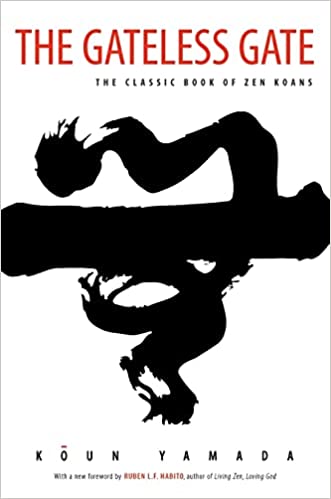
VSCL, Paperback. I studied this book to prepare the First Draft (March 25, 2023) of indexing for the Gateless Gate Koan Collection.
Indexing stored in the GB database (GB = Gateless Barrier or Gateless Gate).


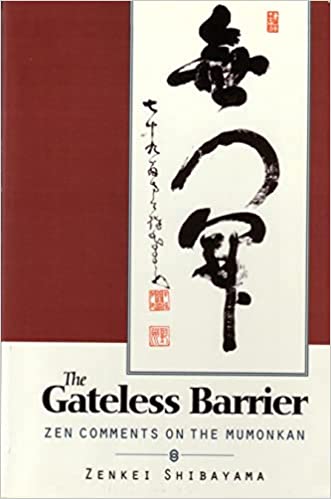
The Gateless Barrier: Zen Comments on the Mumonkan. By Zenkai Shibayama. Shibayama Roshi (1894-1974). Translated by Sumiko Kudo. Introduction by Shibayama Roshi. Preface by Kenneth W. Morgan, Colgate University. Boston, Shambhala, 2000. Glossary, index, 361 pages. ISBN: 9781570627262.  "For more than seven centuries the Mumonkan (Gateless Barrier) has been used in Zen monasteries to train monks and to encourage the religious development of lay Buddhists. It contains forty- eight koans, or spiritual riddles, that must be explored during the course of Zen training. Shibayama Zenkei (1894-1974), an influential Japanese Zen teacher and calligrapher who traveled and lectured throughout the United States in the 60s and 70s, offers his own commentary alongside the classic text. The Gateless Barrier remains an essential text for all serious students of Buddhism."  These lectures (Teisho) on the Gateless Barrier were given at Colgate University in 1974.
VSCL, Paperback. I studied this book to prepare the Second Draft of indexing for the Gateless Gate. Second Draft expected in March, 2024.


Koans Research Project.  By Michael P. Garofalo.

Rinzai Zen Buddhist Studies


Tuesday, May 02, 2023

Suzuki Walks in the Fog

The Fireplace Records, Chapter 22


Suzuki Walks in the Fog


Shunryu Suzuki (1904-1971) lived in San Francisco for many years.  He was the Zen Master who was the founder of the Zen Centers in San Francisco and Carmel Valley.  Many of his students in California became influential Zen Buddhist teachers and authors.  

San Francisco often has heavy fog cover in the summer, and the Willamette Valley in Oregon has very heavy fog cover in the winter.  The Central Valleys of California can have very heavy Tule ground fog cover in the winter. Normally, clouds and rainfall come in the winter on the West Coast of the USA, and the summer's are dry and clear - a Mediterranean Climate.

Suzuki was a skillful teacher, working with a variety of students: monks and householders.  His Zen Centers also developed programs for end of life hospice care, AIDS help, food programs, retreats, Temple services, drug rehabilitation, monk training, etc.

A key to his success, besides in enlightened teaching and kindness, was his ability to be patient, stay the course, work day by day, be dedicated, and encourage others to persist in their spiritual practices.  Progress is patience, work, and letting go of attachments to "success" in your spiritual endeavors.  

"After you have practiced for awhile, you will realize that it is not possible to make rapid, extraordinary progress.  Even though you may try very hard, the progress you make is always little by little.  It is not like going out in a shower in which you know when you get wet.  In a fog, you do not know you are getting wet, but as you keep walking you get wet little by little.  If you mind has ideas of progress, you may say, "Oh, this pace is terrible!" But actually, it is not.  When you get wet in a fog it is very difficult to dry yourself.  So there is no need to worry about progress."
- Shunryu Suzuki, Zen Mind,
Beginner's Mind, p. 41


A Student’s Considerations:

Learning to play a musical instrument, cook, garden, or whatever, requires
   patience, practice, and steady slow progress.
Don't Rush so often.  Slow down.  Lower your pace.
Tortoise and Hare: Slow/Fast, Jogging/Sprinting.
Be careful of your commitments in terms of available time.
Take a walk, safely, in the dense fog - in a world erased.
Be committed and soak up the wisdom of the Masters!
Just Do It!  Don't worry about progress.
Persist, struggle forward, persevere like the sturdy Carp swimming upstream
   through a waterfall, passing through the Dragon's Gate, and then becoming
   a Royal Dragon. We have watched salmon migrating upstream to their
   Original Home, and facing their Great Death that gives life to others.  


Related Links, Resources, References

Zen Mind, Beginner's Mind. By Shunryu Suzuki. Shambhala, 1970, 2020 50th Anniversary Edition, 176 pages. VSCL, Paperback.  36 Essays/Chapters.

Koans:


Refer to my Cloud Hands Blog Posts on the topic of Koans/Dialogues.

The Daodejing by Laozi    Best? 

Pulling Onions  Over 1,043 One-line Sayings by Mike Garofalo

Chinese Chan Buddhist and Taoist Stories and Koans

Taoism

Buddhism

Fireplaces, Stoves, Campfires, Kitchens, Pots, Firewood

Chinese Art

Tai Chi Chuan and Qigong

Meditation Methods

Zen Koan Books I Use

Koan Database Project

Brief Spiritual Lessons Database Project: Subject Indexes


Subject Index to 1,001 Zen Buddhist Koans
(This is an ongoing project in the Spring of 2023)


Sparks: Brief Spiritual Lessons and Stories

Matches to Start a Kindling of Insight
May the Light from Your Inner Fireplace Help All Beings
Taoist, Chan Buddhist, Zen Buddhist, Philosophers
Catching Phrases, Inspiring Verses, Koans, Meditations
Indexing, Bibliography, Quotations, Notes, Resources
Research by Michael P. Garofalo

The Fireplace Records
By Michael P. Garofalo


Subject Index to 1,001 Zen Buddhist Koans