Showing posts with label Hun Yuan Chen Taijiquan. Show all posts
Monday, December 07, 2020
The Concept of "Hunyuan"
"Hunyuan is an ancient, central concept of Daoist philosophy and meditation practice. Hun means undifferentiated unity, the state of mind and being that occurs when one does not divide the world into concepts. In other words, hun is equivalent to inner silence. Yuan means origin or original. The importance of Yuan is attested by the fact that it is the opening word of Qian, the first chapter of the Yi Jing (The Classic of Change). "Original [Yuan], Penetrating [Heng], Auspicious [Li], Correct [Zhen]." This mantric phrase may be interpreted as four stages in the creation or evolution of an idea or phenomenon; or it may represent the four seasons.
Yuan is the root or antecedent of any action. It is the creative spark or impulse, like a seed planted in Spring which is just ready to sprout. Heng is the Summer, and represents germination and development. The character heng originally meant a sacrificial cup used to make offerings to the Gods. Most commentators explain heng as tong, penetrating or reaching to the Gods. Li means to cut grain, to harvest or reap the benefits of what was grown. It is thus the Autumn season. Zhen, which originally included the character for tripod means steady and correct. It also means divination. Zhen is the winter season, when the energies of life retreat back into the ground and people return from the fields to their homes. The spark of yang is hidden in the yin. Winter is a time for inner work rather than outer work, a time to perfect one's character and prepare for the coming year by consulting oracles.
The character yuan was originally a composite of shang the word "above" with ren, the word "person." Hence, yuan means the upper part of a person's body, the head, or, as we say in English to go ahead, to be first. Interestingly, the Chinese character Dao also contains an element that means both head and first, shou. One of my Daoist teachers, the late B. P. Chan, defined Dao as "the path to the origin." We could also interpret this as returning to the origin. When the body Returns to the Origin, it renews itself with the energy of life, the all pervading qi of the universe. It becomes like an uncarved block of wood-- the Daoist symbol of a person uncorrupted by the stresses and worries of life. As Lao Zi says, "See the unbleached silk, embrace the uncarved block; reduce selfishness, lessen desire." (When the mind Returns to the Origin, it becomes simple and pure like a newborn babe, able to perceive the world with a fresh innocence.)
Hun with yuan becomes the concept Hunyuan, the Primordial State of Being. The term is synonymous with the word Dao itself and also with Taiji (the Undifferentiated, as in Taiji Quan, a martial art and healing art that blends yin and yang, suppleness with strength). Philosophy and personal cultivation are not separate categories in Daoist thought. Thus, Hunyuan is the Primal Being (God) or Beingness that both precedes and underlies all creation. It is also the spiritual state of a person who practices Daoist meditation."
- Hunyuan Qigong: Tracing Life to Its Roots
An excellent essay by Master Kenneth Cohen, 2007
Hun Yuan Qigong
Hun Yuan Taijiquan
Months and Seasons of the Year
Saturday, December 21, 2019
Hun Yuan Chen Taijiquan
1. Keep the spine straight and relaxed - not tense.
2. Bend your knees to enable weight transfer.
3. Let your weight sink down to the soles of the feet - not held in the upper body or the thighs. Develop natural weight transfer – from ground to ground.
4. Legs are the foundation. Each movement starts from the legs, to the waist (which also enables the spine to rotate) and then to the arms. The waist controls the upper body.
Avoid leaning with the upper body.
5. Distinguish between empty and solid. Control your centre of gravity. Step out empty with no weight, so that you may be able to retrieve your step if necessary.
6. Be aware of relaxing the shoulders.
7. Use minimum amount of strength to move the body. Anything more is tension. Relax, relax, relax.
8. Coordinate the lower and the upper body.
9. Distinguish between open and close within the movement. Feel your back and chest. Avoid leaning.
10. Use your mind, that is, your intention, to lead the movement."
- Brett Wagland, Experiencing the First Stage of Hun Yuan Tai Chi
Hun Yuan Taijiquan 24 Form
HunYuan Qigong: Tracing Life to its Root, by Kenneth S. Cohen, 2007
Hun Yuan Qigong
HunYuan Qigong: Tracing Life to its Root, by Kenneth S. Cohen, 2007
Hun Yuan Qigong
Sunday, December 31, 2017
With Slow Movements ...
"The movements of Qigong exercise should be slow instead of fast because slow movements will nourish qi and combine the posture with qi. The training practice of Qigong should start with Wuji with slow movement until the closing of the training. Every movement and step must be done slowly, opening and spreading of the body be slow, closing and sinking of the body be slow, and rising and falling of the body be slow. With slow movements, one can keep thinking whether the upper, lower, left and right of the body are followed, and whether the interior and exterior are coordinated. With the slow and gentle movements and posture, the internal qi is conducted to flow slowly in the body to integrate mindwill with qi, vitality with posture, and enter the realm of forgetting the substance and me."
- Master Wang Fengming, Special Taoist Taji Stick and Ruler Qigong, p. 115.
Hun Yuan Qigong, Primordial Qigong, Mixed Circles Qigong
Valley Spirit Qigong
Vancouver Tai Chi and Chi Kung Studio, Vancouver, Washington State
I was given a number of books by family and friends this holiday season, and for my 72nd birthday. I thank them for their generosity.
A 5 DVD set of instructional DVDs from Brett Wagland and Fontane Ip from Canberra, Australia. They teach Hunyuan Taijiquan and Qigong. A $125 investment in coaching in Hunyuan:
Yang Tai Chi for Beginners. By Dr. Yang, Jwing-Ming. Instructional DVD, 293 minutes. YMAA, 2012. VSCL.
Tai Chi Chuan Martial Power: Advanced Yang Style. By Dr. Wang, Jwing Ming. Foreword by Tsung-Hwa Jou. Wolfeboro, New Hampshire, YMAA Publication Center, 3rd Edition, 1986, 1996, 2015. Index, glossary, bibliography, 274 pages. ISBN: 978-1594392948. VSCL.
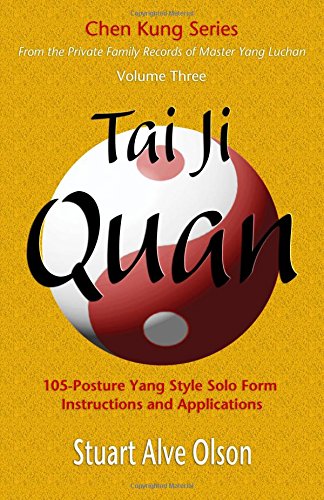
Tai Ji Quan: 105 Posture Yang Style Solo Form - Instructions and Applications. Chen Kung Series, From the Private Family Records of Master Yang Luchan, Volume Three. Translation and commentary by Master Stuart Alve Olson. Phoenix, Arizona, Valley Spirit Arts, 2017. Bibliography, appendices, 234 pages. ISBN: 978-1548105372. VSCL. "The long-awaited third volume in the Chen Kung Series presents the detailed instructions on the original Yang Style 105-Posture Taijiquan form, along with explanations of the practical self-defense applications, commentaries by Chen Kung, translations of the illustrations in the text, and notes by Stuart Alve Olson. A truly remarkable, insightful work that complements anyone’s library on the art of Taijiquan." "Born in 1906, Master Chen Kung (a.k.a., Yearning K. Chen and Chen Yen-lin) passed away in Shanghai, Chiina, in 1980. Master Chen Kung copied the Yang Family manuscripts in 1930."

Northwest Tai Chi and Qigong Studio, Vancouver, Washington
Northwest Taijiquan and Qigong
The Vancouver Tai Chi Chuan and Qigong Studio
Sifu Brian Knack
Assistant Instructors: Bill, Sandy, Joel
Vancouver Health and Wellness Building
202 E. Mcloughlin Blvd., Vancouver, Washington, 98663
360-607-8240
Also, on Facebook
The information on the Northwest Taijiquan website has not been updated.
Class Schedule:
Tuesday Morning 9-11 am
Tuesday Evening 5:30 - 7:30 pm
Thursday Morning 9-11 am (Class Cancelled Jan-Mar 2018)
Saturday Morning 10-12 am
I plan to attend these classes in 2018.
The facility is clean and attractive, and located in downtown Vancouver, near Main Street and Mcloughlin Blvd. An excellent peaceful atmosphere with many very accomplished and knowledgeable students. Good mature attitudes all around, and peaceful, polite, and friendly people.
Here are the kinds of Taijiquan and Qigong we have been learning and practicing at the Vancouver Studio (Dojo/Training Center) with Sifu Knack, and the assistant Instructors Sandy, Bill, Joel, and Camille along with four to eight other other students. I also use DVDs by Sifu Knack for home study. Curriculum:
Yang Style Taijiquan 24 Form
Yang Style Taijiquan 108 Long Form
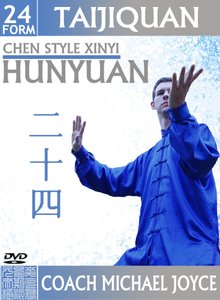
Hunyuan Chen Taijiquan 24 Form
Eight Gates Warmup Yang Taijiquan
Push Hands
Da Lu
Hunyuan Qigiong, Primordial Qigong, Mixed Circles Qigong
Kuan Yin Sitting Qigong
Bagua Qigong: Liang Shen Pu
Eight Immortals Flute Form
Hun Yuan Taiji Stick and Qigong Ruler.
32 Sword Form
Chen Broadsword Form
About Sifu Bryan Knack Ph.D./Ma.Sc.D.

"Bryan Knack was inducted to the U.S.A. Martial Arts Hall of Fame as "Chinese Martial Arts Master of the Year" and "International Sifu of the Year."
"Sifu Bryan Knack began studying martial arts in the mid-70's, begining with the external martial arts of Goju-ryu (Okinawan karate) and Siu Lum Kung Fu in the 1980's. Then he turned his studies to Tai Chi and Qi Gong and had a training center in Portland, Oregon.
He returned to his hometown of Spokane to open his own studio, Northwest Tai Chi for Health in 2000. Sifu Knack returned to the Vancouver/Portland area in 2011 to be close to his family."
Friday, December 29, 2017
Hunyuan Taijiquan and Qigong
"Hun Yuan Qigong is often translated as meaning ‘Primordial’ or ‘Congenital Qigong’ which is an appropriate name but it really deserves further exploration. ‘Hun’ by its nature refers to something that is mixed, something that is still a composite and hasn’t been divided into various parts as in Hun Dun which is often translated as original chaos. ‘Yuan’ literally means rotations or circles. So the name of this Qigong set is actually Mixed Circles or Mixed Rotations Qigong. Why is this and what does this have to do with primordial? A state of undifferentiated rotating energy is the original state of the cosmos according to esoteric Daoism. This was the state before Yin and Yang divided. It is the potential for something but nothing manifest. The ultimate state of Wuji is supposed to be formed of various mixed circles – Wuji is Hun Yuan. Out of these mixed circles come Taiji which is the catalyst for Creation so Hun Yuan literally implies trying to take yourself, your Mind, your Energy Body to a state before Yin and Yang divided when there is still just rotational potential for something – which is why often they’ll shorten all of that and say Primordial Qigong for example. Most people will know Hun Yuan Qigong through a gentleman who died recently named Feng Zhi Qiang who was the founder of Hun Yuan Taiji, a variant of Chen style boxing. Feng also taught Hun Yuan Qigong which, prior to being part of a Taijiquan system, had alchemical Daoist origins."
- Damo Mitchell, Hun Yuan in Qigong
- Grandmaster Feng Zhi Qiang
Chen Tai Chi Chuan
Hun Yuan Qigong
HunYuan Qigong: Tracing Life to its Root, by Kenneth S. Cohen, 2007
Valley Spirit Qigong
Hun Yuan Tai Chi 24 Form. Instructional DVD, NTSC, 74 minutes. Featuring Brett Wagland and Fontane Ip. From the Tai Chi Academy. VSCL.
Labels:
Chen Taijiquan,
Chi Kung,
Hun Yuan Chen Taijiquan,
Qigong
Tuesday, December 26, 2017
Vancouver Tai Chi Chuan Studio
Northwest Taijiquan and Qigong
The Vancouver Tai Chi Chuan and Qigong Studio
Sifu Brian Knack
Assistant Instructors: Bill, Sandy, Joel
Vancouver Health and Wellness Building
202 E. Mcloughlin Blvd., Vancouver, Washington, 98663
360-607-8240
Also, on Facebook
The information on the Northwest Taijiquan website has not been updated.
Class Schedule:
Tuesday Morning 9-11 am
Tuesday Evening 5:30 - 7:30 pm
Thursday Morning 9-11 am (Class Cancelled Jan-Mar 2018)
Saturday Morning 10-12 am
I plan to attend these classes in 2018.
The facility is clean and attractive, and located in downtown Vancouver, near Main Street and Mcloughlin Blvd. An excellent peaceful atmosphere with many very accomplished and knowledgeable students. Good mature attitudes all around, and peaceful and friendly people.
Here are the kinds of Taijiquan and Qigong we have been practicing at the Vancouver Studio with Sifu Knack, and the advanced students and assistant Instructors Sandy, Bill, Joel, Camille and with four to eight other other students. I also use DVDs by Sifu Knack for home study. Curriculum:
Yang Style Taijiquan 24 Form
Yang Style Taijiquan 108 Long Form
Hunyuan Chen Taijiquan 24 Form
Eight Gates Warmup Yang Taijiquan
Push Hands
Da Lu
Hun Yuan Qigiong
Kuan Yin Sitting Qigong
Bagua Qigong: Liang Shen Pu
Eight Immortals Flute Stick Form
Hun Yuan Taiji Stick and Qigong Ruler
32 Sword Form
Chen Broadsword Form
About Sifu Bryan Knack Ph.D./Ma.Sc.D.

"Bryan Knack was inducted to the U.S.A. Martial Arts Hall of Fame as "Chinese Martial Arts Master of the Year" and "International Sifu of the Year."
Sifu Bryan Knack began studying martial arts in the mid-70's, begining with the external martial arts of Goju-ryu (Okinawan karate) and Siu Lum Kung Fu in the 1980's. Then he turned his studies to Tai Chi and Qi Gong and had a training center in Portland, Oregon.
He returned to his hometown of Spokane to open his own studio, Northwest Tai Chi for Health in 2000. Sifu Knack returned to the Vancouver/Portland area in 2011 to be close to his family."
"Tai Chi is fun! The Vancouver Tai Chi and Qigong Studeio offers an affordable program for multiple section classes for a monthly charge, or for a small fee for each class you attend."
Come and Join us in Practicing and Learning Taijiquan and Qigong.
Subscribe to:
Posts (Atom)