Showing posts with label Plants. Show all posts

Tuesday, April 28, 2026

Dao De Jing Chapter 16

Tao Te Ching by Lao Tzu
Chapter 16


"Attaining perfect emptiness
 Remain patient and sincere
 The myriad beings arise as one
 Through this we observe the return
 Of beings in numberless multitudes
 Each coming home to its root
 Return to the root means serenity
 It may be called a return to a higher order
 Return to higher order speaks of the enduring
 To comprehend the enduring speaks of clarity
 To not comprehend the enduring
 Is to recklessly create suffering
 To comprehend the enduring (is) tolerance
 Tolerance becomes justice
 Justice becomes sovereignty
 Sovereignty becomes celestial
 The celestial becomes the path
 The path is then continuous
 The death of self is nothing to fear"
 -  Translated by Bradford Hatcher, 2005, Chapter 16


"Bring about emptiness to the extreme.
Guard true stillness.
The ten-thousand things rise together.
I therefore observe their return:
Those ten-thousand plants—each plant—returns
Going back to its root.
Going back to the root is said to be stillness.
This is called returning to life.
Returning to life is called the Constant.
Understanding the Constant is called clarity.
Not understanding the Constant:
Reckless actions—misfortune.
Understanding the Constant, forgive.
Forgive, then be unbiased.
Be unbiased, then be whole.
Be whole, then be Heaven.
Be Heaven, then be Tao.
Be Tao, then be eternal.
Not having a body, there is no danger."
-  Translated by Aalar Fex, 2006, Chapter 16  


"Empty the self completely; Embrace perfect peace.
 Realize that all beings alike go through their processes of activity and life,
 and then they return to the original source.
 Returning to the source brings peacefulness and stillness.
 This stillness is the flow of nature, and signifies that the beings have lived their allotted span of life.
 Accepting this brings enlightenment and tranquility,
 ignoring this brings confusion and sorrow
 If one can accept this flow of nature; one can cherish all things.
 Being all-cherishing you become impartial;
 Being impartial you become magnanimous;
 Being magnanimous you become natural;
 Being natural you become one with The Way;
 Being one with The Way you become immortal:
 Though the body will decay, the Way will not."
 -  Translated by John Discus, 2002, Chapter 16   


致虛極.
守靜篤.
萬物並作.
吾以觀復.
夫物芸芸, 各復歸其根.
歸根曰靜.
是謂復命.
復命曰常.
知常曰明.
不知常, 妄作凶知常容.
容乃公.
公乃王.
王乃天.
天乃道.
道乃久.
沒身不殆.
-  Chinese characters, Tao Te Ching, Chapter 16


zhi xu ji.
shou jing du.
wan wu bing zuo.
wu yi guan fu.
fu wu yun yun, ge fu gui qi gen.  
gui gen yue jing.
shi yue fu ming.
fu ming yue chang.
zhi chang yue ming.
bu zhi chang, wang zuo xiong zhi chang rong.
rong nai gong.
gong nai quan.
quan nai tian.
tian nai dao.
dao nai jiu.
mo shen bu dai.
-  Pinyin translation, Daodejing, Chapter 16 


"Effect emptiness to the extreme.
 Keep stillness whole.
 Myriad things act in concert.
 I therefore watch their return.
 All things flourish and each returns to its root.
 Returning to the root is called quietude.
 Quietude is called returning to life.
 Return to life is called constant.
 Knowing this constant is called illumination.
 Acting arbitrarily without knowing the constant is harmful.
 Knowing the constant is receptivity, which is impartial.
 Impartiality is kingship.
 Kingship is Heaven.
 Heaven is Tao
 Tao is eternal.
 Though you lose the body, you do not die."
 -  Translated by Charles Muller, 1891, Chapter 16


"Vacía tu Ego completamente;
Abraza la paz perfecta.
El Mundo se mueve y gira;
Observale regresar a la quietud.
Todas las cosas que florecen
Regresarán a su origen.

Este regreso es pacífico;
Es el camino de la Naturaleza,
Eternamente decayendo y renovandose.
Comprender ésto trae la iluminación,
Ignorar esto lleva a la miseria.

Aquel que comprende el camino de la Naturaleza llega a apreciarlo todo;
Apreciandolo todo, se convierte en imparcial;
Siendo imparcial, se convierte en magnánimo;
Siendo magnánimo, se convierte en parte de la Naturaleza;
Siendo parte de la Naturaleza, se hace uno con el Tao;
Siendo uno con el Tao, se alcanza la inmortalidad:
Piensa que el cuerpo perecerá, el Tao no."
-  Translated by Antonio Rivas Gonzálvez, 1998, Tao Te Ching, Capítulo 16


"To arrive at ultimate quietness
Steadfastly maintain repose.
All creatures together have form;
I see them return again to their root.
The Master creatures come to perfect form,
Continuously they return to their root.
Continuous return to the root is called repose,
Repose is called the law of return,
The law of return is called eternity.
To know eternity is called illumination.
To ignore eternity is to draw misfortune on oneself,
To know eternity is to be great of Soul,
To be great of soul is to be a ruler,
To be a ruler is to be greater than all,
To be greater than all is to be conscious of Life,
To be conscious of Life is to endure.
The body shall disappear but not decay."
-  Translated by Isabella Mears, 1916, Chapter 16  


Audio Recordings (Podcasts) in English by Mike Garofalo

Here is an audio recording of selected translations from Chapter 16 of the Tao Te Ching. This reading includes translations by Isabella Mears 1916, Charles Muller 1891, John Discus 2002, Bradford Hatcher 2005, Stephen Addis 1993.  Reading and recording by Michael P. Garofalo at the Valley Spirit Center in Red Bluff, California.  Recorded on December 5, 2016. MP3 format.  12.7 MB.    


A typical webpage created by Mike Garofalo for each one of the 81 Chapters (Verses, Sections) of the Tao Te Ching (Daodejing) by Lao Tzu (Laozi) includes 25 different English language translations or interpolations for that Chapter, 5 Spanish language translations for that Chapter, the Chinese characters for that Chapter, the Wade-Giles and Hanyu Pinyin transliterations (Romanization) of the Mandarin Chinese words for that Chapter, and 2 German and 1 French translation of that Chapter.  Each webpage for each one of the 81 Chapters of the Tao Te Ching includes extensive indexing by key words, phrases, and terms for that Chapter in English, Spanish, and the Wade-Giles Romanization.  Each webpage on a Chapter of the Daodejing includes recommended reading in books and websites, a detailed bibliography, some commentary, research leads, translation sources, a Google Translate drop down menu, and other resources for that Chapter.   

Chapter 16, Tao Te Ching by Lao Tzu


Chapter and Thematic Index (Concordance) to the Tao Te Ching by Lao Tzu


English Language Daodejing Translators' Source Index


Spanish Language Daodejing Translators' Source Index


Ripening Peaches: Taoist Studies and Practices


Taoism: A Selected Reading List


Friday, March 27, 2026

California Bees and Blooms

"California is home to over sixteen hundred species of undomesticated bees--most of them native--that populate and pollinate our gardens, fields, and urban green spaces. In this absorbing guidebook, some of the state's preeminent bee and botany experts introduce us to this diverse population. California Bees and Blooms holds a magnifying glass up to the twenty-two most common genera (and six species of cuckoo bees), describing each one's distinctive behaviors, social structures, flight season, preferred flowers, and enemies. Enhancing these descriptions are photographs of bees so finely detailed they capture pollen scattered across gauzy wings and iridescent exoskeletons.
Drawing from years of research at the UC Berkeley Urban Bee Lab, California Bees and Blooms presents an authoritative look at these creatures, emphasizing their vital relationship with flowers. In addition to opening our eyes to the beautiful array of wild bees in our midst, this book provides information on fifty-three bee-friendly plants and how to grow them. Just a few square feet of poppies, sage, and phacelia are enough to sustain a healthy population of wild bees, transforming an urban or suburban garden into a world that hums and buzzes with life."


Monday, July 21, 2025

Mushrooms and Puffballs

Repost for December, 2014:

In the past month, here in Red Bluff, California, we have had many days with rain.  These rainy days have caused the spores from many types of mushrooms and puffballs to appear in the ground around our home.  Karen has stalked these little fungi, and taken many pictures.


"A mushroom (or toadstool) is the fleshy, spore-bearing fruiting body of a fungus, typically produced above ground on soil or on its food source. The standard for the name "mushroom" is the cultivated white button mushroom, Agaricus bisporus; hence the word "mushroom" is most often applied to those fungi (Basidiomycota, Agaricomycetes) that have a stem (stipe), a cap (pileus), and gills (lamellae, sing. lamella) or pores on the underside of the cap. These pores or gills produce microscopic spores that help the fungus spread across the ground or its occupant surface.
"Mushroom" describes a variety of gilled fungi, with or without stems, and the term is used even more generally, to describe both the fleshy fruiting bodies of some Ascomycota and the woody or leathery fruiting bodies of some Basidiomycota, depending upon the context of the word.
Forms deviating from the standard morphology usually have more specific names, such as "puffball", "stinkhorn", and "morel", and gilled mushrooms themselves are often called "agarics" in reference to their similarity to Agaricus or their place Agaricales. By extension, the term "mushroom" can also designate the entire fungus when in culture; the thallus (called a mycelium) of species forming the fruiting bodies called mushrooms; or the species itself."
Mushroom - Wikipedia


Tuesday, June 27, 2023

Lusus: A Bud Sport, A Unique Offspring, A Transformation

"In botany, a sport or bud sport, traditionally called lusus, is a part of a plant that shows morphological differences from the rest of the plant. Sports may differ by foliage shape or color, flowers, fruit, or branch structure. The cause is generally thought to be a chance genetic mutation.

Sports with desirable characteristics are often propagated vegetatively to form new cultivars that retain the characteristics of the new morphology. Such selections are often prone to "reversion", meaning that part or all of the plant reverts to its original form. An example of a bud sport is the nectarine, at least some of which developed as a bud sport from peaches. Other common fruits resulting from a sport mutation are the red Anjou pear, the Ruby Red grapefruit, and the 'Pink Lemonade' lemon, which is a sport of the "Eureka" lemon."

In the photo below, foliage of a dwarf Alberta spruce (Picea glauca var. albertiana 'Conica'), with a branch showing reversion to the normal Alberta white spruce growth habit of larger leaves and longer internodes.

Wikipedia


Transformation


"Transformation isn’t sweet and bright. It’s a dark and murky, painful pushing. An unraveling of the untruths you’ve carried in your body. A practice in facing your own created demons. A complete uprooting, before becoming.”
-  Victoria Erickson


“Transformation literally means going beyond your form.”
-  Wayne Dyer


“Beautiful are those whose brokenness gives birth to transformation and wisdom.”
-  John Mark Green


Sunday, May 07, 2023

Planting Our Front Yard Vegetable Garden

Karen and I have maintained a summer vegetable garden for 50 years.  Here are some photos of our current vegetable garden in Vancouver, Washington.  It is located on the west side of our home, in the front yard, in a location with full sun.

We place seedlings and seeds into the veggie garden on May 1st in Vancouver.  


Plenty of space for a home garden


Lots of Onions coming along
Note: These beds were garbage compost bins
a few years ago.


No seeds up yet - just seedlings


Early May - Front of House


We had a much larger vegetable
garden in Red Bluff, CA, from
1998-2017.
We also planted over 100 fruit trees
on the 5 acres of land.


More Weeding Work to be Done on Corner

Friday, November 26, 2021

Paul Allen Smith

 We have enjoyed watching P. Allen Smith's many television programs that he has hosted.  Many are available on UTube.  There are Facebook and Instagram channels.   

"Paul Allen Smith, Jr. (born March 12, 1960)[1] is an American television host, garden designer, conservationist, and lifestyle expert. He is the host of three television programs. P. Allen Smith's Garden Home and P. Allen Smith's Garden to Table are distributed to public television by American Public Television.[2][3] His 30-minute show Garden Style is syndicated by The Television Syndication Company.[4] Smith is one of America's most recognized gardening and design experts, providing ideas and guidance through multiple media venues. He is the author of the Garden Home series of books published by Clarkson Potter/Random House, including Bringing the Garden Indoors: Container, Crafts and Bouquets for Every Room and the cookbook, Seasonal Recipes from the Garden, inspired by the abundance of food from his farm and a family of cooks. In 2014, Smith's television shows were successful at the Taste Awards with Smith returning to Little Rock with four Taste Awards. In 2015, Smith was inducted into the Taste Hall of Fame for his significant impact in the world of taste and broadcast entertainment.[5] Garden Home won a 2017 Taste Award for "Best Green or Organic Program".[6]

- Wikipedia


Harvest Blessings to All this Thanksgiving Day!


Tuesday, March 19, 2019

Retail Gardens Thriving

We shop at retail gardens in the northeast area of Vancouver, Washington.

Today, I visited Lowe's on 117th Ave and 78th St.  Their gardening area was well stocked with many kinds of plants, shrubs, starters, colors, seeds, sizes, soils, bricks, wood, and equipment.  Today, I purchased a hanging basket with colorful flowers, a heather plant in bloom, and six bricks.  Karen and I will return tomorrow.

A few days ago we visited Yard and Garden on NE Hwy 99.  I plan to visit my nearby Home Depot on Andresson and 78th St.  Even our local Fred Meyer Supermarket, across from Lowes, has a well stocked gardening area.

This Springtime Gardening Extravagance of plants and gardening supplies is inspiring to me.  The colors are enlivening.  Exhuberance of Green Beings-- all in Monrovia Nursery containers.

We have also shopped at many nurseries in Portland and up in Woodland (Tsusagawa) and up elsewhere in Washington.


Sunday, November 25, 2018

Garden Project: Greenhouse


As we transition into late autumn and winter, and the temperature drops, we need to protect frost sensitive plants.  Last winter we brought the frost sensitive plants (e.g., succulents, fuschias, lemon, avocado, etc.) indoors.  We had a snow once (12/17), and several times with winter nightime lows in the 30's F. 

We are now busy moving plants around and bringing some temporarily indoors. 

Here is a photo of the current Nursery area, and then a photo of the plants indoors. 


This year, we intend to add a greenhouse in the area of our backyard called the "Nursery." Here is a current photo of the area:


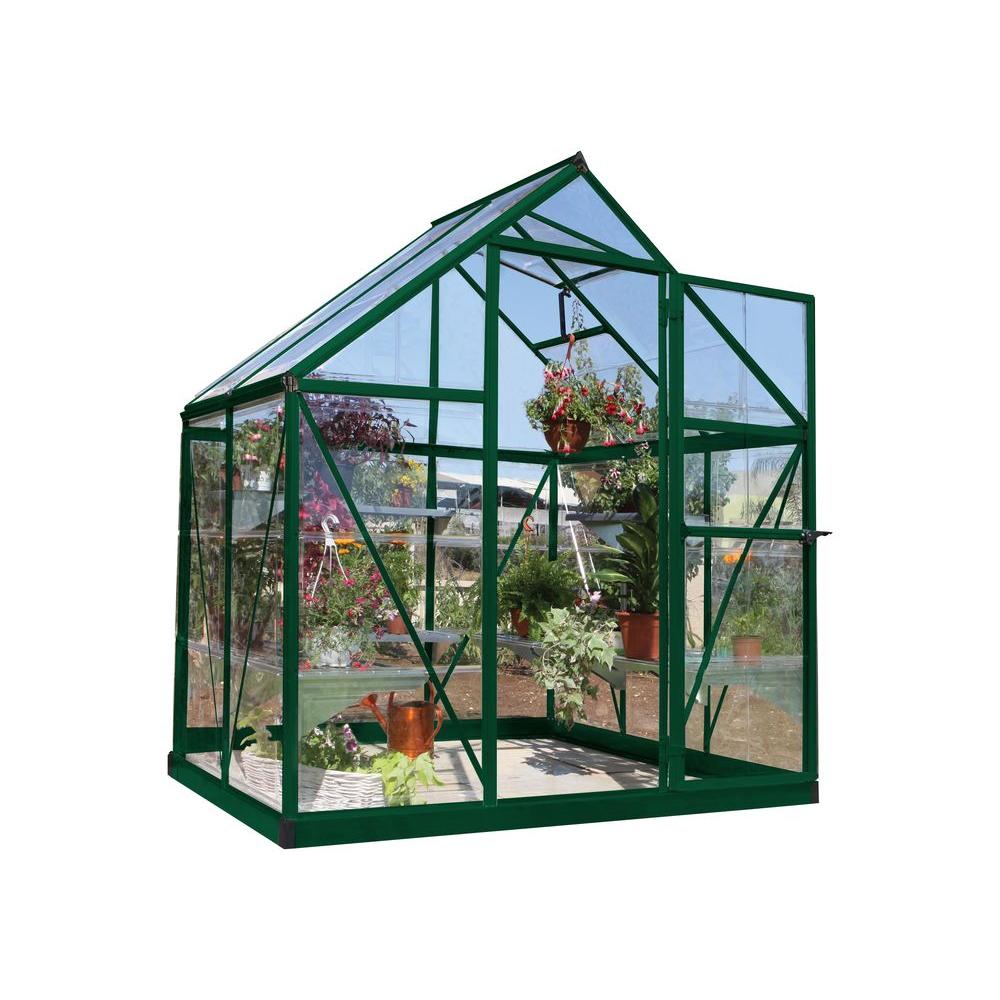
We selected the Palram Harmony 6 foot x 4 foot Polycarbonate Greenhouse from Home Depot.  This greenhouse arrived yesterday.  Here is what the greenhouse looks like:


Palram Harmony 6 ft. x 4 ft. Polycarbonate Greenhouse in Green

Monday, May 14, 2018

Forest Epiphanies


"The smell of the sea hugged the fog in the redwood trees,
All cool and dank, dimly lit and rank with green,
And in shadowed limbs the Stellar jays jabbered free,
And me, standing silently, an alien in this enchanted scene.

From behind the mossy grey stumps
the sounds of footsteps crunching fronds of ferns
caught my suddenly wary mind ...
What?

"Hello, old friend," said Chang San Feng.
"Master Chang, what a surprise," said I.
Master Chang sat on a stump, smiled, and said,

"Can you hear the Blue Dragon singing in the decaying tree;
Or is it the White Tiger roaring in the wilderness of your bright white skull?
No matter!  The answer is in the questioning; don't you Chan men see?

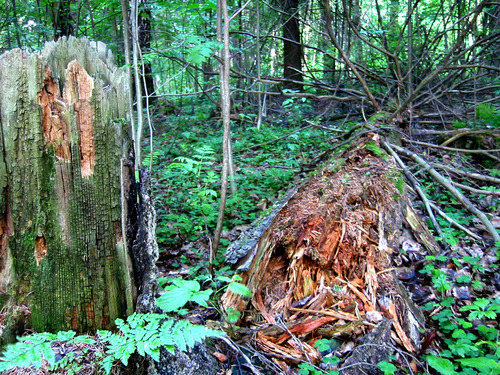
In the red ball flesh of this decaying tree
Sapless woody shards of centuries of seasons
Nourish the new roots of mindfulness sprouting.
Yes, Yes, but how can it be?
The up-surging waves of life sprout forth from the decaying tree,
As sure as sunrise rolling over the deep black sea.
Coming, coming, endlessly coming; waves of Chi.

Tan Qian's raven roosts for 10,000 moons
     in the withered branches of the rotting tree;
     then, one day, the weathered tree falls,
     nobody hearing, soundlessly crashing
     on the forest floor, on some unknown noon.

Over and over, over and over, life bringing death, death bringing life,
Beyond even the miraculous memories of an old Xian like me;
Watching, watching, sequestered from the strife,
Turning my soul away sometimes because I cannot bear to see.

Even minds may die, but Mind is always free
Bounding beyond, beyond, far beyond you and me;
Somehow finding the Possibility Keys
And unlocking the Door out of the Voids of Eternities."

Master Chang somehow, someway,
slowly disappeared into the red brown heart of the decaying tree.

Then the squawk of the jay
opened my mind's eye to the new day -
Namaste."

-  Michael P. Garofalo
   Meetings with Master Chang San Feng
   Remembering Prairie Creek Redwoods State Park, California, 2012


Monday, March 05, 2018

Spring Planting in Vancouver, WA


Karen and I will be busy with home improvement and gardening projects all during the month of March.  We are adding new fencing and improving old fencing.  We are going to be planting ground covers, ornamental evergreen shrubs, trees, mowing, fertilizing, and finishing paving our nursery area.  We are adding and improving garden trellis framing.  We also have many indoor home improvement projects.  

I planted four camellia shrubs in our backyard, and many smaller evergreen shrubs and ground covers.  

When to Plant Vegetables in Vancouver, Washington

From the National Gardening Association


The Spirit of Gardening by Mike Garofalo

Notes about Gardening in Vancouver, Washington


Wednesday, June 14, 2017

Growing Up Oneself


"The secret of the Tao Te Ching is its idea of Tao, modeled on the life of a plant.  Just as a living plant is tender and yielding (Chapter 76), so is Tao weak and yielding (Chapter 40).  With plants the hidden roots support the visible leaves and flowers, which return to the roots upon perishing (Chapter 16).  Likewise, Tao is the hidden root (Chapter 6), the non-being from which all beings spring (Chapter 40 and Chapter 21) and to which all beings return (Chapter 34).  The life of a plant is conditioned by seasonal rotation.  So is the movement of Tao in four stages: great (summer), disappearing (fall), far away (winter), and return (spring) (Chapter 25).  In the same way does the Taoist model spiritual life after a plant.  A living plant is tender and pliant, whole a dead plant is stiff and hard (Chapter 76); one who is with the Tao is also tender and pliant, while one who departs from the Tao is stiff and hard.  The plant kingdom is a quiet kingdom (Chapter 16) that sleeps in beauty; Taoist quietude is the spiritual condition for regeneration.  A plant grows at its own pace.  One must not, like the farmer in the Mencius (2A.2), help the growth of the corn stalks by pulling them up.  In the same way the Taoist allows events to unfold according to their inner rhythms; he acts by non-action (wu-wei), which is acting with, not against, the inner rhythms of things.  A plant is always renewing itself; the Taoist celebrates perpetual childhood (Chapter 55)."

- Ellen M. Chen, Tao Te Ching: A New Translation and Commentary. Paragon House, 1998. Detailed glossary, index, bibliography, notes, 274 pages. The above quote is from page 41. (I have found this book very useful.)


Tao Teh Ching Chapter Index    Hypertext Chart by Michael P. Garofalo
1 2 3 4 5 6 7 8 9 10
11 12 13 14 15 16 17 18 19 20
21 22 23 24 25 26 27 28 29 30
31 32 33 34 35 36 37 38 39 40
41 42 43 44 45 46 47 48 49 50
51 52 53 54 55 56 57 58 59 60
61 62 63 64 65 66 67 68 69 70
71 72 73 74 75 76 77 78 79 80
81


Son (Michael) and Father (Mike)
Two Gardeners in Vancouver, Washington, June 12, 2017
Backdrop of Western Red Cedar, Sitka Spruce, Firs, Maple, Green Lawn


In a sunny spot for a vegetable garden.
On the east corner of Michael and April's lot.
April, Michael and Karen all worked on this garden.
June 12, 2017


Spirituality and Gardening

Nature Mysticism


"The first act of awe, when man was struck with the beauty or wonder of Nature, was the first spiritual experience."
-  Henryk Skolimowski   


"A little too abstract, a little too wise,
It is time for us to kiss the earth again,
It is time to let the leaves rain from the skies,
Let the rich life run to the roots again."
-  Robinson Jeffers


"In the assemblies of the enlightened ones there have been many cases of mastering the Way bringing forth the heart of plants and trees; this is what awakening the mind for enlightenment is like.  The fifth patriarch of Zen was once a pine-planting wayfarer; Rinzai worked on planting cedars and pines on Mount Obaku.   ...  Working with plants, trees, fences and walls, if they practice sincerely they will attain enlightenment." 
-  Dogen Zenji, Japanese Zen Buddhist Grand Master , Awakening the Unsurpassed Mind, #31 


"Gardening helps us realize somatically, viscerally, the laws of growth and gradual unfolding.  We can't pull the plants up to make them grow, but we can help facilitate and midwife their blooming, each in his own way, time, and proper season.  I have learned a little about patience and humility from my gardens.  It's so obviously not something I'm doing that creates this miracle!  I also like to reflect upon and appreciate the exquisitely, evanescent, transitory, and poignant nature of things in the garden.  If you love the Dharma, you have to farm it. Go to a garden.  Just stand in it.  Breathe in the air, the fragrances, the light, the temperature, the music of the different plants, insects, birds, worms, caterpillars, grasshoppers, and butterflies.  Inhale the prana (cosmic energy) of all the abundantly growing things.  Recharge your inner batteries.  This is the joy of natural meditation."
-  Lama Surya Das, Awakening to the Sacred, 1999


Sunday, November 16, 2014

Building a Cold Frame in the Garden


We have a number of perennial plants that are not cold hardy.  Most are in pots setting on the front porch or back porch.  These plants needs to be protected during the winter months, e.g., bougainvillaea, ginger, succulents, cacti, etc.

We decided to build a cold frame structure to protect our tender plants.  It is located in our sunny garden and gets sunshine all day.  It is approximately 5 feet long, 4 feet wide, and 5 feet high.  I used treated lumber and used concrete around each post for stability.  The structure will be covered with plastic sheeting.  It will be filled with straw and then pavers and bricks will be placed on top of the straw.  If temperatures drop below 25F we will place a light bulb inside the structure - making it into a hot bed.

I will add more pictures as this project is completed during the upcoming week.  


"A cold frame is a protected plant bed. It has no artificial heat added. The temperature difference between the inside and outside of the frame is generally not more than 5 to 10 degrees. A mat or blanket may be placed over the frame on cold nights to conserve heat, but this increases temperature by only a few degrees. There are times, however, when a few degrees can be very important.
A cold frame is used to provide shelter for tender perennials, to "harden off" seedling plants or to start cold-tolerant plants such as pansies, cabbage or lettuce earlier than they can be started in open soil. It may also be used to overwinter summer-rooted cuttings of woody plants.
A hotbed basically is a heated cold frame. In many ways it is a miniature greenhouse, providing the same benefits with limited space at minimal expense. It is a means for extending the growing season. It is most often used to give an early start to warm-season vegetables such as tomato, pepper or melon. It may also be used to root cuttings of some woody plants.
Hotbeds and cold frames should have a southern exposure to receive the maximum amount of sunlight. To reduce the cost of heating, use a north or northwest windbreak. This may be provided by a building, bales of hay or straw, tight board fence or evergreen hedge. Bundles or bales of straw could be used on the north for temporary windbreak."
-  By Denny Shrock, Department of Horticulture, University of Missouri


Images for Cold Frames

How to Build a Cold Frame

Building and Using Hotbeds and Coldframes

The Spirit of Gardening:  Quotes, Sayings, Poems, Information.  Over 3,500 quotations arranged by over 200 topics.  Compiled by Mike Garofalo. 

Months and Seasons: Quotes, Sayings, Poems, Information.  Compiled by Mike Garofalo.