Showing posts with label Zen. Show all posts

Sunday, May 31, 2026

Treasury of the True Dharma Eye by Zen Master Dogen

Zen Master Eihei Dogen Zenji (1200-1253) 
Japanese founder of Soto Zen School Tradition.
Teacher, abbot, essayist, poet, Zen philosopher
His collected works are called The Treasury of the True Dharma Eye, Shobogenzo.

I first read Dogen's works in the book Moon in a Dewdrop translated by Kazuaki Tanahashi (1995, 368 pages); and in the book Rational Zen: the Mind of Dogen Zenji translated by Thomas Clearly (2001, 232 pages.)

I have read, studied, and adopted much from my study of Zen Buddhist literature since I was 14 years old.  I am a philosopher, but I have a interest in Taoism, and associated practices like some in Zen Buddhism.

Gudo Nishijima and Chodo Cross's four volume translation of the Treasury of the True Dharma Eye, Shobogenzo in 2021.

Unfortunately, the Kindle Version of Nishijima is very poor, and cheap ($7.00), so I purchased the paperback copies at $18.00 - $27.00 each.  

The new Kazuaki Tanahashi Kindle version of the Treasury of the True Dharm Eve, Shobogenco (2013, 1280 pages) is excellent, at a cost of $60.00.  The hardbound version is $75.00, very heavy, big, like a large family Bible on a coffee table.  So, I'll purchase one volume of Nishijima's translation per month at $25.00 each.  And, then get Tanahashi in the Kindle version as money permits.


Here is an 2008 Amazon review by by Ted Beriginer of Gudo Nishijima and Chodo Cross's four volume translation of the Treasury of the True Dharma Eye, Shobogenzo in 2021.


"If you have not read Books 1 through 4 of this translation of the 95 chapter edition of Shobogenzo, do it now! If you have read them, do it again!

Gudo Nishijima and Mike (Chodo) Cross's four volume translation of the 13th century Zen master Eihei Dogen's masterpiece marked the first English language translation of the entire 95 chapter version of Shobogenzo - The True Dharma-Eye Treasury (excepting the nearly useless translation by Kosen Nishiyama and John Stevens).

By opting for a more "literal" rather than "interpretive" rendition, the translators have realized a monumental achievement by furnishing English readers with a reliable text that is certain to be invaluable for generations.

This set is also packed with a wide selection of reference material, or "Aids to the Reader", including a translation of The Heart Sutra, Dogen's Fukanzazengi, and a generous selection of passages from the Lotus Sutra, Glossaries, a variety of tables offering data on everything from The Works of Dogen, to equivalents of Chinese/Japanese/Sanskrit/English.

The extensive footnotes, while occasionally offering some overly "interpretive" (read: sectarian), provide readers with a vast amount of supplemental information with lucid explanations concerning cultural context, alternate readings, sources for material quoted in the body of the text, biographical (historical and traditional) information on personages appearing in the text, and much more.


Book 1 - Table of Contents

[1] BENDOWA - A Talk about Pursuing the Truth

[2] MAKA-HANNYA-HARAMITSU - Maha-prajna-paramita

[3] GENJO-KOAN - The Realized Universe

[4] IKKA-NO-MYOJU - One Bright Pearl

[5] JU-UNDO-SHIKI - Rules for the Hall of Heavy Cloud

[6] SOKU-SHIN-ZE-BUTSU - Mind Here and Now Is Buddha

[7] SENJO - Washing

[8] RAIHAI-TOKUZUI - Prostrating to Attainment of the Marrow

[9] KEISEI-SANSHIKI - The Voices of the River-Valley and the Form of the Mountains

[10] SHOAKU-MAKUSA - Not Doing Wrongs

[11] UJI - Existence-Time

[12] KESA-KUDOKU - The Merit of the Kasaya

[13] DEN-E - The Transmission of the Robe

[14] SANSUIGYO - The Sutra of Mountains and Water

[15] BUSSO - The Buddhist Patriarchs

[16] SHISHO - The Certificate of Succession

[17] HOKKE-TEN-HOKKE - The Flower of Dharma Turns the Flower of Dharma

[18] SHIN-FUKATOKU - Mind Cannot Be Grasped [The former]

[19] SHIN-FUKATOKU - Mind Cannot Be Grasped [The latter]

[20] KOKYO - The Eternal Mirror

[21] KANKIN - Reading Sutras


Book 2 - Table of Contents

[22] BUSSHO - The Buddha-nature

[23] GYOBUTSU-YUIGI - The Dignified Behavior of Acting Buddha

[24] BUKKYO - The Buddha's Teaching

[25] JINZU - Mystical Power

[26] DAIGO - Great Realization

[27] ZAZENSHIN - A Needle for Zazen

[28] BUTSU-KOJO-NO-JI - The Matter of the Ascendant State of Buddha

[29] INMO - It

[30] GYOJI - [Pure] Conduct and Observance [of Precepts] - Parts 1 & 2

[31] KAI-IN-ZANMAI - Samadhi, State Like the Sea

[32] JUKI - Affirmation

[33] KANNON - Avalokitesvara

[34] ARAKAN - The Arhat

[35] HAKUJUSHI - Cedar Trees

[36] KOMYO - Brightness

[37] SHINJIN-GAKUDO - Learning the Truth with Body and Mind

[38] MUCHU-SETSUMU - Preaching a Dream in a Dream

[39] DOTOKU - Expressing the Truth

[40] GABYO - A Picture of Rice Cake

[41] ZENKI - All Functions


Book 3 - Table of Contents

[42] TSUKI - The Moon

[43] KUGE - Flowers in Space

[44] KOBUSSHIN - The Mind of Eternal Buddhas

[45] BODAISATTA-SHISHOBO - Four Elements of a Bodhisattva's Social Relations

[46] KATTO - The Complicated

[47] SANGAI-YUISHIN - The Triple World is Only the Mind

[48] SESSHIN-SESSHO - Expounding the Mind & Expounding the Nature

[49] BUTSUDO - The Buddhist Truth

[50] SHOHO-JISSO - All Dharmas are Real Form

[51] MITSUGO - Secret Talk

[52] BUKKYO - The Buddhist Sutras

[53] MUJO-SEPPO - The Non-Emotional Preaches the Dharma

[54] HOSSHO - The Dharma-nature

[55] DARANI - Dharani

[56] SENMEN - Washing the Face

[57] MENJU - The Face-to-Face Transmission

[58] ZAZENGI - The Standard Method of Zazen

[59] BAIKE - Plum Blossoms

[60] JUPPO - The Ten Directions

[61] KENBUTSU - Meeting Buddha

[62] HENSAN - Thorough Exploration

[63] GANZEI - Eyes

[64] KAJO - Everyday Life

[65] RYUGIN - The Moaning of Dragons

[66] SHUNJU - Spring and Autumn

[67] SOSHI-SAIRAI-NO-I - The Ancestral Master's Intention in Coming from the West

[68] UDONGE - The Udumbara Flower

[69] HOTSU-MUJOSHIN - Establishment of the Will to the Supreme

[70] HOTSU-BODAISHIN - Establishment of the Bodhi-mind

[71] NYORAI-ZENSHIN - The Whole Body of the Tathagata

[72] ZANMAI-O-ZANMAI - The Samadhi That Is King of Samadhis

[73] SANJUSHICHI-BON-BODAI-BUNBO - The Thirty-seven Auxiliary Bodhi Methods

[74] TEMBORIN - Turning the Dharma Wheel

[75] JISHO ZANMAI - Samadhi as Self Experience

[76] DAI SHUGYO - Great Practice

[77] KOKU - Space

[78] HATSU-U - The Patra

[79] ANGO - The Retreat

[80] TASHINTSU - The Power to Know Others' Minds

[81] O SAKU SENDABA - A King's Seeking of Saindhava

[82] JI-KUIN-MON - Sentences To Be Shown in the Kitchen Hall

[83] SHUKKE - Leaving Family Life

[84] SANJI-NO-GO - Karma in Three Times

[85] SHIME - The Four Horses

[86] SHUKKE-KUDOKU - The Merit of Leaving Family Life

[87] KUYO-SHOBUTSU - Serving Offerings to Buddhas

[88] KIE-SANBO - Taking Refuge in the Three Treasures

[89] SHINJIN-INGA - Deep Belief in Cause and Effect

[90] SHIZEN-BIKU - The Bhiksu in the Fourth Dhyana

[91] YUI-BUTSU-YO-BUTSU - Buddhas Alone, Together With Buddhas

[92] SHOJI - Life-and-Death

[93] DOSHIN - The Will to the Truth

[94] JUKAI - Receiving the Precepts

[95] HACHI-DAININGAKU - The Eight Truths of a Great Human Being

[Appendix 1] BUTSU-KOJO-NO-JI - The Matter of the Ascendant State of Buddha."


Wednesday, May 27, 2026

R. H. Blyth (1898-1964)

I first read R. H. Blyth from books borrowed from the Montebello Regional Library of the Los Angeles County Public Library System in 1961.  There is an excellent Asian-Pacific Resource Center at the Montebello Library.  I was much influenced by writers like Blyth, Suzuki, Watts, Reps, and Chinese/Japanese literature and classics I borrowed from the Montebello Library.  

I was attending Cantwell Catholic High School in Montebello from 1959-1963.  I walked and used local buses for transportation.  I lived in the Bandini barrio of East Los Angeles near the intersection of the Atlantic and Washington Boulevards.  

I later worked as a librarian, branch manager, regional and system audio-visual coordinator, and finally as the Regional Administrator of 22 libraries in the East Region, East San Gabriel Valley area.  I worked for the County Public Library from 1974-1998.  

I enjoyed Blyth's writings for their playful humor, sensitivity to nature, humanity, and insightful and quirky comparisons of literary and classical works.  


Reginald Horace Blyth (1898-1964)   
Bibliography, Biography, Links, Resources, Quotations, Comments, Influence, Zen, Haiku
Hypertext Notebook by Michael P. Garofalo


"These are some of the characteristics of the state of mind which the creation and appreciation of haiku demand: Selflessness, Loneliness, Grateful Acceptance, Wordlessness, Non-intellectuality, Contradictoriness, Humor, Freedom, Non-morality, Simplicity, Materiality, Love, and Courage."
- Haiku, Volume One, p. 154


"The love of nature is religion, and that religion is poetry; these three things are one thing. This is the unspoken creed of haiku poets."
- History of Haiku, Vol. One, Introduction, 8.5


"The object of our lives is to look at, listen to, touch, taste things. Without them, - these sticks, stones, feathers, shells, - there is no Deity."
- R. H. Blyth, Zen in English Literature and Oriental Classics, p. 144.


"The sun shines, snow falls, mountains rise and valleys sink, night deepens and pales into day, but it is only very seldom that we attend to such things ... When we are grasping the inexpressible meaning of these things, this is life, this is living. To do this twenty-four hours a day is the Way of Haiku. It is having life more abundantly."
- R. H. Blyth, Haiku, Volume One, p. 11


A repost from 2006.  

Tuesday, May 19, 2026

Slices of Time


         The Fireplace Records, Chapter 39


 Slices of Time


The Arrows of Time
    never rest,
moving forward unrelenting
    irreversible
from hot towards cold
from organized to disorganized
from past to future
from moving towards stillness
from life towards death.
Or,
so it seems,
    to us,
    with our little particulars,
    with our homebrew views,
    with our social habits a must.

The Spiderwebs of Time
    are legion
multitudes of nows and thens;
Uncountable heres and theres
    unhitched
from any eternal present
everywhere.

The Moments of Time
    are a matrix of memories,
colored by fondness,
vaguer and vaguer by the day,
fading, cropped, mixed,
deleted, falling away.

The Times of Your Life
    from birth to death,
    can't be denied.
How did you live?
Where, when, why?
What did it mean?
Was a little a lie?

    running out of time
for catching up
    with the future
now

        my mind grinds
        my times
into memories

To dance at the still point
Of the Time beyond time,
Beyond pasts, within futures,
this Moment
Now and forever, beyond minds.


Comments, Sources, Observations, Koans, Poems, Quips:

Time


Riddles (200+ Riddles, with No Ads.)

Refer to my Cloud Hands Blog Posts on the topic of Koans/Stories. 

Subject Index to 1,975 Zen Buddhist Koans

Zen Buddhist Koans: Indexes, Bibliography, Commentary, Information

The Daodejing by Laozi

Pulling Onions  Over 1,043 One-line Sayings, Quips, Maxims, Humor

Chinese Chan Buddhist and Taoist Stories and Koans

The Fireplace Records (Blog Version) By Michael P. Garofalo


Saturday, May 16, 2026

Subject Indexes to The Sound of One Hand 148 Koans Collection

 The Sound Of One Hand (SOH)


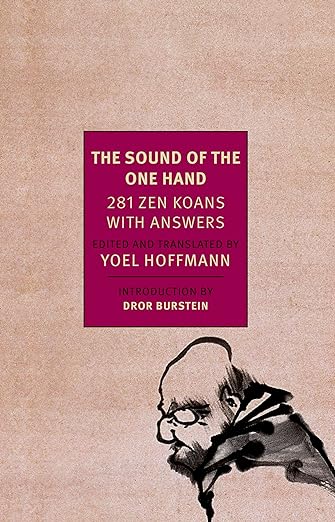
The Sound of One Hand: 281 Zen Koans with Answers. Translation, research and commentary by Joel Hoffmann. Introduction by Dror Burstein. NRYB, 2016, 304 pages. VSCL, Paperback.

There are 144 koan cases, starting on page 75. The full text for each case is followed by possible acceptable answers or responses to the koan. The first 74 pages are very brief questions and answers regarding 137 other cases, without the full text for each case. Therefore, the total cases discussed are 281 koan cases. I have indexed only 148 Cases.

Indexed by Michael P. Garofalo.

Subject Index to the Sound of One Hand 148 Koans. PDF, 10/26/2023, 30 pages.

Case Number List to the Sound of One Hand 148 Koans. PDF, 10/26/2023, 6 pages.

Case Title List to the Sound of One Hand 148 Koans. PDF, 10/26/2023, 6 pages.


Subject Index to 1,975 Zen Buddhist Koans
Indexing and webpage by Michael P. Garofalo.
578 pages, December 28, 2024, PDF


Buddhism: Bibliography, Links, Information, Resources
. Compiled by Michael P. Garofalo.


Taoism: Bibliography, Links, Resources, Information. Compiled by Michael P. Garofalo.


Wednesday, March 11, 2026

Give Up Learning


The Fireplace Records, Chapter 11


The student asked, "How can I best pursue the Buddhist Way?"

The Master said, "Don't give up learning."  

The student said, "But don't all the masters in the sets of Chan koan collections tells us not to think, not to read, not to have intellectual or literary quibbles, to let go of body and mind, to free yourself from the tainted worship of scriptures, to stop reasoning using only dualistic logical viewpoints, to introspect and intuit, to give up the pursuit of knowledge and scholarship, to stop judging between right and wrong, to focus on emptiness?"

The Master said, "It is true that for the illiterate person listening and seeing are more fundamental in their lives than other learning methods.  Cutting Nansen's cat in half, hitting a student hard with a cane, or yelling at someone are dramatic teaching encounters. However, I only know now how that person thought or acted or chose not to think or felt by reading what some scholar historian wrote down about them.  In some ways, "The Buddha" is just a bunch of footnotes on awakened and compassionate living."

The Master continued, "Increasing your learning is like adding gathered firewood to cut up and dry for later use.  Then, when you need wood for cooking or heating you will have some resources at hand.  To learn more by studying scriptures or introspecting koans is like adding a new log to a new fire in the Fireplace of Your Spirit.  I still believe that guided book learning is very beneficial when pursuing the Buddhist Way.  Indeed, other methods for "learning" are possible, but book learning appeals strongly to some people and is an effective method for helping them become more like the Buddha."


The Student's Considerations

Logic requires both true and false. 
Seek the true, valid, accurate, sensible, reasonable, practical,
   most probable, beautiful, fair, and useful.
Face the false and deal with it. Know what is false. 
There are limits to reasoning and limits to introspection. 
Figure it out in terms of your life choices today. 
Stupidity and ignorance won't necessarily lighten
   your worries or troubles. 
Learning takes a lifetime of effort.
There are a number of ways to learn.
Book learning, scholarship, spiritual literature,
   writing, reading, research, comparisons, and
   intellectual endeavors are good ways to learn
   for some people on a spiritual quest.  


Tao Te Ching by Lao Tzu

Chapter 20

"Give up learning, and put an end to your troubles.
Is there a difference between yes and no?
Is there a difference between good and evil?
Must I fear what others fear? What nonsense!
Other people are contented, enjoying the sacrificial feast of the ox.
In spring some go to the park, and climb the terrace,
But I alone am drifting, not knowing where I am.
Like a newborn babe before it learns to smile,
I am alone, without a place to go.
Others have more than they need, but I alone have nothing.
I am a fool. Oh, yes! I am confused.
Others are clear and bright,
But I alone am dim and weak.
Others are sharp and clever,
But I alone am dull and stupid.
Oh, I drift like the waves of the sea,
Without direction, like the restless wind.
Everyone else is busy,
But I alone am aimless and depressed.
I am different.
I am nourished by the great mother."
-  Translated by Gia-fu Feng and Jane English, 1989, Chapter 20  


"Get rid of "learning" and there will be no anxiety.
How much difference is there between "yes" and "no"?
How far removed from each other are "good" and "evil"?
Yet what the people are in awe of cannot be disregarded.
I am scattered, never having been in a comfortable center.
All the people enjoy themselves, as if they are at the festival of the great sacrifice,
Or climbing the Spring Platform.
I alone remain, not yet having shown myself.
Like an infant who has not yet laughed.
Weary, like one despairing of no home to return to.
All the people enjoy extra
While I have left everything behind.
I am ignorant of the minds of others.
So dull!
While average people are clear and bright, I alone am obscure.
Average people know everything.
To me alone all seems covered.
So flat!
Like the ocean.
Blowing around!
It seems there is no place to rest.
Everybody has a goal in mind.
I alone am as ignorant as a bumpkin.
I alone differ from people.
I enjoy being nourished by the mother."
-  Translated by Charles Muller, 1891, Chapter 20  


"Cease learning, no more worries
Respectful response and scornful response
How much is the difference?
Goodness and evil
How much do they differ?
What the people fear, I cannot be unafraid
So desolate! How limitless it is!
The people are excited
As if enjoying a great feast
As if climbing up to the terrace in spring
I alone am quiet and uninvolved
Like an infant not yet smiling
So weary, like having no place to return
The people all have surplus
While I alone seem lacking
I have the heart of a fool indeed so ignorant!
Ordinary people are bright
I alone am muddled
Ordinary people are scrutinizing
I alone am obtuse
Such tranquility, like the ocean
Such high wind, as if without limits
The people all have goals
And I alone am stubborn and lowly
I alone am different from them
And value the nourishing mother"
-  Translated by Derek Linn, 2006, Chapter 20 


唯之與阿, 相去幾何.
善之與惡, 相去若何.
人之所畏, 不可不畏.
荒兮其未央哉.
衆人熙熙.
如享太牢.
如春登臺.
我獨怕兮其未兆, 如嬰兒之未孩.
儽儽兮若無所歸.
衆人皆有餘, 而我獨若遺.
我愚人之心也哉, 沌沌兮.
俗人昭昭.
我獨昏.
俗人察察.
我獨悶悶.
澹兮其若海.
飂兮若無止.
衆人皆有以.
而我獨頑似鄙.
我獨異於人,而貴食母.
-  Chinese characters, Tao Te Ching, Chapter 20


wei chih yü a, hsiang ch'ü chi ho.
 shan chih yü wu, hsiang ch'ü jo ho.
 jên chih so wei, pu k'o pu wei.
 huang hsi ch'i wei yang tsai.
 chung jên hsi hsi.
 ju hsiang ta lao.
 ju ch'un têng t'ai.
 wo tu p'o hsi ch'i wei chao, ju ying erh chih wei hai.
 lei lei hsi jo wu so kuei.
 chung jên chieh yu yü, erh wo tu jo yi.
 wo yü jên chih hsin yeh tsai, t'un t'un hsi.
 su jên chao chao.
 wo tu hun.
 hun su jên ch'a ch'a.
 wo tu mên mên.
 tan hsi ch'i jo hai.
 liu hsi jo wu chih.
 chung jên chieh yu yi.
 erh wo tu wan ssu pi.
 wo tu yi yü jên, erh kuei shih mu.
 -  Wade-Giles Romanization, Tao Te Ching, Chapter 20  

 
"Leave off fine learning! End the nuisance
Of saying yes to this and perhaps to that,
Distinctions with how little difference!
Categorical this, categorical that,
What slightest use are they!
If one man leads, another must follow,
How silly that is and how false!
Yet conventional men lead an easy life
With all their days feast days,
A constant spring visit to the Tall Tower,
While I am a simpleton, a do-nothing,
Not big enough yet to raise a hand,
Not grown enough to smile,
A homeless, worthless waif.
Men of the world have a surplus of goods,
While I am left out, owning nothing.
What a booby I must be
Not to know my way round,
What a fool!
The average man is so crisp and so confident
That I ought to be miserable
Going on and on like the sea,
Drifting nowhere.
All these people are making their mark in the world,
While I, pig-headed, awkward,
Different from the rest,
Am only a glorious infant still nursing at the breast."
-  Translated by Witter Bynner, 1944, Chapter 20 


"Renounce knowledge and your problems will end.
What is the difference between yes and no?
What is the difference between good and evil?
Must you fear what others fear?
Nonsense, look how far you have missed the mark!

Other people are joyous,
as though they were at a spring festival.
I alone am unconcerned and expressionless,
like an infant before it has learned to smile.

Other people have more than they need;
I alone seem to possess nothing.
I am lost and drift about with no place to go.
I am like a fool, my mind is in chaos.

Ordinary people are bright;
I alone am dark.
Ordinary people are clever;
I alone am dull.
Ordinary people seem discriminating;
I alone am muddled and confused.
I drift on the waves on the ocean,
blown at the mercy of the wind.
Other people have their goals,
I alone am dull and uncouth.

I am different from ordinary people.
I nurse from the Great Mother's breasts."
-  Translated by John H. McDonald, 1996, Chapter 20 


"Suprime el adoctrinamiento y no habrá preocupaciones.
¿Qué diferencia hay entre el sí y el no?
¿Qué diferencia hay entre el bien y el mal?
¡El dicho “lo que otros evitan, yo también deberé evitar”
cuán falso y superficial es!
No es posible abarcar todo el saber.
Todo el mundo se distrae y disfruta,
como cuando se presencia un gran sacrificio,
o como cuando se sube a los jardines de una torre en primavera.
Sólo yo doy cabida a la duda,
no copiando lo que otros hacen,
como un recién nacido que aún no sabe sonreír.
Como quien no sabe a dónde dirigirse,
como quien no tiene hogar.
Todo el mundo vive en la abundancia,
sólo yo parezco desprovisto.
Consideran mi mente como la de un loco
por sentir umbrías confusiones y críticas.
Todo el mundo brilla porque solo las luces buscan,
sólo yo me atrevo a transitar por las tinieblas.
Todo el mundo se conforma con su felicidad,
sólo yo me adentro en mi depresión.
Soy como quien deriva en alta mar,
voy contra la corriente sin un rumbo predestinado.
Todo el mundo es puesto en algún uso;
sólo yo soy un ermitaño intratable y aburrido.
Sólo yo soy diferente a todos los demás
porque aprecio a la Madre Naturaleza que me nutre."
-  Translation from Wikisource, 2013, Capitulo 20  


"Give up learning, and you will be free from all your worries.
What is the difference between yes and no about which the rhetoricians have so much to say?
What is the difference between good and evil on which the critics never agree?
These are futilities that prevent the mind from being free.
Now freedom of mind is necessary to enter into relation with the Principle.
Without doubt, among the things which common people fear, there are things that should be feared; but not as they do, with a mind so troubled that they lose their mental equilibrium.
Neither should one permit oneself to lose equilibrium through pleasure, as happens to those who have a good meal or view the surrounding countryside in spring from the top of a tower with the accompaniment of wine, etc.).
I, the Sage, seem to be colourless and undefined; neutral as a new-born child that has not yet experienced any emotion; without design or aim.
The common people abound in varied knowledge, but I am poor having rid myself of all uselessness and seem ignorant, so much have I purified myself.
They seem full of light, I seem dull.
They seek and scrutinize, I remain concentrated in myself.
Indeterminate, like the immensity of the oceans, I float without stopping.
They are full of talent, whereas I seem limited and uncultured.
I differ thus from the common people, because I venerate and imitate the universal nourishing mother, the Principle."
-  Translated by Derek Bryce, 1999, Chapter 20 


A typical webpage created by Mike Garofalo for each one of the 81 Chapters (Verses, Sections) of the Tao Te Ching (Daodejing) by Lao Tzu (Laozi) includes 25 different English language translations or interpolations for that Chapter, 5 Spanish language translations for that Chapter, the Chinese characters for that Chapter, the Wade-Giles and Hanyu Pinyin transliterations (Romanization) of the Mandarin Chinese words for that Chapter, and 2 German and 1 French translation of that Chapter.  Each webpage for each one of the 81 Chapters of the Tao Te Ching includes extensive indexing by key words, phrases, and terms for that Chapter in English, Spanish, and the Wade-Giles Romanization.  Each webpage on a Chapter of the Daodejing includes recommended reading in books and websites, a detailed bibliography, some commentary, research leads, translation sources, a Google Translate drop down menu, and other resources for that Chapter.   

Chapter 20, Tao Te Ching by Lao Tzu


Chapter and Thematic Index (Concordance) to the Tao Te Ching by Lao Tzu


English Language Daodejing Translators' Source Index


Spanish Language Daodejing Translators' Source Index


Ripening Peaches: Taoist Studies and Practices


Taoism: A Selected Reading List


Related Links, Resources, References


Refer to my Cloud Hands Blog Posts on the topic of Koans/Dialogues.
Brief Spiritual Stories, Dialogues, and Encounters
Zen Buddhist Koan Collections
Bibliography, Quotations, Notes, Resources

Research by Michael P. Garofalo

The Fireplace Records By Michael P. Garofalo


25 Steps and Beyond:
The Collected Works of Mike Garofalo


Tuesday, February 10, 2026

Zen Koan Books II


Zen Koans, Testing Verses, Mondos, Dialogues, Stories
Bibliography, Quotations, Notes, Resources
Compiled by Michael P. Garofalo

Here is a list of the books I own and have used to "study" the collections of recorded Taoist/Chan/Zen teaching examples.  These collections of brief spiritual stories and questions have been available in English language translations and commentaries since the 1960's. 

These popular "Koan Collections" include "Cases" of brief spiritual conversations, anecdotes, curious questions and answers, brief stories, dialogues, reports of puzzling encounters, tall tales, aphorisms, tests of basic understanding, pop quizzes, jokes, Dharma talks, poetry, summaries, etc.  

I am interested in research in "Koan Collections" primarily from a literary, scholarly, philosophical, educational, and historical viewpoint.  Taoist/Chan/Zen religious practices, attitudes, and training methods regarding koans cannot be ignored. Finally, I will share some of my own phenomenological experiences while dealing with the ideas, or no-mind non-ideas, of this enchanting Zen koan nexus. 

You can purchase all of these books for under $500.  My membership in the Dharma Rain Temple in Portland, Oregon, a Soto Zen Buddhist Sangha, costs me $30.00 per month.  Learning requires monthly financial commitments, both in support of my own intellectual and spiritual progress, and in support of the work of others spreading the Good Dharma as authors or as local priests and lay teachers.    

Here are the books I have used for trying to integrate and enrich my life with a study of these spiritual practices: Koans, Stories, Dialogues, Mondos, Testing Verses, Riddles, Taoist/Chan/Zen Directness, Non-Sequiturs, immediacy, Checking Verses, spontaneity, quiet sitting, martial arts, monks living together, lay Sanga members, etc:


1. Book of Equanimity/Serenity, 100 Koans
2. Blue Cliff Record, Hekiganroku, 100 Koans
3. Gateless Barrier, Mumonkan, 48 Koans
4. Dogen's Koans, 300 Koans
5. How to Study Koans, Mondos, and Checking Verses
6. Other Koan Collections
7. Related Links, Resources, References


1. Book of Equanimity/Serenity, 100 Koans

The Book of Equanimity: Illuminating Classic Zen Koans.  Commentary and Introduction by Gerry Shishin Wick, Roshi, Ph.D.  Roshi Wick was a Dharma Heir of Hakuyu Taizan Maezumi (1931-1995). The text was translated from the Japanese to English by Dana Fraser and Maezumi Roshi.  Foreword by Bernie Glassman.  Wisdom Publications, 2005, 360 pages.  100 Koans. VSCL, paperback.  


Book of Serenity: One Hundred Zen Dialogues.  Translation and commentary by Thomas Cleary.  Shambhala, 2005, 512 pages.  100 Koans. VSCL, paperback.


Book of Serenity  By Joan Sutherland, Roshi


2. The Blue Cliff Records (Pi Yen Lu, Hekiganroku)
    100 Koans 


In the Sung Dynasty (960-1279) Zen flourished in China.  Zen Master Xuedou Zhongxian (Jap. Setcho) (980-1052) sorted through hundreds of Yulu collections of encounter dialogues, and came up with 100 good examples, or Cases, for Zen training purposes.  His compilation was called The One Hundred Odes.   

Odes to a Classic Hundred Standards by Xuedou Zhongxian

The Chinese Zen Master Yuanwu Kegin (Jap. Engo) (1063-1135) revised The One Hundred Odes.  He added introductions/prefaces for each Case, added some all the recapitulation verses, added notes and added comments.  After his efforts, his written document came to be titled The Blue Cliff Record, Pi Yen Lu, Hekiganroku by later users.   

Blue Cliff Record - Wikipedia 

Directory of Commentaries for Each Case of the Blue Cliff Record.
By Matthew Juksan Sullivan.  


Two Zen Classics: Mumonkan and Hekiganroku. Translated with commentaries by Katsuki Sekida. Edited and introduced by A. V. Grimstone. New York, Weatherhill, 1977. Index, 413 pages. ISBN: 0834801302. 100 + 250 Koans. Extensive, detailed, and useful notes for each Case in both books.  VSCL, Paperback. 


The Garden of Flowers and Weeds: A New Translation and Commentary on the Blue Cliff Record.  By Matthew Juksan Sullivan, Roshi.  Monkfish Pubs., 2021, 580 pages.  Index, glossary, bibliography, name lists, appendices.  VSCL, Hardbound.  


The Blue Cliff Record.  Translated with commentary and notes by Thomas Cleary and J. C. Cleary. Foreword by Taizan Maezumi Roshi. Boston, Shambhala, 2005. Glossary, biographies, bibliography, 648 pages. ISBN: 9781590302323. VSCL, Paperback.  Online Bootleg


3. Gateless Barrier, Mumonkan, 48 Koans


The Gateless Barrier: Zen Comments on the Mumonkan.
By Zenkai Shibayama. Shibayama Roshi (1894-1974). Translated by Sumiko Kudo. Introduction by Shibayama Roshi. Preface by Kenneth W. Morgan, Colgate University. Boston, Shambhala, 2000. Glossary, index, 361 pages. First compiled with commentary, published in 1228, by Zen Master Mumon Ekai (1183-1260) [Wumen Huikai]. Outstanding 
teishos (comments, explanations, reflections) by Shibayama Roshi on each of Mumon Ekai's tripartite approach: koan case, commentary, and poem (capping verse).  The Gateless Barrier, a path of no-gate, is expressed in 48 Cases. VSCL, Paperback.


Two Zen Classics: Mumonkan and Hekiganroku. Translated with commentaries by Katsuki Sekida. Edited and introduced by A. V. Grimstone. New York, Weatherhill, 1977. Index, 413 pages. ISBN: 0834801302. 100 Koans. VSCL, Paperback.


Passing Through the Gateless Barrier: Koan Practice for Real Life. By Guo Gu. Shambhala, 2016, 440 pages. VSCL, Paperback.  


The Gateless Gate: The Classic Book of Zen Koans. Commentary and translation by Koun Yamada. Foreword by Ruben L. F. Habito. Wisdom Publications, 2004. 336 pages. 


4. Dogen's Koans, 301 Koans


The True Dharma Eye: Zen Master Dōgen's Three Hundred Koans. Translated by Kazuaki Tanahashi and John Daido Loori. Commentary and verse by John Daido Loori. Boston, Shambhala, 2009. Index of koans, glossary, biographical, lineage charts, notes, 540 pages. VSCL, Paperback.


Master Dogen's Shinji Shobogenzo: 301 Koan Stories.  Translation and commentary by Gudo Nishijima.  Edited by Michael Luetchford and Jeremy Pearson.  2020, 397 pages.  VSCL, Amazon Kindle EBook is hard to use.


5. How to Study Koans, Mondos, and Checking Verses


Sitting with Koans: Essential Writings on Zen Koan Introspection.  Edited by John Daido Loori.  Introduction by Tom Kirchner.  Wisdom Publications, 2005, 368 pages.  VSCL - Used paperback.   


The Zen Koan: Its History and Use in Rinzai Zen.  By Isshu Miura and Ruth Fuller Sasaki.  Harper Perennial, 1966, 176 pages.  VSCL, Paperback.  


Through Forests of Every Color: Awakening with Koans.  By Joan Sutherland.  Shambhala, 2022, 208 pages.  VSCL, Paperbound.  


The Record of Linji.  Edited by Thomas Yuho Kirchner.  Translations by Ruth Fuller Sasaki.  Nazan Library of Asian Religion and Culrture #20.  Linji Yixuan (died 866 CE). University of Hawaii Press, 2008, 520 pages. VSCL, Paperback.


Introduction to Zen Koans: Learning the Language of Dragons.  By James Ishmael Ford. Foreword by Joan Halifax.  Wisdom Publications, 2018, 264 pages.  VSCL, Paperback.


The Sound of One Hand: 281 Zen Koans with Answers.  Translation and commentary by Yoel Hoffmann.  Introduction by Dror Burstein.  NRYB, 2016, 304 pages.  VSCL, Paperback.


Bring Me the Rhinoceros: And Other Zen Koans That Will Save Your Life. By John Tarrant. Boston, Shambhala, 2008. Notes, 192 pages. VSCL, Paperback. 


6. Other Koan Collections


Transmission of Light: Zen in the Art of Enlightenment.  By Zen Master Keizan.  Translated with commentary and notes by Thomas Cleary. Shambhala, 2002, 240 pages.  53 Biographical Stories/Cases.  VSCL, Paperback.


Entangling Vines: A Classic Collection of Zen Koans.  Translated with commentary by Thomas Yuho Kirchner.  Introduction of Ueda Shizuteru.  Wisdom, 2013, 232 pages.  VSCL, Amazon Kindle EBook. 


Opening a Mountain: Koans of the Zen Masters. By Steven Heine. Oxford University Press, 2004, 200 pages. VSCL, Paperback. 


The Fireplace Records By Michael P. Garofalo


Cracking the Code of the Zen Koan: A Five Volume Zen Koan Anthology.  Compiled by Stephen Wolinsky.  E-Kindle Book, 2021, 676 pages.  VSCL, Kindle E-Book.


Collection of Stone and Sand (Shaseki-shu).  A Koans/Parables collection by Zen Teacher Muju (the "non-dweller") from circa 1275 CE.  And, cases from more recent anecdotes of Zen monks.


The Record of Empty Hall: One Hundred Classic Koans. Translated with commentary by Dosho Port. Shambhala, 2021, 320 pages. VSCL, Paperback. 


The Iron Flute: 100 Zen Koans.  Genro Oryu.  Translated by Ruth Stout McCandlesss.  Wisdom, 2004, 153 pages. VSCL, Paperback. 


Zen Flesh and Zen Bones: A Collection of Zen and Pre-Zen Writings. Translated and compiled by By Paul Reps and Nyogen Senzaki. Tuttle Publishing, Flaps edition, 1998. First published in 1957.  211 pages. The Gateless Gate (Mumonkan) was transcribed by Nyogen Senzaki (1876–1958) and Paul Reps (1895–1990) in 1934, and appeared in in "Zen Flesh, Zen Bones, 1958" pp. 109-161. VSCL, hardbound and paperback. 101 Stories/Koans.


Zen's Chinese Heritage: The Masters and Their Teachings.  By Andy Ferguson.  Wisdom Publications, 2000, 518 pages. Index, charts, notes, tables.  VSCL, Paperback.


7. Related Links, Resources, References

Refer to my Cloud Hands Blog Posts on the topic of Koans/Dialogues.
Zen Koans, Testing Verses, Mondos, Dialogues, Stories
Bibliography, Quotations, Notes, Resources
Compiled by Michael P. Garofalo

The Fireplace Records By Michael P. Garofalo