Showing posts with label Ease. Show all posts

Tuesday, October 22, 2024

Why I Don't Practice With a Chromatic Harmonica


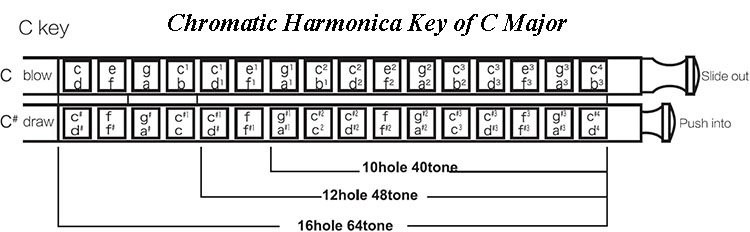
I have very little experience with using a chromatic harmonica. I have purchased two chromatic harmonicas in the Key of C Major, 12 holes, 48 tones/notes, in the past. I have considerable experience with diatonic harmonicas.

After playing the chromatic harmonica for a year, after studying, learning, and using the different layouts for blow/draw notes/holes (Richter vs Solo), after listening to the different sound of the diatonic and chromatic, after sensing the different feel of the size and shape of these two types of harmonicas, and after experimenting with the slide, etc.; I've come to a conclusion. I have decided to focus on playing, learning, and advancing my musical skills in using only a diatonic harmonica.

I have decided not to play a chromatic harmonica anymore. Why?

All chromatics are much larger and heavier than a diatonic. They are considerably less portable than a Hohner Thunderbird or Hohner Rocket diatonic. Most good chromatics have 12 or 16 holes, and diatonics have 10 holes. A typical chromatic is not a carry in your pocket anywhere harmonica, they are more a carry in your backpack musical instrument.

A chromatic, in my opinion, does not play chords as well as a diatonic harmonica.

If you can't manage the chromatic's slide well, then a chromatic can sound really bad. A diatonic is more forgiving of mistakes.

I do enjoy experimenting with a wider ranges of notes/sounds available on the chromatic harmonica vs a diatonic harmonica (48 notes vs 20 notes without bends or overblows); however, I find that using my decent electronic MIDI keyboard offers vastly more experimental options for an adventuresome sound explorer.

Good chromatic harmonicas are typically more expensive than good diatonic harmonicas. Some good chromatic models cost from $150.00 - $250.00 or more. A decent diatonic harmonica can be purchased for under $50.00.

Both chromatic and diatonic harmonicas are available in a variety of different keys, both in standard and low tuned. However, most good chromatics come in the Key of C Major. And, with a higher degree of skill, you can play in many keys on one C Major Key chromatic. However, in my opinion, it is just far easier to play a diatonic in the key you want to play, rather than mastering playing in different keys on one chromatic harmonica.

It is easier to bend or overblow on a diatonic harmonica, rather than on a chromatic without using the slider. Seems to me that the degree and control of notes with bends and overblows, excluding slider functions, is more capable of refinement on a diatonic.

Chromatics are favored by classical and jazz harmonica musicians. Diatonics are favored by blues, rock, folk, and country musicians. I play tunes I enjoy the most being played on a diatonic harmonica.

Using the chromatic slider properly is a refined skill requiring considerable practice, and adds another challenging layer of refined learning and practice demands for typical home solo players.

In is far easier to us a variety of cupping techniques on a diatonic, rather than on the larger chromatic.

Shifting between chromatic and diatonic versions can be confusing for beginners like me. Better to focus on playing just one type of musical instrument. I chose the diatonic harmonica.


I own a EastTop Forerunner Chromatic Harmonica in the Key of C Major LOW. 12 Holes, 48 Tones, Chromatic Mouth Organ Harmonica, $125.00. VSCL.

I own a EastTop Forerunner Chromatic Harmonica in the Key of C Major. 12 Holes, 48 Tones, Chromatic Mouth Organ Harmonica, $52.00. VSCL.
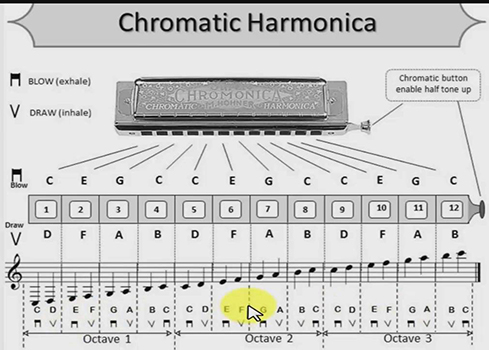
 

Chromatic Harmonica in the Key of C Major


Saturday, February 18, 2023

Limping Towards Recovery


I was making steady progress on recovery from my cryo-balloon heart ablation on 2/2/2023.  I was walking for over 6,000 Steps per day, practicing my Taijiquan, and doing some light stretching.  

Last Sunday, while getting up carelessly and quickly from a 14 inch high low bench, I twisted my right leg.  Immediate Pain!  My right knee buckled and hurt, my hamstring hurt, my quadriceps hurt.  I could not walk without serious pain.  I was slowly limping around the house.  I began treatment: rest, ice, compression, gentle massage, elevation of my right leg.  Then, I sprained my right foot on Tuesday.  More pain, more limping, more discouragement.  

This is a rare series of leg injuries for me.  Very discouraging and disappointing setback to my normal exercise routines, and my heart recovery.  I've not injured my hamstrings or quadriceps since my baseball playing days when I was 40.  

I am now studying and implementing the recommendations for slow recovery found in the excellent book:

Built from Broken. A Science-Based Guide to Healing Painful Joints, Preventing Injuries, and Rebuilding Your Body. By Scott Hogan. Salt Wrap, 2021, index, reference, appendices, 341 pages. VSCL. 

Strength Training for Seniors


For Spiritual Encouragement, I am rereading and studying the valuable book:

Light on Life: The Yoga Journey to Wholeness, Inner Peace, and Ultimate FreedomBy B.K.S. Iyengar.  With John J. Evans and Douglas Abrams.  Rodale Books, 2005.  Index, 282 pages.  ISBN: 1594862486.  VSCL.  Contrary to some critics of popularized "gym" yoga, blaming Iyengar; his books reveal his spirituality through the practice of yoga postures, breath work, self-discipline, positive psychology, and meditation.  In short, Raja Yoga and Hatha Yoga combined.  

Spiritual Practices for Self-Transformation

How to Live a Good Life: Advice from Wise and Respected Persons


I checked out three books from the Fort Vancouver Regional Library System:  

Tibetan Yoga: Magic Movements of Body, Breath and Mind.  By Alejandro Chaoul.  This yoga practice requires instruction from a qualified teacher.  The book provides theory, ancient texts, and very brief descriptions of the movements.  There are no pictures or illustrations of the specific movements.  The use of shaking the body between movements, asanas, and postures are similar to Qigong systems.  For experienced Yogis.

Accessible Yoga: Poses and Practices for Every Body.  By Jivana Heyman.  Beginner's Yoga and for people with health problems.  Good photos to illustrated modified poses.  

Both books tended to stress the incompleteness and inadequacy of popular Western hatha yoga practice in gyms and yoga studios.  They take issue with the goals of flexibility and athleticism in common yoga; and, its not making yoga accessible to different body types or sub-cultures, or for those people seeking spiritual development via Yoga practices.  

In my view, different strokes for different folks.  I'm OK with slim, young, beautiful, athletic, Christian females doing rigorous 'gym' yoga; or, male lamas doing Tibetan yoga on three month retreats; or, old Bigger men, like me, seeking a modicum of fitness without injury via yoga and strength training.  Some folks are into the 'spiritual' dimensions of Raja Yoga, others not so much so.  Everyone benefits from these Yoga practices if they Practice Daily.  

I've been doing some light stretching using a chair or table for support.  

Chair Yoga: Sit, Stretch, and Strengthen Your Way toa Happier, Healthier You.  By Kristin McGee.  William Morrow, 2017. Index, 271 pages. Basic instruction in many exercises you can do while supporting yourself with a chair.  There are numerous books on the market for Chair Yoga.  For beginners and seniors needing alternatives.  VSCL. 

Yesterday, I felt comfortable and safe enough to resume walking, Taijiquan, and gentle stretching, and even some strength training.  I walked 3,400 Steps.  My goal is to walk over 3.500 to 5,000 Steps per day for the next five days.  


Sunday, May 31, 2020

Natural Movement Principles


Lately, I've been reading a book by Tara Stiles titled "Guiding Strala: The Yoga Training Manual.  To Ignite Freedom, Get Connected, and Build Radiant Health and Happiness.  By Tara Stiles.  Carlsbad, California, Hay House Inc., 2017.  Index, 361 pages.  ISBN: 978-1401948108.  The Fort Vancouver Regional Libraries supply me with plenty of good books, CDs, VCDs, ebooks, etc. 

In Guiding Strala, she outlines "11 Principles of Natural Movement" (pp.69-85)  These 11 Principles are then discussed throughout the book mostly in the context of Vinyasa style yoga.

These Principles can also be found in Tai Chi Chuan theory and practices.  Qigong and Feldenkrais practices and theory use some of same concepts. 

"So here they are: 11 principles to natural movement that will get you moving easily and powerfully, without tiring, in everything you do."

1.  Soften
2.  Establish Your Breath-Body Connection
3.  Lead From Your Middle
4.  Use Your Opposites
5.  Use Momentum
6.  Use Your Whole Body
7.  Open the Door, Close the Door
8.  Conserve Energy
9.  Sensitize
10.  Focus on Body Position
11.  Play

For example, Principle 7 (Open the Door, Close the Door): "Always move into challenges from where you are comfortable and open. Always open the door to movement first so you don't have to force your way through."  Relax while learning new movements, be open, don't rush, welcome yourself in.  Don't let impatience, immaturity, or pride close the door to your progress.  Overly stressful exertion, too much effort, or high octane challenges might delay your overall progress and close the door on real progress, benefits, and mastery.  Close the door on dis-ease, and open the door to ease.  Breathing practices (pranayama) use inhaling (opening the door) and exhaling (closing the door) to our benefit and mental-spiritual well-being. Mind-body yoga practices enable us to close the door on unhealthy practices, and open the door to a healthier lifestyle.  [The "Door" metaphor works in many ways.]