Showing posts with label Dialogues. Show all posts

Saturday, February 28, 2026

Mt. Adams Emerges in the West

The Fireplace Records Case #58

Mt. Adams Emerges in the West


"Master Yellow-Bitterroot Mountain asked me,

'What is the meaning of Old Pahto emerging in the West?'

I lifted my cane and placed it in my mouth, saying nothing.

Later, zany Zen liar that I am, I wrote:

"No minds, no dharmas. No-mind, much Dharma."


Zen Koans: The Fireplace Records
Koans by Mike Garofalo

Zen Koan Collections Studies

Subject Index to 1,975 Zen Buddhist Koans

Reading Wittgenstein 1975-

Buddhism

Taoism

Meetings with Master Chang San-Feng

Philosophy

Quintain Poetry

Mount Adams, Old Pahto, Washington

Pulling Onions


Friday, February 27, 2026

Shifu Miao Zhang Takes A Walk

The Fireplace Records Case #57

Shifu Miao Zhang Takes a Walk


Toju Zenchu brandished his staff before Daoist 

Shifu Miao Zhang and challenged him "Miao 

Zhang, speak and you get whacked with Nanten's

staff. Do not speak and you still get whacked with

Nanten's staff." Shifu Zhang stood up quickly, 

lifted his cane strongly in defense, and quietly

said, "Yunmen's shit stick stinks and Nanten's 

staff is cracked! I am leaving now to take my

evening walk. Goodbye."


Zen Koans: The Fireplace Records
Koans by Mike Garofalo

Zen Koan Collections Studies

Subject Index to 1,975 Zen Buddhist Koans

Reading Wittgenstein 1975-

Buddhism

Taoism

Philosophy

Quintain Poetry

Pulling Onions


Thursday, February 26, 2026

Cutting Through the Wind

The Fireplace Records Case #56


Cutting Through the Wind

Mayoku walked around his old Daoist friend,
Shifu Miao Zhang, three times and then thumped
his staff on the ground. Miao Zhang stood up,
walked around Mayoku once, tapped his cane three
times on the wall, and said "The power of the wind
can topple trees and is gone by morning. My cane
can cut through the wind."

Shifu Miao Zhang


Zen Koans: The Fireplace Records
Koans by Mike Garofalo

Zen Koan Collections Studies

Subject Index to 1,975 Zen Buddhist Koans

Reading Wittgenstein 1975-

Buddhism

Taoism

Philosophy

Quintain Poetry

Pulling Onions


Tuesday, October 14, 2025

The Dumpling Discourse

 The Fireplace Records, Chapter 44


The Dumpling Discourse


It was a hot day in July when Carol and Adolf met in a tea shop in Portland. They sipped iced tea and chatted about Taoism for an hour.

Adolf asked Carol, "What is beyond the Tao?" Carol answered, "Either the Dark Void or preparing hot oatmeal."

Adolf sarcastically replied, "Yunmen is direct, he says '"Dumplings.' You are caught in either/or, dualisms, and straying from the spot!" Carol said "Purported Zen Masters seldom cook."

Adolf raised his right hand, like Gutei, and gave Carol the middle finger. Carol slapped the finger of his right hand.

Adolf got up and went to the toilet. While urinating, like Master Omori Sogen, he was suddenly awakened. While he was away, Carol left for home.

She worked in her home garden. She weeded and watered. She picked two squash. Like the Tao, she grew living beings. She went indoors and cooked some hot oatmeal. She added raisins to the mush. She ate. She smiled. Her dark blue bowl was then empty. She was ordinary and clear mined. 

Comments, Sources, Observations, Koans, Poems, Quips:

Omori Sogen, "Introduction to Zen Training" Tuttle, 2001,2020.

"What is talk transcending the Buddhas and Patriarchs?", Yunmen's translated answers "Sesame Cakes", "Rice cakes", "Dumplings."
See BOS 78, ZE 42, ENT 88, WWSF 348, BCR 77

Gutei's One Finger Zen
BCR 19, BOS 84, DSMS 245, GB 30, SOH 21

If the answer can be 'the oak tree in the courtyard,' then the answer can be 'eating oatmeal with raisins.'

Irrelevant answers are a staple spontaniety of Zen tricksters. 

Some say nonsensical Zen Koan answers are free and natural poety; however, they are often just bad poetry.

Which finger was the "one finger?"

People are Makers, Imitating the Dao - The Great Maker, Doer, Creator.  Sometimes even seeming to go Beyond the Dao.


636 Riddles, Jokes, Witticisms, Humor

Refer to my Cloud Hands Blog Posts on the topic of Koans/Stories. 

Subject Index to 1,975 Zen Buddhist Koans

Zen Buddhist Koans: Indexes, Bibliography, Commentary, Information

The Daodejing by Laozi

Pulling Onions  Over 1,043 One-line Sayings, Quips, Maxims, Humor

Chinese Chan Buddhist and Taoist Stories and Koans

The Fireplace Records (Blog Version) By Michael P. Garofalo

The Spirit of Gardening


Sunday, July 20, 2025

Can You Grasp Emptiness?

The Fireplace Records, Chapter 1

Can You Grasp Emptiness?

One drizzling cold afternoon, Shih-kung and Hsi-tang stopped along the steep trail up to the Temple on Mount Wudang.  They rested while quietly sitting.  Shih-kung picked up a small rock and tossed in down the hill. A short while later, Shih-kung asked Hsi-tang: "Can you grasp emptiness?" Hsing-tang replied: "Yes, I think I can."  Shih-kung continued: "How would you grasp emptiness?"  Using his hand, Hsi-tang then grasped at empty space.  Shih-kung replied: "You are 70% correct, and 30% uncertain." "Then how do you do it?" asked Hsi-tang.  Shih-kung then grasped Hsi-tang's ear and pulled it. Hsi-tang exclaimed "Ouch, your hurting my ear!"  Shih-tang said "You can grasp and hear emptiness only in this way."  Hsi-tang gently rubbed is ear, laughed, and told Shih-kung, "You are a clever devil, Shih-kung, and your diligent practice on your zither has improved your music." 

Hsi-tang then picked up a small rock and tossed it down the canyon.  

Both listened.  Both smiled.


Capping Verse

Opening bell
echoes from the canyon walls 

raindrops on the river.

The sounds of rocks bouncing off rocks;
the shadows of trees traced on trees.

We sit quietly, still.
The canyon river chants,
moving mountains.

The sermon spun on the still point:
dropping off eternity, picking up time;
letting go of self, awakened to Mind.


Can You Grasp Emptiness?  A Dialogue.
By Michael P. Garofalo


- For a insightful discussion of Eihei Dogen's (1250-1253 CE) views on Buddha-Mind, expressions and actions, existence, emptiness, the total exertion of a single thing, thusness, and time read Chapter 4 of "Eihei Dogen: Mystical Realist," by Hee-Jin Kim, 2004.

Another version of the Shih-kung and Hsi-tang dialogue is found on p.134 of Hee-Jin Kim's fine book.

Spiritual Stories and Dialogues

Zen Poetry

Refer to Fireplaces, Stoves, Hearths, Campfires


"There is no such thing as an empty space or an empty time. There is always something to see, something to hear. In fact, try as we may to make a silence, we cannot." - John Cage


The Fireplace Records Compiled with Commentary by Michael P. Garofalo


A Sidewalk Poem by Esther M. Sternberg, M.D. 


Sunday, September 22, 2024

Why Did the Bodhidharma Walk So Far Away?

The Fireplace Records, Chapter 3


The Young Bodhidharma Walks Back to India from China
He did not sit for seven years in a cave.
Where is his Backpack?
Why are his clothes not dirty?
Is he a Fang-shih?


Why Did the Bodhidharma Walk So Far Away? 

Two old friends were resting after morning chores on the farm.  They sat and watched the busy traffic on the dirt road from Wuhan to Huarong. 

Seigen asked Obaku: "What was Master Bodhidharma's intention in walking west from India to China?"

Obaku, a Taoist scholar, answered: "He likely preferred the warmer winters of  Wuhan to the blizzards in Tibet.  Or, he just enjoyed backpacking for great distances back and forth."

Seigen, a Chan man, said: "Really, Obaku, don't you believe he traveled to spread the Buddha Dharma to our Chinese people?"

Obaku replied: "Maybe, but why then did he choose to sit in silence facing a stone wall for seven years in China? How could he help others in so doing? He could have died from such extreme austerities.  And, he could have saved Dazu Huike's arm. He should have spent the time learning to speak, read, write, and teach in Chinese."

Seigen, a bit annoyed, said; "But, Obaku, was he not a great leader at the Shaolin Temple in Luoyang and the Sixth Patriarch of Chan Buddhism?"

Obaku retorted: "He could have been more gracious towards the generous and kind Emperor Wu. Was he not sort of a rough Tibetan hardened fellow, a Foreigner?  His alleged name, "Bodhidharma," seems suspicious to me."

Seigen would not give up, and said: "What? Did not the Bodhidharma bring vital bodily exercises and martial arts to those lazy Shaolin monks?"

Obaku replied: "The Chinese people were doing many longevity exercises and internal alchemy practices a thousand years before the Bodhidharma arrived.  Hua Tuo and He Gong were more influential in this respect for more people."

Seigen said: "The Bodhidharma lived for 150 years to show his great healing powers."

Obaku snorted: "50 years or 150 years ... In the end we all rot in our graves.  Only but a few are reborn as the fictions of legends."

Seigen responded: "Obaku, you are full of harsh judgments today.  I sense a bit much of the judgmental thinking of the Action and Karma brothers of your creed; also, your being rather chauvinistic about our beloved Chinese heritage."

Obaku replied: "You are correct, Seigen!  Too much judging distorts our greater awareness, and threatens wisdom.  Also, I should be more respectful of the Patriarchs and our shared new insights. I'm sorry old friend.  

Seigen said: "You are also correct, Obaku. I must curb my hero worship and simple love of legends.  Anyway, back to some quiet sitting, my brother."

Obaku's daughter brought them both a cup of hot tea.  They sipped in silence.  They listened to the oxen carts rattling by on the road, and watched the many walkers traveling west.  A smattering of being enlightened occurred for both of them.  


Considerations 

Too much sitting stiffens the body-mind.
Even the Bodhidharma made the monks work more.
Many Chan monks distained learning and reading,
and because they could not read.
Beware of overgrown imagination and legends.
Question the scriptures and tales.
Don't read with one eye blind.
Beliefs can disrupt sound judgments.
Without right judgments we cannot flourish.
Friendships close the door to petty arguments.  


Comments, Sources

Refer to Master Dogen's Shinji ShobogenzoCase 10.

Refer to my Cloud Hands Blog Posts on the topic of Koans/Stories. 

The Daodejing by Laozi

Pulling Onions  Over 1,043 One-line Sayings by Mike Garofalo

Chinese Chan Buddhist and Taoist Stories and Koans

Refer Also to Fireplaces, Hearths, Campfires, Stoves


The painting shown at the top of this post is from the book: The Chinese Art Book, p. 182.  It was a famous oil on canvas painting made in 1967 by the artist Liu Chunua.  It is titled: Chairman Mao Goes to Anyuan.   


The Fireplace Records By Michael P. Garofalo


"A monk asked Joshu in all earnestness, "What is the meaning of the Patriarch's coming from the West?"  Joshu said, "The oak tree there in the garden."
- Gateless Barrier, Case 37

"A monk asked Xianglin, "Why did the Patriarch come from the West?" Xianglin said, "Sitting for a long time becomes tiresome."
- Blue Cliff Record, Case 17

A monk asked Master Ma, "Please, directly point out to me the meaning of the coming from the West?" Master Ma replied, "I'm tired today and can't explain it to you."
- Blue Cliff Record, Case 73

A monk asked Master Wei, "What is the meaning of the Patriarch's coming to the West?" Master Wei replied, "Please pass me the meditation cushion."
- Blue Cliff Record, Case 20

Now, I understand that the Bodhidharma traveled from India to China.  He would be coming from the East, and thus traveling and coming in or to a Westerly direction.  He traveled to the West from India by the Silk Road from India to China on foot or horseback; or, he traveled by sea. 

For all of these speakers, living in China, the Bodhidharma never came from the West.  He came from the East.

Maybe the Bodhidharma came from a place in China that was in Western China by the Pacific Ocean and then walked to a place in Eastern China in the mountains.  Then, he would be coming from the West.  No wonder Master Ma was tired of this koan.    

Many Patriarchs, over many centuries, many famous Taoist/Buddhist philosophers and spiritual seekers, traveled from East to West, from West to East, from North to South, and from South to North.  Why?  Pilgrimages by monks between Temples and famous scenery locales was a common practice. People like travel adventures. Monks wanted to study with different famous teachers. Civil and governmental strife and war caused the relocation of many monks. 


Saturday, September 07, 2024

What Transcends Lao Tzu?


The Fireplace Records, Chapter 2


What Transcends Lao Tzu?

Ju-ching and Chang San Feng were hoeing and weeding their garden one cool Spring day around noon. Ju-ching asked: "What transcends Lao Tzu, Confucius, or the Buddhas?" Chang answered: "Here, have a bite of my cold rice." Ju-ching responded: "But, you have not answered my question." Chang replied: "Your quest for knowing is quite admirable, Ju-ching. However, sometimes your thirst for mental matters cannot be satisfied. Here, enjoy a cup of cold water." Ju-ching said: "You think that cold water transcends Lao Tzu?" Chang replied: "Yes, or hot tea. The ordinary is the best scaffolding for transcending. The fruits emerge from trees with strong roots. Find the spring that unceasingly flows to nourish your growing garden." Ju-ching was a little startled and said: " Oh! Ah!" and he became enlightened - for an hour.


Considerations 

Enlightenment comes and goes;
Just don't fret your mind or body.
Fathom your being startled,
Revel in your wonder;
And remain steady on the scaffold,
or you will fall into errors. 
Be Patient! 
A callused palm and dirty fingernails precede a Green Thumb.
Only from the Ground of Somethings,
Can Lao Tzu's true words flourish.  


Comments, Sources

Chang San Feng is regarded as a Immortal; a enlightened man who has lived far over 888 years. He appears and disappears at will at different places around the world, and in different eras. He can incarnate as speaking animals and plants. He is regarded as a shaman, fang-shi, wizard, Taoist master, philosopher, fortune teller, mystic, Taijiquan and Internal Alchemy master, wise elder archetype, popular gift giver, odd dresser, and among the revered patriarchs. I have met with Master Chang San Feng many times.

Master Ju-ching (Rujing) was the Chan Buddhist teacher in China of Eihei Dogen from 1230-1235 CE. 

Refer to the Blue Cliff Record (Hekiganroku), Case 77.

Refer to my Cloud Hands Blog Posts on the topic of Koans. 

The Daodejing by Laozi

Pulling Onions Over 1,043 One-line Sayings by Mike Garofalo

Chinese Buddhist and Taoist Stories and Koans 

Refer to Fireplaces, Stoves, Hearths, Campfires


The Fireplace Records Compiled with Commentary by Michael P. Garofalo


Wednesday, August 21, 2024

Subject Index to the Book of Serenity 100 Zen Buddhist Koans


Book of Serenity 100 Koans (BOS)


Book of Equanimity or Book of Serenity (BOS)

The Book of Serenity (BOS) Book of Equanimity
100 Cases of Brief Stories, Spiritual Encounters, Koans, Wisdom Tales, Sermons, Dialogues, Parables
Compiled and published around 1224 CE.

Indexed by Michael P. Garofalo. Second Draft on August 26, 2023.

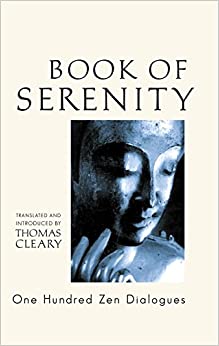
Primary Source for Indexing: The Book of SerenityOne Hundred Zen Dialogues. Translated with commentary by Thomas Cleary, 2005, 512 pages.


Subject Index to Cases in the Book of Serenity (BOS) 100 Koans Collection. Second Draft, August 25, 2023, 26 pages, PDF.

Alphabetical List of Cases in the Book of Serenity (BOS) 100 Koans Collection. Second Draft, August 25, 2023, 4 pages, PDF.

List of Cases by Case Numbers in the Book of Serenity (BOS) 100 Koans Collection. Second Draft, August 25, 2023, 4 pages, PDF.


Subject Index to 1,975 Zen Buddhist Koans and Discourses

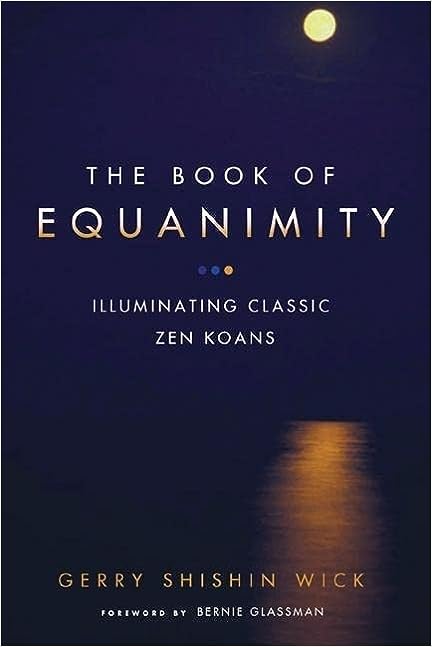
The Book of Equanimity: Illuminating Classic Zen Koans. By Gerry Shishin Wick. Foreword by Bernie Glassman. Boston, Wisdom Publications, 2005. Recommended reading list, list of names index, 331 pages. ISBN: 9780861713875.


Book of Serenity: One Hundred Zen Dialogues. Translation and commentary by Thomas Cleary. Shambhala, 2005, glossary, notes, 463 pages. 100 Koans. VSCL, paperback.


Book of Serenity Translated by Joan Sutherland Roshi and John Tarrant Roshi. "The hundred koans of the Book of Serenity, also translated as the Book of Equanimity, were among those written by twelfth-century Chan teacher Hongzhi Zhengjue. In the thirteenth century, Wansong Xingxiu compiled Hongzhi’s koans and wrote commentaries for each. Although the collection is associated with the Caodong / Soto school, they are also taken up in koan study by Linji / Rinzai practitioners." Online PDF Version.


Shoyoroku (E. Book of Serenity, C. Ts’ung-jung lu) Online version of the Book of Serenity. Congrong Lu.
A collection of 100 koans, originally compiled in the 12th century by Wanshi Shogaku (C. Hung-chih Cheng-chüeh).


Book of Equanimity - Wikipedia 100 Cases. Compiled by Wangsong Zingxiu (1166-1246), and first published in 1224. The book comprises a collection of 100 koans written by the Chan Buddhist master Hongzhi Zengjue (1091-1157), together with commentaries by Wansong. Wansong's compilation is the only surviving source for Hongzhi's koans.


Buddhism: Bibliography, Links, Information, Resources. Compiled by Michael P. Garofalo.


Zen Buddhist Koans and Information: https://www.egreenway.com/buddhism/koansdup1.htm By Michael P. Garofalo.


Saturday, April 22, 2023

The Roshi's Clapping Cell Phone

The Fireplace Records, Chapter 19


The Roshi's Clapping Cell Phone


"What is the sound of one hand clapping? asked Hakuin Ekaku in 1740.

Thousands of monks and householders have introspected this famous Zen Koan Case since 1740.  They pounded on tables with one hand, tapped their staff against the floor with one hand, and came up with many wordy replies to reveal the sound of one hand clapping.  

After years of study with Hakuin, after satisfactory revealing the spiritual and psychic impact of the koans, after achieving enlightenment, and after following the Dharma Path thereafter, Hakuin would award his close friend/student, his Dharma heir, with a painting of a whisk and dragon staff.


Of course, the mind does the clapping itself, patting ourselves on the back with one hand, cheering us on, applauding our daily efforts.
Bravo! With one hand or two hands clapping, no matter, show your respect and appreciation for all our good work.  

Haikuin painted with one hand, and applauded his student's efforts and achievements.   

My Roshi has a Apple cellphone.  His ring tone is the sound of clapping. Naturally, he holds the phone with one hand.  

I applaud his Dharma efforts!  He needs a pat on the back.  


A Student's Considerations:

Different centuries, different ideas and things at hand.
Applaud, clap for, cheer on the good efforts of everyone.  
Talking is the father of metaphors.
Practical realists would say that a single hand makes no clapping sound; but, poets and mystics favor playing with entangling expressions. And,
we all hear the sound and know the direct meaning of a pat on the back.
Occasionally, the wrong answer is revealing in new ways. 
Even if a pat on the back is not forthcoming, keeping working.      


Related Links, Resources, References


Koans:


Refer to my Cloud Hands Blog Posts on the topic of Koans/Dialogues.

The Daodejing by Laozi    Best? 

Pulling Onions  Over 1,043 One-line Sayings by Mike Garofalo

Chinese Chan Buddhist and Taoist Stories and Koans

Taoism

Buddhism

Fireplaces, Stoves, Campfires, Kitchens, Pots, Firewood

Chinese Art

Tai Chi Chuan and Qigong

Meditation Methods

Zen Koan Books I Use

Koan Database Project

Brief Spiritual Lessons Database Project: Subject Indexes


Sparks: Brief Spiritual Lessons and Stories

Matches to Start a Kindling of Insight
May the Light from Your Inner Fireplace Help All Beings
Taoist, Chan Buddhist, Zen Buddhist, Philosophers
Catching Phrases, Inspiring Verses, Koans, Meditations
Indexing, Bibliography, Quotations, Notes, Resources
Research by Michael P. Garofalo

The Fireplace Records
By Michael P. Garofalo