Showing posts with label Effort. Show all posts

Friday, June 20, 2025

Shifu Mio Zhang's "Gradual Enlightenment"

 The Fireplace Records, Chapter 21


Shifu Mao Zhang's "Gradual Enlightenment


Xita asked Shifu Miao Zhang, "What is sudden enlightenment?"  Shifu Miao Zhang threw his staff on the muddy ground. 

Xita asked Miao Zhang, "What is gradual enlightenment?" Shifu Miao Zhang stomped on his staff three times.

Xita said, "Yes! Good!  Your understanding is straightening.  From now on, Miao Zhang, you will need to continue to clean and polish your staff."


Related Links, Resources, References

Koans:

Refer to my Cloud Hands Blog Posts on the topic of Koans/Dialogues.

The Daodejing by Laozi  

Pulling Onions  Over 1,043 One-line Sayings by Mike Garofalo

Chinese Chan Buddhist and Taoist Stories and Koans

Taoism

Buddhism

Fireplaces, Stoves, Campfires, Kitchens, Pots, Firewood

Chinese Art

Tai Chi Chuan and Qigong

Meditation Methods

Zen Koan Books I Use

Koan Database Project

Brief Spiritual Lessons Database Project: Subject Indexes


Subject Index to 621 Zen Buddhist Koans


Sparks: Brief Spiritual Lessons and Stories

Matches to Start a Kindling of Insight
May the Light from Your Inner Fireplace Help All Beings
Taoist, Chan Buddhist, Zen Buddhist, Philosophers
Catching Phrases, Inspiring Verses, Koans, Meditations
Indexing, Bibliography, Quotations, Notes, Resources
Research by Michael P. Garofalo

The Fireplace Records
By Michael P. Garofalo


Wednesday, February 05, 2025

Using Your Time Wisely


The Improvement of Spare Moments
From Pushing to the Front, 1894
By Orrison Swett Marden

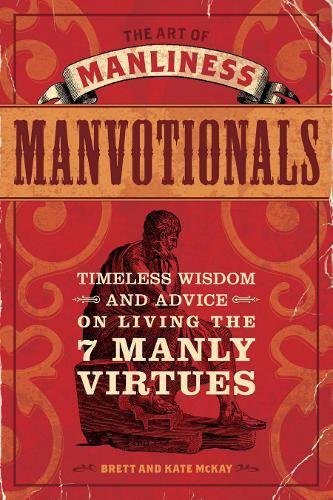
Found in The Art of Manliness - Manvotionals: Timeless Wisdom and Advice on Living the 7 Manly Virtues. By Brett and Kate McKay.  HOW Books, 2011.  272 pages.  Quote: p 87-90.


The Improvement of Spare Moments, Part 1
By Orrison Swett Marden, 1894


"On the floor of the gold-working room, in the United States Mint in Philadelphia, there is a wooden lattice-work which is taken up when the floor is swept, and the fine particles of gold-dust, thousands of dollars' worth yearly, are thus saved.  So every successful man has a kind of network to catch "the raspings and parings of existence, those leavings of days and wee bits of hours" which most people sweep into the waste of life.  He who hoards and turns into account all odd minutes, half hours, unexpected holidays, gaps between times, and chasms of waiting for unpunctual persons, achieves results which astonish those who have not mastered this most valuable secret.  

The days come to us like friends in disguise, bringing priceless gifts from an unseen hand; but if you do not use them, they are borne silently away, never to return.  Each successive morning new gifts are brought, but if we failed to accept those that were brought yesterday and the day before, we become less and less about to turn them in account, until the ability to appreciate and utilize them is exhausted.  Wisely was it said that lost wealth may be regained by industry and economy, lost knowledge by study, lost health by temperance and medicine, but lost time is gone forever.  

"Oh, it's only five minutes or ten minutes till meal-time: there's not time to do anything now," is one of the commonest expressions heard in the family.  But what monuments have been built up by poor boys with no chance, out of broken fragments of time which many of us throw away!  The very hours you have wasted, if improved, might have insured your success.  

The author of "Paradise Lost" was a teacher, Secretary of the Commonwealth, Secretary of the Lord Protector, and had to write his sublime poetry whenever he could snatch a few minutes from a busy life.  John Stuart Mill did much of his best work as a writer while a clerk in the East India House.  Galileo was a surgeon, yet to the improvement of his spare moments the world owes some of its greatest discoveries."  


Monday, October 14, 2024

Dao De Jing, Chapter 6

 Dao De Jing, Laozi

Chapter 6

"The manifestations of Infinity never cease manifesting.
Infinity is the primal creator, the oneness of male and female.
Infinity is the gate though which heaven and earth manifested.
It is invisible to the senses, yet totally permeates all things.
It is inexhaustible and eternally available for any purpose."
-  Translated by John Worldpeace, Chapter 6


"The Tao is called the Great Mother:
empty yet never-ending,
it gives birth to unlimited worlds.
It is always at hand within you.
Use it gently, and without force."
-   Translated by Rivenrock, Chapter 6 


"The spiritual valley can never be extinguished.
It is correctly referred to as the mysteries of the receptive.
The entrance to mysterious receptivity is correctly referred to as
the origin of the whole universe.  
It is continuous and unbroken!
Its usefulness seems to persevere without effort."
-  Translated by Nina Correa, 2005, Chapter 6


"The valley spirit not expires,
Mysterious woman ’tis called by the sires.
The mysterious woman’s door, to boot,
Is called of heaven and earth the root.
Forever and aye it seems to endure
And its use is without effort sure.”
-  Translated by D. T. Suzuki and Paul Carus, 1913, Chapter 6 


"Like the sheltered, fertile valley,
the meditative mind is still,
yet retains its energy.
Since both energy and stillness,
of themselves, do not have form,
it is not through the senses
that they may be found,
nor understood by intellect alone,
although, in nature, both abound.
In the meditative state,
the mind ceases to differentiate
between existences,
and that which may or may not be.
It leaves them well alone,
for they exist,
not differentiated, but as one,
within the meditative mind."
-  Translated by Stan Rosenthal, Chapter 6   


"The concept of Yin is ever present.
It is the Mystic Female from whom
the heavens and the earth originate.
Constantly, continuously, enduring always.
Use her!"
-  Translated by C. Ganson, Chapter 6    


"The valley spirit dies not, aye the same;
The female mystery thus do we name.
Its gate, from which at first they issued forth,
Is called the root from which grew heaven and earth.
Long and unbroken does its power remain,
Used gently, and without the touch of pain."
-  Translated by James Legge, 1891, Chapter 6    
 
 
"The valley spirit dies not, aye the same;
The female mystery thus do we name.
Its gate, from which at first they issued forth,
Is called the root from which grew heaven and earth.
Long and unbroken does its power remain,
Used gently, and without the touch of pain."
-  Translated by Stephen McIntyre, 2009, Chapter 6 
 
 
谷神不死, 是謂玄牝.
玄牝之門.
是謂天地根.
綿綿若存.
用之不勤. 
-  Chinese characters, Chapter 6, Tao Te Ching


ku shên pu ssu, shih wei hsüan p'in.
hsüan p'in chih mên.
shih wei t'ien ti kên.
mien mien jo ts'un.
yung chih pu ch'in.
-  Wade-Giles Romanization, Chapter 6, Tao Te Ching  


"The valley spirit that doesn't die we call the dark womb
as real as gossamer silk and yet we can't exhaust it.
The valley spirit that doesn't die we call the dark womb the dark womb's mouth
we call the source of creation as real as gossamer silk and yet we can't exhaust it."
-  Translated by Red Pine, Chapter 6


"The spirit of the valley does not die
It may be known as the mysterious feminine
The gateway of the mysterious feminine
May be known as the source of heaven and earth
Endless, continuous, seeming to exist
To practice this is not effort."
-  Translated by Bradford Hatcher, 2005, Chapter 6  


"The unlimited capacity of valleys;
the unbelievable power of Spirits;
and the unending life of immortality are called the Profound Origin Mother.
The beginning of the Profound Origin Mother is the root of Heaven and Earth.
Endlessly, endlessly!
It is existing.
Yet its usefulness is invisible."
-  Translated by Tang Zi-Chang, Chapter 6


"The Tao never dies;
It is a deep womb.
And the opening of the womb
Is called the root of heaven and earth.
It exists for ever,
And its use can never be exhausted."
-  Translated by Gu Zengkun, Chapter 6


"The mystery of the valley is immortal;
It is known as the Subtle Female.
The gateway of the Subtle Female
Is the source of Heaven and Earth.
Everlasting, endless, it appears to exist.
Its usefulness comes with no effort."
-  Translated by R. L. Wing, 1986, Chapter 6


"La Esencia del Todo no muere.
Es la Mujer Misteriosa, Madre del Universo.
El camino de la Mujer Misteriosa
es la raíz del Cielo y de la Tierra.
Su duración es perenne, su eficiencia infatigable."
-  Translation from Wikisource, 2013, 
Capítulo 6  


Valley Spirit, Gu Shen, Concept, Chapter 6 


"Der Geist des Tals stirbt nicht,
das heißt das dunkle Weib.
Das Tor des dunklen Weibs,
das heißt die Wurzel von Himmel und Erde.
Ununterbrochen wie beharrend
wirkt es ohne Mühe."
-  Translated by Richard Wilhelm, 1911, Chapter 6


"The spirit of the valley never dies. 
It is called the subtle and profound female. 
The gate of the subtle and profound female 
Is the root of Heaven and Earth. 
It is continuous, and seems to be always existing. 
Use it and you will never wear it out."
-  Translated by Chan Wing-Tsit, 1963, Chapter 6   


"The spirit of emptiness is immortal.
It is called the Great Mother
because it gives birth to Heaven and Earth.
It is like a vapor,
barely seen but always present.
Use it effortlessly."
-  Translated by John H. McDonald, Chapter 6 


A typical webpage created by Mike Garofalo for each one of the 81 Chapters (Verses, Sections) of the Tao Te Ching (Daodejing) by Lao Tzu (Laozi) includes 25 different English language translations or interpolations for that Chapter, 5 Spanish language translations for that Chapter, the Chinese characters for that Chapter, the Wade-Giles and Hanyu Pinyin transliterations (Romanization) of the Mandarin Chinese words for that Chapter, and 2 German and 1 French translation of that Chapter.  Each webpage for each one of the 81 Chapters of the Tao Te Ching includes extensive indexing by key words, phrases, and terms for that Chapter in English, Spanish, and the Wade-Giles Romanization.  Each webpage on a Chapter of the Daodejing includes recommended reading in books and websites, a detailed bibliography, some commentary, research leads, translation sources, a Google Translate drop down menu, and other resources for that Chapter.  These are hypertext documents, and available online under Creative Commons 4.


Chapter 6, Tao Te Ching by Lao Tzu.  Complied by Mike Garofalo.  

Chapter and Thematic Index (Concordance) to the Tao Te Ching by Lao Tzu


English Language Daodejing Translators' Source Index


Spanish Language Daodejing Translators' Source Index


Ripening Peaches: Taoist Studies and Practices


Taoism: A Selected Reading List


Saturday, April 27, 2024

Chen Taijiquan Short Forms

Chen 18 Taijiquan form of Grandmaster Chen Zenglei.


Chen's Taichi for Health and Wellness.  By Grandmaster Chen Zenglei.  White Bench Publications, Toronto, Canada, 2010, 94 pages.  Warmup exercises, and detailed instructions with some photographs for the Chen 18 Short Form.  Jack Yan is a collaborator.  I like this book quite a bit.  $24.00 in 2/2021. VSCL.  

Chen Taijiquan Short 18 Form of Grandmaster Chen Zenglei.  By Michael P. Garofalo.  Bibliography, links, resources, notes, quotes.  

Chen Style Taijiquan Short 18 Form.  Performance by Grandmaster Chen Zhenglei.  UTube, color, 3:38 Minutes, 2007. 

The Chen Style Taijiquan for Life Enhancement.  Written by Chen Zhenglei and translated by Xu Hailing.  Zhongzhou Classic Publishing House, Zhengzhou, China, 2002.  Text in English and Chinese.  ISBN: 7534821819.  149 pages.  "Describes the principles of Chen style for life enhancement, basic training, Taiji Skills for Preserving Energy and the 18 Forms of the Chen Style. Many photos of Chen Zhenglei doing Exercises and forms. Chen Zhenglei is one of the top Chen stylists in China. Paperback, 149 pages, 5 1/2' by 8'. -  Wayfarer Publications   "It covers the content of the health exercise silk reeling video, and is a useful reference,  giving more detail, especially on theory."  This is a very expensive out of print book, not worth $150.00.  I purchased back in 2004 for $25.00.  VSCL   

Essence of Traditional Chen Style 18 Posture Short Form.  Instructional DVD by Shifu Jiang Jian-ye.  Color, 87 Minutes.  Capital District Tai Chi and Kung Fu Association of New York, 1997.  "Cheng Zheng Lei (the 19th generation of the Chen Family) created this form from the old style of Chen first and second routines.  It includes "silk reeling," fa jin (releasing energy), and balance.  This short form is a good introduction for beginners or for those with little Chen style experience."  "A good introductory Chen form that includes silk reeling and fajing movements as well as other characteristics of the Chen first and second routines. Chen Zhenglei, one of today's top Chen stylists, created the form. There is a demonstration of the entire form followed by step-by-step teaching in slow motion with 2-4 views, from the front, back and side. There are front and back demonstrations of each segment (5 to 7 moves each.)  At the end of the teaching there are demonstrations, front and back. There are also excerpts from other Chen forms." - Wayfarer Publications.  CDTKA.  VSCL.  I use a Cboy V-Zon portable DVD player and this DVD works fine because of the way it is organized.     


Chen Style Taijiquan
Grandmaster Chen Zhenglei's Short 18 Movements Tai Chi Hand Form, 2001
List of 18 Movements


1.     Beginning Posture of Taiji    (Taiji Chu Shi

2.     Buddha's Warrior Attendant Pounds the Mortar   (Jin Gang Dao Dui

3.     Lazily Tying One's Coat   (Lan Zha Yi)   

4.     Six Sealing and Four Closing   (Liu Feng Si Bi)    

5.     Single Whip   (Dan Bian)  

6.     White Crane Spreads Its Wings   (Bai E Liang Chi

7.     Walk Diagonally   (Xie Xing)    

8.     Brush Knee   (Lou Xi

9.     Stepping to Both Sides   (Ao Bu)    

10.   Cover Hands and Strike with Fist   (Yan Shou Gong Quan)    

11.   High Pat on the Horse   (Gao Tan Ma)   

12.   Kick with the Left Heel    (Zuo Deng Yi Gen

13.   Jade Maiden Working Her Loom   (Yu Nu Chuan Suo)    

14.   Cloud Hands   (Yun Shou)     

15.   Turn Body with Double Lotus Kick    (Zhuan Shen Shuang Bai Lian

16.   Cannon Fist Over the Head   (Dan Tou Pao)    

17.   Buddha's Warrior Attendant Pounds the Mortar   (Jin Gang Dao Dui)    

18.   Closing Posture of Taiji   (Taiji Shou Shi)      


List of Movements in Grandmaster Chen Zhenglei's Short 18 Form  (1 Page, PDF)  English Only 


Monday, October 30, 2023

Great Determination and Great Effort

Repost from 2015:

My yoga classes have their greatest attendance in January and February of each year.  Students join the gym because of a New Year's Resolution to improve their health and fitness, loose weight, or share an activity with a friend or loved one.

Keeping up efforts to accomplish a resolution, goal, objective, or intention requires great effort and great determination.  

In China, there is a legend about a carp or salmon struggling upstream against many obstacles to bring a new generation into being.  Accomplishing the tasks toward a goal is referred to as passing through the Dragon's Gate.  Scholars who have successfully completed all the requirements of a university curriculum, passed all the tests, are said to have graduated and passed through the Dragon's Gate and thus have transformed themselves into something new and improved. 

May each of you have great determination and exert great effort to accomplish your chosen goals and objectives in 2015.  

Here is a version of the legendary story of the Redfin Carp passing through the Dragon's Gate, as told by the Japanese Zen Master, Haikuin Ekaku:

"Redfin Carp pledged a solemn vow.  "I shall swim beyond the Dragon Gates.  I shall brave the perilous bolts of fire and lightening.  I shall transcend the estate of ordinary fish and achieve a place among the order of sacred dragons.  I shall rid myself forever of the terrible suffering to which my race is heir, expunge every trace of our shame and humiliation."    
Waiting until the third day of the third month, when the peach blossoms are in flower and the river is full, he made his way to the entrance of the Yü Barrier.  Then, with a flick of his tail, Redfin Carp swam forth.

You men have never laid eyes on the awesome torrent of water that rolls through the Dragon Gates.  It falls all the way from the summits of the far-off Kunlun Range with tremendous force.  There are wild, thousand foot waves that rush down through gorges towering to dizzying heights on either side, carrying away whole hillsides as they go.  Angry bolts of thunder beat down with a deafening roar.  Moaning whirlwinds whip up poisonous mists and funnels of noisome vapor spitting flashing forks of lightening.  The mountain spirits are stunned into senselessness; the river spirits turn limp with fright.  Just a drop of this water will shatter the carapace of the giant tortoise, it will break the bones of the giant whale.

It was into this maelstrom that Redfin Cary, his splendid golden-red scales girded to the full, his steely teeth thrumming like drums, mad a direct all-out assault.  Ah! Golden Carp!  Golden Carp!  You might have led an ordinary life out in the boundless ocean.  It teems with lesser fish.  You would not have gone hungry.  Then why?  What made you embark on this wild and bitter struggle:  What was waiting for you up beyond the Barrier?
Suddenly, after being seared by cliff-shattering bolts of lightning, after being battered by heaven scorching blast of thunder-fire, his scaly armor burnt from from head to tail, his fins singed through, Redfin Carp perished into the Great Death and rose again as a divine dragon─ a supreme lord of the waters.  Now, with the thunder god at his head and a fire god at his rear, flanked right and left with the gods of rain and wind, he moves abroad with the clouds in one hand and mists in the other, bringing new life to the tender young shoots withering in the long parched desert lands, keepin the true Dharma safe amid the defilements of the degenerate world.

Had he been content to pass his life like a lame turtle or blind tortoise, feeding on winkles and tiny shrimps, not even all the effort Vasuki, Manasvi, and the other Dragon Kings might muster on his behalf could have done him any good.  He could never have achieved the great success that he did."

-   Hakuin Ekaku (1686-1769), Japanese Zen Master and artist, "The Essential Teachings of Zen Master Hakuin," translated by Norman Waddell, 1994, p. 64


Willpower


Leaping Over the Dragons Gate

Taoism


Monday, January 23, 2023

Daily Somatic Practices in 2023

 In 2023, my Daily Body-Mind-Spirit Practices include: 

the Yang Style Traditional T'ai Chi Ch'uan 108 Movements Long Form;

the Yang Style Taijiquan Standard 24 Movements Short Form;

the Eight Immortals Cane Form Yang Style;

Wudang Chi Kung, Warmups, Exercises, Ideals;

and Daoism: Principles and Practices.


Yang Style Taijiquan - Traditional 108 Movements T'ai Chi Ch'uan Long Form

Standard Simplified Yang Style Taijiquan 24 Movements Short Form

Eight Immortals Cane Routine #1, Yang Style

Wudang Qigong , Warmups, Exercises, Ideals, Meditation

Daoism: Principles and Practices


 Today, January 23rd, is my birthday.  I am 77 years old today.  


Thursday, March 19, 2020

Need Good Luck? Earn It!

No luck, good luck, or bad luck ... living involves dealing with the surprises and capriciousness of events in our lives.  

"Your competition is not other people but the time you kill, the ill will you create, the knowledge you neglect to learn, the connections you fail to build, the health you sacrifice along the path, your inability to generate ideas, the people around you who don't support and love your efforts, and whatever god you curse for your bad luck."
- James Altucher


"Diligence is the mother of good luck."
-  Benjamin Franklin


"Luck is a matter of preparation meeting opportunity."
-  Lucius Annaeus Seneca


"The only good luck many great men ever had was being born with the ability and determination to overcome bad luck."
-  Channing Pollock


"Luck is the residue of design."
-  Branch Rickey


"Luck, bad if not good, will always be with us. But it has a way of favoring the intelligent and showing its back to the stupid."
-  John Dewey


Wednesday, September 25, 2019

Brace Yourself Up


"I take the liberty of observing that you are not a true disciple of our master Epicurus, in indulging the indolence to which you say you are yielding. One of his canons, you know, was that “that indulgence which prevents a greater pleasure, or produces a greater pain, is to be avoided.” Your love of repose will lead, in its progress, to a suspension of healthy exercise, a relaxation of mind, an indifference to everything around you, and finally to a debility of body, and hebetude of mind, the farthest of all things from the happiness which the well-regulated indulgences of Epicurus ensure; fortitude, you know is one of his four cardinal virtues. That teaches us to meet and surmount difficulties; not to fly from them, like cowards; and to fly, too, in vain, for they will meet and arrest us at every turn of our road. Weigh this matter well; brace yourself up!"
- Thomas Jefferson's letters

New Epicurean Website Articles, Links, Bibliography, News, Discussion, History

Thursday, February 21, 2019

Maxims of Benjamin Franklin

Benjamin Franklin's (1706-1790) Maxims
Regarding Work, Effort, Diligence and Industry
Poor Richard's Almanac

"Early to bed and early to rise, makes a man heathy, wealthy and wise.
Diligence is the mother of good luck.
God helps them that help themselves.
At the working man’s house hunger looks in, but dares not enter.
For industry pays debts, while despair increaseth them.
By diligence and patience the mouse ate in two the cable.
Little strokes fell great oaks.
Since thou art not sure of a minute, throw not away an hour.
Trouble springs from idleness, and grievous toil from needless ease.
Many, without labor, would live by their wits only, but they break for want of stock.
Sloth makes all things difficult, but industry all things easy.
Dost thou love life? Then do not squander time, for that is the stuff life is made of.
Sloth, like rust, consumes faster than labor wears, while the used key is always bright.
There will be sleeping enough in the grave.
Lost time is never found again.
Laziness travels so slowly, that Poverty soon overtakes him.
Industry need not wish, and he that lives upon hopes will die fasting.
Ploughing deep, while sluggards sleep.
Handle your tools without mittens; the cat in gloves catches no mice.
Constant dropping wears away stones.
A ploughing on his legs is higher than a gentleman on his knees."


How to Live a Good Life: Advice from Wise Persons

Virtue Ethics


Thursday, October 25, 2018

Daily Personal Training

"Tai Chi Chuan is the art of letting hardness dwell within softness and hiding a needle within cotton; from the point of view of techniques, physiology, and physics, there is considerable philosophy contained within it.  Hence those who would research it need to undergo a definite process of development over a considerable period of time.  Though one may have the instruction of a fine teacher and the criticism of good friends, the one thing which is most important and which one cannot do without is daily personal training.  Without it one can discuss and analyze all day, think and ponder for years, but when one day you encounter an opponent you are like a hole with nothing in it - you are still quite inexpert, lacking the skills (kung fu) borne of daily practice. This is what the ancients meant by "thinking forever is useless, better to practice."  If morning and evening there is never a gap, hot or cold never an exception, so that the moment you think of it you proceed to do your training, then young or old, man or woman, you will alike be rewarded with success."
-  By Yang Cheng Fu, A Talk on Practice, 1925

Tai Chi Chuan Quotations

Persistence, Will Power, Practice


Saturday, May 26, 2018

Learning Tai Chi from Instructional DVDs


Here is an blog post of mine from 2015.  It pertains to learning a particular Taijiquan Form (e.g., Chen 18, Yang 24) from instructional DVDs and books:


The most frequent question I am asked is "Where I live there are no Taijiquan teachers of the the Taijiquan style X that I want to learn.  How do I go about learning Taijiquan Style X?"

You always need to learn Tai Chi by observing someone doing the Taijiquan form you are studying, and listening carefully to their instructions.  Fortunately, in 2015, for most Taijiquan forms, you have from two to ten different choices of very knowledgeable instructors or Masters who teach the Taijiquan form that you are learning by means of good instructional DVDs or videos.  Also, for some popular Taijiquan forms there are excellent books or manuals available for the form you are learning, or very good online webpages on the form.  Sometimes there are VCDs that can be played on a home computer.  Finally, there are some online courses and UTube demonstrations of the form you are learning.  

You are learning the "basics" from a good live teacher and/or a good writer.  All Taijiquan is learned this way.  

My own webpages provide extensive bibliographies of these many learning resources.  I also provide many suggestions and remarks about learning specific forms using DVDs, videos, and books, e.g.,  Standard 24 Taijiquan Form.  

Instructional DVDs come in NTSC and PAL formats, with NTSC format being used on DVD players in the United States.  If you are purchasing your DVD from  outside the United States it is most likely in the PAL format and will not work properly on your DVD player.  Caveat Emptor.  

I use a small desktop DVD player.  My Vzon model, playing the NTSC format, has a hand held DVD controller and controls on the machine.  I no longer use instructional VHS videos, because you can't as easily cue as with DVDs. 

You want to purchase a DVD that teaches the Taijiquan form.  You want an instructional DVD, not a demonstration DVD.  Advanced Tai Chi students can sometimes learn from a demonstration DVD, but not without much difficulty.  All Tai Chi learners can benefit from a good instructional DVD that breaks the form down into discrete sections (lessons, blocks) and provides detailed verbal instructions on how to perform the movements in each section.  Sometimes a section is called a "lesson" and might include three or four movements of the form.  The best instructional DVDs feature frequent repetition of a movement, clear voice over narration, the use of different camera angles for showing a movement sequence, sectional performance demonstrations, and complete demonstrations of the form from a front and back view.  It is essential to get the narration in the language you use, because it is very hard to read subtitles and carefully study the the movements visually at the same time.   

Study each DVD lesson carefully, make notes, memorize the names of the movements in that lesson, then immediately practice each lesson until you can perform the movement sequence in the lesson on your own.  Repeat, repeat, repeat!!  Don't move on to the next lesson until you can perform the movements in the lesson you are studying on your own.  Give yourself a little slack and accept being just "satisfactory" at performing each lesson.  Over time you will refine and perfect your performance.   

After learning the first lesson, then proceed in the same manner to learn the second lesson.  Then combine the first and second lesson and practice them together until you can perform them on your own.  Don't move on to lesson three until you can easily and smoothly perform lessons one and two combined.  To "learn" means to me to be able to remember and easily, consistently, and smoothly perform a sequence of movements on your own.  Study Lesson 1, practice and learn Lesson 1; study Lesson 2, practice and learn Lessons 1 + 2; study Lesson 3, practice and learn Lessons 1 + 2 + 3; study Lesson 4, practice and learn Lessons 1 + 2 + 3 +4, etc. 

As with all learning the keys are: daily study, careful study, paying attention, remembering, daily practice, patience, repetition, visualization, verbal cues, making notes, and confidence.  Take your time, don't rush, be patient.  The process of learning might take months. 

Here are some suggestions from Robert Chuckrow: 

"Whereas a form-instruction video is no substitute for a qualified teacher, those who live far from any teacher are still better off learning from a video than if they had no instruction at all. For those who have a teacher, a video can augment and accelerate the learning process. Finally, those who have had prior instruction in internal arts should be able to attain a substantial benefit from a video.

One method of learning a form from a video is to repeatedly do the entire form or blocks of the form along with the video. However, this method is not efficient because there is insufficient opportunity to reinforce each movement. A better way is to refrain from doing movement while watching the video. Rather, it is good to choose a small block of material, watch it a few times. Then, without any major physical action, visualize the sequence of movements as clearly as possible. Next, go back to the beginning of that block of material, and view and visualize it again a few times. Only after clear and complete visualization is achieved should the movements be attempted physically.


At first it will seem extremely difficult to work this way. With persistence, however, it is possible to achieve a level of visualization so intense that the imagined movements are almost as vivid as those seen on a TV screen. The dividends of the process of visualization are twofold: (1) By subduing the physical aspects of movement (e.g., balance, coordination, kinetic sense, timing), you can completely focus the mind on the details of the movement. (2) By cultivating the ability to visualize and mentally encompass complex details, you become increasingly able to observe and learn new movements quickly, especially in situations where it is not feasible to move while observing (e.g., dreams, teacher showing movements while the class watches). Referring to the dimension of self-defense, the more you can observe and mentally encompass the movements of the opponent, the greater the advantage achieved." 
- Robert Chuckrow, The Tai Chi Book, YMAA Publication Center, Boston, MA, 1998, pp. 119–120

Thursday, November 03, 2016

Character in Action

"The shortest answer is doing."
-  George Herbert


"No one is wise by birth.  Wisdom results from one's own efforts."
-  Krishnamacharya    


"Will is character in action."
-  William McDougall


"Willpower is the art of replacing one habit for another."
-  Michael Garofalo  


"It is really vain to express the nature of something.  We notice effects, and a complete account of these effects would perhaps comprise the nature of this thing.  We attempt in vain to describe the character of a man; but a description of his actions and his deeds will create for us a picture of his character."
-  Goethe, The Theory of Colors


Will Power: Quotes, Sayings

Virtue Ethics

How to Live a Good Life