Showing posts with label Fitness. Show all posts

Tuesday, May 12, 2026

Yang Style Tai Chi Chuan Training Principles

"1.) Head upright to let the shen [spirit of vitality] rise to the top of the head. Don't use li [external strength], or the neck will be stiff and the ch'i [vital life energy] and blood cannot flow through. It is necessary to have a natural and lively feeling. If the spirit cannot reach the headtop, it cannot raise.

2.) Sink the chest and pluck up the back. The chest is depressed naturally inward so that the ch'i can sink to the tan-t'ien [field of elixir]. Don't expand the chest: the ch'i gets stuck there and the body becomes top-heavy. The heel will be too light and can be uprooted. Pluck up the back and the ch'i sticks to the back; depress the chest and you can pluck up the back. Then you can discharge force through the spine. You will be a peerless boxer.

3.) Sung [Relax] the waist. The waist is the commander of the whole body. If you can sung the waist, then the two legs will have power and the lower part will be firm and stable. Substantial and insubstantial change, and this is based on the turning of the waist. It is said "the source of the postures lies in the waist. If you cannot get power, seek the defect in the legs and waist."

4.) Differentiate between insubstantial and substantial. This is the first principle in T'ai Chi Ch'uan. If the weight of the whole body is resting on the right leg, then the right leg is substantial and the left leg is insubstantial, and vice versa. When you can separate substantial and insubstantial, you can turn lightly without using strength. If you cannot separate, the step is heavy and slow. The stance is not firm and can be easily thrown of balance.

5.) Sink the shoulders and drop the elbows. The shoulders will be completely relaxed and open. If you cannot relax and sink, the two shoulders will be raised up and tense. The ch'i will follow them up and the whole body cannot get power. "Drop the elbows" means the elbows go down and relax. If the elbows raise, the shoulders are not able to sink and you cannot discharge people far. The discharge will then be close to the broken force of the external schools.

6.) Use the mind instead of force. The T'ai Chi Ch'uan Classics say, "all of this means use I [mind-intent] and not li." In practicing T'ai Chi Ch'uan the whole body relaxes. Don't let one ounce of force remain in the blood vessels, bones, and ligaments to tie yourself up. Then you can be agile and able to change. You will be able to turn freely and easily. Doubting this, how can you increase your power?

The body has meridians like the ground has ditches and trenches. If not obstructed the water can flow. If the meridian is not closed, the ch'i goes through. If the whole body has hard force and it fills up the meridians, the ch'i and the blood stop and the turning is not smooth and agile. Just pull one hair and the whole body is off-balance. If you use I, and not li, then the I goes to a place in the body and the ch'i follows it. The ch'i and the blood circulate. If you do this every day and never stop, after a long time you will have nei chin [real internal strength]. 

The T'ai Chi Ch'uan Classics say, "when you are extremely soft, you become extremely hard and strong." Someone who has extremely good T'ai Chi Ch'uan kung fu has arms like iron wrapped with cotton and the weight is very heavy. As for the external schools, when they use li, they reveal li. When they don't use li, they are too light and floating. There chin is external and locked together. The li of the external schools is easily led and moved, and not too be esteemed.

7.) Coordinate the upper and lower parts of the body. The T'ai Chi Ch'uan Classics say "the motion should be rooted in the feet, released through the legs, controlled by the waist and manifested through the fingers." Everything acts simultaneously. When the hand, waist and foot move together, the eyes follow. If one part doesn't follow, the whole body is disordered.

8.) Harmonize the internal and external. In the practice of T'ai Chi Ch'uan the main thing is the shen. Therefore it is said "the spirit is the commander and the body is subordinate." If you can raise the spirit, then the movements will naturally be agile. The postures are not beyond insubstantial and substantial, opening and closing. That which is called open means not only the hands and feet are open, but the mind is also open. That which is called closed means not only the hands and feet are closed, but the mind is also closed. When you can make the inside and outside become one, then it becomes complete.

9.) Move with continuity. As to the external schools, their chin is the Latter Heaven brute chin. Therefore it is finite. There are connections and breaks. During the breaks the old force is exhausted and the new force has not yet been born. At these moments it is very easy for others to take advantage. T'ai Chi Ch'uan uses I and not li. From beginning to end it is continuous and not broken. It is circular and again resumes. It revolves and has no limits. The original Classics say it is "like a great river rolling on unceasingly." and that the circulation of the chin is "drawing silk from a cocoon " They all talk about being connected together.

10.) Move with tranquility [Seek stillness in movement]. The external schools assume jumping about is good and they use all their energy. That is why after practice everyone pants. T'ai Chi Ch'uan uses stillness to control movement. Although one moves, there is also stillness. Therefore in practicing the form, slower is better. If it is slow, the inhalation and exhalation are long and deep and the ch'i sinks to the tan-t'ien. Naturally there is no injurious practice such as engorgement of the blood vessels. The learner should be careful to comprehend it. Then you will get the real meaning."

-  By Yang Cheng-fu (1883 - 1936) as researched by Lee N. Scheele


 T'ai Chi Ch'uan Bibliography

Yang Style Taijiquan

Mastering Yang Style Taijiquan  By Fu Zhongwen.  Translated by Louis Swaim.  Berkeley, California, Blue Snake Books, c 1999, 2006.  Bibliography, glossary, 226 pages.  ISBN: 9781583941522.  VSCL.  Fu Zongwen (1919-1994) was a student of Yang Cheng Fu.  Translations of many Tai Chi classics are included.  A list of 85 movements are provided.  251 movement analysis illustrations.  Over 76 of the illustrations are traced and drawn from photographs of Yang Chengfu.  Detailed descriptions of the long form, pp. 26-162.  Push hands information.  Yang Tai Chi essentials.


Master Cheng's Thirteen Chapters On Tai Chi Ch'uan. By Cheng Man-ch'ing. Translated by Douglas Wile. 101 pages. Sweet Chi Press, 1982. 101 pages. ISBN: 978-0912059006. Originally written in Chinese in 1949. VSCL.


The Essence and Applications of Taijiquan. By Yang, Chengfu (1883-1936). Translated by Louis Swaim. The original publication date was in 1934. The original book was edited by Professor Cheng Man-Chi'ng. Berkeley, California, North Atlantic Books, 2005. Introduction, appendices, bibliography, 124 pages. ISBN: 1556435452. In this book, the entire sequence of the specialized and named martial movements/postures/sections/forms is numbered from Section 1 up to Section 94; thus, the popular long taijiquan from, the Yang 94 Form. VSCL.


Saturday, January 04, 2025

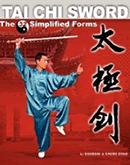
Standard Taijiquan 32 Sword Form


This popular webpage includes a comprehensive bibliography, scores of links to webpages; an extensive listing of the names and name variations for each movement in English, Chinese, French, German, and Spanish; a detailed analysis of each posture and movement sequence with explanations and numbered illustrations and detailed instructions; selected quotations; comments on 20 Taijiquan sword techniques; a comprehensive media bibliography; a chart of performance times; recommendations for starting to learn this form at home one your own with instructional DVDs, books and practice methods; and, a comparison of the 32 and 55 sword forms in the Yang style. 

This is the standard, simplified, orthodox, 1957, 32 Taiji Sword Form, in the Yang Style of T'ai Chi Ch'uan. 

32 Sword Form Pamphlet by Geoffrey Hugh Miller.  Adapted from information and graphics found on the 32 Sword Form webpage by Michael P. Garofalo.  22 pages, 9/7/2015, PDF Format.  Excellent job by Mr. Miller.  This is a handy practice tool.  

Read about the Taoist magical sword finger hand sign:
"The sword finger hand sign is to draw your own magic power to the fingers and output a beam of energy for doing Taoist magic.  This beam of magical power isn’t just an imaginary thing, it’s a real visible beam if you can see it. Some of my students can see the beam of energy beams out like a long laser from the tip of the finger and extend all the way to the wall or somewhere far away. The beam is a beam a the magic power from one doing the handsign. This beam of power can be used for drawing FUs in the air, killing evils, doing magic in magic battles, healing or even saving lives!  This is like a multi-usage tool, which can be a pen, a chisel, a phone, or even a drill, it all depends on how you use it and what adaptor you put on it to make it function differently. The most commonly seen usage of this handsign in Tin Yat Lineage is by drawing Taoism FU in the air or on the incense. This allow you to “carve” the Taoism FU into the object or in the air to perform magic." 

The Wild Horse Jumps Over the Mountain Stream 


  "Mike, I wonder if you could give your thoughts on something.  For years I’ve been practicing 3. The Swallow Skims Across the Water with the left hand moving in a similar fashion to 5. Block and Sweep to the Left i.e. the little finger side of the hand brushing the left hip before raising above the head.  I’ve recently got a book by Li Deyin which has his daughter Faye Yip performing it slightly differently.  She points her fingers backwards with the back of the hand brushing the hip and mentions it in the essential points for the movement.  Looking at videos on the internet they all seem to be similar to Faye Yip.  Would you mind if I asked how you practice?"
-  A question from Simon Ellis, UK, 9/2/2015


Simon, I have found that the details of bodily positions for any Taijiquan movement vary somewhat according to the following standards: 

1.  Competition standards.  If you are preparing to compete in a Taijiquan event, then carefully study the standards for the forms you are performing.  In the case of the 32 sword form, check out books and DVDs by Li Deyin or his heirs. 
2.  Your teacher's standards.  If you are working closely with a Taijiquan teacher, then follow their instructions.  This simplifies your learning, and shows respect for the teacher.  Since I learned the 32 sword from Dr. Paul Lam, I practice this form in a manner fairly close to his instructions.   
3.  Your personal standards.  If you have been practicing for many years, mostly alone, then more variations in bodily positions will likely emerge.  Sensibly, as we age, we make adaptations in our Taijiquan form work to safely accommodate our declining physical abilities. 

As for how I practice, I'm rather unconcerned about details, a bit careless, playful, free, and seldom do things exactly the same way.  I just like skimming across the water, and leave the details about how to flap my wings to others.  Call me a lazy dilettante Daoist, with a penchant for ziran.  I don't even practice with a sword or saber anymore─ I only wield my sturdy cane.  As I recall, the front of my left hand crosses my waist while going to 3c; and, more important, I still make that magical Taoist sword finger hand sign with my left hand while doing this form. 

I think that modeling your performance on the standards set by Master Faye Yip's 32 Sword form instructions and demonstration would result in much grace, improved strength, and a beautiful style.   
Best wishes!  Mike.  9/8/2015 


Wednesday, December 18, 2024

He Who Feels It, Knows It More

"The human body is not an instrument to be used, but a realm of one's being to be experienced, explored, enriched and, thereby, educated."
-  Thomas Hanna

"There is deep wisdom within our very flesh,  if we can only come to our senses and feel it."
 -  Elizabeth A. Behnke

"He who feels it, knows it more."
-  Bob Marley  

"No matter how closely we look, it is difficult to find a mental act that can take place without the support of some physical function."
-  Moshe Feldenkrais  

"I would have touched it like a child
But knew my finger could but have touched
Cold stone and water.   I grew wild,
Even accusing heaven because
It had set down among its laws:
Nothing that we love over-much
Is ponderable to our touch."
-  W. B. Yeats  


Sunday, April 16, 2023

Silk Reeling Exercises (Chan Si Gong)

"Silk reeling (pinyin chánsīgōng, Wade-Giles ch'an2 ssu1 kung1 ), also called "Winding Silk Power" (chansijing) (纏絲), as well as "Foundational Training"(jibengong), refers to a set of neigong exercises frequently used by the Chen style, Wu style and some other styles of T'ai Chi Ch'uan. The name derives from the metaphorical principle of "reeling the silk from a silk worm's cocoon". In order to draw out the silk successfully the action must be smooth and consistent without jerking or changing direction sharply. Too fast, the silk breaks, too slow, it sticks to itself and becomes tangled. Hence, the silk reeling movements are continuous, cyclic patterns performed at constant speed with the "light touch" of drawing silk.
In common with all Qigong exercises, the patterns are performed in a concentrated, meditative state with an emphasis on relaxation. However, rather than being isolated exercises purely for health benefits, the focus is on strengthening and training the whole body coordination (nei jin) and grounded body alignment that is used in the Tai Chi form and pushing hands. Silk reeling is commonly used in Chen style as a warmup before commencing Tai Chi form practice, but its body mechanics are also a requirement of Chen Style Tai Chi throughout the forms. In other styles, silk reeling is only introduced to advanced levels. Many schools, especially those not associated with the orthodox Tai Chi families, don't train it at all."
- Silk Reeling - Wikipedia


Dragon Qigong


Silk Reeling
Bibliography, Quotes, Notes, Videos.  Compiled by Mike Garofalo. 

Chan Ssu Gong, Chan Szu Chin, Chan Ssu Kung, Chan Si Gong, Chan Si Jing
Chen Style Taijiquan and Qigong
Spiraling Energy Exercises, Spiral Energy Qigong


Saturday, October 08, 2022

Chen Taijquan Studies: Report 1

Chen Style Tai Chi Chuan
Study and Sharing Group
Vancouver, Washington
Location: 100 NE 100th Street, Vancouver, Washington, 98662
Time:  Every Friday from 9 am to 10:30 am
Coordinator:  Michael Garofalo   

Introductory Webpage


Report 1 for October 7, 2022

Comparison of instructional DVDs used to study Chen Taijiquan
Values and drawbacks of standing isometric practices
Meditation practices: styles and objectives
Circling movements in warm ups
Silk reeling practices with one hand
Chen 19 Form
Sharing, Demonstrations, Discussion, Viewing DVDs


Thursday, June 16, 2022

Honesty: The Secret to Transformation


"In my life, the world has constantly changed around me, whether I liked it or not. Carpets were pulled out from under me and sometimes, blankets wrapped around my shoulders. Change in the world is inevitable, but there is no power in experiencing it. Flowing with change is simply enjoying what comes our way or weathering a storm. It’s about being an observer and reacting (or not reacting) to the unrelenting ebbs and flows of life.

There is a difference between change and transformation. Transformation is where the power is. I have transformed many things in my life as well, and any time I want it to last, there is always one key ingredient- honesty


Transformation can begin only with brutal honesty. We have to be unafraid to get raw, get dirty and get real. We have to close the gap between who we want to be and who we really are in order to evolve.

What happens when we try to transform without being honest about where and who we are in life? Well, it falls flat, it fades away and we are back to the same lies we were telling ourselves before to get through the day. When we start facing the truth, then and only then, can we begin to create the life for ourselves that we imagine possible.

Transformation isn’t easy, but I can promise you, it’s possible. You can be the person you always wanted to be. You can have the relationship you have always wanted. You can be healthy, fit and happy. You can transform your life into the one in your dreams. First, you just have to be honest. When you can do that, no one will or could stand in your way, not even you."
- Angie Cherry, Yoga Teacher, Vancouver, Washington

Wednesday, June 30, 2021

Walking Benefits

"It engages your buttocks with the world
It modestly reduces fat
It improves glycemic control, especially after meals
It improves triglyceride levels and lowers blood pressure, especially after meals
It might help you live longer if you do it briskly
It is well tolerated by people with arthritis
It is good for your brain
It reduces stress
It boosts immune function
It helps prevent falls in the elderly
It gives you a chance to think
It can be a kind of meditation
It is in your blood, in your genes
It enables recognition of the felt presence of immediate experience."
-  Mark Sisson, Reasons to Walk this Year, 2014


"Walking might:
Allow you to see new aspects of your local environment
Make you a bit mellower and more peaceful
Set a good example for others
Enable you to meet other people and dogs
Make for good conversations with a friend while walking
Engender more gratefulness and kindness
Lift your mood and improve your attitude
Give you time to think, reflect, or contemplate alone
Energize your body, mind, and spirit
Bring new scents and smells to your nostrils
Provide mystical experiences and epiphanies
Reduce or resolve your worries 
Enjoying good memories or testing your memory 
Allow you to feel and see the effects of our invisible Air
Give you more confidence in achieving your goals
Get you in better awareness of your feelings
Change your perspective 
Allow you to help with neighborhood watch
Let you be alone for awhile
Make your legs feel good
Appreciate the beauty in our world
Allow you to come under the 'Spell of the Sensuous'
Provide some time for listening to music or lectures
Reduce the onset or ameliorate physical ailments or diseases."
-  Michael P. Garofalo, Ways of Walking, October 2016  


Ways of Walking Website:  Quotations, Information, Facts, Poetry, Inspiration

Benefits of Walking

Caloric Expenditures While Walking

Walking Meditation

Exercise Options for Older Persons

Aging Well


Sunday, April 18, 2021

Bodybuilding for Persons Over 60 Years of Age

A repost from 2015.

I am an active weightlifter.  I train with weights five days every week.  I am 69 years of age.

Strength Training (Weightlifting, Bodybuilding, Physical Conditioning) for Persons Over 55 Years of Age. 
By Mike Garofalo. 
Quotations, Bibliography, Links, Resources, my Training Program for 2015. 

Mike Garofalo's Mind-Body Fitness Class Schedule for 2015

In Red Bluff, California

On Friday and Monday I lift weights to strengthen my legs as follows:

    Reference Source:  Frédéric Delavier, "Strength Training Anatomy," 3rd Edition, 2010.  E.g., Delavier p. 130

Leg Strength Training Workout - Some Possible Combinations for 50 Minutes
     Leg training workout at the TFFC gym every Monday and Friday @ 4:00 pm
     Warm Up segment   I frequently walk on a treadmill for 30 minutes then stretch.
     Seated Forward Leg Press  4Sx 8-10R  Up to 400lbs
     Lying Leg Curls (Reverse Lying Leg Curls)  4Sx 8-10R  Up to 80lbs  Delavier, p. 140
     Barbell Squats 4S x 5-8R  High Limit: 245lbs x 6R   Delavier, p. 126 
     Leg Extensions, Seated  4Sx 8-10R  Delavier, p.138 
     Hack Squat - Decline Angled Leg Press  4Sx 8-10R   High Limit: 320 pounds x 6R   Delavier, p. 130
     Incline Leg Pres - Incline Angled, Push Upward from Below  4Sx 8-10R   High Limit: 540lbs x 6R   Delavier, p. 135 
     Dumbbell or Barbell Shrugs  4Sx 8-10R  Up to 300 lbs barbell x 4-8R.  Delavier, p. 116-119
     Lunges  4Sx 8-10R  Use 10 to 25 lb dumbbell or no weights   Delavier, 2006 (2nd), p. 99
     Seated or Standing Calf Raises  4Sx 8-10R  45 -150 lbs  Delavier, p. 149-153
     Triceps Cable Pushdowns  4s x 8-10R  Delavier, p. 20
     On some days, when feeling more energetic, I do heaver weights with lower reps and more sets
     I intersperse arm or back work between leg sets to rest the legs. 


Cultivating a Positive Mindset
"Think in a calm, pacified, and reflective manner instead of being disturbed, agitated, and impulsive in one's reactions.
Put ideas together rationally and arrive at the right judgment even in the absence of obvious evidence or proof. 
Decide, plan, and execute a course of action in a patient, persistent, and disciplined manner. 
Recognize the changes and be flexible in adapting to them.
Observe and perceive things with a sense of humor instead of outrage, indignation, and anger.
Let go of useless and counterproductive thoughts, desires, and ambitions instead of being preoccupied with them.
Relax and meditate or rest.
Resist temptation and coercion."

- Michael Fekete
  Strength Training for Seniors, Hunter House, 2006, p. 36


Here are two books I refer to frequently to learn about anatomy and strength training:  

Strength Training Anatomy   By Frédéric Delavier.  Champaign, Illinois, Human Kinetics, Third Edition, 2010.  192 pages.  ISBN: 978-0736092265.  Revised edition of "Guide des mouvements de musculation" Paris, Ditions Bigot, 1998.  An outstanding illustrated guide to muscles at work.   Both male and female models are used.   This is one of my favorite books to use to understand strength training anatomical facts and exercise effects on the musculature.  Extremely detailed color illustrations of the human body.  The muscles and bones most effected and worked by a particular exercise are clearly indicated.  Instructions and tips are given for each exercise.  Exercises are arranged by general areas of the body:  Arms, Shoulders, Chest, Back, Legs, Buttocks and Abdomen.  There is no general index at the end of the book.   VSCL:  I own the 2nd edition (2006) and 3rd edition (2010).

Anatomy for Strength and Fitness Training: An Illustrated Guide to Your Muscles in Action  By Mark Vella.  New York, McGraw Hill, 2006.  Index, glossary, 144 pages.  ISBN: 0071475338.  VSCL.  An excellent reference tool for understanding how specific exercises effect muscles and joints.  Outstanding illustrations.  


Sunday, October 27, 2019

Firstenburg Community Center, Vancouver WA

Last week, I visited the Firstenburg Community Center in Vancouver, Washington. This large facility offers a complete fitness center, many meeting and activity rooms, and an impressive indoor pool. The cost to me was $6.00 for an all day pass into Firstenburg. I walked the second floor indoor track for 30 minutes, and enjoyed the elevated views through large glass windows and from above the active basketball games.  Finally, I attended a very enjoyable one hour Tai Chi Chuan class conducted by Jill Ross from 12:20 to 1:20 pm.  We practiced the Yang 24 and Sword 32.  

After Taijiquan practices, I then browsed and borrowed two books from the spacious Cascade Park Community Library of the FVRL which is right next door to Firstenburg. There was ample available parking at Firstenburg, at 700 NE 136 Ave.., on the northeast side of the building.  Map View.

One could easily walk to nearby Leroy Haagen Memorial Park a bit north of Firstenburg for outdoor sidewalk and walking path jaunts.  

This is an excellent fitness facility.  The library is beautiful with many great reads, and superior inter-library request services and ebook lending.  There is a Kitchen Table Cafe and a Coffee Revolution coffee/tea room directly across the signaled street from Firstenburg, as well as a small food and drinks outlet inside of Firstenburg.  Plenty of restrooms.  Many fitness equipment options, lockers, large workout rooms.  

Firstenburg is less than a mile north of busy Mill Plain Blvd and scores of new retail stores and restaurants.  Firstenburg is about 8 miles from my home in the Orchards. I thoroughly enjoyed this outing, and this facility will definitely be part of my future pleasures. 


Firstenburg Community Center

Image result for firstenberg center vancouver wa


Image result for firstenburg


Image result for firstenberg center vancouver wa


Cascade Park Community Library

Image result for cascade park community library vancouver wa


Image result for cascade park community library vancouver wa


Leroy Haagen Memorial Park

Image result for leroy haagen park vancouver washington


Image result for leroy haagen park vancouver washington

Wednesday, January 17, 2018

Benefits of Walking

"It engages your buttocks with the world
It modestly reduces fat
It improves glycemic control, especially after meals
It improves triglyceride levels and lowers blood pressure, especially after meals
It might help you live longer if you do it briskly
It is well tolerated by people with arthritis
It is good for your brain
It reduces stress
It boosts immune function
It helps prevent falls in the elderly
It gives you a chance to think
It can be a kind of meditation
It is in your blood, in your genes
It enables recognition of the felt presence of immediate experience."
-  Mark Sisson, Reasons to Walk this Year, 2014


"Walking might:
Allow you to see new aspects of your local environment
Make you a bit mellower and more peaceful
Set a good example for others
Enable you to meet other people and dogs
Make for good conversations with a friend while walking
Engender more gratefulness and kindness
Lift your mood and improve your attitude
Give you time to think, reflect, or contemplate alone
Energize your body, mind, and spirit
Bring new scents and smells to your nostrils
Provide mystical experiences and epiphanies
Reduce or resolve your worries
Enjoying good memories or testing your memory
Allow you to feel and see the effects of our invisible Air
Give you more confidence in achieving your goals
Get you in better awareness of your feelings
Change your perspective
Allow you to help with neighborhood watch
Let you be alone for awhile
Make your legs feel good
Appreciate the beauty in our world
Allow you to come under the 'Spell of the Sensuous'
Provide some time for listening to music or lectures
Reduce the onset or ameliorate physical ailments or diseases."
-  Michael P. Garofalo, Ways of Walking, October 2016  


Ways of Walking Website:  Quotations, Information, Facts, Poetry, Inspiration

Benefits of Walking

Caloric Expenditures While Walking

Walking Meditation

Exercise Options for Older Persons

Aging Well


Thursday, November 16, 2017

Walking Indoors


The above photograph was taken in November of 2009. 
I was walking along Kilkenny Lane in Red Bluff, California.  


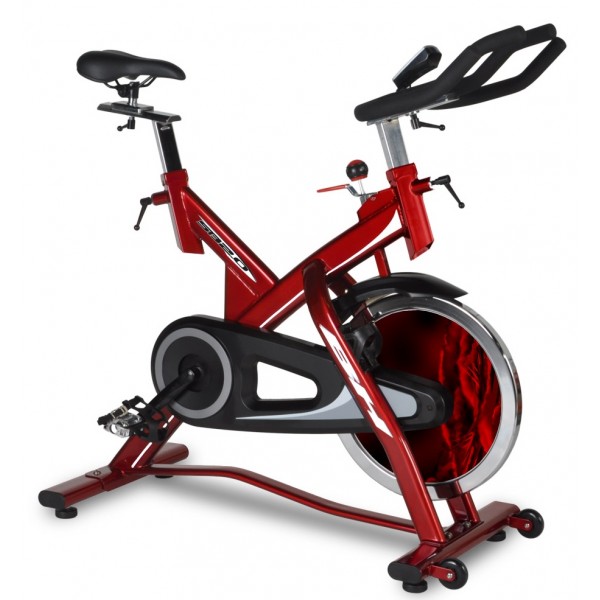
Lately, in November of 2017, I've been doing aerobic exercise indoors by using a combination of treadmill, elliptical, and bicycle machines.  I do this activity five days a week, for 45 to 60 minutes each day.  I stay dry and warm while doing this indoor aerobic exercise activity.  


"Putting facts by the thousands,
into the world, the toes take off
with an appealing squeak which the thumping heel
follows confidentially, the way men greet men.
Sometimes walking is just such elated
pumping."
- Lyn Hejinian, Determination


The Ways of Walking Website

Walking Meditation


Image result for elliptical machine


Image result for indoor bicycle

Wednesday, April 05, 2017

Deer Raises Its Antlers


"To learn and practice “Deer Show”, it is indispensable to understand the fitness functions of it. In the first place, it can strengthen the waist and kidney. The traditional Chinese medicine claims that the Du meridian has close relationship with brain, marrow and kidney, which can prevent from the pathological changes for the above three organs. By means of turning waist as well as twisting coccygeal end, it is conductive to clear the meridians, improve blood circulation, and strengthen the exchange of congenital and acquired blood. All the above functions can control and prevent from the symptoms such as waist virtual cold, pain, enuresis and diarrhea, exert a strong efficacy of kidney. In the second place, it can play the role of arousing the Yang-Energy. By means of gravity moving backward, the whole spine bending, the coccygeal end folder, Ming Men protruding backward, clearing the Da Zhui to raise the Yang-Energy. Furthermore, it is positive to promote the blood transmission to the body meridians, nourishing the body from top to bottom, from inside to outside, so that it can contribute greatly to restore normal physiological and psychological functions. In the third place, it can fully rotate the spine, enhance muscle strength and prevent from the disorders of waist. The arms with the state of internal rotation, the shoulder and back muscles with the state of free stretch, can exert favorable effects on preventing from the neck and shoulder syndromes."
-   Connotations of “Deer Show” of Wu Qin Xi,  Chinese Health Qigong Association 

Five Animal Frolics Qigong   Hypertext research notebooks of Mike Garofalo.


Monday, April 03, 2017

Eight Beautiful Tapestries Chi Kung

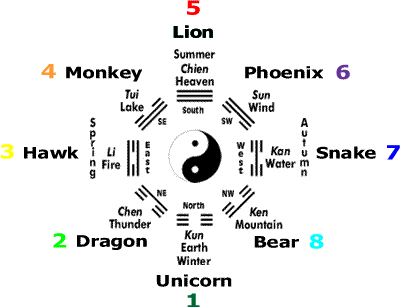
Sequence C:  Trigrams, Bagua, and Eight Section Brocade (Ba Duan Jin) Exercises Correlations

Soft Qigong (Rou Gong), Inner Qigong (Nei Gong); Slow Pace, Gentle, Soft, At Ease, Relaxed (Sung)Rooted/Sunk, Yin Style


Eight Section Brocade Exercise
I Ch'ing Trigram 
Parts of the Body Affected
1.  Pressing Up to the Heavens with
Two Hands
South, Summer
Ch'ienQián, Heaven, Sky, Air
Intense Yang
Lion
Heart, Small Intestine, Stomach, Lungs
(The Triple Warmer)
              
2.  Drawing the Bow   and Letting the Arrow FlySouthwest, Mid-Summer
Sun, Wind
Yang
Phoenix
Kidneys, Spleen, Waist, Eyes, Legs
                     
4.  Wise Owl Gazes BackwardWest, Autumn
K'an, Water
Yang-Yin
Snake
Lungs, Immune System, Large Intestine
                   
5.  Big Bear Turns from Side to SideNorthwest, Mid-Autumn
KenGèn, Mountain
Yin-Yang
Bear
Heart, Waist, Legs
                   
3.  Separating Heaven and EarthNorth, Winter
K'un, Earth
Intense Yin
Unicorn, Qilin
Spleen, Kidneys, Bladder, Pancreas
                        

8.  Shaking the BodyNortheast, Mid-Winter
ChenZhèn, Thunder
Yin
Dragon
Immune System, Calves, Feet
                         
6.  Punching with Angry GazeSpring, East
Li, Fire
Yin-Yang
Hawk, Falcon
Liver, Gallbladder, Blood, Eyes
                      

8.  Touching Toes then Bending BackwardsSoutheast, Mid-Spring
Tui, Lake
Yang-Yin
Monkey
Kidneys, Waist, Legs, Back

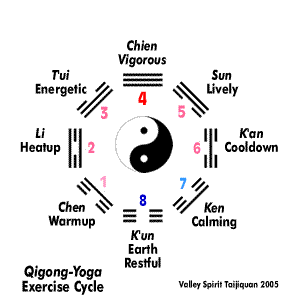
The above three charts were proposed in 2005 by Mike Garofalo, in his webpage on the Eight Section Brocade.  See also Mike's webpage on the Eight Trigrams.  


In 2014, Christina Barea-Young and Peyton Young provided another set of associations for the Eight Section Brocade movements with the Eight Trigrams in Qi Magazine (Volume 24, No. 2, 2014, p. 48).  

I find these kinds of correlations, associations, and relational charts quite inconsistent between various authors.  Yoga, Western Esoteric Magic, and Qigong have many of the same kind of charts and tables of correlations; again, with considerable inconsistency between various "masters."  Other than the "traditions of specific esoteric schools", I find the associations rather arbitrary and fanciful, primarily aids to remembering clusters of ideas, poetic devices, magical-metaphysical lore, and lacking in much pragmatic-scientific meaningfulness.  Contrast these charming and pre-scientific tables with the modern and justifiably famous "Periodic Table of the Elements" for a real lesson in an objective and empirical approach to understanding the world.  Nevertheless, these clusters of ideas may stimulate the imagination, and are fun for playing thought games.  


"The names of the 108 Forms are each symbolic and signify concepts removed from the literal  physicality of the object - horse, tiger, bird, and so forth.  Each name has its separate allusion, and metaphorically may connote an aspiration, a philosophical attitude towards self and  conduct, a turn of mind, a sense of being, some thought about life and spirit.  The true meanings are revealed when the T'ai-Chi Ch'uan exponent has advanced to that stage of experience comprehension where he can utilize the implication of the philosophical  intentions, and where the symbols can be part of his growing consciousness.  This happens only when the mind and body have "changed" and absorbed the reasons for mental, emotional, and physical unity."
-   Sophia Delza, The T'ai Chi Ch'uan Experience, 1996, p. 24

 
The above long chart is more readable on my Eight Section Brocade webpage, 441 KB, last updated on June 20, 2014.  


Tuesday, October 25, 2016

Advantages of Walking

"It engages your buttocks with the world
It modestly reduces fat
It improves glycemic control, especially after meals
It improves triglyceride levels and lowers blood pressure, especially after meals
It might help you live longer if you do it briskly
It is well tolerated by people with arthritis
It is good for your brain
It reduces stress
It boosts immune function
It helps prevent falls in the elderly
It gives you a chance to think
It can be a kind of meditation
It is in your blood, in your genes
It enables recognition of the felt presence of immediate experience."
-  Mark Sisson, Reasons to Walk this Year, 2014


"Sharpen your brain
Strengthen your bones
Boost your mood
Enhance your circulation
Reduce your risk of slipping and falling with age
Bolster your memory
Lessen the pain of conditions like arthritis or fibromyalgia
Improve your blood glucose levels
Raise your immunity
Improve your sleep
-  Jessica Smith, Amazing Benefits of Walking, 2016


“We ought to take outdoor walks, to refresh and raise our spirits by deep breathing in the open air.”
 -  Seneca  


Ways of Walking Website:  Quotations, Information, Facts, Poetry, Inspiration

Benefits of Walking

Caloric Expenditures While Walking

Walking Meditation

Exercise Options for Older Persons

Aging Well


Saturday, October 15, 2016

Doing Something in the Rain


The first rainstorm of our "rainy season" (October - May) settled in yesterday.  A refreshing light rain for a few days.   Cool, beautiful, and delightful.  I enjoyed walking outdoors when the rain let up a little.  


"Walked for half an hour in the garden.  A fine rain was falling, and the landscape was that of autumn.  The sky was hung with various shades of gray, and mists hovered about the distant mountains - a melancholy nature.  The leaves were falling on all sides like the last illusions of youth under the tears of irremediable grief.  A brood of chattering birds were chasing each other through the shrubberies, and playing games among the branches, like a knot of hiding schoolboys.  Every landscape is, as it were, a state of the soul, and whoever penetrates into both is astonished to find how much likeness there is in each detail."
-   Henri Frederic Amiel 


“Thinking is generally thought of as doing nothing in a production-oriented culture, and doing nothing is hard to do. It's best done by disguising it as doing something, and the something closest to doing nothing is walking.”
-  Rebecca Solnit   


Tuesday, October 11, 2016

Benefits of Walking

Benefits of Walking

 "Improves your circulation
 Shores up your bones
 Leads to a longer life
 Lightens mood
 Can lead to weight loss
 Strengthens muscles
 Improves strength
 Supports your joints
 Improves your breath
 Slows mental decline
 Lowers Alzheimer’s risk
 Helps you do more, longer

 – Arthritis Foundation, Walking Program, 2016


 “Maintain a healthy weight
 Prevent or manage various conditions, including heart disease, high blood pressure and type 2 diabetes
 Strengthen your bones and muscles
 Improve your mood
 Improve your balance and coordination”
 – Mayo Clinic, Walking: Improve Your Health, 2016


Ways of Walking   Quotations, Information, Inspiration, Poems


Wednesday, May 18, 2016

Little Answers About Your Body

As I walk 3.6 miles in the morning, four days each week, I enjoy the interplay of all the senses and the kinesthetic exuberance of the flowing movement.  The scenery along my safe rural walking path is beautiful and changing with the seasons.  While walking, I mostly am just walking, and sometimes thinking, reflecting, contemplating, or meditating.  These experiences are something I treasure.  Walking is beneficial for my heart, and helps me keep my diabetes under control.  Walking is an integral component of my regular Sadhana ... my "spiritual" practices.  

"If you want to know if your brain is flabby, feel your legs."  -  Bruce Barton   

"Think with your whole body."
-  Taisen Deshimaru


”If you want to find the answers to the Big Questions about your soul, you’d best begin with the Little Answers about your body.”
-  George Sheehan

"Isn't it really quite extraordinary to see that, since man took his first step, no one has asked himself why he walks, how he walks, if he has ever walked, if he could walk better, what he achieves in walking .. questions that are tied to all the philosophical, psychological, and political systems which preoccupy the world."
-  Honoré de Balzac, Theorie de la Demarché   


"Roads go ever ever on,
Over rock and under tree,
By caves where never sun has shone,
By streams that never find the sea;
Over snow by winter sown,
And through the merry flowers of June,
Over grass and over stone,
And under mountains of the moon.

Roads go ever ever on
Under cloud and under star
Yet feet that wandering have gone
Turn at last to home afar.
Eyes that fire and sword have seen
An horror in the halls of stone
Look at last on meadows green
And trees and hills they long have known."
-  J. R. R. Tolkien, The Hobbit


Sunday, May 08, 2016

Your Alive and Walking on a Beautiful Planet

"Walking meditation means to enjoy walking without any intention to arrive. We don't need to arrive anywhere.  We just walk. We enjoy walking. That means walking is already stopping, and that needs some training.  Usually in our daily life we walk because we want to go somewhere. Walking is only a means to an end, and that is why we do not enjoy every step we take. Walking meditation is different. Walking is only for walking. You enjoy every step you take. So this is a kind of revolution in walking. You allow yourself to enjoy every step you take.
The Zen master Ling Chi said that the miracle is not to walk on burning charcoal or in the thin air or on the water; the miracle is just to walk on earth. You breathe in. You become aware of the fact that you are alive. You are still alive and you are walking on this beautiful planet. That is already performing a miracle. The greatest of all miracles is to be alive. We have to awaken ourselves to the truth that we are here, alive. We are here making steps on this beautiful planet. This is already performing a miracle.  But we have to be here in order for the miracle to be possible. We have to bring ourselves back to the here and the now."
-  Thich Nhat Hanh, Resting in the River


Walking Meditation:  Quotes, Bibliography, Links, Information, Methods 
Compiled by Mike Garofalo.


"Walking meditation is walking in full awareness of breath, body and everything the senses present.  It is not an aerobic exercise - though it would be a fine lead-in to aerobic walking.  Rather, walking meditation is done slowly and consciously, with each step fully feeling the earth.  During this precious time, body and mind come together, joined in the present moment.  Although the benefits of walking meditation will deepen over time, even from the start, you can experience some measure of the relaxation, balance and quiet energy that builds through this practice."
-  Ginny Whitelaw, Body Learning, p. 55.   


"Research conducted at Harvard Medical School’s Mind/Body Medical Institute has found that focused walking meditations are highly effective for reducing anxiety and producing  what’s called the “relaxation response.”
-  Borgess Health   


The Ways of Walking  Compiled by Mike Garofalo.


Saturday, March 05, 2016

Tai Chi Chuan Class in Red Bluff, California

T'ai Chi, T'ai Chi Ch'uan, Taijiquan

Class in Red Bluff, California

Instructor:  Michael Garofalo

Time:  Saturdays, 9:00 - 10:15

Location:  Valley Spirit Center, Outdoor Practice

Cost:  $10 - $25, Barter, Sliding Scale

Information about the Class

Standard 24 Short Form Taijiquan in the Yang Style

Traditional 108 Yang Family Taijiquan Long Form 

Chen Taijiquan 18 Movement Short Form 

Chi Kung (Qigong) Warmup Exercises


Monday, February 22, 2016

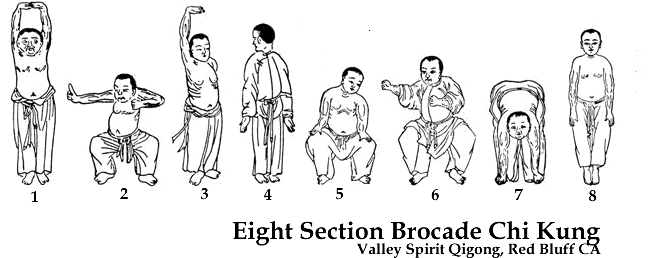
Eight Treasures Chi Kung Exercise Set

I frequently teach the Chinese Eight Section Brocade Chi Kung exercise and fitness routine in my Taijiquan class and my Yoga class.  Naturally, I include many comments about Shaolin and Daoist fitness and healthy living concepts.

This Eight Treasures exercise and fitness routine has a varied and long history with ancient roots back to the Animal Frolics Dao-yin exercises of 300 CE.  Some of the Eight Treasures exercises involve toughening, courage, and fighting and were used in military exercise and conditioning drills.  Many versions of the Ba Duan Jin include 12 exercises or more.   

One recent book that provides good documentation on the history of Chinese exercise practices (Chi Kung, Qigong, Neigong), including five illustrated versions of the Eight Section Brocade, is:  

An Illustrated Handbook of Chinese Qigong Forms from the Ancient Texts  Complied by Li Jingwei and Zhu Jianping.  London, Singing Dragon, 2014.  No index or bibliography, 325 pages.  ISBN: 9781848191976.  Many excellent line drawings are included to illustrate the postures.  VSCL. 

Back in 2002, I created the webpage titled:  The Eight Section Brocade Chi Kung.
  

The Ba Duan Jin Qigong form includes eight basic exercises to help you keep limber, become stronger, improve your balance, and increase your stamina.  There are opportunities for squatting movements and postures to strengthen the legs.  
  The entire Eight Beautiful Tapestries Chi Kung form is normally done while standing, although there are some versions done in a seated posture for meditative purposes or for frail persons. 


There are numerous versions of this popular Chi Kung form.  There are many good books, instructional DVDs, and UTube videos to choose from on this topic.  My webpage includes a long bibliography on the Eight Section Brocade Chi Kung with citations for resources, links, videos, books, and instructional DVDs on the subject.  
  I make a number of comments about each of the eight movements, including comments about the movement variations, physical training targets, muscles worked, attitude, internal alchemy (Neidan), benefits, options, comparisons with yoga asanas, and breathing patterns.  
  

I offer my own version with fairly detailed comments on each of the eight movements.  Here is my one page class handout for the Eight Section Brocade Chi Kung class.  


"The name “Ba Duan Jin” has been found as early as the Northern Song Dynasty. According to Hong Mai's (洪邁) Yi Jian Zhi (夷堅志, Song Dynasty), Zhenghe Seventh Year, Emperor's Chief Secretary, Li Shi-Ju, lived a simple life.  He spent a large portion of his time in his mediation room practicing Daoist Monk’s exercises expanding like a bear and stretching like a bird. In the early hours, he is often found breathing and massaging, practicing the so-called Eight-Section Brocade (Ba Duan Jin). This passage reveals that Ba Duan Jin has been developed and practiced since the Song Dynasty as a general health-keeping regime.
    
Both sitting and standing forms have been found in the history of Ba Duan Jin (
八段錦),. Standing forms were developed into two schools (northern and southern styles) in the Qing Dynasty. The Northern School, said to have been passed down by Yue Fei (岳飛), has tougher forms, and the Southern School, claimed the lineage from Liang Shi-Chang (梁世昌), focuses on softer trainings. Quite a few verses has been passed down during the period from Song Dynasty to Qing Dynasty, but all verses for the standing forms have evolved from the passages recorded in "The Chapter of Wonders, Pivot of Dao" (道樞·眾妙篇, Dao Shu, Zong Miao Pian, Song Dynasty) and verses of the sitting style from the forms recorded in "TheTen Books of Daoist Practices" (修真十書 Xiu Zhen Shi Shu, Ming Dynasty ).  or "The Methods of Curing"(活人心法, Huo Ren Xin Fa, Ming Dynasty). Sets Ba Duan Jin forms are not always limited to the number of eight. The number of forms in a set range from a single form to tens or as many as a hundred; nevertheless, they are all exercise regimes designed for health-keeping, preventive, and therapeutic purposes, and, liberally saying, all exercise regimes designed for such purposes are part of the Ba Duan Jin system."
-   Lee Chang-Chih, 
 A Brief Introduction to Ba Daun Jin.  "Reinterpreting Ba Duan Jing From the Theories of the Eight Extra Meridians" 2005