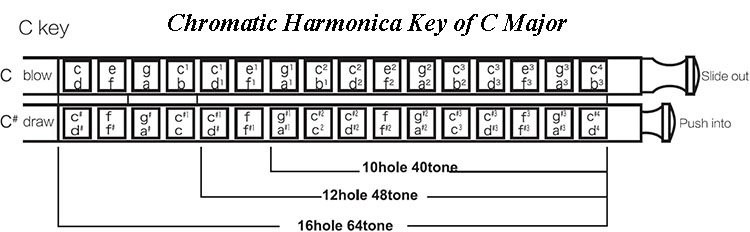
I have very little experience with using a chromatic harmonica. I have purchased two chromatic harmonicas in the Key of C Major, 12 holes, 48 tones/notes, in the past. I have considerable experience with diatonic harmonicas.
After playing the chromatic harmonica for a year, after studying, learning, and using the different layouts for blow/draw notes/holes (Richter vs Solo), after listening to the different sound of the diatonic and chromatic, after sensing the different feel of the size and shape of these two types of harmonicas, and after experimenting with the slide, etc.; I've come to a conclusion. I have decided to focus on playing, learning, and advancing my musical skills in using only a diatonic harmonica.
I have decided not to play a chromatic harmonica anymore. Why?
All chromatics are much larger and heavier than a diatonic. They are considerably less portable than a Hohner Thunderbird or Hohner Rocket diatonic. Most good chromatics have 12 or 16 holes, and diatonics have 10 holes. A typical chromatic is not a carry in your pocket anywhere harmonica, they are more a carry in your backpack musical instrument.
A chromatic, in my opinion, does not play chords as well as a diatonic harmonica.
If you can't manage the chromatic's slide well, then a chromatic can sound really bad. A diatonic is more forgiving of mistakes.
I do enjoy experimenting with a wider ranges of notes/sounds available on the chromatic harmonica vs a diatonic harmonica (48 notes vs 20 notes without bends or overblows); however, I find that using my decent electronic MIDI keyboard offers vastly more experimental options for an adventuresome sound explorer.
Good chromatic harmonicas are typically more expensive than good diatonic harmonicas. Some good chromatic models cost from $150.00 - $250.00 or more. A decent diatonic harmonica can be purchased for under $50.00.
Both chromatic and diatonic harmonicas are available in a variety of different keys, both in standard and low tuned. However, most good chromatics come in the Key of C Major. And, with a higher degree of skill, you can play in many keys on one C Major Key chromatic. However, in my opinion, it is just far easier to play a diatonic in the key you want to play, rather than mastering playing in different keys on one chromatic harmonica.
It is easier to bend or overblow on a diatonic harmonica, rather than on a chromatic without using the slider. Seems to me that the degree and control of notes with bends and overblows, excluding slider functions, is more capable of refinement on a diatonic.
Chromatics are favored by classical and jazz harmonica musicians. Diatonics are favored by blues, rock, folk, and country musicians. I play tunes I enjoy the most being played on a diatonic harmonica.
Using the chromatic slider properly is a refined skill requiring considerable practice, and adds another challenging layer of refined learning and practice demands for typical home solo players.
In is far easier to us a variety of cupping techniques on a diatonic, rather than on the larger chromatic.
Shifting between chromatic and diatonic versions can be confusing for beginners like me. Better to focus on playing just one type of musical instrument. I chose the diatonic harmonica.

I own a EastTop Forerunner Chromatic Harmonica in the Key of C Major LOW. 12 Holes, 48 Tones, Chromatic Mouth Organ Harmonica, $125.00. VSCL.
I own a EastTop Forerunner Chromatic Harmonica in the Key of C Major. 12 Holes, 48 Tones, Chromatic Mouth Organ Harmonica, $52.00. VSCL.
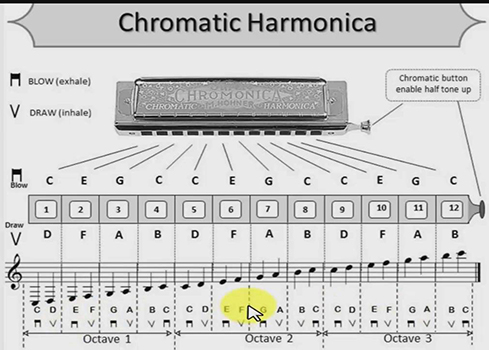
Chromatic Harmonica in the Key of C Major


