Showing posts with label Self-Improvement. Show all posts

Sunday, March 15, 2026

Feldenkrais Techniques

A repost from February 2018:

I have taken 9 Feldenkrais' introductory 90 minute group classes from a local Feldenkrais practitioner, Christine Toscano.  I also practice this method alone at home.  I have also read a number of books on the subject.


Mrs. Toscano recommended we read Chapter 5 of the book by Norman Doidge, M.D., "The Brain's Way of Healing: Remarkable Discoveries and Recoveries from the Frontiers of Neuroplasticity," (Penguin Books, 2016). The chapter covers the life and work of Moshe Feldenkrais (1904-1984).  He was a Ph.D. engineer, kudo master, movement therapist, author, and healer. The chapter discusses some of the core principles of his theory and methods as follows:

"1. The mind programs the functioning of the brain.
2. A brain cannot think without motor function.
3. Awareness of movement is the key to improving movement.
4. Differentiation: making the smallest possible sensory distinctions between movements - builds brain maps.
5. Differentiation is easiest to make when the stimulus is smallest.
6. Slowness of movement is the key to awareness, and awareness is the key to learning.
7. Reduce the effort whenever possible. Relax.
8. Errors are essential, and there is no right way to move, only better.
9. Random movements provide variation that leads to developmental breakthroughs.
10. Even the smallest movement in one part of the body involves the entire body.
11. Many movement problems, and the pain that goes with them, are caused by learned habit, not by abnormal structure." 


Awareness Through Movement.  Easy-To-Do Health Exercises to Improve Your Posture, Vision, Imagination and Personal Awareness.  By Moshe Feldenkrais.  HarperOne, Reprint edition, 2009.  192 pages.  ISBN: 978-0062503220.  VSCL. 

Awareness Heals: The Feldenkrais Method for Dynamic Health.  By Stephen Shafarman.  Da Capo Lifelong Books, 1997.  224 pages.  ISBN: 978-0201694697.  VSCL. 


The Brain's Way of Healing: Remarkable Discoveries and Recoveries from the Frontiers of Neuroplasticity.  By Norman Doidge, M.D..  Penguin Books, 2016.

Change Your Age: Using Your Body and Brain to Feel Younger, Stronger, and More Fit.  By Frank Wildman, Ph.D..  Da Capo Lifelong Books, 2010.  240 pages.  ISBN: 978-0738213637.  VSCL. 


Embodied Wisdom: The Collected Papers of Moshe Feldenkrais.  Edited by Elizabeth Beringer.  Foreword by David Zemach-Bersin.  North Atlantic Books, 1st Edition, 2010.  256 pages.  ISBN: 978-1556439063.  VSCL.  
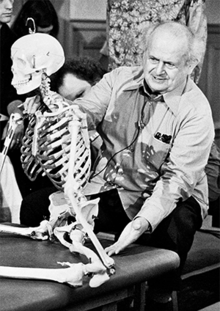


Moshe Feldenkrais.png


Monday, July 14, 2025

Three Requirements for the Study of Zen

The Fireplace Records, Chapter 10


One afternoon, Master Hakuin said "I once read that Master Gaofeng Yuanmiao preached that there are three requirements for the study of Zen. The first is a great root of faith. The second is a great ball of doubt. The third is a great tenacity of purpose.  A man who lacks any of these is like a three-legged kettle with one broken leg."  

Layman Mujiang, replied to Hakuin saying, "There are always more than three."

Hakuin asked "More?"

Mujiang said, "How about being able to sit still quietly for many hours?" 

Hakuin said, "I doubt it."

Mujiang said, "How about reciting the sacred scripture or Names more?"

Hakuin said, "I doubt it."

Mujian said, "You will never give up the quest for Buddhahood, will you Master Hakuin."

Hakuin said, "I doubt it."


Layman Mujiang's Verse:

Grab hold of the Koan by one of its Three Limbs:
Have faith in the Buddha's Hands;
Heal the bruises of Doubts;
Hold on tightly, keep your grip, Persist.

The Three gives birth to the Ten Thousand Things.
Somehow/someway changing by profound and decent ways.
Doubts hinder many and spur a few to act.
Plant the great Root of Faith deep in good soil.  Water it daily.
Big Doubts, little doubts, Great Doubts, minor doubts.
I don't know, doubting it, maybe so, hypothetical, provisional. 

I can't see the Big Harbor because of the dense fogs.  
I doubt the fog will lift this morning.  


Japanese Zen Master Hakuin Ekaku (1868-1769) was extremely influential in reviving the practice of using koans/mondos/verbal encounters/stories in his Rinzai Zen Buddhist training program and with his priestly work with rural workers.  He stresses the direct interaction between a master koan teacher and a koan student, face to face dialogues, regular one on one testing, interaction, and evaluation. 

Hakuin Ekaku was an accomplished artist and calligrapher.  He also emphasized good fitness and health practices to prepare the body for the rigors of Zen training.  

Hakuin believed that quiet sitting or simple daily activities combined with the contemplation of koans was a very effective practice for imparting Buddhist wisdom teachings (Dharma) and inducing enlightenment

Hakuin thought about and he experienced personal realization, or kensho, or satori, or enlightenment, or interpenetration of suchness at the intersection of the Fundamental Point, or fully understood his authentic changing selfhood by using koan practice while sitting or gently moving.  

You can Contemplate your Assigned Koan: absorb it, mull over it, get frustrated by it, doubt it, think about it, meditate on it, discard it, cuss it, sink into it, respect it, analyze it, confound it, introspect it, leap over it, word tail it, kick it around, not-think it, hear its messages, swallow it and spit it out, submerge with it, cherish it and hate it, study it diligently, become one with it, keep it first in mind, squeeze all the insight from it, be surprised and amazed by it, catch it with a capping phrase, reflect on it, huatou keypoint at it, laugh at it, reflect on it, cry over it, stop analyzing it, grab it by the throat, don't let it go.  

Persist in Contemplating your Assigned Koan until your deeper intuitive understanding occurs, or you are somehow/someway changed in profound and decent ways, or you have chosen to work/study another koan, or you just try and try again like a dog begging for extra treats, or you somehow/someway graduate to a new awareness of our precious lives, or you quit doing koan practice, or ...   

You might find that "something should take place not unlike the cat springing upon the mouse or the mother hen hatching her eggs, then in a flash great livingness surges up. This is the moment when the phoenix escapes from the golden net, when the crane breaks the bars of its cage."
- Ruth Fuller Sasaki, The Zen Koan, 1965, p. 42


Cloud Dragon: The Joan Sutherland Dharma Works

Joan Sutherland Koan Collections  

Gates: Miscellaneous Koans  Joan Sutherland

Gateless Gateway  Joan Sutherland

The Blue Cliff Record  Joan Sutherland and John Tarrant  


Rinzai Zen Buddhist School  

Pacific Zen Institute  


"Sometimes our practice is something like this. We don’t know how much our understanding is limited. That is why you have to study koans. Koans will open up your mind. If you understand your way of life more objectively, you will understand what you are doing."
- Suzuki Roshi


Hakuin, Self-Portrait, 1767 

He gently touches his ceremonial whisk;
he frowns, he seems displeased
about something or someone.  
Maybe his stomach is upset.
Maybe that great ball of doubt
is stuck in his soul.


Related Links, Resources, References


The Zen Koan by Ruth Fuller Sasaki, 1965, p. 42.
Blue Cliff Record, Case 52, The Bridge at Zhaozhou, Joshu's Stone Bridge

Refer to my Cloud Hands Blog Posts on the topic of Koans/Dialogues.
Zen Koans, Testing Verses, Mondos, Dialogues, Stories
Bibliography, Quotations, Notes, Resources
Compiled by Michael P. Garofalo

The Fireplace Records By Michael P. Garofalo


Bodhidharma by Hakuin


Thursday, July 10, 2025

Tao Te Ching, Chapter 33

Daodejin, Laozi
Chapter 33


"It is wisdom to know others;
It is enlightenment to know one's self.
The conqueror of men is powerful;
The master of himself is strong.
It is wealth to be content;
It is willful to force one's way on others.
Endurance is to keep one's place;
Long life it is to die and not perish."
-  Translated by R. B. Blakney, 1955, Chapter 33  


"Those who know others are intelligent;
Those who know themselves have insight.
Those who master others have force;
Those who master themselves have strength.
Those who know what is enough are wealthy.
Those who persevere have direction.
Those who maintain their position endure.
And those who die and yet do not perish, live on."
-  Translated by R. L. Wing, 1986, Chapter 33 


"He who knows men is wise,
He who knows himself can see clearly.
He who conquers men has strength,
He who conquers himself has power
He who knows that he has enough is rich,
He who acts with energy has a strong will.
He who fails not to find the Self shall endure,
He who dies, but does not perish, shall endure for ever."
-  Translated by Isabella Mears, 1916, Chapter 33


"Understanding other people is wisdom,
understanding other religions is knowledge,
understanding oneself is enlightenment.
Strength is necessary to overcome others
power is necessary to overcome oneself.

Being content with what one already has is wealth.
Violence may achieve a quick result
but nothing permanent.
Stay in place, content with what you have,
to live a long life.
Death is a return to the native elements."
-  Translated by Tom Kunesh, Chapter 33  


知人者智.
自知者明. 
勝人者有力.
自勝者強. 
知足者富. 
強行者有志. 
不失其所者久. 
死而不亡者壽. 

-  Chinese characters, Tao Te Ching, Chapter 33


chih jên chê chih.
tzu chih chê ming.
shêng jên chê yu li.
tzu shêng chê ch'iang.
chih tsu chê fu.
ch'iang hsing chê yu chih.
pu shih ch'i so chê chiu.
ssu erh pu wang chê shou.
-  Wade-Giles Romanization, Tao Te Ching, Chapter 33 


"He who knows others is clever;
He who knows himself has discernment.
He who overcomes others has force;
He who overcomes himself is strong.
He who knows contentment is rich;
He who perseveres is a man of purpose;
He who does not lose his station will endure;
He who lives out his days has had a long life."
-  Translated by D. C. Lau, 1963, Chapter 33 


"Those who know others are wise; those who know themselves are enlightened.
Those who overcome others are powerful; those who overcome themselves are strong.
Those who are contented are rich; those who act strongly have will.
Those who do not lose their place endure; those who die without perishing live long."
-   Translated by Thomas Cleary, 1991, Chapter 33


"He who knows others is wise; he who knows himself is enlightened.
He who overcomes others is powerful; he who overcomes himself is strong.
He who feels self-contentment is rich; he who practises self-cultivation is resolute.
He who abides by his original nature endures; he who follows Truth throughout life enjoys immortality."

-  Translated by Cheng Lin, Chapter 33


"Quien conoce a los demás es inteligente.
Quien se conoce a sí mismo tiene visión interna.
Quien conquista a los demás tiene fuerza; quien se conquista a sí mismo es realmente poderoso.
Quien sabe cuándo ha obtenido bastante es rico, y quien sigue asiduamente
     el sendero del Tao es alguien de propósito constante.
Quien permanece en el lugar en el que ha encontrado su verdadera casa vive mucho tiempo,
     y quien muere, pero no perece, goza de la auténtica longevidad."
-  Translation from Chinese to English by John C. H. Wu, translated into Spanish by Alfonso Colodrón, Capítulo 33


"One who knows others is clever.
One who knows himself has insight.
One who overcomes others is forceful.
One who overcomes himself is truly strong.
One who knows he has enough is rich.
One who does not divert his mind from the realization of integral virtue is wisely willful.
One who preserves his natural integrity will endure.
One who embraces the subtle essence dies yet does not perish and thus enjoys true immortality."
-  Translated by Hua-Ching Ni, 1995, Chapter 33 


"Whoever knows others has wisdom;
Whoever knows himself has insight.
Whoever conquers others has force;
Whoever conquers himself has strength.
Whoever knows he has enough has wealth.
Whoever perseveres has purpose. Whoever keeps to one place endures.
Whoever dies without perishing lives long."
-  Translated by Herrymoon Maurer, 1985, Chapter 33


Chapter 33Tao Te Ching by Lao Tzu
A Philosopher's Notebooks 


Thursday, June 01, 2023

Dao De Jing Chapter 33 Tao Te Ching

 Tao Te Ching by Lao Tzu

Chapter 33

"One who knows others is clever, but one who knows himself is enlightened. 
One who conquers others is powerful, but one who conquers himself is mighty. 
One who knows contentment is rich and one who pushes with vigor has will. 
One who loses not his place endures. 
One who may die but will not perish, has life everlasting."
-  Translated by Daisetsu Teitaro Suzuki and Paul Carus, 1913, Chapter 33 


"It is wisdom to know others;
It is enlightenment to know one's self.
The conqueror of men is powerful;
The master of himself is strong.
It is wealth to be content;
It is willful to force one's way on others.
Endurance is to keep one's place;
Long life it is to die and not perish."
-  Translated by R. B. Blakney, 1955, Chapter 33   


"He who knows others is wise;
He who knows himself is enlightened.
He who conquers others is strong;
He who conquers himself is mighty.
He who knows contentment is rich.
He who keeps on his course with energy has will.
He who does not deviate from his proper place will long endure.
He who may die but not perish has longevity."
-  Translated by Ch'u Ta-Kao, 1904, Chapter 33 


"Know others by knowing yourself.
Overcome others by overcoming yourself.
Understanding what is enough is enough.
Presence is perseverance.
Coming to stillness is forging ahead.
Find life by accepting death."
-  Translated by Starwell Crispin, Chapter 33 


知人者智.
自知者明. 
勝人者有力.
自勝者強. 
知足者富. 
強行者有志. 
不失其所者久. 
死而不亡者壽. 
-  Chinese characters, Tao Te Ching, Chapter 33 


zhi ren zhe zhi.
zi zhi zhe ming.
sheng ren zhe you li.
zi sheng zhe qiang.
zhi zu zhe fu.
qiang xing zhe you zhi.
bu shi qi suo zhe jiu.
si er bu wang zhe shou.
-  Pinyin Romanization, Daodejing, Chapter 33  


"He who knows others is intelligent;
he who understands himself is enlightened;
he who is able to conquer others has force,
but he who is able to control himself is mighty.
He who appreciates contentment is wealthy.
He who dares to act has nerve;
if he can maintain his position he will endure,
but he, who dying does not perish, is immortal."
-  Translated by Dwight Goddard, 1919, Chapter 33  


"Knowledge frequently results
from knowing others,
but the man who is awakened,
has seen the uncarved block.
Others might be mastered by force,
but to master one's self
requires the Tao.
He who has many material things,
may be described as rich,
but he who knows he has enough,
and is at one with the Tao,
might have enough of material things,
and have self-being as well.
Will-power may bring perseverance;
but to have tranquility is to endure,
being protected for all his days.
He whose ideas remain in the world,
is present for all time."
-  Translated by Stan Rosenthal, 1984, Chapter 33  


"Quien conoce a los demás es inteligente.
Quien se conoce a sí mismo tiene visión interna.
Quien conquista a los demás tiene fuerza; quien se conquista a sí mismo es realmente poderoso.
Quien sabe cuándo ha obtenido bastante es rico, y quien sigue asiduamente
     el sendero del Tao es alguien de propósito constante.
Quien permanece en el lugar en el que ha encontrado su verdadera casa vive mucho tiempo,
     y quien muere, pero no perece, goza de la auténtica longevidad."
-  Translation from Chinese to English by John C. H. Wu, translated into Spanish by Alfonso Colodrón, Capitulo 33 


"Knowing others makes you smart, but knowing yourself makes you wise.
To rule others, you must be powerful, but to rule yourself, you must be strong.
If you have only what you need, you have true wealth.
If you never give up, you will find a way.
If you stay true to yourself, you will never be lost.
If you live your entire life, you’ve really lived."
-  Translated by Ron Hogan, 1995, Chapter 33


A typical webpage created by Mike Garofalo for each one of the 81 Chapters (Verses, Sections) of the Tao Te Ching (Daodejing) by Lao Tzu (Laozi) includes over 25 different English language translations or interpolations for that Chapter, 5 Spanish language translations for that Chapter, the Chinese characters for that Chapter, the Wade-Giles and Hanyu Pinyin transliterations (Romanization) of the Mandarin Chinese words for that Chapter, and 2 German and 1 French translation of that Chapter.  Each webpage includes a Google Translate option menu for reading the entire webpage in many other languages.  Each webpage for each one of the 81 Chapters of the Tao Te Ching [246 CE Wang Bi version] includes extensive indexing by key words, phrases, and terms (concordance) for that Chapter in English, Spanish, and the Wade-Giles Romanization.  Each webpage on a Chapter of the Daodejing includes recommended reading in books and websites, a detailed bibliography, some commentary, links, research leads, translator sources, and other resources for that Chapter.  
     A Top Tier online free resource for English and Spanish readers, researchers, Daoist devotees, scholars, students, fans and fellow travelers on the Way. 


Saturday, March 12, 2022

On Becoming Who You Are


"As it turns out, to "become who you are: is not about finding a "who" you have always been looking for.  It is not about separating "you" off from everybody else.  And it not about existing as you truly "are" for all time.  The self does not lie passively in wait for us to discover it.  Selfhood is made in the active, ongoing process, in the German verb werden, "to become."  The enduring nature of being human is to turn into something else.  This may come as a great disappointment to one who goes in search of the self.  What one is, essentially, is this active transformation, nothing more, nothing less.  This is not a grand wisdom quest or hero's journey and it doesn't require one to escape to the mountains.  No mountain is high enough.  Just a bit of cheese and any fast moving river will suffice." 
-  By John Kaag, Hiking with Nietzsche: On Becoming Who You Are, 2018, p.220


“Research has shown that it takes 31 days of conscious effort to make or break a habit.  That means, if one practices something consistently for 31 days, on the 32nd day it does become a habit.  Information has been internalized into behavioral change, which is called transformation.”
 –  Shiv Khera


"Really changing might make you dissatisfied with yourself and many others also dissatisfied with you.  Changing can be risky, can be dangerous, can be disastrous; not changing might be the same.  Transformation tests the mettle of free will."
-   Mike Garofalo, 
Pulling Onions


Transformation: Quotes, Sayings

Searching for Chimeras


"We really can be happier if we think about our lives, if we work on ourselves, if we learn to make more sensible decisions, or indeed if we alter our thoughts, our beliefs, or the way we imagine ourselves in the world.  The great paradox of happiness is that it can be tamed while still remaining essentially beyond our control.  Happiness is a matter of fate and chance; but it can also stem from a rational, deliberate approach."
-  Frederic Lenoir, Happiness 

Happiness: A Philosopher's Guide.  By Frederic Lenoir.  Melville House, 2015.  208 pages.

Happiness: Quotes, Sayings, Bibliography by Mike Garofalo

Thursday, October 03, 2019

Stick With It: Changing Your Life

A Process for Changing Your Life

1.  Stepladders
2.  Community
3.  Important
4.  Easy
5.  Neurohacks
6.  Captivating
7.  Engrained


-  Sean Young, PhD.  Stick with It: A Scientifically Proven Process for Changing Your Life - For Good.  New York, Harper Collins, 2017.  289 pages, index, notes.  

How to Live a Good Life: Advice From Wise Persons


Stick with It: A Scientifically Proven Process for Changing Your Life--for Good


1. Stepladders
Stepladders are specific tasks, deeds, or actions done during one week.  Steps can also involve not doing some task, behavior, or action.  Goals are accomplishments or achievements made in one month from actualizing the specific stepladders.  Dreams are possible accomplishments occurring in three months after accomplishing goals from doing specific stepladder tasks.  Attention and action should be focused on specific steps each week, and far less emphasis on longer term goals or dreams. 
The stepladders must be specific, time fixed, easy, doable, concrete, and measurable.  The stepladders must not be too steep, too high, unrealistic, or way to hard.  Start small and slowly build up. 
Stepladders, at first, must be realistic and expectations must be lower so success is more certain.  
You must track, monitor, evaluate, and reflect on your weekly progress up the stepladder to success.

2. Community
Many people find that working together with other people with the same objective and goals is very beneficial to them.  Many join actual groups or classes, and many use Internet applications to communicate and work with others on shared goals.  The author gives many good examples of online groups and applications for this purpose of interpersonal support, education, and encouragement.  Telling family and friends may also provide support and encouragement.  A spouse or good friend might join you in your new weekly objectives on the stepladder.  Libraries offer many good books to help you learn and get motivated.  Sometimes, however, rely only on yourself and get started anyway. 

3.  Important
If the change desired is not really important to you, then you will not implement the stepladders.  Your goals must be a high priority or be of critical importance to your health, success, or happiness.  Goals of declining interest or low importance will not be realized.

Saturday, October 27, 2018

Activities Leading to Happiness


Happiness Activities

1.  Expressing Gratitude
2.  Cultivating Optimism
3.  Avoiding Over-Thinking and Social Comparisons
4.  Practicing Acts of Kindness
5.  Nurturing Social Relationships
6.  Developing Strategies for Coping
7.  Learning to Forgive
8.  Increasing Flow Expectations
9.  Savoring Life's Joys
10.  Committing to Your Goals
11.  Practicing Spirituality
12.  Taking Care of Your Body (Meditation)
13.  Taking Care of Your Body (Physical Activity)
14.  Taking Care of Your Body (Acting Like a Happy Person)
15.  The Five Hows Behind Sustainable Happiness: Positive Emotions,
       Optimal Timing and Variety, Social Support, Motivation, Effort,
       Commitment, and Habit. 

-  Sonja Lyubomirsky, The How of Happiness: A Scientific Approach to Getting the Life You Want, 2008 

How to Live a Good Life: Advice from Wise Persons

Sunday, August 26, 2018

How to Live a Better Life


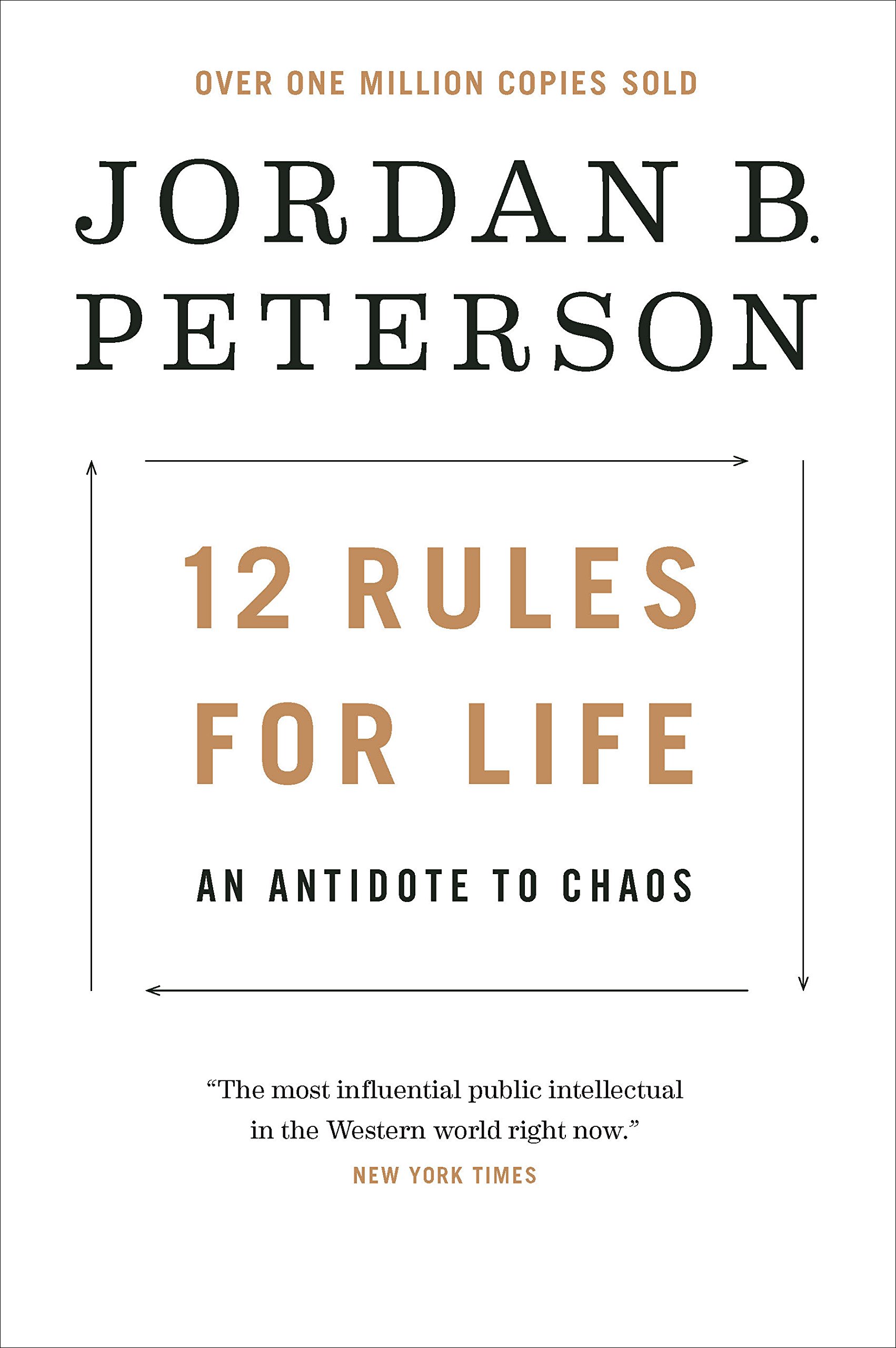
12 Rules for Life by Jordan B. Peterson


Stand up straight with your shoulders back
Treat yourself like someone you are responsible for helping
Make friends with people who want the best for you
Compare yourself to who you were yesterday, not to who someone else is today
Do not let your children do anything that makes you dislike them
Set your house in perfect order before you criticize the world
Pursue what is meaningful (not what is expedient)
Tell the truth – or, at least, don't lie
Assume that the person you are listening to might know something you don't
Be precise in your speech
Do not bother children when they are skateboarding
Pet a cat when you encounter one on the street


12 Rules for Life: An Antidote to Chaos  
By Jordan B. Peterson
Random House, 2018, 409 pages.


Wednesday, June 13, 2018

Moving Towards Self-Improvement


"Correction of movements is the best means of self-improvement:
1.  The nervous system is occupied mainly with movement. 
2.  It is easier to distinguish the quality of movement.
3.  We have a richer experience of movement.
4.  The ability to move is important to self-value.
5.  All muscular activity is movement.
6.  Movements reflect the state of the nervous system.
7.  Movement is the basis of awareness.
8.  Breathing is movement.
9.  Hinges of habit."
-  Moshe Feldenkrais, Awareness Through Movement, pp. 33-39, 1972


Notes on Feldenkrais Methods


Sunday, November 19, 2017

Coping with the Blues


I found the article "Coping with Depression" from Health Guide to be informative and useful.  One may just have "the blues," and need to apply some self-help suggestions to get back to feeling better.

1.  Reach out and stay connected.
2.  Do things that make you feel good.
3.  Get moving
4.  Eat a healthy, depression fighting diet.
5.  Get a daily dose of sunlight.
6.  Challenge negative thinking

The suggestions on ways to avoid negative thinking are staple recommendations from the Rational Emotive Behavorial Therapy (REBT) school popularized by Dr. Albert Ellis. 

"Come up with a list of things that you can do for a quick mood boost. The more “tools” for coping with depression, the better. Try and implement a few of these ideas each day, even if you’re feeling good. 


Spend some time in nature
List what you like about yourself
Read a good book
Watch a funny movie or TV show
Take a long, hot bath
Take care of a few small tasks
Play with a pet
Talk to friends or family face-to-face
Listen to music
Do something spontaneous"


Ways to Lift Your Spirits, by Mike Garofalo, 9/15/2011, 3 pages PDF format.

How to Live a Good Life: Advice from Wise Persons Compiled by Mike Garofalo.


Sunday, November 01, 2015

Stoic Week 2015, Online Workshop for Self-Improvement


Stoic Week 2015, November 2 - November 8th, 2015.   "The course guides you through all the basic ideas of Stoicism. Each day has its own theme, exercises to practise,  and reflections from original Stoic texts to consider. It has been written by the Stoicism Today team, an interdisciplinary group of academics and psychotherapists. You are also encouraged to take wellbeing surveys before and after the week, so we can measure the effectiveness of the course.  To take part in Stoic Week 2015, follow us on social media and subscribe to the blog, and you will be updated with all our material, such as the handbook and survey links.  As well as subscribing, follow our Twitter account @Stoicweek or see our Facebook group. See below for further contact details.  You’ll be able to register about a week before Stoic Week begins when we publish the link for the online intake questionnaires."  

I am participating in this online Stoic Week workshop in November of 2015.  

Monday's Theme is "Your Life Project and Role Models."  


Stoicism.  A hypertext notebook by Mike Garofalo.  

Virtues and Happiness.

How to Live a Good Life: Advice From Wise Persons


Aurelius, MarcusMarcus Aurelius Antoninus Augustus; 26 April 121 CE – 17 March 180 CE) was Roman Emperor from 161 to 180. 'He ruled with Lucius Verus as co-emperor from 161 until Verus' death in 169. He was the last of the Five Good Emperors, and is also considered one of the most important Stoic philosophers.  During his reign, the Empire defeated a revitalized Parthian Empire in the East: Aurelius' general Avidius Cassius sacked the capital Ctesiphon in 164. In central Europe, Aurelius fought the Marcomanni, Quadi, and Sarmatians with success during the Marcomannic Wars, although the threat of the Germanic tribes began to represent a troubling reality for the Empire. A revolt in the East led by Avidius Cassius failed to gain momentum and was suppressed immediately.  Marcus Aurelius' Stoic tome Meditations, written in Greek while on campaign between 170 and 180, is still revered as a literary monument to a philosophy of service and duty, describing how to find and preserve equanimity in the midst of conflict by following nature as a source of guidance and inspiration."

Marcus Aurelius (121-180 CE)   Stanford Encyclopedia of PhilosophyWikipedia EncyclopediaInternet Encyclopedia of Philosophy


Marcus Aurelius: A Life  By Frank McLynn.  Da Capo Press, 2010.  720 pages.  ISBN: 978-0306819162. 


Marcus Aurelius: A Biography.  By Anthony R. Birley.  Roman Imperial Biographies Series.  Routledge, 2nd Edition, 2000.  320 pages.  ISBN: 9780415171250.


The Inner Citadel: The Meditations of Marcus Aurelius  By Pierre Hadot.  Translated by Michael Chase.  Cambridge, Massachusetts, Harvard University Press, 1998.  Index, notes, 351 pages.  Meditations of Marcus Aurelius Series.  ISBN:  978-0674007077.  VSCL. 


Meditations of the Emperor Marcus Antoninus Aurelius.  Translation and commentary by A. S. L. Farquharson.  2 Volumes in 1944.  Everyman's Library, Reprint Edition, 1992.  280 pages.  ISBN: 9780679412717.


Meditations.  By Marcus Aurelius.  Translated by Martin Hammond.  Illustrated by Coralie Bickford-Smith.  Introduction by Diskin Clay.  Hardcover Classics.  New York, Penguin Classics, Reissue Edition, 2014.  General index, index of quotes, extensive notes, 416 pages.  ISBN: 978-0141395869.  VSCL.  Written by the Roman Emperor Marcus Aurelius in Koine Greek around 160 CE.


Meditations: A New Translation.  By Marcus Aurelius.  Translated by Gregory Hays.  New York, Modern Library, 2002.  256 pages.  ISBN: 978-0679642602.  Kindle Version.  VSCL.  Written by the Roman Emperor Marcus Aurelius in Koine Greek around 160 CE.

The Meditations of Marcus Aurelius: A Study.   By R. B. Rutherford.  Oxford Classical Monographs, 1989.  Clarendon Press, 1991.  304 pages.  ISBN: 9780198147558.  


Stoic Studies  By Anthony A. Long.  University of California Press, 2001.  325 pages.  Hellenistic Culture and Society, Book 36.  ISBN: 978-0520229747.