Showing posts with label Stories. Show all posts

Saturday, June 06, 2026

Thunderbird Stories, Legends, and Myths


Thunderbird Stories of Pacific Northwest Native Peoples

Thunderbird Stores from the Hoh, Quileute, and Tillamook Tribes


"For the native cultures of the Pacific Northwest and the Great Plains, the Thunderbird was a mythical creature that embodied strength and power. The Thunderbird is a very large and powerful bird. It was said to be so large, in fact, that it could pluck an orca whale from the sea with as much ease as an eagle catching salmon in its talons. As the name implies, Thunderbirds were associated with storms. The massive wings of the Thunderbird made the sound of thunder when they flapped, and according to some stories, the Thunderbird even shot lightning from its eyes. For peoples of the Great Plains, the Thunderbird was a harbinger of rain, which could be a welcomed sight or a destructive force, depending on the conditions. In some cultures, Thunderbirds go to war with other forces of nature. “To the Arapaho, Thunderbird is the summer bird who challenges White Owl Woman, the winter bird, to see whose powers are greater. Thunderbird stirs up great black clouds with tremendous noise and wind. White Owl Woman stirs up thick, fast-moving white clouds that blow a piercing wind. The Thunderbird represented the power of nature and the violence of storms, but it was, for the most part, not a fearsome or malevolent creature. This mythical creature was revered as sacred. The tribes of the Pacific Northwest topped their totem poles with carved images of Thunderbirds. Drawings, artwork, songs, stories, and dances featuring the Thunderbird are common in the tribes of the Great Plains and Pacific Northwest."
Ten Native American Mythical Creatures


"The thunderbird is a mythological bird-like spirit in North American indigenous peoples' history and culture. It is considered a supernatural being of power and strength. The thunderbird is said to create thunder by flapping its wings (Algonquian[1]), and lightning by flashing its eyes (Algonquian, Iroquois[2]). Across cultures, thunderbirds are generally depicted as birds of prey, or hybrids of humans and birds. Thunderbirds are often viewed as protectors, sometimes intervening on people's behalf, but expecting veneration, prayers, and gifts. Petroglyphs of thunderbirds are found near Twin Bluffs, Wisconsin. Similar beings appear in mythologies the world over. Examples include the Chinese thunder-god Leigong, the Hindu Garuda and the African lightning bird.[14]"
- Thunderbird in Wikipedia


"According to many legends, the Thunderbird is so large that one feather from their wingspan would have to be folded in half to properly fit into a quiver. Additionally, these creatures were so large and mighty that they could easily carry a whale in their talons. Because of this, many scholars find it unlikely that the Thunderbird could exist in modern day without being seen.

In spite of these things, the Thunderbird continues to be a point of fascination for all. The Thunderbird appears to be a creature of extreme intelligence and intrigue. There are many stories that tell of the Thunderbird in Native American legends, which make the creature appear to be one of the key deities in their beliefs. The Thunderbird is mysterious in that it is not merely a protector, but is also seen as enforcer of morality – one that should never be angered."
- Thunderbirds in Myths


Other Transformer Changers Creatures are the Raven and Coyote.

My favorite harmonica is the Hohner Thunderbird in the Key of C Low.


Wednesday, August 21, 2024

Subject Index to the Book of Serenity 100 Zen Buddhist Koans


Book of Serenity 100 Koans (BOS)


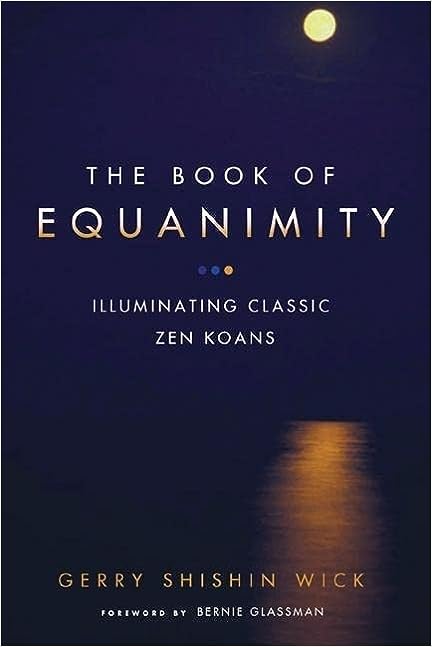
Book of Equanimity or Book of Serenity (BOS)

The Book of Serenity (BOS) Book of Equanimity
100 Cases of Brief Stories, Spiritual Encounters, Koans, Wisdom Tales, Sermons, Dialogues, Parables
Compiled and published around 1224 CE.

Indexed by Michael P. Garofalo. Second Draft on August 26, 2023.

Primary Source for Indexing: The Book of SerenityOne Hundred Zen Dialogues. Translated with commentary by Thomas Cleary, 2005, 512 pages.


Subject Index to Cases in the Book of Serenity (BOS) 100 Koans Collection. Second Draft, August 25, 2023, 26 pages, PDF.

Alphabetical List of Cases in the Book of Serenity (BOS) 100 Koans Collection. Second Draft, August 25, 2023, 4 pages, PDF.

List of Cases by Case Numbers in the Book of Serenity (BOS) 100 Koans Collection. Second Draft, August 25, 2023, 4 pages, PDF.


Subject Index to 1,975 Zen Buddhist Koans and Discourses

The Book of Equanimity: Illuminating Classic Zen Koans. By Gerry Shishin Wick. Foreword by Bernie Glassman. Boston, Wisdom Publications, 2005. Recommended reading list, list of names index, 331 pages. ISBN: 9780861713875.
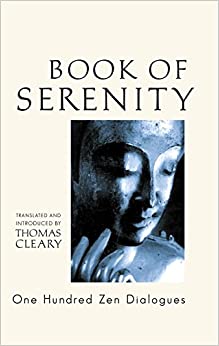

Book of Serenity: One Hundred Zen Dialogues. Translation and commentary by Thomas Cleary. Shambhala, 2005, glossary, notes, 463 pages. 100 Koans. VSCL, paperback.


Book of Serenity Translated by Joan Sutherland Roshi and John Tarrant Roshi. "The hundred koans of the Book of Serenity, also translated as the Book of Equanimity, were among those written by twelfth-century Chan teacher Hongzhi Zhengjue. In the thirteenth century, Wansong Xingxiu compiled Hongzhi’s koans and wrote commentaries for each. Although the collection is associated with the Caodong / Soto school, they are also taken up in koan study by Linji / Rinzai practitioners." Online PDF Version.


Shoyoroku (E. Book of Serenity, C. Ts’ung-jung lu) Online version of the Book of Serenity. Congrong Lu.
A collection of 100 koans, originally compiled in the 12th century by Wanshi Shogaku (C. Hung-chih Cheng-chüeh).


Book of Equanimity - Wikipedia 100 Cases. Compiled by Wangsong Zingxiu (1166-1246), and first published in 1224. The book comprises a collection of 100 koans written by the Chan Buddhist master Hongzhi Zengjue (1091-1157), together with commentaries by Wansong. Wansong's compilation is the only surviving source for Hongzhi's koans.


Buddhism: Bibliography, Links, Information, Resources. Compiled by Michael P. Garofalo.


Zen Buddhist Koans and Information: https://www.egreenway.com/buddhism/koansdup1.htm By Michael P. Garofalo.


Wednesday, May 10, 2023

Gateless Gate Koans Subject Index

In 1961, at age 15, I read three books that greatly influenced my thinking: The Story of Philosophy by Will Durant, Why I am Not a Christian by Bertrand Russell, and Zen Flesh and Zen Bones by Paul Reps and Nyogen Senzaki.  I read books from the Bandini Branch (two blocks from my home) of the County of Los Angeles Public Library, and from the old ELA Library Branch of CoLAPL near my Catholic elementary school, and later from the City of Commerce Public Library.

I still own copies of Zen Flesh and Zen Bones compiled by Paul Reps and Nyogen Senzaki. It is the first Koan Collection I ever read.  I have studied many other "brief" spiritual stories/tests/sermons/koans collections for many decades since 1961.    

Zen Flesh and Zen Bones: A Collection of Zen and Pre-Zen Writings. Translated and compiled by By Paul Reps and Nyogen Senzaki. Tuttle Publishing, Flaps edition, 1998. First published in 1957.  211 pages. The Gateless Gate (Mumonkan) was transcribed by Nyogen Senzaki (1876–1958) and Paul Reps (1895–1990) in 1934, and appeared in in "Zen Flesh, Zen Bones, 1958" pp. 109-161. VSCL, hardbound and paperback. 101 Stories/Koans.


There are numerous published collections of brief Buddhist and Taoist stories, conversations, meetings, student and teacher exchanges, sermons, lessons, instructions, questions, tests and problems, confrontations, spiritual insights, biographies of Buddhist Saints and Heroes, enlightenment experiences, etc.  I call some of these "Koan Collections."

I decided I would first use a simple Excel spreadsheet to create a Subject Index to Koan Collections.  Then, I converted to using Microsoft Access Database for the Koan Database Project.  

The first book (Koan Collection) I indexed was:

GB The Gateless Gate: The Classic Book of Zen Koans.  Translated with commentary by Koun Yamada Roshi.  2004. 48 Koan Cases compiled around 1250 CE.  


Saturday, April 01, 2023

How Could He Make Up His Mind

The Fireplace Records, Chapter 13


The student asked, "One question that keeps cropping up in the Zen Buddhist koan literature is "What is the Buddha?"

I've read that Baso said, "This very mind is the Buddha." (GG 30, Sekida)
Nansen said, "Ordinary mind is the Way." (GG 19)
Baso said, "No mind, no Buddha." (GG 33)
Nansen said, "It is not mind; it is not Buddha; it is not things." (GG 27)
I've read that Nansen said: "Ordinary Mind is Buddha."
Pan Shan said, "There is nothing in the Triple World,
where can mind be found." (BCR 37)
Yun Men said, "Food in the bowl, water in the bucket." (BCR 50)."

"I am impressed by the catchy phrases, uplifted in spirit, but I am still a bit confused."

The teacher replied, "Don't agree with or believe in some of what you read. Don't concern yourself to much with what so and so said so in so. Some confusion can be productive around complex issues and concepts.  Don't make up your mind right away about important Dharma matters. Mind your mind."  

The teacher continued, "The Buddha is explained and expressed and symbolized in our ordinary lives through attentiveness, insight, dedication, compassion, gratitude, wisdom, enlightenment, being down to earth, following a spiritual path and practice, following the Precepts, seeing clearly, supporting others, etc.   So, yes, I do oftentimes hear the Buddha Dharma revealed within our ordinary minds, ordinary deeds, and our ordinary words."

The student smiled.  


The Student's Considerations:

A teacher is not necessarily a Master.
Mind my mind: Observe, Judge, Control-Act.
Don't let the mind get too closed.
Being open minded is sometimes temporary impartiality.
"Mind", mind you, is hard to define, comprehend, explain.
Act, when needed, quickly; otherwise deliberate first.    


Related Links, Resources, References


GG, Hekiganroku: Gateless Gate, Translated by Katsuki Sekida, Cases 19, 27, 30, 33. 
BCR, Blue Cliff Record, Translated by Katsuki Sekida, Cases 37, 50 

Refer to my Cloud Hands Blog Posts on the topic of Koans/Dialogues.

The Daodejing by Laozi    Best? 

Pulling Onions  Over 1,043 One-line Sayings by Mike Garofalo

Chinese Chan Buddhist and Taoist Stories and Koans

Taoism

Buddhism

Fireplaces, Stoves, Campfires, Kitchens, Pots, Firewood

Chinese Art

Tai Chi Chuan and Qigong

Meditation Methods

Zen Koan Books I Use

Koan Database Project


Sparks: Brief Spiritual Stories, Dialogues, and Encounters
Matches to Start the Kindling of Insight
May the Light from Your Inner Fireplace Help All Beings
Zen Buddhist Koan Collections
Catching Phrases, Inspiring Verses, Hard Questions
Bibliography, Indexing, Quotations, Notes, Resources
Research by Michael P. Garofalo

The Fireplace Records
By Michael P. Garofalo


Thursday, March 23, 2023

Database Software: Microsoft Access

 I have used the Microsoft Access database software since 2001.  I used Access for work at my places of employment and at home for database applications.  

I had not used Access since 2017, and had used Microsoft Excel since 2017 for related simple home database applications.  

To my surprise, Access is not included in my current low budget Microsoft Office package.  I had to shell out $175.00 today for the Microsoft Access software.  I've used database software since the 1990's.  I like this kind of power user database software.  

I am currently working on a major database Project in 2023.  I call it:
"The Subject Index to Cases in Koan Collections."

The Access database for this project on my C: hard drive is called:
Koan Case Database.

The Folder on my C: hard drive where I store the various files, reports, backups, images, documents, downloads, etc., for this project is at:
C:\Koan Database. 

I was able to import all my existing Excel data into a new database called: Koan Case Database.  


Brief Spiritual Stories, Dialogues, and Encounters
Zen Buddhist Koan Collections
Catching Phrases, Inspiring Verses, Hard Questions
Bibliography, Quotations, Notes, Resources

Research by Michael P. Garofalo

The Fireplace Records By Michael P. Garofalo