Showing posts with label Exercises. Show all posts

Tuesday, April 14, 2026

Chen Tai Chi Chuan Short Forms

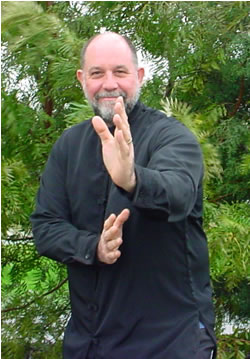
Chen 18 Taijiquan Short Form of Grandmaster Chen Zenglei

18 Movements Short Form

Notes by Michael P. Garofalo, Vancouver, Washington, 2024

Chen Taijiquan Short 18 Form of Grandmaster Chen Zenglei
Webpage by Michael P. Garofalo
Bibliography, links, resources, notes, quotes, videos, lists, photos, comments.


Chen's Taichi for Health and Wellness  By Grandmaster Chen Zenglei. White Bench Publications, Toronto, Canada, 2010, 94 pages. Warmup exercises, and detailed instructions with some photographs for the Chen 18 Short Form. Jack Yan is a collaborator  I like this book quite a bit.  $24.00 in 2/2021. VSCL.

Chen Style Taijiquan Short 18 Form  Performance by Grandmaster Chen Zhenglei  UTube, color, 3:38 Minutes, 2007.

The Chen Style Taijiquan for Life Enhancement. Written by Chen Zhenglei and translated by Xu Hailing. Zhongzhou Classic Publishing House, Zhengzhou, China, 2002. Text in English and Chinese.  ISBN: 7534821819.  149 pages. "Describes the principles of Chen style for life enhancement, basic training, Taiji Skills for Preserving Energy and the 18 Forms of the Chen Style. Many photos of Chen Zhenglei doing Exercises and forms. Chen Zhenglei is one of the top Chen stylists in China. Paperback, 149 pages, 5 1/2' by 8'. -  Wayfarer Publications "It covers the content of the health exercise silk reeling video, and is a useful reference,  giving more detail, especially on theory." This is a very expensive out of print book, not worth $150.00. I purchased back in 2004 for $25.00. VSCL.

Essence of Traditional Chen Style 18 Posture Short Form. Instructional DVD by Shifu Jiang Jian-ye.  Color, 87 Minutes. Capital District Tai Chi and Kung Fu Association of New York, 1997.  "Cheng Zheng Lei (the 19th generation of the Chen Family) created this form from the old style of Chen first and second routines.  It includes "silk reeling," fa jin (releasing energy), and balance.  This short form is a good introduction for beginners or for those with little Chen style experience." "A good introductory Chen form that includes silk reeling and fajing movements as well as other characteristics of the Chen first and second routines. Chen Zhenglei, one of today's top Chen stylists, created the form.There is a demonstration of the entire form followed by step-by-step teaching in slow motion with 2-4 views, from the front, back and side. There are front and back demonstrations of each segment (5 to 7 moves each.)  At the end of the teaching there are demonstrations, front and back. There are also excerpts from other Chen forms." - Wayfarer Publications. CDTKA.  VSCL. I use a Cboy V-Zon portable DVD player and this DVD works fine because of the way it is organized.   


Chen Style Taijiquan
Grandmaster Chen Zhenglei's Short 18 Movements Tai Chi Hand Form, 2001
List of 18 Movements


1.     Beginning Posture of Taiji    (Taiji Chu Shi

2.     Buddha's Warrior Attendant Pounds the Mortar   (Jin Gang Dao Dui

3.     Lazily Tying One's Coat   (Lan Zha Yi)   

4.     Six Sealing and Four Closing   (Liu Feng Si Bi)    

5.     Single Whip   (Dan Bian)  

6.     White Crane Spreads Its Wings   (Bai E Liang Chi

7.     Walk Diagonally   (Xie Xing)    

8.     Brush Knee   (Lou Xi

9.     Stepping to Both Sides   (Ao Bu)    

10.   Cover Hands and Strike with Fist   (Yan Shou Gong Quan)    

11.   High Pat on the Horse   (Gao Tan Ma)   

12.   Kick with the Left Heel    (Zuo Deng Yi Gen

13.   Jade Maiden Working Her Loom   (Yu Nu Chuan Suo)    

14.   Cloud Hands   (Yun Shou)     

15.   Turn Body with Double Lotus Kick    (Zhuan Shen Shuang Bai Lian

16.   Cannon Fist Over the Head   (Dan Tou Pao)    

17.   Buddha's Warrior Attendant Pounds the Mortar   (Jin Gang Dao Dui)    

18.   Closing Posture of Taiji   (Taiji Shou Shi)      


Chen Taijiquan Short 18 Form of Grandmaster Chen Zenglei. By Michael P. Garofalo. Bibliography, links, resources, notes, information, lists, practices, quotes.

List of Movements in Grandmaster Chen Zhenglei's Short 18 Form  (1 Page, PDF)  English Only


Friday, February 27, 2026

Keeping Your Balance and Avoiding Falls for Older Persons

Keeping Your Balance and Avoiding Falls 
Safety Tips for Around Your House
For Older Persons, Seniors, Elderly:

Avoid clutter. Don't leave things on the floor. Pick up after yourself.
Make sure you have good lighting for both night and day.
Keep furniture and tables to a minimum. Leave room for walking.
Keep areas beside the bed and into a toilet clear and uncluttered.
Use hand bars beside toilet and shower.
Have a strong small ladder for reaching up to higher shelves.
Wear good shoes indoors.
Make sure rugs and runners are secure on the floor.
Watch out if you have steps into your garage or rooms.
Be careful, slow down, be alert!
Use your cane or walker as needed.
Be aware if medicines you take make you feel lightheaded or dizzy.
If sitting for a long time, stand up slowly and carefully.
Move carefully on arthritic or injured limbs.
Use tips and techniques for standing up carefully and safely.
Exercise each day to improve strength, flexibility, and balance.
Make sure all chairs, seats, and tables are in good working order.
Use it, or slowly but surely loose it.
Keep all cabinet drawers or doors pushed and closed properly.
Let others help you or pay for services.
Know you own strengths, limitations, or weaknesses.
If you are obese, it will impair your balance skills. Loose weight!
Do exercises to improve the strength of your legs and hips.
See a physician for serious dizziness.
Practice Tai Chi Chuan to improve your balance skills.
- Michael P. Garofalo, Balance

Aging Well  Information, Bibliography, Quotes, Notes, Links


Sunday, December 07, 2025

Heart-Mind Boxing

"Dragon Body - This imaginary beast is common in Chinese fables and folklore. The dragon could fly high, riding the mists, contracting and twisting it's body like a snake through the clouds. Xingyi places high importance on this for every transitional movement in the art should embody the spirit of the dragon, expanding and contracting, striking out with mystical prowess.

Chicken Leg - This is one of the most basic fundamentals of the art of Xingyiquan. A chicken can run very quickly and stop suddenly, keeping it's weight on one leg, ready to peck. Xingyi's five elements all encompass this theory by stepping forward onto one leg before it issues it's strike much like a chicken does. By mastering this, you can advance, retreat, turn and change forms very quickly because the weight is always ready to transfer.

Eagle Claw - While the hands are relaxed and held in gentle curves when in transitional movements, when striking, they must become like the fearless bird of prey's attacking talons, digging and grasping with an iron grip. This is especially seen in the beginning movement of Pi Quan when the hands draw down towards the Dan Tian. This is also very important in Xingyi, for many of the art's applications consist of grabbing with one hand while simultaneously striking with the other.

Bear Shoulders - Bears are large animals that can can generate a great deal of power from their great rounded shoulders. The Xingyi practitioner must mimic this to obtain maximum power in his art. By rounding the shoulders and hollowing the chest, the body actually "gets behind" the arms and hands, so when you strike, the power doesn't come from the arms, but from the whole body.

Tiger's Head Embrace - The tiger is a very regal beast. They are powerful and strong animals that exude the finest and most fearsome aspects of nature. In Xingyi, the head must be held erect and slightly back, but spiritually, it must also capture the imposing manner of the tiger, letting it's blank cunning show in your eyes and it's ability to pounce.

Xonghua Xinyiquan

Xing Yi Quan (Hsing I Chuan): Bibliography, Links, Resources, Quotes, Notes. By Mike Garofalo.


Xing Yi Quan Xue: The Study of Form-Mind Boxing.   By Sun Lu Tang.  Translated by Albert Liu.  Compiled and edited by Dan Miller.  Burbank, CA, Unique Publications, 2000.  ISBN: 0865681856.  312 pages.  Includes a biography of Sun Lu Tang (pp.1-41) by Dan Miller.  The work was encouraged and supported by Sun Jian Yun, and an interview with her is included.  Translations by Tim Cartmell, Gu Feng Mei, and Huang Guo Qi.  This original book was first published in 1915.  It was the first book ever published that integrated Chinese martial arts with Chinese philosophy and Daoist Qi cultivation  theories.  The book includes many photographs of Sun Lu Tang.  


"Of the three internal arts, Xing Yi is probably the most straightforward to understand in terms of practical fighting applications. Grandmaster Sun, however, believed that the most important reason to practice martial arts was the improvement of one's health; developing fighting ability was merely of secondary importance. Sun himself certainly benefited in both respects. In 1933, at the age of 73 and shortly before his death, Sun was examined by a physician and found to have the body of a 40-year old. Furthermore, throughout his life he was an awesome fighter: He worked as a professional bodyguard, taught martial arts at the Presidential Palace, and never lost a challenge match.
Certain health benefits of Xing Yi training are obvious. It is a low-impact exercise requiring little jumping, few low stances, and smooth rather than ballistic movements. As Sun notes in his book, it can be practiced by anyone, both the young and old, and the sick and infirm. Healthy people will grow stronger, while those with a disease will recover their health. However, in addition to the external physical benefits, Xing Yi practice offers a sophisticated system of internal energy training that stimulates the major energetic pathways within the body.At the core of Sun Lu Tang's Xing Yi Quan system is the 12 animals set. This set consists of 12 lines of movements, each emulating the fighting techniques of the 12 animals that come from heaven and earth. These are the Dragon, Tiger, Monkey, Horse, Water Lizard, Chicken, Sparrow Hawk, Swallow, Snake, Tai Bird, Eagle, and Bear. Regular practice of the 12 animals set benefits the practitioner both externally and internally. Externally, one learns the physical characteristics of each animal-the explosive power of the tiger, or the strength of the bear, for example. Internally, each animal form stimulates the internal energy, or Qi, in a particular and beneficial manner. The remainder of this article describes both the energetic work and the fighting applications of four of the animal forms: the Dragon, Tiger, Eagle, and Bear."
-  Justin Liu, 
 Cultivation and Combat: The Fighting Animals of Xing Yi Quan.


Friday, July 04, 2025

Cannon Cane: Eight Immortals Chen Taijiquan Cane Routine II


Eight Immortals Taijiquan Cane
Cannon Cane, Routine Two
Based on the Chen Style of Taijiquan

Created and Taught by Master Jesse Tsao, PhD.

List of Postures, Movements, Forms 

Section I

1.  Opening Form

2.  Lazily Tying Coat

3.  Six-Seal and Four Close
4.  Single Whip
5.  Striking Left and Right
6.  Wrapping Head with the Cane
7.  Uppercuts Left and Right
8.  Grand Eagle Spreads Wings
9.  Embracing the Moon
10.  Cat Catches Rat
11.  Golden Rooster Standing on One Foot
12.  Whipping Sleeves and Slamming Cane
13.  Overturn the Ocean
 

Section II

14.  Dragon’s Tail Stirring Water
15.  Pinwheel Cane
16.  Fair Lady Works at Shuttles
17.  Batting a Home Run
18.  Ruthless Lord Holds Up Flag
 

Section III

19.  Strike Low and Strike High
20.  Dragon Descends into Ocean
21.  Dragon Emerges from Water
22.  Parry Left and Right
23.  Turn-Around Strike
24.  Dragon Swings Tail
25.  Head Smashing Cane
26.  Lock Front Door
 

Section IV 

27.  Black Bear Turns Around
28.  Lock Back Door
29.  Heart Thrusting Cane
30.  Waist Blocking Cane
31.  Crotch Striking Cane
32.  Head Striking Cane
33.  Dragon’s Head Up
34.  Dragon Coiling Around Pillar
35.  Wind Devil Cane
36.  Closing Form


Mastering Tai Chi Cane for Health and Self-Defense. By Jesse Tsao, PhD. Tai Chi Healthways, 2022, 225 pages.


Traditional Tai Chi Eight Immortals Cane, Routine 2 (Cannon Cane, Chen Style).  By Jesse Tsao, PhD.  Tai Chi Healthways, Instructional DVD 62 Minutes. 

Way of the Short Staff  By Michael P. Garofalo, M.S.  A comprehensive guide to the practice of the short staff, cane, jo, walking stick, gun, zhang, whip staff, 13 Hands Staff, and related wood short staff weapons.  A detailed and annotated guide, bibliography, lists of links, resources, instructional media, online videos, and lessons.  Includes use of the short staff and cane in martial arts, self-defense, walking and hiking.  Separate sections on Aikido Jo, Cane, Taijiquan cane and staff, Jodo, exercises with a short staff, selected quotations, techniques, selecting and purchasing a short staff, tips and suggestions, and a long section on the lore, legends, and Magick of the short staff.  Includes "Shifu Miao Zhang Points the Way."

 Cloud Hands Taijiquan, Valley Spirit Center, Fir Grove, Vancouver, Washington.  List by Michael P. Garofalo, September 24, 2022. 


Eight Immortals Taijiquan Cannon Cane Routine

1.  Opening Form  Section 1

2.  Lazily Tying Coat

3.  Six-Seal and Four Close
4.  Single Whip
5.  Striking Left and Right
6.  Wrapping Head with the Cane
7.  Uppercuts Left and Right
8.  Grand Eagle Spreads Wings
9.  Embracing the Moon
10.  Cat Catches Rat
11.  Golden Rooster Standing on One Foot
12.  Whipping Sleeves and Slamming Cane
13.  Overturn the Ocean

14.  Dragon’s Tail Stirring Water  Section 2
15.  Pinwheel Cane
16.  Fair Lady Works at Shuttles
17.  Batting a Home Run
18.  Ruthless Lord Holds Up Flag

19.  Strike Low and Strike High  Section 3
20.  Dragon Descends into Ocean
21.  Dragon Emerges from Water
22.  Parry Left and Right
23.  Turn-Around Strike
24.  Dragon Swings Tail
25.  Head Smashing Cane
26.  Lock Front Door

27.  Black Bear Turns Around  Section 4
28.  Lock Back Door
29.  Heart Thrusting Cane
30.  Waist Blocking Cane
31.  Crotch Striking Cane
32.  Head Striking Cane
33.  Dragon’s Head Up
34.  Dragon Coiling Around Pillar
35.  Wind Devil Cane
36.  Closing Form


Thursday, June 26, 2025

Chen Taijiquan 19 Form


I am learning this short Taiji form from Sifu Ken Gullette, from his excellent instructional DVD.  I'm still kind of stiff in my movements.  Feel I have good ground path connection and shifting weight into sides.  No sense of Dantien circling yet.  Can repeat, on my own, up to Move 13.  

"The Chen 19 Form was created by Grandmaster Chen Xiao Wang in 1995 in response to demand from students around the world for a short routine suitable for beginners. The form is composed of 19 movements (and so its name) , divided into four sections. The form is easy for novice to learn, yet offers the experienced practitioner room to express and develop the basic principles, energies and techniques of the style. The form is a combination of postures from the three traditional Chen style taijiquan routines: Lao Jia (Old Frame), Xin Jia (New Frame), and the Xiao Jia (Small Frame). It contains several postures from the Xin Jia style, including Shang Bu Xie Xing, Dao Juan Hong, and Yeh Ma Fen Zhong. These postures are fairly simple, and avoid the complex coils that are the signature of the style. Also included are postures from the Xiao Jia style, including Shuang Tui Shou, Shan Tong Bei, and Liu Feng Si Bi. The remainder of the form (about 2/3) is from the Lao Jia Yi Lu routine."
- Madison Chen Style Taijiquan Studio


The Chen Taijiquan 19 Form of Grandmaster Chen Xiao Wang
Research and Study of the 19 Form by Michael P. Garofalo
2018-2023

"This form was developed by Chen Xiao Wang, 19th generation grandmaster of Chen Style Taijiquan. It serves as a good introduction to important moves in the primary Chen form, lao jia yi lu. It is an easy form to begin utilizing Chen Xiao Wang's reeling silk principles. It is also very well balanced with right-side/left side moves. Postures of this form are derived from Chen “first set” forms as listed below: New Frame First set (Xin Jia Yi Lu): Step up walk obliquely (Shang bu xie xing), Whirling upper arms (Dao juan hong), Part wild horse’s mane (Yeh ma fen zhong). Small Frame First set (Xiao Jia Yi Lu): Push with both hands (Shuang tui shou), Flashing the back (Shan tong bei), and Six sealing four closing (Liu feng si bi). Old Frame First Set (Lao Jia Yi Lu) – Remainder of moves. The form is composed of four sections that run back and forth on a straight line, with each section primarily running in one direction."
-  Rochester Chen Style Tai Chi Chuan


The Chen Taijiquan 19 Form of Grandmaster Chen Xiao Wang
Research and Study of the 19 Form by Michael P. Garofalo
2018-2023


Monday, April 28, 2025

Taijiquan Sword: Yang Style 32 Sword Form


This popular webpage includes a comprehensive bibliography, scores of links to webpages; an extensive listing of the names and name variations for each movement in English, Chinese, French, German, and Spanish; a detailed analysis of each posture and movement sequence with explanations and numbered illustrations and detailed instructions; selected quotations; comments on 20 Taijiquan sword techniques; a comprehensive media bibliography; a chart of performance times; recommendations for starting to learn this form at home one your own with instructional DVDs, books and practice methods; and, a comparison of the 32 and 55 sword forms in the Yang style. 

This is the standard, simplified, orthodox, 1957, 32 Taiji Sword Form, in the Yang Style of T'ai Chi Ch'uan. 

32 Sword Form Pamphlet by Geoffrey Hugh Miller.  Adapted from information and graphics found on the 32 Sword Form webpage by Michael P. Garofalo.  22 pages, 9/7/2015, PDF Format.  Excellent job by Mr. Miller.  This is a handy practice tool.  


Monday, April 14, 2025

Sun Tai Chi Chuan Characteristics

[Here is a Cloud Hands Blog repost from June 19, 2009.]


"The Four Characteristics of Sun Shi Tai Ji:

1. The natural position of the body. The position of the body is more natural than in other forms of Tai Ji. The basic position - San Ti Shi - comes from Xing Yi. It differs from the traditional basic position - Hun Yuan Zhuang. The position of the body is higher (angle with the knees of 135°), the axis head - centre of gravity falls on only one foot and not with equal distance of the two feet, the feet are positioned one compared to the other according to an angle of 45° and not in parallel or are aligned like usually used in other schools of Tai Ji. All these characteristics respect the natural positioning of the body with two consequences. Initially a practice more favorable to health, without excessive wear (of the knees in particular). Then, a good balance between stability and flexibility.

2. Flexible and fast movement. The movement of the feet is flexible and fast: as soon as a leg advances or moves back, the other leg follows immediately. One does not find in Sun Shi Tai a horse riding stance with feet equal distance apart or the bow and arrow posture of traditional Tai Ji. In Sun Shi, one uses the free steps coming from Xing Yi and of Bagua. The centre of gravity always falls on one leg; a foot supports all the weight of the body, the other follows, free. The steps forwards are the steps of Beng Quan, and backwards the steps of Pi Quan. The steps of rotation correspond to the steps of Ba Gua. Sun Shi is light, fluid and fast. It is compared with the water which runs and with the clouds which slip into a windy sky.

3. The specific figure of Kai He. Sun Shi Tai Ji has a very specific figure; Kai He (to open - to close) which is found neither in other forms of Tai Ji, nor in Ba Gua or Xing Yi. This Kai He appears with each connection and transition. It makes it possible to control and adjust breathing and to accumulate the Shi (energy potential) in order to prepare for the next change.

4. It is an art which aims at effectiveness in combat. Sun Shi Tai Ji is truly an art of combat. The amplitude of the gestures is limited, the course of the hands are direct, natural and aims to be effective. . It is not the force of the arms which strike, but the sum total of the elastic force of each movement carried out on a correct and uniform axis of gravity."
- Master Bob Melia, Sun Shi Tai Chi

Sun Taijiquan: Bibliography, Links, Resources, Instructions, Quotes, Glossary
By Mike Garofalo.

Research by Mike Garofalo

Sun Taijiquan Website Index Page

Sun Lu Tang (1861-1933) Biographical Information

Sun Tai Chi Chuan International Competition 73 Form
Instructions, Bibliography, Links, Resources.

Sun Taijiquan Blog

Sun Taijiquan Dictionary

Sun Lu Tang's Xing Yi Quan (Hsing I Chuan)

Sun Lu Tang's Baguazhang (BaQua Quan)


Sun Taijiquan is reputed to help with osteoarthritis.  I have problems with arthritis in my feet, shoulder, tailbone, and hands.  Nothing actute at the present time, but annoying.  Sometimes, I have to adjust my workouts in the gym, in yoga, or in my taijiquan practice to manage the discomfort from increasing osteoarthritis.

Help with Arthritis: Tai Chi, Chi Kung, Yoga, Walking, and Diet   Bibliography, links, resources, recommended books, information, quotations, tips, and research.  By Michael P. Garofalo.  
 

Saturday, April 12, 2025

Tai Chi Chuan Instruction in Vancouver, Clark County, WA

 Tai Chi Chuan Instruction in 2025-

The Yang Style of T'ai Chi Ch'uan

Private or Group Lessons

Instructor: Mike Garofalo, M.S., B.A.

Instructor's Qualifications

In Clark County, Washington State:
Vancouver, Battleground, Camas,
Orchards, Salmon Creek, Minnehaha,
Prairie Creek, Five Corners, Felida,
Sunnyside, City Center, Mill Plain

Contact Mike Garofalo by Email or Phone

Teaching and practicing the Yang Style
Taijiquan Short 24 Movements Form,
the Standard Long 108 Movements Form,
Cane, and Qigong


Cost for Lessons:
$20 per hour for one person
$30 per hour for two persons
Senior Citizen Discounts
Large Group Discounts
Long Time Student Discounts
Gratuities Always Welcome


Location of Lessons:
9102 NE 100th Street
Vancouver, WA 98662
Also at Nearby Locations


Websites: Cloud Hands Tai Chi Chuan

Blog: Cloud Hands Blog

Qigong (Chi Kung), Longevity Practice


Instructor: Michael P. Garofalo
Qualifications and Experience

I began learning Yang Style Taijiquan and
Qigong in 1986, and have taught these
Body-Mind Somatic Arts since 2000.
I also taught Hatha and Vinyasa Yoga
in Red Bluff, CA, from 2003-2016.

All of my Yoga and T'ai Chi Ch'uan
Classes Include Some Qigong
(Chinese Yoga) Practices

In 2025, I am 79 years of age.


I began learning Yang Style Taijiquan and Qigong from
1986-1990 with Sensei Frank McGourick in Whittier, California.
I studied Lui Ho Ba Fa and Qigong with Sifu Robert Moore from 1987-1990 in Whittier, California.
I studied Red Dragon Kung Fu from 1991-1993 with Sensei Tony Ippolito in Hacienda Heights, California.

I taught over 950 one hour classes of Taijiquan and Qigong in Red Bluff, California, from 2000-2017.
I also practice the Chen 18 Style of Taijiquan and Sun 73 Style
of Taijiquan, the cane weapon, and many Qigong forms.

Tai Chi for Diabetes Instructor Trained and Certified by Dr. Paul Lam in 2003.
Tai Chi for Arthritis Level 2 Instructor (Sun Style) Trained and Certified by Troyce Thome in 2006.
Advanced Tai Chi and Qigong training at workshops or classes led by Robert Moore, Paul Lam, Ken Cohen,
Patricia Long, George Xu, Elaine Waters,
Bill Helm, Doc Fai-Wong, Sher K. Lew,
Kevin Weaver, Troyce Thome, Yang Jun,
David Fetyko, and Brian Knack.

I taught Hatha and Vinyasa Yoga in Red Bluff from 2003 to 2016 for over 1,460 hours of one hour classes.
YogaFit Level IV Certified Yoga Instructor (Standard 200 Hour Yoga Alliance Curriculum Completed) in 2004.
Over 100 hours of additional yoga training with Dr. Paula Barros, Desiree Rambaugh, and at the Ananda Yoga Center.
All of my Yoga Classes include some Qigong (Chinese Yoga).

Personal Fitness Trainer Certified by AFAA 2007
Mat Pilates AFAA Certified 2005
Spin Cycling AFAA Certified 2005
Aerobics and Fitness Association of America (AFAA) Certifications
SilverSneakers Trained Instructor 2012
CPR and AED certified from 1999-2017, 2024-.

Emergency 30-Day Substitute Teaching Permit, 4/1999-4/2017
Certified by the State of California Commission
on Teacher Credentialing.
M.A. Education, 40 units, CSU Chico.
M.A., Philosophy, 30 units at CSU Los Angeles.
M.S., Library and Information Science,
University of Southern California, 1968
B.A. Philosophy, CSU Los Angeles, 1967

Brief Biography

My telephone number in 2025 is 530-200-0750.


Qigong
(Chinese Warm-up Exercises, Chinese Yoga,
Chi Kung, Energy Development, Energy Work)

Eight Section Brocade Qigong (Ba Duan Gin)

Five Animal Frolics Qigong (Wu Qin Xi)

The Magic Pearl Medicine Ball Qigong

Ba Gua Circle Walking Eight Mother Palms

Entering Tranquility: Standing Meditation

Silk Reeling and Circles in Taijiquan

Temple Qigong

Dragon Qigong

Muscle-Tendon Changing Qigong (Yi Jin Jing)

Cloud Hands Website

Cloud Hands Blog

25 Steps and Beyond: Collected Works


Updated on April 12, 2025


Friday, March 07, 2025

Yin Yoga, Gentle Yoga, Yoga for Seniors

 Yin Yoga, Gentle Yoga


The Complete Guide to Yin Yoga: The Philosophy and Practice of Yin Yoga. By Bernie Clark. Wild Strawberry, 2019, 350 pages. VSCL, Paperback. DVD. My First Choice. Excellent descriptions of Yin Postures.


Yin Yoga and Meditation
: A Mandala Map for Practice, Teaching and Beyond. By Sagel Urlacher. 2022, 331 pages. VSCL, Paperback.
 My Second Choice. Excellent meditation information and ideas.


YinSights: A Journey Into the Philosophy and Practice of Yin Yoga. By Bernie Clark. Foreword by Sarah Powers. Index, 417 pages. ISBN: 096876651X. VSCL, Paperback.


Yin Yoga: Outline of a Quiet Practice. By Paul Grilley. Ashland, Oregon, White Cloud Press, 2002. 118 pages. ISBN: 1883991439. VSCL, Paperback. 


Yin Yoga: The Foundations of a Quiet Practice. Instructional DVD featuring Paul Grilley. Pranamaya, Inc., 2005. 2 DVDs, 338 minutes. ASIN: B000B5871I.  VSCL, DVD.


Gentle Yoga: 7 Beginning Yoga Practices for Mid-Life (40's - 70's). Includes AM Energy, PM Relation, Improving Balance, Relief from Desk Work, Corce Strength, and more. By Jane Adams. DVD, 3 Hours and 12 minutes. VSCL, DVD.


Yoga for Beginners. 8 Yoga Video Routines for Beginners. Include Gentle Yoga Workouts to Increas Strength and Flexibility. By Barbara Benagh. DVDs, 13 Hours. 2019. VSCL, DVD.


Built From Broken. A Science-Based Guide to Healing Painful Joints, Preventing Injuries, and Rebuilding Your Body. By Scott H. Hogan. 2021, 348 pages. VSCL, Paperback.  


Columbia Valley Spirit Yoga Website.  By Michael P. Garofalo.


Carbohydrates 2024

Wednesday, January 15, 2025

Balance for Seniors

 Balance

Maintaining and Improving Your Balance
Methods, Exercises, Concepts, Causes
Better Balance for Seniors and Avoiding Falls


By Michael P. Garofalo


Bibliography Links Resources Information

Quotations References Commentary

Instructor Qualifications of Michael P. Garofalo


Keeping Your Balance and Avoiding Falls 
Safety Tips for Around Your House
For Older Persons, Seniors, Elderly:

Avoid clutter. Don't leave things on the floor. Pick up after yourself.
Make sure you have good lighting for both night and day.
Keep furniture and tables to a minimum. Leave room for walking.
Keep areas beside the bed and into a toilet clear and uncluttered.
Use hand bars beside toilet and shower.
Have a strong small ladder for reaching up to higher shelves.
Wear good shoes indoors.
Make sure rugs and runners are secure on the floor.
Watch out if you have steps into your garage or rooms.
Be careful, slow down, be alert!
Use your cane or walker as needed.
Be aware if medicines you take make you feel lightheaded or dizzy.
If sitting for a long time, stand up slowly and carefully.
Move carefully on arthritic or injured limbs.
Use tips and techniques for standing up carefully and safely.
Exercise each day to improve strength, flexibility, and balance.
Make sure all chairs, seats, and tables are in good working order.
Use it, or slowly but surely loose it.
Keep all cabinet drawers or doors pushed and closed properly.
Let others help you or pay for services.
Know you own strengths, limitations, or weaknesses.
If you are obese, it will impair your balance skills. Loose weight!
Do exercises to improve the strength of your legs and hips.
See a physician for serious dizziness.
Practice Tai Chi Chuan to improve your balance skills.
- Michael P. Garofalo, Balance

Aging Well  Information, Bibliography, Quotes, Notes, Links


9 Practical Walking Principles
By Arieh Lev Breslow
"Tai Chi Falls Prevention Manual"

"1. Wear shoes that fit comfortably and promote balance. Look for shoes that are stable from side to side and are well-cushioned. They should enable you to walk smoothly and comfortably and provide you enough room to wiggle your toes while being snug in the heels. 

2. When you step forward, always step with the heel first. Then roll your weight onto the bottom of your foot. This is the natural way to walk. If you can’t do this, then you need to ask for a diagnosis from your physician or physical therapist. If you are stepping with the flat part of the foot or the ball of the foot first, you will be unbalanced with each step. 

3. Allow your weight to sink into your ankles and knees as if they were springs. This will impart a sense of buoyancy to your body as you walk. If your knee and ankle joints are held in a rigid or locked position, your gait will lose its fluidity and thus increase the probability of falling. 

4. As you walk, be aware of the shifting of weight - Tai Chi Walking 

5. Walk from your belly button. The Chinese call this area, Tan-Tien (pronounced “Dahn T-yen"). It is approximately the center of the body and the storage place of Chi energy. Imagine that you have a belt around your body with a piece of it extended out from your belly button. When you walk, allow yourself to be gently led as if someone was pulling the extended piece of belt. Remember that this is only an image. You should not walk with your belly sticking out. No one from the outside should know that you are using this image. 

6. Walk with an Upright Body. The idea of your headtop being lifted toward heaven by a string is an important image in Tai Chi Walking. It works against the tendency to lean. When you lean, you are likely to fall in that direction. 

7. Before you change direction, first turn your head and look in the direction you want to go. Then turn your body in that direction. Many falls occur when turning too fast. 

8. The arms should swing naturally at the sides of the body. This is important because the arms provide balance and momentum. If they are held in the pockets, they cannot be used to prevent or to cushion a fall. 

9. Breathe deeply in a natural way to relax the body. A stiff body is like a pole ready to topple over. Breathing deeply will also mitigate the mental fear factor." 

Friday, November 08, 2024

Personal Transformation: Practices, Exercises, Disciplines

Personal Transformation:
Practices, Techniques, Methods, Paths, Activities, Expressions
Ways, Tactics, Strategies, Plans, Engagement, Learning,
Spiritual Exercises of Stoics, Positive Psychology Methods,
Daily Efforts, Actions, Aims


Most people experiment and then discover methods that work best for them, their circumstances, age, culture, personality, education, habits, etc.

When you find a path that works best for you - stick to that way. It is likely that an open-minded and flexible person will use a variety of spiritual practices.  Some aspects of each practice overlap with some aspects of other practices.  

Transformation is not a goal or aim of a practice; the practice itself is the embodiment of transformation.  The process is itself transformation.  Your transformed here and now by doing the practice with some confidence or belief in the efficacy of the practice. As soon as you make the effort to engage in psychologica/spiritual practices you immediately taste bites of nourishing enlightenment and transformation.  


Aging and Spirituality, Graceful Aging, Coping with Aging

Art, Beauty, Creative Projects 

Asceticism, Self-Denial, Restraint, Fasting, Self-Discipline

Avoid the Mob, the Herd, the Commonplace Social Pressures

Bhakti Yoga, Loving-Kindness, Worship of Other and the Divine

Beauty of Ordinary Objects, Wabi/Swabi, Aesthetics

Being Present Today, Using the Present Day for Change

Belief, Confidence, Adherence, Trusting

Biofeedback, Electronic Aids, Lights, Air Filters 

Body-Mind Practices, Somatic Therapy

BreathingPranayama, Breath Work, Dao Yin

Chanting, Mantras, Sound Healing, Singing

Charity, Benevolence, Sharing, Volunteering

Classes, Lectures, Training Sessions, Learning, Seminars

Control or Not Control Events in Your Life, Distinguish

Cooking, Mindful Eating, Vegetarianism, Good Nutrition

Comparative Religions and Worldviews Studies

Cosmic, Big Picture, World Events and Circumstances

Counseling, Psychotherapy, Advisors, Guides, CBT

Create a Meaningful Life and Values for Yourself

Cycles, Repeating Patterns, Seasons, Repetitions, Reflect

Do Good, Avoid Evil

Eastern Options: YogaBuddhismTaoismStoicismZen

Environmental Awareness and Responsibilities

Excess, Gluttony, Hedonism, Wallowing: Avoid, Don't Do

Exercises: Walking, Yoga, Taijiquan, StretchingWeight Lifting, etc.

Experiment, Research, Investigate, Question, Try Out

Family Life and Social Responsibilities Met, Householder Duties

Fate, Beyond Your Control, External Events

Five Senses Awareness and Explorations

Focus on Your Actions and Thoughts Today

Future Events are Somewhat Uncertain, Focus on Today

Gardening: Soil Work, Planting, Nurturing, Harvesting, Watering, Ecology

Goddess Devotion and Love, Tara, Kwan Yin, Mary, Lakshmi, Shakti

Gratitude, Thankfulness, Appreciation, Satisfaction

Guided Meditations, Hypnotherapy, Wise Stories 

Hatha Yoga, Tantra, Vajira Body, Longevity, Immortality

Healing, Caring, Helping, Informing 

Holidays, Celebrations, Customs, Observances, Eight Sabbats 

Incense, Smells, Fireplace, Flowers 

Interacting with Others, Group Activities, Church or Temple Services

Jana Yoga, Wisdom Path, Insight, Understanding

Language, Truth, and Logic, Semantics, Rhetoric

Left Hand Tantra: Libertinism, Antinomianism, Sensuality, Sexuality

Live and Let Live, Mind Your Own Business

Magic, Incantations, Prayers, Spells, Esoterica, Tantra

Massage, Acupressure, Self-Massage 

Mass Media Negative Influences on Your Life, Avoid, Reduce

Maxims, Reminders, Axioms, Great Verses, Memorize, Repeat

Meditation, Non-judgmental Awareness, Non-Dual Awareness

Mindfulness, Attention, Focus in the Present Day

Moderation in All Things, Don't Overdo or Underdo, Golden Mean

Music, Songs, Ambient Sounds, Bells/Gongs, Audio lectures

Must Do's, Should Do's ... Be Careful of these Opinions

Nature Outdoors: Ocean, Mountains, Desert, Forest, Rivers, Neighborhood, Garden, Parks

Massage, Acupressure, Healing Hands, Reiki, Acupuncture, Chiropractic

Medicines, Herbal Remedies, Alternative Therapies, TCM 

Medicine for the Body-Mind, Spirit, Soul

Movies, Documentaries, UTube Videos

Mysticism, Oneness, Epiphanies, Engaging, Revealing

One Chance, One Life, Today: Reflect

Open-mindedness, Flexibility, Keeping Options Open, Fair

Opinions and Judgements: Be Careful, Revise as Needed

Passages Repeated, Spiritual Notebooks, Inspiring Passages, Prayer Books, Hymnals

Past Events are Fixed and Unchangeable

Peaceful Calm Joyful Mind/Body Sense of Being in the World

Perceptions: Aim for Clarity, Truthfulness, Accuracy, Usefulness

Persistence, Grit, Willpower, Determination, Perseverance, Dedication

Photography, Drawing, Painting, Viewing Sacred Images

Philosophy, Thoughtfulness, Reasoning, Understanding, Science

Philosophy As a Way of Life

Pilgrimages, Visiting Sacred Places, Learning about Holy Sites

Plan Your Day in the Morning, Set Objectives, To Do Lists

Play, Games, Sports, Homo Ludens

Pleasures: Natural and Necessary, Bodily Functions, Understand

Pleasures: Natural but Unnecessary, Understand and Control

Pleasures: Unnatural and Unnecessary, Avoid, Shun

Praying, Invocations, Spells, Recitations, Mantras, Chants 

Present Focus, Here and Now, Today, Realm of Your Control

Reading, Research, Self-Study, Scriptures, Classics 

Reflections, Ruminations, Considerations, Reminders

Reflect on Impermanence and Death, Anticipate

Reminders, Maxims, Axioms, Great Verses, Memorize, Repeat

Research, Investigate, Question, Experiment

Retreats, Vision Quests, Isolation, Solitude, Solo Practice

Review Your Day at the End of Each Day

Riddles, Puzzles, Poems, Dilemmas, Koans

Right Livelihood, Decent Employment, Honorable Work

Rituals, Sacraments, Sacred Rites, Rites of Passage

Sacred Objects: Altars, Statues, Bowls, Art, Books

Sacred Places, Sacred Circles, Sacred Groves, Buildings

Service to Others, Helping, Volunteering, Charity

Shamanism, Visions, Astral Travel, Meeting Spirits, Drugs 

Simplicity, Frugality, Conservation, Respect for Things

Sitting in Quiet Awareness, Sitting in Oblivion, Zuowang

Smiling, Joyfulness, Positive Vibrations, Laughter, Jokes

Social Responsibilities, Family, Employment, Community

Spiritual Exercises of Stoics, Buddhists, Epicureans, Cynics

Stories, Inspiring Fiction, Poetry 

Strength Training, Weightlifting, Endurance Events

Spiritual Guides, Gurus, Enlightened Persons, Elders, Scriptures

Supernatural Beings: God, Allah, Shiva, Avatars/Incarnations (Jesus, Krishna, Buddha, Vishnu), Nature Spirits, Angels, Saints, Demons, Bodhisattvas, Dao, Wee Folk, Immortals (Xian), etc.  Use or Don't Use!

Tai Chi ChuanQigongDao Yin, Martial Arts

Tarot, I Ching, Random Visuals/Archetypes/Reminders

Thankful for the Gifts of Others, Parents, Teachers, Community

Theology, Thinking about the Divine, Scripture Study

Time Management, Action Today, Aims and Objectives

Today is the Day for Change, Be Present, Here and Now

Traditions, Ancestors, History, Religions, Philosophies

Unquestioning Obedience or Religious Zealotry Avoided

Usefulness: What is and What is Not Good for You and Society

Walking, Hiking, Sauntering, Kinhin Walking Meditation 

Worry, Fretting, Fear: Find Methods to Reduce or Avoid

Yoga

Virtue Ethics, Morals, Proper Behaviors, Karma, Niyamas, Values

Virtue: Flourishing, Skills, Knowledge, Awareness

Visualizing, Imagining, Pretending, Fantasies, Dreams

Vows, Precepts Taking, Initiation, Confirmation

Wait, Delay, Reflect: Before You Act

Work Responsibilities, Career, Management, Effort, Right Livelihood

Worship, Submission, Dedication, Bhakti Yoga

Writing, Journaling, Blogging, Web Publishing 

Zazen, Seated Zen Meditation, Zuowang  


Springtime in Vancouver, WA
Mike Garofalo reading Moshe Feldenkrais


"I am a seeker of truth on a spiritual journey. 
I believe life has sacred meaning and purpose.
May my behavior today express my deepest beliefs. 
May I approach each and every task today with quiet impeccability. 
May I be a simple, humble, and kind presence on the earth today. 
May I see the Divine Nature in all beings today. 
May I be grateful today to those who came before me,
and may I make the roads smoother
     for those who will travel them after me. 
May I leave each place at least a little better than I found it today. 
May I truly cherish this day, knowing that it may be my last. 
May I remember, remember, remember, not to forget, forget, forget."

-   Bo Lozoff, It's a Meaningful Life: It Just Takes Practice 


How to Live a Good Life: Advice from Wise and Respected Persons

Compiled by Michael P. Garofalo