Showing posts with label Symbolism. Show all posts

Sunday, April 19, 2026

Art, Symbolism, and Creative Interpretations: The Tarot

Today, I am enjoying using a new copy of the:
Voyager Tarot, Intuition Cards for the 21st Century
By James Wanless, Ph.D.. Artist Ken Knutson. 
78 full color collage art Tarot cards.  117 page mini booklet. 
Fair Winds: ISBN 978-1-59233-322-6, 2017.  First edition 1984.  


Has anyone seen a chart or list correlating the 78 cards in the Voyager Tarot (or other Tarot decks) with the 64 Hexagrams of the I Ching???

For examples:

I Ching Number = Tarot Card Name

#1 Creative, Initiating = Magician, 1

#4, Childhood, Youthful Folly, Impermanence = Fool, 0

#52 Mountain = Hermit, 9

During a morning Voyager Tarot card reading, I usually select one card as the most significant for the day.  I would like to write on each Tarot card the corresponding, related, correlated, comparable, similar themed, or relevant I Ching Hexagram Number.  

Also, this is a different way for selecting an I Ching Hexagram other than yarrow sticks or coin tossing.  


A Repost from 2018:


I first purchased and used Tarot decks in 1979.  I studied numerous books on the subject of the Tarot.  I purchased numerous decks over the decades.  First, I enjoyed the variety of artwork and symbolism in the 78 cards in the different decks from different centuries.  Second, the creator of each deck brings some new insights into the overall structure and meanings for the cards in the deck.  Third, I enjoyed "reading" and creatively interpreting the symbols and images in these small art objects in the context of my own life and questions.  

I even made, in 2011, some very incomplete notes in hypertext documents on the Tarot.

My method over the years is to ask a question or reflect on my current consciousness and situation in my life.  Then, I randomly pull from 3 to 5 cards from the deck.  I try to interpret, reflect upon, and consider the meaning of each card.  I may use The Voyager Tarot book to refresh or expand my understanding or memories.  Then, I arrange the cards in some order to "tell a story."  I do this once a day, at night; then, in the morning, reconsider the meanings and relevance of that 3-5 card reading in my life.  I only look at cards right side up; although, I do sometimes reverse the meaning of the cards depending upon the story I create.  

I enjoy using the 1991 Voyager Tarot deck the most.  

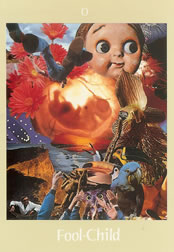
This photomontage deck was designed by James Wanless, Ph.D.  The photographic collage artwork was created by Ken Knutson.  It was first published in 1984, and then in 1991 and 2008. 

The Voyager Tarot: Way of the Great Oracle Book.  By James Wanless, 1989.  Book and Deck


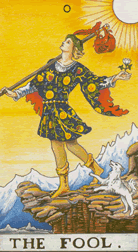
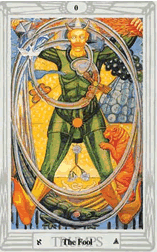
 The Fool, 0


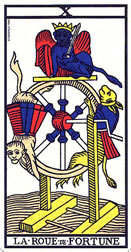
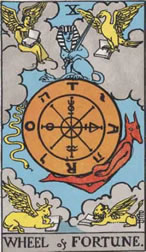
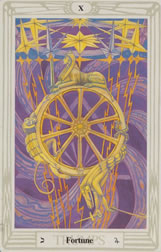
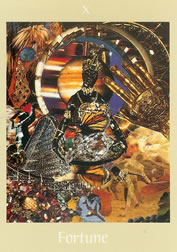
The Wheel of Fortune, 10


Saturday, February 07, 2026

Jnana Mudra


The Jnana Mudra represents knowledge, insight, experience, and wisdom.  

Jnana Yoga (theistic and non-theistic) is a path of learning, reading, listening, discussing, knowing, meditating, and understanding.

For me, I interpret this hand gesture, the Jnana Mudra, as follows:

Little Finger:  Ethics, Doing Good, Avoiding Evil, Sharing, Compassion

Ring Finger:  Healthy Living, Proper Diet, Exercise, Sleep, Meditation, Rest, Respect for Body of Self and Others, Actions, Work

Middle Finger:  Improving your Mind, Refining your mind, Self-Understanding, Awareness, Know Thyself, Self-Realization

Index Finger Touching Thumb:

  Connecting with Others, Friendships, Sangha

  Interconnectivity, Connections, Interdependence, World-Life

  Zero, Emptiness, Transformations of Everything,
  Insubstantiality of Self, Death, Boundlessness

  Circle of Life, Cycles, Round and Round

  Buddhist Wheel with Eight Spokes Symbol, Eightfold Path

  Sun, Great Eastern Sun, Energy-Power, Life Giving


Monday, September 23, 2024

Tao Te Ching, Chapter 4

Daodejing, Laozi
Chapter 4


"Tao is like an empty vessel,
yet use will not drain it.
Never needing to be filled,
it is the deep and unfathomable source
of the ten thousand things.

Blunt the sharpness.
Untangle the knots.
Soften the glare.
Settle like dust.
Let your wheels move only along old ruts.

Darkly visible,
it only seems as if it were there.
I know not its name.
It existed before the ten thousand things.
I call it Tao."
-  Translated by Kari Hohne, 2009, Chapter 4  


"Tao is a whirling emptiness, yet when used it cannot be exhausted.
Out of this mysterious well flows everything in existence.
Blunting sharp edges, Untangling knots, Softening the glare, It evolves us all and makes the whole world one.
Something is there, hidden and deep!
But I do not know whose child it is.
It came even before God."
-  Translated by Brian Browne Walker, 1996, Chapter 4  


"Tao is infinite.
If we use It, we find It inexhaustible,
Deep!
It appears to be Ancestor of all things.
It rounds our angles. It unravels our difficulties. It harmonizes our Light. It brings our atoms into Unity.
Pure!
It appears to be everlasting in principle.
I do not know whose Son It is,
It existed before God was manifest in Form."
-  Translated by Isabella Mears, 1916, Chapter 4 


"The Tao is like an empty bowl, 
Which in being used can never be filled up.
Fathomless, it seems to be the origin of all things.
It blunts all sharp edges,
It unties all tangles,
It harmonizes all lights,
It unites the world into one whole.
Hidden in the deeps,
Yet it seems to exist for ever.
I do not know whose child it is;
It seems to be the common ancestor of all, the father  of things."
-  Translated by John C. H. Wu, 1961, Chapter 4  


道沖而用之或不盈.
淵兮似萬物之宗.
挫其銳.
解其紛.
和其光同其塵.
湛兮似或存.
吾不知誰之子.
象帝之先.
-  Chinese characters, Chapter 4, Tao Te Ching


dao chang er yong zhi huo bu ying.
yuan xi si wan wu zhi zong.
cuo qi rui.
jie qi fen.
he qi guang tong qi chen.
zhan xi si huo cun.
wu bu zhi shui zhi zi.
xiang di zhi xian.  
-  Pinyin Romanization, Chapter 4, Daodejing


"Existence, by nothing bred,
Breeds everything.
Parent of the universe,
It smoothes rough edges,
Unties hard knots,
Tempers the sharp sun,
Lays blowing dust,
Its image in the wellspring never fails.
But how was it conceived?--this image
Of no other sire."
-  Translated by Witter Bynner, 1944, Chapter 4 


"Tao is empty, used yet never filled.
It is deep, like the forefather of all things.
It dulls sharpness, and sorts tangles,
Blends with the light, becoming one with the dust.
So serene, as if it hardly existed.
I do not know whose son it is.
It seems to have preceded God."
-  Translated by Paul J. Lin, Chapter 4 


"El Tao es como un jarrón
que el uso nunca llena.
Es iqual que un abismo,
origen de todas las cosas del mundo.

El embota cualquier filo,
El desmadeja cualquier ovillo,
El fusiona todas las cuces,
El unifica todos los polvos.

El parece muy frofundo,
parece durar siempre.
Higo de un no sé qué,
debe de ser el antepasado de los dioses."
-  Translated by Alba, 1998, Tao Te Ching, Capítulo 4 


"The subtle Way of the universe appears to lack strength,
yet its power is inexhaustible.
Fathomless, it could be the origin of all things.
It has no sharpness,
yet it rounds off all sharp edges.
It has no form,
yet it unties all tangles.
It has no glare,
yet it merges all lights.
It harmonizes all things and unites them as one integral whole.
It seems so obscure,
yet it is the Ultimate Clarity.
Whose offspring it is can never be known.
It is that which existed before any divinity."
-  Translated by Hua-Ching Ni, 1995, Chapter 4  


"Tao is an empty vessel;
it is used but never exhausted.
It is the fathomless source
of the ten thousand beings!
It blunts the sharp
and untangles the knots.
It softens the glare
and unites with the dust of the world.
It is tranquil and serene
and endures forever.
I don't know form where it comes
yet it is the ancestor of all."
-  Translated by Solala Towler, 2016, Chapter 4 


"Tao is a container
Though used again and again
It is never full
Profound!  As though the ancestor of all things

Rounding the points
Untying the knots
Softening the glare
Unifying the dust


Tranquil!  Although having a life of its own
I do not know whose child it is
It appears to have preceded the primordial ruler"
-  Translated by Dan G. Reid, 2016, Chapter 4 


"The Tao is like an empty container: 
 it can never be emptied and can never be filled.
 Infinitely deep, it is the source of all things.
 It dulls the sharp, unties the knotted,
 shades the lighted, and unites all of creation with dust.

It is hidden but always present.
 I don't know who gave birth to it.
 It is older than the concept of God."
-  Translated by John H. McDonald, 1996, Chapter 4  


A typical webpage created by Mike Garofalo for each one of the 81 Chapters (Verses, Sections) of the Tao Te Ching (Daodejing) by Lao Tzu (Laozi) includes 25 different English language translations or interpolations for that Chapter, 5 Spanish language translations for that Chapter, the Chinese characters for that Chapter, the Wade-Giles and Hanyu Pinyin transliterations (Romanization) of the Mandarin Chinese words for that Chapter, and 2 German and 1 French translation of that Chapter.  Each webpage for each one of the 81 Chapters of the Tao Te Ching includes extensive indexing by key words, phrases, and terms for that Chapter in English, Spanish, and the Wade-Giles Romanization.  Each webpage on a Chapter of the Daodejing includes recommended reading in books and websites, a detailed bibliography, some commentary, research leads, translation sources, a Google Translate drop down menu, and other resources for that Chapter.  These are hypertext documents, and available online under Creative Commons 4.


Chapter 4, Tao Te Ching by Lao Tzu.  Compiled and indexed by Mike Garofalo.  

Chapter and Thematic Index (Concordance) to the Tao Te Ching by Lao Tzu


English Language Daodejing Translators' Source Index


Spanish Language Daodejing Translators' Source Index


Ripening Peaches: Taoist Studies and Practices


Taoism: A Selected Reading List


Thursday, April 15, 2021

Pan and the Green Man


"There lies within
A hidden glen
An altar made of stone.
Creeping vine
And moss entwine
To hide this ancient throne.
Tangled thorn
Grows thick to scorn
Those who seek to enter.
For though they strive
No man alive
Shall ever reach its center.
Known as Pan,
To some Green Man,
This glen is his sacred place.
He dons his hood
Of wildwood
To hide his leafy face.
The roving clans
That raped the lands,
Cut down his beloved trees.
And so, alas
As time did pass
The Green God fell to his knees. ..."

- Kristina Peters Moone, The Green Man


"The force that through the green fuse drives the flower
Drives my green age; that blasts the roots of trees
Is my destroyer.
And I am dumb to tell the crooked rose
My youth is bent by the same wintry fever.

The force that drives the water through the rocks
Drives my red blood; that dries the mouthing streams
Turns mine to wax.
And I am dumb to mouth unto my veins
How at the mountain spring the same mouth sucks."

-   Dylan Thomas, The Force That Through the Green Fuse Drives the Flower


Lore, Legends, Tales, Celebrations, Springtime Symbols, Folk Stories and Plays
From the hypertext research notebooks of Mike Garofalo


This cabbage, these carrots, these potatoes,
these onions ... will soon become me.
Such a tasty fact!
- Mike Garofalo, Cuttings


Portrait of the Emperor Rudolph II as Autumn.By Arcimboldo, 1591, Held at the Museo Civico, Brescia.