Showing posts with label Harmonica. Show all posts

Monday, March 23, 2026

Harmonica: This Land is Your Land


Harmonica: This Land is Your Land

Woody Guthrie wrote the song “This Land is Your Land” in 1940.
My harmonica teacher, Luke, says “it was a critical response to the song God Bless America.”

Key of C.  Chords: C7 F C G G7

Woody Guthrie (1912-1967)  https://en.wikipedia.org/wiki/Woody_Guthrie


This Land is Your Land

4    -4   5  -5   -5  

This land is your land

 -5    4  -4  5   5

This land is my land

 3   4 5 -4 -4  -4  -4  4   -4   5  5

From California to the New York island

 4    4   -4  5  -5 -5 

From the redwood forest 

 -5 -5   4    -4    5  5

To the Gulf Stream waters

 -4   -4  -4   -3   3  -3  -4   4

This land was made for you and me


Tuesday, December 31, 2024

New Year's Eve, 2024, Reflections

Peace on Earth and Good Will to People

May family and friends have continued happiness.

How to Live a Good Life: Advice for Wise Persons


In 2025 I plan to, intend to, and will apply effort to:

Continue to enjoy playing and learning about making music with my harmonica and electric keyboard.

Write and study poetry, e.g., At the Edges of the West.

Walk over 5,000 steps per day for three months, then increase.

Go on a 4 day Yurt Camping trip each month.

Eat under 150 Grams of Carbohydrates each day.

Practice Yang Style Tai Chi Chuag each day for 30 minutes.


Tuesday, October 22, 2024

Why I Don't Practice With a Chromatic Harmonica


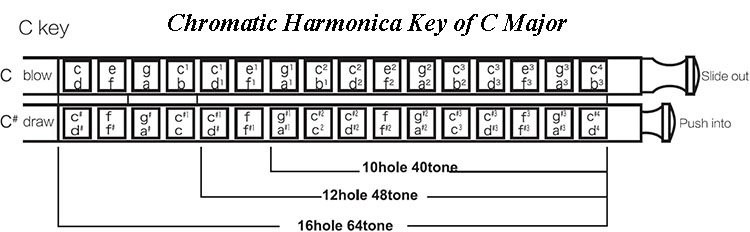
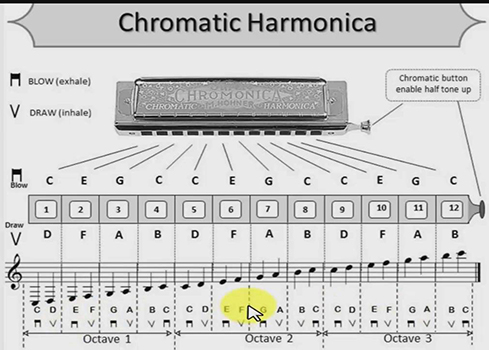
I have very little experience with using a chromatic harmonica. I have purchased two chromatic harmonicas in the Key of C Major, 12 holes, 48 tones/notes, in the past. I have considerable experience with diatonic harmonicas.

After playing the chromatic harmonica for a year, after studying, learning, and using the different layouts for blow/draw notes/holes (Richter vs Solo), after listening to the different sound of the diatonic and chromatic, after sensing the different feel of the size and shape of these two types of harmonicas, and after experimenting with the slide, etc.; I've come to a conclusion. I have decided to focus on playing, learning, and advancing my musical skills in using only a diatonic harmonica.

I have decided not to play a chromatic harmonica anymore. Why?

All chromatics are much larger and heavier than a diatonic. They are considerably less portable than a Hohner Thunderbird or Hohner Rocket diatonic. Most good chromatics have 12 or 16 holes, and diatonics have 10 holes. A typical chromatic is not a carry in your pocket anywhere harmonica, they are more a carry in your backpack musical instrument.

A chromatic, in my opinion, does not play chords as well as a diatonic harmonica.

If you can't manage the chromatic's slide well, then a chromatic can sound really bad. A diatonic is more forgiving of mistakes.

I do enjoy experimenting with a wider ranges of notes/sounds available on the chromatic harmonica vs a diatonic harmonica (48 notes vs 20 notes without bends or overblows); however, I find that using my decent electronic MIDI keyboard offers vastly more experimental options for an adventuresome sound explorer.

Good chromatic harmonicas are typically more expensive than good diatonic harmonicas. Some good chromatic models cost from $150.00 - $250.00 or more. A decent diatonic harmonica can be purchased for under $50.00.

Both chromatic and diatonic harmonicas are available in a variety of different keys, both in standard and low tuned. However, most good chromatics come in the Key of C Major. And, with a higher degree of skill, you can play in many keys on one C Major Key chromatic. However, in my opinion, it is just far easier to play a diatonic in the key you want to play, rather than mastering playing in different keys on one chromatic harmonica.

It is easier to bend or overblow on a diatonic harmonica, rather than on a chromatic without using the slider. Seems to me that the degree and control of notes with bends and overblows, excluding slider functions, is more capable of refinement on a diatonic.

Chromatics are favored by classical and jazz harmonica musicians. Diatonics are favored by blues, rock, folk, and country musicians. I play tunes I enjoy the most being played on a diatonic harmonica.

Using the chromatic slider properly is a refined skill requiring considerable practice, and adds another challenging layer of refined learning and practice demands for typical home solo players.

In is far easier to us a variety of cupping techniques on a diatonic, rather than on the larger chromatic.

Shifting between chromatic and diatonic versions can be confusing for beginners like me. Better to focus on playing just one type of musical instrument. I chose the diatonic harmonica.


I own a EastTop Forerunner Chromatic Harmonica in the Key of C Major LOW. 12 Holes, 48 Tones, Chromatic Mouth Organ Harmonica, $125.00. VSCL.

I own a EastTop Forerunner Chromatic Harmonica in the Key of C Major. 12 Holes, 48 Tones, Chromatic Mouth Organ Harmonica, $52.00. VSCL.


Chromatic Harmonica in the Key of C Major


Thursday, September 12, 2024

Laptop Computer Setup

Today, I began working on setting up my new Lenovo IdeaPad 1 Windows laptop microcomputer:

Lenovo IdeaPad 1 Laptop, 15.6” FHD Display, AMD Ryzen 5 5500U, 8GB RAM, 512GB SSD, Windows 11 Home, 720p Camera w/Privacy Shutter, Smart Noise Cancelling, Cloud Grey, $331.00 from Amazon on 9/11/2024. Supposedly, it runs Windows 11 Home quite well, has decent battery life, is sturdy and light in weight, and has a better sound system.


I will set up the Lenovo laptop for full featured use of the Internet (Chrome and Bing, My Homepage), Facebook, Blog, Amazon, Kindle, Atlantis, Website Links ...

Also, and most important, I want to use the new Lenovo laptop for music recording, music editing, DAW (Digital Audio Workshops: FLStudio, Ableton), Band in a Box Software, percussion software, MIDI keyboard connectivity, home music studio hardware and software, music composing, sound mixing, musical theory research, voice alteration Humanoid, ...

In September, 2024, I stopped using my old refurbished HP Elitebook 8470P laptop which I purchased for $250 in January, 2022,, except for photography work. I stopped using my old Galaxy 1 Tablet A in September 2024, except for music playing. Both older units are slow, have battery problems, do not work properly sometimes, have old hardware/software, etc. I'm removing some files from both, deleting some programs, and cleaning them up.

Musical Practice and Developmental Pointers

Suggestions Harvested by Michael P. Garofalo

Tips from a Beginning Harmonica Player

Harmonica Studies: A Beginner's Notes, Research, Resources, and Comments.

September 2024


Saturday, August 03, 2024

Harmonica: I Just Called to Say I Love You by Stevie Wonder


I Just Called to Say I Love You

Stevie Wonder

Key of C Major Harmonica


    NO   NEW   YEARS   DAY   TO   CEL-E-BRATE   

      3       -4             4             4        3      -4     4      4

    NO   CHOC-LATE   COV-ERED   CAN-DY   HEARTS   TO   GIVE   A-WAY

     3        -4           4           4       -4           4     -5            6           -5        4       -4     -3

    NO   FIRST   OF   SPRIN-G,   NO   SONG   TO   SING

     -3        5        -5         -5       5     -3          5         5        -3

    IN   FACT   HERES   JUST   AN-OTH-ER   OR-DI-NAR-Y   DAY

    -3        5           -5           -5         5       5     -5      6     -5    5    -4       3

    NO   A-PRIL   RAIN,   NO   FLOW-ERS   BLOOM

     3     -4     4           4          3        -4         4             4

    NO   WED-DING   SAT-UR-DAY   WITH-IN   THE   MONTH   OF   JUNE

     3         -4        4          4     -4      4           -5        6      -5           4           -4       -3

    BUT   WHAT   IT   I-S,   IS   SOME-THING   TRUE

    -3             5        -5    -5  5     -3        5           5            -3

    MADE   UP   OF   THESE   THREE   WORDS   THAT   I   MUST   SAY   TO   YOU

    -3          5     -5         -5             5                5              -5       6       -5          4       -4        4 

   Chorus

     I   JUST     CALLED   TO   SAY   I   LOVE   YOU

    4      4              -3            4        -4     3       -4          4

    I   JUST     CALLED   TO   SAY   HOW   MUCH   I   CARE

    4      4               -3            4       -4          -3            3       -3       2

    I   JUST     CALLED   TO   SAY   I   LO-VE   YOU

    4     4               -3            4      -4       3   -5    6        5

    AND   I   MEAN   IT   FROM   THE   BOT-TOM   OF   MY   HEART

     5      5       -3         3        -2          -1         2       -1        2       -1           1 


No summer's high
No warm July
No harvest moon to light one tender August night
No autumn breeze
No falling leaves
Not even time for birds to fly to southern skies

Chorus

No Libra sun
No Halloween
No giving thanks to all the Christmas joy you bring
But what it is, though old so new
To fill your heart like no three words could ever do

Chorus


Monday, July 29, 2024

And ... Put the Load Right On Me

The song "The Weight" by The Band, 1960's

Harmonica Version, Key of A


Here is a Playing for Change Version:


Chorus
Chorus Repeat

Harmonica Studies by Michael P. Garofalo A Beginner's Notes, Research, Comments, Suggestions

"The Weight" Harmonica, by The Band, 1960's,
Harmonica Key of A

A  C#m  D  A    (x4)        

4   4  4    - 4  5  5 5 5  5 5   4   4 -4 4

I pulled into Nazareth, was feelin' about half past dead

4  4  4  - 4    5   5 5 5  5   5 4 4   6    4  

I just need some place where I can lay my head

 6   6  6   6   6    6  -6   5  5 5  5  4  4 -4  4

"Hey, mister, can you tell me where a man might find a bed?"

 4 4 4  - 4   5   5     5    5     5   5  4  4  -4 4

He just grinned and shook my hand, "no" was all he said  


44 55 66


A         D  (x3)

6 6 6  5 4 4     

Take a load off, Fanny

6 6 6  5 4 

Take a load for free

6 6 6  5 4 4 
Take a load off, Fanny

D           A

4 4 4 4 4 4 44 444 55 4 

And (and) (and) you put the load right on me


Harmonica Studies A Beginners

A  C#m  D  A    (x4)        

4   4  4    - 4  5  5 5 5  5 5   4   4 -4 4

I pulled into Nazareth, was feelin' about half past dead

4  4  4  - 4    5   5 5 5  5   5 4 4   6    4  

I just need some place where I can lay my head

 6   6  6   6   6    6  -6   5  5 5  5  4  4 -4  4

"Hey, mister, can you tell me where a man might find a bed?"

 4 4 4  - 4   5   5     5    5     5   5  4  4  -4 4

He just grinned and shook my hand, "no" was all he said  


44 55 66


A         D  (x3)

6 6 6  5 4 4     

Take a load off, Fanny

6 6 6  5 4 

Take a load for free

6 6 6  5 4 4 
Take a load off, Fanny

D           A

4 4 4 4 4 4 44 444 55 4 

And (and) (and) you put the load right on me


Harmonica Studies by Michael P. Garofalo A Beginner's Notes, Research, Comments, Suggestions


Chords on A Major Key Diatonic Harmonica
I     A Major   ACE  (Blow Holes 123 or 456 or 789 or any 2 or 3 adjacent holes)
IV   D Dyad   DF       (Draw 56 and Draw 9 10)
V    E Major   EGBD  (Draw Holes 234 or Draw Holes 1234)
      Gm Minor  GBD   (Draw 345 and 789)
      E7   EGBD      (Draw Holes 2-5)
      Em  BE           (Draw 12)
      Bm   BDF         (Draw 456 and 89 10)
      Cross Harp, 2nd, play on D Key diatonic harmonica.
      Key Signature: Three Sharps: C F G; A Major or F#minor.
      I play: Lee Oskar Tombo Key of A


Saturday, July 27, 2024

Benefits of Playing Music

The Benefits of Playing Music Help Your Brain
More Than Any Other Activity

By John Rampton, 2017

"Long-Lasting Benefits for Musicians

Brain-scanning studies have found that the anatomical change in musicians' brains is related to the age when training began. It shouldn't be surprising, but learning at a younger age causes the most drastic changes.

Interestingly, even brief periods of musical training can have long-lasting benefits. A 2013 study found that even those with moderate musical training preserved sharp processing of speech sounds. It was also able to increase resilience to any age-related decline in hearing.

Researchers also believe that playing music helps speech processing and learning in children with dyslexia. Furthermore, learning to play an instrument as a child can protect the brain against dementia.

"Music reaches parts of the brain that other things can't," says Loveday. "It's a strong cognitive stimulus that grows the brain in a way that nothing else does, and the evidence that musical training enhances things like working memory and language is very robust."

Other Ways Learning an Instrument Strengthens Your Brain

Guess what? We're still not done. Here are eight additional ways that learning an instrument strengthens your brain.

1. Strengthens bonds with others. This shouldn't be surprising. Think about your favorite band. They can only make a record when they have contact, coordination, and cooperation with one another.

2. Strengthens memory and reading skills. The Auditory Neuroscience Laboratory at Northwestern University states this is because music and reading are related via common neural and cognitive mechanisms.

3. Playing music makes you happy. McMaster University discovered that babies who took interactive music classes displayed better early communication skills. They also smiled more.

4. Musicians can process multiple things at once. As mentioned above, this is because playing music forces you to process multiple senses at once. This can lead to superior multisensory skills.

5. Music increases blood flow in your brain. Studies have found that short bursts of musical training increase the blood flow to the left hemisphere of the brain. That can be helpful when you need a burst of energy. Skip the energy drink and jam for 30 minutes.

6. Music helps the brain recover. Motor control improved in everyday activities with stroke patients.

7. Music reduces stress and depression. A study of cancer patients found that listening to and playing music reduced anxiety. Another study revealed that music therapy lowered levels of depression and anxiety.

8. Musical training strengthens the brain's executive function. Executive function covers critical tasks like processing and retaining information, controlling behavior, making decisions, and problem solving. If strengthened, you can boost your ability to live. Musical training can improve and strengthen executive functioning in both children and adults."

Tuesday, July 16, 2024

Tuesday, July 09, 2024

Reading Sheet Music: Discovery 2

Reading Sheet Music for Harmonica
Discoveries #2 (July 8, 2024)

Harmonica Studies by Michael P. Garofalo

I have been diligently working on learning to read standard music notation, sheet music, when
playing the harmonica. I had been using for many years the harmonica tablature notation showing what hole to blow or draw into. Sheet music notation tells me what note to play and the duration and sequence of the notes played. Most diatonic harmonica music books have lessons using a C Major harmonica, the sheet music for each song, and under each note the harmonica tablature. I focus now on the sheet music and ignore the harmonica tablature. I am using the book 'Easy Piano Sheet Music for Kids', by Avgusta Udartseva, while learning, which does not include harmonica tablature.

For me, what are the benefits of reading standard musical notation (sheet music):
1. A better sense of the flow and timing of a composition.
2. There is far more sheet music without harmonica tablature that is readily available.
3. Following traditional musical learning using sheet music is very valuable, and essential for real progress in music playing.
4. Learning to connect names of notes (CDEFGABC) with positions on the sheet music, and connecting these with diatonic harmonica holes for blow or draw notes (20 notes on a 10 hole diatonic harmonica).
5. Learning to read sheet music more efficiently, effectively, knowledgeably, and beneficial for playing properly.
6. I am learning more musical theory each day.
7. The visual spacing of the notes on the sheet music is more useful to precise playing and improving one's anticipation and timing.
8. Improves my learning how to play better.
9. I enjoy learning challenges, tests, new methods and techniques.
10. It is intellectually and emotionally satisfying to make progress in playing music.
11. The challenge of new ways of looking and seeing; new ways of communicating with symbols.
12. Harmonica tablature can be useful, but must be left behind for real progress to occur.

This has been a significant and transformative learning experience for me! Why did I wait so long to learn how to read and play from sheet music? Why did I not take classes from a music teacher? Why did I not take community college or private classes in musical theory and education? Nevertheless, this is all just muddy water gone past under the bridge for a 78 year old man playing the harmonica on his own. I must focus on learning NOW, and ignore my regrets and failings. PRACTICE NOW and enjoy myself.


Harmonica Studies by Michael P. Garofalo


Monday, May 20, 2024

Harmonica Playing

I have owned various harmonicas since my childhood days.  

I have enjoyed playing various harmonicas by myself.

I have used various books, CDs, MP3s, charts, and online learing resources to learn 
how to play the harmonica.

I now focus for 30 to 60 minutes each day in learning and practicing with a harmonica.

Serious harmonica hobbyists, players, listeners, students, enthusiasts,
learners, and musical pleasure seekers can get OCD about this music.

Purchasing good quality harmonicas in differest Keys, books, CDs, MP3s, online resources, online video instruction (Luke), and paying for a personal harmonica instructor can be costly for serious intermediate harmonica students and lifetime enthusiasts.

Good education and ongoing learning are essential for steady improvement and more fun.


My Musical Mission

Listening to all kinds of music over a lifetime.
Enjoying the pleasures of music over a lifetime.
Seeking positive, uplifiting, spiritual, and mysical experiences via music.
Enjoying playing the harmonica.
Sharing good sounds with others.
Encouraging and supporting musicians.

My Musical Goals

Playing the harmonica daily.
Learning how to play better chords on the harmonica.
Learning how to play harmonica rythmic patterns better.
Listening to harmonica music.
Learning some harmonica musical theory each week.
Learning to interpret standard musical score notation for a harmonica.
Learning how to play easy popular tunes. 

My Musical Objectives


May- June 2024

Study The Idiot's Guide to Harmonica Playing for 30 minutes each day.
Attend an online class at Harmonica.com with Luke twice each week.

Playing, Jamming, Learning, and Practicing with various harmonicas:
Hohner Crosover Marine Band  Key of C
Seydel Sohne 1847  Key of Low C

Learning how to play 5 simple folk music tunes properly all the way through.


Since January, 2024, I have been using a Hohner Crossover Marine Band Key of C and a Seydel Sohne 1847 Key of Low C for daily practice, learning the chords on the C Key harmonica, learning the hole notes and playing single notes more clearly.  Most basic instruction books for the harmonic focus of using a diatonic harmonic in the Key of C.