Showing posts with label Contentment. Show all posts

Monday, January 12, 2026

Gardening and Contentment

"I've made an odd discovery, every time I talk to a savant I feel quite sure that happiness is no longer a possibility. Yet, when I talk with my gardener, I'm convinced of the opposite."
- Bertrand Russell, mathematician and philosopher

How to Live a Good Life: Advice from Wise and Respected Persons

Happiness

The Spirit of Gardening


Sunday, October 15, 2023

Dao De Jing 46 Tao Te Ching

Tao Te Ching, Lao Tzu
Chapter 46

"When the world yields to Tao, race horses will be used to haul manure.
 When the world ignores Tao war horses are pastured on the public common.

 There is no sin greater than desire.
 There is no misfortune greater than discontent.
 There is no calamity greater than acquisitiveness.
 Therefore to know extreme contentment is simply to be content."
 -  Translated by Dwight Goddard, 1919, Chapter 46  


"When the Way rules the world,
Coach horses fertilize the fields;
When the Way does not rule,
War horses breed in the parks.
No sin can exceed
Incitement to envy;
No calamity's worse
Than to be discontented,
Nor is there an omen
More dreadful than coveting.
But once be contented,
And truly you'll always be so."
-  Translated by Raymond B. Blakney, Chapter 46   


"Swift horses are curbed for hauling dung-carts in the field.
When Tao does not reign in the world,
War horses are bred on the commons outside the cities.
There is no greater crime than seeking what men desire;
There is no greater misery than knowing no content;
There is no greater calamity than indulging in greed.
Therefore the contentment of knowing content will ever be contented."
-  Translated by Ch'u Ta-Kao, 1904, Chapter 46 


"When Tao is in the world, horses are used in the pastureland.
When Tao has left the world, chargers are reared in the wilderness.
There is no greater sin than indulging desire.
There is no greater pain than discontent.
There is nothing more disastrous than the greed of gain.
Hence the satisfaction of contentment is an everlasting competence."
-  Translated by Walter Gorn Old, 1904, Chapter 46  


天下有道. 
卻走馬以糞. 
天下無道.
戎馬生於郊. 
禍莫大於不知足.
咎莫大於欲得. 
故知足之足, 常足矣. 
-  Chinese characters, Tao Te Ching, Chapter 46   


tian xia you dao.
que zou ma yi fen.
tian xia wu dao.
rong ma sheng yu jiao.
huo mo da yu bu zhi zu.
jiu mo da yu yu de.
gu zhi zu zhi zu, chang zu yi.
-  Pinyin Romanization, Daodejing, Chapter 46  


"When there is Tao in the empire
The galloping steeds are turned back to fertilize the ground by their droppings.
When there is not Tao in the empire
War horses will be reared even on the sacred mounds below the city walls.
No lure is greater than to possess what others want,
No disaster greater than not to be content with what one has,
No presage of evil greater than men should be wanting to get more.
Truly:
“He who has once known the contentment that comes simply through being content,
Will never again be otherwise than contented”."
-  Translated by Arthur Waley, 1934, Chapter 46  


"Cuando el Tao reina en el mundo
los caballos de guerra acarrean estiércol.
Cuando no hay Tao en el mundo
Los campos se usan para criar caballos de guerra.
No hay mayor error que consentir los deseos.
No hay mayor desgracia que ser insaciable.
No hay mayor vicio que ser codicioso.
Quien sepa moderarse al obtener lo suficiente,
siempre estará saciado."
-  Translation from Wikisource, 2013, Capitulo 46


"With the world in step with Tao horses work upon the farms,
When the Tao is disregarded they respond to war's alarms,
And are bred in border waste and wilderness;
There is no greater sin than to sanction fell desire,
Than a discontented life no calamity more dire,
None greater than the grasping to possess;
And he who knows contentment has the all-sufficient cure,
And satisfied, will evermore endure."
-  Translated by Isaac Winter Heysinger, 1903, Chapter 46  


A typical webpage created by Mike Garofalo for each one of the 81 Chapters (Verses, Sections) of the Tao Te Ching (Daodejing) by Lao Tzu (Laozi) includes over 25 different English language translations or interpolations for that Chapter, 5 Spanish language translations for that Chapter, the Chinese characters for that Chapter, the Wade-Giles and Hanyu Pinyin transliterations (Romanization) of the Mandarin Chinese words for that Chapter, and 2 German and 1 French translation of that Chapter.  Each webpage includes a Google Translate option menu for reading the entire webpage in many other languages.  Each webpage for each one of the 81 Chapters of the Tao Te Ching [246 CE Wang Bi version] includes extensive indexing by key words, phrases, and terms (concordance) for that Chapter in English, Spanish, and the Wade-Giles Romanization.  Each webpage on a Chapter of the Daodejing includes recommended reading in books and websites, a detailed bibliography, some commentary, links, research leads, translator sources, and other resources for that Chapter.  

     A Top Tier online free resource for English and Spanish readers, researchers, Daoist devotees, scholars, students, fans and fellow travelers on the Way. 


Saturday, September 30, 2023

Tao Te Ching 44 Dao De Jing

Dao De Jing, Laozi
Chapter 44


"Or fame or life,
Which do you hold more dear?
Or life or wealth,
To which would you adhere?
Keep life and lose those other things;
Keep them and lose your life:--which brings
Sorrow and pain more near?
Thus we may see,
Who cleaves to fame Rejects what is more great;
Who loves large stores
Gives up the richer state.
Who is content Needs fear no shame.
Who knows to stop Incurs no blame.
From danger free Long live shall he."
-  Translated by James Legge, 1891, Chapter 44 


"Fame or self: which is more important?
Your possessions or your person: which is worth more to you?
Gain or loss: which is worse?
Therefore, to be obsessed with "things" is a great waste,
The more you gain, the greater your loss.
Being content with what you have been given, You can avoid disgrace.
Knowing when to stop, You will avoid danger.
That way you can live a long and happy life."
-  Translated by John R. Mabry, Chapter 44 


"Which means more to you,
You or your renown?
Which brings more to you,
You or what you own?
And which would cost you more
If it were gone?
The niggard pays,
The miser loses.
The least ashamed of men
Goes back if he chooses:
He knows both ways,
He starts again."
-  Translated by Witter Bynner, 1944, Chapter 44 


"Fame or one's own self, which matters to one most?
One's own self or things bought, which should count most?
In the getting or the losing, which is worse?
Hence he who grudges expense pays dearest in the end;
He who has hoarded most will suffer the heaviest loss.
Be content with what you have and are, and no one can despoil you;
Who stops in time nothing can harm.
He is forever safe and secure."
-  Translated by Arthur Waley, 1934, Chapter 44 


名與身孰親?
身與貨孰多? 
得與亡孰病?
是故甚愛必大費.
多藏必厚亡.
知足不辱.
知止不殆.
可以長久. 
-  Chinese characters, Tao Te Ching, Chapter 44


ming yu shen shu qin?
shen yu huo shu duo?
de yu wang shu bing?
shih bu shen ai bi da fei.  
duo cang bi hou wang.
gu zu bu ru.  
zhi zhi bu dai.
ke yi chang jiu.
-  Pinyin Romanization, Daodejing, Chapter 44 
  
"Which is neared to you, your name or your person?
Which is more precious, your person or your wealth?
Which is the greater evil, to gain or to lose?
Great devotion requires great sacrifice.
Great wealth implies great loss.
He who is content can never be ruined.
He who stands still will never meet danger.
These are the people who endure."
-  Translated by Walter Gorn Old, 1904, Chapter 44


"Which is more dear to you, your character or your body?
Which do you treasure more, your body or your wealth?
Which makes you more unhappy, to gain or to lose?
But we must sacrifice much to gain true love.
We must suffer great loss to obtain much treasure,
To know contentment is to fear no shame.
To know how to stop is to avoid destruction.
Thus doing, we shall long endure."
-  Translated by Isabella Mears, 1916, Chapter 44  


"¿Qué es más íntimo a nuestra naturaleza,
la fama o el propio cuerpo?
¿Qué es más apreciable, la salud o la riqueza?
¿Qué nos duele más,
ganar una cosa o perder la otra?
Quien se apega a las cosas, mas sufre por ellas.
Quien acumula muchas cosas, mas peligra de perderlas.
Quien se contenta con lo justo nunca es agraviado.
Quien sabe medirse no sufre peligros
y vivirá largamente."
-  Translation from Wikisource, 2013, Capitulo 44


"Which is nearer you,
Your name or yourself?
Which is more to you,
Your person or your pelf?
And is your loss or gain
The more malicious elf?
Extreme love's price
Must be paid with sacrifice.
 
Hoarding to excess
Brings ruin its its place,
Who knows he has enough
Never knows disgrace,
Who knows when to stop
Danger will efface,
And long can endure,
Evermore secure."
-  Translated by Isaac Winter Heysinger, 1903, Chapter 44 


A typical webpage created by Mike Garofalo for each one of the 81 Chapters (Verses, Sections) of the Tao Te Ching (Daodejing) by Lao Tzu (Laozi) includes over 25 different English language translations or interpolations for that Chapter, 5 Spanish language translations for that Chapter, the Chinese characters for that Chapter, the Wade-Giles and Hanyu Pinyin transliterations (Romanization) of the Mandarin Chinese words for that Chapter, and 2 German and 1 French translation of that Chapter.  Each webpage includes a Google Translate option menu for reading the entire webpage in many other languages.  Each webpage for each one of the 81 Chapters of the Tao Te Ching [246 CE Wang Bi version] includes extensive indexing by key words, phrases, and terms (concordance) for that Chapter in English, Spanish, and the Wade-Giles Romanization.  Each webpage on a Chapter of the Daodejing includes recommended reading in books and websites, a detailed bibliography, some commentary, links, research leads, translator sources, and other resources for that Chapter.  

     A Top Tier online free resource for English and Spanish readers, researchers, Daoist devotees, scholars, students, fans and fellow travelers on the Way. 


Saturday, October 12, 2019

Keys to Happiness


Happiness Activities


1.  Expressing Gratitude
2.  Cultivating Optimism
3.  Avoiding Over-Thinking and Social Comparisons
4.  Practicing Acts of Kindness
5.  Nurturing Social Relationships
6.  Developing Strategies for Coping
7.  Learning to Forgive
8.  Increasing Flow Expectations
9.  Savoring Life's Joys
10.  Committing to Your Goals
11.  Practicing Spirituality
12.  Taking Care of Your Body (Meditation)
13.  Taking Care of Your Body (Physical Activity)
14.  Taking Care of Your Body (Acting Like a Happy Person)
15.  The Five Hows Behind Sustainable Happiness: Positive Emotions, Optimal Timing and Variety, Social Support, Motivation, Effort, Commitment, and Habit. 


-  Sonja Lyubomirsky, The How of Happiness: A Scientific Approach to Getting the Life You Want, 2008


Advice from the Sages: Living a Happy Life


Virtues and the Flourishing Life


Sunday, March 31, 2019

Chapter 33, Tao Te Ching, Lao Tzu

Dao De Jing, Lao Tzu
Chapter 33


"One who knows others is clever, but one who knows himself is enlightened.
One who conquers others is powerful, but one who conquers himself is mighty.
One who knows contentment is rich and one who pushes with vigor has will.
One who loses not his place endures.
One who may die but will not perish, has life everlasting."
-  Translated by Daisetsu Teitaro Suzuki and Paul Carus, 1913, Chapter 33 


"It is wisdom to know others;
It is enlightenment to know one's self.
The conqueror of men is powerful;
The master of himself is strong.
It is wealth to be content;
It is willful to force one's way on others.
Endurance is to keep one's place;
Long life it is to die and not perish."
-  Translated by R. B. Blakney, 1955, Chapter 33   


"He who knows others is wise;
He who knows himself is enlightened.
He who conquers others is strong;
He who conquers himself is mighty.
He who knows contentment is rich.
He who keeps on his course with energy has will.
He who does not deviate from his proper place will long endure.
He who may die but not perish has longevity."
-  Translated by Ch'u Ta-Kao, 1904, Chapter 33 


"Know others by knowing yourself.
Overcome others by overcoming yourself.
Understanding what is enough is enough.
Presence is perseverance.
Coming to stillness is forging ahead.
Find life by accepting death."
-  Translated by Starwell Crispin, Chapter 33 


知人者智.
自知者明.
勝人者有力.
自勝者強.
知足者富.
強行者有志.
不失其所者久.
死而不亡者壽.  

-  Chinese characters, Tao Te Ching, Chapter 33 


zhi ren zhe zhi.
zi zhi zhe ming.
sheng ren zhe you li.
zi sheng zhe qiang.
zhi zu zhe fu.
qiang xing zhe you zhi.
bu shi qi suo zhe jiu.
si er bu wang zhe shou.
- Pinyin Romanization, Daodejing, Chapter 33


"He who knows others is intelligent;
he who understands himself is enlightened;
he who is able to conquer others has force,
but he who is able to control himself is mighty.
He who appreciates contentment is wealthy.
He who dares to act has nerve;
if he can maintain his position he will endure,
but he, who dying does not perish, is immortal."
-  Translated by Dwight Goddard, 1919, Chapter 33  


"Knowledge frequently results
from knowing others,
but the man who is awakened,
has seen the uncarved block.
Others might be mastered by force,
but to master one's self
requires the Tao.
He who has many material things,
may be described as rich,
but he who knows he has enough,
and is at one with the Tao,
might have enough of material things,
and have self-being as well.
Will-power may bring perseverance;
but to have tranquility is to endure,
being protected for all his days.
He whose ideas remain in the world,
is present for all time."
-  Translated by Stan Rosenthal, 1984, Chapter 33  


"Quien conoce a los demás es inteligente.
Quien se conoce a sí mismo tiene visión interna.
Quien conquista a los demás tiene fuerza; quien se conquista a sí mismo es realmente poderoso.
Quien sabe cuándo ha obtenido bastante es rico, y quien sigue asiduamente
     el sendero del Tao es alguien de propósito constante.
Quien permanece en el lugar en el que ha encontrado su verdadera casa vive mucho tiempo,
     y quien muere, pero no perece, goza de la auténtica longevidad."
-  Translation from Chinese to English by John C. H. Wu, translated into Spanish by Alfonso Colodrón, Capitulo 33 


"Knowing others makes you smart, but knowing yourself makes you wise.
To rule others, you must be powerful, but to rule yourself, you must be strong.
If you have only what you need, you have true wealth.
If you never give up, you will find a way.
If you stay true to yourself, you will never be lost.
If you live your entire life, you’ve really lived."
-  Translated by Ron Hogan, 1995, Chapter 33


A typical webpage created by Mike Garofalo for each one of the 81 Chapters (Verses, Sections) of the Tao Te Ching (Daodejing) by Lao Tzu (Laozi) includes 25 different English language translations or interpolations for that Chapter, 5 Spanish language translations for that Chapter, the Chinese characters for that Chapter, the Wade-Giles and Hanyu Pinyin transliterations (Romanization) of the Mandarin Chinese words for that Chapter, and 2 German and 1 French translation of that Chapter.  Each webpage for each one of the 81 Chapters of the Tao Te Ching includes extensive indexing by key words, phrases, and terms for that Chapter in English, Spanish, and the Wade-Giles Romanization.  Each webpage on a Chapter of the Daodejing includes recommended reading in books and websites, a detailed bibliography, some commentary, research leads, translation sources, a Google Translate drop down menu, and other resources for that Chapter.  These are hypertext documents, and available online under Creative Commons 4.

Chapter 33, Tao Te Ching by Lao Tzu. Complied by Mike Garofalo.

Chapter and Thematic Index (Concordance) to the Tao Te Ching by Lao Tzu


Concordance, Alphabetical Subject Index, Chapters 1-25

English Language Daodejing Translators' Source Index

Spanish Language Daodejing Translators' Source Index

Ripening Peaches: Taoist Studies and Practices

Taoism: A Selected Reading List

A Solitary Daoist Neopagan's Final Journey

An Old Philosopher's Notebooks

How to Live a Good Life: Advice from Wise Persons


Friday, November 10, 2017

Dao De Jing, Laozi, Chapter 3

Tao Te Ching by Lao Tzu
Chapter 3

"If no distinctions of superiority and inferiority prevail among officers, they will devote themselves to their tasks rather than to rivalries with one another.
If no special value is placed upon rare things, one will have no incentive for stealing them.
If nothing appears to arouse envy, one will remain satisfied with things as they are
Since this is so, the wise administrator does not lead people to set their hearts upon what they cannot have, but satisfies their inner needs. He does not promote ambition to improve their status, but supports their self-sufficiency. He does not complicate their lives with knowledge of multifarious details or with an urge to attend to this, that and the other.
By keeping people contented, he prevents those who mistakenly believe that ambition is better than contentment from leading the contented astray.
By being calm and contented himself, he sets an example for his people."
-  Translated by Archie J. Bahm, 1958, Chapter 3  


"Not exalting ability ensures that the people do not strive.
Not prizing goods that are difficult to obtain ensures that the people do not become robbers.
Not showing them what they might desire ensures that the people do not feel disturbed in their hearts.
Therefore the Saint, in the exercise of government, empties their hearts and fills their bellies, weakens their wills and strengthens their bones, thus constantly ensuring that the people are without knowledge and without desires and that those who have knowledge dare not act.
He practices Non-action and consequently there is nothing that is not well governed."
-  Translated by Jan J. L. Duyvendak, 1954, Chapter 3  


"When you praise people for their achievements, people will compete
When you call things valuable, people will steal
When people flaunt desirable things, it will make other people restless
Therefore the sage sets himself to the task of emptying their heads
To make sure they're not hungry, discourage their ambitions and strengthen their bodies
So people will be without anxiety and without the desire for knowledge
And the scientists will be played off the field
When people won't labour anymore
All will live in peace."
-  Translated by Anonymous, Chapter 3  


"Rewarding not the talented from fierce contention frees,
With wealth unprized, the people will not take to thievish arts,
Not seeing what awakes desire will keep the mind at ease,
And so the sage' s governing unloads the people' s hearts.
He fills the stomach, strengthens bones, and calms the daring will,
He causes people not to know desires they should not hold,
And those who know of such he keeps, from reckless daring, still,
He acts the nothing acting, and there' s nothing uncontrolled."
-  Translated by Isaac Winter Heysinger, 1903, Chapter 3  


不尚賢, 使民不爭; 不貴難得之貨, 使民不為盜.
不見可欲, 使心不亂.
是以聖人之治.
虛其心.
實其腹.
弱其志.
強其骨.
常使民無知無欲.
使夫知者不敢為也.
為無為.
則無不治. 
-  Chinese characters, Tao Te Ching, Chapter 3  


pu shang hsien, shih min pu chêng; pu kuei nan tê chih huo, shih min pu wei tao.
pu chien k'o yü, shih min hsin pu luan.
shih yi shêng jên chih chih. 
hsü ch'i hsin.
shih ch'i fu.
jo ch'i chih.
ch'iang ch'i ku.
ch'ang shih min wu chih wu yü. 
shih fu chih chê pu kan wei yeh. 
wei wu wei.
tsê wu pu chih.
-  Wade-Giles Romanization, Tao Te Ching, Chapter 3  


"If those who are excellent find no preferment,
The people will cease to contend for promotion.
If goods that are hard to obtain are not favored,
The people will cease to turn robbers or bandits.
If things much desired are kept under cover,
Disturbance will cease in the minds of the people.
The Wise Man's policy, accordingly,
Will be to empty people's hearts and minds,
To fill their bellies, weaken their ambition,
Give them sturdy frames and always so,
To keep them uniformed, without desire,
And knowing ones not venturing to act.
Be still while you work
And keep full control
Over all."
-  Translated by Raymond Blakney, 1955, Chapter 3  


"Exalt not the wise, 
So that the people shall not scheme and contend;
Prize not rare objects,
So that the people shall not steal;
Shut out from site the things of desire,
So that the people's hearts shall not be disturbed.
Therefore in the government of the Sage:
He keeps empty their hearts
Makes full their bellies,
Discourages their ambitions,
Strengthens their frames;
So that the people may be innocent of knowledge and desires.
And the cunning ones shall not presume to interfere.
By action without deeds
May all live in peace."
-  Translated by Lin Yutang, 1955, Chapter 3  


"Si no se eleva a los hombres de mérito,
no habrá disputas entre el pueblo.
Si no se valoran los objetos difíciles de conseguir,
no existirán ladrones en el pueblo.
Si no se deja ver lo que puede provocar el deseo,
no se producirán disturbios populares.
Por eso el gobierno del sabio es:
vaciar la mente del pueblo,
y llenar su estómago;
debilitar su ambición,
y fortalecer sus huesos.
Hacer siempre que el pueblo no tenga conocimientos, ni deseos.
Hacer que los inteligentes no se atrevan (a gobernar);
no actuar, en una palabra,
y entonces reinará el orden universal."
-  Translated by Juan Ignacio Preciado, 1978, Tao Te Ching, Capítulo 3 


"When the superior are not exalted, envy will not be aroused.
Then there will be no rivalry or contention among people.
When wealth is not treasured, desire for possessions will not be stirred up.
Then people will not be tempted to rob one another.
By shutting that which is desirable out of sight, the heart will remain undisturbed.
Then there will be no confusion in the hearts of people.
The guidance of the Universal One of natural wholeness is therefore:
Empty your mind.
Enjoy good health.
Weaken your ambitions.
Strengthen your essence.
When people are free from cunning, desire, and artifice, everything will be well-ordered of its own accord."
-  Translated by Ni Hua-Ching, 1995, Chapter 3


"Bestowing honor breeds ambitions.
 Hoarding treasure invites thieves.
 Displaying objects of desire sows the seeds of discontent.
 Therefore the sage governs
 by emptying minds and filling bellies,
 by weakening wills and strengthening bones.
 He extols the virtue of desireless unknowing
 and keeps intellects off balance.
 When not-doing is accomplished,
 nothing remains undone."
 -  Translated by Bart Marshall, 2006, Chapter 3


A typical webpage created by Mike Garofalo for each one of the 81 Chapters (Verses, Sections) of the Tao Te Ching (Daodejing) by Lao Tzu (Laozi) includes 25 different English language translations or interpolations for that Chapter, 5 Spanish language translations for that Chapter, the Chinese characters for that Chapter, the Wade-Giles and Hanyu Pinyin transliterations (Romanization) of the Mandarin Chinese words for that Chapter, and 2 German and 1 French translation of that Chapter.  Each webpage for each one of the 81 Chapters of the Tao Te Ching includes extensive indexing by key words, phrases, and terms for that Chapter in English, Spanish, and the Wade-Giles Romanization.  Each webpage on a Chapter of the Daodejing includes recommended reading in books and websites, a detailed bibliography, some commentary, research leads, translation sources, a Google Translate drop down menu, and other resources for that Chapter.  These are hypertext documents, and available online under Creative Commons 4.


Chapter 3, Tao Te Ching by Lao Tzu.  Compiled and indexed by Mike Garofalo.  

Chapter and Thematic Index (Concordance) to the Tao Te Ching by Lao Tzu


English Language Daodejing Translators' Source Index


Spanish Language Daodejing Translators' Source Index


Ripening Peaches: Taoist Studies and Practices


Taoism: A Selected Reading List


Monday, May 16, 2016

Sitting in a Sacred Circle

I've put together a webpage on the subject of Sacred Circles.

This webpage provides links, bibliographic citations, resources, quotations, notes, and comments on medicine wheels, henges, labyrinths, neopagan sacred circles, holy circles, the symbolism and myths about circles and spheres, sacred circle gardens, the four elements, and related topics.

This webpage includes information and photographs of our sacred circle garden at our home in Red Bluff, California.

Those folks who walk the circle in labyrinthswalking meditation or baguazhang might find some of the information in sacred circles to be of interest to them.

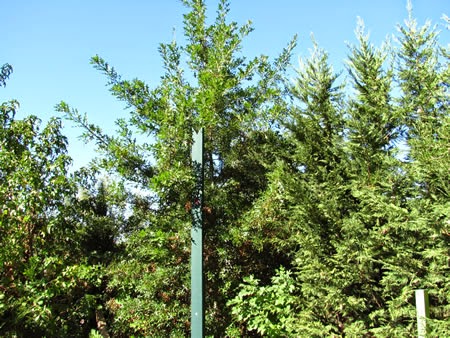
Here are a few pictures from our sacred circle garden.  They were all taken a few years ago.  Everything is the same today, except all the trees and shrubs are larger.  


Friday, March 25, 2016

Tao Te Ching by Lao Tzu, Chapter 35

Daodejing, Laozi
Chapter 35   


"One who holds fast to the Great Symbol
Gains the whole world
Bestows purest peace
Serenity and bliss.
Yet the hasty wayfarer
Attracted only by outer chars
Tastes Tao and is not aware of it
Sees Tao and does not perceive it
Listens to Tao and does not hear it.
But whoever
Grasps and holds it
Amid impermanence
Is grasped by the permanent
And attains duration."
-  Translated by K. O. Schmidt, 1975, Chapter 35


"Reside in the center
where understanding does not require words or images,
and folk will come to you to be taught
how to be serene.
Where there is good music and food
people stop to rest and regain their energy.
But though the Tao seems unmelodious or even bland
it is an inexhaustible source of refreshment."
-  Translated by Crispin Starwell, Chapter 35


"To him who holds to the Great Form all the world go.
It will go and see no danger, but tranquility, equality and community.
Music and dainties will make the passing stranger stop.
But Tao when uttered in words is so pure and void of flavor
When one looks at it, one cannot see it;
When one listens to it, one cannot hear it.
However, when one uses it, it is inexhaustible."
-  Translated by Ch'u Ta-Kao, 1904, Chapter 35 


"The owner of the biggest image attracts the whole world.
When all who come have been safely settled,
The world will then be peaceful.
Melodious music and delicious food
Can only attract passers-by.
But the Way is, when put into one's mouth, tasteless,
When looked at, colorless,
When listened to, uninteresting,
And, when used, limitlessly bountiful."

-  Translated by Liu Qixuan, Chapter 35 


執大象, 天下往. 
往而不害, 安平大. 
樂與餌, 過客止. 
道之出口, 淡乎其無味.
視之不足見.
聽之不足聞.
用之不足既. 

-  Chinese characters, Tao Te Ching, Chapter 35


zhi da xiang, tian xia wang.
wang er bu hai, an ping tai.
le yu er, guo ke zhi.
dao zhi chu kou, dan hu qi wu wei.
shi zhi bu zu jian.
ting zhi bu zu wen.
yong zhi bu zu ji.

-  Pinyin Romanization, Daodejing, Chapter 35 


"Hold the Great Symbol
and all the world follows,
Follows without meeting harm,
And lives in health, peace, commonwealth.
Offer good things to eat
And the wayfarer stays.
But Tao is mild to the taste.
Looked at, it cannot be seen;
Listened to, it cannot be heard;
Applied, its supply never fails."
-  Translated by Lin Yutang, 1955, Chapter 35 


"Apprehend the inimitable conception, you attract the world;
coming it receives no harm, but it tranquil, peaceful, satisfied.
Like transient guests, music and dainties pass away.
The Tao entering the mouth is insipid and without flavour;
when looked at it evades sight;
when listened for it escapes the ear.
Yet, its operations are interminable."
-  Translated by C. Spurgeon Medhurst, 1905, Chapter 35 


"The owner of the biggest image attracts the whole world.
When all who come have been safely settled,
The world will then be peaceful.
Melodious music and delicious food
Can only attract passers-by.
But the Way is, when put into one's mouth, tasteless,
When looked at, colorless,
When listened to, uninteresting,
And, when used, limitlessly bountiful."

-  Translated by Liu Qixuan, Chapter 35 


"El Tao carece de forma y aroma;
No puede ser visto ni oido,
Y su aplicación no puede ser agotada.
Si ofreces música y comida
Los extraños se detienen a tu lado;
Pero si estás de acuerdo con el Tao
La gente del Mundo te mantendrá
En seguridad, salud, compañía y paz."
-  Translated by Antonio Rivas Gonzálvez, 1998, Capítulo 35 


"If you offer music and food
Strangers may stop with you;
But if you accord with the Way
All the people of the world will keep you
In safety, health, community and peace.
The Way lacks art and flavor;
It can neither be seen or heard,
But its benefits cannot be exhausted."

-  Translated by Peter Merel, 1992, Chapter 35


"Hold fast the idea of "The Great,"
Then all men will be drawn to you.  
They will come to you and receive no hurt,
But rest, peace and great calm.
When you provide music and exquisite food
The traveller will stay with you gladly.
When the Tao flows out from you to him
By his palate he does not detect its savour,
By his eye he cannot perceive it,
By his ears he cannot hear it,
But in using it he finds it to be inexhaustible." 
- Translated by Isabella Mears, 1916, Chapter 35 


Chapter 35Tao Te Ching by Lao Tzu
A Philosopher's Notebooks