Showing posts with label Atheism. Show all posts

Thursday, May 21, 2026

Stand and Face the World

What We Must Do

"We want to stand upon our own feet and look fair and square at the world - its good facts, its bad facts, and its ugliness; see the world as it is, and be not afraid of it. Conquer the world by intelligence, and not merely by being slavishly subdued by the terror that comes from it.  The whole conception of God is a conception derived from the ancient Oriental despotisms. It is a conception quite unworthy of free men.  When you hear people in church debasing themselves and saying that they are miserable sinners, and all the rest of it, it seems contemptable and not worthy of self-respecting human beings.  We ought to stand up and look at the world frankly in the face.  We ought to make the best we can of the world, and if it is not so good as we wish, after all it will still be better than what these others have made of it in all these ages.  A good world needs knowledge, kindliness, and courage; it does not need a regretful hankering after the past, or a fettering of the free intelligence by the words uttered long ago by ignorant men.  It needs a fearless outlook and a free intelligence.  It needs hope for the future, not looking back all the time towards a past that is dead, which we trust will be far surpassed by the future that our intelligence can create."
- Bertrand Russell, Why I Am Not A Christian, 1927

[Does "Oriental" really mean from the Middle East and India; although despotisms existed all around the world.]


Bertrand Russell on God and Religion. Edited by Al Seckel. Prometheus Books, 1986, index, 250 pages.

Buddhism Without Beliefs: A Contemporary Guide to Awakening. By Stephen Batchelor. New York, Riverhead Books, 1997, 127 pages.  


Free Thought: My Views

Nature Mysticism

How to Live a Good Life: Advice from Wise and Respected Persons


"Face the world and go crosswise."
Linji, Zen Master, 850 CE


Wednesday, May 13, 2026

Humanism: Readings


I have enjoyed and benefitted from reading three books by the fine writer, humanist, and scholar: Sarah Bakewell. 

How to Live, or A Life of Montaigne in One Question and Twenty Attempts at an Answer.

At the Existentialist Cafe: Freedom, Being and Apricot Cocktails.

This week, I have enjoyed reading her newest book:

Humanly Possible: Seven Hundred Years of Humanist Freethinking, Inquiry and Hope. Penguin Press, 2023, 454 pages. VSCL.


I have a number of webpages with my notes on Humanist philosophy:

How to Live a Good Life: Advice From Wise Persons

Pragmatism

My Views on Religion

Free Thought


Thursday, May 07, 2026

A Pragmatic Non-Religious Life

 Reasons for living one's life without religious interference.

Living a Good Life Without God
A freethinker's ruminations.
A Practical and Pragmatic Persons Views on Religions

1. Since religions have little scientific, technological, or practical daily life value, you just don't need to bother with them.  For examples: If you needed good medical advice about a proper lifestyle for coping with Type II diabetes, see a competent doctor; and the Bible is useless for this advice. I you needed information on repairing your bicycle chain, don't waste your time reading the Koran. I you want to know how to create and care for an orchard, the Bagjavagita would be useless.  If you wanted to learn a foreign language, reading the Book of Mormon would unnecessary. If you needed to improve you mathematical skills, consulting the Pranjaparamitra Sutra would be useless.

Religious works are filled with stories and fictional tales of ancient tribal peoples, just like some fictional literary works. They might be pleasant leisure diversions, but have little or no substantive practical value.

2. Don't waste your time going to religious services at a Church or Temple. You have heard all these theology stories in the past, read about them in childhood, and listened to preachers splitting theological hairs and repeating the same old stories over and over, year after year. Why use your limited time listening again and again to the same old sermons? It is a non-productive use of your limited leisure hours; like seeing the same old situation comedy over again, watching football games for hours on end, or watching the "News" on TV for many hours. Get off you butt, take a walk, or garden, or practice on your piano, or read a science book. Don't be a passive listener, a dolt in a pew, a dullar sponge of a mind. Free yourself from boring indoctrination by preachers and priests telling you what and how to think. Quietly laugh at their threats, and never return. Think of how many thousands of hours saved for worthy practical and enjoyable pursuits by just not attending any church or temple meetings. 

3. You don't have enough money to give to religious organizations that have little value in your personal, daily, and social life. Don't pay for religious tax free buildings, and put some more money on your own mortgage. Don't fatten the wallets of wealthy preachers and priests, invest your money, or help a friend or somebody struggling. Don't pay for religious pre-schools that indoctrinate little children with absurd ideas. Don't give money to religious institutions that want to control politics, make everyone follow their own lifestyle, advocate violence and hate towards peaceful people of other religious or ideologies. Financially helping hospitals, food banks, libraries, public schools, rest homes, the homeless, children's music programs and sports teams might be a few good alternatives for you expenditures. What would be more useful to your community, a new up-to-date hospital or another church building? Improve your own family home before giving any money to an old worn corner church with few members that have rather rigid opinions about how everyone should live their version of a "moral" and 'godly' life.

4. Don't bother arguing with religious people. They  have been indoctrinated since childhood in the habitual thinking of their parent's religion.  Such habits of thought are seldom changed by talking with non-religious persons. Just mentioning to them that you just don't find religion very useful or practical is enough on your part. Don't let them preach to you or try to convert you; tell them that you are just not interested. Save yourself the time and trouble. 

5. Be skeptical of anyone who acts like they know it all, possess the one truth, speaks with with an attitude of unquestioned absolute authority, and claims to know an invisible god's thoughts. Beware of preachers and priests with spiritual insights and opinions that cannot be questioned. Don't be fooled by "Mysteries" that surpass human understanding. Don't let dramatic and clever preaching get in the way of clear understanding and reasoning. Find other thinkers to read and listen to that have some humility, some practical ideas, some generous humanity, know about limits, and have some common sense.

6. Religious people can become fanatical, mean, and violent. History provides ample horrible evidence for this claim. Avoid and do not in any way support these people.

7. Religious hypocrites talk on an on about the terrible dangers of secularism, modernism, and consumerism. Yet they live just like everyone else in our modern society. Be suspicious of holier-than-thou hypocrites, and wealthy preachers railing against secularism.

8.  Beware of any religious organization that is male dominated, supports macho attitudes, denies women rights, has only male leaders and elders and speakers, keeps women in the back of the church, and encourages male domination over women. Half the population everywhere are women. Don't give your money or time to religious organizations that denigrate and subordinate women.  Such behavior is impractical, unfair, unkind, and spiritually limiting. Support equal education for women, women's rights, and support women in leadership roles in our community. 

9. Being Non-Religious does not mean being Anti-Religious. There are decent people with religious beliefs that you can share your life with. Tolerance, pluralism, compassion, and friendship are good to share with everyone. Yes, there are some extremist religious fanatics you should avoid, shun, and be cautious around. But don't let the bad apples ruin the apple harvest. It is best for us just to avoid and not participate with religious rituals, organizations, and believers rather than persecute and or harass them.  Let the few great writers and orators, like the New Atheists, present the articulate arguments against the negative impacts of religion.

10. Don't Ask, Don't Tell.  Keep your spiritual and philosophical opinions to yourself in daily life. In America, religious people might hamper your success in work and business or public service if they know about your non-religious views.  Speak in general humanistic ethical ways, and avoid references to religious views in your daily ordinary life. Be neutral.  Don't proselytize for non-religious views amongst your ordinary daily contacts with people. 

11. Lead by example.  Make your lifestyle and thinking a model for others seeking alternatives to religious indoctrination and authoritarianism and magical irrelevance. Consult my "How to Live a Good Life: Advice from Wise and Respected Persons" for ample information on a viable humanistic lifestyle for the 21st Century.


he Little Book of Humanism: Universal Lessons on Finding Purpose, Meaning and Joy. By Andrew Copson and Alice Roberts. Piatkus, 2022, 256 pages. VSCL, Hardbound.

Humanly Possible: Seven Hundred Years of Humanist Freethinking, Inquiry and Hope. Penguin Press, 2023, 454 pages. VSCL, Paperback.

American Humanist Association

Humanists of Greater Portland, Oregon


Good Without God: What a Billion Nonreligious People Do Believe.  By Greg M. Epstein, Humanist Chaplain at Harvard University.  William Morrow, 2009, 250 pages. FVRL, Hardbound. Outstanding presentation!


Tuesday, June 25, 2024

Ten Commitments of American Humanism


The Ten Commitments

Alturism
Critical Thinking
Empathy
Environmentalism
Ethical Development
Global Awareness
Humility
Peace and Social Justice
Responsibility
Service and Participation

Humanists of Greater Portland, Oregon, 2023

American Humanists Association, 2023

I am a member of the American Humanists Association


Outline of Humanism


Virtues and Values of Humanism

  • Common good
  • Compassion
  • Creativity
  • Empiricism
  • Experience
  • Experimentation
  • Freethought
  • Human dignity


Supports


I have a number of webpages with my notes on Humanist philosophy:

How to Live a Good Life: Advice From Wise Persons

Pragmatism

My Views on Religion

Free Thought


Friday, April 26, 2024

Humanism

Humanism: Good Reads

The Little Book of Humanism: Universal Lessons on Finding Purpose, Meaning and Joy. By Andrew Copson and Alice Roberts. Piatkus, 2022, 256 pages. VSCL, Hardbound.

Humanly Possible: Seven Hundred Years of Humanist Freethinking, Inquiry and Hope. Penguin Press, 2023, 454 pages. VSCL, Paperback.

American Humanist Association

Humanists of Greater Portland, Oregon


Good Without God: What a Billion Nonreligious People Do Believe.  By Greg M. Epstein, Humanist Chaplain at Harvard University.  William Morrow, 2009, 250 pages. FVRL, Hardbound. Outstanding presentation!


I have enjoyed and benefitted from reading three books by the fine writer, humanist, and scholar: Sarah Bakewell. 

How to Live, or A Life of Montaigne in One Question and Twenty Attempts at an Answer.

At the Existentialist Cafe: Freedom, Being and Apricot Cocktails.

This week, I have enjoyed reading her newest book:

Humanly Possible: Seven Hundred Years of Humanist Freethinking, Inquiry and Hope. Penguin Press, 2023, 454 pages. VSCL.


I have a number of webpages with my notes on Humanist philosophy:

How to Live a Good Life: Advice From Wise Persons

Pragmatism

My Views on Religion

Free Thought


"You are what you make of yourselves. Aim high, aim for the stars, and you may yet clear the rooftops. You will need courage, tenacity, motivation, and a good sense of humor on the route. Quality of character, happiness, fulfilment of potential and of human needs can be improved through changed values, through redirection of individual life, by a process of personal change, and personal evolution."
- Jeaneane Fowler


"The secret of happiness is this: let your interests be as wide as possible and let your reactions to the things and persons that interest you be as far as possible friendly rather than hostile." - Bertrand Russell


"Is it so small a thing To have enjoyed the sun, To have lived light in the spring, To have loved to have thought, to have done; To have advanced true friends, and beat down baffling foes.

That we must feign a bliss Of doubtful future date, And while we dream on this Lose all our present state, And relegate to worlds yet distant our repose? - Matthew Arnold


The Great Agnostic: Robert Ingersoll and American Freethought.  By Susan Jacoby.  Yale University Press, 2013, 246 pages. VSCL. 


Thursday, December 21, 2023

Freethinkers


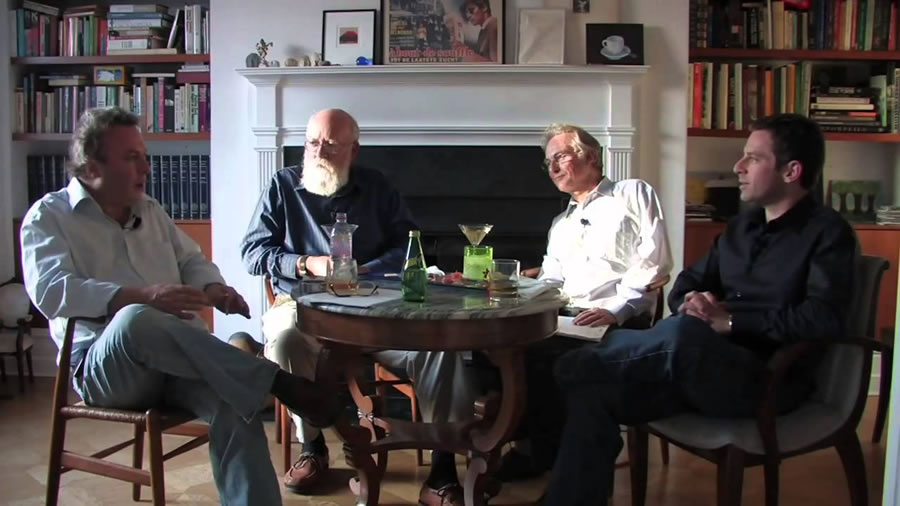
The "Four Horsemen"

Of Contemporary Free Thought


Christopher Hitchens, Daniel Dennett, Richard Dawkins, Sam Harris

The "Four Horsemen" of Free Thought in 2009


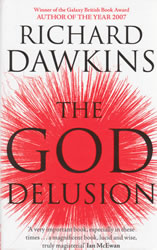
The God Delusion. By Richard Dawkins. 2008. 


I have enjoyed and benefitted from reading three books by the fine writer, humanist, and scholar: Sarah Bakewell. 

How to Live, or A Life of Montaigne in One Question and Twenty Attempts at an Answer.

At the Existentialist Cafe: Freedom, Being and Apricot Cocktails.

This week, I have enjoyed reading her newest book:

Humanly Possible: Seven Hundred Years of Humanist Freethinking, Inquiry and Hope. Penguin Press, 2023, 454 pages. VSCL.


Tuesday, June 20, 2023

The Human Body and Religion

I am always keenly interested in our understanding, appreciation, and uses of our human bodies.  Somatics and mind-body arts practices are one focus of my research and writing.  My own opinions about a philosophy of living one's life, and enjoying the use of our bodies are, generally, non-religious, Epicurean, skeptical, and philosophical.  

Religious views of the body-mind are a serious impediment to scientific and pragmatic progress. 


"Two thousand years of Christian discourse—anatomy, medicine, physiology, or course, but also philosophy, theology, and aesthetics—have fashioned the body we inhabit.  And along with that discourse we have inherited Platonic-Christian models that mediate our perception of the body, the symbolic value of the body's organs, and their hierarchically ordered functions.  We accept the nobility of heart and mind, the triviality of viscera and sex (the neurosurgeon versus the proctologist).  We accept the spiritualization and dematerialization of the soul, the interaction of sin-prone matter and of luminous mind, the ontological connotation of these two artificially opposed entities, the disturbing forces of a morally reprehensible libidinal humanity ... All have contributed to Christianity's sculpting of the flesh.

Our image of ourselves, the scrutiny of the doctor or the radiologist, the whole philosophy of sickness and health—none of this could exist in the absence of the above mentioned discourse.  Nor could our conception of suffering, the role we allot to pain and therefore our relationship with pharmacology, substances, and drugs.  Nor could our conception of suffering, the role we allot to pain and therefore our relationship with pharmacology, substances, and drugs.  Nor could the special language of practitioner to patient, the relationship of self to self, reconciliation of one's image of oneself with a ideal of the physiological, anatomical, and psychological self.  So that surgery and pharmacology, homeopathic medicine and palliative treatments, gynecology and thanatology, emergency medicine and oncology, psychiatry and clinical work all obey Judeo-Christian law without any particularly clear understanding of the symptoms of this ontological contamination.

The current hypersensivity on the subject of bioethics proceeds from this invisible influence.  Secular political decisions on this major issue more or less correspond to the positions formulated by the church.  This should be no surprise, for the ethos of bioethics remains fundamentally Judeo-Christian.  Apart from legislation on abortion and artificial contraception, apart fro these two forward steps toward a post-Christian body—what I have elsewhere called a Faustian body—Western medicine sticks very closely to the church's injunctions.

The Health Professionals' Charter elaborated by the Vatican condemns sex-change operations, experiments on the embryo, in vitro fertilization and transfer, surrogate motherhood, medical assistance with reproduction, but also therapeutic cloning, analgesic cocktails that suspend consciousness as life comes to an end, therapeutic use of cannabis, and euthanasia.  On the other hand, the charter praises palliative care and insists on the salutary role of pain.  These are all positions often echoed by ethical committees calling themselves secular and believing themselves independent of religious authority." 

-  Michel Onfray.  Atheist Manifesto: The Case Against Christianity, Judaism, and Islam.  Translated from the French by Jeremy Leggatt.  New York Arcade Publishing, 2005, 2011.  ISBN: 10161145008X.  Annotated bibliography, 246 pages.  VSCL.  A lucid, strong, well reasoned, insightful, and stylish presentation.  Excellent explication of the French and European writing on atheism, anti-clericalism, irreligion, deconstruction of religions, and anti-fascism.  His detailed knowledge of religious customs and ideas is very impressive.  I agree with Professor Onfray's assessment about the negative influences of the three monotheistic religions surveyed; as I do with the dynamic and robust critiques of religion by Christopher Hitchens, Daniel Dennett, Richard Dawkins, and Sam Harris. The above quote is from p. 47 or Professor Onfray's book.  


When my mother, June, was dying of colorectal cancer, she spent her final days comfortably in a hospice.  When she died my superstitious Catholic father said many times that the hospice killed her, that the hospice practiced euthanasia, that the hospice was sinful and evil.  No matter how much I explained hospice care to him, he would not listen.  It is no wonder my mother did not want to see my father at the end.  I concluded that that he would rather have seen her suffer more, believing that suffering was good for the soul.  He was often a mean and rigid macho man, lacking loving-kindness and compassion. 

When I was 12 years of age, I was told by my priest confessor that masturbation was a mortal sin, evil, unnatural, and inspired by the devil; and, that I would go directly to hell for eternal horrific punishment if I continued to masturbate.  I knew that that masturbation was pleasant, harmless, disease free, legal, and entirely private.  I could not understand how if I should murder somebody I would go to hell, and if I masturbated I would go to hell.  These church rules and penalties regarding masturbation seemed to me arbitrary and absurd.

The longstanding mistreatment of women by religious authorities and religious rules is also completely unsatisfactory to me.  Dr. Ben Carson, for example, a recent secular Republican political candidate, believes our laws should be changed so that any woman who is impregnated by a rapist or through incest should not be allowed to have an abortion even if she chooses to do so.  Reflect also on how women are oppressed and mistreated under the domination by Islamic men.  

I was not surprised to read that the Catholic Church, Islam, and Mormons still all object to vasectomies.  Religions supported and encouraged slavery for centuries.  Religions significantly slowed the progress in anatomy for many centuries by refusing to allow post-mortem autopsies.  Large families are encouraged by religions (more paying believers in the long run I suppose) despite the grueling poverty of overpopulation.  Examples of the pernicious effect of religion on medicine, psychology and public health can, unfortunately, be multiplied with ease.  

The fact that people hold antiquated and false views about bodily functions is not so troublesome as the fact that their religious leaders want to force everybody to accept, obey and follow their nonsensical opinions.  These religions do not favor freedom of thought and action, scientific investigation, and freedom of expression.  Most sensible and modern 'social church goers' simply quietly ignore and disregard most of these outmoded ideas about bodily functions and behaviors pandered by their priests and preachers, if they can do so without being harmed by the local religious police enforcers.  


I have never gone to any church since I was 16, after I left Catholic high school.  What a wise move on my part to abandon the silly rules, anti-scientific opinions, fables, myths, superstitions, and authoritarianism of organized religions.  A good life is much easier to live and enjoy, without the burdens of religious twaddle.  


"The source of man's unhappiness is his ignorance of Nature. The pertinacity with which he clings to blind opinions imbibed in his infancy, which interweave themselves with his existence, the consequent prejudice that warps his mind, that prevents its expansion, that renders him the slave of fiction, appears to doom him to continual error."
-  Baron d'Holbach, The System of Nature


"The whole thing is so patently infantile, so foreign to reality, that to anyone with a friendly attitude to humanity it is painful to think that the great majority of mortals will never be able to rise above this view of life. It is still more humiliating to discover how a large number of people living today, who cannot but see that this religion is not tenable, nevertheless try to defend it piece by piece in a series of pitiful rearguard actions."
-  Sigmund Freud, Civilization and Its Discontents, 1930 


Thursday, May 11, 2023

The Little Book of Atheist Spirituality

I highly recommend the fine book by the French philosopher, André Comte-Spoonville titled "The Little Book of Atheist Spirituality."
These engaging, wise, articulate, and diplomatic short essays were translated from the French by Nancy Huston (Penguin, 2007).  This 212 page gem consists of four chapters:  1. Can We Do Without Religion?; 2. Does God Exist?; 3. Can There Be an Atheist Spirituality; and 4.  Love and Truth. 

Professor Comte-Spoonville is a non-dogmatic atheist, respectful of the positive aspects of religions traditions (Western and Eastern), and tolerant of non-fanatic believers.  However, his carefully reasoned arguments for atheism are clear, strong, and convincing.  He tells us why he does not believe in God, an afterlife, divine intervention, creationism, or the heavenly triumph of good; but he does not take a more aggressive anti-religious tact like Richard Dawkins, Daniel Dennent, Sam Harris, or Ayn Rand.  


The "atheist spirituality" he advocates is an appreciation for the wonder and beauty of the natural world and human consciousness at its best; and the cultivated or spontaneous mystical experiences characterized by silence, mystery, plenitude, oceanic feeling, immanensity, simplicity, unity, timelessness, serenity, self-evident truth, acceptance, independence, and love.  He advocates a fidelity to the best philosophy and traditions of Western civilization, starting with the Greeks. 
 
He tackles and clearly shows the weaknesses of the traditional arguments for the existence of God/Allah/Shiva.  He provides a well reasoned explanation of why there is weak or non-existent evidence for believing in the existence of God when he discusses the hidden nature of God, incomprehensibility, the excess of evil, human mediocrity, and resisting the lure of illusion (i.e., strongly believing in something simply because you really desire or want to believe).  

He provides convincing reasons for why we can live productive, dignified, respectful, cheerful, virtuous, intelligent, and courageous lives without religion.  

He draws on wide range of Western and Eastern philosopher, theologians, social, and psychological thinkers to bolster his arguments.  

If your public library has a book by the Reverend Billy Graham then it should have a copy of this book by Professor Comte-Spoonville.  

The Little Book of Atheist Spirituality  


Wednesday, February 15, 2017

Brighter by the Years


"The physician/essayist Lewis Thomas went further: "The greatest of all accomplishments of twentieth-century science has been the discovery of human ignorance."

Raymo, Chet. When God Is Gone, Everything Is Holy: The Making of a Religious Naturalist By Chet Raymo. Nortre Dame, Indiana, Sorin Books, c 2008. 13 chapters, notes, 148 pages. ISBN: 9781933495132. Clean used copy from Oregon. VSCL. This open-minded Professor Emeritus of Science at Stone Hill College, Massachusetts, advocates a "religious naturalism." He is a lifelong agnostic, atheist, and secular minded person; who, does favor retaining some aspects of religious practices. He strongly supports consensus science as the best path to universal provisional truths, and a rejection of the pre-scientific fables, myths, and lore of the ancients. He was educated in Catholic institutions (e.g., Notre Dame) and taught at a "Catholic" founded College. Very interesting philosophical consideration given to Ocham's Razor, consensus knowledge, "I don't know," genetics, skepticism, and inter-connectivity. Short thoughtful essays.

Wednesday, April 02, 2014

Delusions Unravelled and Warded Off


I recently read  completely, for the second time, the bold, incisive, and clear minded 2006 book by Richard Dawkins called "The God Delusion."  I agree with and support most of his accurate and decisive criticisms of religious beliefs and their negative effects on our world.  This book is essential reading for the 20% of Americans who say they have no religious affiliations and beliefs.  We need to be informed and speak out clearly. 

Last Friday morning, a well dressed man came to my house to proselytize for his fundamentalist Christian church in Red Bluff.  He invited me to attend the Lord's Supper at his Church, and began to lecture me about Christianity.  Yes, another persistent salesman for the God Delusion at my door.  

I politely spoke to him in these terms: "I was forced to attend Catholic schools until the 12th grade.  I am a college graduate, and am very knowledgeable about the many religions in our world.  I've not been a member of any church, or participated in any church services since I was 15.  I am a humanist and atheist.  I have lived a long, happy, productive, moral, prosperous, and satisfying life with few if any religious beliefs.  I am lucky to live in America were we can live in relative peace in a secular state. Please, sir, you need not return again to my home to preach to me."  

Not giving up, after not listening or understanding what I just said, he began spouting biblical passages so as to do his self-appointed religious salesman duties.  I listened politely for another minute.  Then, I said, 'Confucius said, "Don't do to others what you don't want them to do to you."  You don't want me to come to your house to annoy you by lecturing to you about the sensible and good reasons for not accepting the delusions the Christian religion; therefore, please stop talking to me and do not return to my home again to preach to me.  Good day, Sir.'

My Own Views on Religion and Theology

Check out the sidebar in this blog for more links to websites about "Free Thought."

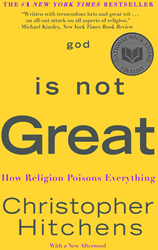
God Is Not Great: How Religion Poisons Everything.  By Christopher Hitchens.  Twelve, 2009.  336 pages.  ISBN: 978-0446697965.  VSCL.  A strong critique of the negative impact of religions.  Uses many historical facts from the last 100 years.  Wide ranging and penetrating arguments.  Includes an intense criticism of Islam, Catholicism, Evangelical Christianity, and Zionist Judaism.  

Dawkins, Richard.  The God Delusion.   Mariner Books, Houghton Mifflin, 2006, 2008.  Index, notes, bibliography, appendices, 463 pages.  ISBN: 978-0618918249.  VSCL.  A bold, incisive, convincing, and clear minded critique of religious beliefs and religions and their negative and pernicious impact on our communities, societies, nations, and the world.  I've read this book more that twice, and find it uplifting, brave, and to the point.  His analysis of the negative social and moral effects of religion are accurate and compelling.  Guaranteed to make you Brighter!