Showing posts with label Work. Show all posts

Tuesday, January 13, 2026

Dao De Jing 43 Tao Te Ching

Tao Te Ching by Lao Tzu
Chapter 43


"The softest of stuff in the world
Penetrates quickly the hardest;
Insubstantial, it enters
Where no room is.
By this I know the benefit
Of something done by quiet being;
In all the world but few can know
Accomplishment apart from work,
Instruction when no words are used."
-  Translated by Raymond B. Blakney, 1955, Chapter 43  


"As the soft yield of water cleaves obstinate stone,
So to yield with life solves the insoluble:
To yield, I have learned, is to come back again.
But this unworded lesson,
This easy example,
Is lost upon men."
-  Translated by Witter Bynner, 1944, Chapter 43  


"That which offers no resistance,
overcomes the hardest substances.
That which offers no resistance
can enter where there is no space.
Few in the world can comprehend
the teaching without words,
or understand the value of non-action."
-  Translated by John H. McDonald, 1996, Chapter 43   


天下之至柔, 馳騁天下之至堅. 
無有入無間.
吾是以知無為之有益. 
不言之教.
無為之益, 天下希及之. 
-  Chinese characters, Tao Te Ching Chapter 43 


t'ien hsia chih chih jou, ch'ih ch'êng t'ien hsia chih chih chien.
wu yu ju wu chien.
wu shih yi chih wu wei chih yu yi.
pu yen chih chiao.
wu wei chih yi, t'ien hsia hsi chi chih.
-  Wade-Giles Romanization, Tao Te Ching, Chapter 43  


"The softest substance of the world
Goes through the hardest.
That-which-is-without-form penetrates that-which-has-no-crevice;
Through this I know the benefit of taking no action.
The teaching without words
And the benefit of taking no action
Are without compare in the universe."
-  Translated by Lin Yutang, 1955, Chapter 43  


"The softest thing in the world can overcome the hardest.
The shapeless can penetrate the seamless.
Thus I know the value of not acting.
Few understand the wordless teaching of non-action."
-  Translated by Ned Ludd, Chapter 43    


"The world’s weakest drives the world’s strongest.
The indiscernible penetrates where there are no crevices.
From this I perceive the advantage of non-action.
Few indeed in the world realize the instruction of the silence, or the benefits of inaction."
-  Translated by C. Spurgeon Medhurst, 1905, Chapter 43 


"Lo más blando del mundo
vence a lo más duro.
La nada penetra donde no hay resquicio.
Por esto conozco la utilidad del no-interferir.
Pocas cosas bajo el cielo son tan instructivas como las lecciones del silencio,
o tan beneficiosas como los frutos del no-interferir.
Pocos en el mundo llegan a comprenderlo."
-  Translation from Wikisource, 2013, Capitulo 43


"The non-existent can enter into the impenetrable.
By this I know that non-action is useful.
Teaching without words, utility without action-
Few in the world have come to this."
-  Translated by Ch'u Ta-Kao, 1904, Chapter 43


"What is of all things most yielding
Can overwhelm that which is of all things most hard.
Being substanceless it can enter even where is no space;
That is how I know the value of action that is actionless.
But that there can be teaching without words,
Value in action that is actionless,
Few indeed can understand."
-  Translated by Arthur Waley, 1934, Chapter 43  


A typical webpage created by Mike Garofalo for each one of the 81 Chapters (Verses, Sections) of the Tao Te Ching (Daodejing) by Lao Tzu (Laozi) includes over 25 different English language translations or interpolations for that Chapter, 5 Spanish language translations for that Chapter, the Chinese characters for that Chapter, the Wade-Giles and Hanyu Pinyin transliterations (Romanization) of the Mandarin Chinese words for that Chapter, and 2 German and 1 French translation of that Chapter.  Each webpage includes a Google Translate option menu for reading the entire webpage in many other languages.  Each webpage for each one of the 81 Chapters of the Tao Te Ching [246 CE Wang Bi version] includes extensive indexing by key words, phrases, and terms (concordance) for that Chapter in English, Spanish, and the Wade-Giles Romanization.  Each webpage on a Chapter of the Daodejing includes recommended reading in books and websites, a detailed bibliography, some commentary, links, research leads, translator sources, and other resources for that Chapter.  

     A Top Tier online free resource for English and Spanish readers, researchers, Daoist devotees, scholars, students, fans and fellow travelers on the Way. 


Wednesday, January 07, 2026

Who Gathers and Chops Firewood for the Cook's Kitchen?

 The Fireplace Records, Chapter 8


Huineng Chopping Bamboo
Ink on paper by Liang Kai
Circa 1200 CE

Who Gathers and Chops Firewood for the Cook's Kitchen?
When he leaves, somebody new will take his place. 


Huineng (638-713 CE) was an hardworking monk who quietly followed all the Temple lifestyle rules.  His job was to gather firewood to use in the kitchen or elsewhere at the Temple.  He pulled a little cart and gathered sticks, driftwood, wood donations, and downed limbs.  He sawed, split up, and cut up dried wood to give to the cooks in the Temple kitchen or others tending fires.  He did this humble task well for many years.  

Huineng is remembered for emphasizing the power of simple useful work activities as a valid path to enlightenment (e.g., gardening, Temple maintenance, cooking, chores, firewood working, samu = work, transcribing, etc.)  Huineng became enlightened while chopping up bamboo.  He later became a leading Zen Master featured in many stories.  

Also, we all have roles, duties, work, and responsibilities to others and to ourselves. This is an underlying reality.  

"The kitchen was a hell of heat.  Woks large enough to bathe a child in sat on roaring, wood-burning brick stoves.  Young monks fed the insatiable fires, while others stirred the boiling rice.  Some chopped vegetables or prepared them for pickling. They were all under the direction of a senior priest, who was known only as "the Old Cook.""
- By Deng Ming Dao;, Chronicles of Tao, p. 166
The Kitchen of a Daoist Temple Monastery in the Huashan Mountains of China, circa 1930's.  

Somebody is still chopping wood for a fireplace stove, or providing you with the electricity or gas or coal for you kitchen ovens and stoves and cooking appliances.  

Without the fire in the kitchen for cooking we could not survive. 


So, who chops the firewood for your kitchen stove?


Comments, Sources

Refer to Cases ??? in Koan Classics.  OK. find any?  

Refer to my Cloud Hands Blog Posts on the topic of Koans/Mondos/Tests

The Daodejing by Laozi  

Pulling Onions  Over 1,043 One-line Sayings by Mike Garofalo

Chinese Chan Buddhist and Taoist Stories and Koans 

Fireplaces, Campfires, Stoves


The Fireplace Records By Michael P. Garofalo

Friday, June 20, 2025

Shifu Mio Zhang's "Gradual Enlightenment"

 The Fireplace Records, Chapter 21


Shifu Mao Zhang's "Gradual Enlightenment


Xita asked Shifu Miao Zhang, "What is sudden enlightenment?"  Shifu Miao Zhang threw his staff on the muddy ground. 

Xita asked Miao Zhang, "What is gradual enlightenment?" Shifu Miao Zhang stomped on his staff three times.

Xita said, "Yes! Good!  Your understanding is straightening.  From now on, Miao Zhang, you will need to continue to clean and polish your staff."


Related Links, Resources, References

Koans:

Refer to my Cloud Hands Blog Posts on the topic of Koans/Dialogues.

The Daodejing by Laozi  

Pulling Onions  Over 1,043 One-line Sayings by Mike Garofalo

Chinese Chan Buddhist and Taoist Stories and Koans

Taoism

Buddhism

Fireplaces, Stoves, Campfires, Kitchens, Pots, Firewood

Chinese Art

Tai Chi Chuan and Qigong

Meditation Methods

Zen Koan Books I Use

Koan Database Project

Brief Spiritual Lessons Database Project: Subject Indexes


Subject Index to 621 Zen Buddhist Koans


Sparks: Brief Spiritual Lessons and Stories

Matches to Start a Kindling of Insight
May the Light from Your Inner Fireplace Help All Beings
Taoist, Chan Buddhist, Zen Buddhist, Philosophers
Catching Phrases, Inspiring Verses, Koans, Meditations
Indexing, Bibliography, Quotations, Notes, Resources
Research by Michael P. Garofalo

The Fireplace Records
By Michael P. Garofalo


Wednesday, February 05, 2025

Using Your Time Wisely


The Improvement of Spare Moments
From Pushing to the Front, 1894
By Orrison Swett Marden

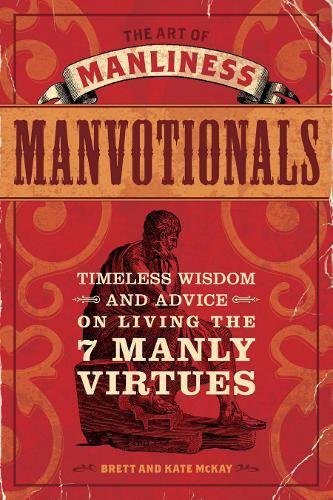
Found in The Art of Manliness - Manvotionals: Timeless Wisdom and Advice on Living the 7 Manly Virtues. By Brett and Kate McKay.  HOW Books, 2011.  272 pages.  Quote: p 87-90.


The Improvement of Spare Moments, Part 1
By Orrison Swett Marden, 1894


"On the floor of the gold-working room, in the United States Mint in Philadelphia, there is a wooden lattice-work which is taken up when the floor is swept, and the fine particles of gold-dust, thousands of dollars' worth yearly, are thus saved.  So every successful man has a kind of network to catch "the raspings and parings of existence, those leavings of days and wee bits of hours" which most people sweep into the waste of life.  He who hoards and turns into account all odd minutes, half hours, unexpected holidays, gaps between times, and chasms of waiting for unpunctual persons, achieves results which astonish those who have not mastered this most valuable secret.  

The days come to us like friends in disguise, bringing priceless gifts from an unseen hand; but if you do not use them, they are borne silently away, never to return.  Each successive morning new gifts are brought, but if we failed to accept those that were brought yesterday and the day before, we become less and less about to turn them in account, until the ability to appreciate and utilize them is exhausted.  Wisely was it said that lost wealth may be regained by industry and economy, lost knowledge by study, lost health by temperance and medicine, but lost time is gone forever.  

"Oh, it's only five minutes or ten minutes till meal-time: there's not time to do anything now," is one of the commonest expressions heard in the family.  But what monuments have been built up by poor boys with no chance, out of broken fragments of time which many of us throw away!  The very hours you have wasted, if improved, might have insured your success.  

The author of "Paradise Lost" was a teacher, Secretary of the Commonwealth, Secretary of the Lord Protector, and had to write his sublime poetry whenever he could snatch a few minutes from a busy life.  John Stuart Mill did much of his best work as a writer while a clerk in the East India House.  Galileo was a surgeon, yet to the improvement of his spare moments the world owes some of its greatest discoveries."  


Monday, October 30, 2023

Great Determination and Great Effort

Repost from 2015:

My yoga classes have their greatest attendance in January and February of each year.  Students join the gym because of a New Year's Resolution to improve their health and fitness, loose weight, or share an activity with a friend or loved one.

Keeping up efforts to accomplish a resolution, goal, objective, or intention requires great effort and great determination.  

In China, there is a legend about a carp or salmon struggling upstream against many obstacles to bring a new generation into being.  Accomplishing the tasks toward a goal is referred to as passing through the Dragon's Gate.  Scholars who have successfully completed all the requirements of a university curriculum, passed all the tests, are said to have graduated and passed through the Dragon's Gate and thus have transformed themselves into something new and improved. 

May each of you have great determination and exert great effort to accomplish your chosen goals and objectives in 2015.  

Here is a version of the legendary story of the Redfin Carp passing through the Dragon's Gate, as told by the Japanese Zen Master, Haikuin Ekaku:

"Redfin Carp pledged a solemn vow.  "I shall swim beyond the Dragon Gates.  I shall brave the perilous bolts of fire and lightening.  I shall transcend the estate of ordinary fish and achieve a place among the order of sacred dragons.  I shall rid myself forever of the terrible suffering to which my race is heir, expunge every trace of our shame and humiliation."    
Waiting until the third day of the third month, when the peach blossoms are in flower and the river is full, he made his way to the entrance of the Yü Barrier.  Then, with a flick of his tail, Redfin Carp swam forth.

You men have never laid eyes on the awesome torrent of water that rolls through the Dragon Gates.  It falls all the way from the summits of the far-off Kunlun Range with tremendous force.  There are wild, thousand foot waves that rush down through gorges towering to dizzying heights on either side, carrying away whole hillsides as they go.  Angry bolts of thunder beat down with a deafening roar.  Moaning whirlwinds whip up poisonous mists and funnels of noisome vapor spitting flashing forks of lightening.  The mountain spirits are stunned into senselessness; the river spirits turn limp with fright.  Just a drop of this water will shatter the carapace of the giant tortoise, it will break the bones of the giant whale.

It was into this maelstrom that Redfin Cary, his splendid golden-red scales girded to the full, his steely teeth thrumming like drums, mad a direct all-out assault.  Ah! Golden Carp!  Golden Carp!  You might have led an ordinary life out in the boundless ocean.  It teems with lesser fish.  You would not have gone hungry.  Then why?  What made you embark on this wild and bitter struggle:  What was waiting for you up beyond the Barrier?
Suddenly, after being seared by cliff-shattering bolts of lightning, after being battered by heaven scorching blast of thunder-fire, his scaly armor burnt from from head to tail, his fins singed through, Redfin Carp perished into the Great Death and rose again as a divine dragon─ a supreme lord of the waters.  Now, with the thunder god at his head and a fire god at his rear, flanked right and left with the gods of rain and wind, he moves abroad with the clouds in one hand and mists in the other, bringing new life to the tender young shoots withering in the long parched desert lands, keepin the true Dharma safe amid the defilements of the degenerate world.

Had he been content to pass his life like a lame turtle or blind tortoise, feeding on winkles and tiny shrimps, not even all the effort Vasuki, Manasvi, and the other Dragon Kings might muster on his behalf could have done him any good.  He could never have achieved the great success that he did."

-   Hakuin Ekaku (1686-1769), Japanese Zen Master and artist, "The Essential Teachings of Zen Master Hakuin," translated by Norman Waddell, 1994, p. 64


Willpower


Leaping Over the Dragons Gate

Taoism


Saturday, January 21, 2023

Home Again, Home Again ... Yes!!

I returned home on last Thursday afternoon from my solo yurt camping trip to Bullards Beach State Park near Bandon, Oregon.  A yurt is round and 16 feet in diameter.  No cooking or no bathroom in a yurt.  

Now, Saturday, I am back to the comforts and pleasures of the nice company of my wife, Karen.  She is an excellent cook, so no more hohum campground foods or eating out at a local cafe in Bandon.  At home, unlike the yurt, there is more space, my interesting books, large padded chairs, a large nice bed, full private bathroom, and a big screen television set (and prerecorded sports and documentaries).  I had not watched television for four days.  

We live in a 50 year old suburban house in a quiet neighborhood of many seniors in Vancouver, Washington.  We live in the northeast part of unincorporated Vancouver, called "The Orchards."  There are four large Douglas firs in our backyard and many around in our neighbor's houses.

Here are some photos of our main living room looking to the north .  Here I enjoy reading and studying, chatting with Karen, and watching TV.  I read in a big green chair.  Karen took these photos on a dark, windy, and rainy day.  Bruno, our dog, hangs around and likes the warm indoors like us.  I can easily do a compact Yang Style Taijiquan in this room by moving a few chairs.  


Each season provides new views looking north into the back yard.
The maple trees are all leafless in January.
Many branches and limbs fell during a 45 mile windstorm.
A great view from our reading chairs.


Looking to the west.  Our fireplace is quite nice and large.
Yes, the Northwest has lots of dark clouds, fog, mist and rain.  
Karen's big black chair.

I converted one small bedroom into my computer room, office, library, meditation room, floor yoga and standing Qigong practice area, and reading room.  The window in this room faces south.  I have a small Taoist altar set up. 


Looking south.


Taoist altar


Here is how my former Druid altar (ancient Roman themed) 
looked in our old home in rural Red Bluff.  This room was my
reading room with a huge green chair that I still use. 
We lived and worked in Red Bluff from 1989 to 2017.


Saturday, March 20, 2021

Tao Te Ching Chapter 34 Daodejing

 Daodejing, Laozi

Chapter 34

"How all-pervading is the great Reason!
It can be on the left and it can be on the right. 
The ten thousand things depend upon it for their life, and it refuses them not.
When its merit is accomplished it assumes not the name.
Lovingly it nourishes the ten thousand things and plays not the lord.
Ever desireless it can be classed with the small.   
The ten thousand things return home to it.
It plays not the lord.
It can be classed with the great.  
The holy man unto death does not make himself great and can thus accomplish his greatness."
-  Translated by Daisetsu Teitaro Suzuki and Paul Carus, 1913, Chapter 34 


"Great Tao is like a boat that drifts;
 It can go this way; it can go that.
 The ten thousand creatures owe their existence to it and it does not disown them;
 Yet having produced them, it does not take possession of them.
 Makes no claim to be master over them,
 (And asks for nothing from them.)
 Therefore it may be called the Lowly.
 The ten thousand creatures obey it,
 Though they know not that they have a master;
 Therefore it is called the Great.
 So too the Sage just because he never at any time makes a show of greatness
 In fact achieves greatness."
 -  Translated by Arthur Waley, 1934, Chapter 34 


"The Great Tao (the Laws of the Universe) is universal like a flood.
How can it be turned to the right or to the left?
All creatures depend on it, and it denies nothing to anyone.
It does its work,
But it makes no claims for itself.
It clothes and feeds all,
But it does not rule them
Thus, it may be called "the Little."
All things return to it as to their home,
But it does not rule them 
It may be called "the Great."
It is just because it does not wish to be great
That its greatness is fully realized.
The Complete Thinker would not control the world;
They are in harmony with the world."
-  Translated by John Louis Albert Trottier, 1994, Chapter 34  


 "The great Tao pervades everywhere, both on the left and on the right.
 By it all things came in to being, and it does not reject them.
 Merits accomplished, it does not possess them.
 It loves and nourishes all things but does not dominate over them.
 It is always non-existent; therefore it can be named as small.
 All things return home to it, and it does not claim mastery over them;
 therefore it can be named as great.
 Because it never assumes greatness, therefore it can accomplish greatness."
 -  Translated by Ch'u Ta-Kao, 1904, Chapter 34 


大道汎兮其可左右. 
萬物恃之而生而不辭. 
功成不名有. 
衣養萬物而不為主.
常無欲, 可名於小.  
萬物歸焉而不為主, 可名為大. 
以其終不自為大.
故能成其大. 
-  Chinese characters, Tao Te Ching, Chapter 34


ta tao fan hsi ch'i k'o tso yu.
wan wu shih chih erh shêng erh pu tz'u.
kung ch'êng pu ming yu.
yi yang wan wu erh pu wei chu.
ch'ang wu yü, k'o ming yü hsiao.
wan wu kuei yen erh pu wei chu, k'o ming wei ta.
yi ch'i chung pu tzu wei ta.
ku nêng ch'êng ch'i ta.
-  Wade-Giles Romanization, Tao Te Ching, Chapter 34


"Great Tao flows everywhere,
It extends to the left and to the right.
All beings receive It in order to live and be free.
It works out perfectness in them although It possesses not a Name.
It protects them with love and sustains them, but does not claim to be Ruler of their actions.
Always seeking the innermost, you may say that Its Name is in the Small.
All beings return again into It, yet It does not claim to be Ruler of their actions.
You may say that Its Name is in the Great.
That is why, to the end of his life, the self-controlled man is not great in action,
Thus he is able to perfect his greatness."
-  Translated by Isabella Mears, 1916, Chapter 34 


"El Gran Tao es como un río que fluye en todas las direcciones.
Los diez mil seres y las diez mil cosas le deben la existencia
y él a ninguno se la niega.
El Tao cumple su propósito sin apropiarse de nada.
Cuida y alimenta a los diez mil seres
sin adueñarse de ellos.
Carece de ambiciones,
por eso puede ser llamado pequeño.
Los diez mil seres retornan a él sin que los reclame,
y por eso puede ser llamado grande.
De la misma forma, el sabio nunca se considera grande,
y así, perpetúa su grandeza."
-  Translation from Wikisource, 2013, Capitulo 34


"The great Tao flows everywhere
It fills everything to the left and to the right
All things owe their existence to it and it cannot deny any one of them
Tao is eternal
It does not favour one over the other
It brings all things to completion without their even knowing it
Tao nourishes and protects all creatures yet does not claim lordship over them
So we class it with the most humble
Tao is the home to which all things return yet it wants nothing in return
So we call it he Greatest
The Sage is the same way ?
He does not claim greatness over anything
He not eve aware of his own greatness
Tell me, what could be greater than this?"
-  Translated by Jonathan Star, 2001, Chapter 34  


"Great Tao is all-pervading,
At once on left and right
It may be found, and all things wait
On it for life and light.
No one is refused the gift,
And when the work is done
It does not take the name of it,
Nor claim the merit won.
All things it loves and nurses,
But does not strive to own,
Has no desires, and can be named
With the tiniest ever known.
All things return home to it,
But it does not strive to own,
And can be named with the mightiest,
For it is the Tao alone.
And thus the sage is able
To accomplish his great deeds,
To the end he claims no greatness,
And his great work thus succeeds."
-  Translated by Isaac Winter Heysinger, 1903, Chapter 34 


A typical webpage created by Mike Garofalo for each one of the 81 Chapters (Verses, Sections) of the Tao Te Ching (Daodejing) by Lao Tzu (Laozi) includes over 25 different English language translations or interpolations for that Chapter, 5 Spanish language translations for that Chapter, the Chinese characters for that Chapter, the Wade-Giles and Hanyu Pinyin transliterations (Romanization) of the Mandarin Chinese words for that Chapter, and 2 German and 1 French translation of that Chapter.  Each webpage includes a Google Translate option menu for reading the entire webpage in many other languages.  Each webpage for each one of the 81 Chapters of the Tao Te Ching [246 CE Wang Bi version] includes extensive indexing by key words, phrases, and terms (concordance) for that Chapter in English, Spanish, and the Wade-Giles Romanization.  Each webpage on a Chapter of the Daodejing includes recommended reading in books and websites, a detailed bibliography, some commentary, links, research leads, translator sources, and other resources for that Chapter.  
     A Top Tier online free resource for English and Spanish readers, researchers, Daoist devotees, scholars, students, fans and fellow travelers on the Way. 


Thursday, March 19, 2020

Need Good Luck? Earn It!

No luck, good luck, or bad luck ... living involves dealing with the surprises and capriciousness of events in our lives.  

"Your competition is not other people but the time you kill, the ill will you create, the knowledge you neglect to learn, the connections you fail to build, the health you sacrifice along the path, your inability to generate ideas, the people around you who don't support and love your efforts, and whatever god you curse for your bad luck."
- James Altucher


"Diligence is the mother of good luck."
-  Benjamin Franklin


"Luck is a matter of preparation meeting opportunity."
-  Lucius Annaeus Seneca


"The only good luck many great men ever had was being born with the ability and determination to overcome bad luck."
-  Channing Pollock


"Luck is the residue of design."
-  Branch Rickey


"Luck, bad if not good, will always be with us. But it has a way of favoring the intelligent and showing its back to the stupid."
-  John Dewey


Wednesday, September 25, 2019

Brace Yourself Up


"I take the liberty of observing that you are not a true disciple of our master Epicurus, in indulging the indolence to which you say you are yielding. One of his canons, you know, was that “that indulgence which prevents a greater pleasure, or produces a greater pain, is to be avoided.” Your love of repose will lead, in its progress, to a suspension of healthy exercise, a relaxation of mind, an indifference to everything around you, and finally to a debility of body, and hebetude of mind, the farthest of all things from the happiness which the well-regulated indulgences of Epicurus ensure; fortitude, you know is one of his four cardinal virtues. That teaches us to meet and surmount difficulties; not to fly from them, like cowards; and to fly, too, in vain, for they will meet and arrest us at every turn of our road. Weigh this matter well; brace yourself up!"
- Thomas Jefferson's letters

New Epicurean Website Articles, Links, Bibliography, News, Discussion, History

Thursday, February 21, 2019

Maxims of Benjamin Franklin

Benjamin Franklin's (1706-1790) Maxims
Regarding Work, Effort, Diligence and Industry
Poor Richard's Almanac

"Early to bed and early to rise, makes a man heathy, wealthy and wise.
Diligence is the mother of good luck.
God helps them that help themselves.
At the working man’s house hunger looks in, but dares not enter.
For industry pays debts, while despair increaseth them.
By diligence and patience the mouse ate in two the cable.
Little strokes fell great oaks.
Since thou art not sure of a minute, throw not away an hour.
Trouble springs from idleness, and grievous toil from needless ease.
Many, without labor, would live by their wits only, but they break for want of stock.
Sloth makes all things difficult, but industry all things easy.
Dost thou love life? Then do not squander time, for that is the stuff life is made of.
Sloth, like rust, consumes faster than labor wears, while the used key is always bright.
There will be sleeping enough in the grave.
Lost time is never found again.
Laziness travels so slowly, that Poverty soon overtakes him.
Industry need not wish, and he that lives upon hopes will die fasting.
Ploughing deep, while sluggards sleep.
Handle your tools without mittens; the cat in gloves catches no mice.
Constant dropping wears away stones.
A ploughing on his legs is higher than a gentleman on his knees."


How to Live a Good Life: Advice from Wise Persons

Virtue Ethics


Friday, February 23, 2018

Tao Te Ching, Lao Tzu, Chapter 17

Daodejing, Laozi

Chapter 17

"Those of preeminent wisdom and purity 
knew this Tao intuitively from their birth,
and so possessed it.
Those of the second rank—the men of virtue—approached it nearly,
and eulogised it.
Those of the third rank—who were still
above the commonalty—stood in awe of it.
Those of the lowest rank held it in light esteem.
Their belief in it was superficial, or imperfect;
while there were even some who did not believe in it at all.
The first spoke only with forethought and calculation,
as though honouring their words.
When their public labours were achieved,
and affairs progressed unimpeded, the  people all said,
"This is our natural and spontaneous condition.""
-  Translated by Frederic Henry Balfour, 1884, Chapter 17


"A leader is best
When people barely know that he exists,
Not so good when people obey and acclaim him,
Worst when they despise him.
'Fail to honor people,
They fail to honor you;'
But of a good leader, who talks little,
When his work is done, his aim fulfilled,
They will all say, 'We did this ourselves.'"
-  Translated by Witter Bynner, 1944, Chapter 17  


"In the highest antiquity people scarce knew
That rulers existed among them; In the next age attachment and praise for them grew, In the next people feared they might wrong them;  And then in the next age the people despised The rulers whom fate set above them, For when faith by the rulers no longer is prized, The people no longer can love them. Those earliest rulers! what caution they had In weighing the words they were using; How successful their deeds! while the people all said We are what we are by our choosing.
"
-  Translated by Isaac Winter Heysinger, 1903, Chapter 17


"With the highest rulers -
Those below simply know they exist.
With those one step down -
They love and praise them.
With those one further step down -
They fear them.
And with those at the bottom -
They ridicule and insult them.

Who does not trust enough
will not be trusted.
Hesitant and undecided!
Like this is his respect for speaking.
He completes his tasks and finishes his affairs
Yet the common people say,
"These things all happened by nature."
-  Translated by Bram den Hond, Chapter 17 


太上下知有之.
其次親而譽之.
其次畏之.
其次侮之.
信不足焉有不信焉.
悠兮其貴言.
功成事遂百姓皆謂我自然.  
-  Chinese characters, Tao Te Ching, Chapter 17


t'ai shang hsia chih yu chih.
ch'i tz'u ch'in erh yü chih.
chi tz'u wei chih.
ck'i tz'u wu chih.
hsin pu tsu yen yu pu hsin yen.
yu hsi ch'i kuei yen.
kung ch'êng shih sui pai hsing chieh wei wo tzu jan.
-  Wade-Giles Romanization, Tao Te Ching, Chapter 17


"Of great rulers the subjects do not notice the existence.
To lesser ones people are attached; they praise them.
Still lesser ones people fear, and the meanest ones people despise.
For it is said: 'If your faith be insufficient, verily, you will receive no faith.'
How reluctantly the great rulers considered their words!
Merit they accomplished; deeds they performed; and the hundred families thought: 'We are independent.' "
-  Translated by D. T. Suzuki and Paul Carus, 1913, Chapter 17    


"Of the best ruler,
The people only know he exists.
Next comes one the love and praise.
Next comes one they fear.
Next comes one they abhor.
When you are lacking in trust,
Others have no trust in you.
Of the work of one who is short with his words,
The hundred families say,
We have done it ourselves!"
-  Translated by Herrymoon Maurer, 1985, Chapter 17 


"Acerca de los antiguos todo lo que se sabe es que existían.
Los sucesores fueron amados y alabados, y los siguientes fueron temidos.
Los que vinieron después aborrecidos.
Sí no te tienes plena confianza, otros te serán infieles.
Entonces las palabras rituales estaban medidas.
El mérito de las obras tenía plenitud.
Todo el mundo decía:
"Estamos en armonía con nosotros mismos"."
-  Translation from Logia Medio Dia, 2015, 
Capítulo 17


"In ancient times
The people knew that they had rulers.
Then they loved and praised them,
Then they feared them,
Then they despised them.
The rulers did not trust the people,
The people did not trust the rulers.
The rulers were grave, their words were precious.
The people having finished their work,
and brought it to a successful issue, said:
"We affirm the Self.""
-  Translated by Isabella Mears, 1916, Chapter 17 


A typical webpage created by Mike Garofalo for each one of the 81 Chapters (Verses, Sections) of the Tao Te Ching (Daodejing) by Lao Tzu (Laozi) includes over 25 different English language translations or interpolations for that Chapter, 5 Spanish language translations for that Chapter, the Chinese characters for that Chapter, the Wade-Giles and Hanyu Pinyin transliterations (Romanization) of the Mandarin Chinese words for that Chapter, and 2 German and 1 French translation of that Chapter.  Each webpage for each one of the 81 Chapters of the Tao Te Ching includes extensive indexing by key words, phrases, and terms for that Chapter in English, Spanish, and the Wade-Giles Romanization.  Each webpage on a Chapter of the Daodejing includes recommended reading in books and websites, a detailed bibliography, some commentary, research leads, translation sources, and other resources for that Chapter.  Each webpage includes a Google Translate drop down menu at the top that enables you to read the webpage in over 100 languages.


Chapter 17, Tao Te Ching by Lao Tzu


Chapter Indexing for the Tao Te Ching


English Language Daodejing Translators' Source Index


Spanish Language Daodejing Translators' Source Index


Ripening Peaches: Taoist Studies and Practices


Taoism: A Selected Reading List


Concordance to the Tao Te Ching (2018 Project)   


One Old Daoist Druid's Final Journey  

Tuesday, February 13, 2018

Ongoing Home Improvements


Our garage in July of 2017.


Our garage in February of 2018.

Vertical shelving installed, everything organized into plastic storage bins and fully inventoried on a spreadsheet, new washer and dryer installed, workbench area set up on west side of garage, room on east side to park a car where I am standing or use the same cleared space for an exercise area.  

Moving keeps you quite busy.
Having fun may be habit forming.


Our fireplace corner in June of 2017.


Monday, January 08, 2018

Home Projects in January

"Soon will set in the fitful weather, with fierce gales and sullen skies and frosty air, and it will be time to tuck up safely my roses and lillies and the rest for their winter sleep beneath the snow, where I never forget them, but ever dream of their wakening in happy summers yet to be."
- Celia Thaxter

January Gardening

I pruned six roses. I dug up each rose and transplanted the roots into a new large pot. I moved six pots of roses to the nursery area in the back yard. 


I excavated and layed pavers by the front door. 

We had moved some large potted plants indoors: a lemon citrus, an avocado, a succulent, a fuchsia, etc.

I reworked the sides of the large covered patio on the east side of our house. I closed the entire fence line on the east side from the front gate to the back yard gate. Then I hung brown plastic sheets to enclose three sides and provide some additional rain protection. Two 75 watt utility lights were hung to provide worksite illumination. All sides included four level plastic storage racks to maximize storage in this covered and enclosed storage and work area outside the garage.


I started putting the the 4"x4"x8' treated posts into concrete in the ground.   


Wednesday, September 27, 2017

Los Angeles County Public Library System, 1998, Administrative Council


The top management group of the second largest public library system in the United States.  A very creative group of dedicated professionals, and a fine team.  I retired in 1998, and have not met with these good people again.  

Sunday, March 26, 2017

European Christians and the American Way


I often see graphics on the Internet, in social media and webpages, that catch my attention.  I don't agree with them and think they are incorrect.  Here is an example:


"European Christians Built this Nation."   ????

First, the word 'Christians' is merely a lump sum statistical term and vague. The fact is that Catholics, Baptists, Lutherans, Quakers, Puritans, Presbyterians, Mormons, Southern Baptist Black Churches, Jehovah's Witnesses, Fundamentalists, Mennonites, Church of England, Revivalists, Community Churches, Christian Scientists, etc., don't agree with each other, and often despise and condemn one another.  Shite and Sunni and Sufi Moslems do the same today in the Middle East.  The fanatics in these denominations have a long history of harassing, torturing, and murdering "non-believers" in their illusions.

Yes, those wonderful European Christians (British and Spanish) and Islamics began by kidnapping, shipping, and enslaving millions of Africans in the Americas, and kept exploiting slave labor until 1870.  Those slaves help build this Nation.  

Yes, those kindly European Christians decided to exterminate those savage heathen Native Americans.  They helped unbuild America.

Yes, those hardworking and mean European Christians (i.e., Catholics, Lutherans, and other Protestants) wildly cheered for a loud mouthed demagogue who promised to "Make Germany Great Again". Their foolishness resulted in the genocide of 6 million Jews, the ruin of Europe, and 60 million dead from WWII.

Many of those closed-minded Christian Europeans, especially the WASP, bigoted, racist and violent KKK contingents, hated Catholics, Jews, Blacks, Moslems, and foreigners.

Over 25% of Americans do not belong to any religious group.  So, these hardworking folks had no part in building this Nation?


Many Americans were noted for their independence, self-reliance, and favoring a secular state and religious tolerance.  The ongoing urbanization of America in the 20th century has made us seek new ways of governing ourselves and some shifts in values.  For example, women were denied the vote by 'Christian' macho men and churches until 1920.  The Civil Rights Act was not passed until 1964.

Over the years, those hardworking and poor immigrants, from all over the world, that came to America (and their children and grand children) supported, voted for, and paid taxes for public schools, welfare, Social Security, health care, homeless shelters, sewers, colleges, environmental protection, police, Medicare, courts, social services, libraries, scientific research, roads, parks, museums, etc. Those immigrants knew that America was a better place to live and they paid for the opportunity with their taxes and their lives in our military services.  

Most immigrants to the USA, of all races and religions, are decent, generous, and compassionate.  

My Italian grandparents immigrated in 1905 to Los Angeles and succeeded. Their children went to public schools, public colleges, used roads, followed business laws, they enjoyed the use of many public facilities, they paid their taxes, collected Social Security and Medicare, and helped build America.  And many poor immigrant folks voted Democratic, were pro-union, or Socialists.

Yes, there were many decent and generous European Christian immigrants that helped build America.  But they never did it alone!  

I think that decent Americans continue to build a kinder and better secular Nation today.  

However, the sub-text, and the wrong assumption and claim, is that immigrant white folks who worshiped at my local church, and think like I do or my parents did, really did actually build America. Balderdash!

Many European Christians and Islamics have hated and feared each other for centuries.  It is no surprise to see that slip into the graphic above.  I dislike Islamic Sharia laws, and I dislike Christian Moral Majority "Sharia" laws.  Both want to force their religious practices and customs and petty rules on the rest of us hardworking, and law abiding citizens who support a secular government.  

The "welfare" inclusion is of course the same old sub-text of not wanting welfare for those lazy blacks and rapist and drug dealing Mexicans (the latest Takeaway Trump version), and Moslem immigrants or citizens who are all radical Jihadis; while conveniently ignoring and forgiving those poor unfortunate white folks who worship at my local church and need welfare to help them get a leg up in hard times.  What is good for the holy white goose is not OK for the discolored or mixed gander.  

As for 'Bitching,' it seems like a sneering phrase used to describe the opinions of people who don't agree with you, e.g., if you disagree with Mr. Trump's lies and takeaways, then you are 'whining' and 'bitching.'  Debating and discussing politics and values has a long and honorable tradition in America.  We have listened to Republicants whine and bitch and proselytize for the last eight years; it is now payback time, but with the truth this time.  

When driving home from work one day two years ago, this is what I saw.  A local red-neck rifleman, probably a "Jeffersonian," spray painted on the side of a bridge over Interstate 5 the following: "Lynch Obama."  [One can't know for sure who the perpetrator is, since he hides like the coward he is; but a local Red Bluff racist redneck is most likely.] He most likely sits in a Christian Church on Sundays, with other white European Christians.  Many of us are not thankful for these belligerent European Christians doing their clandestine political bitching. This freeway is flanked by posters and signs with pro-Christian warnings of hell-fire, and anti-abortion crosses.  Thankfully, a state CALTrans worker removed the racist graffiti from the concrete bridge wall a few days later.