Showing posts with label Anatomy. Show all posts

Friday, August 08, 2025

Heart-Mind Connections

 "Research in the relatively new discipline of neuro-cardiology has confirmed that the heart is a sensory organ and acts as a sophisticated information encoding and processing center that enables it to learn, remember, and make independent functional decisions that do not involve the cerebral cortex. Additionally, numerous studies have demonstrated that patterns of cardiac signals to the brain affect autonomic regulatory centers and higher brain centers involved in perception and emotional processing.\."
-  Thomas R. Verny, M.D., The Embodied Mind, Pegasus Books, 2021, p. 125.

"Common Heart Expressions

Follow your heart.
He had a big heart.
If you find it in your heart.
My heartfelt sympathies on you loss.
Wear one's heart on one's sleeve.
He died of a broken heart.
His heart is in the right place.
Eat your heart out.
She was a lighthearted person.
She had a change of heart.
Her heart was not in it.
He has a heart of gold.
He was a heartless villain.
A bleeding heart.
A faint heart.
Absence makes the heart grow fonder.
With an aching heart.
She is all heart.
Open one's heart to.
Pour open's heart out to.
With a heavy heart."

-  Thomas R. Verny, M.D., The Embodied Mind, Pegasus Books, 2021, p. 116, and Mike Garofalo.


"Put your heart, mind, and soul into even your smallest acts.  This is the secret of success."
- Swami Sivananda

"Your heart is full of fertile seeds, waiting to sprout."
- Morihei Ueshiba

"A loving heart is the beginning of all knowledge."
Thomas Carlyle


Tai Chi Chuan, Chi Kung, Nei Gung, and Yoga Masters all mention the role of our hearts and lungs in our brief lives.  

Chinese medical theorists and martial artists (Heart-Mind Boxing) point to the Heart or Middle Dantian or Hsing-Ming (Heart-Mind) as a locus for energy and consciousness. Breathing techniques involving the lungs is also a constant point of emphasis.

"The nearest equivalent to the English term for mind in the classical period is xin 心, which originated as a picture of the heart in human beings and animals and directs body’s behavior. Since ethical guidance in Chinese thought arises from both the cognitive function of the mind and the affective states attributed to the heart, xin is frequently translated as “heart-mind”. This translation will be used here. The xin is credited with thinking si 思, understanding míng 明, knowing zhi 知, intention zhi 志, felt moods and/or emotions qing 情, and desire yu 欲. Xin plays a central role in Chinese ethics, epistemology, and metaphysics; and philosophical disputes often turn on how different schools or Masters portray the role of xin. How it arrives at ethical guidance is a central point of contention between those who treat the guidance as internal (Mengzi) to those who treat xin as navigating an external normative structure and those who advocate emptying or ignoring the xin and taking guidance from some other organ or authority."
Mind (Heart-Mind) in Chinese Philosophy


I have more doubts about the efficacy of the Lower Dan Tien, and its role as an energy source, reservoir, and generator.  See my post titled:
Dantian: A Baffling Legacy.  The area below and behind our belly button is primarily used for digestion, elimination, the female reproductive organs (womb), and some big muscles involved with leg movement and balancing. Digestion is critical for life and has its own biochemistry and automatic functioning.  However, A TCM "Dantian" is invisible and undetectable to modern medical anatomy.

I've never heard any Chi Kung or Tai Chi Chuan teacher talk about sending Chi energy from the heart and lungs out to the arms, hand, legs, feet, or brain; or Chi energy circulation to and from the Middle Dantian or Heart area. This seems remiss to me.  

I have heard both taijiquan and qigong teachers talk about their large bellies as the Dantian source of their power and a chi resovoir.  Men don't have a womb for reproduction, but I guess they envy a woman's power.  People who eat too much and don't exercise, as they age, accumulate fat: men morso in the abdomen and women in the hips. Since the lower Dantian is invisible and non-existent, people can still imagine what they want to imagine about "It" as with other supernatural entities.  

Heart and vascular diseases are the highest cause of death in the world. Far fewer die of kidney or bowel or excretory diseases.  If your heart or lungs fail you die quickly.  If your lower intestine is diseased you die far less quickly.  The heart and lungs never rest; but, you can live a week without water and a month without food. Which is more important to immediate good health and life?  

Yoga masters and Indian doctors speak about the Heart Charkra (Anhata) in a similar way. Yoga practitioners practice a variety of breathing exercises (Pranayama). 

"The middle dantian is located at the center of the chest and is most closely related to the heart chakra, or Anahata. It’s associated with the thymus gland and is considered to be the seat of qi.  “Qi is more subtle and less dense of an energy than jing, and as you elevate through the dantians, you also evolve through the purity of consciousness and subtlety of energy, just like you would in looking at the chakras,” says Soffer. “Qi, like prana, is as ubiquitous in the body as it is in nature. It’s the basis of form and function for universal energy.” According to practitioners, the middle dantian is the spark of all living things. The energy in this dantian is considered unique when compared with the other two. “The energy here is created from the food and fluids we consume and the air we breathe, and is appropriately located around the upper abdomen, where we consume, digest, and distribute energy throughout the body,” explains Ali Vander Baan, a licensed acupuncturist and founder of Yintuition Wellness in Boston. According to Soffer, when a person’s essence (jing) is properly cultivated, their life force rises to support the middle dantian and the opening of the heart. “This is a common occurrence on the path of enlightenment, to become open-hearted, loving, compassionate, and a source of good for the world around you,” explains Soffer."
- What are Dantian

When I teach Tai Chi Chuan, Qigong, Nei Gong, and Yoga I place much more emphasis on strengthening the heart, improving the functioning of the heart, using the emotional-mental aspects of the heart, having the heart and desire for training, having a big and kind heart, and heartfelt understanding; and proper breathing methods and exercises. Sending energy from the heart and lungs to all parts of our body via blood and the circulatory system is my focus.  Blood and nerves transmissions seem a more understandable anatomical and physiological concept to me.  I place little or no emphasis upon the Lower Dantian except for centering and balance in the lower back and hip areas. 


Sunday, August 04, 2024

Eight Section Brocade Qigong

Eight Section Brocade Qigong

Qigong (Chi Kung) Website

Research by Michael P. Garofalo.


Review From Antique Buddhas, UK

"Your extensive exploration of Eight Treasures Qigong is truly inspiring! It's remarkable how this ancient practice, with roots dating back to the Animal Frolics Dao-yin exercises, continues to evolve and benefit practitioners today. Your integration of Shaolin and Daoist concepts adds depth to your teachings, enhancing the holistic understanding of mind-body wellness.

The resources you've compiled, from books to instructional materials, offer a wealth of knowledge for those eager to delve into this enriching practice. Your dedication to detailing each movement, including variations, benefits, and breathing patterns, is commendable and undoubtedly enhances the learning experience for your students.

The historical context you provide, tracing the lineage and development of Ba Duan Jin through the ages, adds richness to its practice. It's fascinating to see how this system has adapted and diversified over time, yet remains focused on promoting health and well-being.

Thank you for sharing your expertise and passion for Eight Treasures Qigong. Your commitment to preserving and transmitting this ancient wisdom is truly admirable.

Warm regards,
Antique Buddhas
www.buddha-statues.co.uk" 2023


This webpage provides information about the history and purpose of this popular Chi Kung practice. Detailed descriptions are provided for each of the eight movements; including information on movement variations, health benefits, qigong meaning, and cautions. The document includes the most extensive bibliography, link guide, and comments on Ba Duan Jin Qigong resources available anywhere. Some animated graphics are provided in linked files. This document is updated as new information is discovered.

This qigong set is the most popular qigong set practiced around the world, and is also known as: Baduanjin, Pa Tuan Jin, Eight Silken Treasures, Ba Duan Jin, Pal Dan Gum, Ba Duan Gin, Pa Tin Kam, Otto Pezzi di Tesoro, Acht Delen Brokaat, Les Huit Exercices del la Soie, Eight Silken Treasures, Brocade Qigong, Wudang Brocade Qigong, Brocade soft qigong (Rou Gong), Eight Treasures inner qigong (Nei Gong), Silk Treasures Qigong, and the first eight Buddha Lohan Hands.

This wepage document is about 110 pages, 26,000 words, and with a filesize of 340Kb. It was last updated and reformatted on April 15, 2008. Web File Location: http://www.egreenway.com/taichichuan/esb.htm.

I get a number of comments and questions sent to me by email each month about my Eight Section Brocade webpage. Here is a recent exchange with Barbara K from the Dutch Country in Pennsylvania:

Dear Michael,

If you don't have a DVD of your version of this, is there one that you recommend? I liked what you said about the way you do this form and, yes, there are SO many different ways of doing the "8 sections." I am trying to teach myself as there doesn't seem to be much in the way of Qigong instruction where I live.

Barbara,

I have not purchased any DVDs on the subject.

The Taijiquan and Kung Fu books and DVDs by Master Yang Jwing Ming that I have purchased have always been very authoritative. He offers a book and video on the Eight Section Brocade.

This qigong form is very simple so you should be able to practice it on your own in a short period of time.

Michael,

Thank you for the prompt response. I have been so overwhelmed with what I found on u-tube as far as demos of the 8 pieces. They are so varied. After reading parts of your very complete treatise on this form, I realized that this was the norm. I just want to find one that I "can agree with" and learn it with a video. I will try the one you suggest. Seems like CA is the place for Tai Chi-Qigung, and not PA Dutch country. That's another reason I want to learn it.


Barbara,

So, you will bring Taijiquan and Qigong to PA Dutch Country. Good health practices are universally needed and valued.

Yes, there are many versions of the Eight Section Brocade and Five Animal Frolics - the two most popular Qigong forms. Likewise, there are many styles of Yoga, and over 500 postures (asanas). Find what works for you: Barbara K’s Qigong. Just remember: full and calm breathing, relax, upright posture, still mind, slow and focused movements, and blend with the cosmos.


Tuesday, June 20, 2023

The Human Body and Religion

I am always keenly interested in our understanding, appreciation, and uses of our human bodies.  Somatics and mind-body arts practices are one focus of my research and writing.  My own opinions about a philosophy of living one's life, and enjoying the use of our bodies are, generally, non-religious, Epicurean, skeptical, and philosophical.  

Religious views of the body-mind are a serious impediment to scientific and pragmatic progress. 


"Two thousand years of Christian discourse—anatomy, medicine, physiology, or course, but also philosophy, theology, and aesthetics—have fashioned the body we inhabit.  And along with that discourse we have inherited Platonic-Christian models that mediate our perception of the body, the symbolic value of the body's organs, and their hierarchically ordered functions.  We accept the nobility of heart and mind, the triviality of viscera and sex (the neurosurgeon versus the proctologist).  We accept the spiritualization and dematerialization of the soul, the interaction of sin-prone matter and of luminous mind, the ontological connotation of these two artificially opposed entities, the disturbing forces of a morally reprehensible libidinal humanity ... All have contributed to Christianity's sculpting of the flesh.

Our image of ourselves, the scrutiny of the doctor or the radiologist, the whole philosophy of sickness and health—none of this could exist in the absence of the above mentioned discourse.  Nor could our conception of suffering, the role we allot to pain and therefore our relationship with pharmacology, substances, and drugs.  Nor could our conception of suffering, the role we allot to pain and therefore our relationship with pharmacology, substances, and drugs.  Nor could the special language of practitioner to patient, the relationship of self to self, reconciliation of one's image of oneself with a ideal of the physiological, anatomical, and psychological self.  So that surgery and pharmacology, homeopathic medicine and palliative treatments, gynecology and thanatology, emergency medicine and oncology, psychiatry and clinical work all obey Judeo-Christian law without any particularly clear understanding of the symptoms of this ontological contamination.

The current hypersensivity on the subject of bioethics proceeds from this invisible influence.  Secular political decisions on this major issue more or less correspond to the positions formulated by the church.  This should be no surprise, for the ethos of bioethics remains fundamentally Judeo-Christian.  Apart from legislation on abortion and artificial contraception, apart fro these two forward steps toward a post-Christian body—what I have elsewhere called a Faustian body—Western medicine sticks very closely to the church's injunctions.

The Health Professionals' Charter elaborated by the Vatican condemns sex-change operations, experiments on the embryo, in vitro fertilization and transfer, surrogate motherhood, medical assistance with reproduction, but also therapeutic cloning, analgesic cocktails that suspend consciousness as life comes to an end, therapeutic use of cannabis, and euthanasia.  On the other hand, the charter praises palliative care and insists on the salutary role of pain.  These are all positions often echoed by ethical committees calling themselves secular and believing themselves independent of religious authority." 

-  Michel Onfray.  Atheist Manifesto: The Case Against Christianity, Judaism, and Islam.  Translated from the French by Jeremy Leggatt.  New York Arcade Publishing, 2005, 2011.  ISBN: 10161145008X.  Annotated bibliography, 246 pages.  VSCL.  A lucid, strong, well reasoned, insightful, and stylish presentation.  Excellent explication of the French and European writing on atheism, anti-clericalism, irreligion, deconstruction of religions, and anti-fascism.  His detailed knowledge of religious customs and ideas is very impressive.  I agree with Professor Onfray's assessment about the negative influences of the three monotheistic religions surveyed; as I do with the dynamic and robust critiques of religion by Christopher Hitchens, Daniel Dennett, Richard Dawkins, and Sam Harris. The above quote is from p. 47 or Professor Onfray's book.  


When my mother, June, was dying of colorectal cancer, she spent her final days comfortably in a hospice.  When she died my superstitious Catholic father said many times that the hospice killed her, that the hospice practiced euthanasia, that the hospice was sinful and evil.  No matter how much I explained hospice care to him, he would not listen.  It is no wonder my mother did not want to see my father at the end.  I concluded that that he would rather have seen her suffer more, believing that suffering was good for the soul.  He was often a mean and rigid macho man, lacking loving-kindness and compassion. 

When I was 12 years of age, I was told by my priest confessor that masturbation was a mortal sin, evil, unnatural, and inspired by the devil; and, that I would go directly to hell for eternal horrific punishment if I continued to masturbate.  I knew that that masturbation was pleasant, harmless, disease free, legal, and entirely private.  I could not understand how if I should murder somebody I would go to hell, and if I masturbated I would go to hell.  These church rules and penalties regarding masturbation seemed to me arbitrary and absurd.

The longstanding mistreatment of women by religious authorities and religious rules is also completely unsatisfactory to me.  Dr. Ben Carson, for example, a recent secular Republican political candidate, believes our laws should be changed so that any woman who is impregnated by a rapist or through incest should not be allowed to have an abortion even if she chooses to do so.  Reflect also on how women are oppressed and mistreated under the domination by Islamic men.  

I was not surprised to read that the Catholic Church, Islam, and Mormons still all object to vasectomies.  Religions supported and encouraged slavery for centuries.  Religions significantly slowed the progress in anatomy for many centuries by refusing to allow post-mortem autopsies.  Large families are encouraged by religions (more paying believers in the long run I suppose) despite the grueling poverty of overpopulation.  Examples of the pernicious effect of religion on medicine, psychology and public health can, unfortunately, be multiplied with ease.  

The fact that people hold antiquated and false views about bodily functions is not so troublesome as the fact that their religious leaders want to force everybody to accept, obey and follow their nonsensical opinions.  These religions do not favor freedom of thought and action, scientific investigation, and freedom of expression.  Most sensible and modern 'social church goers' simply quietly ignore and disregard most of these outmoded ideas about bodily functions and behaviors pandered by their priests and preachers, if they can do so without being harmed by the local religious police enforcers.  


I have never gone to any church since I was 16, after I left Catholic high school.  What a wise move on my part to abandon the silly rules, anti-scientific opinions, fables, myths, superstitions, and authoritarianism of organized religions.  A good life is much easier to live and enjoy, without the burdens of religious twaddle.  


"The source of man's unhappiness is his ignorance of Nature. The pertinacity with which he clings to blind opinions imbibed in his infancy, which interweave themselves with his existence, the consequent prejudice that warps his mind, that prevents its expansion, that renders him the slave of fiction, appears to doom him to continual error."
-  Baron d'Holbach, The System of Nature


"The whole thing is so patently infantile, so foreign to reality, that to anyone with a friendly attitude to humanity it is painful to think that the great majority of mortals will never be able to rise above this view of life. It is still more humiliating to discover how a large number of people living today, who cannot but see that this religion is not tenable, nevertheless try to defend it piece by piece in a series of pitiful rearguard actions."
-  Sigmund Freud, Civilization and Its Discontents, 1930 


Saturday, November 23, 2019

Body Moving, Mind Moving

"We human beings have bodies.  We are "rational animals," but we are also "rational animals," which means that our rationality is embodied.  The centrality of human embodiment directly influences what and how things can be meaningful to us, the ways in which these meanings can be developed and articulated, the ways we are able to comprehend and reason about our experience, and the actions we take.  Our reality is shaped by the patterns of our bodily movement, the contours of our spatial and temporal orientation, and the forms of our interaction with objects."
-  Mark Johnson, The Body in the Mind, 1987, xix


“The human body is the best picture of the human soul.”
-  Ludwig Wittgenstein, Philosophical Investigations


"It was a great thing to be a human being. It was something tremendous. Suddenly I'm conscious of a million sensations buzzing in me like bees in a hive. Gentlemen, it was a great thing."
-  Karel Capek  


“Somaesthetics can be defined as the critical study of the experience and use of one’s body as a locus of sensory-aesthetic appreciation (aesthesis) and creative self-fashioning.”
-  Richard Shusterman


Somaesthetic Practices for Health, Well-Being and Mindfulness

A Good Life

The Five Senses


The Body in the Mind: The Bodily Basis of Meaning, Imagination, and Reason  By Mark Johnson.  University of Chicago Press, 1987, 1992.  Index, notes, 272 pages.  ISBN: 978-0226403182.  VSCL.


Thinking through the Body: Essays in Somaesthetics.  By Richard Schusterman.  New York, Cambridge University Press, 2012.  380 pages.  ISBN: 9781107698505.  


Thursday, August 28, 2014

Yoga Postures Anatomy

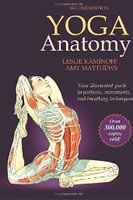
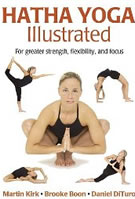
I regularly use these two books in my study of yoga.  They are both well organized, well illustrated, and highly informative.  Both are excellent reference tools, and explain yoga postures from an anatomical and scientific perspective.

Yoga Anatomy  By Leslie Kaminoff and Amy Matthews.  Published by Human Kinetics, Champain, Illinois, Second Edition, 2011.  Copyright by The Breathe Trust 2007, 2012.  Various indexes: by muscles, joints, position in English, position in Sanskrit, bibliography, 276 pages.  ISBN: 1450400248. VSCL.  An outstanding reference book on the anatomy of yoga!  

Hatha Yoga Illustrated: For Greater Strength, Flexibility and Focus  By Martin Kirk and Brooke Boon.  Photographs by Daniel DiTuro.  Champaign, Illinois, Human Kinetics, 2006.  Suggested readings, resources, index by Sanskrit name, index by English name, 233 pages.  ISBN: 0736062033.   VSCL.  Practical, informative and well organized information. 

My Hatha Yoga Postures List is in alphabetical order by both the English and Sanskrit names for many common Hatha Yoga postures for beginning and intermediate yoga students.  The list includes coding for the kind of yoga posture, e.g., balancing, standing, supine, backbend, etc.  For each posture, the list includes reference to descriptions in yoga textbooks, including the two books mentioned above.  The list also includes some Chi Kung postures that I teach in many of my yoga classes.  My Hatha Yoga Postures List is now 14 pages long, in a PDF format, print only, at Version 6, 10/1/2012.  I also have prepared numerous one page Study Lists that might be useful to yoga students and beginning teachers.   


Thursday, April 17, 2014

Anatomy of Hatha Yoga Postures

I regularly use these two books in my study of yoga.  They are both well organized, well illustrated, and highly informative.  Both are excellent reference tools, and explain yoga postures from an anatomical and scientific perspective.
Yoga Anatomy  By Leslie Kaminoff and Amy Matthews.  Published by Human Kinetics, Champain, Illinois, Second Edition, 2011.  Copyright by The Breathe Trust 2007, 2012.  Various indexes: by muscles, joints, position in English, position in Sanskrit, bibliography, 276 pages.  ISBN: 1450400248. VSCL.  An outstanding reference book on the anatomy of yoga!  
Hatha Yoga Illustrated: For Greater Strength, Flexibility and Focus  By Martin Kirk and Brooke Boon.  Photographs by Daniel DiTuro.  Champaign, Illinois, Human Kinetics, 2006.  Suggested readings, resources, index by Sanskrit name, index by English name, 233 pages.  ISBN: 0736062033.   VSCL.  Practical, informative and well organized information. 
My Hatha Yoga Postures List is in alphabetical order by both the English and Sanskrit names for many common Hatha Yoga postures for beginning and intermediate yoga students.  The list includes coding for the kind of yoga posture, e.g., balancing, standing, supine, backbend, etc.  For each posture, the list includes reference to descriptions in yoga textbooks, including the two books mentioned above.  The list also includes some Chi Kung postures that I teach in many of my yoga classes.  My Hatha Yoga Postures List is now 14 pages long, in a PDF format, print only, at Version 6, 10/1/2012.  I also have prepared numerous one page Study Lists that might be useful to yoga students and beginning teachers.   


Friday, October 05, 2012

Essential Yoga Reference Books

I use these two books every day in my study of yoga for my yoga teacher training program.  They are both well organized, well illustrated, and highly informative.  Both are excellent reference tools.

Yoga Anatomy  By Leslie Kaminoff and Amy Matthews.  Published by Human Kinetics, Champain, Illinois, Second Edition, 2011.  Copyright by The Breathe Trust 2007, 2012.  Various indexes: by muscles, joints, position in English, position in Sanskrit, bibliography, 276 pages.  ISBN: 1450400248. VSCL.  An outstanding reference book on the anatomy of yoga!  

Hatha Yoga Illustrated: For Greater Strength, Flexibility and Focus  By Martin Kirk and Brooke Boon.  Photographs by Daniel DiTuro.  Champaign, Illinois, Human Kinetics, 2006.  Suggested readings, resources, index by Sanskrit name, index by English name, 233 pages.  ISBN: 0736062033.   VSCL.  Practical, informative and well organized information. 

I continue to work a little each day on my Hatha Yoga Postures List.  This list is in alphabetical order by both the English and Sanskrit names for many common Hatha Yoga postures for beginning and intermediate yoga students.  The list includes coding for the kind of yoga posture, e.g., balancing, standing, supine, backbend, etc.  For each posture, the list includes reference to descriptions in yoga textbooks, including the two books mentioned above.  The list also includes some Chi Kung postures that I teach in many of my yoga classes.  My Hatha Yoga Postures List is now 14 pages long, in a PDF format, print only, at Version 6, 10/1/2012.  I also have prepared numerous one page Study Lists that might be useful to yoga students and beginning teachers.