Showing posts with label Elements. Show all posts

Sunday, March 30, 2025

I Love Science

 "I love science, and it pains me to think that so many are terrified of the subject or feel that choosing science means you cannot also choose compassion, or the arts, or be awed by nature. Science is not meant to cure us of mystery, but to reinvent and reinvigorate it."
- Robert Sapolsky, Why Zebras Don't Get Ulcers


"In the end, it's probably impossible to tease out whether the heads or tails of science, the theory or the experiment, has done more to push science ahead." (DS, p36).  


"It is theory that decides what we can observe."
-  Albert Einstein


"Consider what effects, that might conceivably have practical bearings, we conceive the object of our conception to have. Then, our conception of these effects is the whole of our conception of the object."
-  Charles Sanders Pierce


The Disappearing Spoon: And Other True Tales of Madness, Love, and the History of the World from the Periodic Table of the Elements  By Sam Kean.  Little, Brown and Company, 2010.  400 pages.  ISBN: 978-0316051644.  VSCL.  Subjects: Chemistry, Periodic Table, Science, Elements.  This book is the most interesting, informative, and well written book I have read in the last 60 days. 


The modern sciences of physics and chemistry have discovered or synthesized 118 Elements.  This fascinating subject can be studied through the graphical model of the Periodic Table of Elements first conceived in 1869 by the Russian chemist, Dmitri Medneleev.  Read the "Disappearing Spoon" for the fascinating story of the Table of the Elements. 


Saturday, November 12, 2016

Sacred Circles

I've put together a webpage on the subject of Sacred Circles.

This webpage provides links, bibliographic citations, resources, quotations, notes, and comments on medicine wheels, henges, labyrinths, neopagan sacred circles, holy circles, the symbolism and myths about circles and spheres, sacred circle gardens, the four elements, and related topics.

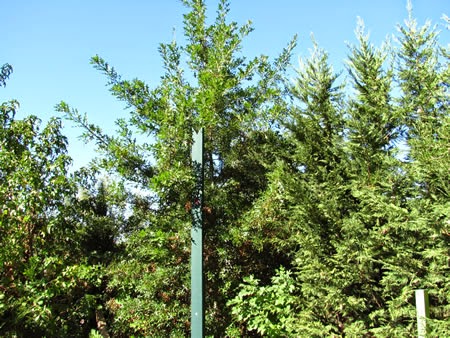
This webpage includes information and photographs of our sacred circle garden at our home in Red Bluff, California.

Those folks who walk the circle in labyrinthswalking meditation or baguazhang might find some of the information in sacred circles to be of interest to them.

Here are a few pictures from our sacred circle garden.  They were all taken a few years ago.  Everything is the same today, except all the trees and shrubs are larger.  


Saturday, November 14, 2015

Theory Decides What We Can Observe

The ancients often though of the objects in our world being composed of a combination of air, earth, fire, water, and the void/ether - the Four Elements Theory.  Chinese thinkers theorized about the Five Elements: Wood, Fire, Earth, Metal, Water.   The Greek Epircureans were materialists who thought objects were composed of atoms.  Some speculated about Eight Elements.  In the 21st century, we talk about 118 Elements. 

"In the end, it's probably impossible to tease out whether the heads or tails of science, the theory or the experiment, has done more to push science ahead." (DS, p36).  


"It is theory that decides what we can observe."
-  Albert Einstein


"Consider what effects, that might conceivably have practical bearings, we conceive the object of our conception to have. Then, our conception of these effects is the whole of our conception of the object."
-  Charles Sanders Pierce


The Disappearing Spoon: And Other True Tales of Madness, Love, and the History of the World from the Periodic Table of the Elements  By Sam Kean.  Little, Brown and Company, 2010.  400 pages.  ISBN: 978-0316051644.  VSCL.  Subjects: Chemistry, Periodic Table, Science, Elements.  This book is an interesting, informative, and well written book I read a few years ago.  


The modern sciences of physics and chemistry have discovered or synthesized 118 Elements.  This fascinating subject can be studied through the graphical model of the Periodic Table of Elements first conceived in 1869 by the Russian chemist, Dmitri Medneleev.  Read the "Disappearing Spoon" for the fascinating story of the Table of the Elements.