Showing posts with label Self-Cultivation. Show all posts

Sunday, April 19, 2026

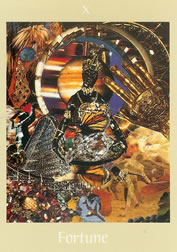
Art, Symbolism, and Creative Interpretations: The Tarot

Today, I am enjoying using a new copy of the:
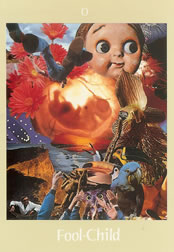
Voyager Tarot, Intuition Cards for the 21st Century
By James Wanless, Ph.D.. Artist Ken Knutson. 
78 full color collage art Tarot cards.  117 page mini booklet. 
Fair Winds: ISBN 978-1-59233-322-6, 2017.  First edition 1984.  


Has anyone seen a chart or list correlating the 78 cards in the Voyager Tarot (or other Tarot decks) with the 64 Hexagrams of the I Ching???

For examples:

I Ching Number = Tarot Card Name

#1 Creative, Initiating = Magician, 1

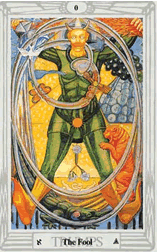
#4, Childhood, Youthful Folly, Impermanence = Fool, 0

#52 Mountain = Hermit, 9

During a morning Voyager Tarot card reading, I usually select one card as the most significant for the day.  I would like to write on each Tarot card the corresponding, related, correlated, comparable, similar themed, or relevant I Ching Hexagram Number.  

Also, this is a different way for selecting an I Ching Hexagram other than yarrow sticks or coin tossing.  


A Repost from 2018:


I first purchased and used Tarot decks in 1979.  I studied numerous books on the subject of the Tarot.  I purchased numerous decks over the decades.  First, I enjoyed the variety of artwork and symbolism in the 78 cards in the different decks from different centuries.  Second, the creator of each deck brings some new insights into the overall structure and meanings for the cards in the deck.  Third, I enjoyed "reading" and creatively interpreting the symbols and images in these small art objects in the context of my own life and questions.  

I even made, in 2011, some very incomplete notes in hypertext documents on the Tarot.

My method over the years is to ask a question or reflect on my current consciousness and situation in my life.  Then, I randomly pull from 3 to 5 cards from the deck.  I try to interpret, reflect upon, and consider the meaning of each card.  I may use The Voyager Tarot book to refresh or expand my understanding or memories.  Then, I arrange the cards in some order to "tell a story."  I do this once a day, at night; then, in the morning, reconsider the meanings and relevance of that 3-5 card reading in my life.  I only look at cards right side up; although, I do sometimes reverse the meaning of the cards depending upon the story I create.  

I enjoy using the 1991 Voyager Tarot deck the most.  

This photomontage deck was designed by James Wanless, Ph.D.  The photographic collage artwork was created by Ken Knutson.  It was first published in 1984, and then in 1991 and 2008. 

The Voyager Tarot: Way of the Great Oracle Book.  By James Wanless, 1989.  Book and Deck


 The Fool, 0


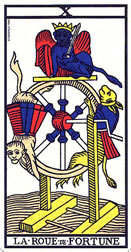
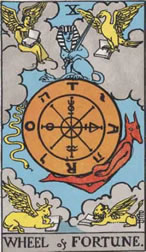
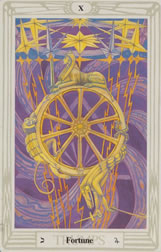
The Wheel of Fortune, 10


Friday, March 13, 2026

Cultivating Taste

Repost from October 2022

I have been reading books by and about John Dewey (1859-1952).  I favor many of the positions of the American Pragmatist philosophers.  

The mind-Body arts and disciplines I practice and write about are useful for maintaining fitness and good health, helping with self-defense at a number of levels, encouraging oneself and others to be peaceful and calm, reducing anxieties and tension, balancing internal forces, opening one up to interesting cultural and philosophical Eastern traditions, and having a dignity and beauty associated with their practice.  I judge them to be "good," and exemplars of "good taste."  They seem right and noble to me, based on broader judgments as to value, and not just my personal preferences or habits.       

"Well, a vast number of our moral perceptions also are certainly of this secondary and brain‑born kind. They deal with directly felt fitnesses between things, and often fly in the teeth of all the prepossessions of habit and presumptions of utility. The moment you get beyond the coarser and more commonplace moral maxims, the Decalogues and Poor Richard's Almanacs, you fall into schemes and positions which to the eye of common‑sense are fantastic and overstrained. The sense for abstract justice which some persons have is as eccentric a variation, from the natural-history point of view, as is the passion for music or for the higher philosophical consistencies which consumes the soul of others. The feeling of the inward dignity of certain spiritual attitudes, as peace, serenity, simplicity, veracity; and of the essential vulgarity of others, as querulousness, anxiety, egoistic fussiness, etc‑-are quite inexplicable except by an innate preference of the more ideal attitude for its own pure sake. The nobler thing tastes better, and that is all that we can say. “Experience” of consequences  may truly teach us what things are wicked, but what have consequences to do with what is mean and vulgar?"  ....


"The word "taste" has perhaps got too completely associated with arbitrary liking to express the nature of judgments of value. But if the word be used in the sense of an appreciation at once cultivated and active, one may say that the  formation of taste is the chief matter wherever values enter in, whether intellectual, aesthetic or moral.  Relatively immediate judgments, which we call tact or to which we give the name of intuition, do not precede reflective inquiry, but are the funded products of much thoughtful experience. Expertness of taste is at once the result and the reward of constant exercise of thinking.  Instead of there being no disputing about tastes, they are the one thing worth disputing about, if by "dispute" is signified discussion involving reflective inquiry.  Taste, if we use the word in its best sense, is the outcome of experience brought cumulatively to bear on the intelligent appreciation of the real worth of likings and enjoyments.  There is nothing in which a person so completely reveals himself as in the things which he judges enjoyable and desirable, Such judgments are the sole alternative to the domination of belief by impulse, chance, blind habit and self-interest. The formation of a cultivated and effectively operative good judgment or taste with respect to what is aesthetically admirable, intellectually acceptable and morally approvable is the supreme task set to human beings by the incidents of experience."
-  John Dewey, The Construction of Good in the Quest for Certainty, 1929


Tuesday, March 10, 2026

Buddhist Understanding and Advice

Dharmapada Sutra


Verse 245 (18:245)
245. Life seems hard for one who ever seeks purity, is detached and humble, is pure and reflective. Narada 1959

245. But life is hard to live for a modest man, who always looks for what is pure, who is disinterested, quiet, spotless, and intelligent. Muller 1881

245. Life is hard for the modest, the lover of purity, the disinterested and simple and clean, the man of insight. Wagiswara 1912


Verse 24 (2:24) (II:24) 

The glory groweth Of one who is aroused and recollecting. Clean of deed, considerate in his doing. Restrained, righteous in life, and earnest.
- Edmunds 1902

Great grows the glory of him who is zealous in meditation, whose actions are pure and deliberate, whose life is calm and righteous and
full of vigor.   - Wagiswara 1912

The man who is strenuous, mindful, of pure conduct, and careful, who restrains himself, who acts after due deliberations and practices
Right Livelihood, becomes famous.   - Jung 2009

Energetic, alert, pure in deed, careful in action, self-controlled, living in accord with truth, the vigilant one will rise in repute.   - Cleary 1994

One who is energetic, mindful, pure in deed, considerate, self-controlled, right living shall arise in glory.   - Narada 1959

For the person of energy, thoughtfulness,
pure conduct, considerate action,
restraint, wholesome living, and diligence,
glory increases.   - Wallis 2007

If an earnest person has roused himself, if he is not forgetful, if his deeds are pure, if he acts with consideration, if he restrains himself,
and lives according to law, then his glory will increase.
- Muller 1881


Buddhism

Philosophy


Monday, January 26, 2026

Yang Style of Tai Chi Chuan, Standard 24 Form

My webpage on the Standard 24 Taijiquan Form has been a very popular webpage on the Cloud Hands Tai Chi Chuan Website since 2001.  In the sidebar of this blog, you will find a quick index to this webpage.   

Standard Simplified Taijiquan 24 Form. Research by Michael P. Garofalo, M.S. This webpage includes a detailed bibliography of books, media, links, online videos, articles, and resources. It provides a list of the 24 movement names in English, Chinese, French, German and Spanish, with citations for sources of the movement names. It provides detailed descriptions of each movement with black and white line illustrations and photographs. It includes relevant quotations, notes, performance times, section breakdowns, basic Tai Chi principles, and strategies for learning the form. This hypertext document was last last updated in December of 2017.  


The Peking (Bejing) Chinese National orthodox standard simplified 24 movement T'ai Chi Ch'uan form, created in 1956, is the most popular form practiced all around the world. This form uses the Yang Style of Taijiquan.  

There is also a famous short Tai Chi Chuan form, created by Professor Cheng Man-ch'ing in the 1940's.  It has 37 movements in the Yang Style of Taijiquan.

My 24 Form webpage provides many good suggestions for a person learning this basic Tai Chi Chuan Form of 24 movements on their own if there is no Tai Chi class in their area.


I started learning Taijiquan in 1986.  I was taught the Standard 24 Movement T'ai Chi Ch'uan Form in the Yang Style of T'ai Chi Ch'uan.  I learned it from Aikido Sensei Frank McGourick in Whittier, California.  


In 1986, were no books or instructional videotapes on this popular form.  In 2019, there are dozens of books and instructional DVDs, videotapes, UTube demonstrations by women and men, streaming content, and scores of webpages on the subject of the 24 Taijiquan Form.  


Sensei McGourick also taught me the standard Long Form of the Yang Style of Tai Chi Chuan.  You hit the floor a lot in Aikido, it is vigorous, and it is very challenging for anyone, and it was too hard for me.  So, being a man in his 40's, and working 50 hours a week as a library administrator of 22 libraries in the busy and growing San Gabriel Valley, I practiced only Taijiquan and Qigong at the Aikido Ai Dojo in Whittier with Dr. Robert Moore and Sensei McGourick.

The most detailed book that I have seen on the subject of the 24 Form is:
The Yang Taiji 24 Step Short Form: A Step by Step Guide for All Levels
By James Drewe.  London, Singing Dragon Press, 2011.  382 pages, black and white photographs, charts, detailed descriptions, training tips.


I give information on many other fine books by other good authors on the Basic 24 Tai Chi Chuan Form in my webpage.  Find books by Andrew Townsend, Cheng Zhao, Foen Tjoeng Lie, Eric Chaline, Le Deyin, etc.

Many persons have told me that their favorite instructional DVD on the 24 Form is: Tai Chi - The 24 Forms  By Dr. Paul Lam.  
I attended Dr. Lam's Tai Chi for Arthritis workshop in Monterey, California; and  later workshops on Sun Tai Chi with other Bay Area teachers.  I am also quite fond of using instructional DVDs by Master Jessie Tsao from San Diego.  


I have played and practiced this form with many different persons and groups over three decades.  The many slight variations are fun to play and observe.  Taijiquan is a very pleasant and satisfying group exercise, dance, marital arts, and choreographed body-mind movements class.  Taijiquan and Qigong provide an excellent fitness class for seniors to help them with aging well.  I have practiced this Basic 24 Form with different groups in the Vancouver and Portland areas, and for many years around Red Bluff, CA.  

At age 79, I can do quite a few repetitions of the form during any day.  I warm up with Qigong and limbering up movements, if needed, before practicing the 24 Form.  I make adjustments necessitated because of my former injuries, falls, surgeries, and decreasing balance skills.  I like to play with the named movement sequences in ways outside of the 24 form choreography, e.g., HsingI type forward drills using Yang postures, changing directions to accommodate indoor practice near furniture, faster movements with intermittent fajing, etc.  I also think about the martial applications of defense or offense, following the Teacher and group members so to achieve a coordinated beauty in the performance style desired, the courtesies and comradeship of the practice team, Taijiquan principles, etc. 

I try my best to try to learn, and relearn, and unlearn.   


"At this period of wushu, the Nanking Central Kuoshu Institute in 1956 tasked the choreography of a Taijiquan routine what would be more suitable for popular dissemination among the masses, in keeping with the government's egalitarian agenda.  The traditional forms were just too long and time consuming to practice, and the traditional methods too arcane and demanding for mass propagation.  The challenge was to reduce the one hundred-odd movements of the traditional Yang Style Taijiquan, prevalent then, to its core, by removing the many repetitive movements as well as the less essential ones.  Thus, the 24-Form Taijiquan set was created.  Instrumental in this simplification effort was Li Tianji (1913-1996) who had been appointed a wushu research fellow at the Institute.  Under official auspices, the 24-Form Taijiquan quickly became the standard form, taught throughout China as part of physical education curriculum in schools and colleges.  It is perhaps the best know Taijiquan form in the world today.  As widespread as it is, the 24-Form is at best an abridged version of the traditional Yang form, a synopsis of the art."
-  C. P. Ong, Taijiquan: Cultivating Inner Strength, 2013, p. 7.  


Lift the head, stand strong and balanced, move gracefully.
Imagine resistance, water boxing, dealing with an opponent, pushing hands.

Be loose and relaxed, avoid over-exertion, use coiling energy.
Keep moving, flowing, shaping yourself in body-mind.
Shoulders down, gentle breathing, dignified bearing.
Stylish, artistic, beautiful, sensuous, dancing, formal.
Yin more than Yang, soft over hard, water over stone, gentle over muscular.
Follow the Teacher, coordinate, create unity, act as one. 


Monday, December 15, 2025

Using the Center


For some, finding one’s “center” is very problematic.  Either you have no “center” and feel lousy about the emptiness or chaos; or, you have a “center” and dislike the way the “center” is now.  Or like me, you just don’t care at all about having or not finding an illusive “center.”  Yes, I’m the smiling uncaring yellow cupcake, just enjoying a nice moment of pleasant relaxation while sitting centered on my wide butt.     


Tuesday, October 28, 2025

B. K. S. Iyengar and Yoga


Iyengar, B.K.S.  1918-2014 Yogacharya Iyengar

The renowned Yoga Grand Master (Yogacharya) B. K. S. Iyengar was born in Bellur, Karnataka, India on December 14, 1918; and died at the age of 96 on August 20, 2014..  He has taught in Pune, India, since 1936; and all around the world.  "Bellur Krishnamachar Sundararaja Iyengar, (B. K. S. Iyengar)  is the founder of Iyengar Yoga. He is considered one of the foremost yoga teachers in the world and has been practicing and teaching yoga for more than 75 years. He has written many books on yoga practice and philosophy, and is best known for his books Light on YogaLight on Pranayama, and Light on the Yoga Sutras of Patanjali.  Iyengar yoga classes are offered throughout the world, and it is believed that millions of students practice Iyengar Yoga." 


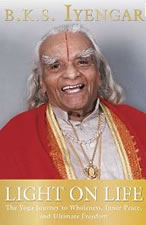
Light on Life: The Yoga Journey to Wholeness, Inner Peace, and Ultimate Freedom  By B.K.S. Iyengar.  With John J. Evans and Douglas Abrams.  Rodale Books, 2005.  Index, 282 pages.  ISBN: 1594862486.  VSCL. 


Light on Prānāyāma: The Yogic Art of Breathing  By B.K.S. Iyengar.  Introduction by Yehudi Menuhin.  New York, Crossroad Pub. Co., 2012.  Originally published in 1985 in English.  Index, glossary, appendices, 296 pages.  ISBN: 9780824506865.  VSCL.


Light on the Yoga Sutras of Patanjali.   By B. K. S. Iyengar.  Foreword by Yehudi Menuhin.  London, Thorsons, 1993.  Index, 337 pages.  ISBN: 1855382253.  VSCL. 


Light on Yoga: Yoga Dipika.   
B.K.S. Iyengar.  New York, Schocken Books, 1966, Revised Edition 1977, 1979.  Glossary, index, 544 pages.  ISBN: 0805210318.   Subtitle: Yoga Dipika.  I own the revised paperback edition, 1979.  VSCL.   

 
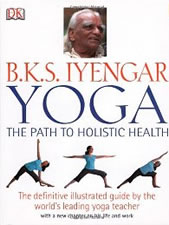
Yoga: The Path to Holistic Health  By B.K.S. Iyengar.  London, Dorling Kindersley, 2001.  Index, glossary, appendices, 415 pages.  ISBN: 0789471655.  
Lavishly illustrated compendium of essential poses, routines, prop use, and yoga routines to help specific health problems.  VSCL.   


Books by "Iyengar Yoga" Teachers


Yoga: The Iyengar Way.  By Mira Silva and Shyam Mehta.  New York, Alfred A. Knopf, 1995.  Index, appendices, 192 pages.  ISBN: 0679722874.  A very good reference tool for the study and practice of yoga poses.  VSCL. 


Iyengar Yoga Institute of San Francisco


Monday, July 14, 2025

Three Requirements for the Study of Zen

The Fireplace Records, Chapter 10


One afternoon, Master Hakuin said "I once read that Master Gaofeng Yuanmiao preached that there are three requirements for the study of Zen. The first is a great root of faith. The second is a great ball of doubt. The third is a great tenacity of purpose.  A man who lacks any of these is like a three-legged kettle with one broken leg."  

Layman Mujiang, replied to Hakuin saying, "There are always more than three."

Hakuin asked "More?"

Mujiang said, "How about being able to sit still quietly for many hours?" 

Hakuin said, "I doubt it."

Mujiang said, "How about reciting the sacred scripture or Names more?"

Hakuin said, "I doubt it."

Mujian said, "You will never give up the quest for Buddhahood, will you Master Hakuin."

Hakuin said, "I doubt it."


Layman Mujiang's Verse:

Grab hold of the Koan by one of its Three Limbs:
Have faith in the Buddha's Hands;
Heal the bruises of Doubts;
Hold on tightly, keep your grip, Persist.

The Three gives birth to the Ten Thousand Things.
Somehow/someway changing by profound and decent ways.
Doubts hinder many and spur a few to act.
Plant the great Root of Faith deep in good soil.  Water it daily.
Big Doubts, little doubts, Great Doubts, minor doubts.
I don't know, doubting it, maybe so, hypothetical, provisional. 

I can't see the Big Harbor because of the dense fogs.  
I doubt the fog will lift this morning.  


Japanese Zen Master Hakuin Ekaku (1868-1769) was extremely influential in reviving the practice of using koans/mondos/verbal encounters/stories in his Rinzai Zen Buddhist training program and with his priestly work with rural workers.  He stresses the direct interaction between a master koan teacher and a koan student, face to face dialogues, regular one on one testing, interaction, and evaluation. 

Hakuin Ekaku was an accomplished artist and calligrapher.  He also emphasized good fitness and health practices to prepare the body for the rigors of Zen training.  

Hakuin believed that quiet sitting or simple daily activities combined with the contemplation of koans was a very effective practice for imparting Buddhist wisdom teachings (Dharma) and inducing enlightenment

Hakuin thought about and he experienced personal realization, or kensho, or satori, or enlightenment, or interpenetration of suchness at the intersection of the Fundamental Point, or fully understood his authentic changing selfhood by using koan practice while sitting or gently moving.  

You can Contemplate your Assigned Koan: absorb it, mull over it, get frustrated by it, doubt it, think about it, meditate on it, discard it, cuss it, sink into it, respect it, analyze it, confound it, introspect it, leap over it, word tail it, kick it around, not-think it, hear its messages, swallow it and spit it out, submerge with it, cherish it and hate it, study it diligently, become one with it, keep it first in mind, squeeze all the insight from it, be surprised and amazed by it, catch it with a capping phrase, reflect on it, huatou keypoint at it, laugh at it, reflect on it, cry over it, stop analyzing it, grab it by the throat, don't let it go.  

Persist in Contemplating your Assigned Koan until your deeper intuitive understanding occurs, or you are somehow/someway changed in profound and decent ways, or you have chosen to work/study another koan, or you just try and try again like a dog begging for extra treats, or you somehow/someway graduate to a new awareness of our precious lives, or you quit doing koan practice, or ...   

You might find that "something should take place not unlike the cat springing upon the mouse or the mother hen hatching her eggs, then in a flash great livingness surges up. This is the moment when the phoenix escapes from the golden net, when the crane breaks the bars of its cage."
- Ruth Fuller Sasaki, The Zen Koan, 1965, p. 42


Cloud Dragon: The Joan Sutherland Dharma Works

Joan Sutherland Koan Collections  

Gates: Miscellaneous Koans  Joan Sutherland

Gateless Gateway  Joan Sutherland

The Blue Cliff Record  Joan Sutherland and John Tarrant  


Rinzai Zen Buddhist School  

Pacific Zen Institute  


"Sometimes our practice is something like this. We don’t know how much our understanding is limited. That is why you have to study koans. Koans will open up your mind. If you understand your way of life more objectively, you will understand what you are doing."
- Suzuki Roshi


Hakuin, Self-Portrait, 1767 

He gently touches his ceremonial whisk;
he frowns, he seems displeased
about something or someone.  
Maybe his stomach is upset.
Maybe that great ball of doubt
is stuck in his soul.


Related Links, Resources, References


The Zen Koan by Ruth Fuller Sasaki, 1965, p. 42.
Blue Cliff Record, Case 52, The Bridge at Zhaozhou, Joshu's Stone Bridge

Refer to my Cloud Hands Blog Posts on the topic of Koans/Dialogues.
Zen Koans, Testing Verses, Mondos, Dialogues, Stories
Bibliography, Quotations, Notes, Resources
Compiled by Michael P. Garofalo

The Fireplace Records By Michael P. Garofalo


Bodhidharma by Hakuin


Thursday, July 10, 2025

Tao Te Ching, Chapter 33

Daodejin, Laozi
Chapter 33


"It is wisdom to know others;
It is enlightenment to know one's self.
The conqueror of men is powerful;
The master of himself is strong.
It is wealth to be content;
It is willful to force one's way on others.
Endurance is to keep one's place;
Long life it is to die and not perish."
-  Translated by R. B. Blakney, 1955, Chapter 33  


"Those who know others are intelligent;
Those who know themselves have insight.
Those who master others have force;
Those who master themselves have strength.
Those who know what is enough are wealthy.
Those who persevere have direction.
Those who maintain their position endure.
And those who die and yet do not perish, live on."
-  Translated by R. L. Wing, 1986, Chapter 33 


"He who knows men is wise,
He who knows himself can see clearly.
He who conquers men has strength,
He who conquers himself has power
He who knows that he has enough is rich,
He who acts with energy has a strong will.
He who fails not to find the Self shall endure,
He who dies, but does not perish, shall endure for ever."
-  Translated by Isabella Mears, 1916, Chapter 33


"Understanding other people is wisdom,
understanding other religions is knowledge,
understanding oneself is enlightenment.
Strength is necessary to overcome others
power is necessary to overcome oneself.

Being content with what one already has is wealth.
Violence may achieve a quick result
but nothing permanent.
Stay in place, content with what you have,
to live a long life.
Death is a return to the native elements."
-  Translated by Tom Kunesh, Chapter 33  


知人者智.
自知者明. 
勝人者有力.
自勝者強. 
知足者富. 
強行者有志. 
不失其所者久. 
死而不亡者壽. 

-  Chinese characters, Tao Te Ching, Chapter 33


chih jên chê chih.
tzu chih chê ming.
shêng jên chê yu li.
tzu shêng chê ch'iang.
chih tsu chê fu.
ch'iang hsing chê yu chih.
pu shih ch'i so chê chiu.
ssu erh pu wang chê shou.
-  Wade-Giles Romanization, Tao Te Ching, Chapter 33 


"He who knows others is clever;
He who knows himself has discernment.
He who overcomes others has force;
He who overcomes himself is strong.
He who knows contentment is rich;
He who perseveres is a man of purpose;
He who does not lose his station will endure;
He who lives out his days has had a long life."
-  Translated by D. C. Lau, 1963, Chapter 33 


"Those who know others are wise; those who know themselves are enlightened.
Those who overcome others are powerful; those who overcome themselves are strong.
Those who are contented are rich; those who act strongly have will.
Those who do not lose their place endure; those who die without perishing live long."
-   Translated by Thomas Cleary, 1991, Chapter 33


"He who knows others is wise; he who knows himself is enlightened.
He who overcomes others is powerful; he who overcomes himself is strong.
He who feels self-contentment is rich; he who practises self-cultivation is resolute.
He who abides by his original nature endures; he who follows Truth throughout life enjoys immortality."

-  Translated by Cheng Lin, Chapter 33


"Quien conoce a los demás es inteligente.
Quien se conoce a sí mismo tiene visión interna.
Quien conquista a los demás tiene fuerza; quien se conquista a sí mismo es realmente poderoso.
Quien sabe cuándo ha obtenido bastante es rico, y quien sigue asiduamente
     el sendero del Tao es alguien de propósito constante.
Quien permanece en el lugar en el que ha encontrado su verdadera casa vive mucho tiempo,
     y quien muere, pero no perece, goza de la auténtica longevidad."
-  Translation from Chinese to English by John C. H. Wu, translated into Spanish by Alfonso Colodrón, Capítulo 33


"One who knows others is clever.
One who knows himself has insight.
One who overcomes others is forceful.
One who overcomes himself is truly strong.
One who knows he has enough is rich.
One who does not divert his mind from the realization of integral virtue is wisely willful.
One who preserves his natural integrity will endure.
One who embraces the subtle essence dies yet does not perish and thus enjoys true immortality."
-  Translated by Hua-Ching Ni, 1995, Chapter 33 


"Whoever knows others has wisdom;
Whoever knows himself has insight.
Whoever conquers others has force;
Whoever conquers himself has strength.
Whoever knows he has enough has wealth.
Whoever perseveres has purpose. Whoever keeps to one place endures.
Whoever dies without perishing lives long."
-  Translated by Herrymoon Maurer, 1985, Chapter 33


Chapter 33Tao Te Ching by Lao Tzu
A Philosopher's Notebooks 


Thursday, February 13, 2025

Dao De Jing, Chapter 19

Tao Te Ching by Lao Tzu

Chapter 19


"Abandon holiness,
discard your plans,
and the people will improve.
Let go of duty,
and the people will find devotion.
Renounce learning and ceremony,
and the people will find peace.
Ditch your clever schemes and thirst for profit,
and thieves will disappear.
Better yet,
just return to the purity and simplicity,
of raw silk or unworked wood.
Lose your self-consciousness
and ease yourself away from desire."
-  Translated by Crispin Starwell, Chapter 19 


"Get rid of "holiness" and abandon "wisdom" and the people will benefit a hundredfold.
Get rid of "altruism" and abandon "Justice" and the people will return to filial piety and compassion.
Get rid of cleverness and abandon profit, and thieves and gangsters will not exist.
Since the above three are merely words, they are not sufficient.
Therefore there must be something to include them all.
See the origin and keep the non-differentiated state.
Lessen selfishness and decrease desire."
-  Translated by Charles Muller, 1891, Chapter 19  


"Stop being learned and your troubles will end.
Give up wisdom, discard cleverness, and the people will benefit a hundredfold.
Give up benevolence, discard moral judgments, and the people will rediscover natural compassion.
Give up shrewdness, discard gain, and thieves and robbers will disappear.
These three false adornments are not enough to live by.
They must give way to something more solid.
Look for what is simple and hold onto the Uncarved Block.
Diminish thoughts of self and restrain desires."
-  Translated by Tolbert McCarroll, 1982, Chapter 19 


"It is better merely to live one's life,
realizing one's potential,
rather than wishing 
for sanctification.
He who lives in filial piety and love 
has no need of ethical teaching. 
When cunning and profit are renounced, 
stealing and fraud will disappear. 
But ethics and kindness, and even wisdom, 
are insufficient in themselves. 
Better by far to see the simplicity
of raw silk's beauty
and the uncarved block;
to be one with oneself, 
and with one's brother.
It is better by far 
to be one with the Tao,
developing selflessness,
tempering desire,
removing the wish,
but being compassionate."
-  Translated by Stan Rosenthal, 1984, Chapter 19 


絕聖棄智, 民利百倍.
絕仁棄義, 民復孝慈.
絕巧棄利, 民有無賊.
絕巧棄利, 盜無 ?者
此三者以為文不足, 故令有所屬.
見素抱樸.
少私寡欲.  
-  Chinese characters, Tao Te Ching, Chapter 19


chüeh shêng ch'i chih, min li pai pei.
chüeh jên ch'i yi, min fu hsiao tz'u.
chüeh hsüeh ch'i li, min yu wu yu.
chüeh ch'iao ch'i li, tao tsê wu yu.
tz'u san chê yi wei wên pu tsu, ku ling yu so shu.
chien su pao p'u.
shao ssu kua yü.
-  Wade-Giles Romanization, Tao Te Ching, Chapter 19  


"If the people renounce self-control and reject wisdom,
Let them gain simplicity and purity
If the people renounce duty to man and reject right conduct,
Let them return to filial piety deep, deep in the heart.
If they renounce skill and leave off search for profit,
Let them rob and by violence take possession of spiritual life.
These three things do not help our progress.
Therefore now let us seek
To perceive simplicity,
To conserve beauty in the heart,
To curb selfishness and to have few desires."
-  Translated by Isabella Mears, 1916, Chapter 19 


"Prescribe la sabiduría, descarta la santidad,
y el pueblo se beneficiará cien veces.
Prescribe la bondad humana, descarta la moralidad,
Y el pueblo será abnegado y compasivo.
Prescribe la habilidad, descarta el provecho,
y así bandidos y ladrones desaparecerán.
Pero estas tres normas no bastan.
Por esto, atiende a lo sencillo y genuino,
reduce tu egoísmo, y restringe los deseos."

-  Translation from Wikisource, 2013, Tao Te Ching, Capítulo 19   


"If men would lay aside their holiness
And wisdom, they would gain a hundred-fold,
And, if benevolence and righteousness,
Parental care and filial love would hold;
If they would drop their cleverness and gain,
Robbers would cease to trouble, as of old.   
Here are three things where decorating fails,
Let them again embrace reality,
Let them restore the purity of old,
Let them return to their simplicity,
Curb selfishness, diminish their desires,
And in the genuine find felicity."
-  Translated by Isaac Winter Heysinger, 1903, Chapter 19 


"Terminate 'sageliness', junk 'wisdom'
the people will benefit a hundred-fold.
Terminate 'humanity', junk 'morality'
the people will respond with 'filiality' and 'affection.'
Terminate 'artistry', junk 'benefit'
thieves and robbers will lack 'existence'.
These three
taken as slogans are insufficient.
Hence, leads us to postulate that to which they belong.
Visualize simplicity and embrace uncarved wood.
Downgrade 'selfishness' and diminish 'desire.'
Terminate learning and you will lack irritation."
-  Translated by Chad Hansen, Chapter 19 


"For thirty years of His life on earth,
The Word was silent before the people.
For fifty centuries the world had waited for the word that its
   Maker could speak.
And finally, with the people before Him
On a sloping meadow overlooking a lake,
The Word spoke His word.
The Way revealed His way.
And He Who had taken the lowest place
Spoke to His creatures of lowliness, saying:
"Blessed are the meek,
The poor in spirit,
Blessed are you who weep now."
He Who had come not seeking praise, said:
"Blessed are you when they revile and persecute you."
These were the first words that the Word spoke to mankind,
Being meek, being Himself reviled,
And weeping with those who weep."
-  Interpolated by Hieromonk Damascene, 1999, Chapter 19
   An Eastern Orthodox interpretation of the Dao and Christ


"Abandon holiness
Discard cleverness and the people will benefit a hundredfold
Abandon the rules of "kindness"
Discard "righteous" actions
and the people will return
to their own natural affections
Abandon book learning
Discard the rules of behavior
and the people will have no worries
Abandon plots and schemes
Discard profit-seeking
and the people will not become thieves

These lessons are mere elaborations
The essence of my teachings is this:
See with original purity
Embrace with original simplicity
Reduce what you have
Decrease what you want."
-  Translated by Johathan Star, 2001, Chapter 19


"Trying Too Hard: Ease up and don’t worry

Give up wisdom. Discard knowledge.
Then people will benefit a hundred fold.
Give up benevolence. Discard justice.
Then people will return to brotherly love and kindness.
Give up scheming. Discard profit.
Then there will be no bandits and thieves.

These three sayings, as principles, are not enough.
Therefore we must add the following:
Be natural and embrace simplicity.
Reduce selfishness and have few desires.
Give up learning and don’t worry."
-  Translated by Amy and Roderic Sorell, 2003, Chapter 19


A typical webpage created by Mike Garofalo for each one of the 81 Chapters (Verses, Sections) of the Tao Te Ching (Daodejing) by Lao Tzu (Laozi) includes over 25 different English language translations or interpolations for that Chapter, 5 Spanish language translations for that Chapter, the Chinese characters for that Chapter, the Wade-Giles and Hanyu Pinyin transliterations (Romanization) of the Mandarin Chinese words for that Chapter, and 2 German and 1 French translation of that Chapter.  Each webpage for each one of the 81 Chapters of the Tao Te Ching includes extensive indexing by key words, phrases, and terms for that Chapter in English, Spanish, and the Wade-Giles Romanization.  Each webpage on a Chapter of the Daodejing includes recommended reading in books and websites, a detailed bibliography, some commentary, research leads, translation sources, and other resources for that Chapter.  Each webpage includes a Google Translate drop down menu at the top that enables you to read the webpage in over 100 languages.

Chapter 19, Tao Te Ching by Lao Tzu


Chapter Indexing for the Tao Te Ching


English Language Daodejing Translators' Source Index


Spanish Language Daodejing Translators' Source Index


Ripening Peaches: Taoist Studies and Practices


Taoism: A Selected Reading List


Concordance to the Tao Te Ching (2018 Project)   


One Old Daoist Druid's Final Journey  


Sunday, October 20, 2024

Tao Te Ching, Chapter 7


Dao De Jing by Laozi
Chapter 7


"The Tao is infinite and eternal.
Why is it eternal?
It was never born;
thus it can never die.
Why is it infinite?
It has no desires for itself;
thus it is present for all beings.
The Master stays behind;
that is why he is ahead.
He is removed from all things;
that is why he is one with them.
Because he has let go of himself,
he is perfectly fulfilled."
- Translated by John Dicus, 2002, Chapter 7


"The universe is everlasting.
The reason the universe is everlasting
Is that it does not live for Self.
Therefore, it can long endure.
Therefore, the Sage puts himself last,
And finds himself in the foremost place;
Regards his body as accidental,
And his body is thereby preserved.
Is it not because he does not live for Self,
That his Self is realized?"
- Translated by Lin Yutang, 1955, Chapter 7


"Heaven is lasting, Earth endures.
What enables Heaven and Earth to last and endure?
Because they do not live for themselves - so it is that they can live so long.
And so, the Wise Person: Puts himself last, and so finds himself in front.
He puts himself in the out group, and so maintains his place.
The personal does not exist for him.
Isn't this how he can perfect what for him is most personal?"
- Translated by Michael LaFargue, 1992, Chapter 7


"The Tao is infinite, eternal.
Why is it eternal?
It was never born;
thus it can never die.
Why is it infinite?
It has no desires for itself;
thus it is present for all beings.
The Master stays behind;
that is why she is ahead.
She is detached from all things;
that is why she is one with them.
Because she has let go of herself,
she is perfectly fulfilled."
- Translated by Edwin Shaw, 1996, Chapter 7


"Heaven is lasting and earth enduring.
The reason why they are lasting and enduring
is that they do not live for themselves.
Therefore, they live long.
In the same way the Sage keeps himself behind,
and he is in the front.
He forgets himself and is preserved.
Is it not because he is not self-interested
That his self-interest is established?"
- Translated by Ch'u Ta-Kao, 1904, Chapter 7 


天長地久.
天地所以能長且久者.
以其不自生.
故能長生.
是以聖人後其身而身先.
外其身而身存.
非以其無私耶.
故能成其私.
- Chinese characters, Tao Te Ching, Chapter 7 


t'ien ch'ang ti chiu.
t'ien ti so yi nêng ch'ang ch'ieh chiu chê.
yi ch'i pu tzu shêng.
ku nêng ch'ang shêng.
shih yi shêng jên hou ch'i shên erh shên hsien.
wai ch'i shên erh shên ts'un.
fei yi ch'i wu ssu hsieh.
ku nêng ch'êng ch'i ssu.
- Wade-Giles Romanization, Tao Te Ching, Chapter 7


"Heaven is enduring and earth is lasting.
Why heaven and earth can be enduring and lasting is because
they do not live for themselves, thus, they can endure and last.
So that a Sage ruler put himself behind others, and he came to the front;
he excluded himself from struggle with others and he survived.
It is because he was selfless that he fulfilled himself."
- Translated by Tang Zi-chang, Chapter 7


"Heaven and earth will exist forever.
The reason they exist forever is that they do not live for themselves
and they do not live because of themselves.
Therefore they live forever.
In the same way, the sage stays behind everything and finds himself
in front of everything, he is not himself and he is preserved forever.
Since he has no self-interest, his self-interest can realize itself.
Even though it looks like heaven and earth give life to all creatures,
they do not live in order to preserve their own existence,
and therefore they live forever and never die.
In his rule over the kingdom, the sage does everything for people,
ignoring his personal goals,
and ultimately earns glory, honor, and everything he wanted for himself."
-  Translated by Chou-Wing Chohan, Chapter 7 


"Heaven endures and earth is lasting.
And why can heaven and earth endure and be lasting?
Because they do not live for themselves.
On that account can they endure.
Therefore,
The holy man puts his person behind and his person comes to the front.
He surrenders his person and his person is preserved.
Is it not because he seeks not his own?
For that reason he can accomplish his own."
-  Translated by D. T. Suzuki, 1913, Chapter 7


"The principle of initiation persists; and the principle of completion continues.
Why do such opposing principles persist?
Because they inhere in Nature, rather than stand by themselves.
That is why opposites endure.
The intelligent man, when an issue arises, stands off
and observes both contentions.
Since he does not take sides, he never loses a battle.
By not favoring one side more than the other,
he is able to appreciate the virtues of both sides."
- Translation by Archie J. Bahm, 1958, Chapter 7


"Largo es el Cielo, duradera es la Tierra.
El Cielo su larguray la Tierra su duración lo deben a no vivir vida propia.
Por eso,pueden vivir mucho.
Así, también el hombre perfecto se antepone, porque se ha pospuesto.
Se queda, porque se ha apartado.
Logra sus interesesprivados, porque los ha desatendido."
- Translated by Carmelo Elorduy, 2006, Capítulo 7


"Heaven lasts long, and Earth abides.
What is the secret of their durability?
Is it not because they do not live for themselves
That they can live so long?
Therefore, the Sage wants to remain behind,
But finds himself at the head of others;
Reckons himself out,
But finds himself safe and secure.
Is it not because he is selfless
That his Self is realized?"
- Translated by John C. H. Wu, 1961, Chapter 7


"The heavens and the earth last forever.
They can do so because they do not exist for themselves.
Therefore, great men always let other people go first, but ended up being first themselves.
They put their lives out of consideration, but always survived.
Is it not because they were selfless,
That they benefited themselves at the end?"
- Translated by Yang Xiaolin, Chapter 7


"Heaven is lasting and earth enduring. 
The reason why they are lasting and enduring is that they do not live for themselves;  
Therefore they live long.  
In the same way the Sage keeps himself behind and he is in the front;  
He forgets himself and is preserved.  
Is it not because he is not self-interested  
That his self-interest is established?"
-  Translated by Ch'u Ta-Kao, 1904, Chapter 7  


A typical webpage created by Mike Garofalo for each one of the 81 Chapters (Verses, Sections) of the Tao Te Ching (Daodejing) by Lao Tzu (Laozi) includes 25 different English language translations or interpolations for that Chapter, 5 Spanish language translations for that Chapter, the Chinese characters for that Chapter, the Wade-Giles and Hanyu Pinyin transliterations (Romanization) of the Mandarin Chinese words for that Chapter, and 2 German and 1 French translation of that Chapter.  Each webpage for each one of the 81 Chapters of the Tao Te Ching includes extensive indexing by key words, phrases, and terms for that Chapter in English, Spanish, and the Wade-Giles Romanization.  Each webpage on a Chapter of the Daodejing includes recommended reading in books and websites, a detailed bibliography, some commentary, research leads, translation sources, a Google Translate drop down menu, and other resources for that Chapter.  These are hypertext documents, and available online under Creative Commons 4.


Chapter 7, Tao Te Ching by Lao Tzu.  Complied by Mike Garofalo.  

Chapter and Thematic Index (Concordance) to the Tao Te Ching by Lao Tzu


English Language Daodejing Translators' Source Index


Spanish Language Daodejing Translators' Source Index


Ripening Peaches: Taoist Studies and Practices


Taoism: A Selected Reading List