Showing posts with label Softness. Show all posts

Tuesday, May 26, 2026

Tao Te Ching Chapter 40 Dao De Jing

Daodejing, Laozi
Chapter 40


"The movement of the Tao
By contraries proceeds;
And weakness marks the course
Of Tao's mighty deeds.
All things under heaven sprang from It as existing and named.
That existence sprang from It as non-existent and not named."
-  Translated by James Legge, 1891, Chapter 40    


"Reversion is the action of Tao.
   Gentleness is the function of Tao.
The things of this world come from Being,
   And Being (comes) from Non-being."
-  Translated by Lin Yutang, 1955, Chapter 40    


"In Tao the only motion is returning;
The only useful quality, weakness.
For though all creatures under heaven are the products of Being,
Being itself is the product of Not-being."
-  Translated by Arthur Waley, 1934, Chapter 40  


"Reversion is the action of the Dao.
 Softness is the function of the Dao.
 The myriad things under Heaven achieve life in existence.
 Existence arises from nothingness."
 -  Translation Richard Lynn, Chapter 40  


反者道之動.
弱者道之用. 
天下萬物生於有.
有生於無.
-  Chinese Characters, Tao Te Ching, Chapter 40  


fan zhe dao zhi dong, 
ruo zhe dao zhi yong. 
tian xia wan wu sheng yu you.   
you sheng yu wu.
-  Pinyin Romanization, Daodejing, Chapter 40   


"The movement of Tao in the course of time is to return to Simplicity;
 The working of Tao is so subtle that is ostensible effect may not be immediately noticeable.
 Myriad things and creatures on Earth were originated from something;
 This something describable by us was launched ultimately from nothing which is beyond our description."
 -  Translated by Lee Sun Chen Org, Chapter 40  


"Interaction of the opposites is the sphere of Tao activity.
The Highest Subtlety is one of the most important qualities of Tao.
It is opposed by coarse qualities of evil people. 
All the development of incarnate beings goes on in interaction of these opposites.
Yet, the very world of matter originated from the Subtlest Source."
-  Translated by Mikhail Nilolenko, Chapter 40    


"El movimiento del Tao es retornar;
El uso del Tao es aceptar;
Todas las cosas derivan del Tao,
El Tao no deriva de ninguna."
-  Translated by Antonio Rivas Gonzálvez, 1998, Capitulo 40


"The movement of the Tao is a returning,
And weakness marks its course, to our discerning,
But heaven and earth and everything from its existence came,
And existence, from the non-existent spurning."
-  Translated by Isaac Winter Heysinger, 1903, Chapter 40  


"Tao moves in cycles;
Tao functions through softness.
All is born of nothing.
Something is born of nothing."
-  Translated by Tam C. Gibbs, 1981, Chapter 40   


A typical webpage created by Mike Garofalo for each one of the 81 Chapters (Verses, Sections) of the Tao Te Ching (Daodejing) by Lao Tzu (Laozi) includes over 25 different English language translations or interpolations for that Chapter, 5 Spanish language translations for that Chapter, the Chinese characters for that Chapter, the Wade-Giles and Hanyu Pinyin transliterations (Romanization) of the Mandarin Chinese words for that Chapter, and 2 German and 1 French translation of that Chapter.  Each webpage includes a Google Translate option menu for reading the entire webpage in many other languages.  Each webpage for each one of the 81 Chapters of the Tao Te Ching [246 CE Wang Bi version] includes extensive indexing by key words, phrases, and terms (concordance) for that Chapter in English, Spanish, and the Wade-Giles Romanization.  Each webpage on a Chapter of the Daodejing includes recommended reading in books and websites, a detailed bibliography, some commentary, links, research leads, translator sources, and other resources for that Chapter.  

     A Top Tier online free resource for English and Spanish readers, researchers, Daoist devotees, scholars, students, fans and fellow travelers on the Way. 


Tuesday, January 13, 2026

Dao De Jing 43 Tao Te Ching

Tao Te Ching by Lao Tzu
Chapter 43


"The softest of stuff in the world
Penetrates quickly the hardest;
Insubstantial, it enters
Where no room is.
By this I know the benefit
Of something done by quiet being;
In all the world but few can know
Accomplishment apart from work,
Instruction when no words are used."
-  Translated by Raymond B. Blakney, 1955, Chapter 43  


"As the soft yield of water cleaves obstinate stone,
So to yield with life solves the insoluble:
To yield, I have learned, is to come back again.
But this unworded lesson,
This easy example,
Is lost upon men."
-  Translated by Witter Bynner, 1944, Chapter 43  


"That which offers no resistance,
overcomes the hardest substances.
That which offers no resistance
can enter where there is no space.
Few in the world can comprehend
the teaching without words,
or understand the value of non-action."
-  Translated by John H. McDonald, 1996, Chapter 43   


天下之至柔, 馳騁天下之至堅. 
無有入無間.
吾是以知無為之有益. 
不言之教.
無為之益, 天下希及之. 
-  Chinese characters, Tao Te Ching Chapter 43 


t'ien hsia chih chih jou, ch'ih ch'êng t'ien hsia chih chih chien.
wu yu ju wu chien.
wu shih yi chih wu wei chih yu yi.
pu yen chih chiao.
wu wei chih yi, t'ien hsia hsi chi chih.
-  Wade-Giles Romanization, Tao Te Ching, Chapter 43  


"The softest substance of the world
Goes through the hardest.
That-which-is-without-form penetrates that-which-has-no-crevice;
Through this I know the benefit of taking no action.
The teaching without words
And the benefit of taking no action
Are without compare in the universe."
-  Translated by Lin Yutang, 1955, Chapter 43  


"The softest thing in the world can overcome the hardest.
The shapeless can penetrate the seamless.
Thus I know the value of not acting.
Few understand the wordless teaching of non-action."
-  Translated by Ned Ludd, Chapter 43    


"The world’s weakest drives the world’s strongest.
The indiscernible penetrates where there are no crevices.
From this I perceive the advantage of non-action.
Few indeed in the world realize the instruction of the silence, or the benefits of inaction."
-  Translated by C. Spurgeon Medhurst, 1905, Chapter 43 


"Lo más blando del mundo
vence a lo más duro.
La nada penetra donde no hay resquicio.
Por esto conozco la utilidad del no-interferir.
Pocas cosas bajo el cielo son tan instructivas como las lecciones del silencio,
o tan beneficiosas como los frutos del no-interferir.
Pocos en el mundo llegan a comprenderlo."
-  Translation from Wikisource, 2013, Capitulo 43


"The non-existent can enter into the impenetrable.
By this I know that non-action is useful.
Teaching without words, utility without action-
Few in the world have come to this."
-  Translated by Ch'u Ta-Kao, 1904, Chapter 43


"What is of all things most yielding
Can overwhelm that which is of all things most hard.
Being substanceless it can enter even where is no space;
That is how I know the value of action that is actionless.
But that there can be teaching without words,
Value in action that is actionless,
Few indeed can understand."
-  Translated by Arthur Waley, 1934, Chapter 43  


A typical webpage created by Mike Garofalo for each one of the 81 Chapters (Verses, Sections) of the Tao Te Ching (Daodejing) by Lao Tzu (Laozi) includes over 25 different English language translations or interpolations for that Chapter, 5 Spanish language translations for that Chapter, the Chinese characters for that Chapter, the Wade-Giles and Hanyu Pinyin transliterations (Romanization) of the Mandarin Chinese words for that Chapter, and 2 German and 1 French translation of that Chapter.  Each webpage includes a Google Translate option menu for reading the entire webpage in many other languages.  Each webpage for each one of the 81 Chapters of the Tao Te Ching [246 CE Wang Bi version] includes extensive indexing by key words, phrases, and terms (concordance) for that Chapter in English, Spanish, and the Wade-Giles Romanization.  Each webpage on a Chapter of the Daodejing includes recommended reading in books and websites, a detailed bibliography, some commentary, links, research leads, translator sources, and other resources for that Chapter.  

     A Top Tier online free resource for English and Spanish readers, researchers, Daoist devotees, scholars, students, fans and fellow travelers on the Way. 


Saturday, June 25, 2022

Daodejing, Chapter 78


Tao Te Ching by Lao Tzu
Chapter 78

"Nothing on earth is so weak and yielding as water, but for breaking down the firm and strong it has no equal.
This admits of no alternative.
All the world knows that the soft can wear away the hard, and the weak can conquer the strong, but none can carry it out in practice.
Therefore the Sage says: He who bears the reproach of his country is really the lord of the land. He who bears the woes of the people is in truth their king.
The words of truth are always paradoxical."
-  Translated by Walter Gorn Old, 1904, Chapter 78 

"remember
to be at your best
pattern yourself after water
nothing in all the world is softer or more powerful
nothing in all the world can substitute for it
nothing in all the world can stop it

in their hearts
everyone easily knows that
the soft and the weak
will always overcome the hard and strong
but they find it difficult to live this way

the secret is to
move the bodymind like water."
-  Translated by John Bright-Fey, 2006, Chapter 78 


"What is more fluid, more yielding than water?
Yet back it comes again, wearing down the rigid strength
Which cannot yield to withstand it.
So it is that the strong are overcome by the weak,
The haughty by the humble.
This we know
But never learn,
So that when wise men tell us,
'He who bites the dust
Is owner of the earth,
He who is scapegoat
Is king,'
They seem to twist the truth."
-  Translated by Witter Bynner, 1944, Chapter 78  


"Nothing is more soft and yielding than water,
for cutting things hard and strong, nothing is better,
because it persists.
The weak can overcome the strong;
the supple can overcome the stiff.
Everyone knows this,
yet no one puts it into practice.
Therefore, the sage says:
who shoulders the humiliation of the people, fits to rule them,
who shoulder the country's disaster, deserves to be the king.
The truth often sounds paradoxical."
-  Translated by Tienzen Gong, Chapter 78


天下莫柔弱於水,
而攻堅強者, 莫之能勝,
其無以易之.
弱之勝強, 柔之勝剛, 天下莫不知, 莫能行.
是以聖人云受國之垢, 是謂社稷主;
受國不祥, 是謂天下王.
正言若反.
-  Chinese characters, Chapter 78, Tao Te Ching


t'ien hsia mo jou jo yü shui,
erh kung chien ch'iang chê, mo chih nêng shêng,
ch'i wu yi yi chih.
jo chih shêng ch'iang, jou chih shêng kang, tien hsia mo pu chih, mo nêng hsing.
shih yi shêng jên yün shou kuo chih kou, shih wei shê chi chu;
shou kuo pu hsiang, shih wei t'ien hsia wang.
chêng yen jo fan.
-  Wade-Giles Romanization, Chapter 78, Tao Te Ching


"There is nothing in the world
as soft and weak as water.
But to erode the hard and strong,
nothing can surpass it;
nothing can be a substitute.
The weak can overcome the strong;
the soft can overcome the hard.
There is no-one in the world who does not know this,
but there is no-one who can put it into practice.
Those who are enlightened say:
those who bear a nation's disgrace
will become lords of its shrines to earth and grain; *
those who bear a nation's misfortune
will become kings under heaven.
True words often seem a paradox."
-  Translated by Tim Chilcott, 2005, Chapter 78 


"Nothing in the world is as soft and yielding as water.
Yet when it attacks what is strong and firm, nothing can hold up against it.
Because there is nothing as changeable as water,
Water conquers what is firm and unyielding.
By being flexible, it can conquer what is strong.
No one in this world wouldn’t be able to understand that, yet no one has the ability to carry it out.

Therefore a wise person’s words declare:
Accepting the blame for a nation’s problems is naturally referred to as being the master of what nourishes the world;
Accepting the nation’s problems as bad signs of fate is naturally referred to as being the king of the world.
These straight-spoken words seem to be backwards."
-  Translated by Nina Correa, 2005, Chapter 78


"Nada hay en el mundo más blando y suave que el agua,
 pero nada puede superarla en el combate contra lo duro y resistente,
 en esto nada puede sustituirla.
 El agua vence a lo más duro,
 lo débil vence a lo fuerte,
 no hay en el mundo quien desconozca esta razón,
 pero tampoco quien sea capaz de ponerla en práctica.

 De ahí que el sabio diga:
 'Sólo quien asume los oprobios del Estado,
 merece ser llamado señor del país.
 Sólo quien soporta las desgracias del Estado,
 merece ser llamado rey del mundo.'

 Las palabras verdaderas parecen paradójicas."
  -  Translated by Juan Ignacio Preciado, 1978, Capítulo 78


"There is nothing weaker than water,
Or easier to efface,
But for attacking the hard and the strong
Nothing can take its place.
That the tender conquers the rigid,
That the weak overcomes the strong,
The whole world knows, but in practice who
Can carry the work along?
Who bears the sins of his country,
We know from the sage's word,
Shall be called the master of sacrifice,
And hailed as its altar's lord.
Who carries his country's woes,
The curse of the land who bears,
Shall be called the king of the world; tis true,
Though a paradox it appears."
-  Translated by Isaac Winter Heysinger, 1903, Chapter 78


A typical webpage created by Mike Garofalo for each one of the 81 Chapters (Verses, Sections) of the Tao Te Ching (Daodejing) by Lao Tzu (Laozi) includes over 25 different English language translations or interpolations for that Chapter, 5 Spanish language translations for that Chapter, the Chinese characters for that Chapter, the Wade-Giles and Hanyu Pinyin transliterations (Romanization) of the Mandarin Chinese words for that Chapter, and 2 German and 1 French translation of that Chapter.  Each webpage for each one of the 81 Chapters of the Tao Te Ching includes extensive indexing by key words, phrases, and terms for that Chapter in English, Spanish, and the Wade-Giles Romanization.  Each webpage on a Chapter of the Daodejing includes recommended reading in books and websites, a detailed bibliography, some commentary, research leads, translation sources, a Google Translate drop down menu, and other resources for that Chapter.   

Chapter 78, Tao Te Ching by Lao Tzu

Chapter and Thematic Index (Concordance) to the Tao Te Ching by Lao Tzu

English Language Daodejing Translators' Source Index

Spanish Language Daodejing Translators' Source Index

Ripening Peaches: Taoist Studies and Practices

Taoism: A Selected Reading List

One Old Daoist Druid's Final Journey  


Wednesday, June 15, 2022

Chapter 76, Daodejing, Laozi

Tao Te Ching by Lao Tzu
Chapter 76

"A man living is yielding and receptive.
Dying, he is rigid and inflexible.
All Things, the grass and trees:
Living, they are yielding and fragile;
Dying, they are dry and withered.
Thus those who are firm and inflexible
Are in harmony with dying.
Those who are yielding and receptive
Are in harmony with living.
Therefore an inflexible strategy will not triumph;
An inflexible tree will be attacked.
The position of the highly inflexible will descend;
The position of the yielding and receptive will ascend."
-  Translated by R. L. Wing, 1986, Chapter 76 


"Human beings are
soft and supple when alive,
stiff and straight when dead.
The myriad creatures, grasses and trees are
soft and supple when alive,
dry and withered when dead.
Therefore it is said:
the rigid person is a disciple of death;
the soft, supple and delicate are lovers of life.
The army that is inflexible will not conquer;
the tree that cannot bend will snap!
The unyielding and mighty will be brought low;
the soft, supple and delicate will rise above them."
-  Translated by Jerry C. Welch, 1998, Chapter 76   

"The living are soft and yielding;
the dead are rigid and stiff.
Living plants are flexible and tender;
the dead are brittle and dry.
Those who are stiff and rigid
are the disciple of death.
Those who are soft and yielding
are the disciples of life.
The rigid and stiff will be broken.
The soft and yielding will overcome."
-  Translated by John H. McDonald, 1996, Chapter 76   


"When a person is living they are soft and easy to bend. 
When they are dead, they become hard and stiff. 
When a plant is living, it is soft and tender. 
When it is dead, it becomes withered and dry.

The hard and stiff belongs to the company of the dead. 
The soft and easy to bend belongs to the company of the living.

A mighty army can to fall by its own weight,
Just as dry wood is ready for the ax.

The mighty and great will be put low;
The humble and weak will be raised high."
-  Translated by J. L. Trottier, 1994, Chapter 76 


人之生也柔弱.
其死也堅強.
萬物草木之生也柔脆.
其死也枯槁.
故堅強者死之徒.
柔弱者生之徒.
是以兵強則不勝.
木強則共.
強大處下.
柔弱處上.
-  Chinese characters, Tao Te Ching, Chapter 76


jên chih shêng yeh jou jo.
ch'i ssu yeh chien ch'iang.
wan wu ts'ao mu chih shêng yeh jou ts'ui.
ch'i ssu yeh k'u kao.
ku chien ch'iang chê ssu chih t'u. 
jou jo chê shêng chih t'u. 
shih yi ping ch'iang tsê pu shêng.
mu ch'iang tsê ping. 
ch'iang ta ch'u hsia.
jou jo ch'u shang.
-  Wade-Giles Romanization (1892), Tao Te Ching, Chapter 76


"When people are born, they are soft and yielding.
When people die, they are stiff and unyielding.
Ten-thousand things (everything) like grass and trees, when they are born, they are soft and supple.
When they die, they are rigid and dry.
Stiffness and unyielding are death’s companions.
Softness and yielding are life’s companions.
Unyielding armies will not win.
Unyielding trees become weapons.
Great strength dwells below.
Weakness dwells above."
-  Translated by Alan Sheets, 2002, Chapter 76 


"Abstain from Hardness
Chieh Ch'iang


Man is soft and weak at birth;
At death he is hard and rigid.
The ten thousand things, herbs and trees,
Are soft and delicate when growing up;
In dying, they wither and look haggard.
Thus hardness and rigidity are companions of death;
Softness and weakness are companions of life.
Therefore armies, having become rigid, will not win;
Trees, having become rigid, will break asunder.
The big and rigid will be laid low;
The soft and weak will be lifted up."
-  Translated by Henry Wei, 1982, Chapter 76


"El hombre al nacer es blando y débil;
cuando muere, rígido, firme y duro.
Las diez mil plantas y árboles son tiernos y frágilesal nacer;
cuando mueren están secos y consumidos.
De ahí el dicho:
'La firmeza y la dureza,
son atributos de la muerte;
la blandura y la debilidad,
son atributos de la vida.'
Por esta razón las armas fuertes no vencen,
el árbol vigoroso muere.
Lo firme y lo grande ocupan el lugar inferior;
lo blando y lo débil, el superior."
  -  Translated by Juan Ignacio Preciado, 1978, Capítulo 76  


"A living person is gentle and tender, while a dying person is rigid and hard.
A living plant is gentle and tender, while a dying plant is dry and withered.
Thus, one who is rigid and hard is on the way to die.
One who is gentle and tender is on the way to live.
Thus, a strong army will soon be annihilated.
A hard stick of wood will soon be broken.
A piece of hard leather will soon be split.
Teeth are stronger than lips, yet the teeth decay first.
Therefore, hardness and strength are inferior, gentleness and tenderness are superior."
-  Translated by Tang Zi-Chang, Chapter 76 


"Alive, a man is supple, soft;
In death, unbending, rigorous.
All creatures, grass and trees, alive
Are plastic but are pliant too,
And dead, are friable and dry.
Unbending rigor is the mate of death,
And wielding softness, company of life:
Unbending soldiers get no victories;
The stiffest tree is readiest for the axe.
The strong and mighty topple from their place;
The soft and yielding rise above them all."
-  Translated by Raymond Blakney, 1955, Chapter 76  


A typical webpage created by Mike Garofalo for each one of the 81 Chapters (Verses, Sections) of the Tao Te Ching (Daodejing) by Lao Tzu (Laozi) includes over 25 different English language translations or interpolations for that Chapter, 5 Spanish language translations for that Chapter, the Chinese characters for that Chapter, the Wade-Giles and Hanyu Pinyin transliterations (Romanization) of the Mandarin Chinese words for that Chapter, and 2 German and 1 French translation of that Chapter.  Each webpage for each one of the 81 Chapters of the Tao Te Ching includes extensive indexing by key words, phrases, and terms for that Chapter in English, Spanish, and the Wade-Giles Romanization.  Each webpage on a Chapter of the Daodejing includes recommended reading in books and websites, a detailed bibliography, some commentary, research leads, translation sources, a Google Translate drop down menu, and other resources for that Chapter.   

Chapter 76, Tao Te Ching by Lao Tzu

Chapter and Thematic Index (Concordance) to the Tao Te Ching by Lao Tzu

English Language Daodejing Translators' Source Index

Spanish Language Daodejing Translators' Source Index

Ripening Peaches: Taoist Studies and Practices

Taoism: A Selected Reading List

One Old Daoist Druid's Final Journey  


Wednesday, September 09, 2020

Loosen Up and Stand Tall

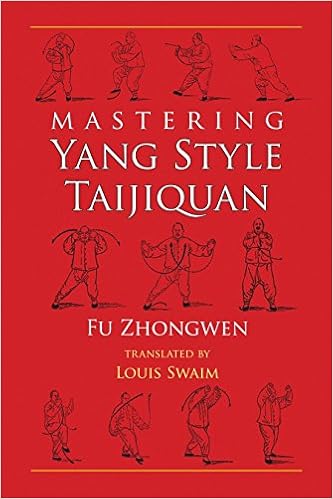
 "Throughout this book one encounters the terms song and fang song.  These are often translated as "relaxed" and "relax."  Etymologically the term song is based on a character for "long hair that hangs down ─that is, hair that is loosened and expanded, not "drawn up."  Therefore, "loosened" and "loosen" are more accurate renderings for song and fang song.  The phonetic element that gives the character song its pronunciation means, by itself, "a pine tree,"" which carries an associated imagery of "longevity," much as evergreens are associated with ongoing vitality in the West.  This may provide a clue to the Taijiquan usage of this term, which must not be confused with total relaxation, but is closer to an optimal state of the condition referred to as tonus in English anatomical parlance: that is, the partial contraction of the musculature, which allows one to maintain equilibrium and upright posture.  The aligned equilibrium that is prescribed in Taijiquan is associated with imagery of being "suspended" from the crown of the head.  One can, therefore, draw upon the available imagery of both something that is loosened and hangs down, and that of the upright pine, whose limbs do not droop down, but are buoyant and lively."
Mastering Yang Style Taijiquan.  Bu Fu Zhongwen (1903-1994).  Translated by Louis Swaim. p. xv.  


"True relaxation is always a dropping into ourselves, a movement toward our core and very center of self.  In addition to distorting what we can see, hear, and feel, the inability to relax and release tension will inevitably fuel the involuntary internal monologue of the mind.  As we become more enmeshed in the drama that our mind is scripting about ourselves, our ability to relate in a wholesome and relaxed manner with the current condition and circumstances of our lives becomes further distorted. ... The relaxation of tension in our bodies melts the armoring that keeps our bodies hard and inflexible.  This hardening of the tissue creates a layer of numbness that keeps our awareness of the rich web of shimmering sensations concealed and contained.  Relaxation allows the armoring to begin to soften and melt away.  The inevitable result is a much greater awareness of sensational presence and a diminution of the ongoing involuntary monologue of the mind.  Learning how to relax by surrendering the weight of the body to the pull of gravity and remaining standing at the same time significantly catalyzes the practice of mindfulness."
-  Will Johnson, Aligned, Relaxed and Resilient, 2000, p. 55


"Sung is probably one of the most important terms in t'ai chi ch'uan. It implies a very high level of alertness, sensitivity, nimbleness and lightness, with an inordinate mindfulness for the conservation of energy.  ...  Sung is the very modus operandi of all energies in t'ai chi ch'uan."
 -   Stuart A. Olson, Intrinsic Energies of T'ai Chi Ch'uan, 1994, p. 55


Loosen, Relaxed, Loose, Open, Yielding, Free, Responsive, Upright, Effortless, Spacious, Song, Sung, Fang Song.  A Defining Characteristic and Essential Quality of Taijiquan and Qigong Practice.  Notes, Quotes, Bibliography.  By Mike Garofalo.

Cloud Hands Taijiquan Website.  By Mike Garofalo.  


Friday, June 02, 2017

Dao De Jing, Chapter 78

Tao Te Ching by Lao Tzu
Chapter 78

"Nothing in the world is weaker than water
but against the hard and the strong nothing excels it
for nothing can change it
the soft overcomes the hard
the weak overcomes the strong
this is something everyone knows but no one is able to practice
thus the sage declares who accepts a country's disgrace we call the lord of soil and grain
who accepts a country's misfortune we call king of all under Heaven
upright words sound upside down"
-   Translated by Bill Porter (Red Pine), 1996, Chapter 78 


"Heaven below (the sacred body) is not as soft and yielding as water, yet can take on the rigid and violent.
Without its (the sacred body's) ability to overcome the rigid and the violent, it is nothing.
It replaces violence with gentleness.
It overcomes violence.
Tenderly it overcomes the unyielding.
Without knowing this, no one in Heaven below can progress.
The sages speak of guarding the community:
Dishonor comes from making sacrifices to the gods.
Preserve the community, not its omens.
It is correct to speak of Heaven below as what connects Heaven,
Humanity and Earth.
The words of the person who sacrifices backfire."
-   Translated by Barbara Tovey and Alan Sheets, 2002, Chapter 78   


"In the world nothing is more fragile than water, and yet of all the agencies that attack hard substances nothing can surpass it.
Of all things there is nothing that can take the place of Tao.
By it the weak are conquerors of the strong, the pliable are conquerors of the rigid.
In the world every one knows this, but none practice it.
Therefore the wise man declares: he who is guilty of the country's sin may be the priest at the altar.
He who is to blame for the country's misfortunes, is often the Empire's Sovereign.
True words are often paradoxical."
-   Translated by Dwight Goddard, 1919, Chapter 78


"In the world nothing is supple and weak in relation to water
Yet of those things which attack the firm and unyielding
Nothing is able to do better
In what is absent, this easily happens.
Being supple conquers the unyielding
Being weak conquers the firm
In the world
No one is without knowing it
No one is able to practice it.
Appropriately it happens that sages say
He who accepts the disgrace of a nation
Is appropriately called lord of the grain shrine
He who accepts the misfortune of a nation
Is appropriately acting as the king of the world.
Correct words look like they turn back."
-   Translated by David Lindauer, Chapter 78 


"remember
to be at your best
pattern yourself after water
nothing in all the world is softer or more powerful
nothing in all the world can substitute for it
nothing in all the world can stop it

in their hearts
everyone easily knows that
the soft and the weak
will always overcome the hard and strong
but they find it difficult to live this way

the secret is to
move the bodymind like water."
-   Translated by John Bright-Fey, 2006, Chapter 78 


"Nothing in the world is Softer or Weaker than water.
But when it attacks what is hard and strong none of them can win out, because they have no way of affecting it.
Softness overcomes what is hard Weakness overcomes what is unyielding.
Everyone in the world understands it no one can practice it.
And so the Wise Person says: Taking on a state's dirt makes one lord of its earth altars taking on a state's misfortunes makes one King of the world.
Right words seem the opposite."
-   Translated by Michael LaFargue, 1992, Chapter 78


"Water is soft and yielding, but
nothing can more effectively dissolve the hard and inflexible.
Weak defeats strong.
Soft defeats hard.
This is well–known, but not easy to put into practice.
Therefore, the Tao–Master says:
He who takes upon himself the dirt of the nation
becomes the master of its sacred soil;
he who takes upon himself the evils of the land
becomes a true king under Heaven.
Straight words seem crooked."
-   Translated by George Cronk, 1999, Chapter 78 


"Nothing is softer, more flexible, or more giving than
water
nothing can resist it
nothing can take it away
nothing can endure it
there is no way to hurt it.
The flexible overcomes what resists it,
the giving overcomes what takes it,
the soft overcomes the hard,
but who uses this knowledge?
Only the person who knows the earth
as intimately as the trees and grasses
can rule the earth,
only the person who accepts
the guilt and evil of humanity
can rule the universe.
Straight tongues seem forked.
Straight talk seems crooked."
-   Translated by Tom Kunesh, Chapter 78  


"There is nothing in the world
as soft and weak as water.
But to erode the hard and strong,
nothing can surpass it;
nothing can be a substitute.
The weak can overcome the strong;
the soft can overcome the hard.
There is no-one in the world who does not know this,
but there is no-one who can put it into practice.
Those who are enlightened say:
those who bear a nation's disgrace
will become lords of its shrines to earth and grain; *
those who bear a nation's misfortune
will become kings under heaven.
True words often seem a paradox."
-   Translated by Tim Chilcott, 2005, Chapter 78 


A typical webpage created by Mike Garofalo for each one of the 81 Chapters (Verses, Sections) of the Tao Te Ching (Daodejing) by Lao Tzu (Laozi) includes 25 different English language translations or interpolations for that Chapter, 5 Spanish language translations for that Chapter, the Chinese characters for that Chapter, the Wade-Giles and Hanyu Pinyin transliterations (Romanization) of the Mandarin Chinese words for that Chapter, and 2 German and 1 French translation of that Chapter.  Each webpage for each one of the 81 Chapters of the Tao Te Ching includes extensive indexing by key words, phrases, and terms for that Chapter in English, Spanish, and the Wade-Giles Romanization.  Each webpage on a Chapter of the Daodejing includes recommended reading in books and websites, a detailed bibliography, some commentary, research leads, translation sources, a Google Translate drop down menu, and other resources for that Chapter.  These are hypertext documents, and available online under Creative Commons 4.


Chapter 79, Tao Te Ching by Lao Tzu.  Compiled and indexed by Mike Garofalo.  

Chapter and Thematic Index (Concordance) to the Tao Te Ching by Lao Tzu


English Language Daodejing Translators' Source Index


Spanish Language Daodejing Translators' Source Index


Ripening Peaches: Taoist Studies and Practices


Taoism: A Selected Reading List


Friday, May 06, 2016

Relax and Drop the Bags


"I have been practicing Tai-Chi Chuan for over fifty years. Only two years ago that I started to understand the word “relax”. I remember my Tai-Chi Chuan teacher Yang Cheng-Fu who did not like to talk much and he used to sit all day without saying a word if no one asked him questions. However, in our T’ai-chi class he would tell us to “relax” repeatedly. Sometimes it seemed like he would say the word hundreds of times during the practice so that the word could fill up my ears. Strangely enough he also said that if he did not tell me of this word that I would not be able to learn T’ai-chi in three life-times (meaning never). I doubted his words then. Now that I think back, I truly believe that if he did not keep reminding me of the word “relax”, I doubt if I could have learned T’ai-chi Chuan in six life-times.

What is the meaning of “relax” in T’ai-chi? Here is an example to help you understand the word. When we go visit a Buddhist temple we usually see a statue of Me-Lo Buddha. The one who has a big rounded stomach with a big smile on his face. He carries a large bag on his shoulder. On top of this statue we see a motto: “Sit with a bag. Walk with a bag. It would be such a relief to drop the bag.” What does all this mean? To me, a person himself or herself is a bag. Everything he or she owns is baggage, including one’s children, family, position and wealth. It is difficult to drop any of one’s baggage, especially the “self” bag.

T’ai-chi Chuan is difficult to learn. To relax in practicing T’ai-chi Chuan is the most difficult phase to go through. To relax a person’s mind is the most significant obstacle to overcome in practicing T’ai-Chi. It takes a great effort to train and exercise one’s mind to relax (or drop one’s “self” bag)."
-  Professor Cheng Man-ch'ing


I think it takes somewhat of a Stoic or Buddhist attitude to view one's children, family, position and wealth, and self as "baggage."  I favor an Epicurean view regarding these generally pleasant aspects of our life - namely as a means to ongoing pleasures derived from kinetic (movement) activity and interactions, social and intellectual conviviality, natural healthy functioning, and katastematic awareness.   


Chinese Medical Doctor, Author, Painter, Taijiquan Master


Friday, April 22, 2016

Dao De Jing, Chapter 76

Tao Te Ching by Lao Tzu
Chapter 76

"A man living is yielding and receptive.
Dying, he is rigid and inflexible.
All Things, the grass and trees:
Living, they are yielding and fragile;
Dying, they are dry and withered.
Thus those who are firm and inflexible
Are in harmony with dying.
Those who are yielding and receptive
Are in harmony with living.
Therefore an inflexible strategy will not triumph;
An inflexible tree will be attacked.
The position of the highly inflexible will descend;
The position of the yielding and receptive will ascend."
-  Translated by R. L. Wing, 1986, Chapter 76 


"Human beings are
soft and supple when alive,
stiff and straight when dead.
The myriad creatures, grasses and trees are
soft and supple when alive,
dry and withered when dead.
Therefore it is said:
the rigid person is a disciple of death;
the soft, supple and delicate are lovers of life.
The army that is inflexible will not conquer;
the tree that cannot bend will snap!
The unyielding and mighty will be brought low;
the soft, supple and delicate will rise above them."
-  Translated by Jerry C. Welch, 1998, Chapter 76   

"The living are soft and yielding;
the dead are rigid and stiff.
Living plants are flexible and tender;
the dead are brittle and dry.
Those who are stiff and rigid
are the disciple of death.
Those who are soft and yielding
are the disciples of life.
The rigid and stiff will be broken.
The soft and yielding will overcome."
-  Translated by John H. McDonald, 1996, Chapter 76   


"When a person is living they are soft and easy to bend. 
When they are dead, they become hard and stiff. 
When a plant is living, it is soft and tender. 
When it is dead, it becomes withered and dry.

The hard and stiff belongs to the company of the dead. 
The soft and easy to bend belongs to the company of the living.

A mighty army can to fall by its own weight,
Just as dry wood is ready for the ax.

The mighty and great will be put low;
The humble and weak will be raised high."
-  Translated by J. L. Trottier, 1994, Chapter 76 


人之生也柔弱.
其死也堅強.
萬物草木之生也柔脆.
其死也枯槁.
故堅強者死之徒.
柔弱者生之徒.
是以兵強則不勝.
木強則共.
強大處下.
柔弱處上.
-  Chinese characters, Tao Te Ching, Chapter 76


jên chih shêng yeh jou jo.
ch'i ssu yeh chien ch'iang.
wan wu ts'ao mu chih shêng yeh jou ts'ui.
ch'i ssu yeh k'u kao.
ku chien ch'iang chê ssu chih t'u. 
jou jo chê shêng chih t'u. 
shih yi ping ch'iang tsê pu shêng.
mu ch'iang tsê ping. 
ch'iang ta ch'u hsia.
jou jo ch'u shang.
-  Wade-Giles Romanization (1892), Tao Te Ching, Chapter 76


"When people are born, they are soft and yielding.
When people die, they are stiff and unyielding.
Ten-thousand things (everything) like grass and trees, when they are born, they  are soft and supple.
When they die, they are rigid and dry.
Stiffness and unyielding are death’s companions.
Softness and yielding are life’s companions.
Unyielding armies will not win.
Unyielding trees become weapons.
Great strength dwells below.
Weakness dwells above."
-  Translated by Alan Sheets, 2002, Chapter 76 


"Abstain from Hardness
Chieh Ch'iang


Man is soft and weak at birth;
At death he is hard and rigid.
The ten thousand things, herbs and trees,
Are soft and delicate when growing up;
In dying, they wither and look haggard.
Thus hardness and rigidity are companions of death;
Softness and weakness are companions of life.
Therefore armies, having become rigid, will not win;
Trees, having become rigid, will break asunder.
The big and rigid will be laid low;
The soft and weak will be lifted up."
-  Translated by Henry Wei, 1982, Chapter 76


"El hombre al nacer es blando y débil;
cuando muere, rígido, firme y duro.
Las diez mil plantas y árboles son tiernos y frágilesal nacer;
cuando mueren están secos y consumidos.
De ahí el dicho:
'La firmeza y la dureza,
son atributos de la muerte;
la blandura y la debilidad,
son atributos de la vida.'
Por esta razón las armas fuertes no vencen,
el árbol vigoroso muere.
Lo firme y lo grande ocupan el lugar inferior;
lo blando y lo débil, el superior."
  -  Translated by Juan Ignacio Preciado, 1978, Capítulo 76  


"A living person is gentle and tender, while a dying person is rigid and hard.
A living plant is gentle and tender, while a dying plant is dry and withered.
Thus, one who is rigid and hard is on the way to die.
One who is gentle and tender is on the way to live.
Thus, a strong army will soon be annihilated.
A hard stick of wood will soon be broken.
A piece of hard leather will soon be split.
Teeth are stronger than lips, yet the teeth decay first.
Therefore, hardness and strength are inferior, gentleness and tenderness are superior."
-  Translated by Tang Zi-Chang, Chapter 76 


"Alive, a man is supple, soft;
In death, unbending, rigorous.
All creatures, grass and trees, alive
Are plastic but are pliant too,
And dead, are friable and dry.
Unbending rigor is the mate of death,
And wielding softness, company of life:
Unbending soldiers get no victories;
The stiffest tree is readiest for the axe.
The strong and mighty topple from their place;
The soft and yielding rise above them all."
-  Translated by Raymond Blakney, 1955, Chapter 76  


A typical webpage created by Mike Garofalo for each one of the 81 Chapters (Verses, Sections) of the Tao Te Ching (Daodejing) by Lao Tzu (Laozi) includes over 25 different English language translations or interpolations for that Chapter, 5 Spanish language translations for that Chapter, the Chinese characters for that Chapter, the Wade-Giles and Hanyu Pinyin transliterations (Romanization) of the Mandarin Chinese words for that Chapter, and 2 German and 1 French translation of that Chapter.  Each webpage for each one of the 81 Chapters of the Tao Te Ching includes extensive indexing by key words, phrases, and terms for that Chapter in English, Spanish, and the Wade-Giles Romanization.  Each webpage on a Chapter of the Daodejing includes recommended reading in books and websites, a detailed bibliography, some commentary, research leads, translation sources, a Google Translate drop down menu, and other resources for that Chapter.   


Chapter 76, Tao Te Ching by Lao Tzu

Chapter and Thematic Index (Concordance) to the Tao Te Ching by Lao Tzu

English Language Daodejing Translators' Source Index

Spanish Language Daodejing Translators' Source Index

Ripening Peaches: Taoist Studies and Practices

Taoism: A Selected Reading List

One Old Daoist Druid's Final Journey