Tuesday, October 29, 2024

Cottonwood Canyon State Park, Oregon

 Cottonwood Canyon State Park, Oregon  Day 2

The wood on the Bighorn Cabin was very beautiful. The Cabin was spacious, clean, with six beds, 2 heaters, air conditioner, table and chairs, refrigerator, lights.  It was very quiet.  There was a walk from the parking lot downhill to the cabins, that required numerous carrying trips with carts.  

We explored backroads off Oregon Roads 97, 206, and 19. Drove through Condon and Wasco.
Drove the black gravel Devil's Butte Road to Makkalo. Walked to the John Day River at Burris boat launch. Walked around Cottonwood Canyon.  Sat and stared at the huge Basalt Pyramid. Enjoyed a delicious salmon dinner.

Eastern High Rolling Hills, wheat growing area, hundreds of wind turbines, south of the Columbia River.

Here are some Cottonwood Canyon photographs that I took on this trip:


Monday, October 28, 2024

Cottonwood Canyon State Park, Oregon

Cottonwood Canyon State Park, Oregon  Day 1

From the Biggs Junction on Interstate 84, drive about 15 miles south on Oregon 97 to the town of Wasco, then drive on Oregon Road 206 for about 20 miles to the entrance to Cottonwood Canyon State Park along the John Day River.

Eastern High Rolling Hills, wheat growing area, hundreds of wind turbines, south of the Columbia River.

Michael Delmer (my son) and I took a 3 day trip to Cottonwood Canyon.

On our first day we drove from Vancouver to Hood River. We ate a Scandinavian style breakfast at an old hotel in Hood River.  Then we toured an abandoned water power electrical plant in Hood River area. Then headed southwest to the White River Falls. Then we camped at the Bighorn Cabin today at Cottonwood Canyon.

Here are some Cottonwood Canyon photographs available on the Internet:


Sunday, October 27, 2024

November Garden Chores


November Gardening Chores
Red Bluff, North Sacramento Valley, California, USA
USDA Zone 9

Removing dead and non-productive summer vegetable crops. 
Turn in composted steer manure and compost into the cleared vegetable garden.
Ordering from seed and garden catalogs. 
Planting potted trees and shrubs. 
Putting winter crops in the ground and harvesting greens: onions, lettuce, radishes, garlic, beets, chard, cabbage.
Placing cold sensitive potted plants in protected areas or indoors.
Planting bulbs.
Prune and mulch dormant perennials.
Prune fruit trees.
Storing and repairing tools. 
Cleaning, storing, repairing and removing gasoline from equipment.
Fertilize with 20-9-9 or 16-16-16. 
Trees without leaves need little or no watering.  
Reduce or eliminate watering, watering as needed, depending upon rainfall, normally 3.1 inches in November.
Picking pumpkins, squash, colored corn, and other crops for Thanksgiving decorations.
Pruning grape vines. 
Picking and storing peppers. 
Raking leaves and add to compost piles and mulch layers.
Lawn care: aerate soil and fertilize.   
Digging holes and post holes in cooler weather. 
Burning dead trees and shrubs in burn pile. 
Watering potted plants. 
Reading gardening books and catalogs. 


Friday, October 25, 2024

Girls Varsity Soccer Champions - Skyview High School

Skyview (HS) High School is located in the area north of Vancouver, Washington.  It is located in the northwest unincorporated suburbs of Vancouver, called Salmon Creek.

Our grand daughter, Makenna Flinn, plays center defender (#16) on the Skyview HS Girls Varsity Soccer Team.  She plays the entire game, every game. She is a Junior. She is an A grade student.

The Skyview Girls Varsity Soccer team went undefeated in 2024.
Overall Record of  11 - 0 - 3  Conference  5 - 0 - 1
The Skyview Girls Varsity Soccer Team won the District Championship of the 4A Greater St. Helens Athletic District in the State of Washington.
The last time Skyview HS  won the GSHAD Championship was in 2014.

The Skyview Girls Varsity Soccer Team fielded a very stingy defense - the best in the league.
The defense recorded eight shoutouts, and gave up only 8 goals all season.
The defense never gave up more than 2 goals in a game.
All players pitched in on defense!
The three main defensive players, who played the entire game every game were:
Brynnlee Williams    Goalie                  Junior
Makenna Flinn          Center Defender  Junior   # 16
Quinn Lundy            Wing Defender     Junior   # 19

The Skyview offense was quite powerful at times, and tallied 57 goals in the season. Only six of the games were close. Some of their wins were by wide margins, e.g., 8-0.  Rotations of mid-fielders and striker forwards were frequent, keeping players fresh, strong, and fast. Standouts on offense included Dea Covarrubias, Mya Ellertson, Bella Town, and Cameron Watson.

This team 2024 team had four seniors on the entire roster.
Many of the team members have played together since elementary school at Chinook Elementary in Salmon Creek on the local league team called "The Nemesis."  Karen and I have attended scores of Nemesis soccer games in the last 7 years.

First year Head Coach was Matt Houghton, and his Assistants were Nello Picinich, Mackenzie Ellertson, and Samantha Schoene.

Overall 2024 Record of  11 - 0 - 3  Conference  5 - 0 - 1
57 Goals Scored by Skyview. Only 8 Goals Scored Against Skyview.

Karen and I attended eight of these Girls Varsity Soccer Games.  We went out to dinner with Makenna's parents (Alicia and Sean) and her other grandmother (Beryl) before three of the games. We got to meet many parents of the girls.  

We visited some of the big stadiums in the area, e.g., Battleground, Richfield, Union, Camas, and the local Kiggins/Boggs Vancouver Field.

They The Skyview HS Girls Varsity Soccer Team will play their first State Tournament Soccer Game on November 2, 2024, at Skyview.


Makenna Flinn and Quinn Lundy
Key Skyview Soccer Defenders


Final Game Photo of Skyview Team
We defeated Union High School, 4-1
October 24, 2024, 9:20 p.m.


Makenna Flinn, Center Defender, #16


Thursday, October 24, 2024

Meeting Chang San-Feng on Mount Shasta

The Fireplace Records, Chapter 9


Meeting Along the Trail

"I first met Chang San-Feng above the forest, 

near the clear spring,
when gathering clouds darkened the day,
and Mt. Shasta was silent.

His long beard was black as emptiness,
ear lobes to his shoulders,
holding obsidian in his hand,
pointing to the sun,
eyes staring into infinity,
his long body clothed in silence.

We exchanged "hellos"
smiled and bowed,
a barbarian and an Immortal,
both panting from the climb,
laughing,
ten-thousand echoes
between our rocky minds.

After billions upon billions of heartbeats past
(for he must have been 888 years old),
I was so bold
as to ask the ancient one
for the sacred mantra of yore.
He lifted his whisk,
and brushed my face,
I could not speak,
my lips were stone,
ideas stopped - 
I was alone." 

-  Michael P. Garofalo, Red Bluff, California, 2003 

Gozo said, "When you meet a man of the Way on the trail, do not meet him with words or silence.  Tell me, how will you meet him?"
- The Gateless Barrier, Case 36

Layman Saihung, a good friend of Gozo, replied, "Maybe the man of Tao will greet me first with smiles and a Tai Chi hand salute. 
I'd smile and rattle the rings on my raised staff. How do I know he is a man of the Way?  Maybe I really don't want to meet this strange man. Maybe, no matter what I may do or not do, maybe I won't meet him. Do you enjoy befuddling me, Gozo!" 


Legends and Lore About Grand Master Chang San-Feng 

Meetings With Master Chang San-Feng 

Fireplace Records, Case 9  

One Old Daoist Druids Final Journey  


More often than not, Master Chang San-Feng and I met in my backyard garden in Red Bluff, California, from 2004-2017. He would show up and appear as a friendly old man who spoke softly and wisely.  

For example: 

After reaching for the needle at the bottom of the sea,
I looked up, one summer's eve,
to see old Chang San-Feng open the garden gate,
and join me for Tai Chi.  ...

Just his gentle voice could be heard at times, as if he was communicating through through plants or animals.  He would sometimes appear in my dreams.  

This was just one part of my Mystical Visions Training as a neophyte Daoist Druid from 2000-2010.  I also used the Voyager Tarot for interpretating artistic symbolism and mystical visions. Magikal and Shamanistic practices can also engender complex fantasies, visions, apparitions, appearances of unrealities and encouraged coincidences.  


Grand Master Chang San Feng is one of my religious fantasies.  

Master Chang is a Taoist and Chan Buddhist, a Spirit Being, an Immortal, Offering Lots of Light, an Influencer, Creative, Pure Jing, Immense Chi, The Uncarved Pillar Reborn, Again and Again, Delighted by Samsara, Intrigued by the Inconceivable.  He is secure and tranquil in samadhi, contributing good actions-works-expressions, bravely helping others, following the Precepts.  He encourages you to work at Becoming a Gentleman with Jen, discovering and daily applying the practices of qigong and taijiquan and healthy living, being grateful, becoming enlightened, right livelihood, and living akin to the Tao. These thoughts become spiritual dictums, hwa tuo capturing mantras, for some Taoists. Recurrent streams of these key themes are flowing into the Reservoir of the Daoist Canon and seasonal Taoist living and the Buddhist Sutras and Koans.   

Why are there so many strange earthly-psycho-metaphysical-profound experiences by hikers on Mount Shasta?  Does the altitude befuddle our brains? Does the impressive scenery around this rocky mountain, and the snow all around, and the wind drive us inward into a huddled stop? Resting, sitting, breathing steadily, sipping warm thermos tea, calming down, and dealing with breathing less oxygen at 10,000 feet.  

Master Chang and I never met again on Mt. Shasta.  


Related Links, Resources, References


Blue Cliff Record, Case ?  Entangling Vines, Case ?

Refer to my Cloud Hands Blog Posts on the topic of Koans/Dialogues.
Zen Koans, Testing Verses, Mondos, Dialogues, Stories
Bibliography, Quotations, Notes, Resources
Compiled by Michael P. Garofalo

The Fireplace Records By Michael P. Garofalo


Tuesday, October 22, 2024

Why I Don't Practice With a Chromatic Harmonica


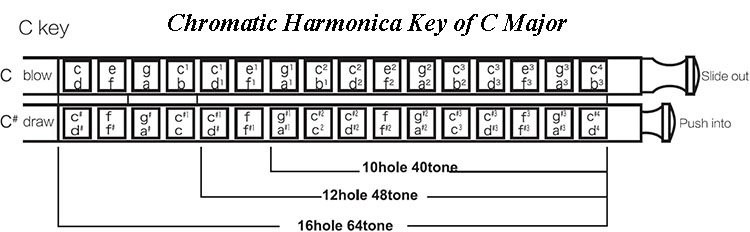
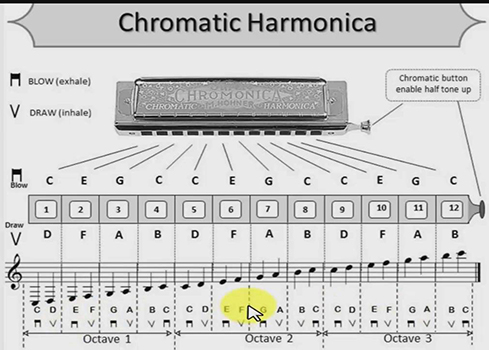
I have very little experience with using a chromatic harmonica. I have purchased two chromatic harmonicas in the Key of C Major, 12 holes, 48 tones/notes, in the past. I have considerable experience with diatonic harmonicas.

After playing the chromatic harmonica for a year, after studying, learning, and using the different layouts for blow/draw notes/holes (Richter vs Solo), after listening to the different sound of the diatonic and chromatic, after sensing the different feel of the size and shape of these two types of harmonicas, and after experimenting with the slide, etc.; I've come to a conclusion. I have decided to focus on playing, learning, and advancing my musical skills in using only a diatonic harmonica.

I have decided not to play a chromatic harmonica anymore. Why?

All chromatics are much larger and heavier than a diatonic. They are considerably less portable than a Hohner Thunderbird or Hohner Rocket diatonic. Most good chromatics have 12 or 16 holes, and diatonics have 10 holes. A typical chromatic is not a carry in your pocket anywhere harmonica, they are more a carry in your backpack musical instrument.

A chromatic, in my opinion, does not play chords as well as a diatonic harmonica.

If you can't manage the chromatic's slide well, then a chromatic can sound really bad. A diatonic is more forgiving of mistakes.

I do enjoy experimenting with a wider ranges of notes/sounds available on the chromatic harmonica vs a diatonic harmonica (48 notes vs 20 notes without bends or overblows); however, I find that using my decent electronic MIDI keyboard offers vastly more experimental options for an adventuresome sound explorer.

Good chromatic harmonicas are typically more expensive than good diatonic harmonicas. Some good chromatic models cost from $150.00 - $250.00 or more. A decent diatonic harmonica can be purchased for under $50.00.

Both chromatic and diatonic harmonicas are available in a variety of different keys, both in standard and low tuned. However, most good chromatics come in the Key of C Major. And, with a higher degree of skill, you can play in many keys on one C Major Key chromatic. However, in my opinion, it is just far easier to play a diatonic in the key you want to play, rather than mastering playing in different keys on one chromatic harmonica.

It is easier to bend or overblow on a diatonic harmonica, rather than on a chromatic without using the slider. Seems to me that the degree and control of notes with bends and overblows, excluding slider functions, is more capable of refinement on a diatonic.

Chromatics are favored by classical and jazz harmonica musicians. Diatonics are favored by blues, rock, folk, and country musicians. I play tunes I enjoy the most being played on a diatonic harmonica.

Using the chromatic slider properly is a refined skill requiring considerable practice, and adds another challenging layer of refined learning and practice demands for typical home solo players.

In is far easier to us a variety of cupping techniques on a diatonic, rather than on the larger chromatic.

Shifting between chromatic and diatonic versions can be confusing for beginners like me. Better to focus on playing just one type of musical instrument. I chose the diatonic harmonica.


I own a EastTop Forerunner Chromatic Harmonica in the Key of C Major LOW. 12 Holes, 48 Tones, Chromatic Mouth Organ Harmonica, $125.00. VSCL.

I own a EastTop Forerunner Chromatic Harmonica in the Key of C Major. 12 Holes, 48 Tones, Chromatic Mouth Organ Harmonica, $52.00. VSCL.


Chromatic Harmonica in the Key of C Major


Sunday, October 20, 2024

Tao Te Ching, Chapter 7


Dao De Jing by Laozi
Chapter 7


"The Tao is infinite and eternal.
Why is it eternal?
It was never born;
thus it can never die.
Why is it infinite?
It has no desires for itself;
thus it is present for all beings.
The Master stays behind;
that is why he is ahead.
He is removed from all things;
that is why he is one with them.
Because he has let go of himself,
he is perfectly fulfilled."
- Translated by John Dicus, 2002, Chapter 7


"The universe is everlasting.
The reason the universe is everlasting
Is that it does not live for Self.
Therefore, it can long endure.
Therefore, the Sage puts himself last,
And finds himself in the foremost place;
Regards his body as accidental,
And his body is thereby preserved.
Is it not because he does not live for Self,
That his Self is realized?"
- Translated by Lin Yutang, 1955, Chapter 7


"Heaven is lasting, Earth endures.
What enables Heaven and Earth to last and endure?
Because they do not live for themselves - so it is that they can live so long.
And so, the Wise Person: Puts himself last, and so finds himself in front.
He puts himself in the out group, and so maintains his place.
The personal does not exist for him.
Isn't this how he can perfect what for him is most personal?"
- Translated by Michael LaFargue, 1992, Chapter 7


"The Tao is infinite, eternal.
Why is it eternal?
It was never born;
thus it can never die.
Why is it infinite?
It has no desires for itself;
thus it is present for all beings.
The Master stays behind;
that is why she is ahead.
She is detached from all things;
that is why she is one with them.
Because she has let go of herself,
she is perfectly fulfilled."
- Translated by Edwin Shaw, 1996, Chapter 7


"Heaven is lasting and earth enduring.
The reason why they are lasting and enduring
is that they do not live for themselves.
Therefore, they live long.
In the same way the Sage keeps himself behind,
and he is in the front.
He forgets himself and is preserved.
Is it not because he is not self-interested
That his self-interest is established?"
- Translated by Ch'u Ta-Kao, 1904, Chapter 7 


天長地久.
天地所以能長且久者.
以其不自生.
故能長生.
是以聖人後其身而身先.
外其身而身存.
非以其無私耶.
故能成其私.
- Chinese characters, Tao Te Ching, Chapter 7 


t'ien ch'ang ti chiu.
t'ien ti so yi nêng ch'ang ch'ieh chiu chê.
yi ch'i pu tzu shêng.
ku nêng ch'ang shêng.
shih yi shêng jên hou ch'i shên erh shên hsien.
wai ch'i shên erh shên ts'un.
fei yi ch'i wu ssu hsieh.
ku nêng ch'êng ch'i ssu.
- Wade-Giles Romanization, Tao Te Ching, Chapter 7


"Heaven is enduring and earth is lasting.
Why heaven and earth can be enduring and lasting is because
they do not live for themselves, thus, they can endure and last.
So that a Sage ruler put himself behind others, and he came to the front;
he excluded himself from struggle with others and he survived.
It is because he was selfless that he fulfilled himself."
- Translated by Tang Zi-chang, Chapter 7


"Heaven and earth will exist forever.
The reason they exist forever is that they do not live for themselves
and they do not live because of themselves.
Therefore they live forever.
In the same way, the sage stays behind everything and finds himself
in front of everything, he is not himself and he is preserved forever.
Since he has no self-interest, his self-interest can realize itself.
Even though it looks like heaven and earth give life to all creatures,
they do not live in order to preserve their own existence,
and therefore they live forever and never die.
In his rule over the kingdom, the sage does everything for people,
ignoring his personal goals,
and ultimately earns glory, honor, and everything he wanted for himself."
-  Translated by Chou-Wing Chohan, Chapter 7 


"Heaven endures and earth is lasting.
And why can heaven and earth endure and be lasting?
Because they do not live for themselves.
On that account can they endure.
Therefore,
The holy man puts his person behind and his person comes to the front.
He surrenders his person and his person is preserved.
Is it not because he seeks not his own?
For that reason he can accomplish his own."
-  Translated by D. T. Suzuki, 1913, Chapter 7


"The principle of initiation persists; and the principle of completion continues.
Why do such opposing principles persist?
Because they inhere in Nature, rather than stand by themselves.
That is why opposites endure.
The intelligent man, when an issue arises, stands off
and observes both contentions.
Since he does not take sides, he never loses a battle.
By not favoring one side more than the other,
he is able to appreciate the virtues of both sides."
- Translation by Archie J. Bahm, 1958, Chapter 7


"Largo es el Cielo, duradera es la Tierra.
El Cielo su larguray la Tierra su duración lo deben a no vivir vida propia.
Por eso,pueden vivir mucho.
Así, también el hombre perfecto se antepone, porque se ha pospuesto.
Se queda, porque se ha apartado.
Logra sus interesesprivados, porque los ha desatendido."
- Translated by Carmelo Elorduy, 2006, Capítulo 7


"Heaven lasts long, and Earth abides.
What is the secret of their durability?
Is it not because they do not live for themselves
That they can live so long?
Therefore, the Sage wants to remain behind,
But finds himself at the head of others;
Reckons himself out,
But finds himself safe and secure.
Is it not because he is selfless
That his Self is realized?"
- Translated by John C. H. Wu, 1961, Chapter 7


"The heavens and the earth last forever.
They can do so because they do not exist for themselves.
Therefore, great men always let other people go first, but ended up being first themselves.
They put their lives out of consideration, but always survived.
Is it not because they were selfless,
That they benefited themselves at the end?"
- Translated by Yang Xiaolin, Chapter 7


"Heaven is lasting and earth enduring. 
The reason why they are lasting and enduring is that they do not live for themselves;  
Therefore they live long.  
In the same way the Sage keeps himself behind and he is in the front;  
He forgets himself and is preserved.  
Is it not because he is not self-interested  
That his self-interest is established?"
-  Translated by Ch'u Ta-Kao, 1904, Chapter 7  


A typical webpage created by Mike Garofalo for each one of the 81 Chapters (Verses, Sections) of the Tao Te Ching (Daodejing) by Lao Tzu (Laozi) includes 25 different English language translations or interpolations for that Chapter, 5 Spanish language translations for that Chapter, the Chinese characters for that Chapter, the Wade-Giles and Hanyu Pinyin transliterations (Romanization) of the Mandarin Chinese words for that Chapter, and 2 German and 1 French translation of that Chapter.  Each webpage for each one of the 81 Chapters of the Tao Te Ching includes extensive indexing by key words, phrases, and terms for that Chapter in English, Spanish, and the Wade-Giles Romanization.  Each webpage on a Chapter of the Daodejing includes recommended reading in books and websites, a detailed bibliography, some commentary, research leads, translation sources, a Google Translate drop down menu, and other resources for that Chapter.  These are hypertext documents, and available online under Creative Commons 4.


Chapter 7, Tao Te Ching by Lao Tzu.  Complied by Mike Garofalo.  

Chapter and Thematic Index (Concordance) to the Tao Te Ching by Lao Tzu


English Language Daodejing Translators' Source Index


Spanish Language Daodejing Translators' Source Index


Ripening Peaches: Taoist Studies and Practices


Taoism: A Selected Reading List


Friday, October 18, 2024

So long, Bruno

Our dog, Bruno, and was a great pal for Karen and I.

During the first 5 years of his active life, Bruno lived in Red Bluff, California. We lived on a five-acre parcel of land in the country.  Bruno ran everywhere on that property, dug holes, hunted gophers, ran through the fields, played with visitors, took walks with me, and lollygagged in our ponds on hot summer days. He was a well behaved dog, curious, and friendly with people. He was a muscular, strong, sturdy, and powerful dog.


We moved to the suburbs in Vancouver, Washington, in 2017. We live on a small lot with a nice back yard. Bruno mostly became an indoor house dog.  Bruno and I took walks together in our neighborhood. He was a good walker on a leash.


It gets cool and damp in
Vancouver, WA, from
October to April.
Walkers, man and dog,
need good clothes.


Bruno got along well with the Flinn dogs.


The aging Bruno


We hung out together on the back porch.
His bed had an insulated cushion, blanket,
and extra blankets to cover him up with.
We seldom had a fire.


Bruno liked to sleep in my study while
I used my computer and played music.


He played with Roxy.


Back porch sunbathing.


Playing with a dog-toy and Charlie dog.


Hanging out in the back yard.


Nap Time, Old Buddy.


In his final months, we nursed a ugly tumor
on the back of right paw, and gave him
medicine for the three other tumors on
his 12 year old body.


We played with his dog toys. We wrestled and hugged.  We sometimes slept together on the floor.

In the last three years, Bruno began to "talk" more with squeals, moans, grunts, puffs. He made us laugh.

He was trained to ring a bell by the back door when he need to go to the toilet outdoors. He always did so.

Our extended family all delighted in Bruno's company, and he was a polite guest at other's houses.

Bruno was steady, active, alert, intelligent, and a well behaved house dog in Vancouver.

We all age. We all get weaker. We all face poor health. We all die.

Bruno has been sick from cancer for the past four months. Bruno died today, October 18, 2024.  

Bruno lived a very good life for 12 years. I will be one to miss you at lot, old buddy.


Wednesday, October 16, 2024

Swimming in the Same Stream

             The Fireplace Records, Chapter 34


Swimming In the Same Stream


Does the same person
swim twice
in the same stream?
Or, in hours,
is Everything New
or a fleeting dream?
New person, New stream;
the price of Tomorrows' Being!

Mind moving or stream moving?
Two monks cane's tap
The Master starts to rap
Cut an apple in half
On your head wear a cap
Use one hand to clap
Let the cat take a nap

Comments, Sources, Observations, Koans, Poems, Quips:

The Heraclitus River flows today into Philosopher's Bay.
Of course, much stays the same--- flowing memories' games.
Nansen's hands are very bloody--- he's quite simply nutty.
We remember mistakes; sometimes that is what it takes.

Koans:
Nansen's Cat GB 14, BOS 9, BCR 62, DSMS 181
Mind Moving: GB 29, ENT 83, DSMS 146, WWSF 212
Chao Chou's Sandals on His Head: BCR 63, BOS 9
Rivers or Streams: DSMS 283, BOS 100, GB 29, ENT 83

Keys to Koan Databases


"The days the weeks pass by beyond our ken
Neither time past
Nor love comes back again
Under the Mirabeau Bridge there flows the Seine
Let night come on bells end the day
The days go by me still I stay."
-  Guillaume Apollinaire, Mirabeau Bridge
Translated by Richard Wilbur


Refer to my Cloud Hands Blog Posts on the topic of Koans/Stories. 

Subject Index to 1,975 Zen Buddhist Koans

Zen Buddhist Koans: Indexes, Bibliography, Commentary, Information

The Daodejing by Laozi

Pulling Onions  Over 1,043 One-line Sayings, Quips, Maxims, Humor

Chinese Chan Buddhist and Taoist Stories and Koans

The Fireplace Records (Blog Version) By Michael P. Garofalo

The Fireplace Records (Text Version)


Columbia River, Washington State
Ilwaco, WA


Monday, October 14, 2024

Dao De Jing, Chapter 6

 Dao De Jing, Laozi

Chapter 6

"The manifestations of Infinity never cease manifesting.
Infinity is the primal creator, the oneness of male and female.
Infinity is the gate though which heaven and earth manifested.
It is invisible to the senses, yet totally permeates all things.
It is inexhaustible and eternally available for any purpose."
-  Translated by John Worldpeace, Chapter 6


"The Tao is called the Great Mother:
empty yet never-ending,
it gives birth to unlimited worlds.
It is always at hand within you.
Use it gently, and without force."
-   Translated by Rivenrock, Chapter 6 


"The spiritual valley can never be extinguished.
It is correctly referred to as the mysteries of the receptive.
The entrance to mysterious receptivity is correctly referred to as
the origin of the whole universe.  
It is continuous and unbroken!
Its usefulness seems to persevere without effort."
-  Translated by Nina Correa, 2005, Chapter 6


"The valley spirit not expires,
Mysterious woman ’tis called by the sires.
The mysterious woman’s door, to boot,
Is called of heaven and earth the root.
Forever and aye it seems to endure
And its use is without effort sure.”
-  Translated by D. T. Suzuki and Paul Carus, 1913, Chapter 6 


"Like the sheltered, fertile valley,
the meditative mind is still,
yet retains its energy.
Since both energy and stillness,
of themselves, do not have form,
it is not through the senses
that they may be found,
nor understood by intellect alone,
although, in nature, both abound.
In the meditative state,
the mind ceases to differentiate
between existences,
and that which may or may not be.
It leaves them well alone,
for they exist,
not differentiated, but as one,
within the meditative mind."
-  Translated by Stan Rosenthal, Chapter 6   


"The concept of Yin is ever present.
It is the Mystic Female from whom
the heavens and the earth originate.
Constantly, continuously, enduring always.
Use her!"
-  Translated by C. Ganson, Chapter 6    


"The valley spirit dies not, aye the same;
The female mystery thus do we name.
Its gate, from which at first they issued forth,
Is called the root from which grew heaven and earth.
Long and unbroken does its power remain,
Used gently, and without the touch of pain."
-  Translated by James Legge, 1891, Chapter 6    
 
 
"The valley spirit dies not, aye the same;
The female mystery thus do we name.
Its gate, from which at first they issued forth,
Is called the root from which grew heaven and earth.
Long and unbroken does its power remain,
Used gently, and without the touch of pain."
-  Translated by Stephen McIntyre, 2009, Chapter 6 
 
 
谷神不死, 是謂玄牝.
玄牝之門.
是謂天地根.
綿綿若存.
用之不勤. 
-  Chinese characters, Chapter 6, Tao Te Ching


ku shên pu ssu, shih wei hsüan p'in.
hsüan p'in chih mên.
shih wei t'ien ti kên.
mien mien jo ts'un.
yung chih pu ch'in.
-  Wade-Giles Romanization, Chapter 6, Tao Te Ching  


"The valley spirit that doesn't die we call the dark womb
as real as gossamer silk and yet we can't exhaust it.
The valley spirit that doesn't die we call the dark womb the dark womb's mouth
we call the source of creation as real as gossamer silk and yet we can't exhaust it."
-  Translated by Red Pine, Chapter 6


"The spirit of the valley does not die
It may be known as the mysterious feminine
The gateway of the mysterious feminine
May be known as the source of heaven and earth
Endless, continuous, seeming to exist
To practice this is not effort."
-  Translated by Bradford Hatcher, 2005, Chapter 6  


"The unlimited capacity of valleys;
the unbelievable power of Spirits;
and the unending life of immortality are called the Profound Origin Mother.
The beginning of the Profound Origin Mother is the root of Heaven and Earth.
Endlessly, endlessly!
It is existing.
Yet its usefulness is invisible."
-  Translated by Tang Zi-Chang, Chapter 6


"The Tao never dies;
It is a deep womb.
And the opening of the womb
Is called the root of heaven and earth.
It exists for ever,
And its use can never be exhausted."
-  Translated by Gu Zengkun, Chapter 6


"The mystery of the valley is immortal;
It is known as the Subtle Female.
The gateway of the Subtle Female
Is the source of Heaven and Earth.
Everlasting, endless, it appears to exist.
Its usefulness comes with no effort."
-  Translated by R. L. Wing, 1986, Chapter 6


"La Esencia del Todo no muere.
Es la Mujer Misteriosa, Madre del Universo.
El camino de la Mujer Misteriosa
es la raíz del Cielo y de la Tierra.
Su duración es perenne, su eficiencia infatigable."
-  Translation from Wikisource, 2013, 
Capítulo 6  


Valley Spirit, Gu Shen, Concept, Chapter 6 


"Der Geist des Tals stirbt nicht,
das heißt das dunkle Weib.
Das Tor des dunklen Weibs,
das heißt die Wurzel von Himmel und Erde.
Ununterbrochen wie beharrend
wirkt es ohne Mühe."
-  Translated by Richard Wilhelm, 1911, Chapter 6


"The spirit of the valley never dies. 
It is called the subtle and profound female. 
The gate of the subtle and profound female 
Is the root of Heaven and Earth. 
It is continuous, and seems to be always existing. 
Use it and you will never wear it out."
-  Translated by Chan Wing-Tsit, 1963, Chapter 6   


"The spirit of emptiness is immortal.
It is called the Great Mother
because it gives birth to Heaven and Earth.
It is like a vapor,
barely seen but always present.
Use it effortlessly."
-  Translated by John H. McDonald, Chapter 6 


A typical webpage created by Mike Garofalo for each one of the 81 Chapters (Verses, Sections) of the Tao Te Ching (Daodejing) by Lao Tzu (Laozi) includes 25 different English language translations or interpolations for that Chapter, 5 Spanish language translations for that Chapter, the Chinese characters for that Chapter, the Wade-Giles and Hanyu Pinyin transliterations (Romanization) of the Mandarin Chinese words for that Chapter, and 2 German and 1 French translation of that Chapter.  Each webpage for each one of the 81 Chapters of the Tao Te Ching includes extensive indexing by key words, phrases, and terms for that Chapter in English, Spanish, and the Wade-Giles Romanization.  Each webpage on a Chapter of the Daodejing includes recommended reading in books and websites, a detailed bibliography, some commentary, research leads, translation sources, a Google Translate drop down menu, and other resources for that Chapter.  These are hypertext documents, and available online under Creative Commons 4.


Chapter 6, Tao Te Ching by Lao Tzu.  Complied by Mike Garofalo.  

Chapter and Thematic Index (Concordance) to the Tao Te Ching by Lao Tzu


English Language Daodejing Translators' Source Index


Spanish Language Daodejing Translators' Source Index


Ripening Peaches: Taoist Studies and Practices


Taoism: A Selected Reading List