Showing posts with label Music Practice. Show all posts

Tuesday, October 22, 2024

Why I Don't Practice With a Chromatic Harmonica


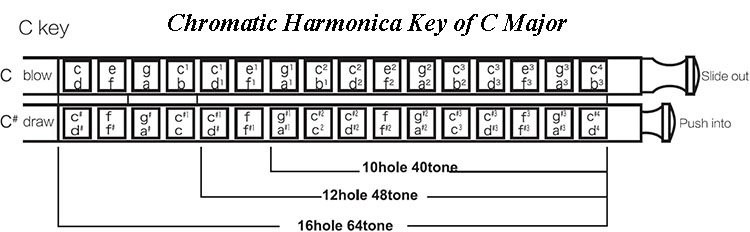
I have very little experience with using a chromatic harmonica. I have purchased two chromatic harmonicas in the Key of C Major, 12 holes, 48 tones/notes, in the past. I have considerable experience with diatonic harmonicas.

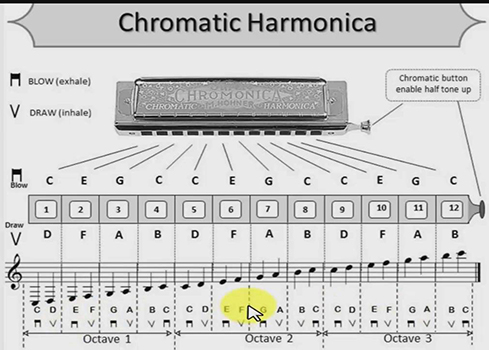
After playing the chromatic harmonica for a year, after studying, learning, and using the different layouts for blow/draw notes/holes (Richter vs Solo), after listening to the different sound of the diatonic and chromatic, after sensing the different feel of the size and shape of these two types of harmonicas, and after experimenting with the slide, etc.; I've come to a conclusion. I have decided to focus on playing, learning, and advancing my musical skills in using only a diatonic harmonica.

I have decided not to play a chromatic harmonica anymore. Why?

All chromatics are much larger and heavier than a diatonic. They are considerably less portable than a Hohner Thunderbird or Hohner Rocket diatonic. Most good chromatics have 12 or 16 holes, and diatonics have 10 holes. A typical chromatic is not a carry in your pocket anywhere harmonica, they are more a carry in your backpack musical instrument.

A chromatic, in my opinion, does not play chords as well as a diatonic harmonica.

If you can't manage the chromatic's slide well, then a chromatic can sound really bad. A diatonic is more forgiving of mistakes.

I do enjoy experimenting with a wider ranges of notes/sounds available on the chromatic harmonica vs a diatonic harmonica (48 notes vs 20 notes without bends or overblows); however, I find that using my decent electronic MIDI keyboard offers vastly more experimental options for an adventuresome sound explorer.

Good chromatic harmonicas are typically more expensive than good diatonic harmonicas. Some good chromatic models cost from $150.00 - $250.00 or more. A decent diatonic harmonica can be purchased for under $50.00.

Both chromatic and diatonic harmonicas are available in a variety of different keys, both in standard and low tuned. However, most good chromatics come in the Key of C Major. And, with a higher degree of skill, you can play in many keys on one C Major Key chromatic. However, in my opinion, it is just far easier to play a diatonic in the key you want to play, rather than mastering playing in different keys on one chromatic harmonica.

It is easier to bend or overblow on a diatonic harmonica, rather than on a chromatic without using the slider. Seems to me that the degree and control of notes with bends and overblows, excluding slider functions, is more capable of refinement on a diatonic.

Chromatics are favored by classical and jazz harmonica musicians. Diatonics are favored by blues, rock, folk, and country musicians. I play tunes I enjoy the most being played on a diatonic harmonica.

Using the chromatic slider properly is a refined skill requiring considerable practice, and adds another challenging layer of refined learning and practice demands for typical home solo players.

In is far easier to us a variety of cupping techniques on a diatonic, rather than on the larger chromatic.

Shifting between chromatic and diatonic versions can be confusing for beginners like me. Better to focus on playing just one type of musical instrument. I chose the diatonic harmonica.


I own a EastTop Forerunner Chromatic Harmonica in the Key of C Major LOW. 12 Holes, 48 Tones, Chromatic Mouth Organ Harmonica, $125.00. VSCL.

I own a EastTop Forerunner Chromatic Harmonica in the Key of C Major. 12 Holes, 48 Tones, Chromatic Mouth Organ Harmonica, $52.00. VSCL.


Chromatic Harmonica in the Key of C Major


Sunday, August 18, 2024

Harmonica: Another Day in Paradise

Another Day in Paradise

By Phil Collins
1989

Diatonic Harmonica
Key of C Major


VERSE 1

6    -6    7  -6  6  -5  5  -4    5 

She calls out to the man on the street 

  7    -6   6  -5   7 

"Sir, can you help me? 

  6   7   -6    6   -5   5  -4    5 

It's cold and I've no-where to sleep, 

 6   6    -6   7    -6   6   -5   7 

Is there some-where you can tell me?" 


VERSE 2 

 6    -6    7   -6  6     -5       4 

He   walks on,  doesn't  look    back 

 7    -6   6   -5   5    6     7

He   pre tends he  can't hear her 

 6      7  -6   6   -5  5   -4   5  -6    6

Starts to whis tle  as  he cros ses the street 

 6     6   -6    -6    6   -5   7

Seems  em  bar rassed to  be  there 


CHORUS

-7   6   6        -4    5 

Oh Think twice, 'cause it's  

 5 6   6  -5   5   -5  5 -5  5   -5  6   6 

An oth er day for you and me in  par a dise 

-7   6    6     -4    5 

Oh Think twice cause it's  

5  6   6  -5  5   -5    -5   6   -5   5  5 

a no ther day for you, you  in par a dise 

   4   -4   4 -4   5 

 just think about  it 


VERSE 3

6    -6    7  -6  6   -5  5  -4   5 

She calls out to the man on the street 

 7  -6   6   -5     5    6     7

He  can see she's been  cry ing 

6      7  -6   6   -5  5   -4   -5  -6    6

She's got blisters on the soles of her feet 

6    6    -6    7   -6   -5  7

She can't walk but she's trying 


 [CHORUS]  


 VERSE 4

 6    -5   5  -5   5 

Just think a-bout it 

 7  -6 

Oh lord! 

-5   6   -5   -5   -5     -5 5  -5  5    7   7 

Is there noth ing more    a  ny bo dy   can do? 

-7   7 

Oh lord! 

  5   -5    6  -5   -5   -5    5   7 

There must be some thing you can say 


 VERSE 5

6    -6   7  -6    6   -5    5  -4   5 

You can tell from the lines on her face 

 7   -6   6  -5   5     6        7

You can see that she's been there 

6    7    -6    6    -5   5    -4  -5  -6    6

Pro bably she  moved  on  from  ev ‘ry  place 

 6      6  -6   7   -6   6  -5   7

Cause  she did n't  fit  in  there 

 [CHORUS]


Monday, July 29, 2024

And ... Put the Load Right On Me

The song "The Weight" by The Band, 1960's

Harmonica Version, Key of A


Here is a Playing for Change Version:


Chorus
Chorus Repeat

Harmonica Studies by Michael P. Garofalo A Beginner's Notes, Research, Comments, Suggestions

"The Weight" Harmonica, by The Band, 1960's,
Harmonica Key of A

A  C#m  D  A    (x4)        

4   4  4    - 4  5  5 5 5  5 5   4   4 -4 4

I pulled into Nazareth, was feelin' about half past dead

4  4  4  - 4    5   5 5 5  5   5 4 4   6    4  

I just need some place where I can lay my head

 6   6  6   6   6    6  -6   5  5 5  5  4  4 -4  4

"Hey, mister, can you tell me where a man might find a bed?"

 4 4 4  - 4   5   5     5    5     5   5  4  4  -4 4

He just grinned and shook my hand, "no" was all he said  


44 55 66


A         D  (x3)

6 6 6  5 4 4     

Take a load off, Fanny

6 6 6  5 4 

Take a load for free

6 6 6  5 4 4 
Take a load off, Fanny

D           A

4 4 4 4 4 4 44 444 55 4 

And (and) (and) you put the load right on me


Harmonica Studies A Beginners

A  C#m  D  A    (x4)        

4   4  4    - 4  5  5 5 5  5 5   4   4 -4 4

I pulled into Nazareth, was feelin' about half past dead

4  4  4  - 4    5   5 5 5  5   5 4 4   6    4  

I just need some place where I can lay my head

 6   6  6   6   6    6  -6   5  5 5  5  4  4 -4  4

"Hey, mister, can you tell me where a man might find a bed?"

 4 4 4  - 4   5   5     5    5     5   5  4  4  -4 4

He just grinned and shook my hand, "no" was all he said  


44 55 66


A         D  (x3)

6 6 6  5 4 4     

Take a load off, Fanny

6 6 6  5 4 

Take a load for free

6 6 6  5 4 4 
Take a load off, Fanny

D           A

4 4 4 4 4 4 44 444 55 4 

And (and) (and) you put the load right on me


Harmonica Studies by Michael P. Garofalo A Beginner's Notes, Research, Comments, Suggestions


Chords on A Major Key Diatonic Harmonica
I     A Major   ACE  (Blow Holes 123 or 456 or 789 or any 2 or 3 adjacent holes)
IV   D Dyad   DF       (Draw 56 and Draw 9 10)
V    E Major   EGBD  (Draw Holes 234 or Draw Holes 1234)
      Gm Minor  GBD   (Draw 345 and 789)
      E7   EGBD      (Draw Holes 2-5)
      Em  BE           (Draw 12)
      Bm   BDF         (Draw 456 and 89 10)
      Cross Harp, 2nd, play on D Key diatonic harmonica.
      Key Signature: Three Sharps: C F G; A Major or F#minor.
      I play: Lee Oskar Tombo Key of A


Tuesday, July 16, 2024

Tuesday, July 09, 2024

Reading Sheet Music: Discovery 2

Reading Sheet Music for Harmonica
Discoveries #2 (July 8, 2024)

Harmonica Studies by Michael P. Garofalo

I have been diligently working on learning to read standard music notation, sheet music, when
playing the harmonica. I had been using for many years the harmonica tablature notation showing what hole to blow or draw into. Sheet music notation tells me what note to play and the duration and sequence of the notes played. Most diatonic harmonica music books have lessons using a C Major harmonica, the sheet music for each song, and under each note the harmonica tablature. I focus now on the sheet music and ignore the harmonica tablature. I am using the book 'Easy Piano Sheet Music for Kids', by Avgusta Udartseva, while learning, which does not include harmonica tablature.

For me, what are the benefits of reading standard musical notation (sheet music):
1. A better sense of the flow and timing of a composition.
2. There is far more sheet music without harmonica tablature that is readily available.
3. Following traditional musical learning using sheet music is very valuable, and essential for real progress in music playing.
4. Learning to connect names of notes (CDEFGABC) with positions on the sheet music, and connecting these with diatonic harmonica holes for blow or draw notes (20 notes on a 10 hole diatonic harmonica).
5. Learning to read sheet music more efficiently, effectively, knowledgeably, and beneficial for playing properly.
6. I am learning more musical theory each day.
7. The visual spacing of the notes on the sheet music is more useful to precise playing and improving one's anticipation and timing.
8. Improves my learning how to play better.
9. I enjoy learning challenges, tests, new methods and techniques.
10. It is intellectually and emotionally satisfying to make progress in playing music.
11. The challenge of new ways of looking and seeing; new ways of communicating with symbols.
12. Harmonica tablature can be useful, but must be left behind for real progress to occur.

This has been a significant and transformative learning experience for me! Why did I wait so long to learn how to read and play from sheet music? Why did I not take classes from a music teacher? Why did I not take community college or private classes in musical theory and education? Nevertheless, this is all just muddy water gone past under the bridge for a 78 year old man playing the harmonica on his own. I must focus on learning NOW, and ignore my regrets and failings. PRACTICE NOW and enjoy myself.

Harmonica Studies by Michael P. Garofalo