Tuesday, November 15, 2016

Harmony of Autumn


"Winter is an etching, spring a watercolor, summer an oil painting
and autumn a mosaic of them all."
- Stanley Horowitz

"There is a harmony
In autumn, and a lustre in its sky,
Which through the summer is not heard or seen,
As if it could not be, as if it had not been!"
- Percy Bysshe Shelley

"The leaves fall, the wind blows, and the farm country slowly
changes from the summer cottons into its winter wools."
- Henry Beston, Northern Farm


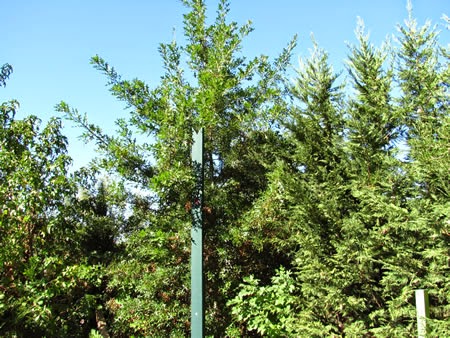
Beautiful autumn colors on the trees in our neighborhood.  Wonderful.  

We have been improving our winter vegetable garden.  

Here are a few photos that Karen took in our back yard.


Our Winter Garden


Monday, November 14, 2016

Express Spirit in Action

Seven Perennial Spiritual Practices:

"1.  Transform your motivation: reduce craving and find your soul's desire.
2.  Cultivate emotional wisdom: heal your heart and learn to love. 
3.  Live ethically: feel good by doing good. 
4.  Concentrate and calm your mind. 
5.  Awaken your spiritual vision: see clearly and recognize the sacred in all things. 
6.  Cultivate spiritual intelligence: develop wisdom and understand life. 
7.  Express spirit in action: embrace generosity and the joy of service." 

-   Roger Walsh, Essential Spirituality: The 7 Central Practices to Awaken Heart and Mind, 1999

Nine Pagan Virtues
"1.  Wisdom - Good judgment, the ability to perceive people and situations correctly, deliberate about and decide on the correct response. 
2.  Piety - Correct observance of ritual and social traditions; the maintenance of the agreements (both personal and societal),
we humans have with the Gods and Spirits.  Keep the Old Ways, through ceremony and duty. 
3.  Vision - The ability to broaden one's perspective to have a greater understanding of our place and role in the cosmos,
relating to the past, present and future. 
4.  Courage - The ability to act appropriately in the face of danger. 
5.  Integrity - Honor; being trustworthy to oneself and to others, involving oath-keeping, honesty, fairness, respect, self-confidence.
6.  Perseverance - Drive; the motivation to pursue goals even when that pursuit becomes difficult.
7.  Hospitality - Acting as both a gracious host and an appreciative guest, involving benevolence, friendliness, humor, and the
honoring of "a gift for a gift."
8.  Moderation - Cultivating one's appetites so that one is neither a slave to them nor driven to ill health (mental or physical),
through excess or deficiency. 
9.  Fertility - Bounty of mind, body and spirit, involving creativity, production of objects, food, works of art, etc., an
appreciation of the physical, sensual and nurturing." 

-  The Ar nDraíocht Feín Dedicant Program, 2005.


Virtues and a Good Life 

Epicureanism

Fitness and Well Being

Aging Well and Values

The Ten Paramitas of Buddhism

Dharmapada Sutra of the Buddha

Tao Te Ching by Lao Tzu

Stoicism

Sunday, November 13, 2016

Magic Pearl Qigong

Qigong, Tai Chi Chuan and physical culture enthusiasts can benefit from using a medicine ball when doing exercises.  There are many routines developed by Taijiquan and Qigong masters using a medicine ball, e.g., Yang Jwing Ming, Chen Qing Zhou, and Jiang Jian-ye.  

Medicine Ball Training and Exercises: Bibliography, Links, Resources .  Prepared by Mike Garofalo.  A general introduction to the use of medicine balls in exercise programs. 

I developed my own medicine ball routine called: Magic Pearl Qigong.


Magic Pearl Qigong, Part I, Movements 1-8 .   Instructions, Bibliography, Links, Handouts, Resources, Mythological Associations, Lore.  Prepared by Mike Garofalo. 

Magic Pearl Qigong, Part II, Movements 9-16 .   Instructions, Bibliography, Links, Handouts, Resources, Mythological Associations, Lore.  Prepared by Mike Garofalo.  An incomplete project.

The Magic Pearl Qigong can be a very vigorous physical culture routine if you increase the weight of the ball and the number of repetitions of each movement. 


Saturday, November 12, 2016

Sacred Circles

I've put together a webpage on the subject of Sacred Circles.

This webpage provides links, bibliographic citations, resources, quotations, notes, and comments on medicine wheels, henges, labyrinths, neopagan sacred circles, holy circles, the symbolism and myths about circles and spheres, sacred circle gardens, the four elements, and related topics.

This webpage includes information and photographs of our sacred circle garden at our home in Red Bluff, California.

Those folks who walk the circle in labyrinthswalking meditation or baguazhang might find some of the information in sacred circles to be of interest to them.

Here are a few pictures from our sacred circle garden.  They were all taken a few years ago.  Everything is the same today, except all the trees and shrubs are larger.  


Friday, November 11, 2016

Tao Te Ching, Chapter 19

Dao De Jing by Laozi
Chapter 19

"Abandon holiness,
discard your plans,
and the people will improve.
Let go of duty,
and the people will find devotion. 
Renounce learning and ceremony,
and the people will find peace.
Ditch your clever schemes and thirst for profit,
and thieves will disappear.
Better yet,
just return to the purity and simplicity,
of raw silk or unworked wood.
Lose your self-consciousness
and ease yourself away from desire."
-  Translated by Crispin Starwell, Chapter 19 


"Get rid of "holiness" and abandon "wisdom" and the people will benefit a hundredfold.
Get rid of "altruism" and abandon "Justice" and the people will return to filial piety and compassion.
Get rid of cleverness and abandon profit, and thieves and gangsters will not exist.
Since the above three are merely words, they are not sufficient.
Therefore there must be something to include them all. 
See the origin and keep the non-differentiated state.
Lessen selfishness and decrease desire."
-  Translated by Charles Muller, 1891, Chapter 19  


"Stop being learned and your troubles will end.
Give up wisdom, discard cleverness, and the people will benefit a hundredfold.
Give up benevolence, discard moral judgments, and the people will rediscover natural compassion.
Give up shrewdness, discard gain, and thieves and robbers will disappear.  
These three false adornments are not enough to live by.
They must give way to something more solid.
Look for what is simple and hold onto the Uncarved Block.
Diminish thoughts of self and restrain desires."
-  Translated by Tolbert McCarroll, 1982, Chapter 19 


"It is better merely to live one's life,
realizing one's potential,
rather than wishing 
for sanctification.
He who lives in filial piety and love 
has no need of ethical teaching. 
When cunning and profit are renounced, 
stealing and fraud will disappear. 
But ethics and kindness, and even wisdom, 
are insufficient in themselves. 
Better by far to see the simplicity
of raw silk's beauty
and the uncarved block;
to be one with oneself, 
and with one's brother.
It is better by far 
to be one with the Tao,
developing selflessness,
tempering desire,
removing the wish,
but being compassionate."
-  Translated by Stan Rosenthal, 1984, Chapter 19 


絕聖棄智, 民利百倍.
絕仁棄義, 民復孝慈.
絕巧棄利, 民有無賊.
絕巧棄利, 盜無 ?者
此三者以為文不足, 故令有所屬.
見素抱樸.
少私寡欲.  
-  Chinese characters, Tao Te Ching, Chapter 19


chüeh shêng ch'i chih, min li pai pei.
chüeh jên ch'i yi, min fu hsiao tz'u.
chüeh hsüeh ch'i li, min yu wu yu.
chüeh ch'iao ch'i li, tao tsê wu yu. 
tz'u san chê yi wei wên pu tsu, ku ling yu so shu.
chien su pao p'u.
shao ssu kua yü.
-  Wade-Giles Romanization, Tao Te Ching, Chapter 19  


"If the people renounce self-control and reject wisdom,
Let them gain simplicity and purity
If the people renounce duty to man and reject right conduct,
Let them return to filial piety deep, deep in the heart.
If they renounce skill and leave off search for profit,
Let them rob and by violence take possession of spiritual life.
These three things do not help our progress.
Therefore now let us seek
To perceive simplicity,
To conserve beauty in the heart,
To curb selfishness and to have few desires."
-  Translated by Isabella Mears, 1916, Chapter 19 


"Prescribe la sabiduría, descarta la santidad,
y el pueblo se beneficiará cien veces.
Prescribe la bondad humana, descarta la moralidad,
Y el pueblo será abnegado y compasivo.
Prescribe la habilidad, descarta el provecho,
y así bandidos y ladrones desaparecerán.
Pero estas tres normas no bastan.
Por esto, atiende a lo sencillo y genuino,
reduce tu egoísmo, y restringe los deseos."
-  Translation from Wikisource, 2013, Tao Te Ching, Capítulo 19   


"If men would lay aside their holiness
And wisdom, they would gain a hundred-fold,
And, if benevolence and righteousness,
Parental care and filial love would hold;
If they would drop their cleverness and gain,
Robbers would cease to trouble, as of old.   
Here are three things where decorating fails,
Let them again embrace reality,
Let them restore the purity of old,
Let them return to their simplicity,
Curb selfishness, diminish their desires,
And in the genuine find felicity."
-  Translated by Isaac Winter Heysinger, 1903, Chapter 19 


"Terminate 'sageliness', junk 'wisdom'
the people will benefit a hundred-fold.
Terminate 'humanity', junk 'morality'
the people will respond with 'filiality' and 'affection.'
Terminate 'artistry', junk 'benefit'
thieves and robbers will lack 'existence'.
These three
taken as slogans are insufficient.
Hence, leads us to postulate that to which they belong.
Visualize simplicity and embrace uncarved wood.
Downgrade 'selfishness' and diminish 'desire.'
Terminate learning and you will lack irritation."
-  Translated by Chad Hansen, Chapter 19 


A typical webpage created by Mike Garofalo for each one of the 81 Chapters (Verses, Sections) of the Tao Te Ching (Daodejing) by Lao Tzu (Laozi) includes 25 different English language translations or interpolations for that Chapter, 5 Spanish language translations for that Chapter, the Chinese characters for that Chapter, the Wade-Giles and Hanyu Pinyin transliterations (Romanization) of the Mandarin Chinese words for that Chapter, and 2 German and 1 French translation of that Chapter.  Each webpage for each one of the 81 Chapters of the Tao Te Ching includes extensive indexing by key words, phrases, and terms for that Chapter in English, Spanish, and the Wade-Giles Romanization.  Each webpage on a Chapter of the Daodejing includes recommended reading in books and websites, a detailed bibliography, some commentary, research leads, translation sources, a Google Translate drop down menu, and other resources for that Chapter.   

Chapter 19, Tao Te Ching by Lao Tzu


Chapter and Thematic Index (Concordance) to the Tao Te Ching by Lao Tzu


English Language Daodejing Translators' Source Index


Spanish Language Daodejing Translators' Source Index


Ripening Peaches: Taoist Studies and Practices


Taoism: A Selected Reading List


Thursday, November 10, 2016

He Kissed Her Hand

"It is clear that the decisive form of our intercourse with things is in fact touch.  And if this is so, touch and contact are necessarily the most conclusive factor in determining the structure of our world."
-  Ortega y Gasset 

"Touch receptors, called Meissner's corpuscles, are the receptor cells for detecting light touch.  Though taste and smell receptor cells are located only in small areas of the body, the receptor cells for touch are located all over the body, in your skin. Where there are many receptors, or the cells are more concentrated, your sense of touch is heightened. So, the greater the number of receptors a body part has, the more sensitive it will be.  It is true that the lips do have many of these touch receptors. When scientists list the top areas of the body in terms of sensitivity, the lips and fingertips are often ranked as the areas with the highest concentrations of receptor cells.  This sensitivity is also connected to the brain. The areas of the brain that receive messages from touch receptors in the lips and hands are much larger than the areas for receiving messages from less sensitive places, such as the back. More brain power is spent interpreting sensations of touch from the lips and fingers than from other areas that contain these cells.  So, yes, lips are one of the most sensitive parts of the body.  Depending on your particular arrangement of nerves, however, your lips may or may not be more sensitive than your hands."
-  
Touch Sensitivity of Lips and Fingers


Wednesday, November 09, 2016

Moving On


The votes have been cast, and the results have been announced.  Some candidates I favor were elected, and others were not.  Some ballot measures I favored were passed, others were not.  

I tend to favor libertarian, socialist, progressive, ecological, and liberal viewpoints.  

I favored the passage of the legalization of marihuana in California.  This ballot failed in past years, while Oregon and Washington legalized the sale to adults over 21 years of age for recreational use.  I have shopped at a number of really clean, upscale, and well stocked marihuana dispensaries in Washington and Oregon.  Marihuana sales are a boost to local agricultural entrepreneurs, retail sales, and tax revenues. Legalization frees up law enforcement to concentrate on more important crime solving and prevention tasks.  It also reduces the impact of the underground criminal drug activity.  

A number of current and ongoing important political and social issues have less importance to a man of seventy years of age who is retired.  

I favor a straight popular vote for the President of the USA, and the elimination of the Electoral College.  Also, I do not believe that each State should have only two senators.  There is something politically indecent and totally imbalanced with Wyoming (pop. 584,000) with two senators, and California (pop. 38,800,000) with only two senators.  The business and wishes of the greatest number of people in this country are stalled by a "rigged" representation allocation formula that gives minority population viewpoints and empty wilderness land undue and unwarranted political power in the Senate.  


Tuesday, November 08, 2016

Voting Day in the USA

I voted by Mail In Ballot over two weeks ago.  Naturally, like most folks, I do follow news and information regarding the ballot measures and candidates.  

May we have prosperous, productive, and peaceful months ahead.  

Monday, November 07, 2016

Three Treasures of Life


"The three educational schools are: Buddhism, Daoism, and Confucianism. These three schools are the most influential groups that have long dominated Chinese thinking and philosophy. Each of these three schools focuses on the philosophical development of human nature (i.e. internal mental cultivation) through comprehension and physical health through physical activities (i.e., martial activities). Moreover, each of these schools believes that the mind is the master of the entire being, and controls our thinking and physical activities. In order to reach the goal mental or spiritual cultivation and physical health, you must know how to protect and firm you essence (Gu Jing), nourish your Qi (Yang Qi), and raise up your spirit (Ti Shen). These three things are considered the three treasures of life (San Bao). Only if you know how to do these things are you then able to have a peaceful, calm, and profound mind to think, ponder and understand. Moreover, you will be able to perform you physical activities healthily."
- Dr. Yang, Jwing-Ming, Tai Chi Secrets of the Yang Style, 2001, p. 138


Virtues and a Good Life


How to Live a Good Life: Advice from Wise Persons

Tai Chi Chuan Classical Yang Style: The Complete Form and Qigong. By Dr. Yang, Jwing-Ming. Boston, MA, 2010. 396 pages. ISBN: 978-1594392009. "Awards: Gold Winner, 2011 IP's Living Now Awards; Gold Winner, 2011 eLit Award, Finalist - 2011 Eric Hoffer Award, Finalist - 2011 USA Best Book Award. Taijiquan is a slow and relaxed moving meditation. It is also a sophisticated martial arts system. Through practicing Taijiquan, you are able to calm down the mind, locate your spiritual center, and consequently find your entire being. From the relaxed moving exercise, you can bring your physical body into an ultimate level of relaxation and natural ease, resulting in smooth Qi (inner energy) and blood circulation. This is a key to maintaining health and recovering from sickness. This book is an in-depth guide for beginners to learn Taijiquan properly. It offers a general plan for practicing Taijiquan, and then goes into great depth to present enough content for proper learning." If you have practiced a version of the Yang style based on the Yang Cheng Fu (1920's) version, as documented by Fu Zhongwen, then you will find differences from the Dr. Yang Jwing-Ming version of the "classical" Yang Style Taijiquan movement sequence.  The postures are the same, the sequence is somewhat different.  VSCL.


Alan Watts


Cheng Man-ch'ing


Yang Cheng Fu


Sunday, November 06, 2016

Yang Style Tai Chi Chuan Principles

"1.) Head upright to let the shen [spirit of vitality] rise to the top of the head. Don't use li [external strength], or the neck will be stiff and the ch'i [vital life energy] and blood cannot flow through. It is necessary to have a natural and lively feeling. If the spirit cannot reach the headtop, it cannot raise.

2.) Sink the chest and pluck up the back. The chest is depressed naturally inward so that the ch'i can sink to the tan-t'ien [field of elixir]. Don't expand the chest: the ch'i gets stuck there and the body becomes top-heavy. The heel will be too light and can be uprooted. Pluck up the back and the ch'i sticks to the back; depress the chest and you can pluck up the back. Then you can discharge force through the spine. You will be a peerless boxer.

3.) Sung [Relax] the waist. The waist is the commander of the whole body. If you can sung the waist, then the two legs will have power and the lower part will be firm and stable. Substantial and insubstantial change, and this is based on the turning of the waist. It is said "the source of the postures lies in the waist. If you cannot get power, seek the defect in the legs and waist."

4.) Differentiate between insubstantial and substantial. This is the first principle in T'ai Chi Ch'uan. If the weight of the whole body is resting on the right leg, then the right leg is substantial and the left leg is insubstantial, and vice versa. When you can separate substantial and insubstantial, you can turn lightly without using strength. If you cannot separate, the step is heavy and slow. The stance is not firm and can be easily thrown of balance.

5.) Sink the shoulders and drop the elbows. The shoulders will be completely relaxed and open. If you cannot relax and sink, the two shoulders will be raised up and tense. The ch'i will follow them up and the whole body cannot get power. "Drop the elbows" means the elbows go down and relax. If the elbows raise, the shoulders are not able to sink and you cannot discharge people far. The discharge will then be close to the broken force of the external schools.

6.) Use the mind instead of force. The T'ai Chi Ch'uan Classics say, "all of this means use I [mind-intent] and not li." In practicing T'ai Chi Ch'uan the whole body relaxes. Don't let one ounce of force remain in the blood vessels, bones, and ligaments to tie yourself up. Then you can be agile and able to change. You will be able to turn freely and easily. Doubting this, how can you increase your power?

The body has meridians like the ground has ditches and trenches. If not obstructed the water can flow. If the meridian is not closed, the ch'i goes through. If the whole body has hard force and it fills up the meridians, the ch'i and the blood stop and the turning is not smooth and agile. Just pull one hair and the whole body is off-balance. If you use I, and not li, then the I goes to a place in the body and the ch'i follows it. The ch'i and the blood circulate. If you do this every day and never stop, after a long time you will have nei chin [real internal strength]. 

The T'ai Chi Ch'uan Classics say, "when you are extremely soft, you become extremely hard and strong." Someone who has extremely good T'ai Chi Ch'uan kung fu has arms like iron wrapped with cotton and the weight is very heavy. As for the external schools, when they use li, they reveal li. When they don't use li, they are too light and floating. There chin is external and locked together. The li of the external schools is easily led and moved, and not too be esteemed.

7.) Coordinate the upper and lower parts of the body. The T'ai Chi Ch'uan Classics say "the motion should be rooted in the feet, released through the legs, controlled by the waist and manifested through the fingers." Everything acts simultaneously. When the hand, waist and foot move together, the eyes follow. If one part doesn't follow, the whole body is disordered.

8.) Harmonize the internal and external. In the practice of T'ai Chi Ch'uan the main thing is the shen. Therefore it is said "the spirit is the commander and the body is subordinate." If you can raise the spirit, then the movements will naturally be agile. The postures are not beyond insubstantial and substantial, opening and closing. That which is called open means not only the hands and feet are open, but the mind is also open. That which is called closed means not only the hands and feet are closed, but the mind is also closed. When you can make the inside and outside become one, then it becomes complete.

9.) Move with continuity. As to the external schools, their chin is the Latter Heaven brute chin. Therefore it is finite. There are connections and breaks. During the breaks the old force is exhausted and the new force has not yet been born. At these moments it is very easy for others to take advantage. T'ai Chi Ch'uan uses I and not li. From beginning to end it is continuous and not broken. It is circular and again resumes. It revolves and has no limits. The original Classics say it is "like a great river rolling on unceasingly." and that the circulation of the chin is "drawing silk from a cocoon " They all talk about being connected together.

10.) Move with tranquility [Seek stillness in movement]. The external schools assume jumping about is good and they use all their energy. That is why after practice everyone pants. T'ai Chi Ch'uan uses stillness to control movement. Although one moves, there is also stillness. Therefore in practicing the form, slower is better. If it is slow, the inhalation and exhalation are long and deep and the ch'i sinks to the tan-t'ien. Naturally there is no injurious practice such as engorgement of the blood vessels. The learner should be careful to comprehend it. Then you will get the real meaning."

-  By Yang Cheng-fu (1883 - 1936) as researched by Lee N. Scheele


 T'ai Chi Ch'uan Bibliography

Yang Style Taijiquan

Mastering Yang Style Taijiquan  By Fu Zhongwen.  Translated by Louis Swaim.  Berkeley, California, Blue Snake Books, c 1999, 2006.  Bibliography, glossary, 226 pages.  ISBN: 9781583941522.  VSCL.  Fu Zongwen (1919-1994) was a student of Yang Cheng Fu.  Translations of many Tai Chi classics are included.  A list of 85 movements are provided.  251 movement analysis illustrations.  Over 76 of the illustrations are traced and drawn from photographs of Yang Chengfu.  Detailed descriptions of the long form, pp. 26-162.  Push hands information.  Yang Tai Chi essentials.


Master Cheng's Thirteen Chapters On Tai Chi Ch'uan. By Cheng Man-ch'ing. Translated by Douglas Wile. 101 pages. Sweet Chi Press, 1982. 101 pages. ISBN: 978-0912059006. Originally written in Chinese in 1949. VSCL.


The Essence and Applications of Taijiquan. By Yang, Chengfu (1883-1936). Translated by Louis Swaim. The original publication date was in 1934. The original book was edited by Professor Cheng Man-Chi'ng. Berkeley, California, North Atlantic Books, 2005. Introduction, appendices, bibliography, 124 pages. ISBN: 1556435452. In this book, the entire sequence of the specialized and named martial movements/postures/sections/forms is numbered from Section 1 up to Section 94; thus, the popular long taijiquan from, the Yang 94 Form. VSCL.


Returned Home


Karen and I were in Vancouver, Washington, for 11 days.  We returned home to Red Bluff on Friday., 11/4.

We helped our daughter and her family.  Our daughter had hysterectomy surgery, and seems to be recovering well.

Busy unpacking, sorting, washing, moving, food shopping, etc.


Saturday, November 05, 2016

Kinesthesia, Visceral and Vestibular Feedback Loops

“Proprioception is, literally, how we “sense ourselves.”  There are three main sources of input into our proprioceptive system.  One of them, kinesthesia, is the feeling of movement derived from all skeletal and muscular structures.  Kinesthesia also includes the feeling of pain, our orientations in space, the passage of time, and rhythm.  A second source, visceral feedback, consists of the miscellaneous impressions from our internal organ.  Labyrinthine or vestibular feedback?  The feeling of balance as related to our position in space is provided by the chochlea, and organ of the inner ear.  The physiological term “proprioception” refers to the ability to evaluate, and respond to stimuli sensed by the proprioceptives, actual nerves imbedded in our tissues (muscles, joints and tendons).  These cells constantly communicate with the brain, orienting the body to its movement, position, and tone.  It is our sixth sense.  The other five senses provide information about the outer world.  Proprioception provides information about the inner world, which we alone inhabit.  Physicist David Bohm used the term “proprioceptive intelligence” to describe an optimal state of self-sensing, self-correcting, and self-organizing awareness? allowing for coherent participation in life through the integral functioning of all modes of intelligence.”
- Risa Kaparo, Awakening Somatic Intelligence, 2012, p.25


"Awareness is the function of isolating "new" sensory-motor phenomena in order to learn to recognize and control them.  It is only through the exclusionary function of awareness that the involuntary is made voluntary, the unknown made known, and the never-done the doable.  Awareness serves as a probe, recruiting new material for the repertoire of voluntary consciousness.  The upshot of this is somatic learning begins by focusing awareness of the unknown.  This active functioning identifies traits of the unknown that can be associated with traits already known in one's conscious repertoire.  Through the process the unknown becomes known by the voluntary consciousness.  In a word, the unlearned becomes learned."
-  Thomas Hanna  


Body-Mind, Somaesthetics, Somatics: Quotations, Bibliography, Resources    


Friday, November 04, 2016

Dao De Jing, Chapter 20

Tao Te Ching by Lao Tzu
Chapter 20

"Give up learning, and put an end to your troubles.
Is there a difference between yes and no?
Is there a difference between good and evil?
Must I fear what others fear? What nonsense!
Other people are contented, enjoying the sacrificial feast of the ox.
In spring some go to the park, and climb the terrace,
But I alone am drifting, not knowing where I am.
Like a newborn babe before it learns to smile,
I am alone, without a place to go.
Others have more than they need, but I alone have nothing.
I am a fool. Oh, yes! I am confused.
Others are clear and bright,
But I alone am dim and weak.
Others are sharp and clever,
But I alone am dull and stupid.
Oh, I drift like the waves of the sea,
Without direction, like the restless wind.
Everyone else is busy,
But I alone am aimless and depressed.
I am different.
I am nourished by the great mother."
-  Translated by Gia-fu Feng and Jane English, 1989, Chapter 20  


"Get rid of "learning" and there will be no anxiety.
How much difference is there between "yes" and "no"?
How far removed from each other are "good" and "evil"?
Yet what the people are in awe of cannot be disregarded.
I am scattered, never having been in a comfortable center.
All the people enjoy themselves, as if they are at the festival of the great sacrifice,
Or climbing the Spring Platform.
I alone remain, not yet having shown myself.
Like an infant who has not yet laughed.
Weary, like one despairing of no home to return to.
All the people enjoy extra
While I have left everything behind.
I am ignorant of the minds of others.
So dull!
While average people are clear and bright, I alone am obscure.
Average people know everything.
To me alone all seems covered.
So flat!
Like the ocean.
Blowing around!
It seems there is no place to rest.
Everybody has a goal in mind.
I alone am as ignorant as a bumpkin.
I alone differ from people.
I enjoy being nourished by the mother."
-  Translated by Charles Muller, 1891, Chapter 20  


"Cease learning, no more worries
Respectful response and scornful response
How much is the difference?
Goodness and evil
How much do they differ?
What the people fear, I cannot be unafraid
So desolate! How limitless it is!
The people are excited
As if enjoying a great feast
As if climbing up to the terrace in spring
I alone am quiet and uninvolved
Like an infant not yet smiling
So weary, like having no place to return
The people all have surplus
While I alone seem lacking
I have the heart of a fool indeed so ignorant!
Ordinary people are bright
I alone am muddled
Ordinary people are scrutinizing
I alone am obtuse
Such tranquility, like the ocean
Such high wind, as if without limits
The people all have goals
And I alone am stubborn and lowly
I alone am different from them
And value the nourishing mother"
-  Translated by Derek Linn, 2006, Chapter 20 


唯之與阿, 相去幾何.
善之與惡, 相去若何.
人之所畏, 不可不畏.
荒兮其未央哉.
衆人熙熙.
如享太牢.
如春登臺.
我獨怕兮其未兆, 如嬰兒之未孩.
儽儽兮若無所歸.
衆人皆有餘, 而我獨若遺.
我愚人之心也哉, 沌沌兮.
俗人昭昭.
我獨昏.
俗人察察.
我獨悶悶.
澹兮其若海.
飂兮若無止.
衆人皆有以.
而我獨頑似鄙.
我獨異於人,而貴食母.
-  Chinese characters, Tao Te Ching, Chapter 20


wei chih yü a, hsiang ch'ü chi ho.
 shan chih yü wu, hsiang ch'ü jo ho.
 jên chih so wei, pu k'o pu wei.
 huang hsi ch'i wei yang tsai.
 chung jên hsi hsi.
 ju hsiang ta lao.
 ju ch'un têng t'ai.
 wo tu p'o hsi ch'i wei chao, ju ying erh chih wei hai.
 lei lei hsi jo wu so kuei.
 chung jên chieh yu yü, erh wo tu jo yi.
 wo yü jên chih hsin yeh tsai, t'un t'un hsi.
 su jên chao chao.
 wo tu hun.
 hun su jên ch'a ch'a.
 wo tu mên mên.
 tan hsi ch'i jo hai.
 liu hsi jo wu chih.
 chung jên chieh yu yi.
 erh wo tu wan ssu pi.
 wo tu yi yü jên, erh kuei shih mu.
 -  Wade-Giles Romanization, Tao Te Ching, Chapter 20  

 
"Leave off fine learning! End the nuisance
Of saying yes to this and perhaps to that,
Distinctions with how little difference!
Categorical this, categorical that,
What slightest use are they!
If one man leads, another must follow,
How silly that is and how false!
Yet conventional men lead an easy life
With all their days feast days,
A constant spring visit to the Tall Tower,
While I am a simpleton, a do-nothing,
Not big enough yet to raise a hand,
Not grown enough to smile,
A homeless, worthless waif.
Men of the world have a surplus of goods,
While I am left out, owning nothing.
What a booby I must be
Not to know my way round,
What a fool!
The average man is so crisp and so confident
That I ought to be miserable
Going on and on like the sea,
Drifting nowhere.
All these people are making their mark in the world,
While I, pig-headed, awkward,
Different from the rest,
Am only a glorious infant still nursing at the breast."
-  Translated by Witter Bynner, 1944, Chapter 20 


"Renounce knowledge and your problems will end.
What is the difference between yes and no?
What is the difference between good and evil?
Must you fear what others fear?
Nonsense, look how far you have missed the mark!

Other people are joyous,
as though they were at a spring festival.
I alone am unconcerned and expressionless,
like an infant before it has learned to smile.

Other people have more than they need;
I alone seem to possess nothing.
I am lost and drift about with no place to go.
I am like a fool, my mind is in chaos.

Ordinary people are bright;
I alone am dark.
Ordinary people are clever;
I alone am dull.
Ordinary people seem discriminating;
I alone am muddled and confused.
I drift on the waves on the ocean,
blown at the mercy of the wind.
Other people have their goals,
I alone am dull and uncouth.

I am different from ordinary people.
I nurse from the Great Mother's breasts."
-  Translated by John H. McDonald, 1996, Chapter 20 


"Suprime el adoctrinamiento y no habrá preocupaciones.
¿Qué diferencia hay entre el sí y el no?
¿Qué diferencia hay entre el bien y el mal?
¡El dicho “lo que otros evitan, yo también deberé evitar”
cuán falso y superficial es!
No es posible abarcar todo el saber.
Todo el mundo se distrae y disfruta,
como cuando se presencia un gran sacrificio,
o como cuando se sube a los jardines de una torre en primavera.
Sólo yo doy cabida a la duda,
no copiando lo que otros hacen,
como un recién nacido que aún no sabe sonreír.
Como quien no sabe a dónde dirigirse,
como quien no tiene hogar.
Todo el mundo vive en la abundancia,
sólo yo parezco desprovisto.
Consideran mi mente como la de un loco
por sentir umbrías confusiones y críticas.
Todo el mundo brilla porque solo las luces buscan,
sólo yo me atrevo a transitar por las tinieblas.
Todo el mundo se conforma con su felicidad,
sólo yo me adentro en mi depresión.
Soy como quien deriva en alta mar,
voy contra la corriente sin un rumbo predestinado.
Todo el mundo es puesto en algún uso;
sólo yo soy un ermitaño intratable y aburrido.
Sólo yo soy diferente a todos los demás
porque aprecio a la Madre Naturaleza que me nutre."
-  Translation from Wikisource, 2013, Capitulo 20  


"Give up learning, and you will be free from all your worries.
What is the difference between yes and no about which the rhetoricians have so much to say?
What is the difference between good and evil on which the critics never agree?
These are futilities that prevent the mind from being free.
Now freedom of mind is necessary to enter into relation with the Principle.
Without doubt, among the things which common people fear, there are things that should be feared; but not as they do, with a mind so troubled that they lose their mental equilibrium.
Neither should one permit oneself to lose equilibrium through pleasure, as happens to those who have a good meal or view the surrounding countryside in spring from the top of a tower with the accompaniment of wine, etc.).
I, the Sage, seem to be colourless and undefined; neutral as a new-born child that has not yet experienced any emotion; without design or aim.
The common people abound in varied knowledge, but I am poor having rid myself of all uselessness and seem ignorant, so much have I purified myself.
They seem full of light, I seem dull.
They seek and scrutinize, I remain concentrated in myself.
Indeterminate, like the immensity of the oceans, I float without stopping.
They are full of talent, whereas I seem limited and uncultured.
I differ thus from the common people, because I venerate and imitate the universal nourishing mother, the Principle."
-  Translated by Derek Bryce, 1999, Chapter 20 


A typical webpage created by Mike Garofalo for each one of the 81 Chapters (Verses, Sections) of the Tao Te Ching (Daodejing) by Lao Tzu (Laozi) includes 25 different English language translations or interpolations for that Chapter, 5 Spanish language translations for that Chapter, the Chinese characters for that Chapter, the Wade-Giles and Hanyu Pinyin transliterations (Romanization) of the Mandarin Chinese words for that Chapter, and 2 German and 1 French translation of that Chapter.  Each webpage for each one of the 81 Chapters of the Tao Te Ching includes extensive indexing by key words, phrases, and terms for that Chapter in English, Spanish, and the Wade-Giles Romanization.  Each webpage on a Chapter of the Daodejing includes recommended reading in books and websites, a detailed bibliography, some commentary, research leads, translation sources, a Google Translate drop down menu, and other resources for that Chapter.   

Chapter 20, Tao Te Ching by Lao Tzu


Chapter and Thematic Index (Concordance) to the Tao Te Ching by Lao Tzu


English Language Daodejing Translators' Source Index


Spanish Language Daodejing Translators' Source Index


Ripening Peaches: Taoist Studies and Practices


Taoism: A Selected Reading List


Thursday, November 03, 2016

Character in Action

"The shortest answer is doing."
-  George Herbert


"No one is wise by birth.  Wisdom results from one's own efforts."
-  Krishnamacharya    


"Will is character in action."
-  William McDougall


"Willpower is the art of replacing one habit for another."
-  Michael Garofalo  


"It is really vain to express the nature of something.  We notice effects, and a complete account of these effects would perhaps comprise the nature of this thing.  We attempt in vain to describe the character of a man; but a description of his actions and his deeds will create for us a picture of his character."
-  Goethe, The Theory of Colors


Will Power: Quotes, Sayings

Virtue Ethics

How to Live a Good Life 

Wednesday, November 02, 2016

Non-Productive Habits to Change

How to Free Up More Time for Productive and Practical Success
Applied with Reason and Practical Wisdom

“Making excuses
Focusing on the negatives
Fearing failure
Looking for the easy way
Beating yourself up
Being ungrateful
Concentrating solely on your needs
Getting distracted
Living aimlessly
Giving up.”
– Mike Oppland, 10 Things You Need to Stop Doing to Be Successful, 2016


“Don’t work only in your comfort zone
Don’t do without first learning
Don’t be afraid of asking for advice
Don’t get lost in the small details
Don’t multitask
Don’t lie to yourself
Don’t procrastinate in asking for feedback
Don’t follow, do lead
Don’t let your past dictate your future
Don’t hang around negative people.”
– Carl Preston, Ten Habits to Give Up to Increase Productivity, 2016


“Don’t do the following:
Overlook the possibility to save money
Heavily rely on others
Act irresponsibly
Feel defeated just because you need to reevaluate your convictions
Dwell on your errors
Permit your past from holding you back
Rely on good luck to solve your problems
Neglect important aspects of your business
Hesitate to learn from your mistakes
Give up on your good ideas just because other people don’t agree with them
Make strong remarks that can make you look weak in the future
Lose the opportunity to broaden your experience
Back off from a good cause
Waste the potentials of their gadgets
Overestimate their abilities
Make redundant enemies
Allow their pride to get in the way
Put all your eggs in one basket
Lie to themselves that everything will be easy
Take unnecessary risks.”
– Djordje Todorovic, Things Smart People Don’t Do, 2016


“Watch less mundane television
Reduce internet browsing time
Avoid ignorant and negative people
Avoid organized religions
Stop using any recreational drugs
Avoid sitting for too long
Give up childish ideas and pipe dreams.”
– Michael P. Garofalo, Free Up More Time for Productive Activity, 2016