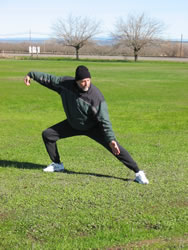
June Gardening Chores in Red Bluff, California, USDA Zone 9
Watering on a regular basis in the early morning hours.
Mowing lawns.
Weeding around vegetables and shrubs.
Wearing a hat and long sleeved shirts.
Maintenance on lawn mowing equipment.
Enjoying vegetables and fruits.
Thinning out excess fruit on trees.
Mulching with straw.
Training vines on support structures, and pruning vigorous grape vines.
Relaxing in the shade.
Enjoying annuals in bloom.
Turning and watering the compost pile.
Removing spent roses.
Reading, resting, and meditating in the shade.
Sipping cool water and tea.
Deep soaking trees and shrubs.
Painting and other maintenance as needed.
Keeping tender potted plants in the afternoon shade.
Planting annuals.
Listening to music outdoors.
June: Quotes, Poems, Lore, Sayings
Summer Solstice
The Spirit of Gardening
Monday, June 02, 2014
Sunday, June 01, 2014
Software and Chopin
One of my favorite albums is
The Nocturnes by Frederic Chopin as played so beautifully on piano by
Maria Joao Pires.
A splendid and sensitive interpretation by Ms. Pires, with an outstanding sound recording by Deutsche Grammophon.
All 21 Nocturnes, 109 minutes, are found on the following delightful classical music album:
A splendid and sensitive interpretation by Ms. Pires, with an outstanding sound recording by Deutsche Grammophon.
All 21 Nocturnes, 109 minutes, are found on the following delightful classical music album:
In the string quartet genre, my favorite, I
have greatly enjoyed listening to the
Danubius Quartet playing the string quartets of
Heitor Villa-Lobos.
Try listening to the 11th, 16th, and 17th Quartets by Villa-Lobos for starters:
A brief list of modern string
quartet albums, recommended by rm508, might be useful to you.
I listen to music recorded in the the MP3
digital format and played back on my
Sony Walkman 16GB player. I carry this reliable and versatile player
with me everywhere. Most stereo players offer a Audio-In plug for use with
these MP3 players.
I'm a Microsoft Windows user at home and at work, and the Sony Walkman unit works just fine with that common software. I like to organize specific ordered and sequenced playlists of music for use in my yoga and taijiquan classes, and just organize them within folders in numbered order using Windows Explorer. Renaming and copying files is an elementary task with great benefits.
I am now setting up a new desktop computer. I'm moving up from a 9 year old Gateway desktop computer operating on Windows XP ..... to .... a new 2014 HewPac HP desktop computer operating on Windows 8.
All of my working C:/ drive files were all backed up {while listening the the Chopin Nocturnes} and moved between the computers yesterday.
Tomorrow, starting to load my old familiar daily and primary software tools: Cute FTP, Microsoft Front Page 2003, Macromedia Dreamweaver/Fireworks 4 Suite. We shall see.
I'm a Microsoft Windows user at home and at work, and the Sony Walkman unit works just fine with that common software. I like to organize specific ordered and sequenced playlists of music for use in my yoga and taijiquan classes, and just organize them within folders in numbered order using Windows Explorer. Renaming and copying files is an elementary task with great benefits.
I am now setting up a new desktop computer. I'm moving up from a 9 year old Gateway desktop computer operating on Windows XP ..... to .... a new 2014 HewPac HP desktop computer operating on Windows 8.
All of my working C:/ drive files were all backed up {while listening the the Chopin Nocturnes} and moved between the computers yesterday.
Tomorrow, starting to load my old familiar daily and primary software tools: Cute FTP, Microsoft Front Page 2003, Macromedia Dreamweaver/Fireworks 4 Suite. We shall see.
Labels:
Computers,
Music,
Piano,
String Quartet
Saturday, May 31, 2014
Make a Deep Mental Path
"I can only meditate when I am walking. When I
stop, I cease to think; my mind works only with my legs."
- Jean Jacques Rousseau, Confessions
“As a single footstep will not
make a path on the earth, so a single thought will not make a pathway in the
mind. To make a deep physical path, we walk again and again. To make a deep
mental path, we must think over and over the kind of thoughts we wish to
dominate our lives.”
- Henry David Thoreau
"The silence of landscape conceals vast
presence. Place is not simply location. A place is a profound individuality.
With complete attention, landscape celebrates the liturgy of the seasons, giving
itself unreservedly to the passion of the goddess. The shape of a landscape is
an ancient and silent form of consciousness. Mountains are huge contemplatives.
Rivers and streams offer voice; they are the tears of the earth's joy and
despair. The earth is full of soul ….. Civilization has tamed place. Left to
itself, the curvature of the landscape invites presence and the loyalty of
stillness." 4
- John O'Donohue, Anam Cara
"To find new things, take the path you took
yesterday."
- John Burroughs
- John Burroughs
"Hiroshi Nose, M.D.,
Ph.D, a professor of sports medical sciences at Sinshu University Graduate
School of Medicine in Japan, who has enrolled thousands of older Japanese
citizens in an innovative, five-month-long program of brisk, interval-style
walking (three minutes of fast walking followed by three minutes of slower
walking, repeated 10 times). The results have been striking. Dr. Nose reported
that "Physical fitness ― maximal aerobic power and thigh muscle strength ―
increased by about 20 percent, which is sure to make you feel about 10 years
younger than before training. The walker's symptoms of lifestyle related
diseases (hypertension, hyperglycemia and obesity) decreased by about 20
percent, while their depression scores dropped by half."
- Reported by Gretchen Reynolds, New York Times Magazine, "What's the Single Best Exercise?", 2011
- Walking Meditation
- Walking Quotations
- Walking Bibliography
- Circle Walking: Bagua
- Walking the Labyrinth
- Garden Walking
- Walking Qigong
- Walking Staff
Labels:
Exercise,
MPGP,
Oregon,
Pacific Ocean,
Walking
Thursday, May 29, 2014
The Edge of Our Conceptions
Seeing and Hearing
4:10 am: Waiting for daybreak, sunshine, morning to come.
The following [below] long recording of 64 minutes features the ACME String Quartet playing Steve Reich's composition Different Trains. I favor listening to this for ten minutes only in one day, and keeping the volume low. Those of you who desire larger doses of Different Trains, are probably those Taiji jocks doing 4 repetitions of the Yang 108 form just this morning. We rock on different trains, rolling by, adios, goodbye; 2012, 2013, 2014 and more {maybe} and many more. Click, moving on, ain't no drain, moving by, flying by, electron speeding by, high, No and Yes, on different trains.
Wednesday, May 28, 2014
Muscle and Tendon Exercises from China
The Yi Jin Jing Qigong is a popular qigong exercise set from China. "Yi Jin Jing Qigong" means "Muscle and Tendon Transforming Exercises."
In most cases, this qigong regimen consists of 12 movement sequences. There are some versions of the Yi Jin Jing with many more movements (22, 49, 108, 216). Some of the longer versions of the Yi Jin Jing include movements from the Eight Section Brocade Routine, the Animal Frolics Routines, the Louhan (Eighteen Buddha Hands Qigong) Routine, or the Bone Marrow and Brain Washing Routine.
Most people practice a 12 movement version of the Yi Jin Jing that was described in a book published by Pan Weiru in 1858 called "Essential Techniques for Guarding Life." Also, Wang Zuyuan published a book in the 1880's titled "Illustrated Exposition of Internal Techniques" that described the same qigong routine as did Pan Weiru.
Some claim that the Yi Jin Jing was created by the famous Zen Patriarch Bodhidharma (Da Mo) around 520 CE, and refined over centuries by Shaolin monks, while others argue for an even more ancient Daoist lineage.
There are numerous instructional DVDs available now for the 12 movement verion of the Yi Jin Jing. I like the instructional book and DVD by the Chinese Health Qigong Association:
Yi Jin Jing: Chinese Health Qigong. Compiled by the Chinese Health Qigong Association. Beijing, China, Foreign Languages Press, 2007. 95 pages, charts, includes an instructional DVD. ISBN: 9787119047782. VSCL. "Qigong is an aspect of traditional Chinese medicine that involves coordinating breathing patterns with physical postures to maintain health and well-being. Yi Jin Jing/ Tendon-Muscle Strengthening Exercises is an accessible, fully-illustrated guide to a particular qigong exercise that focuses on turning and flexing the spine. Based on the twelve traditional routines of Yi Jin Jing, the exercises covered in the book feature soft, extended, even movements that invigorate the limbs and internal organs. In particular, practice of the Yi Jin Jing exercises improves flexibility, balance and muscular strength, and has a beneficial effect on the respiratory system. Each routine is described step-by-step and is illustrated with photographs and key points. The authors also point out common mistakes and offer advice on how to correct these. Complemented by an appendix of acupuncture points and accompanied by a DVD, this book will be of interest to Qigong and Tai Chi practitioners at all levels, students of martial arts and anyone interested in Chinese culture." - Singing Dragon.
For a good book on the theory of the Yi Jin Jing, read Qigong: The Secret of Youth: Da Mo's Muscle/Tendon Changing and Marrow Brain Washing Classics. By Yang, Jwing-Ming, Ph.D., 1946-. An Advanced Qigong Regimen for the Serious Practitioner. Boston, Massachusetts, YMAA Publication Center, 2000. Second Edition 2000, First Edition 1989. Index, appendices, charts, 312 pages. ISBN: 1886969841. VSCL.
In most cases, this qigong regimen consists of 12 movement sequences. There are some versions of the Yi Jin Jing with many more movements (22, 49, 108, 216). Some of the longer versions of the Yi Jin Jing include movements from the Eight Section Brocade Routine, the Animal Frolics Routines, the Louhan (Eighteen Buddha Hands Qigong) Routine, or the Bone Marrow and Brain Washing Routine.
Most people practice a 12 movement version of the Yi Jin Jing that was described in a book published by Pan Weiru in 1858 called "Essential Techniques for Guarding Life." Also, Wang Zuyuan published a book in the 1880's titled "Illustrated Exposition of Internal Techniques" that described the same qigong routine as did Pan Weiru.
Names of the Yi Jin Jing Qigong Movements
Opening Form
1. Wei Tuo Presenting the Pestle 1
2. Wei Tuo Presenting the Pestle 2
3. Wei Tuo Presenting the Pestle 3
4. Plucking Stars on Each Side
5. Pulling Nine Cows by Their Tails
6. Showing Talons and Spreading Wings
7. Nine Ghosts Drawing Sabers
8. Sinking the Three Bodily Zones
Three Plates Falling on the Floor
9. Black Dragon Displaying Its Claws
10. Tiger Springing On Its Prey
11. Bowing Down in Salutation
12. Swinging the Tail
Closing Form
Some claim that the Yi Jin Jing was created by the famous Zen Patriarch Bodhidharma (Da Mo) around 520 CE, and refined over centuries by Shaolin monks, while others argue for an even more ancient Daoist lineage.
There are numerous instructional DVDs available now for the 12 movement verion of the Yi Jin Jing. I like the instructional book and DVD by the Chinese Health Qigong Association:
Yi Jin Jing: Chinese Health Qigong. Compiled by the Chinese Health Qigong Association. Beijing, China, Foreign Languages Press, 2007. 95 pages, charts, includes an instructional DVD. ISBN: 9787119047782. VSCL. "Qigong is an aspect of traditional Chinese medicine that involves coordinating breathing patterns with physical postures to maintain health and well-being. Yi Jin Jing/ Tendon-Muscle Strengthening Exercises is an accessible, fully-illustrated guide to a particular qigong exercise that focuses on turning and flexing the spine. Based on the twelve traditional routines of Yi Jin Jing, the exercises covered in the book feature soft, extended, even movements that invigorate the limbs and internal organs. In particular, practice of the Yi Jin Jing exercises improves flexibility, balance and muscular strength, and has a beneficial effect on the respiratory system. Each routine is described step-by-step and is illustrated with photographs and key points. The authors also point out common mistakes and offer advice on how to correct these. Complemented by an appendix of acupuncture points and accompanied by a DVD, this book will be of interest to Qigong and Tai Chi practitioners at all levels, students of martial arts and anyone interested in Chinese culture." - Singing Dragon.
For a good book on the theory of the Yi Jin Jing, read Qigong: The Secret of Youth: Da Mo's Muscle/Tendon Changing and Marrow Brain Washing Classics. By Yang, Jwing-Ming, Ph.D., 1946-. An Advanced Qigong Regimen for the Serious Practitioner. Boston, Massachusetts, YMAA Publication Center, 2000. Second Edition 2000, First Edition 1989. Index, appendices, charts, 312 pages. ISBN: 1886969841. VSCL.
Labels:
Chi Kung,
Exercise,
Qigong,
Yi Jin Jing
Tuesday, May 27, 2014
Tai Chi Short Form Names of Movements
Dear Michael:
"A friend of mine asked me to help translate Tai Chi 24 Forms
into Cantonese dialect. Your web page of 24 Forms was introduced to me for
reference. I am amazed at the number of translations for each movement.
I have come to realize the difficult task of getting to the
real essence of translation. Inappropriate or incompetent translation makes the
concepts ambiguous or misleading (with all the funny Chinese phrases of naming
things.) Though in all honesty, each source tries to fit the bill, rarely do
they come across the original design/intent of the moves in a comprehensive way.
Usually most Western sources just cannot read the Chinese
words, lesser still the Chinese way of thinking. The Chinese side usually don’t
know English well enough to get the essence across with poor diction.
But I must say that I am no expert. Only that I have observed
some errors, and thought I should mention it to contribute to common
understanding. I only do so as you welcome suggestions from others. (I am a
native Chinese speaker.)
Here are the
examples:
#3 白鵝亮翅 Word to word: White| Goose|
Flash| Wing
Most Tai Chi schools use White Crane Spreads Its Wings. If
this is the case, then the Chinese phrase should be白鶴亮翅. 鶴 = Crane.
白鶴亮翅 Bai
He Liang Chi [Mandarin]
—————————————————————————————— ——
# 8 拦雀尾右 : Lan Que Wei You : Grasp the Bird's Tail Right
拦 means
‘To block’, not ‘grasp’. This I believe is a typo, as it has the same sound as 揽.
So is should be揽雀尾[右] Lan Que Wei (You) [Mandarin] (Notice
I put a bracket around the word右,RIGHT; for better illustration.)
—————————————————————————————— ——
#16 下势 : Xia Shi : Snake (?) Creeps Down
下势 Word to word: Low|
Inertia, dynamic force, or tendency, etc.
There is no mentioning of any animal’s name. I would be
interested to know how this translation came about. Or, it is taken as an
English slang?
Ok, that is all. I am struggling with my own thinking on this
tough translation project. I admire your zest of life reflected in your web
pages.
All the best."Phil
**********************************
Phil,
I have often been perplexed about the translations or interpolations of the "names" of the movements in various Taijiquan forms. The reference sources I have studied vary somewhat.
I'm sure that a Cantonese vs a Mandarin starting point would reveal different results. Then, again, an English, Spanish, or French version would provide additional interesting interpolations.
As for my qualifications, I am fluent in only in the English language. The only other language I use in my daily life is Spanish.
Considering the worldwide popularity of the Standard Simplified 24 T'ai Chi Ch'uan 1956 form, I thought that some effort should be made to show the range of given names for each of the movement forms in the 24 Form, and I tried to do so on my Taijiquan 24 Form webpage.
I welcome your comments and suggestions. I would be willing to integrate them into my webpage if you send them to me, link to your webpage on the subject, or publish your final document as a separate webpage.
Best Wishes,
Mike Garofalo

Labels:
24 Form,
Tai Chi Chuan,
Taijiquan,
Yang Taijiquan
Monday, May 26, 2014
On Parting with Spring
"O day after day we can't
help growing older.
Year after year spring can't help seeming younger.
Come let's enjoy our wine cup today,
Nor pity the flowers fallen."
- Wang Wei, On Parting with Spring
"What is so sweet and dear
As a prosperous morn in May,
The confident prime of the day,
And the dauntless youth of the year,
When nothing that asks for bliss,
Asking aright, is denied,
And half of the world a bridegroom is,
And half of the world a bride?"
- William Watson, Ode in May, 1880
The Spirit of Gardening
May: Quotes, Poems, Sayings
Year after year spring can't help seeming younger.
Come let's enjoy our wine cup today,
Nor pity the flowers fallen."
- Wang Wei, On Parting with Spring
"What is so sweet and dear
As a prosperous morn in May,
The confident prime of the day,
And the dauntless youth of the year,
When nothing that asks for bliss,
Asking aright, is denied,
And half of the world a bridegroom is,
And half of the world a bride?"
- William Watson, Ode in May, 1880
The Spirit of Gardening
May: Quotes, Poems, Sayings
Saturday, May 24, 2014
Marvels Along a Long Walk
into the world, the toes take off
with an appealing squeak which the thumping heel
follows confidentially, the way men greet men.
Sometimes walking is just such elated
pumping."
- Lyn Hejinian, Determination
"Every day, in the morning or evening, or both, take a walk in a safe and peaceful environment for less than an hour. The can be a great fountain of youth. Choose a place to walk that has no kind of disturbance. Walking done in a work environment and when your mind is busy is different; it is not as nutritious as the walking you do for yourself in the morning or evening in a quiet, peaceful, and safe place."
- Master Hua-Ching Ni, Entering the Tao, 1997, p. 135
"Walking is the natural recreation for a man who desires not absolutely to suppress his intellect but to turn it out to play for a season."
- Leslie Stephen
"The interior solitude, along with the steady rhythm of walking mile after mile, served as a catalyst for deeper awareness. The solitude I found and savored on the Camino had an amazing effect on me. The busyness of my life slowly settled down as the miles went on. For a good portion of my life I had longed for a fuller experience of contemplation, that peaceful prayer of the heart in which one is able to look intently and see each piece of life as sacred. Ten days into the journey, totally unforeseen, the grace of seeing the world with startling lucidity came to me. My eyes took in everything with wonder. The experience was like looking through the lens of an inner camera – my heart was the photographer. Colors and shapes took on nuances and depths never before noticed. Each piece of beauty appeared to be framed: weeds along roadsides, hillsides of harvested fields with yellow and green stripes, layers of mountains with lines of thick mist stretching along their middle section, clumps of ripe grapes on healthy green vines, red berries on bushes, roses and vegetable gardens. Everything revealed itself as something marvelous to behold. Each was a work of art. I noticed more and more details of light and shadow, lines and edges, shapes, softness, and texture. I easily observed missed details on the path before me – skinny worms, worn pebbles, tiny flowers of various colors and shapes, black beetles, snails, and fat, grey slugs. I became aware of the texture of everything under my feet – stones, slate, gravel, cement, dirt, sand, grass. I responded with wonder and amazement. Like the poet Tagore, I felt that everything “harsh and dissonant in my life” was melting into “one sweet harmony”."
- Joyce Rupp
Study Tai Chi Chuan and Chi Kung with Mike Garofalo
Thursday, May 22, 2014
Standing Meditation: Zhan Zhuang
Standing Training Postures
"Zhan Zhuang: What Really Happens When We Stand?"
By Mark Cohen
Qi: Journal of Traditional Eastern Health and Fitness, Volume 23, No. 4, Winter, 2013-2014, pp.36-44.
Inside Zhan Zhuang: First Edition
By Mark Cohen. MSC Creative Enterprises, 2013. 258 pages. ISBN: 978-0988317888.
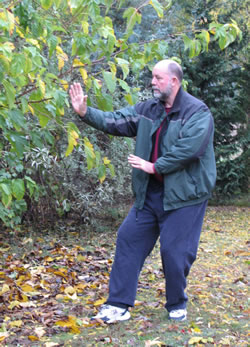
Standing Meditation
By Mike Garofalo. Resources, Bibliography, Links, Methods, Quotations, Comments.
Qigong (Chi Kung) by Mike Garofalo
"Zhan Zhuang: What Really Happens When We Stand?"
By Mark Cohen
Qi: Journal of Traditional Eastern Health and Fitness, Volume 23, No. 4, Winter, 2013-2014, pp.36-44.
Inside Zhan Zhuang: First Edition
Standing Meditation
By Mike Garofalo. Resources, Bibliography, Links, Methods, Quotations, Comments.
Qigong (Chi Kung) by Mike Garofalo
Wednesday, May 21, 2014
Taijiquan Fan
There
are many T'ai Chi Ch'uan exercise forms which make use of a fan. Most
are shorter forms, under 25 movements, but some, like the famous Tai Chi
Kung Fu Fan Form have over 50 movements. Most are done slowly and
softly, but some include vigorous and fast movements. The majority
favor the Yang Style of Tai Chi Chuan.
Tai Chi Fan: Bibliography, Links, Resources, Notes, Lore, Quotations. Research by Mike Garofalo. I welcome any comments, suggestions, additions, or ideas regarding this webpage.
One of the most popular Tai Chi Fan forms was created by Professor Li Deyin (1938-). It has 52 movements. I includes slow and gentle movements in the first half of the form, then the second half is much more vigorous. This Tai Chi Fan form is for athletic and intermediate Tai Chi students.
Here are some instructional resources for learning the Tai Chi Kung Fu Fan Form.
Tai Chi Kung Fu Fan.
Routine 1, created by Grandmaster Li Deyin (1938-). Instructional
DVD, 65 minutes, by Master Jesse Tsao. Tai Chi Healthways, San Diego,
California. "The most popular Tai Chi Fan form ever practiced in
China. The routine was created by Grandmaster Li Deyin, Jesse Tsao's
teacher since 1978. There are 52 movements in the whole routine based
on the characteristic Tai Chi posture with the fan's artistic and
martial functions. Master Tsao presents demonstrations at the
beginning and end. He teaches step-by-step in slow motion, in
English. There are plenty of repetitions of movements in both front
and back view. It is a good reference for home study, or a resource
for instructor's teaching preparation." Cost: 35.00 US. Demonstration.
Tai Chi Kung Fu Fan Instructional DVD by Professor Li Deyin. Narration in English. "A fan routine, created by Professor Li, which combines the gracefulness, centrality and continuity of Taiji with the power, speed and fierceness of Wushu. It is designed as an addition to the exercises for health, and has received massive interest and support throughout the world. In this DVD, Professor Li provides in-depth teaching with Mrs. Fang Mishou performing detail demonstration." Vendor 1. Cost: $35.00 US.
Tai Chi Kung Fu Fan, Form 1. List of 52 movement names, directions, instructions, and notes by Mike Garofalo.
I
compiled the following list of UTube demonstrations of this Tai Chi fan
form a couple of years ago. Some of the videos may no longer exist.
Tai Chi Kung Fun Fan, Form 1. UTube Video, 4:02 min. Lady in white on a stage in Japan. My favorite! "First Form of the Xiyangmei Taiji Kungfu Shan (Taiji Shan). Recorded in Tokyo, Japan when the group headed by Li Deyin went to give an exhibition in 2006."
Tai Chi Kung Fu Fan, Form 1. UTube Video, 3:59 min. Three performers in white outfits.
Tai Chi Kung Fu Fan, Form 1. UTube Video, 3:59 min. Demonstrated by Patty Lee. Lady in a yellow outfit in a field with a backdrop of mountains.
Tai Chi Kung Fu Fan, Form 1. UTube Video, 4:02 min. Lady in black practicing in a dance studio. What is the song used in many of these videos (by Jackie Chan)??
Tai Chi Kung Fu Fan, Form 1. UTube Video, 3:42. A group of Master Fay Li Yip's students performing outdoors.
Tai Chi Kung Fu Fan, Form 1. UTube Video, 3:53 min. A group in black outfits performs outdoors in Madrid, Spain. Some members need more group practice.
Tai Chi Kung Fu Fan, Form 1. UTube Video, 5:57 min. Two ladies in red outfits perform outdoors in Rotterdam, The Netherlands.
Tai Chi Kung Fu Fan, Form 1. 中國太極功夫扇
Tai Chi Kung Fu Fan, Form 1. UTube Video Subject Search.
Tuesday, May 20, 2014
Daodejing Concordance
Concordance to the Tao Te Ching by Lao Tzu
English Language Versions of the Tao Te Ching - Translator's Index
Thematic Index to the Tao Te Ching
Ripening Peaches: Taoist Studies and Practices
Chapter Index to the Tao Te Ching
Taoism: A Bibliography
Daodejing
Chapter Number Index Standard Traditional Chapter Arrangement of the Tao Te Ching Chapter Order in Wang Bi's Daodejing Commentary in 246 CE Chart by Mike Garofalo |
|||||||||
| 1 | 2 | 3 | 4 | 5 | 6 | 7 | 8 | 9 | 10 |
| 11 | 12 | 13 | 14 | 15 | 16 | 17 | 18 | 19 | 20 |
| 21 | 22 | 23 | 24 | 25 | 26 | 27 | 28 | 29 | 30 |
| 31 | 32 | 33 | 34 | 35 | 36 | 37 | 38 | 39 | 40 |
| 41 | 42 | 43 | 44 | 45 | 46 | 47 | 48 | 49 | 50 |
| 51 | 52 | 53 | 54 | 55 | 56 | 57 | 58 | 59 | 60 |
| 61 | 62 | 63 | 64 | 65 | 66 | 67 | 68 | 69 | 70 |
| 71 | 72 | 73 | 74 | 75 | 76 | 77 | 78 | 79 | 80 |
| 81 | |||||||||
Labels:
Dao De Jing,
Daoism,
Tao Te Ching,
Taoism
Monday, May 19, 2014
Kronos String Quartet
Listening to string quartet music has been a passion of
mine for four decades. One particular string quartet group that I have
really enjoyed is the
Kronos Quartet based in San Francisco. They have been performing
for over 40 years, with three members remaining from the original group.
I have purchased nine of their albums and have seen them twice in concerts in Los Angeles. Recently, I purchased two more albums by this creative, versatile, and prolific string quartet.
Alban Berg's Lyric Suite performed by the Kronos Quartet, 2003. The Lyric Suite is a six-movement work for string quartet written by Alban Berg between 1925 and 1926 using methods derived from Schoenberg's twelve-tone technique. This pensive quartet is less than 30 minutes in length.
Philip Glass's String Quartets 2-5, performed by the Kronos Quartet, 2005. Philip Glass (1937-) is a noted and prolific American composer of music with repetitive structures. The harmonies in this album are very appealing.
I have purchased nine of their albums and have seen them twice in concerts in Los Angeles. Recently, I purchased two more albums by this creative, versatile, and prolific string quartet.
Alban Berg's Lyric Suite performed by the Kronos Quartet, 2003. The Lyric Suite is a six-movement work for string quartet written by Alban Berg between 1925 and 1926 using methods derived from Schoenberg's twelve-tone technique. This pensive quartet is less than 30 minutes in length.
Philip Glass's String Quartets 2-5, performed by the Kronos Quartet, 2005. Philip Glass (1937-) is a noted and prolific American composer of music with repetitive structures. The harmonies in this album are very appealing.
Sunday, May 18, 2014
A Crack in the Tea Cup Opens
"But all the clocks in the city
Began to whirr and chime:
"O let not Time deceive you,
You cannot conquer time.
"In the burrows of the Nightmare
Where Justice naked is,
Time watches from the shadow
And coughs when you would kiss.
"In headaches and in worry
Vaguely life leaks away,
And Time will have his fancy
To-morrow or to-day.
"Into many a green valley
Drifts the appalling snow;
Time breaks the threaded dances
And the diver's brilliant bow.
"The glacier knocks in the cupboard,
The desert sighs in the bed,
And the crack in the tea-cup opens
A lane to the land of the dead."
- W. H. Auden, As I Walked Out One Evening, 1937
Time - Quotes and Poems
Ways of Walking
Began to whirr and chime:
"O let not Time deceive you,
You cannot conquer time.
"In the burrows of the Nightmare
Where Justice naked is,
Time watches from the shadow
And coughs when you would kiss.
"In headaches and in worry
Vaguely life leaks away,
And Time will have his fancy
To-morrow or to-day.
"Into many a green valley
Drifts the appalling snow;
Time breaks the threaded dances
And the diver's brilliant bow.
"The glacier knocks in the cupboard,
The desert sighs in the bed,
And the crack in the tea-cup opens
A lane to the land of the dead."
- W. H. Auden, As I Walked Out One Evening, 1937
Time - Quotes and Poems
Ways of Walking
Saturday, May 17, 2014
Walking Out the Stiffness
Stepping On to Pleasures
Grown old I groan
At times so stiff and sore
But not stopping, stepping on,
Walking past the pains to gain
Another epiphany before the rain.
Step by step the breath
Finds a pleasant pace
Pains dissipate.
By the third mile, I smile,
Feet flowing, arms swaying,
discomforts dissolved.
Warmed with eyes wide
Trees slide by, doves coo,
Awe opens then closes - no clues.
My pace slowly slows
Avoiding holes in the road;
Filling the unconscious crevasses of my mind
With pleasures deep and kind.
By and by, it's done, I'm saying
"Such a benefit, and beguiled."
I now rest, content.
- Michael P. Garofalo, Stepping on to Pleasures
The Ways of Walking
The Poems of Mike Garofalo
Grown old I groan
At times so stiff and sore
But not stopping, stepping on,
Walking past the pains to gain
Another epiphany before the rain.
Step by step the breath
Finds a pleasant pace
Pains dissipate.
By the third mile, I smile,
Feet flowing, arms swaying,
discomforts dissolved.
Warmed with eyes wide
Trees slide by, doves coo,
Awe opens then closes - no clues.
My pace slowly slows
Avoiding holes in the road;
Filling the unconscious crevasses of my mind
With pleasures deep and kind.
By and by, it's done, I'm saying
"Such a benefit, and beguiled."
I now rest, content.
- Michael P. Garofalo, Stepping on to Pleasures
The Ways of Walking
The Poems of Mike Garofalo
Thursday, May 15, 2014
Eighteen Hands of the Lohan
Luohan Qigong, Lohan Qigong, Luohan Gong, Lohan Gong, 18 Buddha Hands
Shaolin Buddhist Qigong
Resources, Lessons, History, Links, Bibliography, Notes, Research http://www.egreenway.com/qigong/lohan.htm
"One tradition is that the Buddhist teacher, Bodhidharma (448-527 CE), a famous Grand Master of Chan (Zen),introduced a set of 18 exercises to the Buddhist monks at the Shaolin Temple. These are known as the Eighteen Hands of the Lohan. This Shaolin Lohan Qigong (i.e., the art of the breath of the enlightened ones), "is an internal set of exercises for cultivating the "three treasures" of qi (vital energy), jing (essence), and shen (spirit)," according to Howard Choy. The Kung Fu master, Sifu Wong Kiew-Kit, referring to the Shaolin Wahnam style, says "the first eight Lohan Hands are the same as the eight exercises in a famous set of chi kung exercises called the Eight Pieces of Brocade." There are numerous versions,seated and standing, of Bodhiidharma's exercise sets - including the related "Tendon-Changing and Marrow-Washing" qigong set. Some versions of the 18 Lohan (Luohan) Hands have up to four levels, and scores of movement forms for qigong and martial purposes."
- Michael P. Garofalo, Eight Section Brocade (330Kb)
For a comparison of some of the exercises in the Lohan Qigong with the Eight Section Brocade see my chart on the topic.
The Luohan Qigong includes a massage or patting training methods, and this is especially popular among Yin Fu Bagua enthusiasts. Master Xie Pei Qi has a DVD out on the topic.
Shaolin Buddhist Qigong
Resources, Lessons, History, Links, Bibliography, Notes, Research http://www.egreenway.com/qigong/lohan.htm
"One tradition is that the Buddhist teacher, Bodhidharma (448-527 CE), a famous Grand Master of Chan (Zen),introduced a set of 18 exercises to the Buddhist monks at the Shaolin Temple. These are known as the Eighteen Hands of the Lohan. This Shaolin Lohan Qigong (i.e., the art of the breath of the enlightened ones), "is an internal set of exercises for cultivating the "three treasures" of qi (vital energy), jing (essence), and shen (spirit)," according to Howard Choy. The Kung Fu master, Sifu Wong Kiew-Kit, referring to the Shaolin Wahnam style, says "the first eight Lohan Hands are the same as the eight exercises in a famous set of chi kung exercises called the Eight Pieces of Brocade." There are numerous versions,seated and standing, of Bodhiidharma's exercise sets - including the related "Tendon-Changing and Marrow-Washing" qigong set. Some versions of the 18 Lohan (Luohan) Hands have up to four levels, and scores of movement forms for qigong and martial purposes."
- Michael P. Garofalo, Eight Section Brocade (330Kb)
For a comparison of some of the exercises in the Lohan Qigong with the Eight Section Brocade see my chart on the topic.
The Luohan Qigong includes a massage or patting training methods, and this is especially popular among Yin Fu Bagua enthusiasts. Master Xie Pei Qi has a DVD out on the topic.
Subscribe to:
Posts (Atom)