My right shoulder has been injured for a long time. The injury has reduced my range of motion to some extent, reduced my strength, and, occasionally, causes me considerable pain when I move my arm and shoulder at a particular angle. Most of the time, the shoulder discomfort is a minor concern; but, it has been worsening the last four months.
I met with Dr. Robert Chase, a sport's orthopedist, in Red Bluff yesterday. He viewed my X-rays, interviewed me, and gave me a thorough physical examination. I appreciated his diagnostic skills, pleasant and approachable manner, obvious expertise, and suggestions for remedial actions. He is a University of California at Irvine graduate.
I will have an MRI on 6/11, and see him again on 6/23. Medical interventions considered are drugs for pain, cortisone injections to reduce inflammation, physical therapy, and arthroscopic surgery.
On 6/23, Dr. Chase told me that based upon my complaints and comments, his examination, and the MRI results he thinks I have a tear of a tendon on the rotator cuff caused by arthritic bone spurs. I have troublesome osteoarthritis in my right big toe, tailbone, and shoulder joints; as well as aching finger joints. The arthritis in my shoulder results in impingement: the arthritic bone spurs press and cut rotator cuff tendons in certain positions. He recommended surgery in the next six months to shave down the bone spurs and reattach the tendon.
I am modifying and reducing my weekly strength training program that involves the use of my right shoulder. I will use less weight, do more more isolation dumbbell work, and a do a reduced number of weightlifting workouts per week. No max lifts with barbells, no overhead pressing, no flys. No weightlifting for two weeks, but plenty of walking, gardening, home improvement projects, yoga, and taijiquan. Resting the shoulder from weightlifting is an intelligent choice at this time, as well as taking some ibuprofen.
I will be placing much more emphasis on leg work, cardio-vascular conditioning, and ab work during the month of June.
Discomfort and pain in my right shoulder and right bicep has been increasing during the entire month of June.
Help with Arthritis: Tai Chi, Chi Kung, Yoga, Walking, and Diet Bibliography, links, resources, recommended books, information, quotations, tips, and research. By Michael P. Garofalo.
Thursday, June 11, 2015


Wednesday, June 10, 2015
Trash Cleanup
For the last 16 years, a portion of our south field has been used for storing metal, plastic, and wood trash. We decided to clean up the south field.
Karen and I rented a dumpster from Green Waste of Tehama County. The 20 cubic yard dumpster was delivered yesterday morning. We have one week to fill the dumpster, before it is removed and taken to the Tehama County Landfill.
We use Green Waste of Tehama County for weekly reliable curbside trash disposal - mostly paper waste. We save aluminum cans, metal cans, plastic, and glass containers; and then recycle with Green Waste pickup. We have a compost pile for garbage. Larger weeding, pruning, and tree trimming green waste is piled in the south field and burned on December 21st after rain, and the ashes are used as fertilizer.
Unfortunately, for us, the weather rapidly turned extremely hot. Temperatures have climbed to over 105F in the afternoon. We work from 5 am to 11:30 am.


Karen got bit by wasps five times while working on this cleanup project. She is tough!


Our dog, Bruno, smelled and dug his way into gopher holes, snake holes, bee and wasp hives in holes ... He stayed with us the whole time we worked on the clean up project.


Karen and I rented a dumpster from Green Waste of Tehama County. The 20 cubic yard dumpster was delivered yesterday morning. We have one week to fill the dumpster, before it is removed and taken to the Tehama County Landfill.
We use Green Waste of Tehama County for weekly reliable curbside trash disposal - mostly paper waste. We save aluminum cans, metal cans, plastic, and glass containers; and then recycle with Green Waste pickup. We have a compost pile for garbage. Larger weeding, pruning, and tree trimming green waste is piled in the south field and burned on December 21st after rain, and the ashes are used as fertilizer.
Unfortunately, for us, the weather rapidly turned extremely hot. Temperatures have climbed to over 105F in the afternoon. We work from 5 am to 11:30 am.


Karen got bit by wasps five times while working on this cleanup project. She is tough!


Our dog, Bruno, smelled and dug his way into gopher holes, snake holes, bee and wasp hives in holes ... He stayed with us the whole time we worked on the clean up project.


Tuesday, June 09, 2015
One Love, One Heart
Fans of Bob Marley, Reggae, those of liberal persuasions, and world music lovers will enjoy these Playing for Change UTube music videos:
One Love, One Heart https://www.youtube.com/watch?
Get Up, Stand Up https://www.youtube.com/watch?
Redemption Song https://www.youtube.com/watch?
War: No More Trouble https://www.youtube.com/watch?
One Love, One Heart https://www.youtube.com/watch?
Get Up, Stand Up https://www.youtube.com/watch?
Redemption Song https://www.youtube.com/watch?
Monday, June 08, 2015
If a Tree Falls in Red Bluff ...
We needed to have five trees removed on our property last week. We hired A1 Tree Service from Red Bluff. A 3 person crew with all the proper equipment came to our house last Wednesday. They cut all the trees down safely, neatly piled the cut wood, shredded all the smaller limbs, branches and leaves, and hand trimmed all branches touching the house. I was satisfied with the quality, timeliness, and reasonable (albeit expensive) cost.
Having a single tree cut down and removed can cost from $200 to over $2,400, depending on the size of the tree, the location of the tree, species of the tree, potential hazards, and the condition of the tree. We spent $1,300 for all this work to be done safely and properly.

I have two electric chain saws that I have used to remove most trees that are under 25 feet tall, and with limbs and trunks from 2" to 10" in diameter. Some trees are just too tall, to large, and in a location that is dangerous to our home or fencing, and too dangerous for a 70 year old man like me to cut down. The pine tree limb behind me in the picture below was just too heavy for me to safely remove.

I will tackle the piles shown below on early Monday morning, before the afternoon temperatures reach over 100F. Cleaning up the three downed trees this area will take me at least 7 hours.
I pile the cut trunk and limbs in my south field in a firewood pile. The trees we have cut down in the last six months include cypress, eucalyptus, pine, willow, and cottonwood.

One cottonwood tree was rather large, and a bit unsteady, and it was blocking our Internet signal. It is now gone. The Internet speed and steady signal are now greatly improved.


Having a single tree cut down and removed can cost from $200 to over $2,400, depending on the size of the tree, the location of the tree, species of the tree, potential hazards, and the condition of the tree. We spent $1,300 for all this work to be done safely and properly.

I have two electric chain saws that I have used to remove most trees that are under 25 feet tall, and with limbs and trunks from 2" to 10" in diameter. Some trees are just too tall, to large, and in a location that is dangerous to our home or fencing, and too dangerous for a 70 year old man like me to cut down. The pine tree limb behind me in the picture below was just too heavy for me to safely remove.

I will tackle the piles shown below on early Monday morning, before the afternoon temperatures reach over 100F. Cleaning up the three downed trees this area will take me at least 7 hours.
I pile the cut trunk and limbs in my south field in a firewood pile. The trees we have cut down in the last six months include cypress, eucalyptus, pine, willow, and cottonwood.

Lots of good pine firewood to move and split.
One cottonwood tree was rather large, and a bit unsteady, and it was blocking our Internet signal. It is now gone. The Internet speed and steady signal are now greatly improved.

This was one cottonwood tree that we had removed.
Much too big of a job for me to do alone.
Much too big of a job for me to do alone.

Lots of potential firewood to move and split.
A cord of firewood delivered, depending on the wood, runs from $100 to $300.

Job completed in the front yard, east side, and street side.
Clean, neat, and now safe!
Clean, neat, and now safe!
It took me 10 hours of work this past weekend to pick up the cut pine
limbs on the east street side and to take to my firewood pile in the
south field, rake up all the fallen needles, pick up all the sticks,
prune dead branches, and put all the street side split rail fencing all
back in place.
Sunday, June 07, 2015
Turning Like a Dragon
"It is easier to leave a circle than to enter it.
The emphasis is on the hip movement whether front or back.
The difficulty is to maintain the position without shifting the centre.
To analyze and understand the above situation is to do with movement and not with a stationary posture.
Advancing and retreating by turning sideways in line with the shoulders, one is capable of turning like a millstone, fast or slow, as if whirling like a dragon in the clouds or sensing the approach of a fierce tiger.
From this, one can learn the usage of the movement of the upper torso.
Through long practice, such movement will become natural."
- Yang Family Old Manual, The Coil Incense Kung
"The East Asian Dragons are often associated with water, rain, vapors, fog, springs, streams, waterfalls, rivers, swamps, lakes, and the ocean. Water can take many shapes and states, and Dragons are shape shifters and linked with transformation, appearing and disappearing, changing into something new. Water is found in three states, depending upon the surrounding temperature: a solid (ice, snow), a fluid (flowing liquid), and a gas (fog, vapor, steam). Since rainfall is often accompanied by thunder and lightening (thunderstorms and typhoons), the Dragon is sometimes associated with fire; and, since hot water and steam are major sources of energy in human culture, this further links the Dragon with the essential energy of Fire. The Dragon is thus linked with the chemical and alchemical transformative properties of two of the essential Elements, both Water and Fire. Dragons are generally benign or helpful to humans in East Asia, but their powers can also be destructive (e.g., flooding, tsunami, typhoon, lightening, steam, drowning, etc.). There are both male and female Dragons, kinds or species of Dragons, Dragons of different colors and sizes, and mostly good but some evil Dragons. Some Dragons can fly, some cannot fly; most live in or near water, a few on land. The body of a Dragon combines features from many animals, representing the many possibilities for existential presence. The Dragon in the East has serpentine, snake, or eel like movement qualities: twisting, spiraling, sliding, circling, swimming, undulating, flowing freely like water." [See: The Dragon in China and Japan by Marinus De Visser, 1913]

The emphasis is on the hip movement whether front or back.
The difficulty is to maintain the position without shifting the centre.
To analyze and understand the above situation is to do with movement and not with a stationary posture.
Advancing and retreating by turning sideways in line with the shoulders, one is capable of turning like a millstone, fast or slow, as if whirling like a dragon in the clouds or sensing the approach of a fierce tiger.
From this, one can learn the usage of the movement of the upper torso.
Through long practice, such movement will become natural."
- Yang Family Old Manual, The Coil Incense Kung
"The East Asian Dragons are often associated with water, rain, vapors, fog, springs, streams, waterfalls, rivers, swamps, lakes, and the ocean. Water can take many shapes and states, and Dragons are shape shifters and linked with transformation, appearing and disappearing, changing into something new. Water is found in three states, depending upon the surrounding temperature: a solid (ice, snow), a fluid (flowing liquid), and a gas (fog, vapor, steam). Since rainfall is often accompanied by thunder and lightening (thunderstorms and typhoons), the Dragon is sometimes associated with fire; and, since hot water and steam are major sources of energy in human culture, this further links the Dragon with the essential energy of Fire. The Dragon is thus linked with the chemical and alchemical transformative properties of two of the essential Elements, both Water and Fire. Dragons are generally benign or helpful to humans in East Asia, but their powers can also be destructive (e.g., flooding, tsunami, typhoon, lightening, steam, drowning, etc.). There are both male and female Dragons, kinds or species of Dragons, Dragons of different colors and sizes, and mostly good but some evil Dragons. Some Dragons can fly, some cannot fly; most live in or near water, a few on land. The body of a Dragon combines features from many animals, representing the many possibilities for existential presence. The Dragon in the East has serpentine, snake, or eel like movement qualities: twisting, spiraling, sliding, circling, swimming, undulating, flowing freely like water." [See: The Dragon in China and Japan by Marinus De Visser, 1913]
Dragon Chi Kung
features exercises that involve twisting, turning, screwing,
spiraling, curving, wiggling, undulating, spinning, sinking down and
rising up, swimming, circling, swinging, or twining movements are often
associated with snakes, serpents and dragons. There are many Qigong
sets and specific Qigong movements that have been called "Dragon"
forms, sets, or exercises. Baguazhang martial arts feature much twisting, turning and circling; and, also include many "Dragon" sets and movements. Silk Reeling exercises in Chen Style Taijiquan include twisting, twining, circling, and screwing kinds of movements.

Saturday, June 06, 2015
Summer Vacation
I work part-time for the Corning Union Elementary School District during the school year. I work 117 days each calendar year. My last day of work for the 2014-2015 school year was yesterday. I am now on "summer vacation" until August 16th. Karen retired in June of 2014.
I walk 3.6 miles in the morning each day starting at 5:10 am; with laps interspersed with Taijiquan forms practice. I teach yoga 3 or 4 evenings each week from 5:20 - 6:40 pm. I lift weights at the gym 5 days each week from 4 to 5 pm.
We both work on home improvement projects, water, and garden each day. During the hottest time of each day, we read, research and write indoors. We use a simple evaporation cooler and a couple of fans to keep us comfortable during the hottest time of each summer day.
This summer I will complete Phase 4 (indexing and concordance) for my Tao Te Ching project. As usual, I will post to the Cloud Hands Blog each day.
We listen to a lot of New Age music in MP3 digital format as well as use Pandora. I also listen to a good deal of string quartet music.
I have four books of intellectual history that I plan to read, as well as the Essays of Michel de Montaigne.
This summer I will learn and use Photoshop CS5, AskSam 6, and the Atlantis word processor.
I plan to watch parts of the Tour de France starting on July 4th. I enjoy the scenic and historical commentary, as well, of course, as the tactics and athleticism of the bike riders. I seldom have ridden a bike in my lifetime, although I rode small motorcycles for 12 years for transportation in the city.
Karen and I will complete the repair, painting, and remodeling of our back porch. We will finish removing three dead trees and four overgrown trees in the wrong locations. We will rent a dumpster and clean up materials stored in our far south field. We will tend our summer vegetable garden and enjoy the harvests.
Our children and their families will be visiting us in late June and early July. Karen and I will join my two brothers and their wives in Bodega Bay, California, and in Peyton, Colorado, for the Blaize Reunion. Karen and I will also go up to Portland once.
So, assuming good health, we will have a busy, productive, and pleasurable summer vacation.
If our son is fortunate enough to get a kidney transplant (he has waited 4 years), then Karen will go to Portland for six weeks to help him during recovery, and we will help with finances. That event would make it a wonderful and perfect summer.


I walk 3.6 miles in the morning each day starting at 5:10 am; with laps interspersed with Taijiquan forms practice. I teach yoga 3 or 4 evenings each week from 5:20 - 6:40 pm. I lift weights at the gym 5 days each week from 4 to 5 pm.
We both work on home improvement projects, water, and garden each day. During the hottest time of each day, we read, research and write indoors. We use a simple evaporation cooler and a couple of fans to keep us comfortable during the hottest time of each summer day.
This summer I will complete Phase 4 (indexing and concordance) for my Tao Te Ching project. As usual, I will post to the Cloud Hands Blog each day.
We listen to a lot of New Age music in MP3 digital format as well as use Pandora. I also listen to a good deal of string quartet music.
I have four books of intellectual history that I plan to read, as well as the Essays of Michel de Montaigne.
This summer I will learn and use Photoshop CS5, AskSam 6, and the Atlantis word processor.
I plan to watch parts of the Tour de France starting on July 4th. I enjoy the scenic and historical commentary, as well, of course, as the tactics and athleticism of the bike riders. I seldom have ridden a bike in my lifetime, although I rode small motorcycles for 12 years for transportation in the city.
Karen and I will complete the repair, painting, and remodeling of our back porch. We will finish removing three dead trees and four overgrown trees in the wrong locations. We will rent a dumpster and clean up materials stored in our far south field. We will tend our summer vegetable garden and enjoy the harvests.
Our children and their families will be visiting us in late June and early July. Karen and I will join my two brothers and their wives in Bodega Bay, California, and in Peyton, Colorado, for the Blaize Reunion. Karen and I will also go up to Portland once.
So, assuming good health, we will have a busy, productive, and pleasurable summer vacation.
If our son is fortunate enough to get a kidney transplant (he has waited 4 years), then Karen will go to Portland for six weeks to help him during recovery, and we will help with finances. That event would make it a wonderful and perfect summer.


Friday, June 05, 2015
Interpolations and Translations of the Daodjing by Laozi
A typical webpage created by Mike Garofalo for each one of the 81 Chapters of the Tao Te Ching (Daodejing)
by Lao Tzu (Laozi) includes 20 different English translations or
interpolations for that Chapter, 3 Spanish translations for
that Chapter, the
Chinese characters for that Chapter, and the Wade-Giles and Hanyu Pinyin
Romanization of the Mandarin Chinese words for that Chapter. Each webpage for one of the 81 Chapters of the Tao Te Ching includes extensive
indexing by key words and terms in English, Spanish, and the Wade-Giles Romanization. Each webpage on a Chapter of the Daodejing includes recommended
reading in books and websites, a detailed bibliography, some commentary,
research leads, translation sources, and other resources for that Chapter.
After each quoted version for a Chapter, I use the expression "Translated by ..." The version of the Chapter could be a strict or free or loose "translation" of the Chapter by a qualified bilingual, Chinese-English, scholar (e.g., Ellen Chen, Thomas Cleary, Livia Kohn, Michael LaFargue, Victor Mair, Red Pine, Lin Yutang, Arthur Waley, etc.), teacher, Taoist, or expert. It could also be an "interpolation" by a qualified or unqualified non-bilingual author who compared a dozen true translations into English and then created their own English version of the Chapter, e.g., Aleistar Crowley, Wayne Dyer, Ursula Le Guin, etc. It could be an "interpretation" of the Chapter to suit their own tastes, ideas, or beliefs, e.g., Mabry's Christian interpretation. I just call them all "translations," because I am not often sure as to the background, qualifications, and intentions of the author.
Chapter and Thematic Index (Concordance) to the Tao Te Ching by Lao Tzu
English Language Daodejing Translators' Source Index
Spanish Language Daodejing Translators' Source Index
Ripening Peaches: Taoist Studies and Practices
Taoism: A Selected Reading List
One Old Taoist's Final Journey
Here is an example of some of the translations and/or interpolations for:
Tao Te Ching by Lao Tzu
Daodejing by Laozi
Chapter 12
After each quoted version for a Chapter, I use the expression "Translated by ..." The version of the Chapter could be a strict or free or loose "translation" of the Chapter by a qualified bilingual, Chinese-English, scholar (e.g., Ellen Chen, Thomas Cleary, Livia Kohn, Michael LaFargue, Victor Mair, Red Pine, Lin Yutang, Arthur Waley, etc.), teacher, Taoist, or expert. It could also be an "interpolation" by a qualified or unqualified non-bilingual author who compared a dozen true translations into English and then created their own English version of the Chapter, e.g., Aleistar Crowley, Wayne Dyer, Ursula Le Guin, etc. It could be an "interpretation" of the Chapter to suit their own tastes, ideas, or beliefs, e.g., Mabry's Christian interpretation. I just call them all "translations," because I am not often sure as to the background, qualifications, and intentions of the author.
Chapter and Thematic Index (Concordance) to the Tao Te Ching by Lao Tzu
English Language Daodejing Translators' Source Index
Spanish Language Daodejing Translators' Source Index
Ripening Peaches: Taoist Studies and Practices
Taoism: A Selected Reading List
One Old Taoist's Final Journey
Here is an example of some of the translations and/or interpolations for:
Tao Te Ching by Lao Tzu
Daodejing by Laozi
Chapter 12
"Color's five hues from the eyes their sight will take;
Music's five notes the ears as deaf can make;
The flavors five deprive the mouth of taste;
The chariot course, and the wild hunting waste
Make mad the mind;
And objects rare and strange,
Sought for,
Men's conduct will to evil change.
Therefore the sage seeks to satisfy the craving of the belly,
and not the insatiable longing of the eyes.
He puts from him the latter, and prefers to seek the former."
- Translated by James Legge, 1891, Chapter 12
"The five colours blind the eyes of man.
The five musical notes deafen the ears of man.
The five flavours dull the taste of man.
Violent running and hunting disturb the emotions of man.
Greed for rare objects is hurtful to the actions of man.
That is why the self-controlled man occupies himself with the unseen, he does not occupy himself with the things visible, he puts away the latter and seeks the former."
- Translated by Isabella Mears, 1916, Chapter 12
"The five colors make a man's eyes blind;
Horseracing and hunting make a man's mind go mad;
Goods that are hard to obtain make a man's progress falter;
The five flavors make a man's palate dull;
The five tones make a man's ears deaf.
For these reasons, In ruling, the sage attends to the stomach, not to the eye.
Therefore, He rejects the one and adopts the other."
- Translated by Victor H. Mair, 1990, Chapter 12
五色令人目盲.
五音令人耳聾.
五味令人口爽.
馳騁田獵, 令人心發狂.
難得之貨, 令人行妨.
是以聖人為腹不為目.
故去彼取此.
- Chinese characters, Tao Te Ching, Chapter 12
wu sê ling jên mu mang.
wu yin ling jên erh lung.
wu wei ling jên k'ou shuang.
ch'ih ch'êng t'ien lieh, ling jên hsin fa k'uang.
nan tê chih huo, ling jên hsing fang.
shih yi shêng jên wei fu pu wei mu.
ku ch'ü pi ch'ü tz'u.
- Wade-Giles Romanization, Tao Te Ching, Chapter 12
"The five colors can blind,
The five tones deafen,
The five tastes cloy.
The race, the hunt, can drive men mad
And their booty leave them no peace.
Therefore a sensible man
Prefers the inner to the outer eye:
He has his yes, --he has his no."
- Translated by Witter Bynner, 1944, Chapter 12
"The five colors
blind our eyes.
The five notes
deafen our ears.
The five flavors
dull our taste.
Racing, chasing, hunting,
drives people crazy.
Trying to get rich
ties people in knots.
So the wise soul
watches with the inner
not with the outward eye,
letting that go,
keeping this."
- Translation by Ursula K. Le Guin, 2009, Chapter 12
"The five colours blind man's eye.
The five notes deafen man's ear.
The five tastes jade man's palate.
Galloping and hunting madden man's heart.
Goods that are difficult to obtain entangle man's conduct.
That is why the Saint cares for the belly and not for the eye.
For indeed, he rejects the one and chooses the other."
- Translated by Jan J. L. Duyvendak, 1954, Chapter 12
"Demasiado color ciega el ojo,
Demasiado ruido ensordece el oido,
Demasiado condimento embota el paladar,
Demasiado jugar dispersa la mente,
Demasiado deseo entristece el corazón.
El sabio provee para satisfacer las necesidades, no los sentidos;
Abandona la sensación y se concentra en la sustancia."
- Translated by Antonio Rivas Gonzálvez, 2004, Tao Te Ching, Capítulo 12
Demasiado ruido ensordece el oido,
Demasiado condimento embota el paladar,
Demasiado jugar dispersa la mente,
Demasiado deseo entristece el corazón.
El sabio provee para satisfacer las necesidades, no los sentidos;
Abandona la sensación y se concentra en la sustancia."
- Translated by Antonio Rivas Gonzálvez, 2004, Tao Te Ching, Capítulo 12
"The five colors can make us blind.
The five sounds can make us deaf.
The five flavors can deaden our taste.
Racing, chasing, and hunting can drive us mad.
The pursuit of treasure knocks us off the path.
Therefore, the Tao–Master follows his inner vision
rather than his outer vision.
He chooses this but not that."
- Translated by George Cronk, 1999, Chapter 12
The five sounds can make us deaf.
The five flavors can deaden our taste.
Racing, chasing, and hunting can drive us mad.
The pursuit of treasure knocks us off the path.
Therefore, the Tao–Master follows his inner vision
rather than his outer vision.
He chooses this but not that."
- Translated by George Cronk, 1999, Chapter 12

Wednesday, June 03, 2015
June Gardening Chores
June Gardening Chores in Red Bluff, California, USDA Zone 9
Watering on a regular basis in the early morning hours.Mowing lawns.
Mowing and weed eating property borders for fire protection.
Weeding around vegetables and shrubs.
Wearing a hat and long sleeved shirts.
Maintenance on lawn mowing equipment.
Enjoying vegetables and fruits.
Thinning out excess fruit on trees.
Mulching with straw.
Training vines on support structures, and pruning vigorous grape vines.
Relaxing in the shade.
Enjoying annuals in bloom.
Turning and watering the compost pile.
Removing any wild grass fire hazards.
Removing spent roses.
Cleaning up trash.
Cutting down dead trees and shrubs. Piling safely in burn pile.
Reading, resting, and meditating in the shade.
Sipping cool water and tea.
Deep soaking trees and shrubs.
Painting and other maintenance as needed.
Keeping tender potted plants in the afternoon shade.
Creative ways of preventing gopher attacks in vegetable garden.
Planting annuals.
June: Quotations, Poems, Sayings, Lore, Gardening Chores
Summer Solstice Celebration
Spirit of Gardening
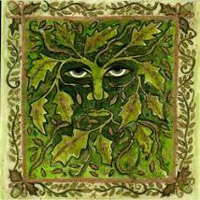
The Green Man: Lore, Quotations


Tuesday, June 02, 2015
Source of Modern Physical Yoga Practices
Recently, I have been reading many books about yoga, exercise and
spirituality. The following book by Mark Singleton has influenced my
understanding of the evolution of the practice of hatha yoga since 1880:
Yoga Body: The Origins of Modern Posture Practice By Mark Singleton. New York, Oxford University Press, 2012. Index,
bibliography, notes, 262 pages. ISBN: 9780195395341. VSCL.
By Mark Singleton. New York, Oxford University Press, 2012. Index,
bibliography, notes, 262 pages. ISBN: 9780195395341. VSCL.
Mr. Singleton's well argued and carefully documented thesis is that transnational yoga as we know it today, asana practices, emerged from physical culture practices from Europe, Indian nationalism, gymnastics, bodybuilding, medicine, health regimens, New Thought, a Hindu studies revival, fitness and gym business promoters, and the development and expansion of visual media. This process began in the 1880's and continues to this day.
"Consider the term Yoga as it refers to modern postural practice as a homonyn, and not a synonym, of the "yoga" associated with the philosophical system of Pantanjali, or the "yoga" that forms and integral component of the Saiva Tantras, or the "yoga" of the Bhagavad Gita, and so on. In other words, although the word "yoga" as it is used popularly today is identical in spelling and pronunciation in each of these instances, it has quite different meanings and origins." p.15
"As Joseph Alter has recently argued, a key methodological issue is therefore "how to exercise ethnographic relativism, historical perspectivity and intellectual skepticism all at the same time." This means critically examining modern yoga's truth claims while seeking to understand under what circumstances and to what ends such claims are made." p.14
The esoteric, magical, religious, New Age, imaginary and spiritual dimensions of "yoga" are definitely part of the currents of contemporary yoga practice and trends in non-church spirituality since the 1880's; but, the bigger picture of its popularity is due to our enthusiasm for fitness, bodybuilding, stress reduction, sexuality, improved health, relaxation, and the "good life."
Another book that points us in the right direction regarding contemporary yoga practices is:
The Science of Yoga: The Risks and the Rewards By William J. Broad. New York, Simon and Schuster, 2012.
Index, bibliography, notes, 298 pages. ISBN; 9781451641424.
VSCL.
By William J. Broad. New York, Simon and Schuster, 2012.
Index, bibliography, notes, 298 pages. ISBN; 9781451641424.
VSCL.
This book is a must read for those who question the often outlandish claims for the benefits of yoga, are concerned about risky yoga postures, and favor a more scientific approach to yoga practice.
Finally, I enjoyed reading:
Original Yoga: Rediscovering Traditional Practices of Hatha Yoga By Richard Rosen. Illustrations by Evan Yee. Boston, Shambhala,
2012. Index, bibliography, glossary, appendices, 286 pages. ISBN:
9781590308134. VSCL.
By Richard Rosen. Illustrations by Evan Yee. Boston, Shambhala,
2012. Index, bibliography, glossary, appendices, 286 pages. ISBN:
9781590308134. VSCL.
"The changes the traditional practice went through over the centuries might be considered organic, common to any living organism’s natural evolution. What happened to Hatha Yoga in the early years of the twentieth century, by contrast, happened virtually overnight and was totally "person-made," or artificial. The full story is too long to tell here and has already been masterfully recounted from slightly different perspectives by British researchers Elizabeth de Michelis in A History of Modern Yoga (Continuum, 2004) and Mark Singleton in Yoga Body (Oxford University Press, 2010. Suffice it to say that by the end of the nineteenth century in India, Hatha had fallen on hard times and was on its last trembling leg. Several Indian teachers set out to save Hatha from oblivion; among them was Tirumular Krishnamacharya, whose work provided the impetus for three of our most popular and influential modern teachers: T. K. V. Desikachar (whose teaching was once known as Viniyoga, a term that has since been abandoned); the late K. Pattabhi Jois (who taught Ashtanga-Vinyasa Yoga); and B. K. S. Iyengar, who (though he often adamantly insists there’s no such thing) created Iyengar Yoga. And save Hatha the teachers did. You may have heard or read somewhere that yoga is five thousand years old, a number that’s continually cited by people who should know better, since there’s not a shred of concrete evidence to back it up. What we do know for certain is that the yoga we practice in the West is no more than one hundred years old. Our Indian teachers took what was once the province of a relatively small, loose-knit, mostly male ascetic community that was resolutely living on the fringes of respectable Indian society and transformed it into a worldwide mass movement open to anyone of any age, gender, or physical condition. This is the second meaning of original yoga, the yoga that’s "original" to the twentieth century, or what we call modern Hatha Yoga." Original Yoga by Richard Rosen
This book includes instructions on some practices for "energizing" aspects of the esoteric body that are typical in Qigong and Yoga. Those interested in organic energy, Prana, Chi, and nadis/meridians will find it interesting.
After you set aside the preaching about worshipping Krishna, Shiva, or other Tantric dieties; strange chakras, gunas, and pranic realms; divine grace or higher consciousness; the power of meditation, mudras, and mantras; and Hindu pride ... just stick with the physical and mental practices of modern yoga to effect significant transformation of your body and mind. This is not to say that studying or practicing Hinduism or Buddhism would not be off some value, but you could also practice contemporary yoga and adhere to other religions or no religion at all. Postures, exercises, breathing, concentration. and meditation can be grafted onto many "religious" practices; and, this is a key reason why yoga is now so popular worldwide.
Yoga: Bibliography, Notes, Indexes
List of Hatha Yoga Postures, English and Sanskrit, Indexed by Textbooks
Yoga Body: The Origins of Modern Posture Practice
By Mark Singleton. New York, Oxford University Press, 2012. Index,
bibliography, notes, 262 pages. ISBN: 9780195395341. VSCL.Mr. Singleton's well argued and carefully documented thesis is that transnational yoga as we know it today, asana practices, emerged from physical culture practices from Europe, Indian nationalism, gymnastics, bodybuilding, medicine, health regimens, New Thought, a Hindu studies revival, fitness and gym business promoters, and the development and expansion of visual media. This process began in the 1880's and continues to this day.
"Consider the term Yoga as it refers to modern postural practice as a homonyn, and not a synonym, of the "yoga" associated with the philosophical system of Pantanjali, or the "yoga" that forms and integral component of the Saiva Tantras, or the "yoga" of the Bhagavad Gita, and so on. In other words, although the word "yoga" as it is used popularly today is identical in spelling and pronunciation in each of these instances, it has quite different meanings and origins." p.15
"As Joseph Alter has recently argued, a key methodological issue is therefore "how to exercise ethnographic relativism, historical perspectivity and intellectual skepticism all at the same time." This means critically examining modern yoga's truth claims while seeking to understand under what circumstances and to what ends such claims are made." p.14
The esoteric, magical, religious, New Age, imaginary and spiritual dimensions of "yoga" are definitely part of the currents of contemporary yoga practice and trends in non-church spirituality since the 1880's; but, the bigger picture of its popularity is due to our enthusiasm for fitness, bodybuilding, stress reduction, sexuality, improved health, relaxation, and the "good life."
Another book that points us in the right direction regarding contemporary yoga practices is:
The Science of Yoga: The Risks and the Rewards
By William J. Broad. New York, Simon and Schuster, 2012.
Index, bibliography, notes, 298 pages. ISBN; 9781451641424.
VSCL. This book is a must read for those who question the often outlandish claims for the benefits of yoga, are concerned about risky yoga postures, and favor a more scientific approach to yoga practice.
Finally, I enjoyed reading:
Original Yoga: Rediscovering Traditional Practices of Hatha Yoga
By Richard Rosen. Illustrations by Evan Yee. Boston, Shambhala,
2012. Index, bibliography, glossary, appendices, 286 pages. ISBN:
9781590308134. VSCL. "The changes the traditional practice went through over the centuries might be considered organic, common to any living organism’s natural evolution. What happened to Hatha Yoga in the early years of the twentieth century, by contrast, happened virtually overnight and was totally "person-made," or artificial. The full story is too long to tell here and has already been masterfully recounted from slightly different perspectives by British researchers Elizabeth de Michelis in A History of Modern Yoga (Continuum, 2004) and Mark Singleton in Yoga Body (Oxford University Press, 2010. Suffice it to say that by the end of the nineteenth century in India, Hatha had fallen on hard times and was on its last trembling leg. Several Indian teachers set out to save Hatha from oblivion; among them was Tirumular Krishnamacharya, whose work provided the impetus for three of our most popular and influential modern teachers: T. K. V. Desikachar (whose teaching was once known as Viniyoga, a term that has since been abandoned); the late K. Pattabhi Jois (who taught Ashtanga-Vinyasa Yoga); and B. K. S. Iyengar, who (though he often adamantly insists there’s no such thing) created Iyengar Yoga. And save Hatha the teachers did. You may have heard or read somewhere that yoga is five thousand years old, a number that’s continually cited by people who should know better, since there’s not a shred of concrete evidence to back it up. What we do know for certain is that the yoga we practice in the West is no more than one hundred years old. Our Indian teachers took what was once the province of a relatively small, loose-knit, mostly male ascetic community that was resolutely living on the fringes of respectable Indian society and transformed it into a worldwide mass movement open to anyone of any age, gender, or physical condition. This is the second meaning of original yoga, the yoga that’s "original" to the twentieth century, or what we call modern Hatha Yoga." Original Yoga by Richard Rosen
This book includes instructions on some practices for "energizing" aspects of the esoteric body that are typical in Qigong and Yoga. Those interested in organic energy, Prana, Chi, and nadis/meridians will find it interesting.
After you set aside the preaching about worshipping Krishna, Shiva, or other Tantric dieties; strange chakras, gunas, and pranic realms; divine grace or higher consciousness; the power of meditation, mudras, and mantras; and Hindu pride ... just stick with the physical and mental practices of modern yoga to effect significant transformation of your body and mind. This is not to say that studying or practicing Hinduism or Buddhism would not be off some value, but you could also practice contemporary yoga and adhere to other religions or no religion at all. Postures, exercises, breathing, concentration. and meditation can be grafted onto many "religious" practices; and, this is a key reason why yoga is now so popular worldwide.
Yoga: Bibliography, Notes, Indexes
List of Hatha Yoga Postures, English and Sanskrit, Indexed by Textbooks
Monday, June 01, 2015
Three Jewels of Goddess Tara
Homages in Twenty One Verses to Arya Tara
A Tibetan Buddhist Scripture
A Tibetan Buddhist Scripture
Verse 9
"Homage to you beautifully adorned
By the Three Jewels' gesture at your heart.
Your wheel shines in all directions
With a whirling mass of light."
- Translated by Thubten Chodron
By the Three Jewels' gesture at your heart.
Your wheel shines in all directions
With a whirling mass of light."
- Translated by Thubten Chodron
Hail you whose heart is beautiful
with hands in the Three-Jew'l gesture,
Their exquisite royal wheel-marks
Shining their light-rays everywhere!
- Translated by Robert Thurman
"Homage, Lady holding her hand over her breast
with a gesture that symbolizes the Three Jewels,
her palms adorned with the universal wheel
radiating a turbulent host of its own beams."
- Translated by Stephan Beyer
"Home to her whose fingers in the mudra symbol
Of the Three Jewels adorn the heart,
Who by radiating the rays of her own light,
Adorns the wheel of all directions."
- Translated by Bokar Rinpoche
"Homage! She adorned with fingers,
at Her heart, in Three-Jewel mudra!
Wheel of all quarters adorned,
filled with masses of Her own light!"
- Translated by Martin Wilson
"Homage, Mother, her hand adorns her heart
In a mudra that symbolizes the Three Jewels.
Adorned with the universal wheel
She radiates turbulent light."
- Translated by Anna Orlova
Goddess Tara: Bibliography, Quotations, Notes, 21 Praises

So, what are your Three Jewels? Your three essential principles of faith? Your three core values?
Sunday, May 31, 2015
Walking Aloof From Honor and Shame
"In these divine pleasures permitted to me
of walks in the June night under moon and stars, I can put my life as a fact
before me and stand aloof from its honor and shame."
- Ralph Waldo Emerson, Journals
"No fear of forgetting the good-humoured faces that meet us in our walks each day."
- Mary Russell Mitford, Our Village
Walking: Quotations, Sayings, Poems
Walking Meditation
Spirituality and Nature
Seasons and Months of the Year

- Ralph Waldo Emerson, Journals
"No fear of forgetting the good-humoured faces that meet us in our walks each day."
- Mary Russell Mitford, Our Village
"Roads go ever ever on,
Over rock and under tree,
By caves where never sun has shone,
By streams that never find the sea;
Over snow by winter sown,
And through the merry flowers of June,
Over grass and over stone,
And under mountains of the moon.
Over rock and under tree,
By caves where never sun has shone,
By streams that never find the sea;
Over snow by winter sown,
And through the merry flowers of June,
Over grass and over stone,
And under mountains of the moon.
Roads go ever ever one
Under cloud and under star
Yet feet that wandering have gone
Turn at last to home afar.
Eyes that fire and sword have seen
An horror in the halls of stone
Look at last on meadows green
And trees and hills they long have known."
- J. R. R. Tolkien, The Hobbit
Under cloud and under star
Yet feet that wandering have gone
Turn at last to home afar.
Eyes that fire and sword have seen
An horror in the halls of stone
Look at last on meadows green
And trees and hills they long have known."
- J. R. R. Tolkien, The Hobbit
Walking: Quotations, Sayings, Poems
Walking Meditation
Spirituality and Nature
Seasons and Months of the Year

Saturday, May 30, 2015
These Hieroglyphics Which My Eyes Behold
"I live so much in my habitual thoughts that I forget there is any outside to the
globe, and am surprised when I behold it as now--yonder hills and river in the
moonlight, the monsters. Yet it is salutary to deal with the surface of things.
What are these rivers and hills, these hieroglyphics which my eyes behold? There
is something invigorating in this air, which I am peculiarly sensible is a real
wind, blowing from over the surface of a planet. I look out at my eyes. I come
to my window, and I feel and breathe the fresh air. It is a fact equally
glorious with the most inward experience.
Why have we ever slandered the outward?"
- Henry David Thoreau (1817-1862), Journal Vol. 4, 1852
Spirituality and Nature

- Henry David Thoreau (1817-1862), Journal Vol. 4, 1852
"Look hard at what pleases you and harder at what doesn't."
- Colette
- Colette
"It
is easy to suppose that few people
realize on that occasion, which comes to all of us, when we look at the
blue sky for the first time, that is to say: not merely see it, but look
at it and experience it and for the first time have a sense that we
live in the center of a physical poetry, a geography that would be
intolerable except for the non-geography that exists there - few people
realize that they are looking at the world of their own thoughts and the
world of their own feelings."
- Wallace Stevens, The Necessary Angel
- Wallace Stevens, The Necessary Angel
Spirituality and Nature

Friday, May 29, 2015
Tao Te Ching by Lao Tzu, Chapter 13
Daodejing, Laozi
Chapter 13
"Favor and disgrace are both causes of shock.
When one is favored, one is shocked.
When one is disgraced, one is also shocked.
That is because people forget the unadorned plainness of universal life.
If they knew this clearly, then what is meant by saying that favor and disgrace are both causes of shock?
Favor is no higher than disgrace.
What is meant by saying that the greatest trouble is the strong sense of individual self that people carry in all circumstances?
People are beset with great trouble because they define their lives so narrowly.
If they forsake their narrow sense of self and live wholly, then what can they call trouble?
Therefore, only one who dedicates himself to the wholeness of the world is fit to tend the world.
Only one who relinquishes the self can be entrusted with responsibility for the life of the world."
- Translated by Ni Hua-Ching, 1995, Chapter 13
"Favor, like disgrace
Brings trouble with it;
High rank, like self,
Involves acute distress."
What does that mean, to say
That "favor, like disgrace
Brings trouble with it"?
When favor is bestowed
On one of low degree,
Trouble will come with it.
The loss of favor too
Means trouble for that man.
This, then, is what is meant
By "favor, like disgrace
Brings trouble with it."
What does it mean, to say
That "rank, like self,
Involves acute distress"?
I suffer most because
Of me and selfishness.
If I were selfless, then
What suffering would I bear?
In governing the world,
Let rule entrusted be
To him who treats his rank
As if it were his soul;
World sovereignty can be
Committed to that man
Who loves all people
As he loves himself."
- Translated by Raymond Blakney, 1955, Chapter 13
"Dread glory as you dread shame.
Prize great calamity as you prize your body.
What does this mean:
"Dread glory as you dread shame"?
Glory comes from below.
Obtain it, you are afraid of shame;
Lose it, you are still afraid of shame.
That is why it is said;
"Dread glory as you dread shame."
What does this mean:
"Prize great calamity as you prize your own body"?
We who meet with great calamities, meet them because we have a body.
If we had not a body what calamity could reach us?
Therefore he who honours the kingdom as his body can govern the kingdom.
He who loves the kingdom as his own body can be trusted with the kingdom."
- Translated by Isabella Mears, 1916, Chapter 13
"Fame and shame are equally laden with grief
Good luck and bad luck resemble man's ego.
What does this mean?
Acquire fame and you dread its loss
Lose fame and you are scared of shame.
Both are accompanied by fear both are sources of grief.
Likewise:
Good luck and bad luck arise from man's ego hit man's ego accompany man's ego.
That is why freedom from ego means freedom from fame as well as shame from good luck as well as bad luck freedom from grief.
For I-ness means limitation means to be chained to grief and bound to the world
All-ness is oneness with the limitless is superiority over grief and overcoming of the world."
- Translated by K. O. Schmidt, 1975, Chapter 13
寵辱若驚.
貴大患若身.
何謂寵辱若驚.
寵為下.
得之若驚.
失之若驚是謂寵辱若驚.
何謂貴大患若.
身吾所以有大患者為吾有身.
及吾無身.
吾有何患.
故貴以身為天下若可寄天下.
愛以身為天下, 若可託天下.
- Chinese characters, Tao Te Ching, Chapter 13
"Equally fear favour and disgrace.
Regard a great calamity as you do your own body.
What is meant by equally fear favour and grace?
Favour should be disparaged.
Gained or lost it arouses apprehension.
Hence it is said, equally fear favour and disgrace.
What is meant by regard a great calamity as you do your own body?
Why have I any sense of misfortune?
Because I am conscious of myself.
Were I not conscious of my body, what distresses would I have?
Therefore, it is only they who value their persons because of their obligation, who may be entrusted with the empire.
It is only they who love themselves on account of their responsibilities, who may be charged with the care of the state."
- Translated by C. Spurgeon Medhurst, 1905, Chapter 13
"El favor y la desgracia inquietan por igual".
"La fortuna es un gran dolor como nuestro cuerpo".
¿Qué quiere decir: favor y desgracia inquietan
por igual ?
El favor eleva y la desgracia abate.
Conseguir el favor es la inquietud.
Perderlo es la inquietud.
Este es el sentido de
«favor y desgracia inquietan por igual»
¿Qué quiere decir: la fortuna es un gran dolor como
nuestro cuerpo?
La causa por la que padezco dolor es mi propio cuerpo.
Si no lo tuviese,
¿qué dolor podría sentir?
Por esto, quien estime al mundo igual a la fortuna de
su propio cuerpo,
puede gobernar el mundo.
Quien ame al mundo como a su propio cuerpo,
se le puede confiar el mundo."
- Translation from Wikisource, 2013, Tao Te Ching, Capítulo 13
"Favor and disgrace seem like a surprise.
Value great suffering as you would keeping your own body.
What is the meaning of “Favor and disgrace seem like a surprise”?
Favor eventually declines.
Getting it is like a surprise.
Losing it is like a surprise.
This is the meaning of “Favor and disgrace seem like a surprise.”
What is the meaning of
“Value great suffering as you would keeping you own body”?
Our place, according to those who have great suffering,
Is our having a body.
When we lack bodies
What suffering do we have?
Therefore, value the “self” that’s considered as being the world,
As though you are able to be entrusted with the world.
Love the “self” that’s considered as being the world,
As though you are able to rely on the world."
- Translated by Aalar Fex, 2006, Chapter 13
Chapter and Thematic Index (Concordance) to the Tao Te Ching
Taoism: A Selected Reading List
Chapter 13
"Favor and disgrace are both causes of shock.
When one is favored, one is shocked.
When one is disgraced, one is also shocked.
That is because people forget the unadorned plainness of universal life.
If they knew this clearly, then what is meant by saying that favor and disgrace are both causes of shock?
Favor is no higher than disgrace.
What is meant by saying that the greatest trouble is the strong sense of individual self that people carry in all circumstances?
People are beset with great trouble because they define their lives so narrowly.
If they forsake their narrow sense of self and live wholly, then what can they call trouble?
Therefore, only one who dedicates himself to the wholeness of the world is fit to tend the world.
Only one who relinquishes the self can be entrusted with responsibility for the life of the world."
- Translated by Ni Hua-Ching, 1995, Chapter 13
"Favor, like disgrace
Brings trouble with it;
High rank, like self,
Involves acute distress."
What does that mean, to say
That "favor, like disgrace
Brings trouble with it"?
When favor is bestowed
On one of low degree,
Trouble will come with it.
The loss of favor too
Means trouble for that man.
This, then, is what is meant
By "favor, like disgrace
Brings trouble with it."
What does it mean, to say
That "rank, like self,
Involves acute distress"?
I suffer most because
Of me and selfishness.
If I were selfless, then
What suffering would I bear?
In governing the world,
Let rule entrusted be
To him who treats his rank
As if it were his soul;
World sovereignty can be
Committed to that man
Who loves all people
As he loves himself."
- Translated by Raymond Blakney, 1955, Chapter 13
"Dread glory as you dread shame.
Prize great calamity as you prize your body.
What does this mean:
"Dread glory as you dread shame"?
Glory comes from below.
Obtain it, you are afraid of shame;
Lose it, you are still afraid of shame.
That is why it is said;
"Dread glory as you dread shame."
What does this mean:
"Prize great calamity as you prize your own body"?
We who meet with great calamities, meet them because we have a body.
If we had not a body what calamity could reach us?
Therefore he who honours the kingdom as his body can govern the kingdom.
He who loves the kingdom as his own body can be trusted with the kingdom."
- Translated by Isabella Mears, 1916, Chapter 13
"Fame and shame are equally laden with grief
Good luck and bad luck resemble man's ego.
What does this mean?
Acquire fame and you dread its loss
Lose fame and you are scared of shame.
Both are accompanied by fear both are sources of grief.
Likewise:
Good luck and bad luck arise from man's ego hit man's ego accompany man's ego.
That is why freedom from ego means freedom from fame as well as shame from good luck as well as bad luck freedom from grief.
For I-ness means limitation means to be chained to grief and bound to the world
All-ness is oneness with the limitless is superiority over grief and overcoming of the world."
- Translated by K. O. Schmidt, 1975, Chapter 13
寵辱若驚.
貴大患若身.
何謂寵辱若驚.
寵為下.
得之若驚.
失之若驚是謂寵辱若驚.
何謂貴大患若.
身吾所以有大患者為吾有身.
及吾無身.
吾有何患.
故貴以身為天下若可寄天下.
愛以身為天下, 若可託天下.
- Chinese characters, Tao Te Ching, Chapter 13
chong ru ruo jing.
gui da huan ruo shen.
he wei chong ru ruo jing.
chong wei xia.
de zhi ruo jing.
shi zhi ruo jing shi wei chong ru ruo jing.
he wei gui da huan ruo.
shen wu suo yi you da huan zhe wei wu you shen.
ji wu wu shen.
wu you he huan.
gu gui yi shen wei tian xia ruo ke ji tian xia.
ai yi shen wei tian xia, ruo ke tuo tian xia.
-  Pinyin Romanization, Daodejing, Chapter 13
"Favor and disgrace are likely to cause fear.
Highly respect great trouble as one respects his own body.
What is meant by "favor and disgrace are likely to cause fear"?
Favor is for the inferior:
Obtaining it, one will fear it.
Losing it, one will fear it.
This means that "favor and disgrace are likely to cause fear."
What is meant by "highly respecting great trouble as one respects his own body"?
"I have great trouble because I have a body;
When I no longer have a body, how can I have trouble?"
Therefore, one who respects himself for the world can be lodged with it;
One who loves himself for the world can be entrusted with it."
- Translated by Paul J. Lin, Chapter 13
Highly respect great trouble as one respects his own body.
What is meant by "favor and disgrace are likely to cause fear"?
Favor is for the inferior:
Obtaining it, one will fear it.
Losing it, one will fear it.
This means that "favor and disgrace are likely to cause fear."
What is meant by "highly respecting great trouble as one respects his own body"?
"I have great trouble because I have a body;
When I no longer have a body, how can I have trouble?"
Therefore, one who respects himself for the world can be lodged with it;
One who loves himself for the world can be entrusted with it."
- Translated by Paul J. Lin, Chapter 13
Regard a great calamity as you do your own body.
What is meant by equally fear favour and grace?
Favour should be disparaged.
Gained or lost it arouses apprehension.
Hence it is said, equally fear favour and disgrace.
What is meant by regard a great calamity as you do your own body?
Why have I any sense of misfortune?
Because I am conscious of myself.
Were I not conscious of my body, what distresses would I have?
Therefore, it is only they who value their persons because of their obligation, who may be entrusted with the empire.
It is only they who love themselves on account of their responsibilities, who may be charged with the care of the state."
- Translated by C. Spurgeon Medhurst, 1905, Chapter 13
"El favor y la desgracia inquietan por igual".
"La fortuna es un gran dolor como nuestro cuerpo".
¿Qué quiere decir: favor y desgracia inquietan
por igual ?
El favor eleva y la desgracia abate.
Conseguir el favor es la inquietud.
Perderlo es la inquietud.
Este es el sentido de
«favor y desgracia inquietan por igual»
¿Qué quiere decir: la fortuna es un gran dolor como
nuestro cuerpo?
La causa por la que padezco dolor es mi propio cuerpo.
Si no lo tuviese,
¿qué dolor podría sentir?
Por esto, quien estime al mundo igual a la fortuna de
su propio cuerpo,
puede gobernar el mundo.
Quien ame al mundo como a su propio cuerpo,
se le puede confiar el mundo."
- Translation from Wikisource, 2013, Tao Te Ching, Capítulo 13
"Favor and disgrace seem like a surprise.
Value great suffering as you would keeping your own body.
What is the meaning of “Favor and disgrace seem like a surprise”?
Favor eventually declines.
Getting it is like a surprise.
Losing it is like a surprise.
This is the meaning of “Favor and disgrace seem like a surprise.”
What is the meaning of
“Value great suffering as you would keeping you own body”?
Our place, according to those who have great suffering,
Is our having a body.
When we lack bodies
What suffering do we have?
Therefore, value the “self” that’s considered as being the world,
As though you are able to be entrusted with the world.
Love the “self” that’s considered as being the world,
As though you are able to rely on the world."
- Translated by Aalar Fex, 2006, Chapter 13
"Le sage redoute la gloire comme l'ignominie; son corps lui pèse comme une grande calamité.
Qu'entend-on par ces mots : il redoute la gloire comme l'ignominie ?
La gloire est quelque chose de bas. Lorsqu'on l'a obtenue, on est comme rempli de crainte;
lorsqu'on l'a perdue, on est comme rempli de crainte.
C'est pourquoi l'on dit : il redoute la gloire comme l'ignominie.
Qu'entend-on par ces mots : son corps lui pèse comme une grande calamité ?
Si nous éprouvons de grandes calamités, c'est parce que nous avons un corps.
Quand nous n'avons plus de corps (quand nous nous sommes dégagés de notre corps), quelles calamités pourrions-nous éprouver ?
C'est pourquoi, lorsqu'un homme redoute de gouverner lui-même l'empire, on peut lui confier l'empire;
lorsqu'il a regret de gouverner l'empire, on peut lui remettre le soin de l'empire."
-  Translated by Stanislas Julien, 1842, Chapter 33
"Both favor and disgrace bring fear.
Great trouble comes from having a body.
What is meant by:
"Both favor and disgrace bring fear"?
Favor leads to a fear of losing it and
disgrace leads to a fear of greater trouble.
What is meant by:
"Great trouble comes from having a body"?
The reason you have trouble is that
you are self-conscious.
No trouble can befall a self-free person.
Therefore, surrender your self-interest.
Love others as much as you love yourself.
Then you can be entrusted with all things under heaven."
- Translated by Tolbert McCarroll, 1982, Chapter 13
Great trouble comes from having a body.
What is meant by:
"Both favor and disgrace bring fear"?
Favor leads to a fear of losing it and
disgrace leads to a fear of greater trouble.
What is meant by:
"Great trouble comes from having a body"?
The reason you have trouble is that
you are self-conscious.
No trouble can befall a self-free person.
Therefore, surrender your self-interest.
Love others as much as you love yourself.
Then you can be entrusted with all things under heaven."
- Translated by Tolbert McCarroll, 1982, Chapter 13
Chapter and Thematic Index (Concordance) to the Tao Te Ching
Taoism: A Selected Reading List
A typical webpage created by Mike Garofalo for each one of the 81 Chapters of the Tao Te Ching (Daodejing)
by Lao Tzu (Laozi) includes 20 different English translations or
interpolations of each Chapter, 3 Spanish translations for
each Chapter, the
Chinese characters for each Chapter, and the Wade-Giles and Hanyu Pinyin
Romanization of the Mandarin Chinese words for each Chapter; extensive
indexing by key words and terms
for each Chapter in English, Spanish, and the Wade-Giles Romanization is
provided; recommended
reading in books and websites, a detailed bibliography, some commentary,
research leads, translation sources, and other resources for each
Chapter are included.


Thursday, May 28, 2015
Karen Garofalo, Reiki Master, Third Degree, Red Bluff, California
Karen Garofalo, Reiki Master, Third Degree
In the Usui Shiki Ryoho Reiki Tradition
Valley Spirit Center
Red Bluff, California
Schedule appointments with Karen by telephone.
Reiki: Bibliography, Quotations, Information, Resources
Karen's Reiki Homepage
Reiki Research Group, Gratitude Center in Red Bluff, California

In the Usui Shiki Ryoho Reiki Tradition
Valley Spirit Center
Red Bluff, California
Schedule appointments with Karen by telephone.
Reiki: Bibliography, Quotations, Information, Resources
Karen's Reiki Homepage
Reiki Research Group, Gratitude Center in Red Bluff, California
Wednesday, May 27, 2015
Chen Tai Chi Chuan First Form
Chen Style Taijiquan, Old Frame First Form, Lao Jia Yi Lu
By Michael P. Garofalo.
This webpage includes a detailed bibliography of books, media, and articles. Extensive selection of Internet links.
List of movement names in English, Chinese characters, Chinese Pinyin, French, German, and Spanish; and citations for sources of the movement names.
Detailed list of DVDs and videos available online.
Extensive notes on the author's learning the Old Frame, First Routine, Lao Jia Yi Lu; and on learning Chen Style Taijiquan.
Record of performance times of this form by many masters.
Breakdown by sections of the form, with separate lists for each section. General information, history, facts, information, pointers, and quotations.

By Michael P. Garofalo.
This webpage includes a detailed bibliography of books, media, and articles. Extensive selection of Internet links.
List of movement names in English, Chinese characters, Chinese Pinyin, French, German, and Spanish; and citations for sources of the movement names.
Detailed list of DVDs and videos available online.
Extensive notes on the author's learning the Old Frame, First Routine, Lao Jia Yi Lu; and on learning Chen Style Taijiquan.
Record of performance times of this form by many masters.
Breakdown by sections of the form, with separate lists for each section. General information, history, facts, information, pointers, and quotations.
Subscribe to:
Posts (Atom)