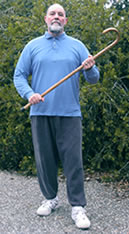
April Gardening Chores in Red Bluff
Mow lawns and field.
Watering as needed.
Clean up and weed vegetable gardens.
Dig, roto-till, and amend garden soil.
Clean up hiding places for bugs.
Clean up dog feces.
Protect new tree trunks from sun - white paint.
Fertilize berry vines.
Enjoy the many roses, pyracanthas, trees, lavender and bottlebrush in bloom.
Spray trees and shrubs - borers.
Plant summer vegetables.
Shape shrubs.
Weed, weed, weed ....
Fertilize lawns.
Prune shrubs after flowering.
Write a poem. Keep a garden journal.
Plant perennials.
Prune evergreens.
Plant seeds.
Hummingbird feeders cleaned and in place.
Remove dead branches and trees.
Use straw as mulch.
Don't get sunburnt.
Flush driplines and check to make sure they are working properly.
Sit and observe.
"All along the road the reddish
purplish, forked, upstanding, twiggy
stuff of bushes and small trees
with dead, brown leaves under them
leafless vines—
Lifeless in appearance, sluggish
dazed spring approaches—
They enter the new world naked,
cold, uncertain of all
save that they enter. All about them
the cold, familiar wind—
Now the grass, tomorrow
the stiff curl of wildcarrot leaf
One by one objects are defined—
It quickens: clarity, outline of leaf
But now the stark dignity of
entrance—Still, the profound change
has come upon them: rooted they
grip down and begin to awaken."
- William Carlos Williams, Spring and All
April: Quotes, Sayings, Lore, Celebrations
Tuesday, April 01, 2014
Sunday, March 30, 2014
Music for a New Age
I enjoy listening to New Age Music when I walk, read, and garden. A good list of choices for New Age music is the Grammy Award for the Best New Age Music Albums.
I use the MP3 format on my Sony Walkman MP3 players. I can take my favorite music anywhere.
I have written before about how I enjoy the music of Robert Mirabal, aka Johnny Whitehorse, e.g., 'Totemic Flute Chants.' I also enjoy Steven Halpern, Kitaro, and cello music.
Lately, I have been listening to the music by the Paul Winter Consort, specifically Crestone and Miho: Journey to the Mountain. Both ablums won a Grammy Award.
I use the MP3 format on my Sony Walkman MP3 players. I can take my favorite music anywhere.
I have written before about how I enjoy the music of Robert Mirabal, aka Johnny Whitehorse, e.g., 'Totemic Flute Chants.' I also enjoy Steven Halpern, Kitaro, and cello music.
Lately, I have been listening to the music by the Paul Winter Consort, specifically Crestone and Miho: Journey to the Mountain. Both ablums won a Grammy Award.
Saturday, March 29, 2014
The Winds Whisper to Us Walkers
"Discipline is the impossible conquered by the obstinate
repetition of the possible."
- Frederic Gros
- Frederic Gros
"If you are seeking creative ideas, go
out walking.
Angels whisper to a man when he goes for a walk."
- Raymond Inmon
- Raymond Inmon
"The art of walking is at once suggestive
of the dignity of man. Progressive motion alone implies power, but in
almost every other instance it seems a power gained at the expense of
self-possession."
- Henry Theodore Tuckerman
"May your trails be crooked, winding, lonesome,
dangerous, leading to the most amazing view. May your mountains rise into
and above the clouds."
- Edgar Abbey
- Edgar Abbey
The Seven Paths: Changing One's Way of Walking in the World
.
By Good Buffalo Eagle. Anazi Foundation Book. Berrett-Koehler Pubs.,
BK Life, 2013. 120 pages. ISBN: 978-1609949198.
Light, Wind, Water, Stone, Plant, Animals,
We.
A Philosophy of Walking
By Frederic Gros. Translated from
the French by John Howe. Verso, 2014. 288 pages. ISBN:
978-1781682708.
The
Ways of Walking Compiled by Mike Garofalo. Quotes, Sayings,
Information, Bibliography, Links, Notes, Observations.
Yesterday, during my morning walk, the winds were blowing from the southeast at a speed of 15 t0 25 miles per hours. The sky was filled with large dark rain filled clouds. It gently rained occasionally. I was immersed in Seven Realms: Light, Wind, Water, Stone, Plant, Animals, and We. Another "peak experience" based on 'Being-Values' ... as per Abraham Maslow's analysis.
Shown below, in a photograph from July, is my daily walking path. It is a .35 mile, asphalt paved,
cul-de-sac, Kilkenny Lane, in Red Bluff, California. Kilkenny Lane moves
in an east-west direction from the front of my home to Highway 99 West. I
practice Tai Chi Chuan and
Chi Kung in the paved circular area in front of my house
shown the shadowed foreground of this picture. I rarely encounter a car on Kilkenny
Lane.
Labels:
Discipline,
Exercise,
Nature,
Psychology,
Walking
Friday, March 28, 2014
Tao Te Ching by Lao Tzu, Chapter 68
Dao De Jing, Laozi
Chapter 68
"He who excels as a warrior is not warlike.
He who excels as a fighter is not wrathful.
He who excels in conquering the enemy does not strive.
He who excels in employing men is lowly.
This is called the virtue of not-striving.
This is called utilizing men's ability.
This is called complying with heaven-since olden times the highest."
- Translated by D. T. Suzuki and Paul Carus, 1913, Chapter 68
"He who in Tao's wars has skill
Assumes no martial port;
He who fights with most good will
To rage makes no resort.
He who vanquishes yet still
Keeps from his foes apart;
He whose hests men most fulfill
Yet humbly plies his art.
Thus we say, 'He ne'er contends,
And therein is his might.'
Thus we say, 'Men's wills he bends,
That they with him unite.'
Thus we say, 'Like Heaven's his ends,
No sage of old more bright.' "
- Translated by James Legge, 1891, Chapter 68
"An effective warrior acts
not from nihilistic anger,
nor from desire to kill.
He who wins should not be vengeful.
An employer should have humility.
If we wish for peace and unity,
our dealings with our fellow man
must be without desire for self-advantage,
and carried out without contention."
- Translated by Stan Rosenthal, 1984, Chapter 68
善為士者不武.
善戰者不怒.
善勝敵者不與.
善用人者為之下.
是謂不爭之德.
是謂用人之力.
是謂配天古之極.
- Chinese characters, Tao Te Ching, Chapter 68
shan wei shih chê pu wu.
shan chan chê pu nu.
shan shêng ti chê pu yü.
shan yung jên chê wei chih hsia.
shih wei pu chêng chih tê.
shih wei yung jên chih li.
shih wei p'ei t'ien ku chih chi.
- Wade-Giles Romanization, Tao Te Ching, Chapter 68
"A good captain is not impetuous.
A good fighter is not angry.
A good conqueror does not engage his adversaries.
A good user of men makes himself inferior to them.
This may be called the Virtue of not striving.
This may be called the strength to use men.
This may be called the acme of conformity to heaven."
- Translated by Jan J. L. Duyvendak, 1954, Chapter 68
"Un buen soldado nunca es agresivo; un buen guerrero nunca es irascible.
La mejor manera de conquistar a un enemigo es ganarle sin enfrentarse a él.
La mejor manera de emplear a alguien es servir bajo sus órdenes.
A esto se llama la virtud de la no-lucha!
A esto se llama emplear las capacidades de los hombres!
A esto se llama estar casado con el cielo desde siempre!"
- Translated into English by John C. H. Wu, Spanish version by Alfonso Colodrón, 2007, Capitulo 68
"The best soldier is not soldierly;
The best fighter is not ferocious;
The best conqueror does not take part in war;
The best employer of men keeps himself below them.
This is called the virtue of not contending;
This is the ability of using men;
This is called the supremacy of consorting with heaven."
- Translated by Ch'u Ta-Kao, 1904, Chapter 68
Chapter and Thematic Index (Concordance) to the Tao Te Ching
Taoism: A Selected Reading List
Chapter 68
"He who excels as a warrior is not warlike.
He who excels as a fighter is not wrathful.
He who excels in conquering the enemy does not strive.
He who excels in employing men is lowly.
This is called the virtue of not-striving.
This is called utilizing men's ability.
This is called complying with heaven-since olden times the highest."
- Translated by D. T. Suzuki and Paul Carus, 1913, Chapter 68
"He who in Tao's wars has skill
Assumes no martial port;
He who fights with most good will
To rage makes no resort.
He who vanquishes yet still
Keeps from his foes apart;
He whose hests men most fulfill
Yet humbly plies his art.
Thus we say, 'He ne'er contends,
And therein is his might.'
Thus we say, 'Men's wills he bends,
That they with him unite.'
Thus we say, 'Like Heaven's his ends,
No sage of old more bright.' "
- Translated by James Legge, 1891, Chapter 68
"An effective warrior acts
not from nihilistic anger,
nor from desire to kill.
He who wins should not be vengeful.
An employer should have humility.
If we wish for peace and unity,
our dealings with our fellow man
must be without desire for self-advantage,
and carried out without contention."
- Translated by Stan Rosenthal, 1984, Chapter 68
善為士者不武.
善戰者不怒.
善勝敵者不與.
善用人者為之下.
是謂不爭之德.
是謂用人之力.
是謂配天古之極.
- Chinese characters, Tao Te Ching, Chapter 68
shan wei shih chê pu wu.
shan chan chê pu nu.
shan shêng ti chê pu yü.
shan yung jên chê wei chih hsia.
shih wei pu chêng chih tê.
shih wei yung jên chih li.
shih wei p'ei t'ien ku chih chi.
- Wade-Giles Romanization, Tao Te Ching, Chapter 68
"The great commander is not a
warlike man,
The hardest fighter is not a man
of wrath,
The greatest conqueror shares not
in the strife,
The great employer treads the
workmen's path.
This is the virtue known as "striving not,"
The wondrous power of utilizing
men,
And this is called the fellowship
with Heaven,
The fellowship the ancients
followed then."
- Translated by Isaac Winter Heysinger, 1903, Chapter 68
A good fighter is not angry.
A good conqueror does not engage his adversaries.
A good user of men makes himself inferior to them.
This may be called the Virtue of not striving.
This may be called the strength to use men.
This may be called the acme of conformity to heaven."
- Translated by Jan J. L. Duyvendak, 1954, Chapter 68
"Un buen soldado nunca es agresivo; un buen guerrero nunca es irascible.
La mejor manera de conquistar a un enemigo es ganarle sin enfrentarse a él.
La mejor manera de emplear a alguien es servir bajo sus órdenes.
A esto se llama la virtud de la no-lucha!
A esto se llama emplear las capacidades de los hombres!
A esto se llama estar casado con el cielo desde siempre!"
- Translated into English by John C. H. Wu, Spanish version by Alfonso Colodrón, 2007, Capitulo 68
"The best soldier is not soldierly;
The best fighter is not ferocious;
The best conqueror does not take part in war;
The best employer of men keeps himself below them.
This is called the virtue of not contending;
This is the ability of using men;
This is called the supremacy of consorting with heaven."
- Translated by Ch'u Ta-Kao, 1904, Chapter 68
Chapter and Thematic Index (Concordance) to the Tao Te Ching
Taoism: A Selected Reading List
Labels:
Dao De Jing,
Daoism,
Tao Te Ching,
Taoism
Thursday, March 27, 2014
Weightlifting for Seniors
I am very active with strength training at the Tehama Family Fitness Center in Red Bluff. My current weightlifting training partner is Roger Andreson. I am 68 years of age and Roger is 64.
We lift weights for 45 to 60 minutes 5 days each week. My current weightlifting goals, objectices and programs are detailed on my strength training webpage.
Strength Training for Persons Over 55 Years of Age
Building Muscle Beyond 50 Blog
Senior Health and Fitness Blog
I find all kinds of interesting information, useful tips, and good ideas at the Building Muscle Beyond 50 Blog.
"In a UCLA study, researchers determined the more muscle mass you have the better your chances to live longer.
“In other words, the greater your muscle mass, the lower your risk of death,” said Dr. Arun Karlamangla, an associate professor in the geriatrics division at the Geffen School and the study’s co-author. “Thus, rather than worrying about weight or body mass index, we should be trying to maximize and maintain muscle mass.”
This is the first study I’ve read that appears to offer more hope than a few years of extra life for people who work out. This fits in with the question I’ve always had about studies that found working out and/or exercising provided minimal increases in your lifespan (1-4 years). My question, related to many other studies, was if working out can give you a large measure of protection against fatal health conditions why wouldn’t it expand your years as you sidestepped these killer maladies?
Surely if building and/or maintaining muscle mass protects you from an earlier death, you would get many more years of living simply by working out. Of course, there are never any guarantees in these matters, but the results of this research look promising.
Reference:
University of California – Los Angeles Health Sciences. (2014, March 14). Older adults: Build muscle and you’ll live longer. ScienceDaily. Retrieved March 16, 2014.
We lift weights for 45 to 60 minutes 5 days each week. My current weightlifting goals, objectices and programs are detailed on my strength training webpage.
Strength Training for Persons Over 55 Years of Age
Building Muscle Beyond 50 Blog
Senior Health and Fitness Blog
I find all kinds of interesting information, useful tips, and good ideas at the Building Muscle Beyond 50 Blog.
"In a UCLA study, researchers determined the more muscle mass you have the better your chances to live longer.
“In other words, the greater your muscle mass, the lower your risk of death,” said Dr. Arun Karlamangla, an associate professor in the geriatrics division at the Geffen School and the study’s co-author. “Thus, rather than worrying about weight or body mass index, we should be trying to maximize and maintain muscle mass.”
This is the first study I’ve read that appears to offer more hope than a few years of extra life for people who work out. This fits in with the question I’ve always had about studies that found working out and/or exercising provided minimal increases in your lifespan (1-4 years). My question, related to many other studies, was if working out can give you a large measure of protection against fatal health conditions why wouldn’t it expand your years as you sidestepped these killer maladies?
Surely if building and/or maintaining muscle mass protects you from an earlier death, you would get many more years of living simply by working out. Of course, there are never any guarantees in these matters, but the results of this research look promising.
Reference:
University of California – Los Angeles Health Sciences. (2014, March 14). Older adults: Build muscle and you’ll live longer. ScienceDaily. Retrieved March 16, 2014.
Labels:
Exercise,
Seniors,
Strength Training,
Weightlifting
Wednesday, March 26, 2014
Shaolin Bodhidharma's Cane Form
The Shaolin Temple uses a cane form with 32 movements. The Shaoln "cane" has a cross handle at the end, and kind of looks like a pick axe. It is called the Shaolin Bodhidharma Cane (Damo Guai Zhang).
Here is a longer instructional DVD by a Shaolin teacher, Shi Deyang. It is 44:27 minutes long on UTube. I purchased this DVD a few years back. This instructional video features the form done in a brisk, quick and powerful manner.
Taijiquan Cane Weapon Research, Bibliography, and Practices
Way of the Short Staff
Long Staff Weapons Practices
The next UTube features a woman doing the Shaolin Bodhidharma's Cane Form in a slower and gentler manner with a walking stick.
Here is a longer instructional DVD by a Shaolin teacher, Shi Deyang. It is 44:27 minutes long on UTube. I purchased this DVD a few years back. This instructional video features the form done in a brisk, quick and powerful manner.
Taijiquan Cane Weapon Research, Bibliography, and Practices
Way of the Short Staff
Long Staff Weapons Practices
The next UTube features a woman doing the Shaolin Bodhidharma's Cane Form in a slower and gentler manner with a walking stick.
Labels:
Cane,
Exercise,
Self-Defense,
Taijiquan,
Walking Stick
Tuesday, March 25, 2014
Fluttering and Dancing in the Breeze
"I wandered lonely as a cloud
That floats on high o'er vales and hills,
When all at once I saw a crowd,
A host, of golden daffodils;
Beside the lake, beneath the trees,
Fluttering and dancing in the breeze."
- William Wordsworth, Daffodils
"Ere frost-flower and snow-blossom faded and fell,
and the splendor of winter had passed out of sight,
The ways of the woodlands were fairer and stranger
than dreams that fulfill us in sleep with delight;
The breath of the mouths of the winds had hardened on tree-tops
and branches that glittered and swayed
Such wonders and glories of blossom like snow
or of frost that outlightens all flowers till it fade
That the sea was not lovelier than here was the land,
nor the night than the day, nor the day than the night,
Nor the winter sublimer with storm than the spring:
such mirth had the madness and might in thee made,
March, master of winds, bright minstrel and marshal of storms
that enkindle the season they smite."
- Algernon C. Swinburne, March: An Ode
March: Quotations, Poems, Sayings, Lore
The Spirit of Gardening
That floats on high o'er vales and hills,
When all at once I saw a crowd,
A host, of golden daffodils;
Beside the lake, beneath the trees,
Fluttering and dancing in the breeze."
- William Wordsworth, Daffodils
"Ere frost-flower and snow-blossom faded and fell,
and the splendor of winter had passed out of sight,
The ways of the woodlands were fairer and stranger
than dreams that fulfill us in sleep with delight;
The breath of the mouths of the winds had hardened on tree-tops
and branches that glittered and swayed
Such wonders and glories of blossom like snow
or of frost that outlightens all flowers till it fade
That the sea was not lovelier than here was the land,
nor the night than the day, nor the day than the night,
Nor the winter sublimer with storm than the spring:
such mirth had the madness and might in thee made,
March, master of winds, bright minstrel and marshal of storms
that enkindle the season they smite."
- Algernon C. Swinburne, March: An Ode
March: Quotations, Poems, Sayings, Lore
The Spirit of Gardening
Monday, March 24, 2014
Eight Immortals Tai Chi Cane Form
Here is a T'ai Chi Ch'uan Cane form that I enjoy practicing and have taught to many of my students:
The Eight Immortals Cane Form. Created by Master Jesse Tsao from San Diego, California. Part I of this cane form is based on the Yang style of T'ai Chi Ch'uan. This form has 36 movements.
Traditional Tai Chi Eight Immortals Cane, Routine One. Demonstrated by Master Jesse Tsao. Instructional DVD, 64 minutes. Produced by Tai Chi Healthways, San Diego, 2008. Routine One is based on the Yang Style of Taijiquan. Master Tsao developed this cane form himself, with grandmaster Zhu Tiancai's support.
Traditional Tai Chi Eight Immortals Cane, Routine Two (Cannon Cane). Demonstrated by Master Jesse Tsao. Instructional DVD, 65 minutes. Produced by Tai Chi Healthways, San Diego, 2008. Routine Two, Cannon Cane, is based on the Chen Style of Taijiquan. Master Tsao developed this cane form himself, with grandmaster Zhu Tiancai's support.
The Eight Immortals Cane Form. Created by Master Jesse Tsao from San Diego, California. Part I of this cane form is based on the Yang style of T'ai Chi Ch'uan. This form has 36 movements.
Traditional Tai Chi Eight Immortals Cane, Routine One. Demonstrated by Master Jesse Tsao. Instructional DVD, 64 minutes. Produced by Tai Chi Healthways, San Diego, 2008. Routine One is based on the Yang Style of Taijiquan. Master Tsao developed this cane form himself, with grandmaster Zhu Tiancai's support.
Traditional Tai Chi Eight Immortals Cane, Routine Two (Cannon Cane). Demonstrated by Master Jesse Tsao. Instructional DVD, 65 minutes. Produced by Tai Chi Healthways, San Diego, 2008. Routine Two, Cannon Cane, is based on the Chen Style of Taijiquan. Master Tsao developed this cane form himself, with grandmaster Zhu Tiancai's support.
Way of the Short
Staff. By Michael P. Garofalo, M.S. A comprehensive guide to the
practice of the short staff, cane, jo, walking stick, gun, zhang,
whip staff, 13 Hands Staff, and related wood short staff weapons. A
detailed and annotated guide, bibliography, lists of links, resources,
instructional media, online videos, and lessons.
Includes use of the short staff and cane in martial arts, self-defense, walking
and hiking. Separate sections on Aikido Jo, Cane, Taijiquan cane and
staff, Jodo, exercises with a short staff, selected quotations, techniques,
selecting and purchasing a short staff, tips and suggestions, and a long section
on the lore, legends, and magick of the short staff. Includes "Shifu
Miao Zhang Points the Way." Published by Green Way Research,
Valley Spirit Taijiquan,
Red Bluff, California. Updated on a regular basis since October, 2008. Related to Mike's popular webpage on the
Staff.
Toju Zenchu brandished his staff before Daoist Shifu Miao Zhang
and challenged him "Miao Zhang, speak and you get
whacked with Nanten's
staff.
Do not speak and you still get whacked with Nanten's staff."
Shifu Zhang stood up quickly, lifted his cane strongly in defense, and quietly said, "Yunmen's shit stick stinks and Nanten's staff is cracked! I am leaving now to take my evening walk. Goodbye."
Taijiquan Cane Weapon Research, Bibliography, and Practices
Way of the Short Staff
Long Staff Weapons Practices
Dr. Andy Fitz-Gibbon teaches Taijiquan and maintains a blog for the Way of Peace Taijiquan Association. He is also the Abbot for the Lindisfarne Community in Ithaca, New York. He is shown performing the Eight Immortals Cane form in the UTube video below.
Shifu Zhang stood up quickly, lifted his cane strongly in defense, and quietly said, "Yunmen's shit stick stinks and Nanten's staff is cracked! I am leaving now to take my evening walk. Goodbye."
Taijiquan Cane Weapon Research, Bibliography, and Practices
Way of the Short Staff
Long Staff Weapons Practices
Dr. Andy Fitz-Gibbon teaches Taijiquan and maintains a blog for the Way of Peace Taijiquan Association. He is also the Abbot for the Lindisfarne Community in Ithaca, New York. He is shown performing the Eight Immortals Cane form in the UTube video below.
Labels:
Cane,
Exercise,
Self-Defense,
Taijiquan,
Walking Stick
Sunday, March 23, 2014
Taiji Cane Form, Standard Beijing 24 Style
Here is a very graceful, fluid, and powerful T'ai Chi Ch'uan cane weapon routine. The movements are based on the Standard Taijiquan 24 Movements Beijing Form in the Yang Style. A common wood cane is used.
This form is performed by Master Wen-Ching Wu, and probably created by him, and is produced for UTube by Way Dragon Wushu in 2011.
Taijiquan Cane Weapon Research, Bibliography, and Practices
Way of the Short Staff
Long Staff Weapons Practices
This form is performed by Master Wen-Ching Wu, and probably created by him, and is produced for UTube by Way Dragon Wushu in 2011.
Taijiquan Cane Weapon Research, Bibliography, and Practices
Way of the Short Staff
Long Staff Weapons Practices
Labels:
24 Form,
Cane,
Staff,
Tai Chi Chuan,
Taijiquan,
Walking Stick
Saturday, March 22, 2014
Helping the Frail and Elderly Walk Again
9 Practical Walking Principles
By Arieh Lev Breslow
"Tai Chi Falls Prevention Manual"
By Arieh Lev Breslow
"Tai Chi Falls Prevention Manual"
2. When you step forward, always step with the heel first. Then roll your weight onto the bottom of your foot. This is the natural way to walk. If you can’t do this, then you need to ask for a diagnosis from your physician or physical therapist. If you are stepping with the flat part of the foot or the ball of the foot first, you will be unbalanced with each step.
3. Allow your weight to sink into your ankles and knees as if they were springs. This will impart a sense of buoyancy to your body as you walk. If your knee and ankle joints are held in a rigid or locked position, your gait will lose its fluidity and thus increase the probability of falling.
4. As you walk, be aware of the shifting of weight - Tai Chi Walking
5. Walk from your belly button. The Chinese call this area, Tan-Tien (pronounced “Dahn T-yen"). It is approximately the center of the body and the storage place of Chi energy. Imagine that you have a belt around your body with a piece of it extended out from your belly button. When you walk, allow yourself to be gently led as if someone was pulling the extended piece of belt. Remember that this is only an image. You should not walk with your belly sticking out. No one from the outside should know that you are using this image.
6. Walk with an Upright Body. The idea of your headtop being lifted toward heaven by a string is an important image in Tai Chi Walking. It works against the tendency to lean. When you lean, you are likely to fall in that direction.
7. Before you change direction, first turn your head and look in the direction you want to go. Then turn your body in that direction. Many falls occur when turning too fast.
8. The arms should swing naturally at the sides of the body. This is important because the arms provide balance and momentum. If they are held in the pockets, they cannot be used to prevent or to cushion a fall.
9. Breathe deeply in a natural way to relax the body. A stiff body is like a pole ready to topple over. Breathing deeply will also mitigate the mental fear factor."
Friday, March 21, 2014
Dao De Jing, Laozi, Chapter 69
Tao Te Ching by Lao Tzu
Chapter 69
"A master of the art of war has said, 'I do not dare to be the host to commence the war;
I prefer to be the guest to act on the defensive.
I do not dare to advance an inch;
I prefer to retire a foot.'
This is called marshalling the ranks where there are no ranks;
Baring the arms to fight where there are no arms to bare;
Grasping the weapon where there is no weapon to grasp;
Advancing against the enemy where there is no enemy.
There is no calamity greater than lightly engaging in war.
To do that is near losing the gentleness which is so precious.
Thus it is that when opposing weapons are actually crossed, he who deplores the situation conquers."
- Translated by James Legge, 1891, Chapter 69
"In conflict just be cautious
And always on your guard
Rather than advance an inch
Instead retreat a yard
In this way you go along
And make your gain without advancing
You deal with the rival
As your position is enhancing
Remember that it's possible
Your rival just may yield
So don't advance on such a foe
Let differences be healed."
- Translated by Jim Caltfelter, 2000, Chapter 69
用兵有言.
吾不敢為主而為客.
不敢進寸而退尺.
是謂行無行.
攘無臂扔無敵.
執無兵.
禍莫大於輕敵.
輕敵幾喪吾寶.
故抗兵相加.
哀者勝矣.
- Chinese characters, Tao Te Ching, Chapter 69
yong bing you yan.
wu bu gan wei zhu er wei ke.
bu gan jin cun er tui chi.
shi wei hang wu hang.
rang wu bi reng wu di.
zhi wu bing.
huo mo da yu qing di.
qing di ji sang wu bao.
gu kang bing xiang jia.
ai zhe sheng yi.
- Pinyin Romanization, Daodejing, Chapter 69
"A great soldier used to say:
"I plan not to be a Lord, but to be a follower; I plan not to advance an inch, but to recede a foot.
This is called:
Advancing with the advantage of Inner Life, baring the arm with the energy of Inner Life, grasping a weapon with the force of Inner Life, meeting the foe as a soldier of Inner Life.
There is no calamity greater than lightly to engage in war.
To engage lightly in war is to lose our treasure of gentleness.
Therefore, when soldiers meet who are equally strong,
He who is compassionate shall conquer."
- Translated by Isabella Mears, 1916, Chapter 69
"An ancient tactician has said:
'I dare not act as a host, but would rather act as a guest;
I dare not advance an inch, but would rather retreat a foot.'
This implies that he does not marshal the ranks as if there were no ranks;
He does not roll up his sleeves as if he had no arms;
He does not seize as if he had no weapons;
He does not fight as if there were no enemies.
No calamity is greater than under-estimating the enemy.
To under-estimate the enemy is to be on the point of losing our treasure.
Therefore, when opposing armies meet in the field the ruthful will win."
- Translated by Ch'u Ta-Kao, 1904, Chapter 69
"Hay un dicho sobre el uso de las armas:
No te apresures a ser anfítrión;
Ejerce, más bien, de huésped.
No te apresures a avanzar una pulgada;
Retrocede, máa bien, un pie.
Se dice que esto es avanzar sin avancar,
Golpear y retroceder sin extender el codo.
Apoderarte de tu adversario sin arma
Y conquistar sin tener adversario alguno.
No hay mayor desastre que despreciar a tud adversario;
Despreciar a tu adversario te conduce casi siempre
a perder tus tsoros
con la facilidad con que caen las hojas de los árboles.
Así cuando se enfrentan do rivales alzando las armas,
Vencerá el que lamenta luchar."
- Translated from Chinese to English by William Scott Wilson, Spanish version by Alejandro Pareja, 2012, Capitulo 69
Chapter and Thematic Index (Concordance) to the Tao Te Ching
Taoism: A Selected Reading List
Chapter 69
"A master of the art of war has said, 'I do not dare to be the host to commence the war;
I prefer to be the guest to act on the defensive.
I do not dare to advance an inch;
I prefer to retire a foot.'
This is called marshalling the ranks where there are no ranks;
Baring the arms to fight where there are no arms to bare;
Grasping the weapon where there is no weapon to grasp;
Advancing against the enemy where there is no enemy.
There is no calamity greater than lightly engaging in war.
To do that is near losing the gentleness which is so precious.
Thus it is that when opposing weapons are actually crossed, he who deplores the situation conquers."
- Translated by James Legge, 1891, Chapter 69
"In conflict just be cautious
And always on your guard
Rather than advance an inch
Instead retreat a yard
In this way you go along
And make your gain without advancing
You deal with the rival
As your position is enhancing
Remember that it's possible
Your rival just may yield
So don't advance on such a foe
Let differences be healed."
- Translated by Jim Caltfelter, 2000, Chapter 69
用兵有言.
吾不敢為主而為客.
不敢進寸而退尺.
是謂行無行.
攘無臂扔無敵.
執無兵.
禍莫大於輕敵.
輕敵幾喪吾寶.
故抗兵相加.
哀者勝矣.
- Chinese characters, Tao Te Ching, Chapter 69
yong bing you yan.
wu bu gan wei zhu er wei ke.
bu gan jin cun er tui chi.
shi wei hang wu hang.
rang wu bi reng wu di.
zhi wu bing.
huo mo da yu qing di.
qing di ji sang wu bao.
gu kang bing xiang jia.
ai zhe sheng yi.
- Pinyin Romanization, Daodejing, Chapter 69
"A great soldier used to say:
"I plan not to be a Lord, but to be a follower; I plan not to advance an inch, but to recede a foot.
This is called:
Advancing with the advantage of Inner Life, baring the arm with the energy of Inner Life, grasping a weapon with the force of Inner Life, meeting the foe as a soldier of Inner Life.
There is no calamity greater than lightly to engage in war.
To engage lightly in war is to lose our treasure of gentleness.
Therefore, when soldiers meet who are equally strong,
He who is compassionate shall conquer."
- Translated by Isabella Mears, 1916, Chapter 69
"An ancient tactician has said:
'I dare not act as a host, but would rather act as a guest;
I dare not advance an inch, but would rather retreat a foot.'
This implies that he does not marshal the ranks as if there were no ranks;
He does not roll up his sleeves as if he had no arms;
He does not seize as if he had no weapons;
He does not fight as if there were no enemies.
No calamity is greater than under-estimating the enemy.
To under-estimate the enemy is to be on the point of losing our treasure.
Therefore, when opposing armies meet in the field the ruthful will win."
- Translated by Ch'u Ta-Kao, 1904, Chapter 69
"Hay un dicho sobre el uso de las armas:
No te apresures a ser anfítrión;
Ejerce, más bien, de huésped.
No te apresures a avanzar una pulgada;
Retrocede, máa bien, un pie.
Se dice que esto es avanzar sin avancar,
Golpear y retroceder sin extender el codo.
Apoderarte de tu adversario sin arma
Y conquistar sin tener adversario alguno.
No hay mayor desastre que despreciar a tud adversario;
Despreciar a tu adversario te conduce casi siempre
a perder tus tsoros
con la facilidad con que caen las hojas de los árboles.
Así cuando se enfrentan do rivales alzando las armas,
Vencerá el que lamenta luchar."
- Translated from Chinese to English by William Scott Wilson, Spanish version by Alejandro Pareja, 2012, Capitulo 69
"An experienced soldier said, 'I
dare not be
The host in war, I' d rather be
the guest;
I dare not, at the first, advance
an inch,
But rather would retire a foot if
pressed.'
It is to march when there' s
nowhere to march,
To threat with arms when there are
arms nowhere,
To charge without an enemy in
sight,
To take by sword and spear when
none are there.
Misfortune never greater can there
be
Than to make light of enemies in
war,
Thereby we lose our all, for then
when meet
Embattled hosts, the weak is
conqueror."
- Translated by Isaac Winter Heysinger, 1903, Chapter 69
Chapter and Thematic Index (Concordance) to the Tao Te Ching
Taoism: A Selected Reading List
Labels:
Dao De Jing,
Daoism,
Politics,
Tao Te Ching,
Taoism
Thursday, March 20, 2014
A Manifesto for Humanists
Humanist Manifesto 2000
I.
Preamble. Humanism is an ethical, scientific, and philosophical
outlook that has changed the world. Its heritage traces back to the
philosophers and poets of ancient Greece and Rome, Confucian China, and the
Charvaka movement in classical India. Humanist artists, writers, scientists,
and thinkers have been shaping the modern era for over half a millennium.
Indeed, humanism and modernism have often seemed synonymous for humanist
ideas and values express a renewed confidence in the power of human beings
to solve their own problems and conquer uncharted frontiers.
II. Prospects for a Better Future.
For the first time in human
history we possess the means provided by science and technology to
ameliorate the human condition, advance happiness and freedom, and enhance
human life for all people on this planet.
III.
Scientific Naturalism.
The unique message of humanism
on the current world scene is its commitment to scientific naturalism. Most
world views accepted today are spiritual, mystical, or theological in
character. They have their origins in ancient pre-urban, nomadic, and
agricultural societies of the past, not in the modern industrial or
postindustrial global information culture that is emerging. Scientific
naturalism enables human beings to construct a coherent world view
disentangled from metaphysics or theology and based on the sciences.
IV. The Benefits of Technology.
Humanists have consistently
defended the beneficent values of scientific technology for human welfare.
Philosophers from Francis Bacon to John Dewey have emphasized the increased
power over nature that scientific knowledge affords and how it can
contribute immeasurably to human advancement and happiness.
V. Ethics and Reason.
The realization of the highest
ethical values is essential to the humanist outlook. We believe that growth
of scientific knowledge will enable humans to make wiser choices. In this
way there is no impenetrable wall between fact and value, is and ought.
Using reason and cognition will better enable us to appraise our values in
the light of evidence and by their consequences.
VI. A Universal Commitment to Humanity as a
Whole.
The overriding need of the
world community today is to develop a new Planetary Humanism—one that seeks
to preserve human rights and enhance human freedom and dignity, but also
emphasizes our commitment to humanity as a whole. The underlying ethical
principle of Planetary Humanism is the need to respect the dignity and worth
of all persons in the world community.
VII. A Planetary Bill of Rights and Responsibilities.
To
fulfill our commitment to Planetary Humanism, we offer a Planetary Bill of
Rights and Responsibilities, which embodies our planetary commitment to the
well-being of humanity as a whole. It incorporates the Universal Declaration
of Human Rights, but goes beyond it by offering some new provisions. Many
independent countries have sought to implement these provisions within their
own national borders. But there is a growing need for an explicit Planetary
Bill of Rights and Responsibilities that applies to all members of the human
species.
VIII. A New Global Agenda.
Many of the high ideals that emerged following the Second World War, and
that found expression in such instruments as the Universal Declaration of
Human Rights, have waned through the world. If we are to influence the
future of humankind, we will need to work increasingly with and through the
new centers of power and influence to improve equity and stability,
alleviate poverty, reduce conflict, and safeguard the environment.
IX. The Need for New Planetary Institutions.
The urgent question in the twenty-first century is whether
humankind can develop global institutions to address these problems. Many of
the best remedies are those adopted on the local, national, and regional
level by voluntary, private, and public efforts. One strategy is to seek
solutions through free-market initiatives; another is to use international
voluntary foundations and organizations for educational and social
development. We believe, however, that there remains a need to develop new
global institutions that will deal with the problems directly and will focus
on the needs of humanity as a whole. These include the call for a bicameral
legislature in the United Nations, with a World Parliament elected by the
people, an income tax to help the underdeveloped countries, the end of the
veto in the Security Council, an environmental agency, and a world court
with powers of enforcement.
X. Optimism about the Human Prospect. Finally, and perhaps most
importantly, as members of the human community on this planet we need to
nurture a sense of optimism about the human prospect. Although many problems
may seem intractable, we have good reasons to believe that we can marshal
our talent to solve them, and that by goodwill and dedication a better life
will be attainable by more and more members of the human community.
Planetary humanism holds forth great promises for humankind. We wish to
cultivate a sense of wonder and excitement about the potential opportunities
for realizing enriched lives for ourselves and for generations yet to be
born.
- Humanist Manifesto 2000, A Call for a New Planetary Humanism
Drafted by Professor Paul Kurtz, International Academy of Humanism, USA
The Good Life
Lifestyle Advice from Wise Persons
The Good Life
Lifestyle Advice from Wise Persons
Labels:
Ethics,
Good Life,
Humanism,
Philosophy,
Secular Humanism
Wednesday, March 19, 2014
Taiji Stick Qigong
Taiji Yangsheng Zhang: Taiji Stick Qigong (Chinese Health Qigong)
By the Chinese Health Qigong Association. Singing Dragon, 2014. 96
pages. 2 instructional DVDs. ISBN: 978-1848191945. VSCL.
"A set of exciting and unusual Taiji Stick qigong exercises is presented in this accessible introduction. Embodying the concepts of taiji, the movements emphasize the harmony of yin and yang, man and nature. Appropriate for all levels of experience and for all age groups, this new set of easy-to-learn exercises distils the essence of traditional stick practice, guides body movements and the movement of the stick, and coordinates directed breathing and imagination. The book provides step-by-step, fully-illustrated instruction, and includes an account of the origins of the movements and guidance for practice. An accompanying DVD features a video demonstrating the form and additional information on its history and origins, and a CD provides options for verbal instructions to lead the practitioner through the exercises, or music to accompany them. The book is an authoritative resource that will help students and practitioners of taiji, qigong, martial arts and Chinese medicine perfect and deepen their practice. It is also an excellent practical introduction for anyone with an interest in the ancient health and martial practices of China. The Chinese Health Qigong Association is dedicated to the popularization of and research into Health Qigong, and is a group member of the All-China Sports Federation. Its aim is to promote and carry forward the Chinese traditional culture of health promotion and facilitate the communication between Western and Eastern Cultures."
Frankly, there is nothing unusual or special about this Taiji Yangsheng Zhang exercise regimen. The form is uncomplicated and very simple. Anyone with rudimentary experience with yoga or qigong could easily take a stick in their hands and practice similar movements. Fit individuals will find it far to easy to be of interest to them; and, should seek more challenging Taiji Cane forms.
Taijiquan Cane Practices
Way of the Short Staff
Long Staff Weapons Practices
"A set of exciting and unusual Taiji Stick qigong exercises is presented in this accessible introduction. Embodying the concepts of taiji, the movements emphasize the harmony of yin and yang, man and nature. Appropriate for all levels of experience and for all age groups, this new set of easy-to-learn exercises distils the essence of traditional stick practice, guides body movements and the movement of the stick, and coordinates directed breathing and imagination. The book provides step-by-step, fully-illustrated instruction, and includes an account of the origins of the movements and guidance for practice. An accompanying DVD features a video demonstrating the form and additional information on its history and origins, and a CD provides options for verbal instructions to lead the practitioner through the exercises, or music to accompany them. The book is an authoritative resource that will help students and practitioners of taiji, qigong, martial arts and Chinese medicine perfect and deepen their practice. It is also an excellent practical introduction for anyone with an interest in the ancient health and martial practices of China. The Chinese Health Qigong Association is dedicated to the popularization of and research into Health Qigong, and is a group member of the All-China Sports Federation. Its aim is to promote and carry forward the Chinese traditional culture of health promotion and facilitate the communication between Western and Eastern Cultures."
Frankly, there is nothing unusual or special about this Taiji Yangsheng Zhang exercise regimen. The form is uncomplicated and very simple. Anyone with rudimentary experience with yoga or qigong could easily take a stick in their hands and practice similar movements. Fit individuals will find it far to easy to be of interest to them; and, should seek more challenging Taiji Cane forms.
Taijiquan Cane Practices
Way of the Short Staff
Long Staff Weapons Practices
Tuesday, March 18, 2014
Spirit is Not Separate from the Body
"Before beginning this journey inward, we
must clarify its nature. There is a frequent misunderstanding of the
journey inward or the spiritual path, which suggests to most people a rejection
of the natural world, the mundane, the practical, the pleasurable. On the
contrary, to a yogi (or indeed a Taoist master or Zen monk) the path toward
spirit lies entirely in the domain of nature. It is the exploration of
nature from the world of appearances, or surface, into the subtlest heart of
living matter. Spirituality is not some external goal that one must seek
be a part of the divine core of each of us, which we must reveal. For the
yogi, spirit is not separate from the body. Spirituality, as I have tried
to make clear, is not ethereal and outside nature but accessible and palpable in
our very own bodies."
- B.K.S. Iyengar, Light on Life, 2005, p. 18
Light on Life: The Yoga Journey to Wholeness, Inner Peace, and Ultimate Freedom
Yoga: The Path to Holistic Health
Labels:
Mind-Body,
Psychology,
Spirituality,
Yoga
Monday, March 17, 2014
Vitality and Attention
"Vitality
shows in not only the ability to persist but the ability to start over."
- F. Scott Fitzgerald
“The inner fire is the most
important thing mankind possesses.”
- Edith Södergran
- Edith Södergran
“Do stuff. Be clenched,
curious. Not waiting for inspiration's shove or society's kiss on your forehead.
Pay attention. It's all about paying attention. Attention is
vitality. It connects you with others. It makes you eager.
Stay eager.”
- Susan Sontag
- Susan Sontag
Subscribe to:
Posts (Atom)