Thursday, November 09, 2023

Twin Harbors State Park, Washington

We are going to camp at Twin Harbors State Park next week: Karen, April, Mick and I.

We plan to visit Centralia downtown and the Satsop decommissioned nuclear reactor along the Chehalis River as we drive into Aberdeen and then Westport.

I will be walking in the Shifting Sands Nature Trails inside Twin Harbors State Park.  

Clam digging from 4:30 to 7 pm. 

My Atrial Fibrillation heart disease has been acting up after 6 months of remission.  Hopefully, I can enjoy the activities at the beach.  I have a cardio conversion scheduled the day before Thanksgiving this month.  We shall see.  Studying the excellent book by John D. Day, MD, and T. Jared Bunch, MD, titled: The AFib Cure: Get Off Your Medications, Take Control of Your Health, and Add Years to Your Life. 2021.


Up before daybreak at our wood cabin C3.


Four Days in Grayland
By Michael P. Garofalo

Tuesday, November 07, 2023

Tao Te Ching, Chapter 50, by Lao Tzu

Tao Te Ching, Lao Tzu
Chapter 50


"Exiting life, we enter death.
The followers of life are three out of ten, the followers of death are three out of ten; in the lives of the people, the dying grounds on which they are agitated are also three out of ten.
What is the reason?
Because of the seriousness with which they take life as life.
It has been said that those who maintain life well do not meet rhinos or tigers on land and do not arm themselves in war.
There is no way for rhinos to gore them; there is no way for tigers to claw them; there is no way for weapons to get at them.
Why?
Because they have no dying ground."
-  Translated by Thomas Cleary, Chapter 50 


"Men go out of life and enter into death.
The parts (proportions) of life are three in ten, the parts of death are also three in ten.
Men that from birth move towards the region of death are also three in ten.
Why is it so?
Because of their redundant effort in seeking to live.
But only those who do nothing for the purpose of living are better than those who prize their lives. For I have heard that he who knows well how to conserve life, when travelling on land, does not meet the rhinoceros or the tiger; when going to a battle, he is not attacked by arms and weapons.
The rhinoceros can find nowhere to drive his horn; the tiger can find nowhere to put his claws; the weapons can find nowhere to thrust their blades.
Why is it so?
Because he is far beyond the region of death."
-  Translated by Ch'u Ta-Kao, 1904, Chapter 50  


"Men go forth from Life and enter into Death.
The Gates of Life are thirteen in number; and the same are the Gates of Death.
By as many ways does life pass quickly into Death. And wherefore?
Because men strive only after the Sensuous Life.
It has been said that one who knows how to safeguard Life can go through the country without protection against the rhinoceros and tiger.
He may enter into battle without fear of the sword.
The rhinoceros finds no place wherein to drive his horn.
The tiger finds no place wherein to fix his claws.
The sword finds no place wherein to thrust itself.
Why is this?
It is because he has overcome Death."
-  Translated by Walter Gorn Old, 1904, Chapter 50  


"Death might appear to be the issue of life,
Since for every three out of ten being born
Three out of ten are dying.
Then why
Should another three out of ten continue breeding death?
By use of sheer madness to multiply.
But there is one out of ten, they say, so sure of life
That tiger and wild bull keep clear of his inland path.
Weapons turn from him on the battle-field,
No bull-horn could tell where to gore him,
No tiger-claw where to tear him,
No weapon where to enter him.
And why?
Because he has no death to die."
-  Translated by Witter Bynner, 1944, Chapter 50 


出生入死. 
生之徒十有三.
死之徒十有三.
人之生動之死地亦
十有三. 
夫何故?
以其生生之厚. 
蓋聞善攝生者.
陸行不遇兕.
虎入軍不被甲兵.
兕無所投其角.
虎無所措其爪.
兵無所容其刃. 
夫何故? 
以其無死地. 
-  Chinese characters, Tao Te Ching, Chapter 50  


ch'u shêng ju ssu.
shêng chih t'u shih yu san.
ssu chih t'u shih yu san.
jên chih shêng tung chih ssu ti yi shih yu san.
fu ho ku?
yi ch'i shêng shêng chih hou.
kai wên shan shê shêng chê.
lu hsing pu yü hu.
ssu ju chün pu pei chia ping.
ssu wu so t'ou ch'i chiao. 
hu wu so ts'u ch'i chao.
ping wu so jung ch'i jên. 
fu ho ku?  
yi ch'i wu ssu ti. 
-  Wade-Giles Romanization, Tao Te Ching, Chapter 50  


"From coming out to life to going back to death:
Those companions (t'u) of life,
They are one-third (shih-yu-san);
Those companions of death,
They are one-third;
Those living but moving toward the place of death,
They are also one-third.
Why?
Because of the intense (hou) life-producing activity.
I have heard that one who knows how to nourish life,
On land meets no tigers or wild buffaloes,
In battle needs to wear no armors or weapons,
A wild buffalo has nowhere to butt its horns,
A tiger has nowhere to sink its claws,
A weapon has nowhere to enter its blade.
Why?
Because such a one has no place of death."
-  Translated by Ellen M. Chen, Chapter 50  


"Vivir es llegar y morir es volver.
Tres hombres de cada diez caminan hacia la vida.
Tres hombres de cada diez caminan hacia la muerte.
Tres hombres de cada diez mueren en el ansia de vivir.
Esto es porque viven sus vidas frenéticamente.
¿Cómo puede entonces sobrevivir el décimo hombre?
El hombre que sabe vivir
viaja sin temor a los búfalos y a los tigres,
y va desarmado al combate.
El búfalo no encuentra donde hincarle el cuerno,
El tigre no encuentra donde clavarle su garra,
El arma del enemigo no encuentra donde hundir su filo.
¿Por qué?
Porque este hombre desechó sus puntos débiles,
burlando así su destino de morir."
-  Translation from Wikisource, 2013, Capitulo 50


"Men, in being born, emerge; in dying, they enter.
There are thirteen organs of life, the four limbs and nine openings.
There are thirteen causes of death: the departure of the three souls, the seven spirits, the vital force, the Yin and the Yang.
There are thirteen seats of death in the active life of men, the eight extremities of the compass and the five elements.
And why is it thus?
It is that the succession of births is a substantial property of Tao. 
Now I have heard it said that a man who understands how to protect his life will never meet with rhinoceros or tiger while travelling by land.
I he enters the army, he will not shrink from the weapons of the enemy.
Thus the rhinoceros has nothing for his horn to attack, the tiger has nothing on which to stretch his claws, the soldier has no use for his blade.
How is this to be accounted for?
It is that the man keeps out of the reach of death.
He never meets wild animals because he avoids their track; he is not slain in battle because he is brave, and does not fear the enemy."
-  Frederick Henry Balfour, 1884, Chapter 50


Chapter and Thematic Index (Concordance) to the Tao Te Ching


Taoism: A Selected Reading List


Saturday, November 04, 2023

The Sorry-Go-Round Goes Round (1951) and Round (2020)


The Wisdom of Insecurity: A Message for an Age of Anxiety.  

By Alan Watts. (1915-1973)
Vintage, 1951, 153 pages.  

I first read this short collection of essays in 1962, then in 2000, and again in 2020.  His ideas and recommendations in this short book, and many other books and recorded lectures by Alan Watts, influenced me greatly in high school, college, and my adult life.  I heard him lecture while in college and I remember just laughing a lot with the young audience, and somehow being lifted up into intellectual sophistication.  His use of metaphors, analogies, examples, and humor is quite clever.  He is full of pithy, wise, and accurate observations; and, his thoughts are relevant in 2022.  His popular explanation of various philosophical and religious views sometimes wavers, falters, and misses the mark; however, he hits the mark more often than not.  

The main thrust of the book is that our lived experience, always in the present, does not provide us with evidence for an enduring self or soul.  That ideas and concepts are useful, but are not to be confused with the reality of our current experience.  That thinking and language can separate us from our existential body-mind.  That memories of past experiences or anticipation of future experiences may be misleading us about our true identity.  That since we cannot loose what we never had (an eternal, enduring, essential self/soul); our anxiety and insecurity should be dissolved by awareness of our actual experiences.  That science and technology are indeed useful, but may condition us in ways that cause more stress and anxiety.  That the fact that uncertainty and death are real, and how we should abandon hope in life being otherwise and being fundamentally insecure.  That American society is stumbling towards insecurity and unhappiness.  

His critiques of American social views and practices are very insightful, and still quite relevant:

     "Thus the "brainy" [over-emphasis of thinking over immediate direct experience] economy designed to produce this happiness is a fantastic vicious circle which must either manufacture more and more pleasures or collapse- providing a constant titillation of the ears, eyes, and nerve ends with incessant streams of almost inescapable noise and visual distractions.  The perfect "subject" [viewer, customer] for the aims of this economy is the person who continuously itches his ears with the radio, preferably using the portable kinds which can go with him at all hours and in all places [smartphones in 2020].  His eyes flit without rest from television screen, to newspaper, [to Internet], to magazine, keeping him in a sort of orgasm-without-release through a series of teasing glimpses of shiny automobiles, shiny female bodies, and other sensuous surfaces, interspersed with such restorers of sensitivity - shock treatments - as "human interest" shots of criminals, mangled bodies, wrecked airplanes, prize fights and burning buildings.  The literature or discourse that goes along with this is similarly manufactured to tease without satisfaction, to replace every partial gratification with a new desire.
     For this stream of stimulants is designed to produce cravings for more and more of the same, though louder and faster, and these cravings drive us to do work which is of no interest save for the money it pays - to buy more lavish radios, sleeker automobiles, glossier magazines, and better television sets, all which will conspire to persuade us that happiness lies just around the corner if we will buy one more."
The Wisdom of Insecurity, p. 62.  


Friday, November 03, 2023

Primacy of Sight

"Sight is valued above all other senses.  True, we can be persuaded that touch and hearing are more basic─the one to survival, the other to the acquisition of language.  Nevertheless, sight enjoys primacy.  It immediately gives us a world "out there."  Self, without a world, is reduced to mere body.  All senses give us a world, but the visual one has the greatest definition and scope.  This expansive visual world is both sensual and intellectual.  It is sensual, not only because of its colors and shapes, but also because of its tactile quality: we can almost feel what we see─smile with pleasure as we look at a fluffy blanket.  It is intellectual because somehow to see is to think and to understand: sight is coupled with insight, and to exercise the mind is to see with "the mind's eye."  Perhaps most important of all, the primacy of sight rests on a simple experience.  Open our eyes, and the world spreads before us in all its vividness and color; close them, and it is instantly wiped out and we are plunged in darkness.  One moment, the world is an enticing space inviting us to enter; the next, it collapses to the limit of our body and we are helplessly disoriented."
-  Yi-Fu Tuan, Passing Strange and Wonderful: Aesthetics, Nature, and Culture, 1995, p. 96. 

Wednesday, November 01, 2023

The Colors of November


The autumn colors are very dramatic in Vancouver, Clark County, Washington.  The four maples in our back yard are quite colorful at present.


"Then summer fades and passes and October comes. We'll smell smoke then, and feel an unexpected sharpness, a thrill of nervousness, swift elation, a sense of sadness and departure."
- Thomas Wolfe


"Lo! sweeten’d with the summer light,
The full-juiced apple, waxing over-mellow,
Drops in a silent autumn night.
All its allotted length of days
The flower ripens in its place,
Ripens and fades, and falls, and hath no toil,
Fast-rooted in the fruitful soil."
- Alfred Lord Tennyson, "The Lotus-Eaters"


I walk with my dog, Bruno, for 40 to 60 minutes in our neighborhood.  Here are a few photographs of our walking environment.  


Monday, October 30, 2023

Great Determination and Great Effort

Repost from 2015:

My yoga classes have their greatest attendance in January and February of each year.  Students join the gym because of a New Year's Resolution to improve their health and fitness, loose weight, or share an activity with a friend or loved one.

Keeping up efforts to accomplish a resolution, goal, objective, or intention requires great effort and great determination.  

In China, there is a legend about a carp or salmon struggling upstream against many obstacles to bring a new generation into being.  Accomplishing the tasks toward a goal is referred to as passing through the Dragon's Gate.  Scholars who have successfully completed all the requirements of a university curriculum, passed all the tests, are said to have graduated and passed through the Dragon's Gate and thus have transformed themselves into something new and improved. 

May each of you have great determination and exert great effort to accomplish your chosen goals and objectives in 2015.  

Here is a version of the legendary story of the Redfin Carp passing through the Dragon's Gate, as told by the Japanese Zen Master, Haikuin Ekaku:

"Redfin Carp pledged a solemn vow.  "I shall swim beyond the Dragon Gates.  I shall brave the perilous bolts of fire and lightening.  I shall transcend the estate of ordinary fish and achieve a place among the order of sacred dragons.  I shall rid myself forever of the terrible suffering to which my race is heir, expunge every trace of our shame and humiliation."    
Waiting until the third day of the third month, when the peach blossoms are in flower and the river is full, he made his way to the entrance of the Yü Barrier.  Then, with a flick of his tail, Redfin Carp swam forth.

You men have never laid eyes on the awesome torrent of water that rolls through the Dragon Gates.  It falls all the way from the summits of the far-off Kunlun Range with tremendous force.  There are wild, thousand foot waves that rush down through gorges towering to dizzying heights on either side, carrying away whole hillsides as they go.  Angry bolts of thunder beat down with a deafening roar.  Moaning whirlwinds whip up poisonous mists and funnels of noisome vapor spitting flashing forks of lightening.  The mountain spirits are stunned into senselessness; the river spirits turn limp with fright.  Just a drop of this water will shatter the carapace of the giant tortoise, it will break the bones of the giant whale.

It was into this maelstrom that Redfin Cary, his splendid golden-red scales girded to the full, his steely teeth thrumming like drums, mad a direct all-out assault.  Ah! Golden Carp!  Golden Carp!  You might have led an ordinary life out in the boundless ocean.  It teems with lesser fish.  You would not have gone hungry.  Then why?  What made you embark on this wild and bitter struggle:  What was waiting for you up beyond the Barrier?
Suddenly, after being seared by cliff-shattering bolts of lightning, after being battered by heaven scorching blast of thunder-fire, his scaly armor burnt from from head to tail, his fins singed through, Redfin Carp perished into the Great Death and rose again as a divine dragon─ a supreme lord of the waters.  Now, with the thunder god at his head and a fire god at his rear, flanked right and left with the gods of rain and wind, he moves abroad with the clouds in one hand and mists in the other, bringing new life to the tender young shoots withering in the long parched desert lands, keepin the true Dharma safe amid the defilements of the degenerate world.

Had he been content to pass his life like a lame turtle or blind tortoise, feeding on winkles and tiny shrimps, not even all the effort Vasuki, Manasvi, and the other Dragon Kings might muster on his behalf could have done him any good.  He could never have achieved the great success that he did."

-   Hakuin Ekaku (1686-1769), Japanese Zen Master and artist, "The Essential Teachings of Zen Master Hakuin," translated by Norman Waddell, 1994, p. 64


Willpower


Leaping Over the Dragons Gate

Taoism


Sunday, October 29, 2023

How Do You Get Out?

              The Fireplace Records, Chapter 38


How Do You Get Out?


Porcupine Roshi was a jovial fellow. He enjoyed jokes.  He laughed often. He was fond of riddles.  

Porcupine Roshi died last winter of pneumonia. One of his friends was reading one of Porcuspine's many old notebooks. He found some curious riddles:

Imagine you are in a room with no windows or doors. How do you get out?

I dreamt I was in jail and to be executed for a crime I did not commit.  How do I escape?

I thought about all the bad situations I could get myself into. This was driving me crazy. What can I do?

Answers: Stop imagining; stop dreaming; stop thinking for awhile.


How many sides does a Zen Circle have?
Two! The inside and the outside.

Porcupine drew a small circle on the ground with his stick. He sat outside the circle. Then, he said, "We must choose to sit outside of the Zen Circle, or sit inside of the Zen Circle, or standing strong and passing between the two sides of the Zen Circle while laughing at ourselves."


Comments, Sources, Observations, Koans, Poems, Quips:

Know the difference between fiction and non-fiction.
Reasoning can be more useful than dreams or imagination.
It is easy to distinguish between being awake or dreaming.
Deal with real events, not how you imagine them beforehand.
Think about or imagine something positive happening.
Don't let your imagination cripple you.
Nobody ever gets away from the grasp of Death.
Imagining something does not make it real.
Watch out for Porcupine Roshi's sharp quills.

Draw the Zen Circle wide enough so that many can sit within.
A few Zen Koans are riddles, and a few Riddles are zen koans.
Surprise laughter after a riddle's answer is a minor insight of sorts.
Some puzzles have no solution, no resolution, no conclusion.
Drawing a circle is a common metaphorical act in Zen.
What side of the Zen Circle are you on?


Riddles (200+ Riddles, with No Ads.)

Refer to my Cloud Hands Blog Posts on the topic of Koans/Stories. 

Subject Index to 1,975 Zen Buddhist Koans

Zen Buddhist Koans: Indexes, Bibliography, Commentary, Information

The Daodejing by Laozi

Pulling Onions  Over 1,043 One-line Sayings, Quips, Maxims, Humor

Chinese Chan Buddhist and Taoist Stories and Koans

The Fireplace Records (Blog Version) By Michael P. Garofalo


Or


Thursday, October 26, 2023

Waiting for the Master

                The Fireplace Records, Chapter 37


Waiting for the Master


Act 1

[Philosopher Coyote and Reverent Hound Dog are sitting under some huge redwood trees along the Eel River by the bridge near Pepperwood. It was cold. They were shivering. They were hungry.]

Philosopher Coyote: When do you expect Master Goose to arrive here today?

Reverent Hound Dog: I’m not exactly sure. He is traveling with two monks from Riverdale, about 10 miles down river. I’m sure the going is rough. It has been very foggy, quite cold, and drizzling all morning.  Are you not both wet and cold Coyote?

Coyote: Inconvenience and discomfort is a small price to pay for meeting Grand Master Goose. Besides, don’t Zen Masters keep you waiting; sometimes for many years?

Hound Dog: Indeed, they can be annoying when wasting your time. I’m tired of waiting for Master Goose. He could fly here so quickly if not for his two slow moving attendant monks. One is a three legged dog, you know. Goose sometimes tries to help him. Both monks are dedicated to him. Master Goose normally leads a squadron of noisy geese, flying South at this time of year. He should just leave that lumbering dog behind.

Coyote: You are not very charitable, Reverend Dog. You are too impatient.

Hound Dog: And, you are too fickle, Coyote. Never steadfast and demanding.

Coyote: Really? Actually, I am flexible [He laughs]

[Coyote barked and Hound Dog howled. Coyote licked his crotch, and Hound Dog scratched his ribs. Then Coyote and Hound Dog curled up close together, fur raised, trying to stay warm and dry. The tree cover and the thick floor of redwood needles helped them keep warmer. They waited, uneasy, for Master Goose. They slowly feel asleep, dreaming of pranksters and penitents.]


Act 2

Coyote: Dog, wake up! I hear them coming over the bridge to meet us. Let’s go!

[Both Coyote and Dog were very hungry, feeling the pangs of starvation.]

[Grand Master Goose was big and loud. His donkey, led by a rope, carried packs and bags of camping gear and food. His devoted dog limped along. They all looked tired.]

Coyote: Welcome, Master Goose. We have been waiting many hours for you to arrive. Where are you going?

Goose: We are going to the Ten Thousand Buddhas Monastery in Wherever Valley. It is a three day hike from the Riverdale Zen Temple.

[Master Goose seemed very annoyed by something Donkey had asked previously, and by some answer servant Dog had given previously. He was upset with his students. He suddenly bit donkey on the hind shin and bit Servant Dog on the hip. He scolded and threatened them as only a aggressive goose can do. The donkey brayed and the dog squealed in pain.]

Goose: Lazy monks!  Dumb and slow. Never understanding the True Way or the Single Point. Lost in delusions, confusions, and misguided resolutions.

[Shocked!–– Coyote barked and Hound Dog howled. Everyone appeared shaken.]

Reverend Dog: You seem very impatient, quarrelsome, and violent Master Goose. Do these teaching methods really help your dedicated students? How many of your monks have attained enlightenment and received certification in your long career as an Abbot?

Master Goose: I have certified three enlightened ones. I have hundreds of students. What right or qualifications do you have to judge me so? You’re just another Christian sheep herder, quoting scriptures, babbling about petty morals, and always arguing and oppressing other religious views.

Reverend Dog: [Annoyed] I was simply commenting on your teaching methods.

Coyote Philosopher: [Also annoyed by Goose]  We waited so as to meet an esteemed Master who could impart a few gems of wisdom to us. Can you?

Master Goose: Wisdom? I teach the doctrine of No-Mind, beyond philosophers endless prattle, looking directly into the heart of being, beyond words, embracing emptiness. You philosophers are muddle minded wordsmiths.

Coyote Philosopher: [Looking perplexed] Then, instead sir, could you give us a koan?

Master Goose: Why did the Bodhisattva Bodhidharma travel South to Wherever Valley?

Reverend Dog: To hear the sound of one hand clapping in the moonlight?

Master Goose: You’re a fool! Go sit and meditate in a cave for seven years! Your wasting my time.

Servant Donkey: Master Goose, don’t be so haughty and rude towards these friendly inquirers.

Master Goose: [Jerking hard on the rope over Donkey’s neck.]  Shut up!  Don’t question me! Silence, or I will give you thirty blows with a stick.

[Master Goose, furious, bit Donkey on his hind leg again. Donkey, in a reflex response, kicked his hind leg back and accidentally struck Goose in the head. Goose died instantly!]

Servant Donkey: Oh! No!!  I did not mean to hit him.  I’m so sorry!  Is he really dead?

Coyote: Yes, Goose is dead!  Not breathing!  Bloodied head!

Servants Donkey and Dog:  Oh, No!  No!  This can't be so. Terrible!


Act 3

[All four, still shocked by the recent events, stood around the corpse of the goose. Donkey is most upset and is shaking.]

Hound Dog: Since the death of Goose was purely accidental, I think we all need to give the same story to others as to what happened.

Coyote: I agree!  How about we all agree to say that Goose was killed and eaten by a cougar near the Pepperwood bridge.

Three-Legged Dog: That is a good idea.

Hound Dog: Yes!. I think that Dog and Donkey should leave now and travel back to Riverdale to tell Master Goose’s pupils the the Master was eaten by a cougar. Coyote and I will bury Goose’s remains.

Coyote: Let me remove that rope from your neck, Donkey. It might trip you up.

[All nod in agreement. Donkey and Dog slowly walk off and disappear from view. As Donkey leaves, a canvas box falls off of his back.]

Hound Dog: Where shall we bury the goose's body?

Coyote: What is in that box, Hound Dog? Maybe there is some beef jerky or dried fruit in the box. Let's look!

[Both Coyote and Hound Dog scratch and pull on the canvas box until it springs open. They rummage through the contents.]

Hound Dog: I see a rumpled hat and a leather whip.

Coyote: Here are some dirty clothes, a pair of boots, and about three pounds of Humboldt cannabis.

Hound Dog: Some Sutra books and the Discourses of Epictetus. Damn, no food to eat in here.

Philosopher Coyote: Oh, well, we tried. I think burying this dead goose is wasteful. I think we, like a hungry cougar, should eat this fine dead goose. I’m terribly hungry. What do you think, Hound Dog?

Reverend Hound Dog: Indeed, a good way to show our proper respects to Master Goose for all he has now given to us.  Before, he seemed a bit rude and stingy with sharing wisdom, if indeed he really had any at all. But, yes, goose flesh is a worthy offer to us. If I can eat and drink the body and blood every week of Our Lord and Savior, Jesus Christ; then, I can easily eat a fine freshly killed goose when I am hungry.

Coyote: I interpret our actions in more pragmatic terms. However, I will thank the gods for a much needed meal. Waiting for Master Goose turned out to be rather worthwhile for us after all.

Reverend Hound Dog: You sometimes speak the truth, Coyote. However, you still will end up in Hell, or reborn as a mangy fox spirit.

Philosopher Coyote: Hell is listening to somebody who is not worth listening to; or, waiting for somebody who is not worth waiting for. Let's eat!

[Both begin to devour the dead goose.]

Curtain

[We hear Coyote barking and Hound Dog howling.]

The End


Comments, Sources, Observations, Koans, Poems, Quips:

Hunger is the first step up on the ladder of spiritual needs.
Live by the bite, die by the kick.
Don't wait for somebody who will never appear.
Don't be a slave led on the rope of ignorant worship. 
"Masters" might be fakers, frauds, and full of crazy mind.
Blame it on the cougar.
Allegories strain our imagination; talking coyotes - humbug.
Everything in some way gets eaten up some day.
Dead things give birth to the living.


Waiting for Godot. Samuel Beckett. 1955.

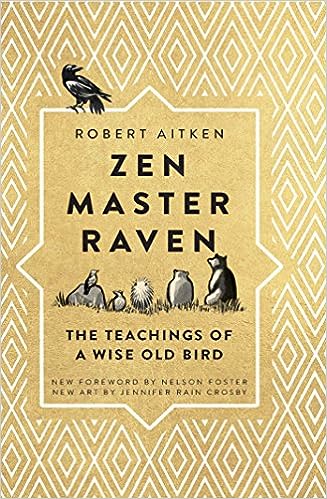
Zen Master Raven.  Robert Aitken. 2002.


Refer to my Cloud Hands Blog Posts on the topic of Koans/Stories. 

Subject Index to 1,975 Zen Buddhist Koans

Zen Buddhist Koans: Indexes, Bibliography, Commentary, Information

The Daodejing by Laozi

Pulling Onions  Over 1,043 One-line Sayings, Quips, Maxims, Humor

Chinese Chan Buddhist and Taoist Stories and Koans

The Fireplace Records (Blog Version) By Michael P. Garofalo

Riddles (200+)


Tuesday, October 24, 2023

Chen Tai Chi Chuan Short 18 Movement Form

From 2006 to 2016, I enjoyed practicing this short Chen Taijiquan 18 Form.  This short Chen Taijiquan 18 Form was developed by Grandmaster Chen Zhenglei in 2001.  I taught this short form to my students at the Tehama Family Fitness Center in Red Bluff, California, and at the Valley Spirit Center.  

Due to a variety of factors and causes, I have let my skills in performing this nice Taiji form weaken and lapse.  Therefore, I am resuming the study and practice of this Chen short form starting on November 1, 2023. I've focused more on walking, yoga, and gardening for the last five monts, rather than Taijiquan.


Chen Taijiquan Short 18 Movement Form Webpage


List of Movements of the Chen Taijiquan 18 Movement Short Form


Chen Taijiquan Old Frame First Form Laojia Yilu Webpage


Chen Style Tai Chi Essential 18 Postures with Patrick Martin.  Instructional DVD, 2 DVDs, 238 minutes.  Disk 1, 130 Minutes.  Jade Dragon Tai Chi International, Empty Circle Productions, 2008.  VSCL.  Patrick Martin is a student of Grandmaster Chen Zhenglei, and has been practicing and teaching Chen style Tai Chi for the last 20 years.  Detailed instructions for each movement sequence.  This DVD would be my first choice for an excellent instructional DVD on the Chen 18 Form.  


"Movement is a medicine for creating change in a person's physical, emotional, and mental states."
-  Carol Welch 


"Knowing is not enough, we must apply.  Willing is not enough, we must do."
-  Bruce Lee  

"It takes a lot of courage to release the familiar and seemingly secure, to embrace the new.  But there is no real security in what is no longer meaningful.  There is more security in the adventurous and exciting, for in movement there is life, and in change there is power."
-  Alan Cohen 


Chen Style Taijiquan Short Hand Form, 18 Movements
Created by Grandmaster Chen Zhenglei

Bibliography, Resources, List of Movements, Resources, Links, Instructions, Comments
Webpage by Michael Garofalo


Watch Grandmaster Chen Zhenglei perform the short form he created:


Sunday, October 22, 2023

Establish and Maintain Ground Force Path: A Beginner's Notes


"Rule One:  Stand Up! Warm up. Then do your Taijiquan."
- Mike Garofalo, 2000


Establish and Maintain Ground Force Path
A Beginner's Notes
 

By Michael P. Garofalo

Ongoing From: September 9, 2022 - 

Interpretation and Skill #1. Sink, Root, Settle, Transfer, Dissolve

You use and apply a technique: gradually loosening some muscles, sinking the entire body, going lower and lower relative to incoming outsides forces, e.g., somebody in front of you slipping and falling into you.  Maintain your balance.  Don't stumble.  Absorbing and deflecting incoming forces down, down, down ... into the LEGS (glutes, quadriceps, hamstrings, calves, ankles, feet, shoes, into the Earth or hard floor below your shoes/feet).  Allow the incoming force to flow down and through your body into the Earth.  Imagine some aspect of your body's somatic or perceptual or your mind's flights of fancy being released downward into the Earth.  Root your feet into the Earth!  Brace yourself.  Stand loose, sink, allow and draw into the ground, being as uncannily strong and tough as needed.  

Exercise 1.  Isometric Posture Work: Single Whip

Hold a posture for 1 minute, without strain.  For example, assume the Chen Taijiquan Single Whip posture.  Then, hold still, and do this Single Whip isometric exercise for 1 minute.  As the weeks and months of daily practice of Single Whip change your body, you can add multiple 1-2 minute intervals in this isometric pose each day.  Make increases slowly!  
Interpretation and Skill #1. Sink, Root, Settle, Transfer, Dissolve

Here is Master Chen Xiaowang's Chen Taijiquan Single Whip:  


This Single Whip landing point posture, which you hold still for 1 minute minimum, looks nearly the same as Hatha Yoga's Warrior II (Virabhadrasana - the Distinguished  Hero). The movement sequence for this Chen Taijiquan Single Whip looks like:


In position 5e of Single Whip, the weight is 65L bent/35R straight.  Enjoy being settled, erect confident, loose, ready, strong, aware, seemingly unmovable, balanced, a bit stubborn, rooted into the Earth, a somatic potential of coiled energy ready to uncoil as Peng Jin!  

Or, HOLD STILL in the posture of Fair Lady Works Her Shuttles, or Standing Post, or San Ti Shi, or Brush Knee, or Tadasana ...

for 1 minute or longer each day.  Increase dosage slowly over time.  Sink your body-weight downward into the Earth.  Your feet are strong, sturdy, flexible absorbers. Try to use less effort.  Get loose and settle in 'balanced bliss' until you start to stress and strain and sweat from this effective traditional isometric exercise.  


Rest in peace: the Blond Bomber, Dave Draper; the Italian Chiropractor Strongman, Franco Columbo.
These guys could let heavy squat loads sink into the Earth.  Absorbing these intense downward forces, reeving up their engines, coiling up, then exploding fa jin, lifting till they Stood up Again.


Kung Fu theorists and practitioners emphasize staying balanced, centered, in control appropriate to circumstances, calm, focused.  We allow our life's events to flow more peacefully, smoothly, and happily.  We utilize practical coping, useful support, and toughening tactics.


I once read The Warriors of Stillness by Jan Dierperspot circa 1980, 240 pages.  These Qigong (Daoyin) practitioners would gather together in Walnut Creek, CA, in the SanFran/Oakland region, and hold static postures for long periods of time in silence.  This was rigorous isometric exercising.  Connecting with the Earth, grounding and centering, imagining being as tough and still as a Post in the Ground.  

I sat on the ground, in Half-Lotus, circa 1986, empty-minded (Zaowang), moving little, staying awake, and listening.  After an hour, the Chan Buddhist Retreat bell sounded.  We then all stood up and walked slowly in a circle - Kinshin.  Not, however, circle walking like in bagua-zhang internal martial arts.

We earthly beings are under the constant press and pull of Gravity.  We swim in an invisible sea of Gravity.  Walk up and down steps and you can feel Gravity.  Just standing or walking in some way defies Gravity.  You have better pay close attention to Gravity - or Else!  Gravity can smash you on the Ground!!!  

Read the book The Longevity Plan by John D. Day, M.D.  Find new ways to Get Grounded, Get Down to Earth, Embracing Mother Earth.  Set down some positive community roots down where you live.  Use positive images and thoughts to enhance your balanced, centered, resilient, strong, healthy lifestyle.  Share with others.  

Two Person Playing Options 
Interpretation and Skill #1. Sink, Root, Settle, Transfer, Dissolve

Person 1  Hold a posture, e.g., Single Whip or Brush Knee.  Ground Yourself.  Establish and Maintain the Ground Force Path. Settle into the Earth.  Transfer and dissolve incoming energies downward into the Foundation of the Earth in our everyday ocean of Gravity.  Observe. Sense.  

Person 2  Gently pushes you to try to force you off-balance. Safely use more pushing force to move Person 1 off their center, to uproot them.  Observe.  Sense.  

Push Hands Two Person Exercises, both Standing and Moving
Trying to uproot each other, deflect incoming energies.  


Interpretation and Skill #2.


Saturday, October 21, 2023

Improving Balance in Seniors

 Balance

Maintaining and Improving Your Balance
Methods, Exercises, Concepts, Causes
Better Balance for Seniors and Avoiding Falls


By Michael P. Garofalo


Bibliography Links Resources Information

Quotations References Commentary

Instructor Qualifications of Michael P. Garofalo


Thursday, October 19, 2023

Tillamook Bay, Oregon

On Wednesday (10/18/2023) I drove from Nehalem to Tillamook, lunched at a Japanese restaurant, then drove up the Miami River up to Oregon 26, over to Seaside, and back to Nehalem.  

Here is a repeat of my Cloud Hands Blog post of February 9, 2022:

 I began this cold day with a campfire.  Then a walk on the forest trail to an ocean overlook.  Then a short and quite lovely 11 mile drive to Tillamook for lunch at the Fern Restaurant.    

I drove from Tillamook to Garibaldi and back.  I drove from Tillamook to Pacific City and back.  Lots to explore in the future in these coastal and valley areas, and up in the Tillamook State Forest.  There are five rivers (Tillamook, Hoquarton, Wilson) that flow through the Tillamook Valley into Tillamook Bay.  

"In its early years, the town of Tillamook, the first community to be settled in the county, bore the unofficial names Lincoln and Hoquarton, the latter believed to be an Indian name meaning “the landing.” Its name was eventually changed to Tillamook, an Indian word meaning “the many peoples of the Nehelim.” William Clark of explorers Lewis and Clark wrote in 1806 of the “Killamox” Indians but according to research by the Clatsop-Nehalem Confederated Tribes the “K” was not used in the name of the tribe. Local folklore used “Land of Many Waters” as the meaning of Tillamook. Though it is a fact that Tillamook is a land of many waters it is not the true meaning of the name Tillamook."
History of Tillamook City   Tillamook County Formed in 1853, and City Incorporated in 1891.  

Trees to the Sea Highway

Here are some photographs by me from this Cape Lookout Trip:


Here are some images of this area found on the Internet:


The coastline from Seaside to Manzanita, and from Tillamook to Cape Lookout,
features many high cliffs, steep hills, ravines, and mountains.
The sand spit at Netart's Bay is a small break from the normally rugged coastline
of the Three Capoes area.  Mountains of Oregon
e.g, Neahkanie Mountain 4,500 feet


Here is some information about Tillamook Bay:

Tillamook City   Population 5,300    Images    On US 101 and Junction with Oregon Road 6 leading back east to Portland.  

Motels, restaurants, cafes, gift shops, grocery, banks, museums, dairy farms, lumber industry, hospital, gas, stores, services, supplies. 
The Tillamook area has many dairy farms on green flat land east of the bay. 

Tillamook Coast Visitors Guide

Tillamook History

Tillamook Travel Guide 1

Tillamook Library   Tillamook County Library System 

Tillamook County   Population 25,300   The City of Tillamook is the County Seat. 

Tillamook Travel Guide 2

Tillamook Heritage Route

Tillamook Restaurants

Tillamook Shopping    Images

Tillamook Creamery   Tours 

Tillamook Air Museum

Tillamook County Pioneer Museum

Blue Heron French Cheese Company

Northwest Coastal Oregon Travel Guide: Astoria to Cape Lookout.  By Mike Garofalo. 

Tillamook Chamber of Commerce


Tillamook Bay

Tillamook Bay Inlet

Tillamook Bay History

Bayocean Development Failure Story

Tillamook Bay Shellfishing   Clams and Crabs

Tillamook Bay Fishing

Barview Jetty County Park    Campground, picnic, hiking.  At the north jetty to Tillamook Bay. 

Oyster Farming in Tillamook Bay - A History

Tillamook Bay Environmental History

Port of Tillamook Bay  Information, History

"The bay is protected from the open ocean by shoals and a 3 mi (5 km) sandbar called the Bayocean Peninsula. It is surrounded closely by the Coastal Range except at its southeast end, where the town of Tillamook sits near the mouths of the KilchisWilsonTrask and Tillamook rivers, which flow quickly down from the surrounding timber-producing regions of the Coastal Range to converge at the bay. The short Miami River enters the north end of the bay. The small fishing village of Garibaldi sits near the cliffs opening of the bay in the ocean. The rivers that feed the bay are known for their prolific steelhead and salmon runs. The mixing of freshwater from the rivers with the ocean's saltwater makes the bay an estuary.

The name "Tillamook" is Coast Salish word meaning "Land of Many Waters", probably referring to the rivers that enter the bay. At the time of the arrival of Europeans, the area along the coast was inhabited by the Tillamook and other related Coast Salish tribes. Historians believe they entered the area around the year 1400 and Lewis and Clark estimated the population south of the Columbia River along the coast at approximately 2,200."
Tillamook Bay