Monday, July 07, 2014

July Gardening in Zone 9

July - Quotes, Poems, Sayings for Gardners

Months - Quotes

High Summer Feast Day, August 1st

July Gardening Chores 
For Red Bluff, California, USDA Zone 9


Water plants: take advantage of cool morning hours, use daytime shade.
Water plants deeply and less frequently.
Water potted plants carefully on very hot days.
Mow lawns, but don't mow low. 
Mulch and compost: straw, cuttings, leaves, twigs, chips, shredded paper, garbage.
Water compost pile areas.
Manage cutworms and other garden pests.
Weed around vegetables and shrubs. 
Plant for autumn vegetable crops. 
Use straw mulch to help control weeds and cool soil.
Maintenance on lawn mowing equipment.
Pick and save or eat fresh vegetables and fruits.
Dry fruit in sun. 
Water plants.  Use irrigation ditch water efficiently and effectively. 
Get up early to work in the cool morning hours. 
Thin out excess fruit on trees.
Mulch with straw, chips, compost.
Train vines on support structures.
Read, listen to music, relax and sleep in the shade.
Tend to and enjoy annuals in bloom. 

Control wasp nests in the eaves of the house and porch and outdoor sheds.
Control ant invasions in our home.
Maintain evaporation cooler and house fans.

Cover all windows with shades on the outside, keep interior blinds and curtains closed.
Use indoor fans to move cooler air from cooler to office area.
Water trees and shrubs  slowly and deeply.
Stay hydrated at all times while working outdoors. 
Use shade for cooling, wear hats, wear light white long sleeved shirts.
Don't water the leaves of plants from 10 am to 8 pm - water roots. 


"Gardening helps us realize somatically, viscerally, the laws of growth and gradual unfolding.  We can't pull the plants up to make them grow, but we can help facilitate and midwife their blooming, each in his own way, time, and proper season.  I have learned a little about patience and humility from my gardens.  It's so obviously not something I'm doing that creates this miracle!  I also like to reflect upon and appreciate the exquisitely, evanescent, transitory, and poignant nature of things in the garden. 
If you love the Dharma, you have to farm it.
Go to a garden
And just stand in it.
Breathe in the air, the fragrances,
the light, the temperature,
the music of the different plants, insects, birds, worms,
   caterpillars, grasshoppers, and butterflies.
Inhale the prana (cosmic energy) of all the abundantly
   growing things.
Recharge your inner batteries.
This is the joy of natural meditation."
-  Lama Surya Das, "Awakening to the Sacred," 1999
    

Scvsc57

The colorful gate pictured above is located at the entrance to our Sacred Circle Garden in Red Bluff, California.  The color green symbolizes Earth, yellow symbolizes Air, red symbolizes Fire, and blue symbolizes Water. This photograph was taken in 2009.  Most of the plants have nearlytripeled in size since then.  


Sunday, July 06, 2014

Beethoven's Late String Quartets


The late string quartets, recorded by the Emerson String Quartet, include Opus 127, 130, 131, 132, and 135.  These are my favorites.  Perfect for a quiet summer morning. 


Saturday, July 05, 2014

Walking and Mental Clarity


"For someone who walks regularly, their body is better able to deliver oxygen to all systems, including the brain, because they’ve improved their cardiovascular function. Not surprisingly, regular walkers report better mental clarity and ability to focus. Creativity is enhanced because walkers have the ability to relax their mind and let it wander around while they’re walking. Outdoor strollers can have the benefit of beautiful scenery as well as just seeing things from a different perspective, which stimulates creative thought and the imagination.  Whether you want to improve your body, your mind or both, the benefits of walking should encourage you to make the time to do it."
Mental Benefits of Walking, Creating a Good Life


"Recent studies have indicated the numerous "mental benefits" of walking such as: slowing mental decline, lowering Alzheimer's risk, improving sleep, improving mood, and improving concentration."
The Mental Benefits of Walking from Arthritis Today, 2010.


"Scientific studies have shown that their are numerous benefits of walking: improves insulin sensitivity and thus prevents diabetes, improves one's sex life, saves you on gym costs, can reduce the need for certain medicines, reduce fibromyalgia pain, helps with overcoming certain cancers, reduces stroke risk, and improves memory."
The Eight Astonishing Benefits of Walking, The Mother Nature Network


Walking: Quotes, Sayings, Poems, Information    Compiled by Mike Garofalo.  


The Tour de France begins today.  The Tour begins in England this year.  The riders will race in the beautiful green rural Yorkshire area today.   The Brits are bicycling sports enthusiasts so the turnout should be excellent.  Millions of people will line the 118 mile racing course.  Enjoy!


Friday, July 04, 2014

4th of July Holiday Celebrations

In America, the 4th of July is a National Holiday.  Most people have a three day weekend holiday this year.  Americans celebrate our "Independence Day" on this day.

Family gatherings, outdoor meals, games and sports, visiting with friends, fireworks, and summer fun activities are all popular.  Some towns also have patriotic parades.

I hope everyone has a very safe and peaceful 4th of July weekend holiday.  

May we all be able to find a government that enables us to create and work for a better life, respect liberty, and pursue happiness.  May be enjoy freedom from religious oppression, and be allowed to speak our minds in a civil manner.  May we avoid hatred, fear, stealing, lying, and fighting for impractical idealistic causes.  We should not enslave people, disrespect the rights of women, and persecute minorities.  Let us encourage gun free zones in our civil society.  Let us cultivate peace, tolerance, patience, and prosperity.  Let us work at our jobs diligently, intelligently, creatively, and with pride.  Let us preserve and protect our environment for future generations.  Let is strive for good health, vitality, and positive mental health.  Let us mind our own business when appropriate, and avoid listening to men with extreme and angry opinions and facile solutions to difficult problems.  Let us encourage kindness, generosity, simplicity, and community cooperation.  May reason and justice be our guides.  May we deliberate calmly and avoid extreme and inflexible opinions.  May we remember and respect the hardworking and decent wise women and men of the past. 

Best wishes to all.


Thursday, July 03, 2014

Bone Marrow Washing Chi Kung and Serious Diseases

John wrote to me asking,

"Hello, Mike. I have enjoyed all of your guides and articles, and know if I have a guestion I just need to go to your website and I usually always find an answer.

I have been researching Xi Sui Jing or Bone Marrow Washing. I have had no success, and wonder if you may be able to guide me in the right direction to either find a teacher, literature or video on this system. I am told there are 18 forms or exercises. Is this true? I have non-Hodgkins lymphoma cancer and thought this may help with my chemotherapy treatments, although the doctor thinks it's a waste of time and money. Thank you."


John,

Intelligently listen to your oncologist's "advice" about treating cancer in terms of complementary exercises.  Some favor exercise and others do not as a complementary therapy. Many people do not feel much like doing qigong exercises while undergoing chemotherapy.

I can't agree with your doctor that practicing Qigong would be a waste of money since it is very inexpensive to do so.  Some people argue that the elaborate and extremely costly conventional medical treatments for cancer are a waste of time and money, and decide on other options.  This makes for very difficult decisions by the patient.

Based on considerable worldwide research, people who are overweight and don't exercise and eat improperly and use unhealthy drugs have a higher incidence of poor health and diseases and die younger than people who are trim, fit, and exercise regularly.  Nevertheless, I do not believe that Qigong or other fitness modalities can be of significant benefit in curing or slowing the progress of cancer; and people who actively practice Qigong may get cancer anyway.  Cancer has many causes and its appearance is currently unpredictable, although more likely above the age of 70, and cancer "cures" are actively being researched and evaluated.   There is lively debate on the subject of the best treatments for the complex and serious disease of cancer.  Read the book "The Emperor of All Maladies: A Biography of Cancer" by Dr. Stephen Hoye and Siddhartha Mukherje, 2010, for a thorough discussion of this important subject. 

Some Qigong (Chi Kung) enthusiasts and teachers do believe that their exercise, breathing, meditation, and visualization methods do significantly help people with serious diseases, including cancer.  Medical Qigong offers clinics attempting to help people with all kinds of health problems, and schools training future Qigong medical practitioners and healers exist worldwide.  However, Caveat emptor.   

Gabi Greve from Japan sent me information on Daruma Bone and Marrow Washing Exercises.

Roberto Gravez recommended "The Scholar Warrior" by Deng Ming-Dao.  This book gives all 24 movements of Bone Marrow Washing Chi Kung with drawings and instructions. The book also provides guides for diet, meditation, and so forth.  Mr. Gravez criticized my skepticism about the use of qigong in healing cancer. 

Dr. Bikum Hu in Berkeley, California, teaches Bone Marrow Washing Qigong.  

As for general well-being, an increased sense of vitality, feeling good, psycho-spiritual progress, positive visualization, and relaxation, qigong has helped many people. People who regularly practice qigong generally have positive comments to make about their experiences.

I've practiced Bone Marrow Washing Shaloin Qigong with a couple of Qigong teachers. I've not seen any consistency in the exercises between these teachers. The sets I learned had around 8 exercises.

Yang Jwing-Ming and Mantak Chia have written books on the Bone Marrow Washing Chi Kung form, and, as I recall, give instructions on a version of the set. Yang Jwing-Ming's books are usually very informative and useful for learning forms, and have excellent, detailed background theory.


There are both harder and easier verions of the Xi Sui Jing exercise as with Shaolin White Crane Qigong. 18 Lohan Qigong, another Shaolin Qigong form, is also popular.

I'd recommend The Eight Section Brocade Qigong for a general introductory form, and you don't need to spend any extra money learning it (I explain it for free on a webpage); and, don't spend more than 20 mintues a day, at first, doing the form in the early morning. Also, enjoy some walking if you feel up to it!

John, my very best wishes for a long remission, improved well-being, and a peaceful soul.

Mike Garofalo

Wednesday, July 02, 2014

Cloud Hands Blog Usage

The Cloud Hands Blog has served up over 400,000 blog posts from October of 2005 through July of 2014.  It now has a 97 subscribers.

Thank you very much to all those that read the posts to this blog.  

This year, I added a Translate button at the top of the right sidebar so that non-English readers can read the post in the language of their choice, albeit within the limitations of automatic machine translations.

The nice aspect of any blog is the fact that all posts are thoroughly indexed by topics shown in the lower right side bar.  The blog has a search box at the top left hand corner of the blog that provides full access to all past posts.

Many of my blog posts refer to material found in my many webpages.  Links in each post point to relevant material in my webpages on a particular subject. 

The right sidebar of this blog highlights my many webpages on a variety of subjects of interest to me.  Also, there are links in the right sidebar to other blogs and webpages by others that are worth exploring and reading.

My main webpage efforts during the last two years has been weekly work on the 81 Chapters of the Tao Te Ching by Lao Tzu.  In June of 2014, I just completed adding two Spanish language translations for each of the 81 chapters of the Daodejing, and indexing by Spanish language terms for all the Chapters.  Each Friday, I submit a post on the Daodejing to the Cloud Hands Blog. 

I do get considerable positive feedback about my webpages and blog via email

Hopefully, posts to this blog will benefit my readers in some positive way, lead to discovering other mind-body fitness options they might explore, and providing a little insight on topics of mutual interest.

I receive very few comments to the blog posts, and I always respond. I get email with questions and comments each day. 

I recently upgraded my computer to a new HP Pavillion desktop computer running Windows 8.1.  I moved all my software and files over to the new computer.  I am now using the Microsoft Office Suite 2007.  In the past, I used the Microsoft Office Suite running on Windows XP on a Gateway desktop computer.  I purchased a number of good low priced used books from Amazon about the Microsoft Office Suite 2007.  This summer, I plan to get very familiar with Word 2007 and Dreamweaver CS5. 

Our summertime afternoon daytime temperatures in Red Bluff, California, frequently climb to above 100F, and nighttime temperatures drop to 70F.  Consequently, we get all outdoor chores and watering done in the early morning hours.  I also take a long walk at daybreak.  In the afternoon, at 4pm, I go to the gym to lift weights and then teach yoga.  I tend to work indoors on computer projects, webpage publishing, writing, reading, and blog posts during the hottest time of the day.  I am off my part-time job as a Elementary School District Librarian and Webmaster until August 20, 2014.

Green Way Research


The picture below was taken in Olympia National Park in Washington during the summer of 2012.  My granddaughter, Makenna, and I enjoyed our visit to this beautiful park.  This summer, in 2014, we will camp at South Beach State Park in Newport, Oregon.


Tuesday, July 01, 2014

A Backyard View to the Southwest

Immediately behind our back porch, which faces due West, are four large pecan trees.  Behind them are many shrubs.  About 20 feet from the back porch, behind the shrubs, is a four foot high chain link fence and gates. 

At the south end of this enclosed garden behind the back porch are a number of trees and shrubs growing in front of a five foot high wood fence.  The largest tree in this group is a fifty foot high redwood tree that I planted in 1998.  Here is how the area looked in 2008. 


During a violent wind storm last Spring, two trees along the wooden fence broke apart and crashed to the ground.  Some fencing and shrubs were broken or damaged.  I removed all the damaged wood and repaired the fencing. 

Two weeks ago, I replanted that area with trees (gifts from Kathy Goodin) and shrubs.  The shade from the pecan trees and other trees makes it difficult for grass to grow in this area in the summer.  Here is how it now looks:


For more photographs of the results of our home landscaping projects from 1998-2008, we have a webpage on the subject. 

The Spirit of Gardening:  Quotations, Sayings, Poetry, Lore, Information.  Over 3,500 quotations arranged by 130 subjects.  Compiled by Mike Garofalo.  


"Man was not made to rust out in idleness.  A degree of exercise is as necessary for the preservation of health, both of body and mind, as his daily food.  And what exercise is more fitting, or more appropriate of one who is in the decline of life, than that of superintending a well-ordered garden?  What more enlivens the sinking mind?  What is more conducive to a long life?"
-  Joseph Breck

"Successful gardening is doing what has to be done when it has to be done the way it ought to be done whether you want to do it or not."
-  Jerry Baker 

"In his garden every man may be his own artist without apology or explanation.  Each within his green enclosure is a creator, and no two shall reach the same conclusion; nor shall we, any more than other creative workers, be ever wholly satisfied with our accomplishment.  Ever a season ahead of us floats the vision of perfection and herein lies its perennial charm."
-  Louise Beebe Wilder

Below is a photo of the small pond at the western edge of our property.  Overflow irrigation from the fields to the west of us keep this pond topped up most of the year.  


Monday, June 30, 2014

The Art of Manliness

The blog, The Art of Manliness, has been online since 2008.  Semper Virilis covers topics such as relationships and family, dress and grooming, health and sports, money, lifestyle, and psychology. 

Seven Letters to Write Before You Die

Warrior Mace Training

Creating a Positive Family Culture


Sunday, June 29, 2014

Smoothing Away the Edges

"Case: 
Jui-yen asked Yen-t'ou, "What is the fundamental constant principle?"
Yen-t'ou said, "Moving."
Jui-yen said, "When moving, what then?"
Yen-t'ou said, "You don't see the fundamental constant principle?"
Jui-yen stood there thinking.
Yen-t'ou said, "If you agree, you are not yet free of sense and matter; if you don't agree, you'll be forever sunk in birth-and-death."

Verse:
The round pearl has no hollows,
The great raw gem isn't polished.
What is esteemed by people of the Way is having no edges.
Removing the road of agreement, sense and matter are empty:
The free body, resting on nothing, stands out unique and alive."
-  Jui-yen (Zuigan, Song Am) was a Chinese Zen Master who lived from 800-900 CE. 
   Found in The Roaring Stream: A New Zen Reader, Edited by Nelson Foster and Jack Shoemaker, p. 182


"In life, when you encounter mean and hurtful people, treat them like sandpaper. No matter how rough they may scrub you, you end up polished and smooth."
-  Nishan Panwar


Saturday, June 28, 2014

Activities That Might Help Your Liver

"Aerobic exercise differs from other types of physical activity in that it is typically of longer duration, yet of relatively low intensity. It generally involves rhythmically using the same large muscle group for at least 15 to 20 minutes. Examples of aerobic activities are walking, biking, jogging, rowing, swimming and cross-country skiing. As a rule, you should be able to carry on a short conversation while doing aerobic exercise without gasping for breath.
Besides benefitting the 25 percent of American adults with a fatty liver, there are many more reasons to engage in regular aerobic exercise. Six reasons to get aerobic exercise daily are:
1.    Aerobic exercise activates the immune system, reducing susceptibility to colds and flus.
2.    Aerobic exercise helps keep arteries clear and strengthens the heart.
3.    Aerobic exercise can ease depression, reduce anxiety and promote relaxation.
4.    Aerobic exercise keeps muscles strong, which helps maintain mobility with advancing age.
5.    Aerobic exercise reduces cognitive decline in older adults.
6.    Aerobic exercise enhances stamina and reduces fatigue.
Although running a marathon may not be everybody’s preference, just about anyone can find a way to include aerobic exercise into their lifestyle. By partaking in this kind of physical activity, fatty liver disease can be prevented, steatosis reversed and steatohepatitis progression halted. As demonstrated by the Cleveland Clinic researchers, long and steady physical activity officially wins the race toward a leaner, healthier liver."
-  Nicole Cutler, Aerobic Exercise - A Smart Route for Battling a Fatty Liver


Walking: Quotes, Sayings, Poetry, Lore, Information.  Compiled by Mike Garofalo.

In the Eight Section Brocade Chi Kung Exercise set, the movement "Punching with an Angry Gaze" is claimed to benefit the liver.  Look at three Qigong liver exercises explained by Harold Sconiers, and four from Ashley Miller.  Liver functions are purportedly at a peak from 1 am to 3 am.  Qigong emphasizes reducing anger to improve liver functioning. 


A diet that is low in fat and high in fiber and lower in calories might help you become leaner. Having less fat around your abdomen, a trim waistline, might benefit your liver.  

Among the Six Daoist Healing Sounds, it is claimed that the sound "Shhhhh " as in "Shush," with the lips pursed, is supposedly beneficial to one's liver.  

Five Yoga poses supposedly helpful in improving liver function are Kapalbhati Pranayama, Ardha Matsyendrasana, Dhanurasana, Gomukh Asana, and Nauksana.  Here are 21 Ways a yoga teacher recommends to help your liver health. 
Kapalbhati Pranayama

General medical information about fatty liver disease:

The Everett Clinic

Better Health Channel

WebMD


Wednesday, June 25, 2014

Be Careful

Know Yourself and Act Accordingly

Some Taijiquan, Qigong and Yoga exercises are not appropriate for people who are out of
shape, in poor physical condition, suffering from chronic or life threatening illnesses,
elderly, infirm, recovering from illness, etc..  For example, bending over and touching
your toes is probably not a good idea for people with high blood pressure, obesity,
suffering from back pain or arithitis, fail bones, or for folks who are totally out of shape. 
Specific exercises are counterindicated depending upon your physical condition, and
if you're in poor or failing health, consult with your personal physician for advice.

You need to be realistic about your state of health and general physical condition.
If your are just beginning any exercise program - proceed slowly and cautiously.  Modify
the degree of difficulty, the number of repetitions, or the duration of any exercise set to
your own comfort and safety level.  Do not try to do what others can do or will do, if it is
inapproprate for you to do.  Don't compare yourself to others and don't be critical of oneself.  Be realistic and safe!

If you need to rest during a class, then just sit quietly and attentively observe.  Drink fluids as needed.  

The best Taijiquan and Chi Kung and Yoga teachers always advise you to be aware of your body,  be sensitive to your body, be "in tune" with your body, and listen to your body.  They  encourage beginners to be gentle on themselves, proceed slowly, and modify the
exercise to suit the student's state of health, level of fitness, age, and body type.  They
view their internal art as a life long regimen, something that evolves and progresses
over long periods of time, and not a "Quick Fix 10 Minutes to Super Health, Rock Hard
Abs, and Super Sex Dynamic Program."   They advocate regular daily exercise,
relaxation, deep breathing, a peaceful and positive attitude, proper eating, adequate rest, and gentle self care - not magic.  

Monday, June 23, 2014

Success in Your Tai Chi Chuan Training Program

How Can You Be Successful in Your Taijiquan Training

By Michael P. Garofalo, Valley Spirit Taijiquan, Red Bluff, California

June of 2014

1.  Get stronger in your legs and waist.  I recommend walking for 1.5 hours four days a week at a brisk pace to condition the legs and waist.   Taijiquan requires you to stand and move for 60 to 90 minutes during a typical Taijiquan practice session or class.  "Tai Chi" (Taijiquan) could also be called "Thigh Chi" because of the demands it makes on the legs and waist.  You need some cardio-vascular (aerobic) training, like long walks, to condition the heart and lungs and legs to better prepare for the demands of Taijiquan training.

2.  Practice, Learn, Practice, Learn, Practice, Learn, Practice, Learn ....  The daily practice of the Taijiquan Forms and Sets is required for "success" (i.e., achievement, skill, adeptness, facility, superior performance, excellence, advancement, fluency, etc.) in Taijiquan training.  You must challenge yourself to learn more each month.  Hard work and dedication (Kung Fu) are necessary for integrating the practice of Taijiquan in your life.  

3.  Listen, observe, imitate, and learn from your Taijiquan teachers.  Use the many fine instructional DVDs now available to learn more about the Taijiquan forms you are practicing.  Read books and magazine articles and web pages, and study UTube demonstrations, to learn more about the Taijiquan forms you are practicing.  Learn more about the history and styles of Taijiquan.  If you are among the few persons fortunate enough to learn directly from a Taijiquan master or grandmaster, then treasure this unique learning opportunity, and advance accordingly under their tutelage.  Give respect to teachers who have earned and deserve respect.  Be humble and open-minded so as to properly absorb new information, ideas, and techniques.  Don't be overly judgmental of others, but don't be a fawning fool or credulous.  

4.  Taijiquan has "Principles" that should be embodied and exemplified in your mind-body practice of this ancient Chinese art.  Some time must be spent learning these key ideas, concepts and principles so as to integrate them into your practice.  For examples, concepts like relaxed, sinking, centering, weighted, balanced, energized, focused, intentions, opponent, forms, styles, heart-mind, spirit, etc., must be learned.  Some understanding and appreciation for the Taoist outlook is valuable and useful for advancement in Taijiquan.   

5.  Find the Taijiquan style suitable to your physique, age, temperament, attitude, limitations, and physical condition.  Select an intensity of practice suitable to your energy level for the day or week, and any physical limitations of a temporary or permanent nature.  Be flexible, explore, adapt, and experiment to find appropriate solutions to your specific individual circumstances.  Cultivate good self-awareness and realistic views of your personal skill sets.  Avoid too many comparisons with other more advanced Taijiquan players.   

6.  Be detailed orientated.  Be precise in your movements, postures, and sequences.  Appreciate the beauty and function of the movements in the tradition of Taijiquan that you practice.  Learn the sequence and names (English and Chinese) for all the parts and postures of the Taijiquan forms you are studying. 

7.  Fight against your real opponents: inactivity, laziness, inflexibility, weakness, inertia, fear, worry, depression, confusion, and sloth.  You are training to become stronger, more agile, more balanced, more enlightened, more conditioned.  You serious efforts in your Taijiquan training will help to ward of disease, improve your immunity, strengthen you muscles, improve your cardio-vascular functioning, ameliorate existing health problems, brighten your attitude, uplift your spirits, calm your emotions, and boost your confidence.  Taijiquan is a self-defense system against poor health habits and sloppy living.  Your final opponents are illness and dying.  Fight on, brothers and sisters!!  

8.  Be patient.  Think and act in terms of months, seasons, and years.  Persevere through the inevitable stale, boring, plateau periods when progress seems stuck.  Consistent practice cultivates will power.  Don't give up.  Have confidence that your self-discipline will bear fruit in due season, and create the seeds leading to a new and rewarding self-appreciation and self-respect. 

Other Ideas About How to Achieve Success in Taijiquan Training


Saturday, June 21, 2014

With Beauty Before Me I Walk

"Happily the spell is taken off for me
Happily I walk, impervious to pain I walk,
Light within I walk, joyous I walk
... In beauty I walk
With beauty before me I walk
With beauty after me I walk
With beauty above me I walk
With beauty above and about me I walk
It is finished in beauty
It is finished in beauty."
The Night Chant, Navajo Native American Chant  


"We live in a fast-paced society.  Walking slows us down." 
-  Robert Sweetgall  


“I firmly believe that everyone deserves to live within walking distance of either beauty or convenience, if not both."
-  Victoria Moran, Lit From Within: Tending Your Soul For Lifelong Beauty  


"We shall not cease from exploration
And the end of all our exploring
Will be to arrive at where we started
And know the place for the first time."  
-  T. S. Eliot,  Little Gidding


Walking: Quotes, Poems, Sayings, Lore.  Compiled by Mike Garofalo.


Thursday, June 19, 2014

Swinging Arms Exercises

I am developing a webpage on Bai Bi Yun Dong (Swinging Arms Exercises).  It it includes lessons on various forms of this popular exercise, an extensive bibliography and links, and a brief introduction. Here is my description of the Swinging Arms Form One.

1.  Swinging Arms Exercise - Form One
Swinging the Arms Forward and Back, Up and Down
Pendulum Swing

1.  Stand with your feet at a hip width distance apart, less than shoulder width, feet pointing straight ahead.  Keep the knees slightly bent.  This standing stance should be comfortable.  Release tension in the body, soften, stay loose, open the chest, keep an open mind - in short, maintain Sung

2.  Keep your head over your shoulders, and the head in line with the spine.  Lift the crown of the head and tuck the chin a little.  Shoulders are kept relaxed, but don't slouch.  Maintain central equilibrium.  Keep an upright posture. 
3.  The feet are grounded and rooted into the earth.  Feet remain flat on the floor during the entire exercise.  The feet should point straight ahead.  The knees are over the feet.   
4.  Look forward, soften and widen your visual focus.  Take in the whole practice scene.  Don't try to block sensory feelings, zone out, or escape being fully present in the simple here and now.
5.  Arms should be loose, relaxed, and hanging gently at the sides of your hips.  Hands should remain soft and relaxed. 
6.  Gently raise both arms up in front of the body, palms facing down.  Raise the arms up to about shoulder height or less, depending upon the mobility or comfort range of motion for your shoulder joint.  The arms are fairly straight with only a slight bend in the elbow. 
7.  Allow the arms to gently move down and back to the sides of your hips.  Continue to lift the arms up behind the body, palms facing up, to a height you are comfortable with, depending upon the mobility of your shoulder joint.  Most people draw the hands up behind the back at considerably less than a 30 degree angle up from the hips.  Then bring the arms downward until the hands are along sides of the hips.  The arms are fairly straight with only a slight bend in the elbow. 
8.  Continue moving both arms at the same time from the hips, up to about shoulder height or less in front, down to the sides of the hips, and up the back, then down to the hips.  Be gentle.  Take your time.  Both arms will gradually begin to effortlessly swing up and down, forward and back, up and down.  Relax!  The arms are fairly straight with only a slight bend in the elbow. 
9.  Breathing is natural, comfortable, effortless, unstrained.  Breathe in through your nose and out through your mouth.  The tongue rests gently on the upper palate.  
10.  The knees will gently begin to bend and straighten slightly as the arms swing forward and back.  A swinging rhythm will establish a bending pattern and movement flow in the knees.  Don't keep the knees stiff, locked, or rigid.  Go with the flow. 
11.  Continue to swing the arms forward and back until you have warmed up your body, loosed the joints, and established a comfortable and flowing motion of swinging your arms.  Slowly increase the pace of your swinging. 
12.  Avoid rapidly snapping the lower arms or hands as you draw you arms downward from the front.   
13.  Enjoy swinging your arms forward and backward for as long as you like.  Start with a swinging practice of two to four minutes, and gradually increase the practice time as your body becomes conditioned to the exercise, your stamina increases, and you find benefits from doing this exercise. 
14.  As you near the end of the exercise period, slow the swinging pace down and reduce the range of motion in the swing.  Gradually slow down and finally stop.  Stand and rest for awhile.   
    This dynamic stretching exercise helps various parts of the body and is an excellent warm up exercise.  It stretches the biceps as you draw the arms back and up.  It stretches the triceps as you swing the arms up and forward.  The relaxed fingers and wrists are stretched on the downward fall of the arms (a nice counter to the flexed and tensed positions of the hands on a keyboard).  The shoulder joint and tendons benefit from the gentle range of motion activity, and the deltoid muscles are exercised.  The pectoral muscles are stretched on the backward movement of the arms.  Strength gains, although very modest, are primarily in the deltoids, latissimus, obliques, quadriceps, and trapesius.  If the swinging arms activity is continued long enough the heartbeat will increase slightly.  This kind of rhythmic activity has a calming effect on the body and reduces stress.  Stephen Sinatra, M.D., claims this exercise will benefit the thoracic duct and help the heart.  Chinese Qigong masters claim that Qi flow is enhanced and the body energized, blood pressure is reduced, and various diseases are prevented or healed. 
    There are alternative versions of this Swinging Arms exercise practiced and recommended by different folks.  Some people like to quietly count the repetitions on the forward up swing as it helps them to focus and maintain a regular breathing pattern.  Some people just swing one arm forward and back, and alternate between the arms.  Guo Lin's Qigong, a Walking Qigong, for cancer patients, alternates the arm swing from side to side, but the elbows are bent more and the waist turns from side to side as the arms swing upward.  Some people enjoy stepping in place or walking forward in a coordinated manner (e.g., Yang Jwing Ming) as they swing their arms forward and backward, up and down.  Swinging the arms or pumping the arms during brisk walking is a popular exercise.  Some swing the arms higher up in the front, up to face level or higher.  Some rise on their heels as they swing the arms up.  Some rock the toes up and down, or the heels up and down as they swing their arms.  Some like to talk with others as they swing their arms, others prefer being quiet.  Some hold very light dumbbells or kettlebells in the hands while doing this exercise for greater strength gains, although repetitions are kept low.   
-  By Michael P. Garofalo, Swinging Arms Exercises: Bai Bi Yun Dong

                                      运 动

Here is an informative video presentation with some creative adaptations of Swinging Hands by Shifu Mike Pekor of Tai Chi Kung Fu of Long Island: Tai Chi Swing Series  UTube, 9:21 minutes.  I also describe this version in my new webpage as Swinging Arms Form Two.


Wednesday, June 18, 2014

The Homeland of Time's Past

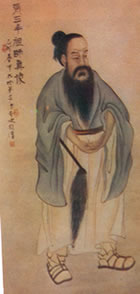
"I saw Master Chang San-feng
Enter the Sidhe, Fairies by his side,
Crossing over the pond at dawn.
Astonished I was!
On the teahouse table by the pond I later found
Some of his neatly printed notes
Folded in a well worn tome 
Of the Tao Te Ching, in Chapter 14. 


He had written:
”Even for an Immortal, the Past is the Key.

The Future
Grasp at it, but you can’t get it,
Colorless as an invisible crystal web,
Unformed, thin, a conundrum of ideas,
The Grand White Cloud Temple of Possibilities,
Flimsy as a maybe, strong as our hopes,
Silent as eternal Space.
When you meet it, you can’t see its face.
You want to stand for it, but cannot find a place. 

The Present
It appears and disappears through the moving ten thousand things,
Quick as a wink, elusive as a hummingbird,
Always Now with no other choice,
Moving ground, unstable Plates,
Real as much as Real gets to Be,
This Day has finally come,
Room for something, for the moment, waits
Gone in a flash, assigned a date,
Gulp, swallowed by the future.
Unceasing, continuous, entering and leaving
The vast empty center of the Elixir Field.

The Past
Becoming obscurer, fading, falling apart,
A mess of memories in the matrix of brains;
Some of it written, fixed in ink, chiseled in stone,
Most of it long lost in graves of pure grey bones.
Following it you cannot see its back,
Only forms of the formless, stories, tales,
Images of imageless, fictions, myths.
A smattering of forever fixed facts,
Scattered about the homes of fading ghosts. 
The twists and turns of millions of tongues
Leaving us languages, our passports to the past.
The future becomes past, the present becomes past,

Every thing lives, subtracting but seconds for Nowness, in the Past. 
The Realms of the Gods, the kingdoms of men,
The Evolutionary Tree with roots a million years long
Intertwined with turtles, dragons, trees, stars and toads;
     crickets, coyotes, grasses, tigers, bears, monkeys and men.  

These profoundest Three of Time
An unraveled red Knot of Mystery,
Evading scrutiny in the darkness of days
Eluding capture in the brightness of nights,
In beginnings and endings are only One, the Tao,
Coming from Nowhere, Returning to Nothing.  

What dimension of Time
Does your mind dwell within?
Future, Present or Past
Where is your homeland?  

The Past holds the accomplishments, the created, the glories, and the Great.
The Present is but a thin coat of ice on the Pond of Fate. 
The Future is an illusion, a guess, a plethora of possible states.

Recreate the Past
By playing within the Present. 
Twisting and reeling one’s silky reality
From the Black Cocoons of the Acts
From which we create our Pasts.
Follow the Ancient Ways. 
The Past is the Key.”   
-  By Michael P. Garofalo, Meetings with Master Chang San-feng